Duane Bryers Art

to
20
4
Overall Width
to
Overall Height
to
24
20
4
4
22
2
21
13
8
8
7
5
3
3
3
2
2
2
2
2
2
2
2
2
2
2
24
24
11,246
2,855
2,494
1,444
4
20
24
Artist: Duane Bryers
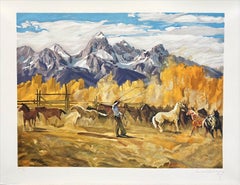
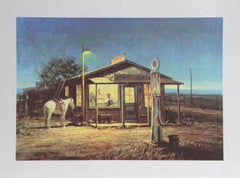
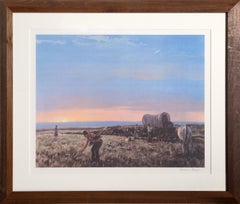
Horseshoe Cafe, American Western Art Lithograph by Duane Bryers

Horseshoe Cafe, American Western Art Lithograph by Duane Bryers

By Duane Bryers

Located in Long Island City, NY

Duane Bryers, American (1911 - 2012) - Horseshoe Cafe, Year: 1980, Medium: Lithograph, signed and numbered in pencil, Edition: 300, AP, Size: 21 in. x 28 in. (53.34 cm x 71.12 cm...

Category

1980s American Realist Duane Bryers Art

Materials

Lithograph
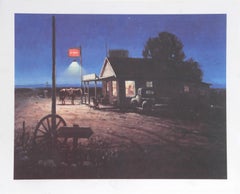
Blue Harmonica, American Western Art Lithograph by Duane Bryers

Blue Harmonica, American Western Art Lithograph by Duane Bryers

By Duane Bryers

Located in Long Island City, NY

Duane Bryers, American (1911 - 2012) - Blue Harmonica, Year: 1979, Medium: Lithograph, Signed and Numbered in Pencil, Edition: 300, AP, Image Size: 17.5 x 22 in., Size: 21.5 in....

Category

1970s American Realist Duane Bryers Art

Materials

Lithograph
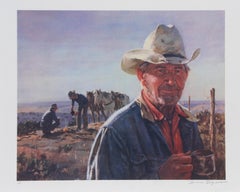
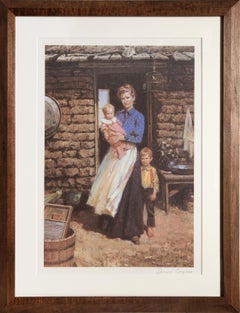
His Family, American Western Art Lithograph by Duane Bryers

His Family, American Western Art Lithograph by Duane Bryers

By Duane Bryers

Located in Long Island City, NY

Duane Bryers, American (1911 - 2012) - His Family, Year: 1979, Medium: Lithograph, Signed and Numbered in Pencil, Edition: 300, AP, Image Size: 14.5 x 22.5 in., Size: 21.5 in. ...

Category

1970s American Realist Duane Bryers Art

Materials

Lithograph
Four Corners Cafe, American Western Art Lithograph by Duane Bryers

Four Corners Cafe, American Western Art Lithograph by Duane Bryers

By Duane Bryers

Located in Long Island City, NY

Duane Bryers, American (1911 - 2012) - Four Corners Cafe, Year: 1979, Medium: Lithograph, signed and numbered in pencil, Edition: 300, AP, Image Size: 18 x 22.5 in., Size: 20.5 ...

Category

1970s American Realist Duane Bryers Art

Materials

Lithograph
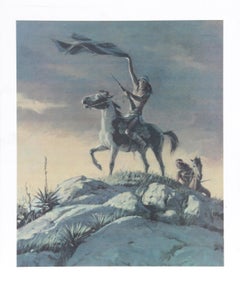
Morning Flight, American Western Art Lithograph by Duane Bryers

Morning Flight, American Western Art Lithograph by Duane Bryers

By Duane Bryers

Located in Long Island City, NY

Duane Bryers, American (1911 - 2012) - Morning Flight, Year: 1979, Medium: Lithograph, Signed and Numbered in Pencil, Edition: 300, AP, Image Size: 17.5 x 21 in., Size: 21 in. x...

Category

1970s American Realist Duane Bryers Art

Materials

Lithograph
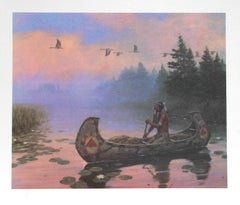
All The Yesterdays, American Western Art Lithograph by Duane Bryers

All The Yesterdays, American Western Art Lithograph by Duane Bryers

By Duane Bryers

Located in Long Island City, NY

Duane Bryers, American (1911 - 2012) - All The Yesterdays, Year: 1979, Medium: Lithograph, signed and numbered in pencil, Edition: 300, AP, Image Size: 16 x 23.5 in., Size: 20.5...

Category

1970s American Realist Duane Bryers Art

Materials

Lithograph
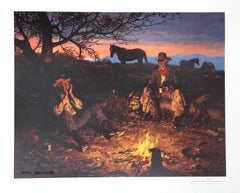
Mountain Fog, American Western Art Lithograph by Duane Bryers

Mountain Fog, American Western Art Lithograph by Duane Bryers

By Duane Bryers

Located in Long Island City, NY

Vic Herman, American (1919 - 1999) - Dances of Guanajuato, Year: 1979, Medium: Lithograph, signed and numbered in pencil, Edition: 300, AP, Image Size: 13 x 23.5 inches, Size: 1...

Category

1970s Folk Art Duane Bryers Art

Materials

Lithograph

Blanket Signals, American Western Art Lithograph by Duane Bryers

Blanket Signals, American Western Art Lithograph by Duane Bryers

By Duane Bryers

Located in Long Island City, NY

Duane Bryers, American (1911 - 2012) - Blanket Signals, Year: 1979, Medium: Lithograph, Signed and Numbered in Pencil, Edition: 300, AP, Image Size: 22.5 x 18 inches, Size: 25 i...

Category

1970s American Realist Duane Bryers Art

Materials

Lithograph
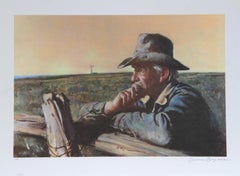
Back Of The River, American Western Art Lithograph by Duane Bryers

Back Of The River, American Western Art Lithograph by Duane Bryers

By Duane Bryers

Located in Long Island City, NY

Duane Bryers, American (1911 - 2012) - Back Of The River, Year: 1979, Medium: Lithograph, signed and numbered in pencil, Edition: 300, AP, Image Size: 17 x 22 in., Size: 21 in. ...

Category

1970s American Realist Duane Bryers Art

Materials

Lithograph
Cooling Off, American Western Art Lithograph by Duane Bryers

Cooling Off, American Western Art Lithograph by Duane Bryers

By Duane Bryers

Located in Long Island City, NY

Duane Bryers, American (1911 - 2012) - Cooling Off, Year: 1979, Medium: Lithograph, Signed and Numbered in Pencil, Edition: 300, AP, Image Size: 17.5 x 22.5 inches, Size: 21.5 i...

Category

1970s American Realist Duane Bryers Art

Materials

Lithograph
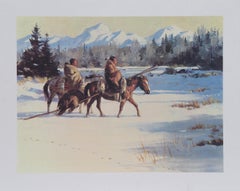
Middle of Nowhere, American Western Art Lithograph by Duane Bryers

Middle of Nowhere, American Western Art Lithograph by Duane Bryers

By Duane Bryers

Located in Long Island City, NY

Duane Bryers, American (1911 - 2012) - Middle of Nowhere, Year: 1979, Medium: Lithograph, Signed and Numbered in Pencil, Edition: 300, AP, Image Size: 16 x 23.5 in, Size: 20.5 i...

Category

1970s American Realist Duane Bryers Art

Materials

Lithograph
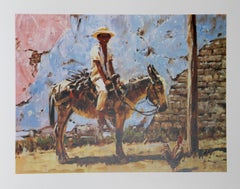
Lonesome Train Whistle, American Western Art Lithograph by Duane Bryers

Lonesome Train Whistle, American Western Art Lithograph by Duane Bryers

By Duane Bryers

Located in Long Island City, NY

Duane Bryers, American (1911 - 2012) - Lonesome Train Whistle, Year: Circa 1979, Medium: Lithograph, signed and numbered in pencil, Edition: 300, AP, Image Size: 17 x 22 in., Siz...

Category

1970s American Realist Duane Bryers Art

Materials

Lithograph
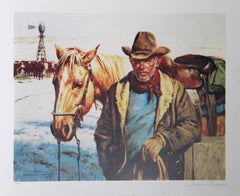
Green River, American Western Art Lithograph by Duane Bryers

Green River, American Western Art Lithograph by Duane Bryers

By Duane Bryers

Located in Long Island City, NY

Duane Bryers, American (1911 - 2012) - Green River, Year: 1979, Medium: Lithograph, signed and numbered in pencil, Edition: 300, AP, Image Size: 17 x 22.5 inches, Size: 21.5 in....

Category

1970s American Realist Duane Bryers Art

Materials

Lithograph
My Favorite Hat, American Western Art Lithograph by Duane Bryers

My Favorite Hat, American Western Art Lithograph by Duane Bryers

By Duane Bryers

Located in Long Island City, NY

Duane Bryers, American (1911 - 2012) - My Favorite Hat, Year: 1981, Medium: Lithograph, signed and numbered in pencil, Edition: 300, AP, Image Size: 18 x 23 inches, Size: 21 in....

Category

1980s American Realist Duane Bryers Art

Materials

Lithograph
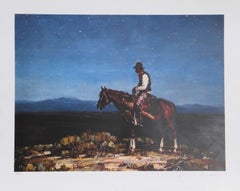
Meanwhile Back at the Ranch, American Western Art Lithograph by Duane Bryers

Meanwhile Back at the Ranch, American Western Art Lithograph by Duane Bryers

By Duane Bryers

Located in Long Island City, NY

Duane Bryers, American (1911 - 2012) - Meanwhile Back at the Ranch, Year: 1980, Medium: Lithograph, signed and numbered in pencil, Edition: 300, AP, Size: 21 in. x 27.5 in. (53.3...

Category

1980s American Realist Duane Bryers Art

Materials

Lithograph
Miguel, American Western Art Lithograph by Duane Bryers

Miguel, American Western Art Lithograph by Duane Bryers

By Duane Bryers

Located in Long Island City, NY

Duane Bryers, American (1911 - 2012) - Miguel, Year: 1979, Medium: Lithograph, signed and numbered in pencil, Edition: 300, AP, Image Size: 16.5 x 22 in., Size: 21 in. x 28.5 in...

Category

1970s American Realist Duane Bryers Art

Materials

Lithograph
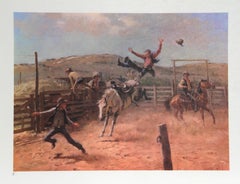
Checking The Stock, American Western Art Lithograph by Duane Bryers

Checking The Stock, American Western Art Lithograph by Duane Bryers

By Duane Bryers

Located in Long Island City, NY

Duane Bryers, American (1911 - 2012) - Checking The Stock, Year: 1979, Medium: Lithograph, Signed and Numbered in Pencil, Edition: 300, AP, Image Size: 18 x 22.5 inches, Size: 2...

Category

1970s American Realist Duane Bryers Art

Materials

Lithograph
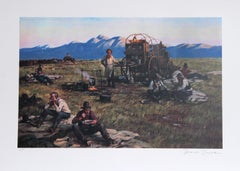
Apache Fire Light, American Western Art Lithograph by Duane Bryers

Apache Fire Light, American Western Art Lithograph by Duane Bryers

By Duane Bryers

Located in Long Island City, NY

Duane Bryers, American (1911 - 2012) - Apache Fire Light, Year: 1979, Medium: Lithograph, signed and numbered in pencil, Edition: 300, AP, Image Size: 17 x 22.5 in., Size: 21.5 ...

Category

1970s American Realist Duane Bryers Art

Materials

Lithograph
A Time To Remember, American Impressionist Lithograph by Duane Bryers

A Time To Remember, American Impressionist Lithograph by Duane Bryers

By Duane Bryers

Located in Long Island City, NY

Duane Bryers, American (1911 - 2012) - A Time To Remember, Year: 1979, Medium: Lithograph, signed and numbered in pencil, Edition: Edition of 300, AP, Image Size: 18 x 22.5 inches, S...

Category

1970s American Impressionist Duane Bryers Art

Materials

Lithograph
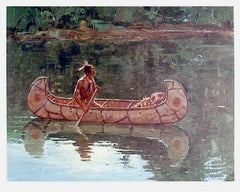
Five Feet Of Backbone, American Impressionist Lithograph by Duane Bryers

Five Feet Of Backbone, American Impressionist Lithograph by Duane Bryers

By Duane Bryers

Located in Long Island City, NY

Duane Bryers, American (1911 - 2012) - Five Feet Of Backbone, Year: 1979, Medium: Lithograph, signed and numbered in pencil, Edition: Edition of 300, AP, Image Size: 23 x 16 inches, ...

Category

1970s American Impressionist Duane Bryers Art

Materials

Lithograph
Along the Way, American Western Art Lithograph by Duane Bryers

Along the Way, American Western Art Lithograph by Duane Bryers

By Duane Bryers

Located in Long Island City, NY

Duane Bryers, American (1911 - 2012) - Along the Way, Year: 1979, Medium: Lithograph, signed and numbered in pencil, Edition: AP, Image Size: 17 x 22.5 inches, Size: 21.5 in. x ...

Category

1970s American Realist Duane Bryers Art

Materials

Lithograph
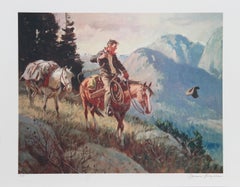
Camouflage, American Western Art Lithograph by Duane Bryers

Camouflage, American Western Art Lithograph by Duane Bryers

By Duane Bryers

Located in Long Island City, NY

Duane Bryers, American (1911 - 2012) - Camouflage, Year: 1979, Medium: Lithograph, Signed and Numbered in Pencil, Edition: 300, AP, Image Size: 22.5 x 18 in., Size: 26.5 in. x 2...

Category

1970s American Realist Duane Bryers Art

Materials

Lithograph
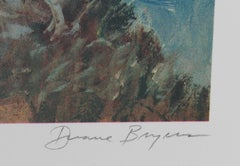
The Audience, American Impressionist Lithograph by Duane Bryers

The Audience, American Impressionist Lithograph by Duane Bryers

By Duane Bryers

Located in Long Island City, NY

Duane Bryers, American (1911 - 2012) - The Audience, Year: 1980, Medium: Lithograph, signed and numbered in pencil, Edition: Edition of 300, AP, Image Size: 14 x 22.5 inches, Size: 2...

Category

1980s American Impressionist Duane Bryers Art

Materials

Lithograph
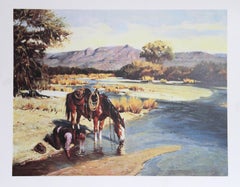
Rancher's Wife, American Impressionist Lithograph by Duane Bryers

Rancher's Wife, American Impressionist Lithograph by Duane Bryers

By Duane Bryers

Located in Long Island City, NY

Duane Bryers, American (1911 - 2012) - Rancher's Wife, Year: Circa 1979, Medium: Lithograph, signed and numbered in pencil, Edition: Edition of 300, AP, Image Size: 15.5 x 23 inches,...

Category

1970s American Impressionist Duane Bryers Art

Materials

Lithograph
Related Items
The Golden Gate
The Golden Gate

The Golden Gate

By Adolf Arthur Dehn

Located in Fairlawn, OH

The Golden Gate Lithograph on wove paper watermarked GC, 1940 Signed in pencil by the artist (see photo) Publisher: Associated American Artists Edition: 189, unnumbered The image depicts The Golden Gate Bridge which connects San Francisco and Marin County, California References And Exhibitions: Illustrated: Adams, The Sensuous Life of Adolf Dehn, Fig. 13.17, page 324 Reference: L & O 325 AAA Index 391 Adolf Dehn, American Watercolorist and Printmaker, 1895-1968 Adolf Dehn was an artist who achieved extraordinary artistic heights, but in a very particular artistic sphere—not so much in oil painting as in watercolor and lithography. Long recognized as a master by serious print collectors, he is gradually gaining recognition as a notable and influential figure in the overall history of American art. In the 19th century, with the invention of the rotary press, which made possible enormous print runs, and the development of the popular, mass-market magazines, newspaper and magazine illustration developed into an artistic realm of its own, often surprisingly divorced from the world of museums and art exhibitions, and today remains surprisingly overlooked by most art historians. Dehn in many regards was an outgrowth of this world, although in an unusual way, since as a young man he produced most of his illustrative work not for popular magazines, such as The Saturday Evening Post, but rather for radical journals, such as The Masses or The Liberator, or artistic “little magazines” such as The Dial. This background established the foundation of his outlook, and led later to his unique and distinctive contribution to American graphic art. If there’s a distinctive quality to his work, it was his skill in introducing unusual tonal and textural effects into his work, particularly in printmaking but also in watercolor. Jackson Pollock seems to have been one of many notable artists who were influenced by his techniques. Early Years, 1895-1922 For an artist largely remembered for scenes of Vienna and Paris, Adolf Dehn’s background was a surprising one. Born in Waterville, Minnesota, on November 22, 1895, Dehn was the descendent of farmers who had emigrated from Germany and homesteaded in the region, initially in a one-room log cabin with a dirt floor. Adolf’s father, Arthur Clark Dehn, was a hunter and trapper who took pride that he had no boss but himself, and who had little use for art. Indeed, during Adolf’s boyhood the walls of his bedroom and the space under his bed were filled with the pelts of mink, muskrats and skunks that his father had killed, skinned and stretched on drying boards. It was Adolf’s mother, Emilie Haas Dehn, a faithful member of the German Lutheran Evangelical Church, who encouraged his interest in art, which became apparent early in childhood. Both parents were ardent socialists, and supporters of Eugene Debs. In many ways Dehn’s later artistic achievement was clearly a reaction against the grinding rural poverty of his childhood. After graduating from high school in 1914 at the age of 19—an age not unusual in farming communities at the time, where school attendance was often irregular—Dehn attended the Minneapolis School of Art from 1914 to 1917, whose character followed strongly reflected that of its director, Munich-trained Robert Kohler, an artistic conservative but a social radical. There Dehn joined a group of students who went on to nationally significant careers, including Wanda Gag (later author of best-selling children’s books); John Flanagan (a sculptor notable for his use of direct carving) Harry Gottlieb (a notable social realist and member of the Woodstock Art Colony), Elizabeth Olds (a printmaker and administrator for the WPA), Arnold Blanch (landscape, still-life and figure painter, and member of the Woodstock group), Lucille Lunquist, later Lucille Blanch (also a gifted painter and founder of the Woodstock art colony), and Johan Egilrud (who stayed in Minneapolis and became a journalist and poet). Adolf became particularly close to Wanda Gag (1893-1946), with whom he established an intense but platonic relationship. Two years older than he, Gag was the daughter of a Bohemian artist and decorator, Anton Gag, who had died in 1908. After her husband died, Wanda’s mother, Lizzi Gag, became a helpless invalid, so Wanda was entrusted with the task of raising and financially supporting her six younger siblings. This endowed her with toughness and an independent streak, but nonetheless, when she met Dehn, Wanda was Victorian and conventional in her artistic taste and social values. Dehn was more socially radical, and introduced her to radical ideas about politics and free love, as well as to socialist publications such as The Masses and The Appeal to Reason. Never very interested in oil painting, in Minneapolis Dehn focused on caricature and illustration--often of a humorous or politically radical character. In 1917 both Dehn and Wanda won scholarships to attend the Art Students League, and consequently, in the fall of that year both moved to New York. Dehn’s art education, however, ended in the summer of 1918, shortly after the United States entered World War I, when he was drafted to serve in the U. S. Army. Unwilling to fight, he applied for status as a conscientious objector, but was first imprisoned, then segregated in semi-imprisonment with other Pacifists, until the war ended. The abuse he suffered at this time may well explain his later withdrawal from taking political stands or making art of an overtly political nature. After his release from the army, Dehn returned to New York where he fell under the spell of the radical cartoonist Boardman Robinson and produced his first lithographs. He also finally consummated his sexual relationship with Wanda Gag. The Years in Europe: 1922-1929 In September of 1921, however, he abruptly departed for Europe, arriving in Paris and then moving on to Vienna. There in the winter of 1922 he fell in love with a Russian dancer, Mura Zipperovitch, ending his seven-year relationship with Wanda Gag. He and Mura were married in 1926. It was also in Vienna that he produced his first notable artistic work. Influenced by European artists such as Jules Pascin and Georg Grosz, Dehn began producing drawings of people in cafes, streets, and parks, which while mostly executed in his studio, were based on spontaneous life studies and have an expressive, sometimes almost childishly wandering quality of line. The mixture of sophistication and naiveté in these drawings was new to American audiences, as was the raciness of their subject matter, which often featured pleasure-seekers, prostitutes or scenes of sexual dalliance, presented with a strong element of caricature. Some of these drawings contain an element of social criticism, reminiscent of that found in the work of George Grosz, although Dehn’s work tended to focus on humorous commentary rather than savagely attacking his subjects or making a partisan political statement. Many Americans, including some who had originally been supporters of Dehn such as Boardman Robinson, were shocked by these European drawings, although George Grocz (who became a friend of the artist in this period) admired them, and recognized that Dehn could also bring a new vision to America subject matter. As he told Dehn: “You will do things in America which haven’t been done, which need to be done, which only you can do—as far at least as I know America.” A key factor in Dehn’s artistic evolution at this time was his association with Scofield Thayer...

Category

1940s American Realist Duane Bryers Art

Materials

Lithograph
America! America!
America! America!

James FetherolfAmerica! America!, 1973

$400

H 22 in W 29.8 in D 0.01 in

America! America!

Located in San Francisco, CA

This artwork titled "America! America" is a color lithograph after noted American artist James Fetherolf, 1925-1994. It is hand signed at the lower rig...

Category

Late 20th Century American Realist Duane Bryers Art

Materials

Lithograph
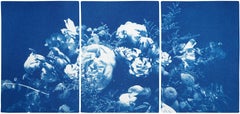
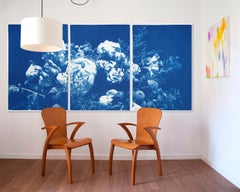
Floral Triptych of Large Floral Bouquet, Botanical Cyanotype in Classic Blue

Floral Triptych of Large Floral Bouquet, Botanical Cyanotype in Classic Blue

By Kind of Cyan

Located in Barcelona, ES

This series of cyanotype triptychs showcases the beauty of nature scenes, including stunning beaches and oceans, as well as the intricate textures of water, forests, and skies. These...

Category

2010s American Realist Duane Bryers Art

Materials

Watercolor, Lithograph, Paper

Los Angeles Crashing Waves, Handmade Cyanotype on Paper, Nautical Seascape, Blue

Los Angeles Crashing Waves, Handmade Cyanotype on Paper, Nautical Seascape, Blue

By Kind of Cyan

Located in Barcelona, ES

This series of cyanotype triptychs showcases the beauty of nature scenes, including stunning beaches and oceans, as well as the intricate textures of water, forests, and skies. These...

Category

2010s American Realist Duane Bryers Art

Materials

Lithograph, Paper

Brandywine Farm Collotype Lithograph Hand Signed Henriette Wyeth Americana Art

Brandywine Farm Collotype Lithograph Hand Signed Henriette Wyeth Americana Art

By Henriette Wyeth

Located in Surfside, FL

Henriette Wyeth-Hurd Hand signed, Collotype, Limited Edition of 490 Image Size: 20" x 26" framed 28.5 X 34.5 Provenance: printed at Triton Press and has their certificate of authenticity verso. Henriette Wyeth Hurd (1907 – 1997) was an American artist noted for her portraits and still life paintings. The eldest daughter of illustrator N.C. Wyeth, she studied painting with her father and brother Andrew Wyeth at their home and studio in Chadds Ford, Pennsylvania. Henrietta Wyeth was born in Wilmington, Delaware, into an artistic family. Wyeth was the eldest of the five children of noted illustrator N.C. Wyeth and his wife Carolyn Bockius. Her siblings Carolyn and Andrew also became artists, and all three studied with their father. Andrew Wyeth became the most well-known artist of this family. Henriette contracted polio at age 3, which altered her health and use of her right hand. As a result, she learned to draw with her left hand and paint with her right. She grew up on the family farm in Chadds Ford, Pennsylvania, and attended local Quaker schools. She and her siblings were eventually homeschooled because their father distrusted the public school system. She began formal art lessons with her father at age 11, making charcoal studies and geometric shapes. A child prodigy, at age 13 Wyeth was enrolled in the Normal Arts School in Boston, Massachusetts. The next year, in 1921, she entered the Boston Museum of Art Academy. Two years later she moved to Philadelphia to study painting at the Pennsylvania Academy of Fine Arts. By age 16, she was well known as a portraitist and received commissions for paintings of Wilmington residents. Deeply influenced by her father's unique realistic style, she rejected early 20th-century painting styles such as Impressionism and Cubism. She was also socially and politically conservative. As a result, later in life she rejected the progressive movements of the 1960s and 1970s, including the women's movement. She often criticized television and modern culture. At age 21, in 1929 Wyeth married artist Peter Hurd, a fellow student at the Pennsylvania Academy and her father's apprentice. The couple had three children together: Peter Jr., Carolyn, and Michael Hurd...

Category

1980s American Realist Duane Bryers Art

Materials

Lithograph

"The Slope Near the Bridge" Paul Sample, Mid-Century, American Snowy Landscape

"The Slope Near the Bridge" Paul Sample, Mid-Century, American Snowy Landscape

By Paul Sample

Located in New York, NY

Paul Sample The Slope Near the Bridge, 1950 Signed in pencil lower left Lithograph on wove paper Image 8 15/16 x 12 15/16 inches Sheet 11 5/16 x 15 1/16 inches From the edition of 25...

Category

1950s American Realist Duane Bryers Art

Materials

Paper, Lithograph

Yelding the Right of Way

Yelding the Right of Way

By Arnold Friberg 1

Located in San Francisco, CA

This artwork titled "Yelding the Right of Way" c.1975 is a color offset lithograph by renown western artist Arnold Friberg, 1913-2010. It is hand signed...

Category

Late 20th Century American Realist Duane Bryers Art

Materials

Lithograph
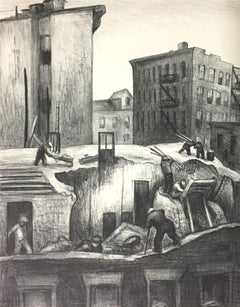
Ann Nooney, (Demolition with Windows, NYC)

Ann Nooney, (Demolition with Windows, NYC)

By Ann Nooney

Located in New York, NY

The dimensions are for the image; there are large margins. This lithograph is signed in pencil. A native New Yorker, Ann Nooney (1900-1970) recorded the urban scene while on the Wo...

Category

1930s American Realist Duane Bryers Art

Materials

Lithograph
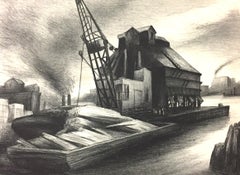
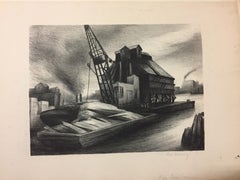
Ann Nooney, (Loading the Lumber Barge, NYC)

Ann Nooney, (Loading the Lumber Barge, NYC)

By Ann Nooney

Located in New York, NY

The dimensions are for the image. There are large margins. Signed in pencil. A native New Yorker, Ann Nooney (1900-1970), recorded the urban scene while on the Works Progress Admini...

Category

1930s American Realist Duane Bryers Art

Materials

Lithograph

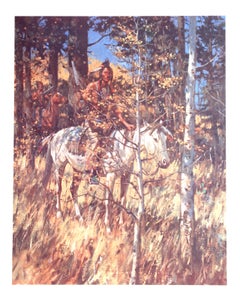
The Long Trail West
The Long Trail West

Arnold Friberg 1The Long Trail West, c.1980

$723

H 22.25 in W 34.25 in D 0.01 in

The Long Trail West

By Arnold Friberg 1

Located in San Francisco, CA

This artwork titled "TheLong Trail West" c.1980 is a color offset lithograph by renown western artist Arnold Friberg, 1913-2010. It is hand signed and n...
Category

Late 20th Century American Realist Duane Bryers Art

Materials

Lithograph

"Fishing Village" Joe Jones, Mid-Century, American Life, Small Town Scene

"Fishing Village" Joe Jones, Mid-Century, American Life, Small Town Scene

By Joe Jones

Located in New York, NY

Joe Jones Fishing Village, 1949 Signed in pencil lower right margin Lithograph on wove paper Image 9 5/16 x 12 9/16 inches Sheet 12 x 15 15/16 inches From the edition of 250 The initial details of Jones' career are sparse, and this is intentional. The young artist was engaged in a process of self-reinvention, crafting a persona. When he submitted a work to the Sixteen Cities Exhibition at New York City's Museum of Modern Art in 1933, he briefly characterized himself: "Born St. Louis, 1909, self-taught. " Jones intentionally portrayed himself to the art community as an authentic working-class figure, backed by a compelling history. He was the youngest of five children in a family led by a one-armed house painter from St. Louis, a Welsh immigrant, and his German American spouse. At the age of ten, Jones found himself in a Missouri reformatory due to authorities' concerns over his graffiti activities. After completing elementary school, he traveled by freight car to California and back, even being arrested for vagrancy in Pueblo, Colorado. Returning to St. Louis, he attempted to settle down by working alongside his father. Yet, Jones felt a profound restlessness and was drawn toward a more elevated artistic pursuit in his late teenage years. He discovered a local collective of budding artists that formed St. Louis’s "Little Bohemia," sharing a studio and providing mutual support until he managed to secure his own modest workspace in a vacant garage. Jones’s initial creations comprised still lifes, landscapes, and poignant portraits of those close to him. These subjects were not only accessible but also budget-friendly, as hiring models was beyond his means. He depicted himself, his father, mother, and eventually, his wife. In December 1930, at the age of 21, Jones wed Freda Sies, a modern dancer and political activist who was four years older than him. By 1933, Jones had started gaining noteworthy local recognition through a solo exhibition at the Artists’ Guild of Saint Louis. Of the twenty-five paintings on display, one, titled River Front (private collection, previously with Hirschl and Adler Galleries), was selected to illustrate a feature article about his show in The Art Digest (February 15, 1933, p. 9). Shortly before this exhibition, a young surgeon named Dr. Robert Elman took an interest in Jones’s art, purchasing several pieces and forming a group of potential patrons committed to providing the emerging artist with a monthly stipend in exchange for art. This group was officially known as the "Co-operative Art Society," but it was informally dubbed the "Joe Jones Club. " Jones became an active participant in the St. Louis artistic scene, particularly within its bohemian segments. He embraced modernism and was a founding member of the "New Hat" movement in 1931, a playful rebellion against the conservative and traditional mainstream art establishment. The summer of 1933 marked a significant shift in Jones’s journey. Sponsored by a dedicated ally, Mrs. Elizabeth Green, Jones, along with Freda and Green, embarked on an eastward road trip. In Washington, D. C., they explored the Corcoran Gallery of Art, the Freer Gallery (part of the Smithsonian Institution), the Library of Congress, and Mount Vernon. Following this whirlwind of art and American culture, they made their way to New York, where they visited various museums and galleries, including a stop at The New School for Social Research, which featured notable contemporary murals by fellow Missourian Thomas Hart Benton and the politically active Mexican artist, José Clemente Orozco. From June through August, Jones and Freda resided in the artist colony of Provincetown, Massachusetts, later returning home via Detroit to see Diego Rivera’s Detroit Industry mural housed at the Detroit Institute of Fine Arts. While Elizabeth Green allegedly hoped that Jones would refine his artistic skills under the guidance of Charles Hawthorne or Richard Miller in Provincetown, Jones followed a different path. Rather than pursuing conservative mentors, he connected with an engaging network of leftist intellectuals, writers, and artists who dedicated their time to reading Marx and applying his theories to the American landscape. Jones's reaction to the traditional culture of New England was captured in his statement to a reporter from the St. Louis Post Dispatch: “Class consciousness . . . that’s what I got of my trip to New England. Those people [New Englanders] are like the Chinese—ancestor worshipers. They made me realize where I belong” (September 21, 1933). The stark social divisions he witnessed there prompted him to embrace his working-class identity even more fervently. Upon returning to St. Louis, he prominently identified himself as a Communist. This newfound political stance created friction with some of his local supporters. Many of his middle-class advocates withdrew their backing, likely influenced not only by Jones’s politics but also by his flamboyant and confrontational demeanor. In December 1933, Jones initiated a complimentary art class for unemployed individuals in the Old Courthouse of St. Louis, the same location where the Dred Scott case was deliberated and where slave auctions formerly took place. Concurrently, the St. Louis Art League was offering paid courses. Emphasizing the theme of social activism, with a studio adorned with Soviet artwork, Jones’s institution operated for just over a year before being removed from the courthouse by local officials. The school’s political focus and unconventional teaching practices, along with its inclusion of a significant number of African American students during a period marked by rigid racial segregation, certainly contributed to its challenges. Under Jones’s guidance, the class created a large chalk pastel mural on board, measuring 16 by 37 feet, titled Social Unrest in St. Louis. Mural painting posed no challenge for the former housepainter, who was adept at handling large wall surfaces. His first significant commission in St. Louis in late 1931 was a mural that celebrated the city’s industrial and commercial fortitude for the local radio station, KMOX. This mural, aimed at conveying optimism amid severe economic hardship, showcased St. Louis's strengths in a modernist approach. When Jones resumed mural work in late 1933, his worldview had evolved considerably. The mural produced for the school in the courthouse, conceived by Jones, featured scenes of modern St. Louis selected to highlight political messages. Jones had observed the technique of utilizing self-contained scenes to craft visual narratives in the murals he encountered in the East. More locally, this compositional strategy was commonly employed by the renowned Missouri artist...

Category

1940s American Realist Duane Bryers Art

Materials

Paper, Lithograph
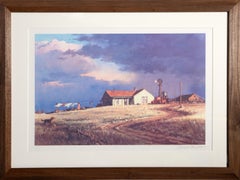
Duane Bryers art for sale on 1stDibs.

Find a wide variety of authentic Duane Bryers art available for sale on 1stDibs.