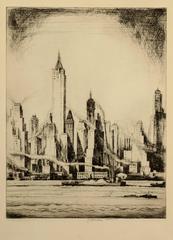
By Earl Horter
Located in New Orleans, LA
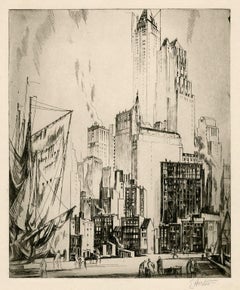
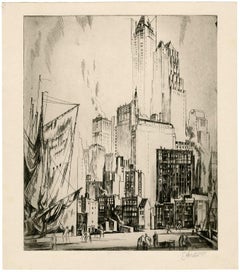
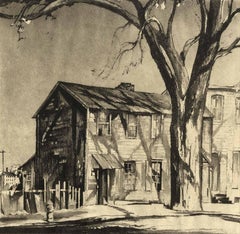
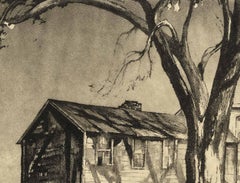
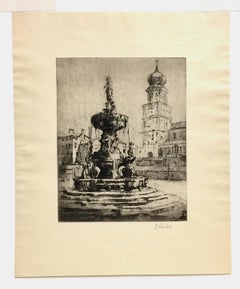
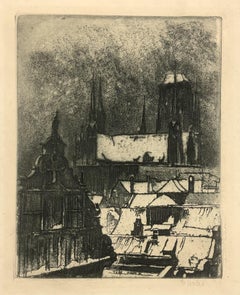
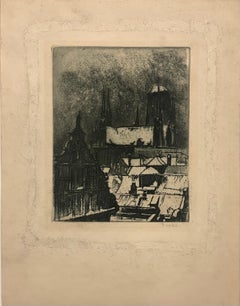
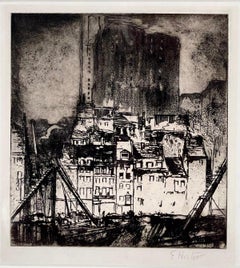
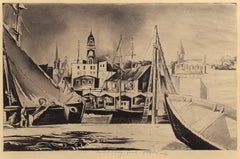
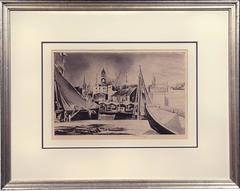
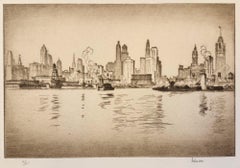
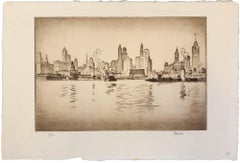
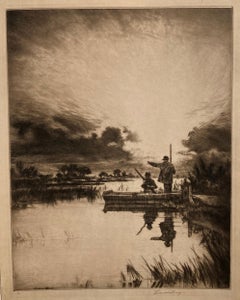
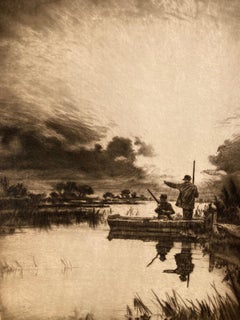
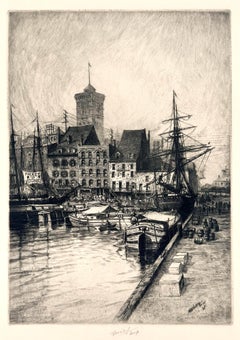
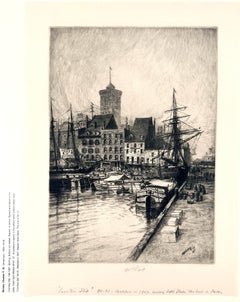
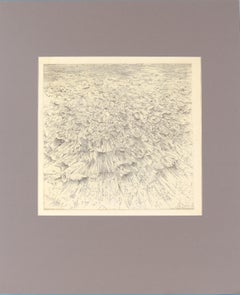
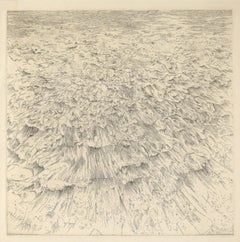
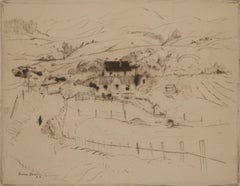
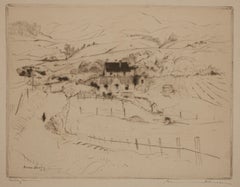
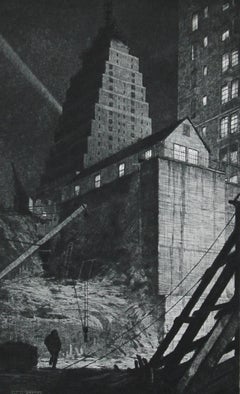
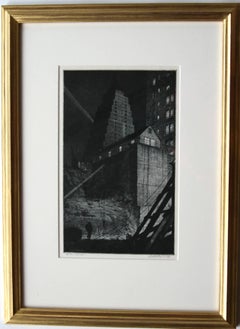
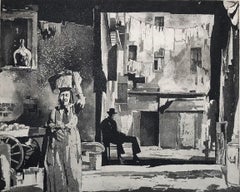
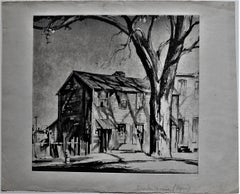
Dark House is a soft-ground etching with aquatint signed in pencil by the artist. This image is in the collection of the Detroit Institute of the Arts
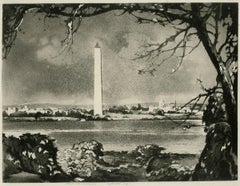
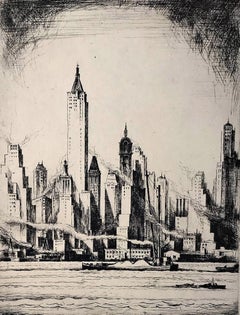
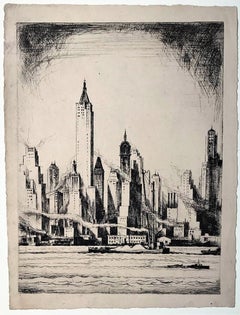
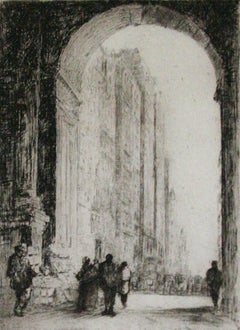
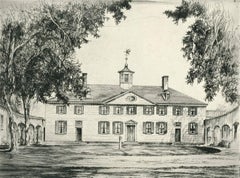
Printmaker Earl Horter, born in 1881 in Germantown, Pennsylvania, was known for his realistic etchings and aquatints of urban scenes, though he was also an illustrator and painter. As a teenager, he engraved stock certificates. He was essentially self-taught, though he did take an etching class when he moved to New York City in 1903 to work for an advertising agency. Horter had a one-man show in 1916 in New York City at the Frederick Keppel and Company gallery. He was given the exhibition by Carl Zigrosser, later the first Curator of Prints and Drawings at the Museum of Modern Art. Horter was back in Philadelphia in 1917, where he would remain until his death in 1940. He worked there as art director for the N. W. Ayer advertising firm from 1917-1923.
Horter was a member of the Society of Illustrators. He exhibited at the Pan American Exposition in 1915 in San Francisco, California; the Art Institute of Chicago, Illinois; and the Philadelphia Print Club's National Exhibition of Prints; as well as Corcoran Gallery biennials from 1935 to 1939, in Washington, D.C. Horter is listed in "Mantle Fielding's Dictionary of American Artists"; "Who Was Who in American Art"; and Mallett's "Index of Artists".
Though not a man of extraordinary means, Horter was a lover of modernist art, which he gradually purchased, creating an important collection, well ahead of its time in America, of Cubist and Precisionist works, as well as African sculpture and Native American artifacts. Artists Horter collected include Europeans Picasso, Braque, Duchamp and Brancusi, and Americans Charles Sheeler and Arthur B. Carles. He was a friend of Carles, as well as other artists and collectors such as Leopold Stokowski, conductor of the Philadelphia Orchestra; Franklin Watkins; S. S. White; and Carroll Tyson...
Category
1930s American Modern Earl Horter Art