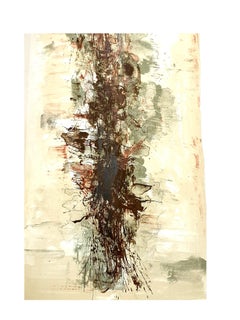
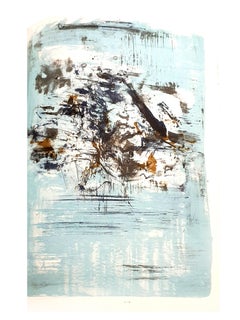
Edward Avedisian Art
to
18
18
9
8
8
8
1
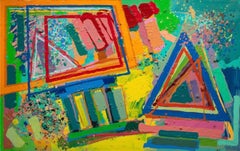
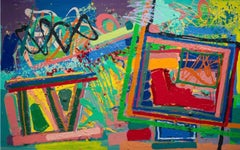
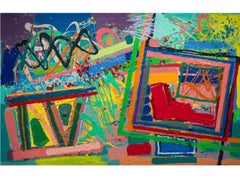
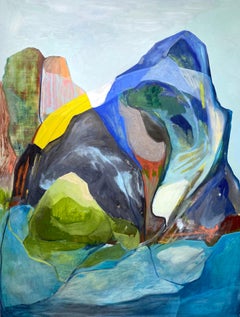
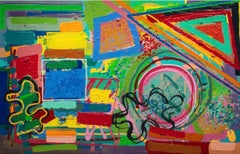
Large Mod Abstract Expressionist Modernist Edward Avedisian Color Field Painting
By Edward Avedisian
Located in Surfside, FL
Edward Avedisian (American, 1936-2007)
Abstract Large Painting
Acrylic on panel heavily textured with a 3D effect.
Dimensions: 48"h x 75"w
Circa late 1970s, early 1980s
Provenance: ...
Category
1970s Abstract Expressionist Edward Avedisian Art
Materials
Acrylic, Wood Panel
Large Mod Abstract Expressionist Modernist Edward Avedisian Color Field Painting
By Edward Avedisian
Located in Surfside, FL
Edward Avedisian (American, 1936-2007)
Abstract Large Painting
Acrylic on panel heavily textured with a 3D effect.
Dimensions: 48"h x 75"w
Circa late 1970s, early 1980s
Provenance: ...
Category
1970s Abstract Expressionist Edward Avedisian Art
Materials
Acrylic, Wood Panel
Large Mod Abstract Expressionist Modernist Edward Avedisian Color Field Painting
By Edward Avedisian
Located in Surfside, FL
Edward Avedisian (American, 1936-2007)
Abstract Large Painting
Acrylic on panel heavily textured with a 3D effect.
Dimensions: 48"h x 75"w
Circa late 1970s, early 1980s
Provenance: ...
Category
1970s Abstract Expressionist Edward Avedisian Art
Materials
Acrylic, Wood Panel
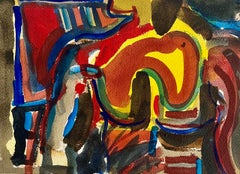
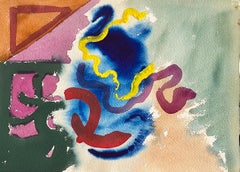
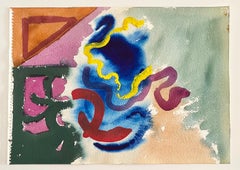
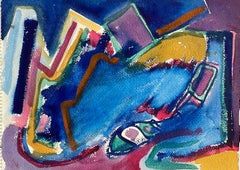
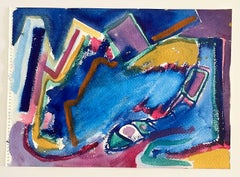
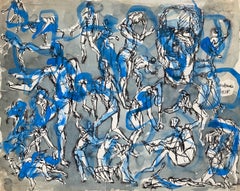
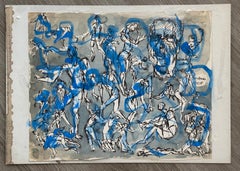
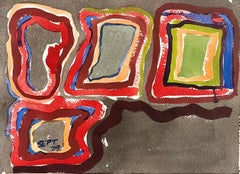
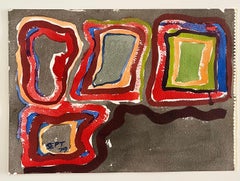
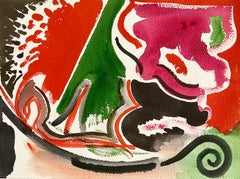
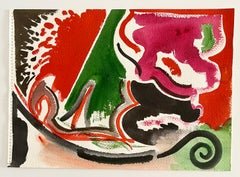
Mod Abstract Expressionist Modernist Edward Avedisian Color Field Art Gouache
By Edward Avedisian
Located in Surfside, FL
Edward Avedisian Gouache Watercolor Abstract Painting on Arches paper. (notebook cover not included)
Unsigned, (bears name verso in pencil.)
Dimensions: 10" X 14"
Late 1970s, early 1...
Category
1970s Abstract Expressionist Edward Avedisian Art
Materials
Watercolor, Gouache
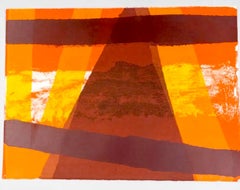
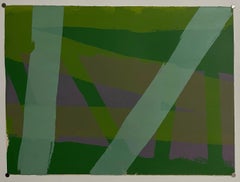
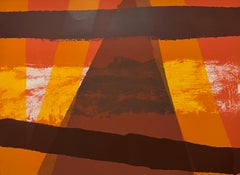
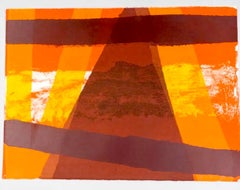
Mod Abstract Expressionist Modernist Lithograph Edward Avedisian Color Field Art
By Edward Avedisian
Located in Surfside, FL
Edward Avedisian (1936-2007)
Cleo, Fur Queen, 1969
Lithograph in color on Arches wove paper.
Hand signed, dated and numbered in pencil.
Edition 100
Dimensions:
22.25 inches X 30.25...
Category
1960s Abstract Expressionist Edward Avedisian Art
Materials
Lithograph
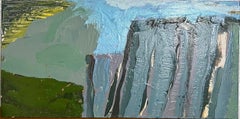
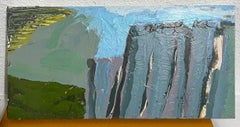
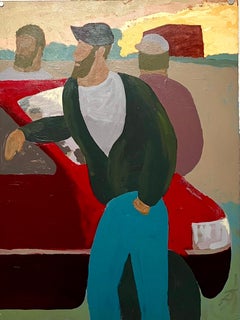
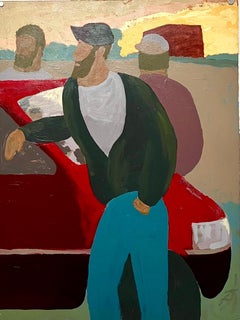
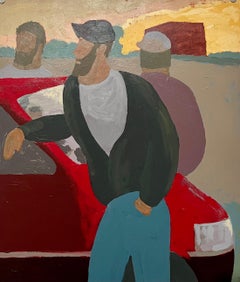
Large Hudson River Figurative Modernist Landscape Oil Painting Edward Avedisian
By Edward Avedisian
Located in Surfside, FL
Edward Avedisian ( 1936-2007 )
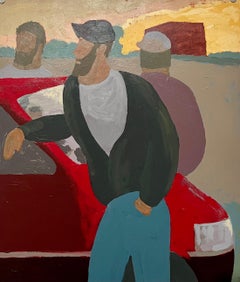
Gouache or oil on paper, 3 guys around a car,
hand signed in paint lower left,
Measures 30"x 22.5"
Edward Avedisian (June 15, 1936, Lowell, Massachusetts – August 17, 2007, Philmont, New York) was an American abstract painter who came into prominence during the 1960s. His work was initially associated with Color field painting and in the late 1960s with Lyrical Abstraction and Abstract Expressionism.
He studied art at the School of the Museum of Fine Arts, Boston. By the late 1950s he moved to New York City. Between 1958 and 1963 Avedisian had six solo shows in New York. In 1958 he initially showed at the Hansa Gallery, then he had three shows at the Tibor de Nagy Gallery and in 1962 and 1963 at the Robert Elkon Gallery. He continued to show at the Robert Elkon Gallery almost every year until 1975.
During the 1960s his work was broadly visible in the contemporary art world. He joined the dynamic art scene in Greenwich Village, frequenting the Cedar Tavern on Tenth Street, associating with the critic Clement Greenberg, and joining a new generation of abstract artists, such as Darby Bannard, Kenneth Noland, Jules Olitski, and Larry Poons.
Avedisian was among the leading figures to emerge in the New York art world during the 1960s. An artist who mixed the hot colors of Pop Art with the cool, more analytical qualities of Color Field painting, he was instrumental in the exploration of new abstract methods to examine the primacy of optical experience.
One of his paintings was appeared on the cover of Artforum, in 1969, his work was included in the 1965 Op Art The Responsive Eye exhibition at the Museum of Modern Art and in four annuals at the Whitney Museum of American Art. His paintings were widely sought after by collectors and acquired by major museums in New York and elsewhere. He has been exhibited in prominent galleries, such as the Anita Shapolsky Gallery and the Berry Campbell Gallery in New York City. Edward Avedisian was known for his brightly colored, boldly composed canvases that combined Minimalism's rigor, Pop art exuberance and the saturated tones of Color Field painting.
Roberta Smith of the NYT writes of Avedesian: "Edward Avedisian helped establish the hotly colored, but emotionally cool, abstract painting that succeeded Abstract Expressionism in the early 1960s. This young luminary harnessed elements of minimalism, pop, and color field painting to create prominent works of epic proportions that energized the New York art scene of the time." In 1996 Avedisian showed his paintings from the 1960s at the Mitchell Algus Gallery, then in SoHo. His last show, dominated by recent landscapes, was in 2003 at the Algus gallery, now in Chelsea.
Selected Exhibitions:
Op Art: The Responsive Eye, at the Museum of Modern Art,
Whitney Museum’s Young America 1965
Expo 67, held in Montreal, Canada.
Six Painters (along with Darby Bannard, Dan Christensen, Ron Davis...
Category
20th Century American Modern Edward Avedisian Art
Materials
Oil, Gouache, Archival Paper
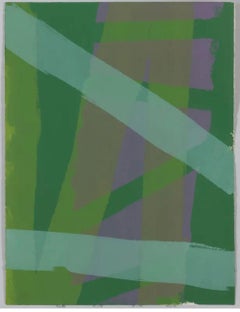
Mod Abstract Expressionist Modernist Lithograph Edward Avedisian Color Field Art
By Edward Avedisian
Located in Surfside, FL
Edward Avedisian (1936-2007)
Green Gold, 1969
Lithograph in color on Arches wove paper.
Hand signed, dated and numbered in pencil.
Edition 100
Dimensions:
22.25 inches X 30.25 inch...
Category
1960s Abstract Expressionist Edward Avedisian Art
Materials
Lithograph
Mod Abstract Expressionist Modernist Oil Painting Edward Avedisian Color Circles
By Edward Avedisian
Located in Surfside, FL
Edward Avedisian ( 1936-2007 )
12 X 8.5
Oil paint on wood panel
This is not signed on front. It bears his name verso.
Provenance: Hudson, N.Y. estate of noted Art Collector Albert B...
Category
1960s Abstract Expressionist Edward Avedisian Art
Materials
Oil, Wood Panel
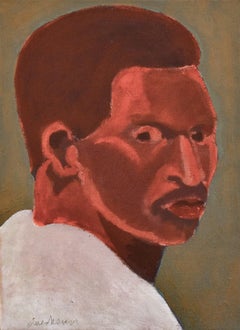
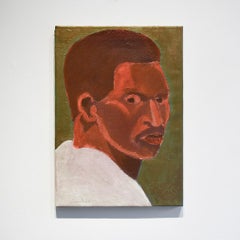
Portrait of Dave Winfield, American Major League Baseball Right Fielder
By Edward Avedisian
Located in Hudson, NY
Portrait of Dave Winfield
Edward Avedisian
20 x 14 inches, acrylic on stretched canvas
Armenian-American artist, Avedisian was best known for his work made in New York City during the 1960s: brilliantly colored, boldly composed canvases that combined Minimalism’s rigor, Pop’s exuberance and the saturated tones of Color Field painting. He was largely recognized for a series of Beach Ball paintings that emerged in the early 1960's and into the later 1960's the artist began painting larger horizontal paintings, featuring vertically intersecting beacon-like stripes that highlighted characteristics from both the Post-Painterly and Color Field movements.
In this portrait, Avedisian using his signature use of color, combining bright rusty reds and oranges against a metallic green gold backdrop.
A major work from Avedesian's color-stripe series was featured on the cover of Artforum's January 1969 issue (pictured here). Also pictured are photographs of the artist c. 1970 in his studio in New York City and catalog pages from Avedisian's inclusion in the American Painting Now Expo at the Institute of Contemporary Art in Boston, MA in Dec 1967 - Jan 1968. The exhibition, organized by art critic Alan Solomon, featured one of Avedisian's signature Beach Ball paintings alongside large works by Robert Motherwell and Jim Rosenquist.
About the subject:
Dave Winifield is American former Major League Baseball right fielder born in 1951 and who played for six teams (San Diego Padres, New York Yankees, California Angels, Toronto Blue Jays, Minnesota Twins, and Cleveland Indians) during his 22 year long career. He had the winning hit in the 1992 World Series with the Blue Jays over the Atlanta Braves. Winfield retired in 1996 and was elected to the Baseball Hall of Fame in 2001, in his first year of eligibility.
About the Artist:
In the 1960’s, Edward Avedisian was one of the youngest of those luminaries producing a grand new abstract painting. Shown first at Ivan Karp and Dick Bellamy’s Hansa Gallery and then at Robert Elkon, Avedisian’s insouciant mix of pop playfulness, color field cool and high formalist style put his art in a unique, and at the time generously rewarded, position. Paintings made it onto the cover of Artforum, were purchased by all the major museums, were among the few abstract works shown as representative of America’s post-war achievement at Expo 67 in Montreal and comprised a cornerstone in histories of the period written by Barbara Rose, among others. The artist was largely influenced by his Color-Field predecessors, Mark Rothko and Barnett Newman. Throughout the 1960's and into the mid 1970's the artist was celebrated in the Manhattan art scene, contributing to the Post-Painterly Abstraction movements with contemporaries Helen Frankenthaler, Andy Warhol, Jules Olitski, and Larry Poons.
Museum Collections:
Albright-Knox Art Gallery, Buffalo, New York
Brooklyn Museum, New York
Chrysler Art Museum, Norfolk, Virginia
Denver Art Museum, Colorado
Flint Institute of Arts, Michigan
Jack S. Blanton Museum of Art, Austin, Texas
The Larry Aldrich Museum, Ridgefield, Connecticut
Metropolitan Museum of Art, New York
Minneapolis Institute of Arts
Minneapolis Society of Fine Arts
Neuberger Museum of Art, State University of New York, Purchase
Los Angeles County Museum, California
Neuberger Museum, SUNY, Purchase, New York
Parrish Art Museum, Water Mill, New York
Solomon R. Guggenheim Museum
*above description text is supported by Alexandra C. Anderson's article on Edward Avedesian in Artforum's January 1969 issue.
NY Times Obituary, published Aug 23, 2007 by Roberta Smith:
Mr. Avedisian was best known for his work in the 1960s: brilliantly colored, boldly composed canvases that combined Minimalism’s rigor, Pop’s exuberance and the saturated tones of Color Field painting.
A frequent motif was a cluster of bright seedlike orbs corralled at the center of a vibrant monochrome field by larger rings of color, creating an image that could resemble a buoyant cross-section of some unknown fruit.
Mr. Avedisian was born in Lowell, Mass., in 1936 and studied art at the Boston Museum School. By the late 1950s he was living in New York, part of a generation of promising young painters that included Frank Stella, Larry Poons and Darby Bannard.
From 1958 to 1963 Mr. Avedisian had six solo shows in New York galleries, including two at the Robert Elkon Gallery, where he continued to show almost every year until 1975. By the early 1960s Mr. Avedisian was a rising star. During that decade, his work appeared on the cover of Artforum, in “The Responsive Eye” exhibition of Op Art at the Museum of Modern Art and in four annuals at the Whitney Museum of American Art. His paintings were widely sought by collectors and acquired by major museums in New York and elsewhere.
In the mid-1970s Mr. Avedisian moved to Hudson and became less visible. His paintings soon began shifting toward representation; he took to calling his abstract paintings “a period style.” But he continued to be well served by his feeling for color, scale and surface. His landscapes described his surroundings in blunt, flat shapes and singing hues reminiscent of those of Marsden Hartley and Paula Modersohn...
Category
1980s Contemporary Edward Avedisian Art
Materials
Canvas, Acrylic
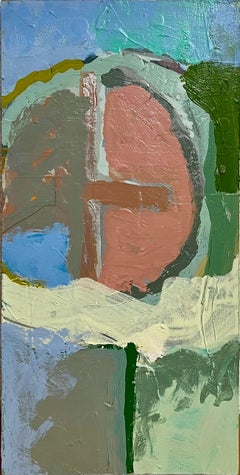
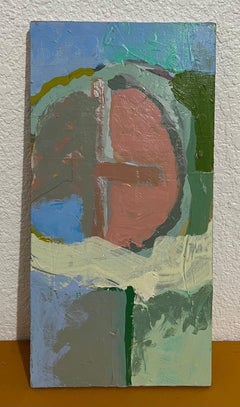
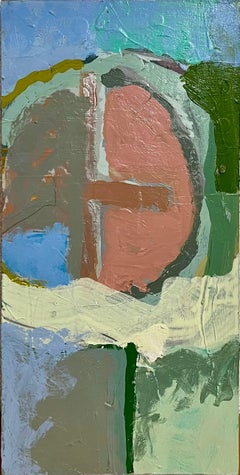
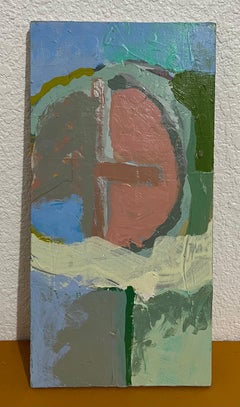
Mod Abstract Expressionist Modernist Oil Painting Edward Avedisian Color Forms
By Edward Avedisian
Located in Surfside, FL
Edward Avedisian ( 1936-2007 )
17.5 X 8.75
Oil paint on wood panel
This is not signed on front. It bears his name verso.
Provenance: Hudson, N.Y. estate of noted Art Collector Alber...
Category
1960s Abstract Expressionist Edward Avedisian Art
Materials
Oil, Wood Panel
Mod Abstract Expressionist Modernist Edward Avedisian Color Field Art Gouache
By Edward Avedisian
Located in Surfside, FL
Edward Avedisian Gouache Watercolor Abstract Painting on Arches paper. (notebook cover not included)
Unsigned, (bears name verso in pencil.)
Dimensions: 10" X 14"
Late 1970s, early ...
Category
1970s Abstract Expressionist Edward Avedisian Art
Materials
Watercolor, Gouache
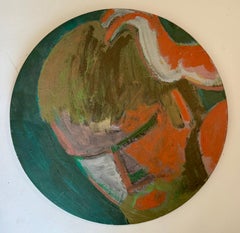
Mod Abstract Expressionist Modernist Edward Avedisian Color Field Oil Painting
By Edward Avedisian
Located in Surfside, FL
Edward Avedisian
Unsigned, (bears name signed verso in pencil.)
Dimensions: 15" X 15" (round tondo)
Circa late 1970s
This is a mod, brutalist portrait of a man
Edward Avedisian (J...
Category
1970s Abstract Expressionist Edward Avedisian Art
Materials
Oil, Board
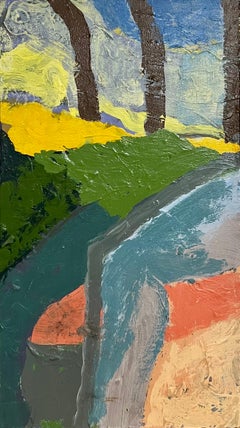
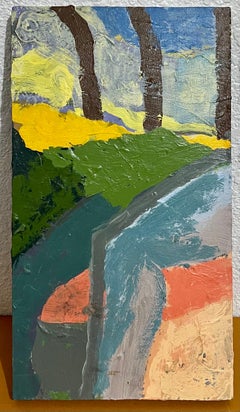
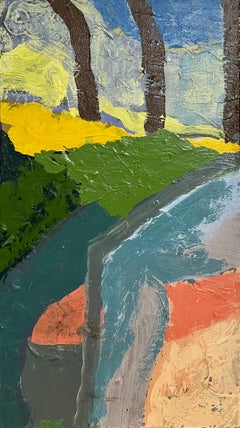
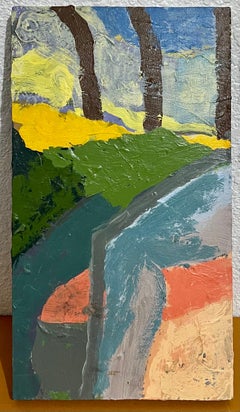
Mod Abstract Expressionist Modernist Oil Painting Edward Avedisian Color Forms
By Edward Avedisian
Located in Surfside, FL
Edward Avedisian ( 1936-2007 )
15 X 8.5
Oil paint on wood panel
This is not signed on front. It bears his name verso.
Provenance: Hudson, N.Y. estate of noted Art Collector Albert B...
Category
1960s Abstract Expressionist Edward Avedisian Art
Materials
Oil, Wood Panel
Mod Abstract Expressionist Modernist Edward Avedisian Color Field Art Gouache
By Edward Avedisian
Located in Surfside, FL
Edward Avedisian Gouache Watercolor Abstract Painting on Arches paper. (notebook cover not included)
Unsigned, (bears name verso in pencil.)
Dimensions: 10" X 14"
Late 1970s, early 1...
Category
1970s Abstract Expressionist Edward Avedisian Art
Materials
Watercolor, Gouache
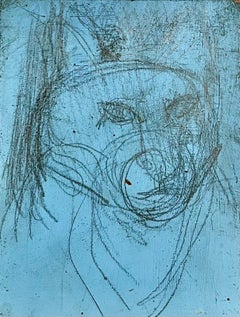
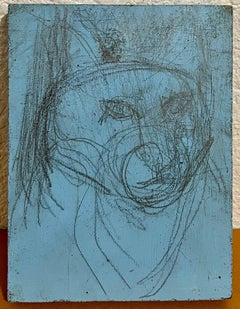
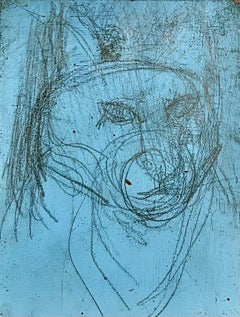
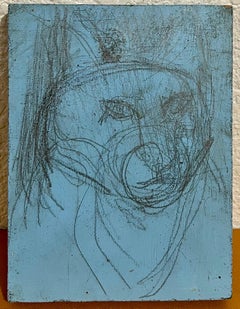
Mod Abstract Expressionist Modernist Oil Painting Dog Drawing Edward Avedisian
By Edward Avedisian
Located in Surfside, FL
Edward Avedisian ( 1936-2007 )
7.5 X 5.75
Oil paint on wood panel
This is not signed on front. It bears his name verso.
Provenance: Hudson, N.Y. estate of noted Art Collector Albert...
Category
1960s Abstract Expressionist Edward Avedisian Art
Materials
Oil, Wood Panel, Graphite
Mod Abstract Expressionist Modernist Edward Avedisian Color Field Art Gouache
By Edward Avedisian
Located in Surfside, FL
Edward Avedisian Gouache Watercolor Abstract Painting on Arches paper. (notebook cover not included)
Unsigned, (bears name verso in pencil.)
Dimensions: 10" X 14"
Late 1970s, early 1...
Category
1970s Abstract Expressionist Edward Avedisian Art
Materials
Watercolor, Gouache
Mod Abstract Expressionist Modernist Oil Painting Edward Avedisian Color Circles
By Edward Avedisian
Located in Surfside, FL
Edward Avedisian ( 1936-2007 )
17.5 X 8.75
Oil paint on wood panel
This is not signed on front. It bears his name verso.
Provenance: Hudson, N.Y. estate of noted Art Collector Alber...
Category
1960s Abstract Expressionist Edward Avedisian Art
Materials
Oil, Wood Panel
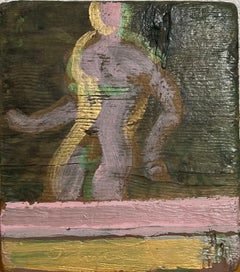
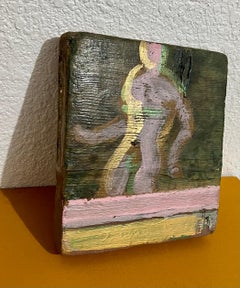
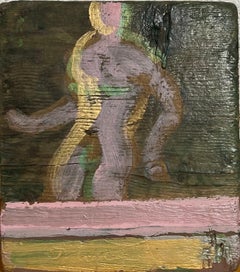
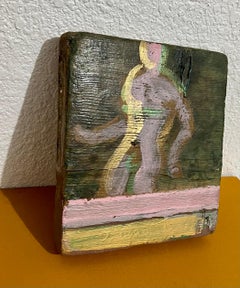
Mod Abstract Expressionist Modernist Oil Painting Edward Avedisian Color Figure
By Edward Avedisian
Located in Surfside, FL
Edward Avedisian ( 1936-2007 )
8 X 9
Oil paint on wood plank panel with gold and purple figure
This is not signed on front. It bears his name verso.
Provenance: Hudson, N.Y. estate of noted Art Collector Albert Burnette Roberts (1932-2021)
Edward Avedisian (June 15, 1936, Lowell, Massachusetts – August 17, 2007, Philmont, New York) was an American abstract painter who came into prominence during the 1960s. His work was initially associated with Color field painting and in the late 1960s with Lyrical Abstraction and Abstract Expressionism.
He studied art at the School of the Museum of Fine Arts, Boston. By the late 1950s he moved to New York City. Between 1958 and 1963 Avedisian had six solo shows in New York. In 1958 he initially showed at the Hansa Gallery, then he had three shows at the Tibor de Nagy Gallery and in 1962 and 1963 at the Robert Elkon Gallery. He continued to show at the Robert Elkon Gallery almost every year until 1975.
During the 1960s his work was broadly visible in the contemporary art world. He joined the dynamic art scene in Greenwich Village, frequenting the Cedar Tavern on Tenth Street, associating with the critic Clement Greenberg, and joining a new generation of abstract artists, such as Darby Bannard, Kenneth Noland, Jules Olitski, and Larry Poons.
Avedisian was among the leading figures to emerge in the New York art world during the 1960s. An artist who mixed the hot colors of Pop Art with the cool, more analytical qualities of Color Field painting, he was instrumental in the exploration of new abstract methods to examine the primacy of optical experience.
One of his paintings was appeared on the cover of Artforum, in 1969, his work was included in the 1965 Op Art The Responsive Eye exhibition at the Museum of Modern Art and in four annuals at the Whitney Museum of American Art. His paintings were widely sought after by collectors and acquired by major museums in New York and elsewhere. He has been exhibited in prominent galleries, such as the Anita Shapolsky Gallery and the Berry Campbell...
Category
1960s Abstract Expressionist Edward Avedisian Art
Materials
Oil, Wood Panel
Related Items
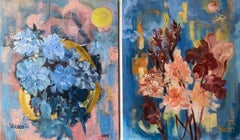
Original-Sunset Clouds Diptych-British Awarded Artist-en plein air-Oil canvas
Located in London, GB
This diptych Sunset Clouds , is part of Sunset Song Series, painted entirely en plein air under dimmed light in sunset hours, with no artificial light to guide her, Shizico Yi embrac...
Category
2010s Abstract Expressionist Edward Avedisian Art
Materials
Gesso, Canvas, Oil, Acrylic, Wood Panel
$810 Sale Price
20% Off
H 15.75 in W 23.63 in D 0.12 in
“Stratawind”
By Syd Solomon
Located in Southampton, NY
Original oil paint and acrylic paint on wooden panel by the well known American artist, Syd Solomon. Signed lower left. Signed, titled and dated 1971 verso . Condition is very good. No restorations. Original frame. Overall framed measurements are 17 by 14 inches. Partial Saidenberg Gallery, New York City label verso. Provenance: A Long Island, New York collector.
American, 1917-2004
SYD SOLOMON BIOGRAPHY:
Written by Dr. Lisa Peters/Berry Campbell Gallery
Syd Solomon was born near Uniontown, Pennsylvania, in 1917. He began painting in high school in Wilkes-Barre, where he was also a star football player. After high school, he worked in advertising and took classes at the Art Institute of Chicago. Before the attack on Pearl Harbor, he joined the war effort and was assigned to the First Camouflage Battalion, the 924th Engineer Aviation Regiment of the US Army. He used his artistic skills to create camouflage instruction manuals utilized throughout the Army. He married Ann Francine Cohen in late 1941. Soon thereafter, in early 1942, the couple moved to Fort Ord in California where he was sent to camouflage the coast to protect it from possible aerial bombings. Sent overseas in 1943, Solomon did aerial reconnaissance over Holland. Solomon was sent to Normandy early in the invasion where his camouflage designs provided protective concealment for the transport of supplies for men who had broken through the enemy line. Solomon was considered one of the best camoufleurs in the Army, receiving among other commendations, five bronze stars. Solomon often remarked that his camouflage experience during World War II influenced his ideas about abstract art. At the end of the War, he attended the École des Beaux-Arts in Paris.
Because Solomon suffered frostbite during the Battle of the Bulge, he could not live in cold climates, so he and Annie chose to settle in Sarasota, Florida, after the War. Sarasota was home to the John and Mable Ringling Museum of Art, and soon Solomon became friends with Arthur Everett “Chick” Austin, Jr., the museum’s first Director. In the late 1940s, Solomon experimented with new synthetic media, the precursors to acrylic paints provided to him by chemist Guy Pascal, who was developing them. Victor D’Amico, the first Director of Education for the Museum of Modern Art, recognized Solomon as the first artist to use acrylic paint. His early experimentation with this medium as well as other media put him at the forefront of technical innovations in his generation. He was also one of the first artists to use aerosol sprays and combined them with resists, an innovation influenced by his camouflage experience.
Solomon’s work began to be acknowledged nationally in 1952. He was included in American Watercolors, Drawings and Prints at the Metropolitan Museum of Art, New York. From 1952–1962, Solomon’s work was discovered by the cognoscenti of the art world, including the Museum of Modern Art Curators, Dorothy C. Miller and Peter Selz, and the Whitney Museum of American Art’s Director, John I. H. Baur. He had his first solo show in New York at the Associated American Artists Gallery in 1955 with “Chick” Austin, Jr. writing the essay for the exhibition. In the summer of 1955, the Solomons visited East Hampton, New York, for the first time at the invitation of fellow artist David Budd. There, Solomon met and befriended many of the artists of the New York School, including Jackson Pollock, Franz Kline, Willem de Kooning, James Brooks, Alfonso Ossorio, and Conrad Marca-Relli. By 1959, and for the next thirty-five years, the Solomons split the year between Sarasota (in the winter and spring) and the Hamptons (in the summer and fall).
In 1959, Solomon began showing regularly in New York City at the Saidenberg Gallery with collector Joseph Hirshhorn buying three paintings from Solomon’s first show. At the same time, his works entered the collections of the Whitney Museum of American Art, the Solomon R. Guggenheim Museum, and the Wadsworth Athenaeum in Hartford, Connecticut, among others. Solomon also began showing at Signa Gallery in East Hampton and at the James David Gallery in Miami run by the renowned art dealer, Dorothy Blau.
In 1961, the Guggenheim Museum’s H. H. Arnason bestowed to him the Silvermine Award at the 13th New England Annual. Additionally, Thomas Hess of ARTnews magazine chose Solomon as one of the ten outstanding painters of the year. At the suggestion of Alfred H. Barr, Jr., the Museum of Modern Art’s Director, the John and Mable Ringling Museum in Sarasota began its contemporary collection by purchasing Solomon’s painting, Silent World, 1961.
Solomon became influential in the Hamptons and in Florida during the 1960s. In late 1964, he created the Institute of Fine Art at the New College in Sarasota. He is credited with bringing many nationally known artists to Florida to teach, including Larry Rivers, Philip Guston, James Brooks, and Conrad Marca-Relli. Later Jimmy Ernst, John Chamberlain, James Rosenquist, and Robert Rauschenberg settled near Solomon in Florida. In East Hampton, the Solomon home was the epicenter of artists and writers who spent time in the Hamptons, including Alfred Leslie, Jim Dine, Ibram Lassaw, Saul Bellow, Barney Rosset, Arthur Kopit, and Harold Rosenberg.
In 1970, Solomon, along with architect Gene Leedy, one of the founders of the Sarasota School of Architecture, built an award-winning precast concrete and glass house and studio on the Gulf of Mexico near Midnight Pass in Sarasota. Because of its siting, it functioned much like Monet’s home in Giverny, France. Open to the sky, sea, and shore with inside and outside studios, Solomon was able to fully solicit all the environmental forces that influenced his work. His friend, the art critic Harold Rosenberg, said Solomon’s best work was produced in the period he lived on the beach.
During 1974 and 1975, a retrospective exhibition of Solomon’s work was held at the New York Cultural Center and traveled to the John and Mable Ringling Museum in Sarasota. Writer Kurt Vonnegut, Jr. conducted an important interview with Solomon for the exhibition catalogue. The artist was close to many writers, including Harold Rosenberg, Joy Williams, John D. McDonald, Budd Schulberg, Elia Kazan, Betty Friedan...
Category
1970s Abstract Expressionist Edward Avedisian Art
Materials
Oil, Acrylic, Wood Panel
Original-Cat, Pond, Trellis with Lime Trees-British Awarded Artist-Gold Leaf+Ink
Located in London, GB
This special large Ink and Gold leaf on canvas board created by Shizico in early autumn, her Cat and the garden take centre stage. The pictorial language in this series pays homage t...
Category
2010s Abstract Expressionist Edward Avedisian Art
Materials
Gold Leaf
$831 Sale Price
20% Off
H 23.63 in W 19.69 in D 0.6 in
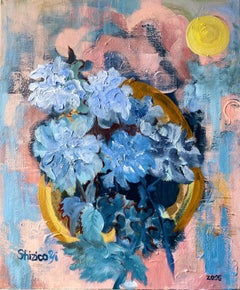
Original-Magic Bell Morning Light-UK Awarded Artist-Botanic- Abstract Expression
Located in London, GB
In her latest series, "The Weaver," Shizico explores forms, layers, and time onto canvases. Applying the format of diptychs and triptychs, she creates lyrical narratives, capturing t...
Category
2010s Abstract Expressionist Edward Avedisian Art
Materials
Gesso, Canvas, Oil, Acrylic, Wood Panel
$655
H 15.75 in W 11.82 in D 0.12 in
Musicians
By Gen Paul
Located in New York, NY
Gen Paul (1895-1955 Fr.) lived in Montmartre, Paris France. He is know for his action painting with quick brush strokes and this work of art was painted around 1955-1960.
He was a mu...
Category
1950s Abstract Expressionist Edward Avedisian Art
Materials
Gouache
The Darker Palette print, Hand signed twice and inscribed by Helen Frankenthaler
By Helen Frankenthaler
Located in New York, NY
Helen Frankenthaler (after)
Frankenthaler: The Darker Palette (autographed and inscribed), 1998
Offset Lithograph print
42 × 35 in
hand signed "Frankenthaler" lower left; inscribed a...
Category
1990s Abstract Expressionist Edward Avedisian Art
Materials
Offset, Lithograph
Mid Century Abstract Nude Oil on Canvas Painting by Edith Ferullo
By Edith E. Ferullo
Located in Atlanta, GA
Original Mid-Century oil on canvas composition by American Artist Edith E. Ferullo (1928 - 2008). The painting features a thick textured abstract nude subject. The brutalist artwork ...
Category
1960s Abstract Expressionist Edward Avedisian Art
Materials
Canvas, Acrylic, Gouache
$3,700
H 18.5 in W 42.52 in D 1.75 in
A Paintings Retrospective: vintage LACMA Museum poster depicting her 1963 work
By Helen Frankenthaler
Located in New York, NY
Helen Frankenthaler (after)
A Paintings Retrospective: vintage LACMA Museum poster, 1990
Offset lithograph museum poster
(Unsigned & Unnumbered)
37 × 25 inches
Unframed
This was printed in the artists lifetime - making it more collectible - on the occasion of the exhibition, "Helen Frankenthaler: A Paintings Retrospective from February to April, 1990 at the Los Angeles County Museum of Art (LACMA)
Print is published by Editions Limited Galleries, San Francisco for Los Angeles County Museum of Art (LACMA), LA, CA
The work depicted is Helen Frankenthaler, The Bay, 1963, acrylic on canvas, Detroit Institute of Arts, Michigan (Incidentally, this beautiful work is featured on the cover of the book Water and Art' by David Clarke.)
“What concerns me when I work is not whether a picture is a landscape… or whether somebody will see a sunset in it. What concerns me is, did I make a beautiful picture?” - - Helen Frankenthaler
This is Frankenthaler's first silkscreen, produced for the portfolio New York Ten, which includes works by other New York-based artists at the time such as Roy Lichtenstein, Jim Dine, Tom Wesselmann and Claes Oldenburg. (She created her first lithograph in 1961)
Other examples of this edition are found in the permanent collections of the Museum of Modern Art, MOCA Chicago, the Metropolitan Museum, the Philadelphia Museum, the Art Institute of Chicago, and numerous regional museums and institutions in the United States and worldwide.
Helen Frankenthaler, A Brief Biography
Helen Frankenthaler (1928-2011), whose career spanned six decades, has long been recognized as one of the great American artists of the twentieth century. She was eminent among the second generation of postwar American abstract painters and is widely credited for playing a pivotal role in the transition from Abstract Expressionism to Color Field painting. Through her invention of the soak-stain technique, she expanded the possibilities of abstract painting, while at times referencing figuration and landscape in unique ways. She produced a body of work whose impact on contemporary art has been profound and continues to grow.
Frankenthaler was born on December 12, 1928, and raised in New York City. She attended the Dalton School, where she received her earliest art instruction from Rufino Tamayo. In 1949 she graduated from Bennington College, Vermont, where she was a student of Paul Feeley. She later studied briefly with Hans Hofmann.
Frankenthaler’s professional exhibition career began in 1950, when Adolph Gottlieb selected her painting Beach (1950) for inclusion in the exhibition titled Fifteen Unknowns: Selected by Artists of the Kootz Gallery. Her first solo exhibition was presented in 1951, at New York’s Tibor de Nagy Gallery, and that year she was also included in the landmark exhibition 9th St. Exhibition of Paintings and Sculpture.
In 1952 Frankenthaler created Mountains and Sea, a breakthrough painting of American abstraction for which she poured thinned paint directly onto raw, unprimed canvas laid on the studio floor, working from all sides to create floating fields of translucent color. Mountains and Sea was immediately influential for the artists who formed the Color Field school of painting, notable among them Morris Louis and Kenneth Noland.
As early as 1959, Frankenthaler began to be a regular presence in major international exhibitions. She won first prize at the Premiere Biennale de Paris that year, and in 1966 she represented the United States in the 33rd Venice Biennale, alongside Ellsworth Kelly, Roy Lichtenstein, and Jules Olitski. She had her first major museum exhibition in 1960, at New York’s Jewish Museum, and her second, in 1969, at the Whitney Museum of American Art, followed by an international tour.
Frankenthaler experimented tirelessly throughout her long career. In addition to producing unique paintings on canvas and paper, she worked in a wide range of media, including ceramics, sculpture, tapestry, and especially printmaking. Hers was a significant voice in the mid-century “print renaissance” among American abstract painters, and she is particularly renowned for her woodcuts. She continued working productively through the opening years of this century.
Frankenthaler’s distinguished, prolific career has been the subject of numerous monographic museum exhibitions. The Jewish Museum and Whitney Museum shows were succeeded by a major retrospective initiated by the Modern Art Museum of Fort Worth that traveled to The Museum of Modern Art, New York, the Los Angeles County Museum of Art, and the Detroit Institute of Arts, MI (1989); and those devoted to works on paper and prints organized by the National Gallery of Art, Washington, D.C. (1993), among others.
Select recent important exhibitions have included Painted on 21st Street: Helen Frankenthaler from 1950 to 1959 (Gagosian, NY, 2013); Making Painting: Helen Frankenthaler and JMW Turner (Turner Contemporary, Margate, UK, 2014); Giving Up One’s Mark: Helen Frankenthaler in the 1960s and 1970s (Albright-Knox Art Gallery, Buffalo, NY, 2014–15); Pretty Raw: After and Around Helen Frankenthaler (Rose Art Museum, Brandeis University, Waltham, MA, 2015); As in Nature: Helen Frankenthaler, Paintings and No Rules: Helen Frankenthaler Woodcuts...
Category
1990s Abstract Expressionist Edward Avedisian Art
Materials
Offset, Lithograph
Original-Magic Bell in the Night-UK Awarded Artist-Botanical Abstract Expression
Located in London, GB
In her latest series, "The Weaver," Shizico explores forms, layers, and time onto canvases. Applying the format of diptychs and triptychs, she creates lyrical narratives, capturing t...
Category
2010s Abstract Expressionist Edward Avedisian Art
Materials
Gesso, Canvas, Oil, Acrylic, Wood Panel
$652
H 15.75 in W 11.82 in D 0.12 in
Shanty Town
By Robert Noel Blair
Located in Buffalo, NY
You are viewing a modernist American acrylic painting depicting a charming but rundown seaside town at night.
Robert Noel Blair (American, 1912-2003) was an American artist, paint...
Category
1950s American Modern Edward Avedisian Art
Materials
Acrylic, Archival Paper
Deluxe Hand Signed & Numbered 25/30 Cat: Lembark 155 Carnegie Museum lithograph
By Sam Francis
Located in New York, NY
Sam Francis
Untitled Abstract Expressionist lithograph (Hand Signed from the Carnegie Museum Deluxe Edition), 1972
Catalogue Raisonné: 155, Lembark
Hand signed and numbered 25/30 on...
Category
1970s Abstract Expressionist Edward Avedisian Art
Materials
Lithograph
$5,250 Sale Price
30% Off
H 15 in W 22 in
Lt Ed. Lithograph from the Deluxe (Hand Signed) 1984 Olympic Committee portfolio
By Sam Francis
Located in New York, NY
Sam Francis
Untitled Abstract Expressionist print for the 1984 Olympics, 1982
Offset Lithograph on Parsons Diploma Parchment paper, hand signed with COA from publisher for Olympic Co...
Category
1980s Abstract Expressionist Edward Avedisian Art
Materials
Pencil, Lithograph, Offset
$2,800
H 36 in W 6 in D 6 in
Previously Available Items
Mod Abstract Expressionist Modernist Edward Avedisian Color Field Art Gouache
By Edward Avedisian
Located in Surfside, FL
Edward Avedisian Gouache Watercolor Abstract Painting on Arches paper. (notebook cover not included)
Unsigned, (bears name verso in pencil.)
Dimensions: 10" X 14"
Inscribed: "Sept 79...
Category
1970s Abstract Expressionist Edward Avedisian Art
Materials
Watercolor, Gouache
Mod Abstract Expressionist Modernist Lithograph Edward Avedisian Color Field Art
By Edward Avedisian
Located in Surfside, FL
Edward Avedisian (1936-2007)
Cleo, Fur Queen, 1969
Lithograph in color on Arches wove paper.
Hand signed, dated and numbered in pencil.
Edition 100
Dimensions:
22.25 inches X 30.25...
Category
1960s Abstract Expressionist Edward Avedisian Art
Materials
Lithograph
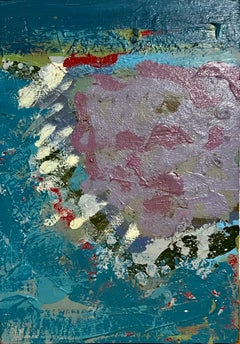
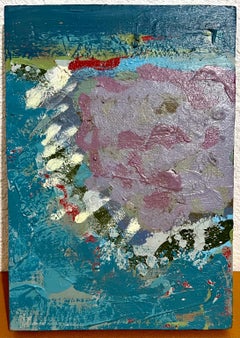
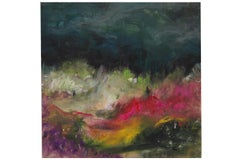
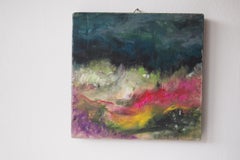
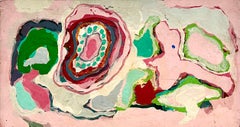
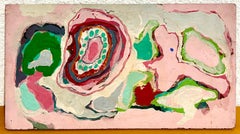
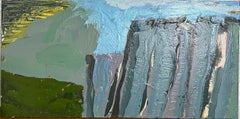
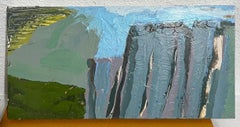
Mod Abstract Expressionist Modernist Oil Painting Edward Avedisian Biomorphic
By Edward Avedisian
Located in Surfside, FL
Edward Avedisian ( 1936-2007 )
7 X 13
Oil paint on wood panel with pink, red and green abstract.
This is not signed on front. It bears his name verso.
Provenance: Hudson, N.Y. estate of noted Art Collector Albert Burnette Roberts (1932-2021)
Edward Avedisian (June 15, 1936, Lowell, Massachusetts – August 17, 2007, Philmont, New York) was an American abstract painter who came into prominence during the 1960s. His work was initially associated with Color field painting and in the late 1960s with Lyrical Abstraction and Abstract Expressionism.
He studied art at the School of the Museum of Fine Arts, Boston. By the late 1950s he moved to New York City. Between 1958 and 1963 Avedisian had six solo shows in New York. In 1958 he initially showed at the Hansa Gallery, then he had three shows at the Tibor de Nagy Gallery and in 1962 and 1963 at the Robert Elkon Gallery. He continued to show at the Robert Elkon Gallery almost every year until 1975.
During the 1960s his work was broadly visible in the contemporary art world. He joined the dynamic art scene in Greenwich Village, frequenting the Cedar Tavern on Tenth Street, associating with the critic Clement Greenberg, and joining a new generation of abstract artists, such as Darby Bannard, Kenneth Noland, Jules Olitski, and Larry Poons.
Avedisian was among the leading figures to emerge in the New York art world during the 1960s. An artist who mixed the hot colors of Pop Art with the cool, more analytical qualities of Color Field painting, he was instrumental in the exploration of new abstract methods to examine the primacy of optical experience.
One of his paintings was appeared on the cover of Artforum, in 1969, his work was included in the 1965 Op Art The Responsive Eye exhibition at the Museum of Modern Art and in four annuals at the Whitney Museum of American Art. His paintings were widely sought after by collectors and acquired by major museums in New York and elsewhere. He has been exhibited in prominent galleries, such as the Anita Shapolsky Gallery and the Berry Campbell...
Category
1960s Abstract Expressionist Edward Avedisian Art
Materials
Oil, Wood Panel
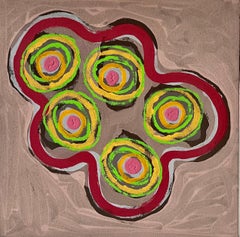
Mod Abstract Expressionist Modernist Oil Painting Edward Avedisian Color Circles
By Edward Avedisian
Located in Surfside, FL
Edward Avedisian ( 1936-2007 )
21.5 X 22
This is not signed on front. It bears his name verso.
Provenance: Hudson, N.Y. estate of noted Art Collector Albert Burnette Roberts (1932-2021)
Edward Avedisian (June 15, 1936, Lowell, Massachusetts – August 17, 2007, Philmont, New York) was an American abstract painter who came into prominence during the 1960s. His work was initially associated with Color field painting and in the late 1960s with Lyrical Abstraction and Abstract Expressionism.
He studied art at the School of the Museum of Fine Arts, Boston. By the late 1950s he moved to New York City. Between 1958 and 1963 Avedisian had six solo shows in New York. In 1958 he initially showed at the Hansa Gallery, then he had three shows at the Tibor de Nagy Gallery and in 1962 and 1963 at the Robert Elkon Gallery. He continued to show at the Robert Elkon Gallery almost every year until 1975.
During the 1960s his work was broadly visible in the contemporary art world. He joined the dynamic art scene in Greenwich Village, frequenting the Cedar Tavern on Tenth Street, associating with the critic Clement Greenberg, and joining a new generation of abstract artists, such as Darby Bannard, Kenneth Noland, Jules Olitski, and Larry Poons.
Avedisian was among the leading figures to emerge in the New York art world during the 1960s. An artist who mixed the hot colors of Pop Art with the cool, more analytical qualities of Color Field painting, he was instrumental in the exploration of new abstract methods to examine the primacy of optical experience.
One of his paintings was appeared on the cover of Artforum, in 1969, his work was included in the 1965 Op Art The Responsive Eye exhibition at the Museum of Modern Art and in four annuals at the Whitney Museum of American Art. His paintings were widely sought after by collectors and acquired by major museums in New York and elsewhere. He has been exhibited in prominent galleries, such as the Anita Shapolsky Gallery and the Berry Campbell Gallery in New York City. Edward Avedisian was known for his brightly colored, boldly composed canvases that combined Minimalism's rigor, Pop art exuberance and the saturated tones of Color Field painting.
Roberta Smith of the NYT writes of Avedesian: "Edward Avedisian helped establish the hotly colored, but emotionally cool, abstract painting that succeeded Abstract Expressionism in the early 1960s. This young luminary harnessed elements of minimalism, pop, and color field painting to create prominent works of epic proportions that energized the New York art scene of the time." In 1996 Avedisian showed his paintings from the 1960s at the Mitchell Algus Gallery, then in SoHo. His last show, dominated by recent landscapes, was in 2003 at the Algus gallery, now in Chelsea.
Selected Exhibitions:
Op Art: The Responsive Eye, at the Museum of Modern Art,
Whitney Museum’s Young America 1965
Expo 67, held in Montreal, Canada.
Six Painters (along with Darby Bannard, Dan Christensen, Ron Davis...
Category
1960s Abstract Expressionist Edward Avedisian Art
Materials
Oil, Canvas
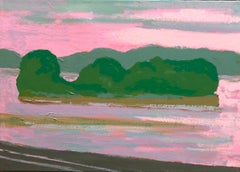
Hudson River Flats, Abstract Expressionist Landscape Oil Painting
By Edward Avedisian
Located in Surfside, FL
Edward Avedisian (June 15, 1936, Lowell, Massachusetts – August 17, 2007, Philmont, New York) was an American abstract painter who came into prominence during the 1960s. His work was...
Category
20th Century Abstract Expressionist Edward Avedisian Art
Materials
Cotton Canvas, Oil
Untitled 009 (1970s Abstract Watercolor Painting in Neon Green and Red)
By Edward Avedisian
Located in Hudson, NY
9 x 11.5 inches, watercolor on paper
15 x 15.5 x 1 inches, custom frame, black wood molding, 8 ply white mat
Vertical striped watercolor painting on paper with a playful color combi...
Category
1970s Abstract Expressionist Edward Avedisian Art
Materials
Watercolor, Archival Paper
H 15 in W 15.5 in D 1 in
Lost at Dawn
By Edward Avedisian
Located in Hudson, NY
acrylic on canvas
Category
20th Century Edward Avedisian Art
Materials
Acrylic, Canvas
Untitled 016
By Edward Avedisian
Located in Hudson, NY
acrylic on canvas
Category
1960s Abstract Edward Avedisian Art
Materials
Acrylic, Canvas
Untitled 015
By Edward Avedisian
Located in Hudson, NY
acrylic on canvas
Category
1960s Abstract Edward Avedisian Art
Materials
Acrylic, Canvas
Green and Gold Beach Ball
By Edward Avedisian
Located in Hudson, NY
Category
Edward Avedisian Art
Materials
Acrylic, Canvas
Edward Avedisian art for sale on 1stDibs.
Find a wide variety of authentic Edward Avedisian art available for sale on 1stDibs. If you’re browsing the collection of art to introduce a pop of color in a neutral corner of your living room or bedroom, you can find work that includes elements of red and other colors. You can also browse by medium to find art by Edward Avedisian in paint, oil paint, panel and more. Much of the original work by this artist or collective was created during the 20th century and is mostly associated with the abstract style. Not every interior allows for large Edward Avedisian art, so small editions measuring 6 inches across are available. Customers who are interested in this artist might also find the work of John von Wicht, Sylvia Rutkoff, and Rebecca Allan.