Items Similar to The Darker Palette print, Hand signed twice and inscribed by Helen Frankenthaler
Want more images or videos?
Request additional images or videos from the seller
1 of 6
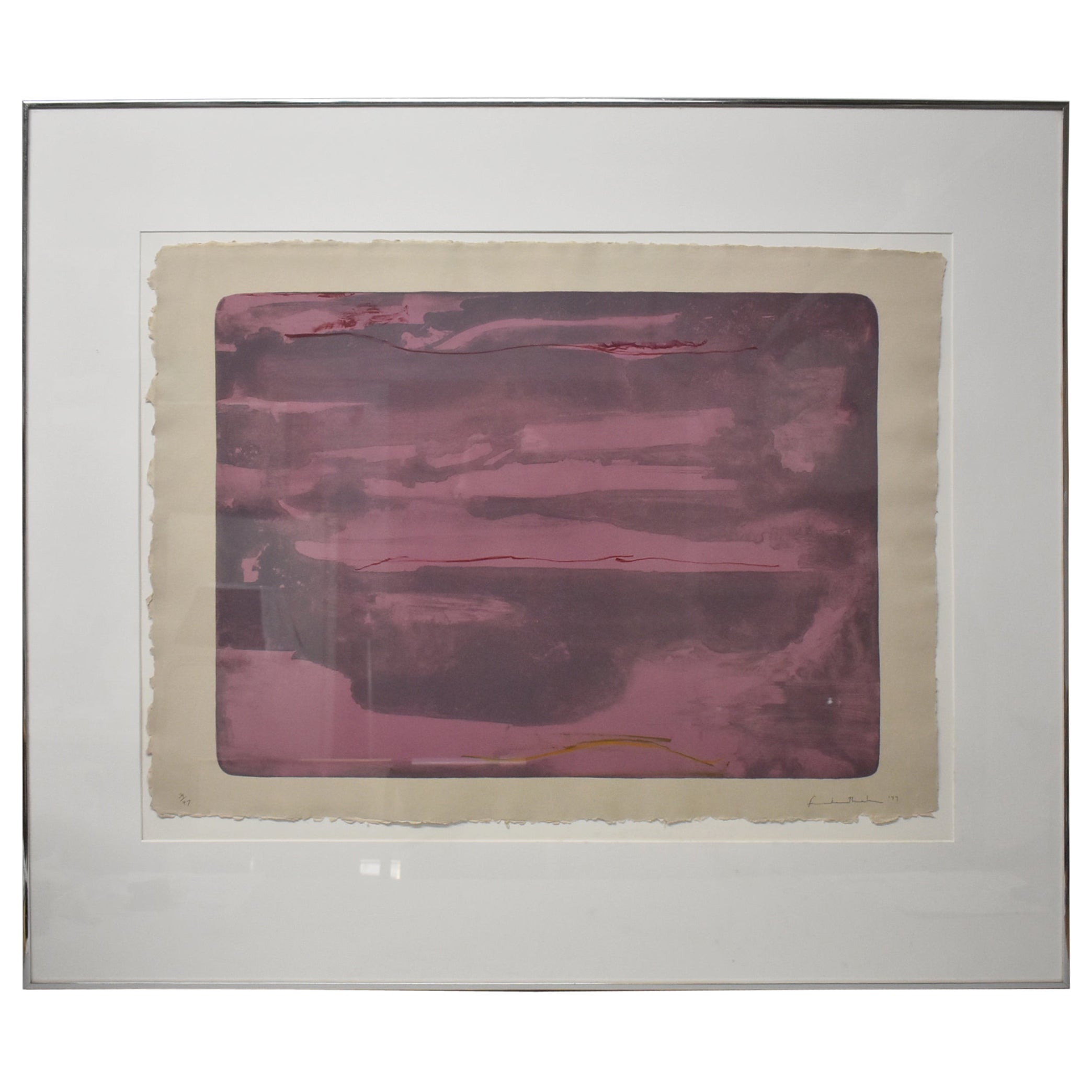
The Darker Palette print, Hand signed twice and inscribed by Helen Frankenthaler1998
1998
$5,500
£4,161.13
€4,802.59
CA$7,681.97
A$8,540.88
CHF 4,470.64
MX$104,751.10
NOK 56,922.52
SEK 53,741.60
DKK 35,838.48
Shipping
Retrieving quote...The 1stDibs Promise:
Authenticity Guarantee,
Money-Back Guarantee,
24-Hour Cancellation
About the Item
Helen Frankenthaler (after)
Frankenthaler: The Darker Palette (autographed and inscribed), 1998
Offset Lithograph print
42 × 35 in
hand signed "Frankenthaler" lower left; inscribed and hand signed Helen and dated '98 after inscription
Unframed
A true collectors' item when hand signed as the present work (not too many were signed)
This offset lithograph is, exceptionally, hand signed on the lower left, and also bears a unique inscription with another signature on the lower right. It was published on the occasion of the exhibition "Frankenthaler: The Darker Palette", curated by Karen Wilkin, ran through June 1998, at the Savannah College of Art & Design (SCAD), before traveling to the Corcoran Gallery of Art and to Princeton University Art Museum. It marks the point of origin in the relationship between SCAD and one of the greatest modern artists in American history. "Helen was the one that proposed The Darker Palette because she was so eager to have this side of her work acknowledged," says Wilkin, reflecting two-plus decades after the fact. "SCAD was certainly ambitious and could pay for an exhibition of this content, that is to say, do it properly in terms of security and air quality in the gallery. The work was not all recent, the work was from different times and was chosen because of its visual qualities. What we dealt with in that exhibition is something that's still very much an issue in Frankenthaler studies — her accurate insistence that she had a much wider range than she was often given credit for."
The work depicted in this poster is Frankenthaler's 1995 painting "The Other Side of the Moon".
The inscription reads, "For Janet and all your cheerful help! With appreciation, Helen '98"
More about Helen Frankenthaler:
A line, color, shapes, spaces, all do one thing for and within themselves, and yet do something else, in relation to everything that is going on within the four sides [of the canvas]. A line is a line, but [also] is a color. . . . It does this here, but that there. The canvas surface is flat and yet the space extends for miles. What a lie, what trickery—how beautiful is the very idea of painting.
—Helen Frankenthaler
Helen Frankenthaler (1928–2011), whose career spanned six decades, has long been recognized as one of the great American artists of the twentieth century. A member of the second generation of postwar American abstract painters, she is widely credited with playing a pivotal role in the transition from Abstract Expressionism to Color Field painting. Through her invention of the soak-stain technique, she expanded the possibilities of abstraction, while at times referencing figuration and landscape in highly personal ways. She produced a body of work whose impact on contemporary art has been profound and continues to grow.
Frankenthaler was born on December 12, 1928, and raised in New York. She attended the Dalton School, where she received her earliest art instruction from Rufino Tamayo. In 1949 she graduated from Bennington College, Vermont, where she was a student of Paul Feeley, following which she studied briefly with Hans Hofmann.
Frankenthaler exhibited her work professionally for the first time in 1950, at the Kootz Gallery in New York, when Adolph Gottlieb selected her painting Beach (1950) for inclusion in Fifteen Unknowns: Selected by Artists of the Kootz Gallery. Her first solo exhibition was presented in 1951, at New York’s Tibor de Nagy Gallery, and that year she was also included in the landmark 9th St. Exhibition of Paintings and Sculpture in New York.
In 1952 Frankenthaler created Mountains and Sea, her breakthrough soak-stain painting. She poured thinned paint directly onto raw, unprimed canvas laid on the studio floor, working from all sides to create floating fields of translucent color. Mountains and Sea was immediately influential for the artists who formed the Color Field school of painting, notable among them Morris Louis and Kenneth Noland.
As early as 1959 Frankenthaler began to be a regular presence in major international exhibitions. That year she won first prize at the Première Biennale de Paris, and in 1966 she represented the United States at the 33rd Biennale di Venezia, alongside Ellsworth Kelly, Roy Lichtenstein, and Jules Olitski. She had her first museum retrospective in 1960, at New York’s Jewish Museum, and her second in 1969, at the Whitney Museum of American Art, New York, followed by an international tour. Additional museum retrospectives have been held at the Solomon R. Guggenheim Museum, New York, and touring venues (1985, works on paper); Modern Art Museum of Fort Worth, Texas, and touring venues, including Museum of Modern Art, New York (1989, paintings); National Gallery of Art, Washington, DC, and touring venues (1993, prints); Naples Museum of Art, Florida, and touring venues, including Yale University Art Gallery, New Haven, Connecticut (2002, woodcuts); and Museum of Contemporary Art, North Miami, Florida, and touring venue, Royal Scottish Academy, Edinburgh, Scotland (2003, works on paper).
-Courtesy Gagosian Gallery
- Creation Year:1998
- Dimensions:Height: 42 in (106.68 cm)Width: 35 in (88.9 cm)
- Medium:
- Movement & Style:
- After:Helen Frankenthaler (1928, American)
- Period:
- Condition:Very good condition; may have minor handling at edges.
- Gallery Location:New York, NY
- Reference Number:1stDibs: LU1745213719762
About the Seller
5.0
Platinum Seller
Premium sellers with a 4.7+ rating and 24-hour response times
Established in 2007
1stDibs seller since 2022
442 sales on 1stDibs
Typical response time: 2 hours
- ShippingRetrieving quote...Shipping from: New York, NY
- Return Policy
Authenticity Guarantee
In the unlikely event there’s an issue with an item’s authenticity, contact us within 1 year for a full refund. DetailsMoney-Back Guarantee
If your item is not as described, is damaged in transit, or does not arrive, contact us within 7 days for a full refund. Details24-Hour Cancellation
You have a 24-hour grace period in which to reconsider your purchase, with no questions asked.Vetted Professional Sellers
Our world-class sellers must adhere to strict standards for service and quality, maintaining the integrity of our listings.Price-Match Guarantee
If you find that a seller listed the same item for a lower price elsewhere, we’ll match it.Trusted Global Delivery
Our best-in-class carrier network provides specialized shipping options worldwide, including custom delivery.More From This Seller
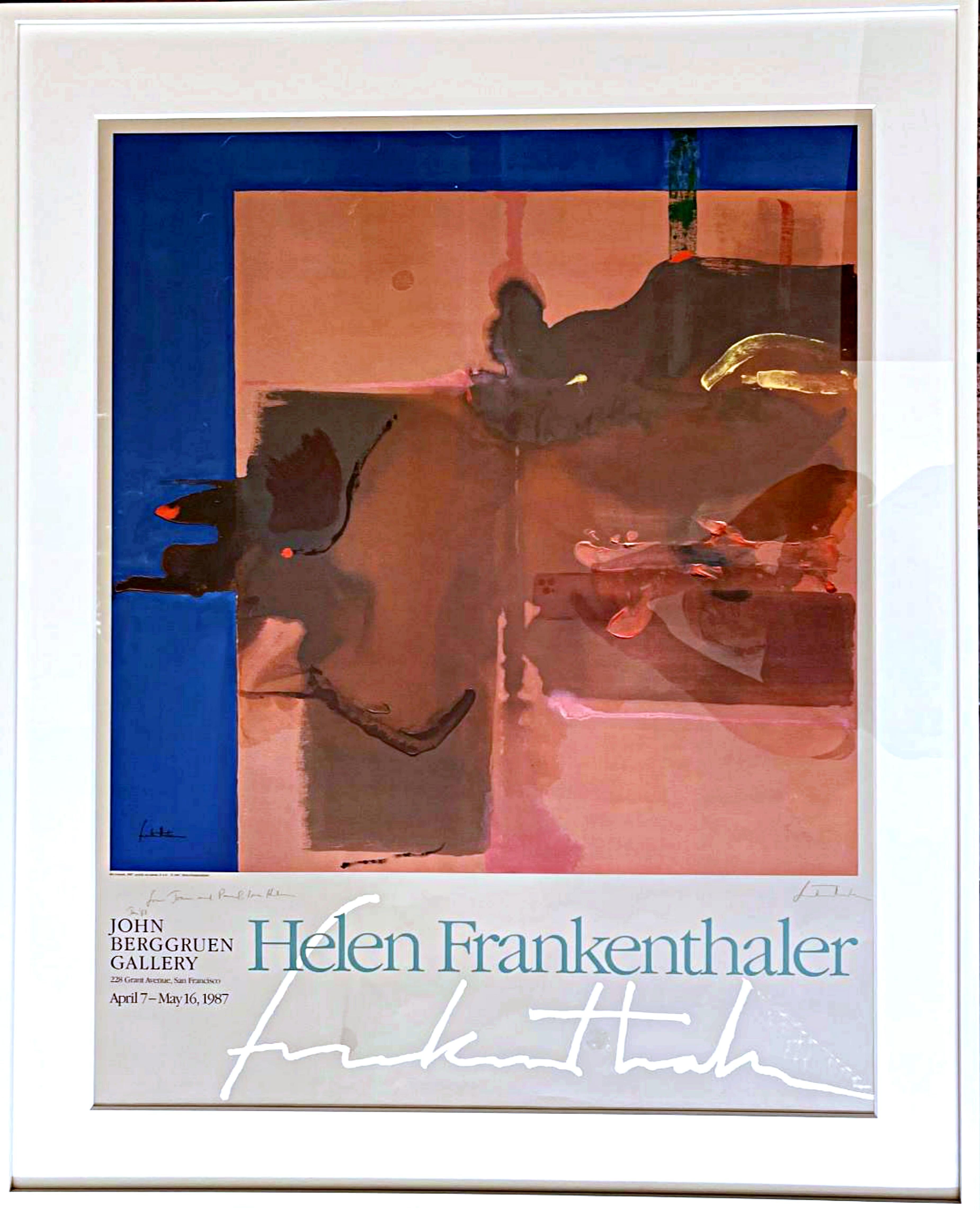
View AllAbstract Expressionist Poster (Hand signed and inscribed by Helen Frankenthaler)
By Helen Frankenthaler
Located in New York, NY
Helen Frankenthaler (after)
Frankenthaler (autographedand inscribed), 1988
Offset lithograph poster (hand signed and inscribed to renowned collectors)
Hand signed and warmly inscribed in ink on the front
Frame included: Museum frame with UV plexiglass included
Inscribed "to Paul and Joan, love Helen Frankenthaler" (Paul and Joan Gluck were major art collectors)
Measurements:
Framed
42 inches vertical by 34 inches by 1.75 inches
Print
34.5 inches vertical by 27 inches
Helen Frankenthaler, A Brief Biography
Helen Frankenthaler (1928-2011), whose career spanned six decades, has long been recognized as one of the great American artists of the twentieth century. She was eminent among the second generation of postwar American abstract painters and is widely credited for playing a pivotal role in the transition from Abstract Expressionism to Color Field painting. Through her invention of the soak-stain technique, she expanded the possibilities of abstract painting, while at times referencing figuration and landscape in unique ways. She produced a body of work whose impact on contemporary art has been profound and continues to grow.
Frankenthaler was born on December 12, 1928, and raised in New York City. She attended the Dalton School, where she received her earliest art instruction from Rufino Tamayo. In 1949 she graduated from Bennington College, Vermont, where she was a student of Paul Feeley. She later studied briefly with Hans Hofmann
Frankenthaler’s professional exhibition career began in 1950, when Adolph Gottlieb selected her painting Beach (1950) for inclusion in the exhibition titled Fifteen Unknowns: Selected by Artists of the Kootz Gallery. Her first solo exhibition was presented in 1951, at New York’s Tibor de Nagy Gallery, and that year she was also included in the landmark exhibition 9th St. Exhibition of Paintings and Sculpture.
In 1952 Frankenthaler created Mountains and Sea, a breakthrough painting of American abstraction for which she poured thinned paint directly onto raw, unprimed canvas laid on the studio floor, working from all sides to create floating fields of translucent color. Mountains and Sea was immediately influential for the artists who formed the Color Field school of painting, notable among them Morris Louis and Kenneth Noland.
As early as 1959, Frankenthaler began to be a regular presence in major international exhibitions. She won first prize at the Premiere Biennale de Paris that year, and in 1966 she represented the United States in the 33rd Venice Biennale, alongside Ellsworth Kelly, Roy Lichtenstein, and Jules Olitski. She had her first major museum exhibition in 1960, at New York’s Jewish Museum, and her second, in 1969, at the Whitney Museum of American Art, followed by an international tour.
Frankenthaler experimented tirelessly throughout her long career. In addition to producing unique paintings on canvas and paper, she worked in a wide range of media, including ceramics, sculpture, tapestry, and especially printmaking. Hers was a significant voice in the mid-century “print renaissance” among American abstract painters, and she is particularly renowned for her woodcuts. She continued working productively through the opening years of this century.
Frankenthaler’s distinguished, prolific career has been the subject of numerous monographic museum exhibitions. The Jewish Museum and Whitney Museum shows were succeeded by a major retrospective initiated by the Modern Art Museum of Fort Worth that traveled to The Museum of Modern Art, New York, the Los Angeles County Museum of Art, and the Detroit Institute of Arts, MI (1989); and those devoted to works on paper and prints organized by the National Gallery of Art, Washington, D.C. (1993), among others.
Select recent important exhibitions have included Painted on 21st Street: Helen Frankenthaler from 1950 to 1959 (Gagosian, NY, 2013); Making Painting: Helen Frankenthaler and JMW Turner (Turner Contemporary, Margate, UK, 2014); Giving Up One’s Mark: Helen Frankenthaler in the 1960s and 1970s (Albright-Knox Art Gallery, Buffalo, NY, 2014–15); Pretty Raw: After and Around Helen Frankenthaler (Rose Art Museum, Brandeis University, Waltham, MA, 2015); As in Nature: Helen Frankenthaler, Paintings and No Rules: Helen Frankenthaler Woodcuts...
Category
1980s Abstract Abstract Prints
Materials
Offset
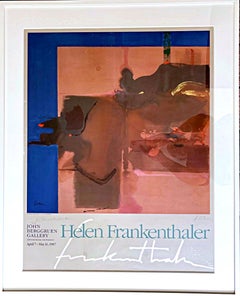
Helen Frankenthaler, Air Frame (Harrison 6) her first silkscreen Signed AP 1965
By Helen Frankenthaler
Located in New York, NY
Helen Frankenthaler
Air Frame, from the New York Ten portfolio (Harrison 6), 1965
Color silkscreen on Arches double-weight watercolor paper
Signed and annotated AP in graphite on the front; this is an Artist's Proof, aside from the regular edition of 200
“What concerns me when I work is not whether a picture is a landscape… or whether somebody will see a sunset in it. What concerns me is, did I make a beautiful picture?” - - Helen Frankenthaler
Pencil signed AP, one of 25 proofs aside from the regular edition of 200
Catalogue Raisonne: Harrison 6, Berggruen 7, Clark 6
Printed by Chiron Press, New York. Published by Tanglewood Press, New York.
This work has been newly framed in a museum quality wood frame under UV plexiglass. The original label from the famed John Berggruen Gallery in California has been affixed to the back to preserve provenance.
Other examples of this coveted 1965 work can be found in major institutional and museum collections worldwide.
Measurements:
Framed
29 inches vertical by 24 inches (horizontal) by 1.5 inches
Artwork:
22 inches vertical x 17 inches horizontal
This is Frankenthaler's first silkscreen, produced for the portfolio New York Ten, which includes works by other New York-based artists at the time such as Roy Lichtenstein, Jim Dine, Tom Wesselmann and Claes Oldenburg. (She created her first lithograph in 1961)
Other examples of this edition are found in the permanent collections of the Museum of Modern Art, MOCA Chicago, the Metropolitan Museum, the Philadelphia Museum, the Art Institute of Chicago, and numerous regional museums and institutions in the United States and worldwide.
Helen Frankenthaler, A Brief Biography
Helen Frankenthaler (1928-2011), whose career spanned six decades, has long been recognized as one of the great American artists of the twentieth century. She was eminent among the second generation of postwar American abstract painters and is widely credited for playing a pivotal role in the transition from Abstract Expressionism to Color Field painting. Through her invention of the soak-stain technique, she expanded the possibilities of abstract painting, while at times referencing figuration and landscape in unique ways. She produced a body of work whose impact on contemporary art has been profound and continues to grow.
Frankenthaler was born on December 12, 1928, and raised in New York City. She attended the Dalton School, where she received her earliest art instruction from Rufino Tamayo. In 1949 she graduated from Bennington College, Vermont, where she was a student of Paul Feeley. She later studied briefly with Hans Hofmann.
Frankenthaler’s professional exhibition career began in 1950, when Adolph Gottlieb selected her painting Beach (1950) for inclusion in the exhibition titled Fifteen Unknowns: Selected by Artists of the Kootz Gallery. Her first solo exhibition was presented in 1951, at New York’s Tibor de Nagy Gallery, and that year she was also included in the landmark exhibition 9th St. Exhibition of Paintings and Sculpture.
In 1952 Frankenthaler created Mountains and Sea, a breakthrough painting of American abstraction for which she poured thinned paint directly onto raw, unprimed canvas laid on the studio floor, working from all sides to create floating fields of translucent color. Mountains and Sea was immediately influential for the artists who formed the Color Field school of painting, notable among them Morris Louis and Kenneth Noland.
As early as 1959, Frankenthaler began to be a regular presence in major international exhibitions. She won first prize at the Premiere Biennale de Paris that year, and in 1966 she represented the United States in the 33rd Venice Biennale, alongside Ellsworth Kelly, Roy Lichtenstein, and Jules Olitski. She had her first major museum exhibition in 1960, at New York’s Jewish Museum, and her second, in 1969, at the Whitney Museum of American Art, followed by an international tour.
Frankenthaler experimented tirelessly throughout her long career. In addition to producing unique paintings on canvas and paper, she worked in a wide range of media, including ceramics, sculpture, tapestry, and especially printmaking. Hers was a significant voice in the mid-century “print renaissance” among American abstract painters, and she is particularly renowned for her woodcuts. She continued working productively through the opening years of this century.
Frankenthaler’s distinguished, prolific career has been the subject of numerous monographic museum exhibitions. The Jewish Museum and Whitney Museum shows were succeeded by a major retrospective initiated by the Modern Art Museum of Fort Worth that traveled to The Museum of Modern Art, New York, the Los Angeles County Museum of Art, and the Detroit Institute of Arts, MI (1989); and those devoted to works on paper and prints organized by the National Gallery of Art, Washington, D.C. (1993), among others.
Select recent important exhibitions have included Painted on 21st Street: Helen Frankenthaler from 1950 to 1959 (Gagosian, NY, 2013); Making Painting: Helen Frankenthaler and JMW Turner (Turner Contemporary, Margate, UK, 2014); Giving Up One’s Mark: Helen Frankenthaler in the 1960s and 1970s (Albright-Knox Art Gallery, Buffalo, NY, 2014–15); Pretty Raw: After and Around Helen Frankenthaler (Rose Art Museum, Brandeis University, Waltham, MA, 2015); As in Nature: Helen Frankenthaler, Paintings and No Rules: Helen Frankenthaler Woodcuts...
Category
1960s Abstract Expressionist Abstract Prints
Materials
Screen
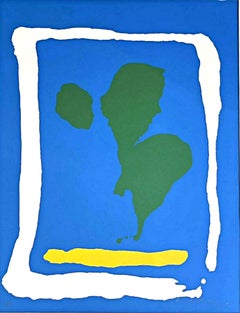
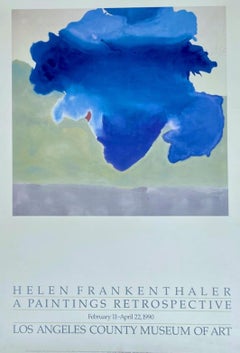
A Paintings Retrospective: vintage LACMA Museum poster depicting her 1963 work
By Helen Frankenthaler
Located in New York, NY
Helen Frankenthaler (after)
A Paintings Retrospective: vintage LACMA Museum poster, 1990
Offset lithograph museum poster
(Unsigned & Unnumbered)
37 × 25 inches
Unframed
This was printed in the artists lifetime - making it more collectible - on the occasion of the exhibition, "Helen Frankenthaler: A Paintings Retrospective from February to April, 1990 at the Los Angeles County Museum of Art (LACMA)
Print is published by Editions Limited Galleries, San Francisco for Los Angeles County Museum of Art (LACMA), LA, CA
The work depicted is Helen Frankenthaler, The Bay, 1963, acrylic on canvas, Detroit Institute of Arts, Michigan (Incidentally, this beautiful work is featured on the cover of the book Water and Art' by David Clarke.)
“What concerns me when I work is not whether a picture is a landscape… or whether somebody will see a sunset in it. What concerns me is, did I make a beautiful picture?” - - Helen Frankenthaler
This is Frankenthaler's first silkscreen, produced for the portfolio New York Ten, which includes works by other New York-based artists at the time such as Roy Lichtenstein, Jim Dine, Tom Wesselmann and Claes Oldenburg. (She created her first lithograph in 1961)
Other examples of this edition are found in the permanent collections of the Museum of Modern Art, MOCA Chicago, the Metropolitan Museum, the Philadelphia Museum, the Art Institute of Chicago, and numerous regional museums and institutions in the United States and worldwide.
Helen Frankenthaler, A Brief Biography
Helen Frankenthaler (1928-2011), whose career spanned six decades, has long been recognized as one of the great American artists of the twentieth century. She was eminent among the second generation of postwar American abstract painters and is widely credited for playing a pivotal role in the transition from Abstract Expressionism to Color Field painting. Through her invention of the soak-stain technique, she expanded the possibilities of abstract painting, while at times referencing figuration and landscape in unique ways. She produced a body of work whose impact on contemporary art has been profound and continues to grow.
Frankenthaler was born on December 12, 1928, and raised in New York City. She attended the Dalton School, where she received her earliest art instruction from Rufino Tamayo. In 1949 she graduated from Bennington College, Vermont, where she was a student of Paul Feeley. She later studied briefly with Hans Hofmann.
Frankenthaler’s professional exhibition career began in 1950, when Adolph Gottlieb selected her painting Beach (1950) for inclusion in the exhibition titled Fifteen Unknowns: Selected by Artists of the Kootz Gallery. Her first solo exhibition was presented in 1951, at New York’s Tibor de Nagy Gallery, and that year she was also included in the landmark exhibition 9th St. Exhibition of Paintings and Sculpture.
In 1952 Frankenthaler created Mountains and Sea, a breakthrough painting of American abstraction for which she poured thinned paint directly onto raw, unprimed canvas laid on the studio floor, working from all sides to create floating fields of translucent color. Mountains and Sea was immediately influential for the artists who formed the Color Field school of painting, notable among them Morris Louis and Kenneth Noland.
As early as 1959, Frankenthaler began to be a regular presence in major international exhibitions. She won first prize at the Premiere Biennale de Paris that year, and in 1966 she represented the United States in the 33rd Venice Biennale, alongside Ellsworth Kelly, Roy Lichtenstein, and Jules Olitski. She had her first major museum exhibition in 1960, at New York’s Jewish Museum, and her second, in 1969, at the Whitney Museum of American Art, followed by an international tour.
Frankenthaler experimented tirelessly throughout her long career. In addition to producing unique paintings on canvas and paper, she worked in a wide range of media, including ceramics, sculpture, tapestry, and especially printmaking. Hers was a significant voice in the mid-century “print renaissance” among American abstract painters, and she is particularly renowned for her woodcuts. She continued working productively through the opening years of this century.
Frankenthaler’s distinguished, prolific career has been the subject of numerous monographic museum exhibitions. The Jewish Museum and Whitney Museum shows were succeeded by a major retrospective initiated by the Modern Art Museum of Fort Worth that traveled to The Museum of Modern Art, New York, the Los Angeles County Museum of Art, and the Detroit Institute of Arts, MI (1989); and those devoted to works on paper and prints organized by the National Gallery of Art, Washington, D.C. (1993), among others.
Select recent important exhibitions have included Painted on 21st Street: Helen Frankenthaler from 1950 to 1959 (Gagosian, NY, 2013); Making Painting: Helen Frankenthaler and JMW Turner (Turner Contemporary, Margate, UK, 2014); Giving Up One’s Mark: Helen Frankenthaler in the 1960s and 1970s (Albright-Knox Art Gallery, Buffalo, NY, 2014–15); Pretty Raw: After and Around Helen Frankenthaler (Rose Art Museum, Brandeis University, Waltham, MA, 2015); As in Nature: Helen Frankenthaler, Paintings and No Rules: Helen Frankenthaler Woodcuts...
Category
1990s Abstract Expressionist Abstract Prints
Materials
Offset, Lithograph
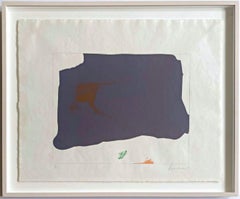
Variation II on Mauve Corner (Harrison, 17), Color Lithograph, Signed/N, Framed
By Helen Frankenthaler
Located in New York, NY
Helen Frankenthaler
Variation II on Mauve Corner (Harrison, 17), 1969
Lithograph in colors on Chatham British paper
Signed, dated and numbered 14/21 in graphite pencil on the front Published by ULAE, West Islip, NY, with their blind stamp
Frame included
Accompanied by gallery issued Certificate of Guarantee
Lithograph in colors on Chatham British paper
Signed, dated and numbered 14/21 in graphite pencil on the front
Published and printed by ULAE, West Islip, NY, with their blind stamp
Literature: Frankenthaler, A Catalogue Raisonné: Prints 1961-1994, Harrison, no. 17, ppg. 106-109
Accompanied by gallery issued Certificate of Guarantee
Elegantly floated and framed in a museum quality wood frame under UV plexiglass
Measurements:
Framed:
23.75 (vertical) x 28.75 (horizontal) x 2 inches
Artwork:
20 inches (vertical) x 25 inches (horizontal)
“What concerns me when I work is not whether a picture is a landscape… or whether somebody will see a sunset in it. What concerns me is, did I make a beautiful picture?” - - Helen Frankenthaler
This is Frankenthaler's first silkscreen, produced for the portfolio New York Ten, which includes works by other New York-based artists at the time such as Roy Lichtenstein, Jim Dine, Tom Wesselmann and Claes Oldenburg. (She created her first lithograph in 1961)
Other examples of this edition are found in the permanent collections of the Museum of Modern Art, MOCA Chicago, the Metropolitan Museum, the Philadelphia Museum, the Art Institute of Chicago, and numerous regional museums and institutions in the United States and worldwide.
Helen Frankenthaler, A Brief Biography
Helen Frankenthaler (1928-2011), whose career spanned six decades, has long been recognized as one of the great American artists of the twentieth century. She was eminent among the second generation of postwar American abstract painters and is widely credited for playing a pivotal role in the transition from Abstract Expressionism to Color Field painting. Through her invention of the soak-stain technique, she expanded the possibilities of abstract painting, while at times referencing figuration and landscape in unique ways. She produced a body of work whose impact on contemporary art has been profound and continues to grow.
Frankenthaler was born on December 12, 1928, and raised in New York City. She attended the Dalton School, where she received her earliest art instruction from Rufino Tamayo. In 1949 she graduated from Bennington College, Vermont, where she was a student of Paul Feeley. She later studied briefly with Hans Hofmann.
Frankenthaler’s professional exhibition career began in 1950, when Adolph Gottlieb selected her painting Beach (1950) for inclusion in the exhibition titled Fifteen Unknowns: Selected by Artists of the Kootz Gallery. Her first solo exhibition was presented in 1951, at New York’s Tibor de Nagy Gallery, and that year she was also included in the landmark exhibition 9th St. Exhibition of Paintings and Sculpture.
In 1952 Frankenthaler created Mountains and Sea, a breakthrough painting of American abstraction for which she poured thinned paint directly onto raw, unprimed canvas laid on the studio floor, working from all sides to create floating fields of translucent color. Mountains and Sea was immediately influential for the artists who formed the Color Field school of painting, notable among them Morris Louis and Kenneth Noland.
As early as 1959, Frankenthaler began to be a regular presence in major international exhibitions. She won first prize at the Premiere Biennale de Paris that year, and in 1966 she represented the United States in the 33rd Venice Biennale, alongside Ellsworth Kelly, Roy Lichtenstein, and Jules Olitski. She had her first major museum exhibition in 1960, at New York’s Jewish Museum, and her second, in 1969, at the Whitney Museum of American Art, followed by an international tour.
Frankenthaler experimented tirelessly throughout her long career. In addition to producing unique paintings on canvas and paper, she worked in a wide range of media, including ceramics, sculpture, tapestry, and especially printmaking. Hers was a significant voice in the mid-century “print renaissance” among American abstract painters, and she is particularly renowned for her woodcuts. She continued working productively through the opening years of this century.
Frankenthaler’s distinguished, prolific career has been the subject of numerous monographic museum exhibitions. The Jewish Museum and Whitney Museum shows were succeeded by a major retrospective initiated by the Modern Art Museum of Fort Worth that traveled to The Museum of Modern Art, New York, the Los Angeles County Museum of Art, and the Detroit Institute of Arts, MI (1989); and those devoted to works on paper and prints organized by the National Gallery of Art, Washington, D.C. (1993), among others.
Select recent important exhibitions have included Painted on 21st Street: Helen Frankenthaler from 1950 to 1959 (Gagosian, NY, 2013); Making Painting: Helen Frankenthaler and JMW Turner (Turner Contemporary, Margate, UK, 2014); Giving Up One’s Mark: Helen Frankenthaler in the 1960s and 1970s (Albright-Knox Art Gallery, Buffalo, NY, 2014–15); Pretty Raw: After and Around Helen Frankenthaler (Rose Art Museum, Brandeis University, Waltham, MA, 2015); As in Nature: Helen Frankenthaler, Paintings and No Rules: Helen Frankenthaler Woodcuts...
Category
1960s Abstract Expressionist Abstract Prints
Materials
Lithograph
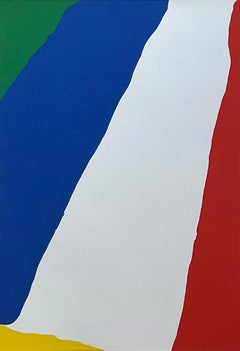
Silkscreen from the estate of Stephen Poleskie, Berggruen 11, Clark 12 Harrison
By Helen Frankenthaler
Located in New York, NY
Helen Frankenthaler
Untitled, from the estate of Stephen Poleskie (Berggruen 11, Clark 12, Harrison and Boorsch 11), 1967
Color silkscreen on wove paper
Unframed
A unique unsigned pr...
Category
1960s Abstract Expressionist Abstract Prints
Materials
Screen
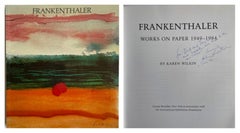
Book: Works on Paper 1949-1984 (Hand signed & inscribed by Helen Frankenthaler)
By Helen Frankenthaler
Located in New York, NY
Helen Frankenthaler (after)
Frankenthaler, Works on Paper 1949-1984 (Hand signed and inscribed to Dick Polich, Founder of Tallix Foundry), 1986
Softcover monograph (book), hand signe...
Category
1980s Abstract Expressionist More Art
Materials
Offset
You May Also Like
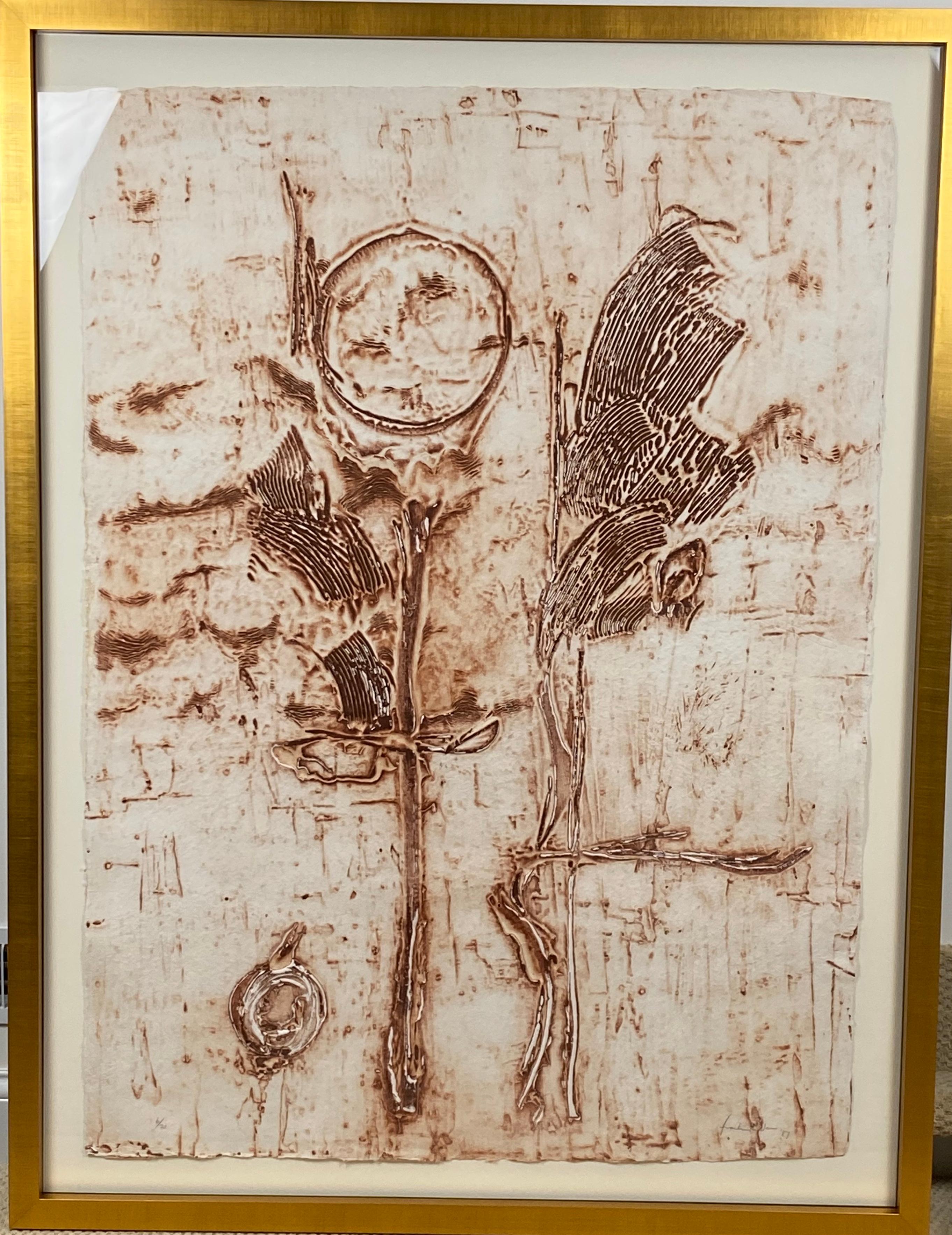
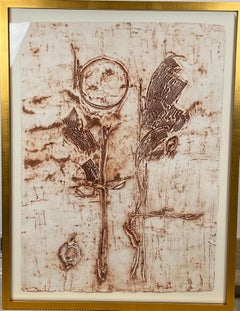
"Parets" original colograph by Helen Frankenthaler
By Helen Frankenthaler
Located in Hinsdale, IL
Helen Frankenthaler
(1928-2011)
"Parets"
Collagraph drawn with Araldite glue, c. 1988
Printed in light burnt sienna from one steel plate, off white handmade paper
Signed in lowe...
Category
1980s Abstract Expressionist Abstract Prints
Materials
Mixed Media
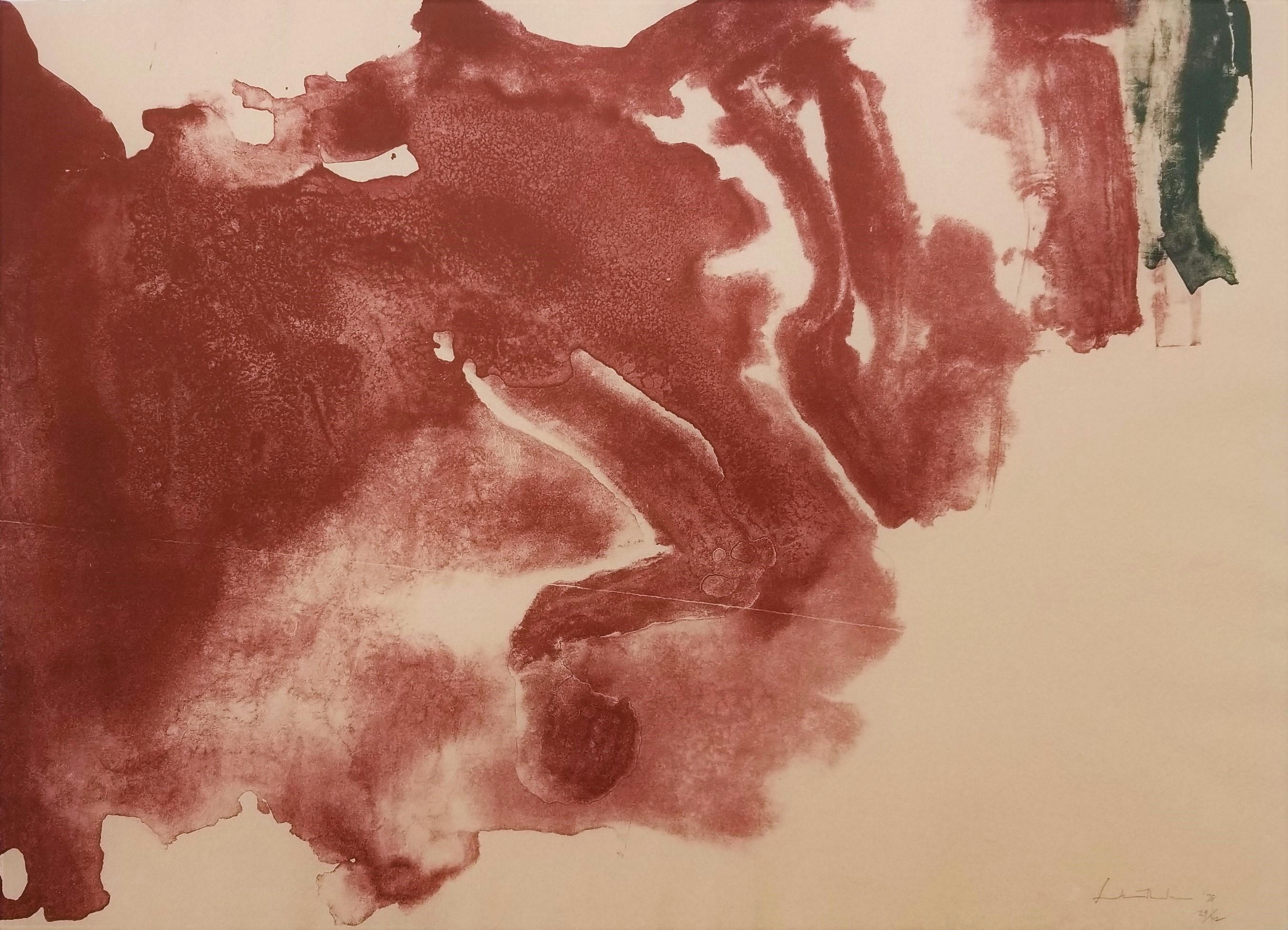
Altitudes /// Abstract Expressionism Helen Frankenthaler Female Post-War Modern
By Helen Frankenthaler
Located in Saint Augustine, FL
Artist: Helen Frankenthaler (American, 1928-2011)
Title: "Altitudes"
*Signed, dated, and numbered by Frankenthaler in pencil lower right
Year: 1978
Medium: Original Lithograph on light yellow-pink J.B. Green Hayle Mill Bodleian handmade paper
Limited edition: 29/42
Printer: Bill Goldston and John A. Lund of Universal Limited Art Editions, West Islip, NY
Publisher: Universal Limited Art Editions, West Islip, NY
Reference: "Frankenthaler: A Catalogue Raisonné - Prints 1961-1994" - Harrison No. 72, page 264, 268-270; "ULAE" - Sparks No. 33, page 88, 323; Clark No. 67; Williams No. 67
Sheet size (irregular margins): 22.25" x 30.88"
Condition: Remnants of previous mounting tape on verso. In excellent condition with strong colors
Very rare
Notes:
Provenance: private collection - New York, NY; private collection - notable fashion illustrator Jay Hyde, Crawford, New York, NY; acquired from an art gallery in New York, NY; likely acquired directly from the publisher Universal Limited Art Editions, West Islip, NY. Lithograph drawn with tusche wash. Printed in two colors from two stones: red and green. Universal Limited Art Editions chop mark/blind stamp lower right.
"Frankenthaler: A Catalogue Raisonné - Prints 1961-1994" - Harrison - "Frankenthaler carefully chose a European handmade paper that would add another color and texture to the print" ... "By contrast, in "Altitudes", the artist created a bleed image so that the sheet of paper is smaller than the stone's image and the large red tusche wash sweeps across the surface of the yellow-pink J.B. Green Hayle Mill Bodleian paper, becoming warmed and enhanced by its color and texture."
"Universal Limited Art Editions - A History and Catalogue: The First Twenty-Five Years" - Sparks - "In "Bronze Smoke" (cat. no. 32), "Altitudes" (cat. no. 33), and "Door" (cat. no. 34), minimal compositions were replaced by fields of drifting, multilayered color, as rich and satisfying as her work on a much grander scale."
Biography:
Frankenthaler was an American abstract expressionist painter. She was a major contributor to the history of postwar American painting...
Category
1970s Abstract Expressionist Abstract Prints
Materials
Handmade Paper, Lithograph
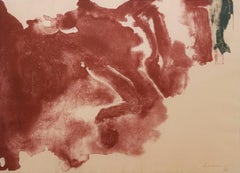
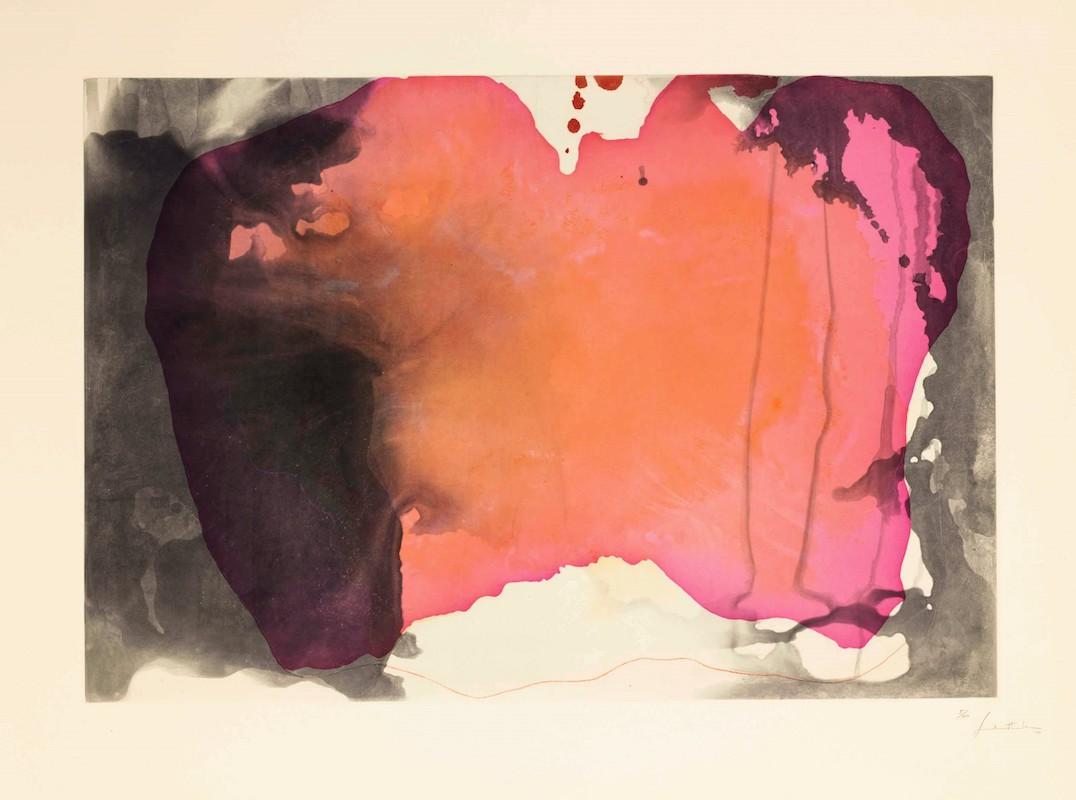
Causeway
By Helen Frankenthaler
Located in New York, NY
An image of ethereal beauty, Helen Frankenthaler created Causeway in 2001 after a lifetime of experimentation with etching and aquatint. Hand-signed, dated and numbered in pencil, t...
Category
21st Century and Contemporary Abstract Abstract Prints
Materials
Etching, Aquatint
Price Upon Request
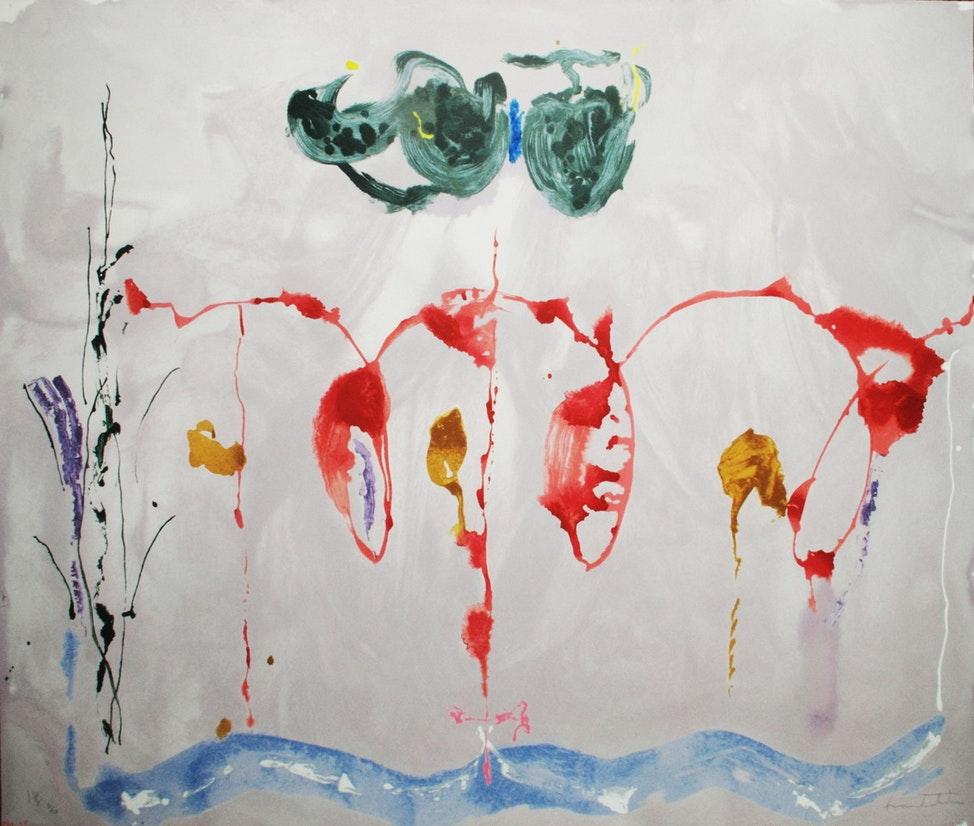
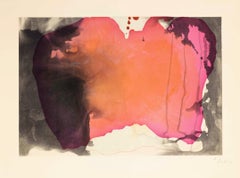
Aerie
By Helen Frankenthaler
Located in New York, NY
Signed and numbered in pencil
Category
21st Century and Contemporary Abstract Expressionist Abstract Prints
Materials
Screen
Price Upon Request
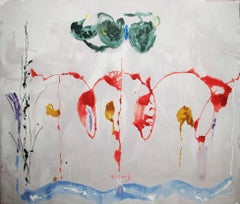
Helen Frankenthaler "Dream Walk" Lithograph, Signed and Numbered 39/47
By Helen Frankenthaler
Located in Toledo, OH
Helen Frankenthaler (1928-2011)
Six color lithograph, Dream Walk, 1977. Number 39 from an edition of 47, pencil lower left corner. Signed and dated 1977 in pencil in lower right cor...
Category
Vintage 1970s American Mid-Century Modern Prints
Materials
Paper
Plaza Real
By Helen Frankenthaler
Located in New York, NY
A very good impression of this color soft-ground etching, etching and aquatint on White Rives BFK paper. Signed, dated and numbered 55/60 in pencil, lower margin. Printed and publish...
Category
1980s Abstract Expressionist Abstract Prints
Materials
Color, Etching, Aquatint
More Ways To Browse
1993 Kelly
Vintage St Louis Posters
Rufino Tamayo Lithograph
Vintage Texas Posters
Florida Poster Vintage
Edinburgh Poster
Gagosian Poster
Roy Lichtenstein Signed Poster
Lichtenstein Yale
Studio Else Paul
Vintage Miami Beach Poster
Art Poster Helen Frankenthaler
Frankenthaler Poster
Venezia Poster
Helen Frankenthaler Poster
Florida Vintage Travel Posters
Ellsworth Kelly Poster
Venezia Vintage Poster