Eugene Martin Landscape Paintings

to
1
1
Overall Width
to
Overall Height
to
1
1
1
1
1
1
1
1
1
1
635
631
484
346
1
1
Artist: Eugene Martin
Related Items
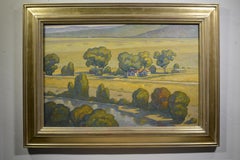
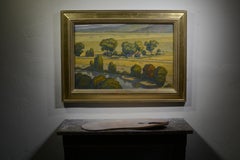
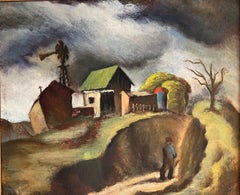
The Ditch

Virginia TrueThe Ditch, 1934

$4,250

H 18 in W 24 in D 1 in

The Ditch

By Virginia True

Located in Los Angeles, CA

The Ditch, 1934, oil on board, signed and dated lower right, 18 x 24 inches, label verso has title, artist’s name, Colorado and New York addresses, and original price Virginia True ...

Category

1930s American Modern Eugene Martin Landscape Paintings

Materials

Oil, Board

Landscape
Landscape

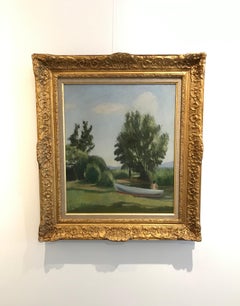
Marcel Emile CaillietLandscape, 1940

$4,250

H 20 in W 24 in D 1 in

Landscape

By Marcel Emile Cailliet

Located in Los Angeles, CA

Landscape, 1940, oil on canvas, 24 x 20 inches, signed, dated and titled verso: “Marcel Cailliet ’40 – S.C.” and “Marcel Cailliet Landscape”; likely exhibited at the annual juried st...

Category

1940s American Modern Eugene Martin Landscape Paintings

Materials

Canvas, Oil

Ne t'en vas pas
Ne t'en vas pas

Vladimir VOLEGOVNe t'en vas pas

$5,460

H 31.89 in W 25.59 in D 3 in

Ne t'en vas pas

Located in Atlanta, GA

Vladimir was born in the city of Khabarovsk, on December 19, 1957. When he was two years old, his mother abandoned his father, took her son and moved to Sverdlovsk (formerly, Yekater...

Category

21st Century and Contemporary Modern Eugene Martin Landscape Paintings

Materials

Oil

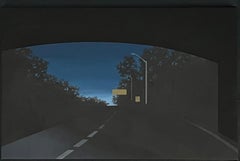
The Road Up

Marina SternThe Road Up, 1992

$4,500

H 11 in W 17 in D 1.5 in

The Road Up

By Marina Stern

Located in Los Angeles, CA

This work is part of our exhibition Marina Stern Luminary, the first retrospective of the artist since 2007. Previously exhibited 1) Marina Stern Nocturnes, Forum Gallery, New York, NY, September 9 to 24, 1993, no. 17 (label verso); and 2) Perception and the Cultural Environment – The Paintings of Marina...

Category

1990s American Modern Eugene Martin Landscape Paintings

Materials

Canvas, Oil

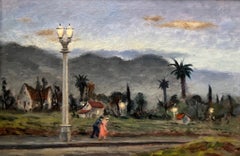
Six O'Clock

Thomas CraigSix O'Clock

$12,500

H 20 in W 30 in D 2 in

Six O'Clock

Located in Los Angeles, CA

Six O-Clock, c. 1942, oil on canvas, 30 x 20 inches, signed and titled several times verso of frame and stretcher (perhaps by another hand), marked “Rehn” several times on frame (for the Frank K. M. Rehn Galleries in New York City, who represented Craig at the time); Exhibited: 1) 18th Biennial Exhibition of Contemporary American Oil Paintings from March 21 to May 2, 1943 at The Corcoran Gallery of Art in Washington, D.C. #87, original price $450 (per catalog) (exhibition label verso), 2) Craig’s one-man show at the Frank K. M. Rehn Galleries, New York City, from October 26 to November 14, 1942, #10 (original price listed as $350); and 3) Exhibition of thirty paintings sponsored by the Harrisburg Art Association at the State Museum of Pennsylvania in Harrisburg in March, 1944 (concerning this exhibit, Penelope Redd of The Evening News (Harrisburg, Pennsylvania) wrote: “Other paintings that have overtones of superrealism inherent in the subjects include Tom Craig’s California nocturne, ‘Six O’Clock,’ two figures moving through the twilight . . . .” March 6, 1944, p. 13); another label verso from The Museum of Art of Toledo (Ohio): original frame: Provenance includes George Stern Gallery, Los Angeles, CA About the Painting Long before Chris Burden’s iconic installation outside of the Los Angeles County Museum of Art, Urban Light, another artist, Tom Craig, made Southern California streetlights the subject of one of his early 1940s paintings. Consisting of dozens of recycled streetlights from the 1920s and 1930s forming a classical colonnade at the museum’s entrance, Burden’s Urban Light has become a symbol of Los Angeles. For Burden, the streetlights represent what constitutes an advanced society, something “safe after dark and beautiful to behold.” It seems that Craig is playing on the same theme in Six O-Clock. Although we see two hunched figures trudging along the sidewalk at the end of a long day, the real stars of this painting are the streetlights which brighten the twilight and silhouette another iconic symbol of Los Angeles, the palm trees in the distance. Mountains in the background and the distant view of a suburban neighborhood join the streetlights and palm trees as classic subject matter for a California Scene painting, but Craig gives us a twist by depicting the scene not as a sun-drenched natural expanse. Rather, Craig uses thin layers of oil paint, mimicking the watercolor technique for which he is most famous, to show us the twinkling beauty of manmade light and the safety it affords. Although Southern California is a land of natural wonders, the interventions of humanity are already everywhere in Los Angeles and as one critic noted, the resulting painting has an air of “superrealism.” About the Artist Thomas Theodore Craig was a well-known fixture in the Southern California art scene. He was born in Upland California. Craig graduated with a degree in botany from Pomona College and studied painting at Pamona and the Chouinard Art School with Stanton MacDonald-Wright and Barse Miller among others. He became close friends with fellow artist Milford Zornes...

Category

1940s American Modern Eugene Martin Landscape Paintings

Materials

Canvas, Oil

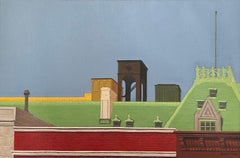
The Railway Station

Edward BibermanThe Railway Station, c. 1934

$50,000

H 20 in W 30 in D 1 in

The Railway Station

By Edward Biberman

Located in Los Angeles, CA

The Railway Station, c. 1934, oil on canvas, signed lower right, titled verso and noted "34"; illustrated Kaufman, Jeffrey, Brush with Life: The Art of Being Edward Biberman...

Category

1930s American Modern Eugene Martin Landscape Paintings

Materials

Oil

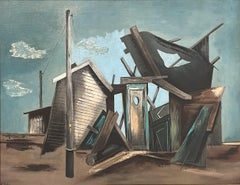
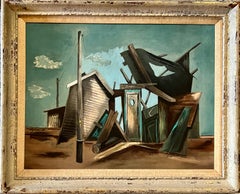
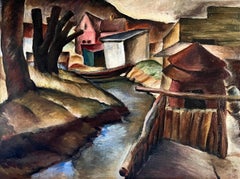
Untitled (Collapsed Shacks)

Untitled (Collapsed Shacks)

By Karl Fortress

Located in Los Angeles, CA

Untitled (Collapsed Shacks), c. 1940s, oil on canvas, signed lower left, 20 ½ x 26 ½ inches, presented in a period frame This work is part of our exhibition America Coast to Coast: ...

Category

1940s American Modern Eugene Martin Landscape Paintings

Materials

Canvas, Oil

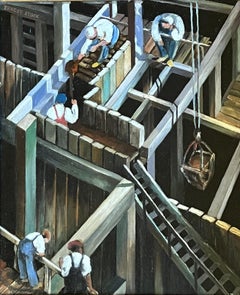
Subway Construction
Subway Construction

Ernest StockSubway Construction

$7,500

H 19 in W 15.5 in D 2 in

Subway Construction

Located in Los Angeles, CA

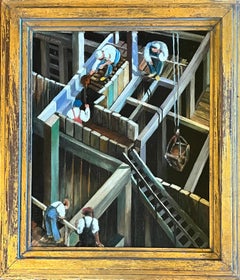
This painting is part of our exhibition American Coast to Coast: Artists of the 1930s Subway Construction, c. 1928, oil on board, 19 x 15 ¾ inches, signed upper left, artist and title verso; exhibited: 1) 12th Annual Exhibition of the Society of Independent Artists, The Waldorf Astoria, New York NY, from March 9 to April 1, 1928, no. 864 (original price $250) (see Death Prevailing Theme of Artists in Weird Exhibits, The Gazette (Montreal, Quebec, Canada), March 8, 1928); 2) Boston Tercentenary Exhibition Fine Arts and Crafts Exhibition, Horticultural Hall, Boston MA, July, 1930, no. 108 (honorable mention - noted verso); 3) 38th Annual Exhibition of American Art, Cincinnati Art Museum, Cincinnati, OH, June, 1931 (see Alexander, Mary, The Week in Art Circles, The Cincinnati Enquirer, June 7, 1931); and 4) National Art Week Exhibition [Group Show], Montross Gallery, New York, New York, December, 1940 (see Devree, Howard, Brief Comment on Some Recently Opened Exhibitions in the Galleries, The New York Times, December 1, 1940) About the Painting Ernest Stock’s Subway Construction depicts the excavation of New York’s 8th Avenue line, which was the first completed section of the city-operated Independent Subway System (IND). The groundbreaking ceremony was in 1925, but the line did not open until 1932, placing Stock’s painting in the middle of the construction effort. The 8th Avenue line was primarily constructed using the “cut and cover” method in which the streets above the line were dug up, infrastructure was built from the surface level down, the resulting holes were filled, and the streets reconstructed. While many artists of the 1920s were fascinated with the upward thrust of New York’s exploding skyline as architects and developers sought to erect ever higher buildings, Stock turned his attention to the engineering marvels which were taking place below ground. In Subway Construction, Stock depicts workers removing the earth beneath the street and building scaffolding and other support structures to allow concrete to be poured. Light and shadow fall across the x-shaped grid pattern formed by the wooden beams and planks. It is no surprise that critics reviewing the painting commented on Stock’s use of an “interesting pattern” to form a painting that is “clever and well designed.” About the Artist Ernest Richard Stock was an award-winning painter, print maker, muralist, and commercial artist. He was born in Bristol, England and was educated at the prestigious Bristol Grammar School. During World War I, Stock joined the British Royal Air Flying Corps in Canada and served in France as a pilot where he was wounded. After the war, he immigrated to the United States and joined the firm of Mack, Jenny, and Tyler, where he further honed his architectural and decorative painting skills. During the 1920s, Stock often traveled back and forth between the US and Europe. He was twice married, including to the American author, Katherine Anne Porter. Starting in the mid-1920s, Stock began to exhibit his artwork professionally, including at London’s Beaux Arts Gallery, the Society of Independent Artists, the Salons of America, the Cincinnati Art Museum, the Whitney Studio and various locations in the Northeast. Critics often praised the strong design sensibility in Stock’s paintings. Stock was a commercial illustrator for a handful of published books and during World War II, he worked in the Stratford Connecticut...

Category

1920s American Modern Eugene Martin Landscape Paintings
Materials

Oil

Factory #2/Yellow Shed

Marina SternFactory #2/Yellow Shed, 1996

$6,000

H 16 in W 28 in D 1 in

Factory #2/Yellow Shed

By Marina Stern

Located in Los Angeles, CA

This work is part of our exhibition Marina Stern Luminary, the first retrospective of the artist since 2007. Marina Stern was a multifaceted New York-based artist whose works ranged from Expressionism and Pop Art to the Neo Immaculate paintings and pastels for which she is best known. A native of Venice, Stern and her family fled in 1939 to escape Italy’s repressive racial laws. After living in England for several years, the family arrived in the United States in 1941. A bright and capable student, Stern graduated from New York’s Julia Richman High School at age 15 and soon enrolled in the Pratt Institute to pursue an interdisciplinary education in the arts. Despite majoring in advertising design, Stern favored her fine art courses. She graduated from Pratt in 1946 at age 18 and began working for advertising agencies. After a brief marriage which ended in divorce, Stern married her second husband, who encouraged the artist to study at the Art Students League of New York, under the renowned Japanese American modernist, Yasuo Kuniyoshi. In Fall 1953, Stern gave birth to her first child, Michael, as she continued to study at the Arts Students League. Later in the Spring of 1957, Stern gave birth to her daughter Nina, as she continued to balance motherhood with her fine art practice and commercial art and design work. Stern’s first significant exhibitions were in 1962 at the Waverly Gallery and the Osgood Gallery, both in New York, followed by inclusion of her work in the Bertha Schaefer Traveling Collage Show from 1963 to 1964. Stern made a splash in the avant-garde art world in 1964 when Time magazine reviewed a show at Amel Gallery which featured three of her audio-visual paintings. Time’s critic noted that Stern created the “cleverest noisemakers” in the exhibition. Time dubbed this work “Talkie Pop,” a label which Stern rejected. Following this recognition, Stern was selected for inclusion in The New American Realism at the Worcester Art Museum—a major showcase of leading artists, including Andy Warhol, Robert Indiana, Roy Lichtenstein, and Jasper Johns. After the Worcester exhibition, Stern began to shift away from her “talking” Pop paintings to mysterious, interior scenes with orange, blue or black walls with windows or doors rising above black and white floors, often depopulated, but sometimes with figures. One of these works, Seven Minus Twenty-One Equals Seven, entered the permanent collection of New York’s Museum of Modern Art in 1966. By 1969, Stern began to incorporate industrial images into these scenes, and in the early 1970s, Stern created her first Neo-Immaculate works of rural, and urban landscapes, which she described as her most satisfying work. Stern often depicted locations that she held close -- New York, New Jersey, Iowa (where her son attended college), Sharon, Connecticut (where her family spent weekends and vacations) and her native Venice, Italy. Stern’s success as a Neo Immaculate painter led to consistent New York gallery representation for over two decades, first with Lee Ault & Co and James Yu Gallery, and then Forum Gallery, where she had six solo shows. Stern completed a Neo-Immaculate mural commission for the Port Authority of New York, George Washington Bridge #1 and #2, followed by another commission from the NY Cityarts Public Art Program in 1976 for a mural on Mulberry Street. Stern also enjoyed solo exhibitions in Boston (Eleanor Rigelhaupt Gallery), Connecticut (Silo Gallery, the Hotchkiss School, J. Rosenthal Fine Arts Gallery, Tremaine Gallery, and Staib Gallery), Chicago (Michael Rosenfeld Gallery), and Santa Fe (Santa Fe East Gallery). Her work was included in group shows at over a dozen public institutions, including The National Academy of Design, The Staten Island Museum, Worcester Art Museum, the Oklahoma Art Center, and the Arkansas Art Center. The Southern Alleghenies Museum of Art hosted a retrospective of four decades of Stern’s work from January 19 to April 22, 2007, entitled Perception and the Cultural Environment: The Paintings of Marina...

Category

1990s American Modern Eugene Martin Landscape Paintings
Materials

Canvas, Oil

Ramón Llovet “De la Vida” Surrealist Figurative Oil Painting, 1980

Ramón Llovet “De la Vida” Surrealist Figurative Oil Painting, 1980

Located in Sant Celoni, ES

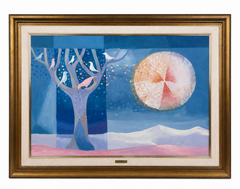
Ramón Llovet “De la Vida” figurative oil painting, 1980. Oil on canvas. Signed, dated and titled. Original oil on canvas by Catalan artist Ramón Llovet Miserol, titled De la Vida (“...

Category

1980s Modern Eugene Martin Landscape Paintings
Materials

Canvas, Oil

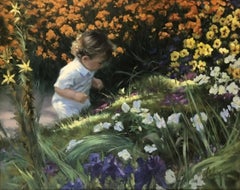
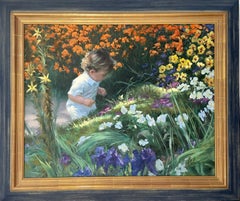
Howard Post, b.1948, Arizona. Oil on canvas painting, Along the River, 20 x 30

Howard Post, b.1948, Arizona. Oil on canvas painting, Along the River, 20 x 30

Located in Basalt, CO

Howard Post b 1948. "Along the River". Oil on canvas, 2011. The painting measures 20 x 30. Overall dimensions are a little more than 27 x 37. The custom frame was made by the Co...

Category

2010s American Modern Eugene Martin Landscape Paintings
Materials

Canvas, Oil

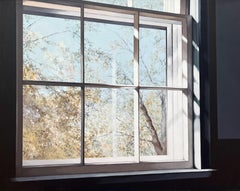
Autumn Window

Marina SternAutumn Window, 1984

$16,000

H 40 in W 50 in D 1.5 in

Autumn Window

By Marina Stern

Located in Los Angeles, CA

This work is part of our exhibition Marina Stern Luminary, the first retrospective of the artist since 2007. Previously exhibited: 1) Marina Stern - New Paintings, Forum Gallery, Ne...

Category

1980s American Modern Eugene Martin Landscape Paintings
Materials

Canvas, Oil

Eugene Martin landscape paintings for sale on 1stDibs.

Find a wide variety of authentic Eugene Martin landscape paintings available for sale on 1stDibs. You can also browse by medium to find art by Eugene Martin in oil paint, paint and more. Much of the original work by this artist or collective was created during the 1930s and is mostly associated with the modern style. Not every interior allows for large Eugene Martin landscape paintings, so small editions measuring 18 inches across are available. Customers who are interested in this artist might also find the work of Donald Stacy, John Kelly, and Harold Haydon. Eugene Martin landscape paintings prices can differ depending upon medium, time period and other attributes. On 1stDibs, the price for these items starts at $1,090 and tops out at $1,090, while the average work can sell for $1,090.