Forms and Surfaces Vases and Vessels

to
1
1
1
1
1
1
1
1
1
1
1
1
1
Height
to
Width
to
1
1
1
3
1,291
528
400
338
Creator: Forms and Surfaces
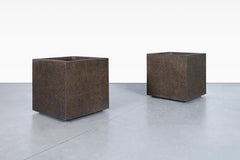
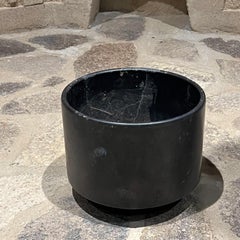
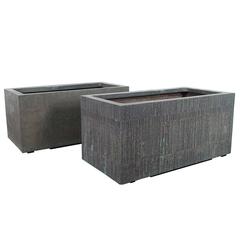
Mid-Century Modern Bronze Resin Square Planters by Forms and Surfaces

Mid-Century Modern Bronze Resin Square Planters by Forms and Surfaces

By Forms and Surfaces

Located in North Hollywood, CA

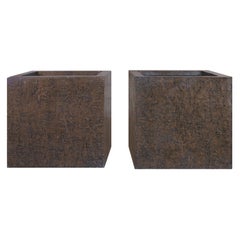
Beautiful mid-century modern bronze resin square planters manufactured in the United States, circa 1970s. These planters are manufactured by the well-known company Forms and Surfaces...

Category

1970s American Mid-Century Modern Vintage Forms and Surfaces Vases and Vessels

Materials

Bronze

Related Items
Wonderful Large Mid Century Modern Brushed Nickel Silver Planter Pedestal

Wonderful Large Mid Century Modern Brushed Nickel Silver Planter Pedestal

Located in Roslyn, NY

A Wonderful Large Mid Century Modern Brushed Nickel / Silver Tone Planter That May Also Be Used As A Pedestal If A Top Were To Be Put On It.

Category

20th Century Mid-Century Modern Forms and Surfaces Vases and Vessels

Materials

Nickel

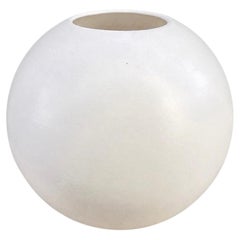
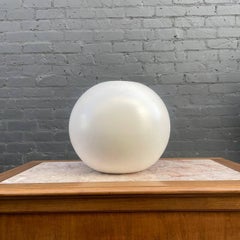
Vintage Mid-Century Modern White Ceramic Sphere Planter

Vintage Mid-Century Modern White Ceramic Sphere Planter

Located in Los Angeles, CA

Condition: Original Vintage Condition

Category

1960s American Mid-Century Modern Vintage Forms and Surfaces Vases and Vessels

Materials

Ceramic

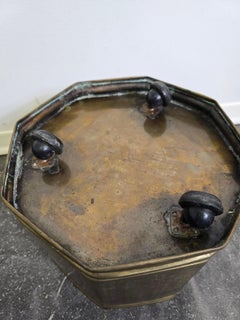
Mid-Century Modern Brass Planter on Casters, Italy, 1970

Mid-Century Modern Brass Planter on Casters, Italy, 1970

Located in Ljubljana, SI

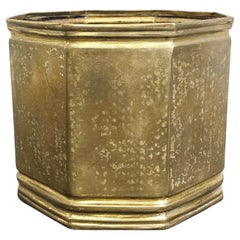
This beautifully aged brass planter brings effortless elegance and old-world charm to any space. Crafted with a faceted, octagonal silhouette and finished in a warm, naturally patina...

Category

1970s Italian Mid-Century Modern Vintage Forms and Surfaces Vases and Vessels

Materials

Brass

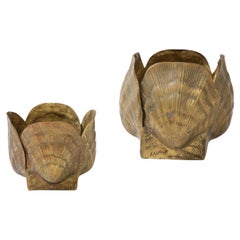
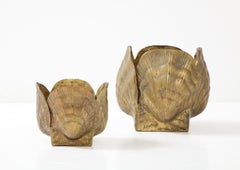
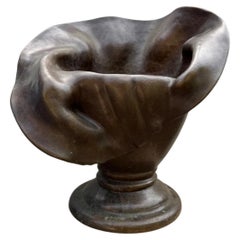
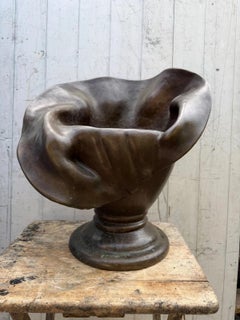
Mid-Century Modern Bronze Shell Planters Inspired by Tony Duquette

Mid-Century Modern Bronze Shell Planters Inspired by Tony Duquette

By Tony Duquette

Located in New York, NY

Mid Century Modern pair of stylized bronze shell jardinieres, in the style of Tony Duquette. Larger : 8.5T X 7W X 7D Smaller : 5.25T X 6W x6D

Category

20th Century American Mid-Century Modern Forms and Surfaces Vases and Vessels

Materials

Bronze

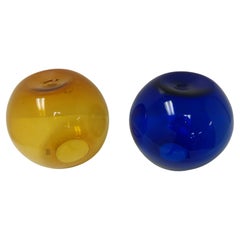
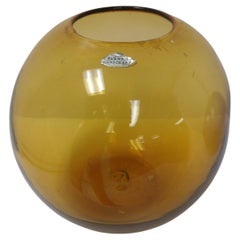
Mid-Century Modern Art Glass Vases by Blenko Blue and Amber Ball Form

Mid-Century Modern Art Glass Vases by Blenko Blue and Amber Ball Form

By Blenko Glass

Located in Port Jervis, NY

Pair of fish bowl vases by American glass blowing company Blenko. Amber colored case is a little taller than the blue vase 10 inch to 9.5 inch. Amber va...

Category

1960s American Mid-Century Modern Vintage Forms and Surfaces Vases and Vessels

Materials

Art Glass

Mid Century Modern Vase or Planter by Bitossi Italy

Mid Century Modern Vase or Planter by Bitossi Italy

By Bitossi

Located in Waddinxveen, ZH

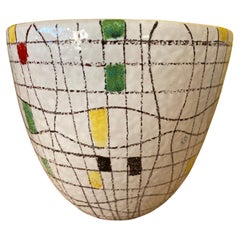
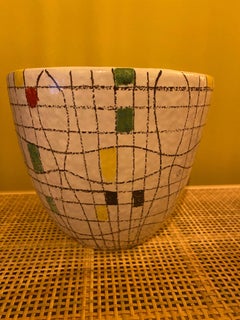
A Mid-Century Modern Bistossi ceramic vase/planter with a stylized crossword design of squiggly lines with block squares in red, yellow, gray blue and black on a white glazed soft te...

Category

1960s Italian Mid-Century Modern Vintage Forms and Surfaces Vases and Vessels

Materials

Ceramic

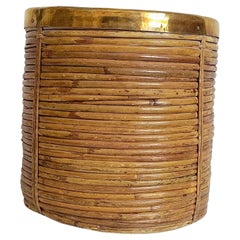
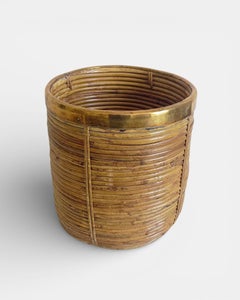
Mid-Century Organic Modern Planter with Brass Rim, c. 1960s

Mid-Century Organic Modern Planter with Brass Rim, c. 1960s

Located in Valencia, VC

Mid-Century Organic Modern Medium Size Pencil Reed/Rattan Planter with Brass Rim A striking and beautifully crafted Mid-Century Organic Modern planter executed in pencil reed/ratta...

Category

1960s Italian Mid-Century Modern Vintage Forms and Surfaces Vases and Vessels

Materials

Brass

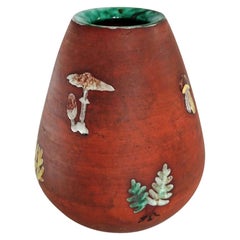
Mid-Century Modern Ceramic Vase, Sweden, Raw Unglazed Surface, 1950s

Mid-Century Modern Ceramic Vase, Sweden, Raw Unglazed Surface, 1950s

Located in Albano Laziale, Rome/Lazio

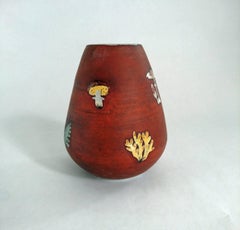
Rare studio work vase with a raw unglazed surface decorated with different funghi/mushrooms and ferns. The rim of the vase as and bottom are also glazed. Unattributed to Austrian des...

Category

1950s Swedish Mid-Century Modern Vintage Forms and Surfaces Vases and Vessels

Materials

Ceramic

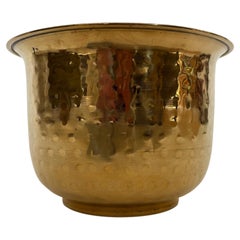
Mid-Century Modern Brass Planter / Decorative Pot, Sweden, 1950s–1960s

Mid-Century Modern Brass Planter / Decorative Pot, Sweden, 1950s–1960s

Located in Turku, Finland

Elegant Swedish mid-century modern, hammered mid-size brass planter / decorative cachepot from the 1950s–1960s. The piece features a beautifully flared rim, warm brass patina, and a...

Category

Mid-20th Century Swedish Mid-Century Modern Forms and Surfaces Vases and Vessels

Materials

Brass

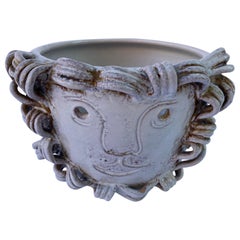
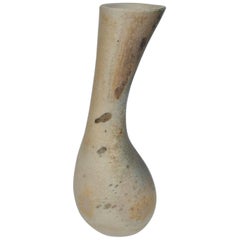
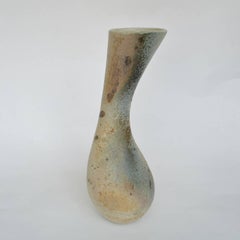
Sculptural Mid Century Modern Vase, Hand-Formed Pottery, 1950s

Sculptural Mid Century Modern Vase, Hand-Formed Pottery, 1950s

Located in London, GB

Sculptural Mid Century Modern curvaceous and organic hand formed vase glazed in muted tones of pastel.

Category

1850s European Mid-Century Modern Antique Forms and Surfaces Vases and Vessels

Materials

Ceramic

Bonsai Blue Planter, Mid-Century Modern Glass & Ceramic, Japan 1980

Bonsai Blue Planter, Mid-Century Modern Glass & Ceramic, Japan 1980

Located in Ciudad Autónoma Buenos Aires, C

Logistics and International Shipping We provide a comprehensive export service so that your only concern is enjoying your acquisition. • Door-to-Door Service: Pieces located in our Argentina galleries are shipped directly to your address via air freight. • Simplified Customs Management: We handle the processing of export permits and the payment of customs duties. You will receive your purchase without additional paperwork or surprise costs. • High-Security Packaging: Following FedEx international standards, each piece is protected in custom-made wooden crates, designed to withstand 1-meter impacts and ensure the integrity of the object during transit. • Note for shipments to the USA: To comply with shipping company regulations and ensure delivery at the destination, a valid tax ID (EIN, SSN, or ITIN) is required. • Domestic US Shipping: For those pieces available in our United States storage, logistics are managed through 1stdibs. Personalized Restorations Our team of expert artisans offers restoration services tailored to your aesthetic preferences and design needs: • Cabinetry and Polishing: We perform polishing work on woods, allowing for transitions from light to dark tones (including deep black finishes). • Upholstery: We reupholster chairs and armchairs with fabrics or leathers of your choice, guaranteeing a high-quality finish. • Lighting: We adapt ceiling lamps by shortening smooth rods to adjust them to the height of your rooms. • Metal Treatment: Restoration of chromed or silver-plated bronze pieces to their original state. o Chroming or silver-plating services for bronze objects. Personalized Quotes: We would be delighted to advise you and provide a quote for any intervention according to your personal taste. We have specialized in the sale of Art Deco and Art Nouveau and Vintage styles since 1982. If you have any questions we are at your disposal. Pushing the button that reads 'View All From Seller'. And you can see more objects to the style for sale. Why are there so many antiques in Argentina? In the 1880 – 1940 there was a grate wave of immigration encouraged by the periods of war that were taking place. 1st World War took place between 1914 and 1918 2nd World War took place between 1939 and 1945 The immigrants options were New York or Buenos Aires. Tickets were cheap and in Buenos Aires they were welcomed with open arms, as it was a country where everything was still to be done. Argentina was the country of new opportunities, labour was needed and religious freedom was assured, in many cases the of the family travel first until they were settled and then the rest of the family members join them. In the immigrant museum “Ellis Island Immigrant Building” in New York you can se the promotional posters of the boats that would take them to a new life. Between the years 1895 and 1896, Argentina had the highest DGP (gross domestic product) per capita in the world according to the Maddison Historical Statistics index, this situation arose due to the large amount of food being exported to European countries, which were at war. The Argentinean ships left the port of Buenos Aires with food, but they returned with furniture, clothes and construction elements, (it´s common to see this the old buildings of the historic neighbourhood of San Telmo, the beams with the inscription “Made in England)”, as well as many markets that were built in Buenos Aires, such us the San Telmo Market, whose structure was brought by ship and afterwards assembled in 900 Defensa Street. With the great influence of European immigrants living in the country, the children of the upper classes travelled to study in France, resulting in the inauguration of “La Maison Argentinienne”, on 27th of June 1928, in the international city of Paris, which hosted many Argentinians that were studying in Frace. It´s the fourth house to be built after France, Canada and Belgium, being the first Spanish-speaking one. Still in place today (17 Bd Jourdan, 75014, Paris, France). Many of the children of these wealthy families who attended international art exhibitions, museums and art courses abroad, took a keen interest in the European style. This is why Buenos Aires was at the time referred as “The Paris of South America”. Between the years 1890 and 1920 more than a hundred Palaces were built on Alvear Avenue the most exclusive avenue in Buenos Aires. Today some of these palaces have been transformed into museums, hotels and embassies. In the year 1936, the Kavanagh building was inaugurated, it was the tallest reinforced concrete building in South America. During 1994 the American Society of Civil Engineers distinguished it as an “international engineering milestone”, and it´s now considered a World Heritage of Modern Architecture. At the time was common to hire foreign architects such as Le Corbusier, who visited Buenos Aires/Argentina in 1929 and in 1948 he drew up the blueprints for a house built in La Plata City (which was declared a World Heritage Site). In 1947, the Hungarian architect Marcelo Breuer designed “Parador Ariston” in the seaside city of Mar del Plata. After an Argentinean student at Harvard University convinced him to come to Argentina. He worked on an urban development project in the Casa Amarilla, area of La Boca. The Ukrainian architect, Vladimiro Acosta, arrives in Argentina in 1928 and worked as an architect until que moved to Brazil. Antonio Bonet, a Spanish architect who worked with Le Corbusier in Paris, arrives in Argentina in 1937, where he carried out several architectural works and in 1938 designs the well-known BFK chair. Andres Kálnay, of Hungarian origin, made around 120 architectural masterpieces, among which the former Munich brewery stands out, he even made the furniture’s design. The German architect, Walter Gropius, director of the Bauhaus, lived in Argentina, where he wrote articles for “Sur” magazine and founded in Buenos Aires, an architectural firm with Franz Möller, who was also an architect, where he built two houses. At the same time several famous designers decided to immigrate to Argentina, among them we can find the well-known French designer, Jean-Michel Frank, who arrived in the country in 1940 and also worked for the Rockefeller family. Special pieces were made, which were sold exclusively in the country, such as the well-known German company “WMF”, who sold their products by catalogue, which were chosen by the ladies of High Society in the list of wedding gifts, as well as the pieces designed by Christofle. The Swiss sculptor Alberto Giacometti, made special pieces for Argentinean mansions. In 1904 the first Jansen branch outside Paris was established in Buenos Aires, as the Argentinean clientele demanded a large amount of furniture, from the end of the 19th Century to the mid-20th Century. In 1970, the brand Rigolleau Argentina made pieces authorised by Lalique. The brands Maple and Thompson also set up shop in the country. The French plastic artist, Marcel Duchamp moved to Argentina in 1918-1919. Glass signed Gallé, Charder, Leverre, Schneider, Muller and other French firms. They were bought in flower shops and were given to ladies with beautiful floral arrangements. Some furniture manufacturers travelled to international fairs and bough the patterns to produce the furniture in Argentina, such as the furniture firm Englander and Bonta, who bought the patterns ins Italy. It is worth mentioning that in Argentina we have the largest Community of Italians outside...

Category

1980s Japanese Mid-Century Modern Vintage Forms and Surfaces Vases and Vessels

Materials

Art Glass, Ceramic

Previously Available Items
Architectural Cast Bronze Resin Planters by Forms and Surfaces

Architectural Cast Bronze Resin Planters by Forms and Surfaces

By Forms and Surfaces

Located in North Hollywood, CA

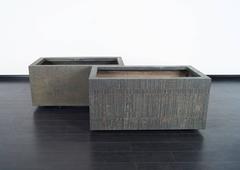
Pair of massive architectural cast bronze resin planters by Forms and Surfaces.

Category

1970s American Mid-Century Modern Vintage Forms and Surfaces Vases and Vessels

Materials

Bronze

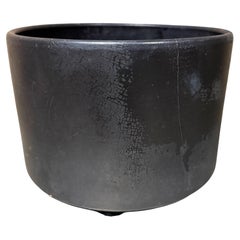
Vintage Bronze Resin Planter by Forms and Surfaces

Vintage Bronze Resin Planter by Forms and Surfaces

By Forms and Surfaces

Located in North Hollywood, CA

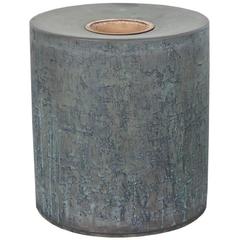
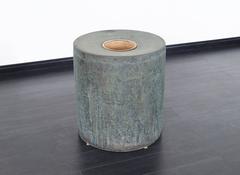
This bronze resin cylinder shaped planter was designed by Forms and Surfaces.

Category

1970s American Mid-Century Modern Vintage Forms and Surfaces Vases and Vessels

Materials

Brocade, Resin, Fiberglass

Monumental Cast Resin Planter by Forms and Surfaces

Monumental Cast Resin Planter by Forms and Surfaces

Sold

H 37.75 in W 47.25 in D 23.75 in

Monumental Cast Resin Planter by Forms and Surfaces

By Forms and Surfaces

Located in North Hollywood, CA

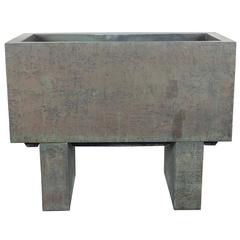
Vintage cast bronze resin planter by Forms and Surfaces. Features rare cast bronze resin bases that are removable.

Category

1970s American Mid-Century Modern Vintage Forms and Surfaces Vases and Vessels

Materials

Bronze

Forms And Surfaces vases and vessels for sale on 1stDibs.

Forms and Surfaces vases and vessels are available for sale on 1stDibs. These distinctive items are frequently made of resin and are designed with extraordinary care. There are many options to choose from in our collection of Forms and Surfaces vases and vessels, although gold editions of this piece are particularly popular. Many of the original vases and vessels by Forms and Surfaces were created in the mid-century modern style in united states during the 1970s. If you’re looking for additional options, many customers also consider vases and vessels by Robert Maxwell, David Cressey, and Architectural Pottery. Prices for Forms and Surfaces vases and vessels can differ depending upon size, time period and other attributes — on 1stDibs, these items begin at $4,500 and can go as high as $4,500, while a piece like these, on average, fetch $4,500.
Questions About Forms and Surfaces Vases and Vessels
  • 1stDibs ExpertFebruary 22, 2021
    A surface mount means an item that sits directly upon the surface that you are mounting it to. For example, a surface mount light sits flush with the wall.
  • 1stDibs ExpertOctober 5, 2021
    The best surface for a workbench is a medium-density fiberboard (MDF) of 3/4-inch thickness. It is sturdy to hold a heavy load, and its surface is smooth enough that it won't scratch the wood. It can be easily replaced or flipped once the tabletop is too worn out. A coat of beeswax will prevent stains. You can find a range of workbenches and work tables on 1stDibs.
  • 1stDibs ExpertFebruary 22, 2021
    Organic forms in art look natural, often by seeming to flow or being irregular and unpredictable. One example of this is realistic representations of the living things.
  • 1stDibs ExpertFebruary 13, 2024
    In art, the meaning of form relates to space. In three-dimensional art, form describes how a particular piece takes up space when displayed. Things that influence a work's form include its volume, dimensions, shape and how it is displayed or installed. On 1stDibs, find a wide variety of fine art.
  • 1stDibs ExpertSeptember 25, 2019

    Yes, collage is an art form.

  • 1stDibs ExpertNovember 13, 2024
    The art of making marks on a surface is called mark-making. However, you may also see people refer to it as drawing. Artists who produce drawings use a variety of materials, including chalk, pastels, crayons, markers, pencils and charcoal. Find a diverse assortment of drawings from some of the world's top galleries and dealers on 1stDibs.
  • PAGODA RED
    PAGODA REDOctober 7, 2020

    One of the esteemed pursuits of the traditional Chinese scholar was landscape painting, known generally as shān shuǐ. Capturing the beauty of nature within a balanced composition is considered a conceptual feat achieved only by the hand of a master.

  • 1stDibs ExpertSeptember 25, 2019

    Mulberry silk is the highest-quality form.

  • 1stDibs ExpertFebruary 22, 2021
    The seven different forms of art include painting, architecture, sculpture, literature, music, performing and cinema.
  • 1stDibs ExpertSeptember 25, 2019

    Yes, Cubism is a form of abstract art.

  • 1stDibs ExpertMarch 3, 2023
    In French, the term for a writing desk that often featured a drop-down writing surface is secretaire. This type of desk is called a secretary desk in English. Simply put, a secretary desk is a multifunctional piece of furniture with a hinged writing surface that folds open or drops down. When the leaf is folded out, small inner storage compartments, which are called pigeonholes, cubbies, recesses or drawers, are revealed. On 1stDibs, shop antique secretary desks from some of the world's top sellers.
  • 1stDibs ExpertMarch 22, 2022
    When painter Lucio Fontana used tools to cut up and puncture the surface of his canvas, he created large slash marks. The presence of the visual element gave the Argentine-Italian artist's work a violent quality. On 1stDibs, shop a selection of Lucio Fontana art.
  • 1stDibs ExpertJanuary 10, 2025
    The artist George Catlin's paintings from the 1800s are considered a form of artistic documentation because he depicted what he saw during his travels across North America. Catlin produced many images of Native Americans living their daily lives. In so doing, he provided a glimpse of what life was like for Indigenous people before the rapid westward expansion of settlers forcibly disrupted their traditions and culture. On 1stDibs, shop a variety of George Catlin art.
  • 1stDibs ExpertJanuary 10, 2025
    The artist who made art from found materials and images and named his new art form a combine was Robert Rauschenberg. He was one of the preeminent American artists of the 20th century, occupying a singular position that straddled the Abstract Expressionist and Pop art movements, drawing on key elements of each. Rauschenberg was an artistic polymath equally adept at painting, collage and silkscreening. Find a diverse assortment of Robert Rauschenberg art on 1stDibs.