Francesco Messina Art

to
3
1
Overall Width
to
Overall Height
to
4
1
1
2
1
2
1
4
3
2
1
1
1
1
1
1
1
2
1
1
1
6
11,453
2,870
2,493
1,538
1
2
4
Artist: Francesco Messina
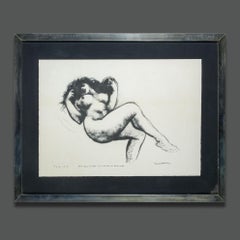
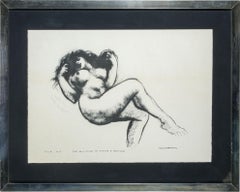
1950s Italian Signed Lithograph by Francesco Messina

1950s Italian Signed Lithograph by Francesco Messina

By Francesco Messina

Located in Roma, IT

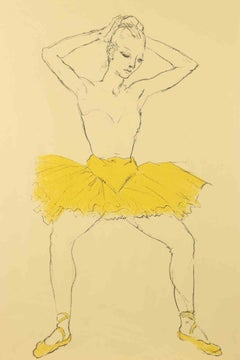
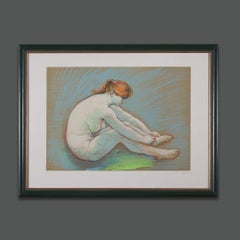
Beautiful lithograph by the great postwar Italian artist Francesco Messina. Depicts in a beautiful pose a nude of a woman "Lying Model" Very rare "Artist's Proof Hors Commerce" wit...

Category

Mid-20th Century Modern Francesco Messina Art

Materials

Lithograph

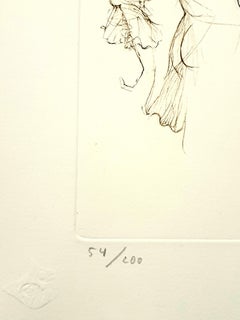
Untitled - Etching by Francesco Messina - 1980

Untitled - Etching by Francesco Messina - 1980

By Francesco Messina

Located in Roma, IT

Etching on Magnani-Pescia paper 310 gr/m2, paper size 71cm x 50cm, work size 60cmx43,5cm . Francesco Messina was born in Linguaglossa in the province of Catania. He is considered by...

Category

1980s Contemporary Francesco Messina Art

Materials

Etching

Fisherman
Fisherman

Fisherman

By Francesco Messina

Located in Roma, RM

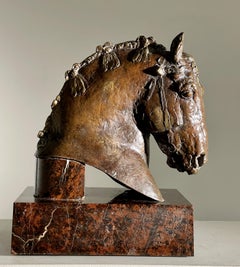
Francesco Messina (Linguaglossa 1900 – Milan 1995), Fisherman (1930) Bronze sculpture measuring 131 x 52 x 65 cm, signed and dated 1930 on the base. Francesco Messina’s Fisherman w...

Category

1930s Realist Francesco Messina Art

Materials

Bronze

Related Items
Else FÜRST (1873-1943), Fasane Foundry stamp of the Berlin foundry Kraas

Else FÜRST (1873-1943), Fasane Foundry stamp of the Berlin foundry Kraas

Located in Berlin, DE

Else Fürst was a German sculptor and medalist who was murdered by the Nazis. Biographical data: Bronze signed Foundry stamp of the Berlin foundry Kraas. 25 x 73 cm Born: June 25,...

Category

1930s Realist Francesco Messina Art

Materials

Bronze

Marc Chagall - Double Portrait - Original Lithograph

Marc Chagall - Double Portrait - Original Lithograph

By Marc Chagall

Located in Collonge Bellerive, Geneve, CH

Marc Chagall, Original Lithograph depicting an instant of the Bible. Technique: Original lithograph in colours Year: 1956 Sizes: 35,5 x 26 cm / 14" x 10.2" (sheet) Published by: Édit...

Category

1950s Modern Francesco Messina Art

Materials

Lithograph

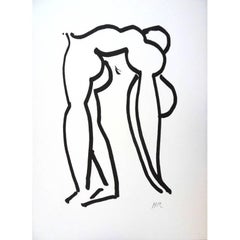
after Henri Matisse - Acrobat

Henri Matisseafter Henri Matisse - Acrobat

$1,535

H 29.93 in W 22.05 in D 0.04 in

after Henri Matisse - Acrobat

By Henri Matisse

Located in Collonge Bellerive, Geneve, CH

after Henri Matisse - Acrobat Edition of 200 with the printed signature, as issued 76 x 56 With stamp of the Succession Matisse References : Artvalue - Succession Matisse

Category

1950s Modern Francesco Messina Art

Materials

Lithograph

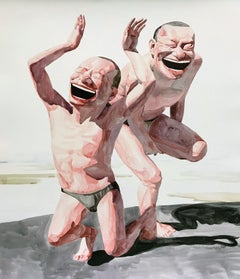
Untitled (Smile-ism No. 20)

Untitled (Smile-ism No. 20)

By Yue Minjun

Located in Calabasas, CA

Artist: Yue Minjun Title: Untitled (Smile-ism No. 20) Year: 2006 Medium: Lithograph on Rives BFK paper Edition: 45; signed and numbered in pencil Sheet: 43.50 x 35.25 in. (110.5 x 8...

Category

Early 2000s Contemporary Francesco Messina Art

Materials

Lithograph

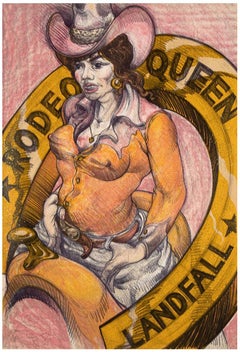
Rodeo Queen by Luis Jimenez

Rodeo Queen by Luis Jimenez

By Luis Alfonso Jimenez

Located in Phoenix, AZ

Rodeo Queen, 1981 Edition 36/50 Signed lower left, Inscribed: for the "Rose" 82. Provenance: Print was a gift to Rozanne Charington, companion and model for "Rodeo Queen", "Rose Tattoo" and "Jimenez at Adeliza's Candy Store". Lithograph on paper 42 ½ × 29 in. (107.3 × 73.7 cm) Luis Alfonso Jimenez Born, 1940, El Paso, Texas, died 2006, Hondo, New Mexico. Statement: Luis Jimenez, in his work, celebrates the vitality of life. . . . Jimenez es un hijo de la frontera; he knows its people and the landscape. It is the transformation of these people into art that is his most important contribution to the art of this vast region which stretches between Mexico and the United States. His subject matter utilizes the popular images of the cultura del norte, and a large part of it is depicted and transformed in the rough and tumble world of la frontera. He is also a son of el norte, and so he uses its materials and explores its emerging, popular myths. The tension and attraction of Jimnez’s work is that he always creates within the space of his two worlds, the Mexicano and the Americano. He constantly shows us the irony of the two forces which repel, while showing us glimpses of the synthesis he seeks. What a gift it has been to us for this talented artist to reflect on the soul of our region. He gives meaning to our existence and history. Rudolfo Anaya (passage chosen by the artist), A View from La Frontera, Man on Fire: Luis Jimenez, pp. 1, 3, 6Biography: Luis Jimenez was born in Texas to parents who had emigrated from Mexico to the United States; he would later dedicate his 1989 sculpture Border Crossing to his father, who had entered the country illegally. The elder Jimenez was a neon sign designer in El Paso, and Luis worked with him as a youth. His experience working in the neon shop and his fascination with U.S. car culture would both become major influences on his art career. Jimenez studied architecture at the University of Texas, Austin (UTA), and also took art courses in which he first created sculptures with wood, steel, and fiberglass, choosing the latter because of its association with U.S. popular culture. He subsequently became one of the artists who made fiberglass an acceptable medium in the 1960s. In 1964 Jimenez received his B.S. in art from UTA, and he continued his studies at the Universidad Nacional Autonoma de Mexico in Mexico City. In 1966 he moved to New York City and worked as an assistant to sculptor Seymour Lipton. Jimenez began to exhibit his art while in New York and in 1972 moved to New Mexico to focus on creating public sculptures, even as he maintained his diverse output of drawings, prints, and lithographs. Drawing on his early experiences, Jimenez creates works that come from a border perspective, one that draws upon the hybridity bred by culture clashes. Often socially and politically informed, his works speak not only in regional terms, those germane to the southwestern United States, but to broader, more global issues as well. They exhibit a profoundly Chicano aesthetic and sensibility, one that is informed by Mexican and Mexican American traditions, North American popular culture, Chicano cultural icons, and images and themes unique to the Southwest. Death, sexuality, and the struggle of the common people are frequent themes. Inspired by authors who write in an autobiographical style, Jimenez creates works that function as personal narrative yet are also able to make statements about culture in more global terms. His use of bold colors and lines, a legacy from his fathers work as a neon sign maker, lends a dynamic sensuality to his work, one that is particularly evident in his monumental fiberglass and acrylic urethane sculptural works Many of Jimenez's works correspond to scholar Toms Ybarra-Fraustos definition of the Chicano aesthetic of rasquachismo, a lowbrow sensibility that appeals to the working class in that it applies to objects that subvert expressions of the mainstream or dominant culture. Creating art that speaks to the people, Jimenez is able to transform regional and culturally specific myths and symbols into globally recognized and relevant icons. Exhibitions: In addition to his personal work, Jimenez has been commissioned for numerous public art projects. In 1999 his sculpture Southwest Piet was designated a National Treasure by First Lady Hillary Clinton. The many exhibitions featuring his work have included Human Concern/Personal Torment (Whitney Museum of American Art, New York, 1969). The First International Motorcycle Art Show (Phoenix Art Museum, Phoenix, AZ, 1973). Three Texas Artists (Centre Cultural Americaine, USIS, Paris, 1977), Recent Trends in Collecting (Smithsonian Institution, Washington, DC, 1982). Committed to Print (Museum of Modern Art, New York, 1989) Printmaking in Texas: The 1980s (Modern Art Museum, Fort Worth, TX. Laguna Gloria Art Museum, Austin, 1990. The Whitney Biennial (Whitney Museum of American Art, New York, 1991) Man On Fire: Luis Jimnez (Albuquerque Museum of Art, NM, 1994-95). 47th Annual Purchase Exhibition (American Academy of Arts and Letters, New York, 1995). Traveling solo exhibition, Working Class Heroes: Images from the Popular Culture (1997-2000). Jiménez Collier Gallery has been in continuous operation for over 40 years. Originally located just off Main Street in downtown Scottsdale, Arizona, we have moved to Phoenix to accommodate and showcase our large inventory including: • Original works by Maynard Dixon, Lon Megargee, Ed Mell, Fritz Scholder, Bill Schenck, Bill Lesch, Luis Jimenez, Greg Singley, Dan Budnik, and other 20th century Western, WPA and Contemporary Southwestern artists. • The Fine Art Estate of Lon Megargee • Vintage rodeo...

Category

1980s Contemporary Francesco Messina Art
Materials

Lithograph

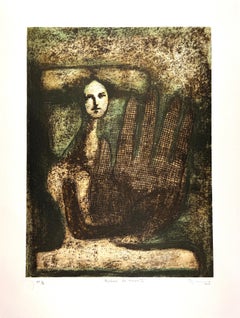
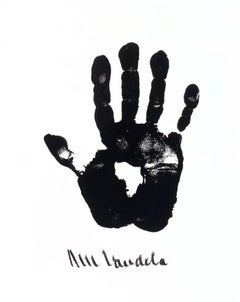
Hand of Africa - Mandela, Former South African President, Signed Artwork, Hand

Hand of Africa - Mandela, Former South African President, Signed Artwork, Hand

By Nelson Mandela

Located in Knowle Lane, Cranleigh

Nelson Mandela, Hand of Africa, Signed Limited Edition Lithograph Many people are unaware that Nelson Mandela turned his hand to art in his 80's as a way of leaving a legacy for his ...

Category

Early 2000s Contemporary Francesco Messina Art
Materials

Lithograph

"Cowrie Shell" (2024) By Tony Hochstetler, Original Bronze Sculpture

"Cowrie Shell" (2024) By Tony Hochstetler, Original Bronze Sculpture

By Tony Hochstetler

Located in Denver, CO

Tony Hochstetler's "Cowrie Shell" (2015) is an original handmade bronze sculpture that depicts the shell of a cowrie. TONY HOCHSTETLER is a sculptor of unusual animals and botanical...

Category

2010s Realist Francesco Messina Art

Materials

Bronze

I Am The Last Of My Kind

I Am The Last Of My Kind

By Tracey Emin

Located in London, GB

Published by the Royal Academy

Category

2010s Contemporary Francesco Messina Art
Materials

Lithograph, Offset

Original CAZALIS & PRATS Grand Cru  Mermaid  vintage French liquor poster

Original CAZALIS & PRATS Grand Cru Mermaid vintage French liquor poster

Located in Spokane, WA

Original CAZALIS & PRATS since 1875. Artist: Emm. Gaillard. Size: 13" x 19.5". Professionally acid-free archival linen backed and ready to frame. Note that a small ink printing line ...

Category

1950s American Modern Francesco Messina Art

Materials

Lithograph

Marc Chagall - Moses - Original Lithograph

Marc Chagall - Moses - Original Lithograph

By Marc Chagall

Located in Collonge Bellerive, Geneve, CH

Marc Chagall, Original Lithograph depicting an instant of the Bible. Technique: Original lithograph in colours Year: 1956 Sizes: 35,5 x 26 cm / 14" x 10.2" (sheet) Published by: Éditions de la Revue Verve, Tériade, Paris Printed by: Atelier Mourlot, Paris Documentation / References: Mourlot, F., Chagall Lithograph [II] 1957-1962, A. Sauret, Monte Carlo 1963, nos. 234 and 257 Marc Chagall (born in 1887) Marc Chagall was born in Belarus in 1887 and developed an early interest in art. After studying painting, in 1907 he left Russia for Paris, where he lived in an artist colony on the city’s outskirts. Fusing his own personal, dreamlike imagery with hints of the fauvism and cubism popular in France at the time, Chagall created his most lasting work—including I and the Village (1911)—some of which would be featured in the Salon des Indépendants exhibitions. After returning to Vitebsk for a visit in 1914, the outbreak of WWI trapped Chagall in Russia. He returned to France in 1923 but was forced to flee the country and Nazi persecution during WWII. Finding asylum in the U.S., Chagall became involved in set and costume design before returning to France in 1948. In his later years, he experimented with new art forms and was commissioned to produce numerous large-scale works. Chagall died in St.-Paul-de-Vence in 1985. The Village Marc Chagall was born in a small Hassidic community on the outskirts of Vitebsk, Belarus, on July 7, 1887. His father was a fishmonger, and his mother ran a small sundries shop in the village. As a child, Chagall attended the Jewish elementary school, where he studied Hebrew and the Bible, before later attending the Russian public school. He began to learn the fundamentals of drawing during this time, but perhaps more importantly, he absorbed the world around him, storing away the imagery and themes that would feature largely in most of his later work. At age 19 Chagall enrolled at a private, all-Jewish art school and began his formal education in painting, studying briefly with portrait artist Yehuda Pen. However, he left the school after several months, moving to St. Petersburg in 1907 to study at the Imperial Society for the Protection of Fine Arts. The following year, he enrolled at the Svanseva School, studying with set designer Léon Bakst, whose work had been featured in Sergei Diaghilev's Ballets Russes. This early experience would prove important to Chagall’s later career as well. Despite this formal instruction, and the widespread popularity of realism in Russia at the time, Chagall was already establishing his own personal style, which featured a more dreamlike unreality and the people, places and imagery that were close to his heart. Some examples from this period are his Window Vitebsk (1908) and My Fianceé with Black Gloves (1909), which pictured Bella Rosenfeld, to whom he had recently become engaged. The Beehive Despite his romance with Bella, in 1911 an allowance from Russian parliament member and art patron Maxim Binaver enabled Chagall to move to Paris, France. After settling briefly in the Montparnasse neighborhood, Chagall moved further afield to an artist colony known as La Ruche (“The Beehive”), where he began to work side by side with abstract painters such as Amedeo Modigliani and Fernand Léger as well as the avant-garde poet Guillaume Apollinaire. At their urging, and under the influence of the wildly popular fauvism and cubism, Chagall lightened his palette and pushed his style ever further from reality. I and the Village (1911) and Homage to Apollinaire (1912) are among his early Parisian works, widely considered to be his most successful and representative period. Though his work stood stylistically apart from his cubist contemporaries, from 1912 to 1914 Chagall exhibited several paintings at the annual Salon des Indépendants exhibition, where works by the likes of Juan Gris, Marcel Duchamp and Robert Delaunay were causing a stir in the Paris art world. Chagall’s popularity began to spread beyond La Ruche, and in May 1914 he traveled to Berlin to help organize his first solo exhibition, at Der Sturm Gallery. Chagall remained in the city until the highly acclaimed show opened that June. He then returned to Vitebsk, unaware of the fateful events to come. War, Peace and Revolution In August 1914 the outbreak of World War I precluded Chagall’s plans to return to Paris. The conflict did little to stem the flow of his creative output, however, instead merely giving him direct access to the childhood scenes so essential to his work, as seen in paintings such as Jew in Green (1914) and Over Vitebsk (1914). His paintings from this period also occasionally featured images of the war’s impact on the region, as with Wounded Soldier (1914) and Marching (1915). But despite the hardships of life during wartime, this would also prove to be a joyful period for Chagall. In July 1915 he married Bella, and she gave birth to a daughter, Ida, the following year. Their appearance in works such as Birthday (1915), Bella and Ida by the Window (1917) and several of his “Lovers” paintings give a glimpse of the island of domestic bliss that was Chagall’s amidst the chaos. To avoid military service and stay with his new family, Chagall took a position as a clerk in the Ministry of War Economy in St. Petersburg. While there he began work on his autobiography and also immersed himself in the local art scene, befriending novelist Boris Pasternak, among others. He also exhibited his work in the city and soon gained considerable recognition. That notoriety would prove important in the aftermath of the 1917 Russian Revolution when he was appointed as the Commissar of Fine Arts in Vitebsk. In his new post, Chagall undertook various projects in the region, including the 1919 founding of the Academy of the Arts. Despite these endeavors, differences among his colleagues eventually disillusioned Chagall. In 1920 he relinquished his position and moved his family to Moscow, the post-revolution capital of Russia. In Moscow, Chagall was soon commissioned to create sets and costumes for various productions at the Moscow State Yiddish...

Category

1950s Modern Francesco Messina Art

Materials

Lithograph

Previously Available Items
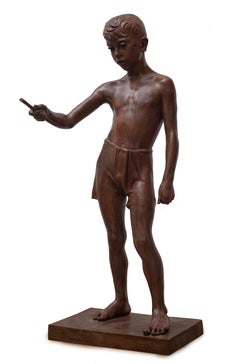
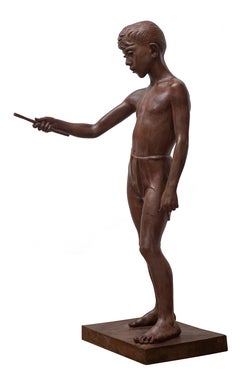
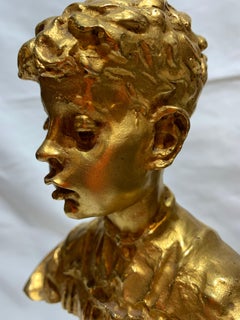
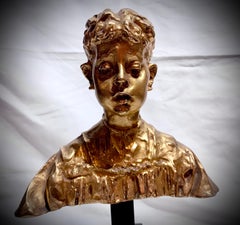
Altar boy.  Francis Messina (1900-1995).  Multiple sculpture nr.56/149

Altar boy. Francis Messina (1900-1995). Multiple sculpture nr.56/149

By Francesco Messina

Located in Firenze, IT

Cleric. (Altar boy). Francis Messina (1900-1995). Multiple sculpture signed and numbered 56/149. Lost wax bronze gilded with 1000° pure gold. Base in black marble. Gilded bronze N...

Category

20th Century Francesco Messina Art
Materials

Marble, Bronze, Gold Leaf

Francesco Messina art for sale on 1stDibs.

Find a wide variety of authentic Francesco Messina art available for sale on 1stDibs. You can also browse by medium to find art by Francesco Messina in bronze, metal, gold leaf and more. Not every interior allows for large Francesco Messina art, so small editions measuring 7 inches across are available. Customers who are interested in this artist might also find the work of Ivan Zanoni, Francesco Piranesi, and Bela Bacsi. Francesco Messina art prices can differ depending upon medium, time period and other attributes. On 1stDibs, the price for these items starts at $660 and tops out at $31,067, while the average work can sell for $15,864.

Artists Similar to Francesco Messina