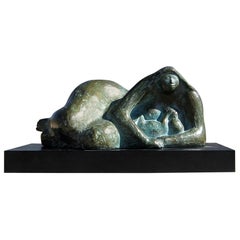
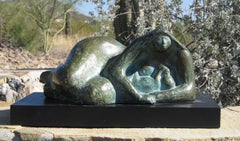
By Francisco Zúñiga
Located in San Francisco, CA
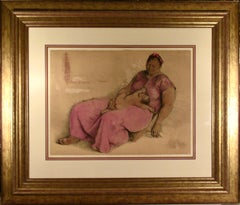
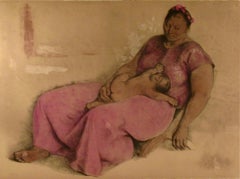
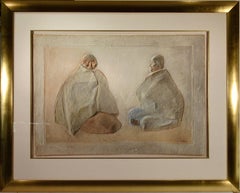
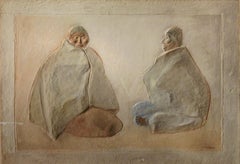
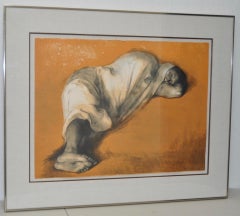
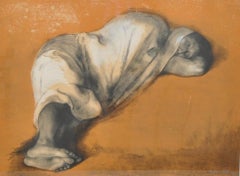
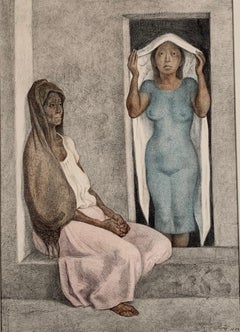
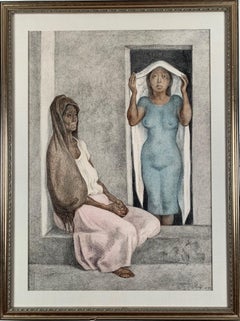
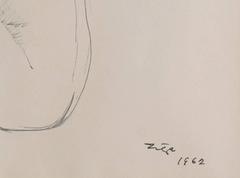
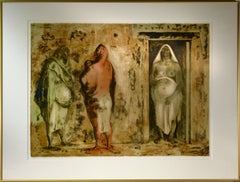
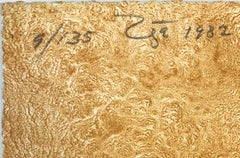
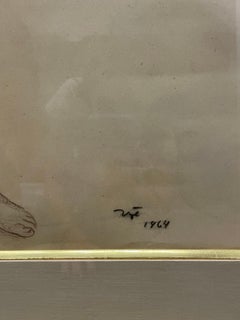
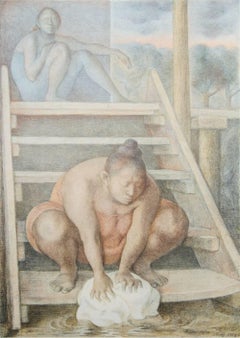
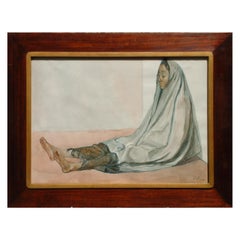
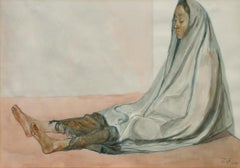
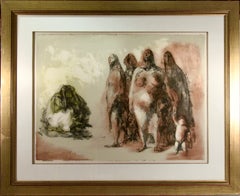
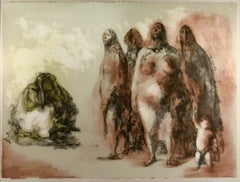
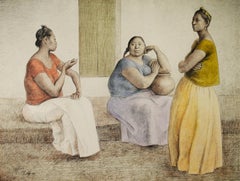
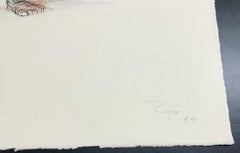
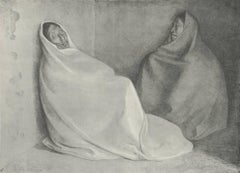
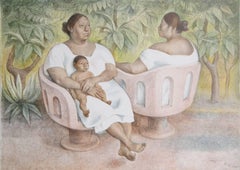
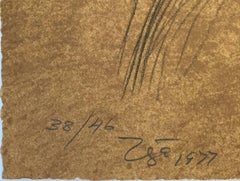
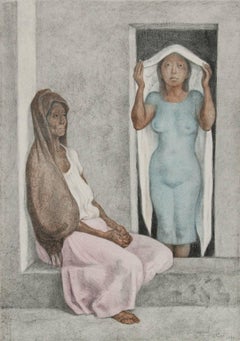
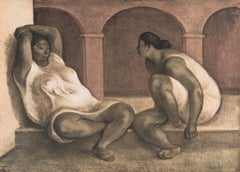
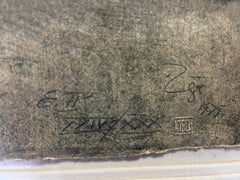
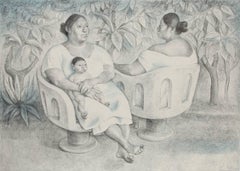
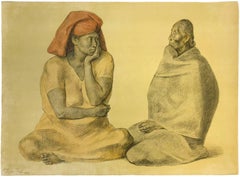
This artwork titled "Juchiteca's Platicando (Juchitecan Women Talking) 1985 is an original colors lithograph on Wove paper by Costa Rican/Mexican artist Francisco Zuniga, 1912-1998. It is hand signed, dated and numbered 72/150 in pencil by the artist. The size is 22.75 x 30 inches. It is in excellent condition, 2 small pieces of hanging tape remaining on the back at the top edge of the sheet from previous framing.
About the subject:
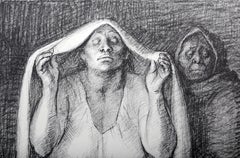
This print, Juchitecas Platicando (Juchitecán Women Talking), depicts three statuesque women from the city of Juchiteca in the state of Oaxaca in southeastern Mexico. Juchiteca is a largely matriarchal society, in that women control the economy and hold positions of power. It is also home to a large Zapotec population, indigenous to the land that became Mexico. Francisco Zúñiga lived within the community of Juchiteca for a period of time and adopted the women of the area as one of the central motifs of his artwork, both on paper and in sculpture. Through his selective coloring, Zúñiga highlights the women’s clothing, including their recognizable huipiles or tunics, conveying the pride in locally made textile art
About the artist:
Internationally acclaimed sculptor and printmaker Francisco Zuñiga was born in Costa Rica. He studied drawing, stone sculpture, and engraving at the School of Fine Arts in San Jose. Later, in 1936, he studied stone carving at La Esmeralda in Mexico City. He was appointed to the faculty of La Esmeralda where he remained until his retirement in 1970.
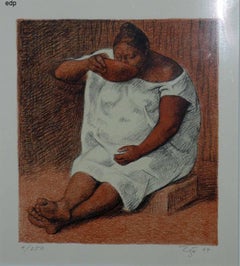
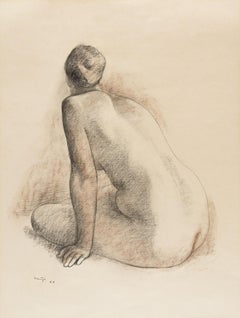
Zuniga's art reflects a love and respect for Central American people and traditions. In 1972, he created his first lithograph. As a complement to his emotionally powerful sculpture, Zuniga's prints articulate the sensitivity and sensuality of the human figure. He has been the recipient of numerous international prizes and awards. His work is exhibited frequently in prominent galleries throughout the world and may be found in the permanent collections of twenty-nine museums, including the Metropolitan Museum of Art in New York, the Los Angeles County Museum, the Mexican Museum in San Francisco, and the Phoenix Art Museum.
In 1936, Francisco Zuniga left San Jose, Costa Rica, where he had studied drawing at the School of Fine Arts and worked as an assistant in his father's studio, a workshop which produced religious sculpture for the churches and convents in and around the city. His destination was Mexico City. It was from there that he would begin an illustrious career as a sculptor and draftsman. Zuñiga's exploration into the nuances of volume, in line and space, are demonstrated in this, the most complete exhibition of his work to be shown in more than a decade.
Mexico City in 1936 was, even then, one of the major art centers of the Americas. As such it witnessed and participated in many of the frenzied and controversial art movements which reflected the political and intellectual climate of the first three decades of the twentieth century. Muralism, the graphic arts, the incorporation of in-ternational movements had produced an artistic climate, which would eventually attract to Mexico international artists and intellectuals such as Sergei Eisenstein, André Breton and Antonin Artaud. Then as now, Mexico City was a major world capital with the infrastructure necessary to exhibit and expose new aesthetic concepts.
For all these reasons it was the most obvious destination of choice for Zuñiga. In Mexico he worked with the painter Manuel Rodríguez...
Category
Late 20th Century Realist Francisco Zúñiga Art