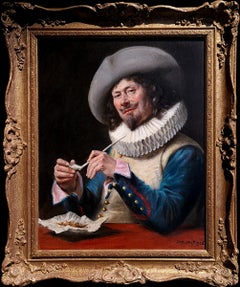
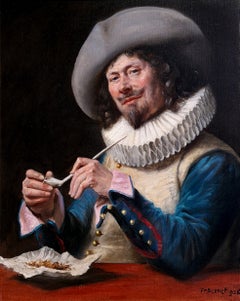
By Frank Moss Bennett
Located in Nr Broadway, Worcestershire
Frank Moss Bennett
British, (1874-1952)
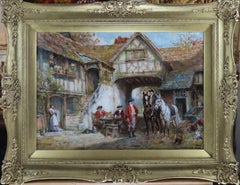
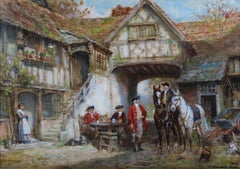
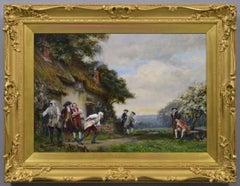
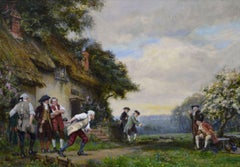
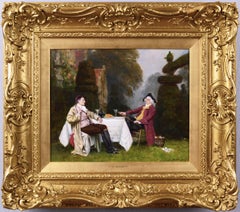
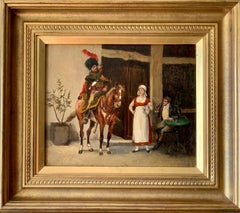
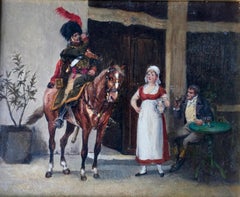
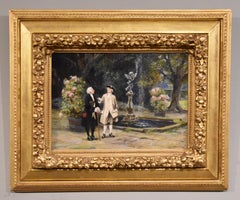
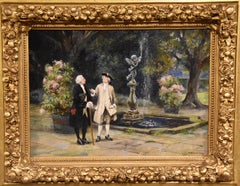
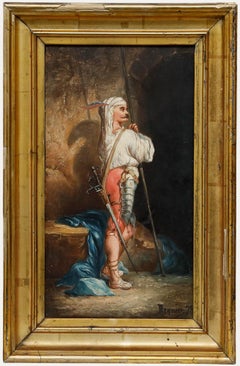
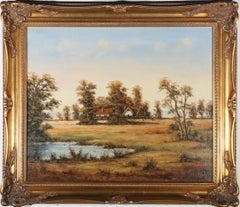
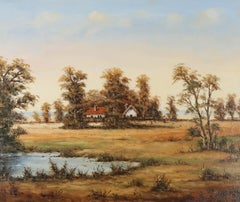
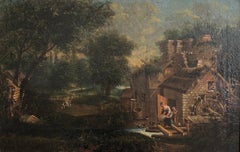
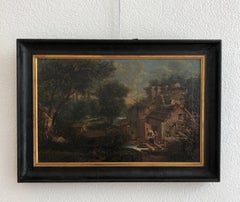
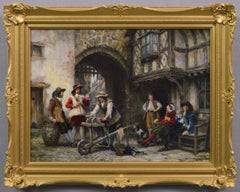
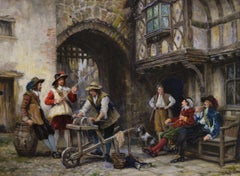
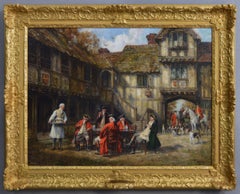
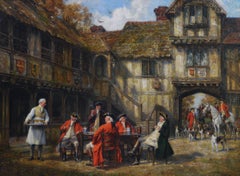
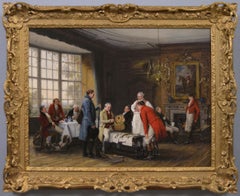
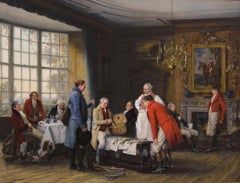
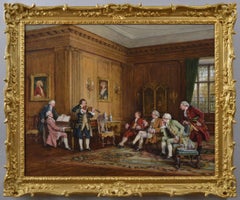
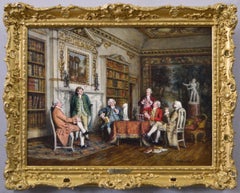
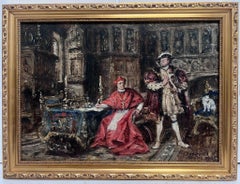
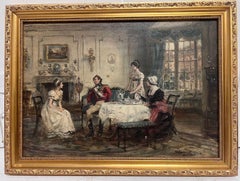
A Meeting of the Dillettanti
Oil on canvas, signed
Image size: 14.5 inches x 19.5 inches
Size including frame: 19.5 inches x 24.5 inches
Provenance: Harrods, Knightsbridge, London
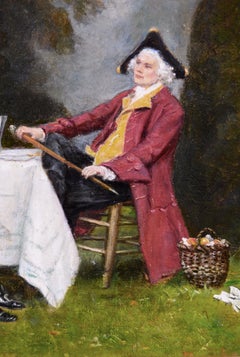
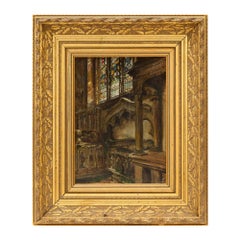
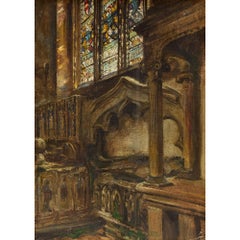
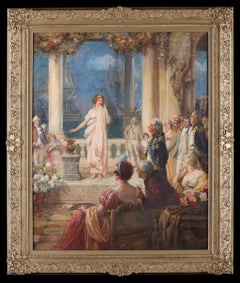
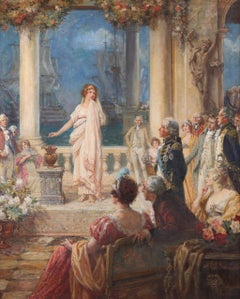
A well observed genre painting of a group of gentlemen in 18th century costume by Frank Moss Bennett. The men are depicted in a richly decorated interior of a stately home discussing the merits of two statues over a glass of wine.
Frank Moss Bennett was a portrait and genre painter who was born in Liverpool on November 15, 1874. He was the son of the Iron Founder Henry Mellor Bennett who was also became mayor of Liverpool. His family’s wealth enabled him to receive a good education, initially with a governess and then at Clifton College in Bristol. His talent for art emerged at a young age, however it was not until he left Bristol that he decided to follow a career in painting.
He moved to London in 1892, most likely with his family who went to live in Croydon after his father’s retirement. There he studied at the Slade School of Art where he was taught by Henry Tonks and John Singer Sargent. He also met fellow artist Eddie Wells who became his friend, travel partner and brother-in-law. He later attended the St John’s School of Art and in 1896 entered the Royal Academy school, winning a gold medal and a scholarship to travel. He began exhibiting at the Royal Academy from 1898 with a work entitled ‘A Book Plate’, continuing to exhibit there until 1929. He also exhibited at the Paris Salon, the Royal Institute of Oil Painters and the Royal Institute of Painters in Watercolour.
In 1900, Bennett used his scholarship money to go on a painting expedition to Italy with his friend Wells. On his return he lived with his family at 18 Warrington Road, Croydon and took a studio nearby at Alipore, Duppas Hill, where he began specialising in historical genre and portraits. His work portrayed life in seventeenth and eighteenth century England, depicting figures in tavern interiors, gentlemen discussing affairs of State or at leisure in their homes. He wanted his works to be historically accurate and used authentic props and antiques. He also accrued a large collection of costumes, some of which were later given to the Platt Hall Museum, Manchester and the Museum of London. He also developed an interest in historical architecture, particularly Tudor and made many sketches of buildings...
Category
Early 20th Century Victorian Frank Moss Bennett Art