By Franz Xaver Bergman (Bergmann)
Located in San Francisco, CA
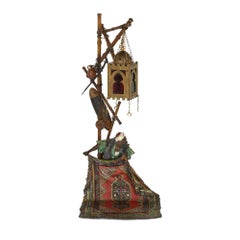
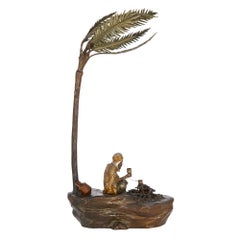
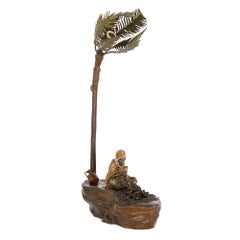
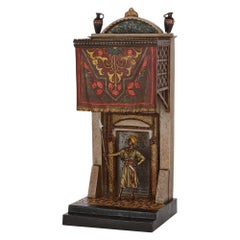
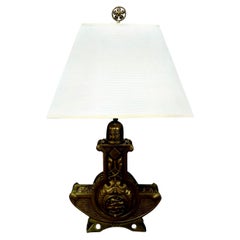
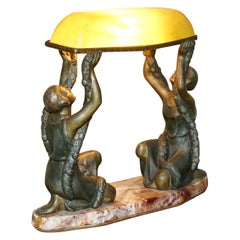
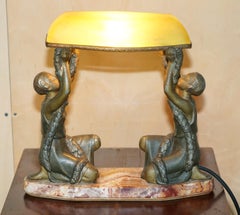
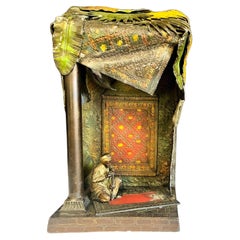
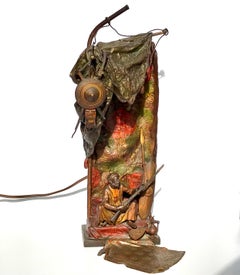
On offer is an early 20th-century "After Bergman" cold-painted spelter lamp, one that explicitly bears a stamp, likely for the manufacturer Müller (often associated with Müller Co. or other specialized French/Austrian metal foundries operating in the 1920s–1930s).
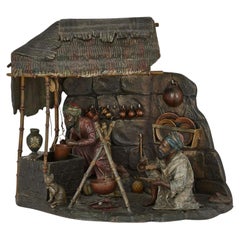
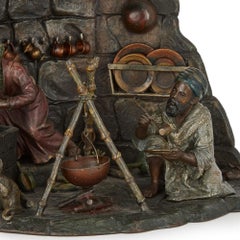
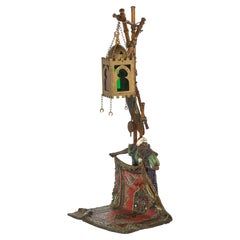
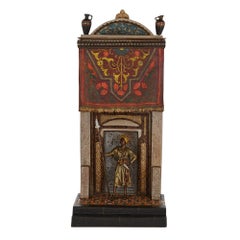
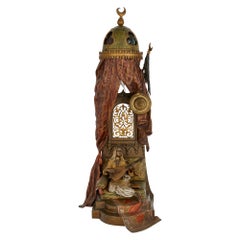
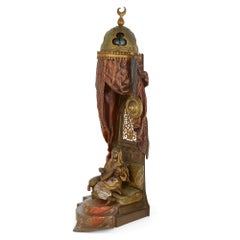
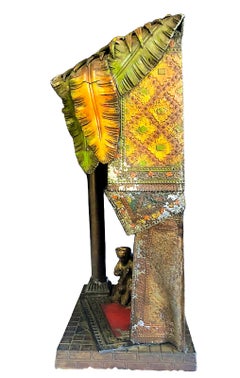
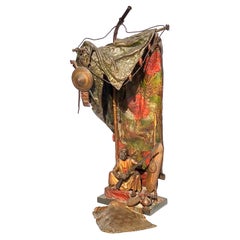
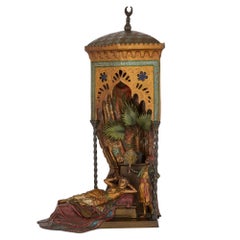
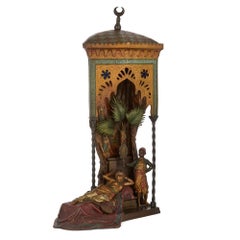
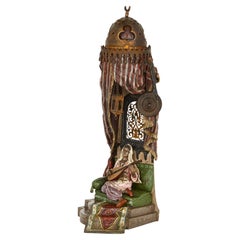
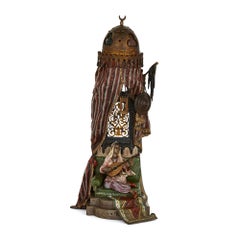
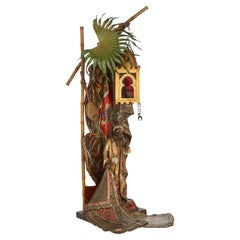
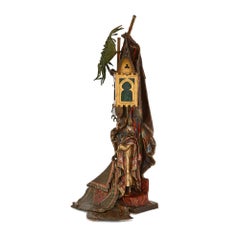
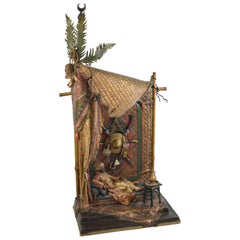
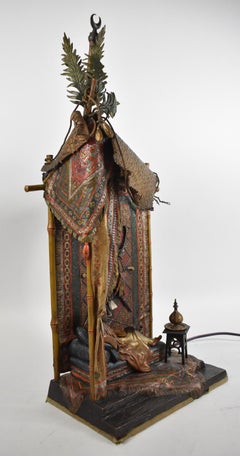
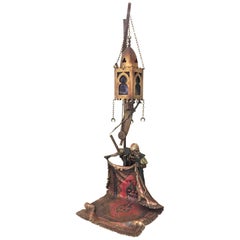
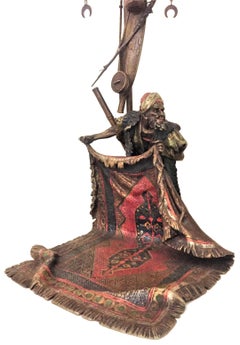
The lamp depicts a Middle Eastern carpet seller sitting cross-legged inside his market stall, which is shaded by broad green banana leaves. Richly patterned Oriental rugs, complete with fringe, are draped over the structure.
The rug seller is shown playing a rebab, an ancient Middle Eastern stringed instrument. He holds the instrument vertically resting on his lap or the floor. In the late 19th and early 20th centuries, Middle Eastern and North African marketplaces, known as “souks,” were incredibly competitive, noisy, and bustling environments. To stand out, merchants did not just sit quietly waiting for foot traffic. They utilized street performance—called busking—as a highly effective marketing tactic. A rug merchant playing a piercing, hypnotic melody on a rebab would successfully create an inviting ambiance, draw a curious crowd to his market stall, and provide a pleasant environment to keep potential buyers lingering around his expensive textiles longer.
During the height of the Art Deco and Orientalist craze, the original cold-painted bronze designs by Franz Bergman were incredibly popular and expensive. To meet the demand for more affordable home lighting, alternative foundries bought or replicated the original molds.
Rather than using costly heavy bronze, these foundries cast the lamps using spelter (a zinc-based alloy popular in France and Austria). Spelter was lighter, easier to cast, and took enamel "cold paint" exceptionally well. The kneeling merchant and the structural pillar show the classic, slightly softer detailing indicative of a high-quality spelter casting rather than crisp chiseled bronze. The striking orange, yellow, and green pigments applied directly onto the metal capture the exact moody, bazaar-like atmosphere intended by the original theme.
A light bulb socket is hidden underneath the canopy of the roof structure. When turned on, the bulb illuminates the entire interior marketplace scene from above, shining down through the leaves and casting a dramatic, warm, atmospheric glow.
Because these "After Bergman" pieces are genuine early 20th-century antiques in their own right, they carry significant historical value and are highly sought after by collectors of Art Deco and Orientalist lighting...
Category
Early 20th Century Grand Tour Franz Xaver Bergman (Bergmann) Lighting