Frederick William MacMonnies Landscape Paintings
American, 1863-1937
A sculptor of classical figures, American-born Frederick MacMonnies had fame in the United States and Europe in the later half of the 19th century and early 20th century. He occasionally returned to America but lived most of his life as in expatriate in France. He was especially known for his lithe bronze figures, especially ones titled Diana. The classical names of these figures allowed him the appearance of propriety but gave him the opportunity to model svelte nudes. Frederick MacMonnies was one of the first American sculptors to recognize the potential market of the middle class. He copyrighted his works and then contracted with foundries to mass produce some of his figures such as Diana in smaller sizes. MacMonnies was born in Brooklyn, New York, and was a child prodigy at carving stone. At age 18, he worked in the studio of Augustus Saint-Gaudens, and then persuaded him to become his assistant, keeping models damp and covered, running errands, and cleaning the studio. Evenings he studied at the Art Students League, Cooper Union, and the National Academy of Design. In Saint-Gaudens' studio, he met many of the wealthy people who shared Saint-Gaudens Beaux-Arts based ideas that art and architecture should be unified in order to create public art in America equal to that of classical antiquity or Renaissance Europe. Among the men that MacMonnies met through Saint-Gaudens who later furthered his career were architects Stanford White and Charles McKim and John LaFarge, decorator of mansions of the wealthy including the Vanderbilts. After four years of study and work in New York, MacMonnies left for Paris, opting for the more modernist techniques he could learn there over the more traditional sculpture teaching in Rome. One of his first teachers was Alexandre Falguiere, who had been an instructor of Saint-Gaudens and who injected a degree of contemporary realism into his classical figures. MacMonnies mingled with many upper class American expatriates and met his future wife, Mary Fairchild, a painter. MacMonnies came home briefly to help Saint-Gaudens with a project and then gained admittance in Paris to the Ecole des Beaux Arts, where he did numerous classical figures inspired by the style of small bronzes of Renaissance Florence, Italy. In 1889, he established his reputation with his sculpture of "Diana" at the Paris Salon. The execution of his nude sculpture was a challenge for a sculptor such as himself who strove for slim, well proportioned figures---the "aestheticizing of the nude". (Katz 12) In those days, most of the female models were poor peasants who were stocky with poor figures, distorted feet and often unbathed. However, MacMonnies found Marie Caira as the model for his Diana figures, and she, from a professional family of models, had the figure and social stature that met his criteria. Although he chose to live in Paris, many of his public and private sculpture commissions in future years, with the help of Saint-Gaudens and also architect, Stanford White, were in the United States.
to
1
Overall Width
to
Overall Height
to
1
1
1
1
1
1
1
3
644
605
445
327
1
1
Artist: Frederick William MacMonnies
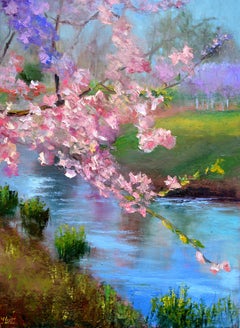
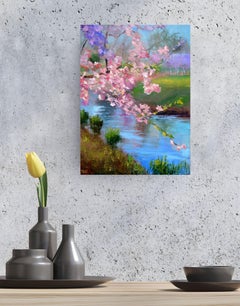
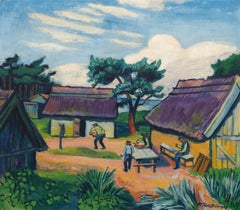
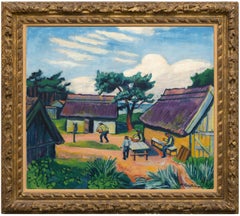
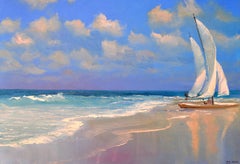
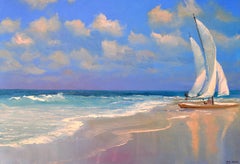
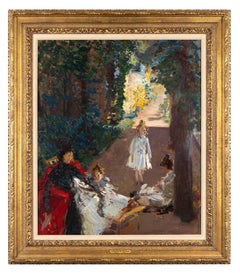
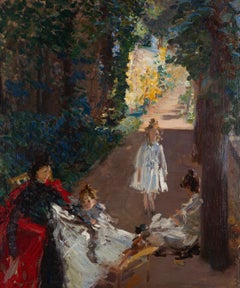
Les Jardin Du Giverny

Les Jardin Du Giverny

By Frederick William MacMonnies

Located in Sheffield, MA

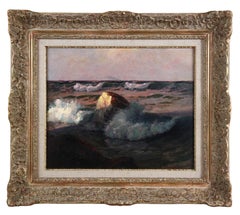
Frederick William MacMonnies American, 1863-1937 Les Jardin Du Giverny Oil on Canvas 21 by 25 in, w/ frame 27 ⅞ by 31 ⅞ in A sculptor of classical figures, American-born Frederick ...

Category

Early 20th Century Expressionist Frederick William MacMonnies Landscape Paintings
Materials

Oil

Related Items
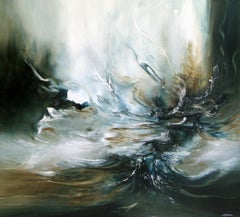
Full Calm
Full Calm

RAKHMET REDZHEPOV (RAMZI)Full Calm, 2024

$1,041

H 17.72 in W 21.66 in D 0.4 in

Full Calm

Located in Zofingen, AG

In crafting this piece, I explored the tranquil interplay of light and texture over the serene expanse of water, reflecting a quiet sunset. The gentle blending of acrylic and oil in ...

Category

2010s Expressionist Frederick William MacMonnies Landscape Paintings
Materials

Oil, Acrylic, Cardboard

"Countryside Landscape Hills Scene with Path" Expressionistic Style Oil Painting

"Countryside Landscape Hills Scene with Path" Expressionistic Style Oil Painting

By Michael Baxte

Located in New York, NY

A strong modernist oil painting depicted in the Mid Century by Russian painter Michael Baxte. Mostly known for his abstracted figures on canvas or street scenes, this piece is a wonderful representation of his landscapes with expressive use of color, shape, and form. Later in his career, Baxte explores Expressionism, infusing both European and North American stylistic trends. Art measures 15 x 18 inches Michael Posner Baxte was born in 1890 in the small town of Staroselje Belarus, Russia. For the first half of the 19th century, it was a center of the Chabad movement of Hasidic Jews, but this group was gone by the middle of the 19th century. By the time the Baxte family immigrated to the United States at the beginning of the 20th century, the Jewish population numbered only on the hundreds. The native language of the Baxte family was Yiddish. It is likely that the death of Michael Baxte’s father triggered the family’s immigration. Three older brothers arrived in New York between 1903 and 1905. Michael and his mother, Rebecca, arrived in 1907. By 1910 Michael, his mother, and brother, Joseph, were living in New Orleans and may have spent some time on a Louisiana plantation. Around 1912, Michael Baxte returned to Europe to study the violin. In 1914 he, his mother, and Joseph moved to New York City. Meanwhile, in Algeria, a talented young woman painter, Violette Mege, was making history. For the first time, a woman won the prestigious Beaux Art competition in Algeria. At first, the awards committee denied her the prize but, with French government intervention, Mege eventually prevailed. She won again 3 years later and, in 1916, used the scholarship to visit the United States of America. When Violette came to New York, she met Baxte, who was, by then, an accomplished violinist, teacher, and composer. Baxte’s compositions were performed at the Tokyo Imperial Theater, and in 1922 he was listed in the American Jewish Yearbook as one of the prominent members of the American Jewish community. As a music teacher, he encouraged individual expression. Baxte stated, “No pupil should ever be forced into the imitation of the teacher. Art is a personal experience, and the teacher’s truest aim must be to awaken this light of personality through the patient's light of science.” By 1920 Michael Baxte and Violette Mege were living together in Manhattan. Although they claimed to be living as husband and wife, it seems that their marriage did not become official until 1928. On their “unofficial” honeymoon around 1917, in Algiers, Baxte confided to her his ambition to paint. There and later in New Mexico where the wonderful steeped sunlight approximates the coloring of Algiers, she taught him his heart’s desire. He never had any other teacher. She never had any other pupil. For ten years she devoted all her time, energy, and ambition to teaching, encouraging, inspiring him. Then in 1928, their mutual strivings were rewarded, as his works were being chosen as one of the two winners in the Dudensing National Competition for American Painters. Out of 150 artists from across the country participated in the Dudensing, and Michael Posner Baxte and, Robert Fawcett...

Category

Mid-20th Century Expressionist Frederick William MacMonnies Landscape Paintings
Materials

Oil, Masonite

North West. Richard K Blades. Oil painting of the sea and sky Turner influence.

North West. Richard K Blades. Oil painting of the sea and sky Turner influence.

By Richard K Blades

Located in Coltishall, GB

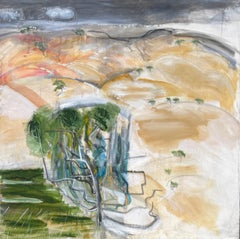
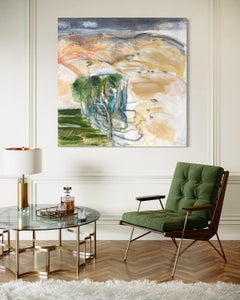
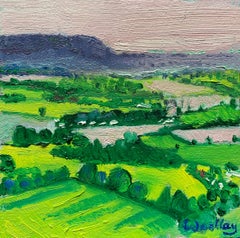
North West - a tumultuous seascape beneath a dramatic sky. Blades' textured brushstrokes that merge shades of deep indigo and soft pink, suggest an impending storm. The transition fr...

Category

21st Century and Contemporary Expressionist Frederick William MacMonnies Landscape Paintings
Materials

Oil, Board

"Landscape Scene of Fisherman by Lake" Expressionistic Oil Painting on Masonite

"Landscape Scene of Fisherman by Lake" Expressionistic Oil Painting on Masonite

By Michael Baxte

Located in New York, NY

A strong modernist oil painting depicted in 1963 by Russian painter Michael Baxte. Mostly known for his abstracted figures on canvas or street scenes, this piece is a wonderful representation of his figures in water landscapes with expressive use of color, shape, and form. Later in his career, Baxte explores Expressionism, infusing both European and North American stylistic trends. This piece is from later in his career, but we can feel this underlying style throughout. Art measures 18 x 21.75 inches Michael Posner Baxte was born in 1890 in the small town of Staroselje Belarus, Russia. For the first half of the 19th century it was a center of the Chabad movement of Hasidic Jews, but this group was gone by the middle of the 19th century. By the time the Baxte family immigrated to the United States at the beginning of the 20th century, the Jewish population numbered only on the hundreds. The native language of the Baxte family was Yiddish. It is likely that the death of Michael Baxte’s father triggered the family’s immigration. Three older brothers arrived in New York between 1903 and 1905. Michael and his mother, Rebecca, arrived in 1907. By 1910 Michael, his mother, and brother, Joseph, were living in New Orleans and may have spent some time on a Louisiana plantation. Around 1912, Michael Baxte returned to Europe to study the violin. In 1914 he, his mother, and Joseph moved to New York City. Meanwhile, in Algeria, a talented young woman painter, Violette Mege, was making history. Since for the first time, a woman won the prestigious Beaux Art competition in Algeria. At first, the awards committee denied her the prize but, with French government intervention, Mege eventually prevailed. She won again 3 years later and, in 1916, used the scholarship to visit the United States of America. When Violette came to New York, she met Baxte, who was, by then, an accomplished violinist, teacher, and composer. Baxte’s compositions were performed at the Tokyo Imperial Theater, and in 1922 he was listed in the American Jewish Yearbook as one of the prominent members of the American Jewish community. As a music teacher he encouraged individual expression. Baxte stated, “No pupil should ever be forced into imitation of the teacher. Art is a personal experience, and the teacher’s truest aim must be to awaken this light of personality through the patient light of science.” By 1920 Michael Baxte and Violette Mege were living together in Manhattan. Although they claimed to be living as husband and wife, it seems that their marriage did not become official until 1928. On their “unofficial” honeymoon around 1917, in Algiers, Baxte confided to her his ambition to paint. There and later in New Mexico where the wonderful steeped sunlight approximates the coloring of Algiers, she taught him his heart’s desire. He never had any other teacher. She never had any other pupil. For ten years she devoted all her time, energy, and ambition to teaching, encouraging, inspiring him. Then in 1928, their mutual strivings were rewarded, as his works were being chosen as one of the two winners in the Dudensing National Competition for American Painters. Out of 150 artists from across the country participated in the Dudensing, and Michael Posner Baxte and, Robert Fawcett, were the winners. In his 1924 naturalization application, he indicated that he was sometimes known as “Michael Posner Baxte.” One of the witnesses to his application was Bernard Karfiol, a Jewish American artist. That’s when Michael may...

Category

1960s Expressionist Frederick William MacMonnies Landscape Paintings
Materials

Oil, Masonite

"Mexican Landscape Scene of Mother with Children" Expressionistic Style Painting

"Mexican Landscape Scene of Mother with Children" Expressionistic Style Painting

By Michael Baxte

Located in New York, NY

A strong modernist oil painting depicted in 1962 by Russian painter Michael Baxte. Mostly known for his abstracted figures on canvas or street scenes, this piece is a wonderful representation of his portraits in countryside landscapes with expressive use of color, shape, and form. Later in his career, Baxte explores Expressionism, infusing both European and North American stylistic trends. Art measures 21.25 x 25.5 inches Michael Posner Baxte was born in 1890 in the small town of Staroselje Belarus, Russia. For the first half of the 19th century, it was a center of the Chabad movement of Hasidic Jews, but this group was gone by the middle of the 19th century. By the time the Baxte family immigrated to the United States at the beginning of the 20th century, the Jewish population numbered only on the hundreds. The native language of the Baxte family was Yiddish. It is likely that the death of Michael Baxte’s father triggered the family’s immigration. Three older brothers arrived in New York between 1903 and 1905. Michael and his mother, Rebecca, arrived in 1907. By 1910 Michael, his mother, and brother, Joseph, were living in New Orleans and may have spent some time on a Louisiana plantation. Around 1912, Michael Baxte returned to Europe to study the violin. In 1914 he, his mother, and Joseph moved to New York City. Meanwhile, in Algeria, a talented young woman painter, Violette Mege, was making history. For the first time, a woman won the prestigious Beaux Art competition in Algeria. At first, the awards committee denied her the prize but, with French government intervention, Mege eventually prevailed. She won again 3 years later and, in 1916, used the scholarship to visit the United States of America. When Violette came to New York, she met Baxte, who was, by then, an accomplished violinist, teacher, and composer. Baxte’s compositions were performed at the Tokyo Imperial Theater, and in 1922 he was listed in the American Jewish Yearbook as one of the prominent members of the American Jewish community. As a music teacher, he encouraged individual expression. Baxte stated, “No pupil should ever be forced into the imitation of the teacher. Art is a personal experience, and the teacher’s truest aim must be to awaken this light of personality through the patient's light of science.” By 1920 Michael Baxte and Violette Mege were living together in Manhattan. Although they claimed to be living as husband and wife, it seems that their marriage did not become official until 1928. On their “unofficial” honeymoon around 1917, in Algiers, Baxte confided to her his ambition to paint. There and later in New Mexico where the wonderful steeped sunlight approximates the coloring of Algiers, she taught him his heart’s desire. He never had any other teacher. She never had any other pupil. For ten years she devoted all her time, energy, and ambition to teaching, encouraging, inspiring him. Then in 1928, their mutual strivings were rewarded, as his works were being chosen as one of the two winners in the Dudensing National Competition for American Painters. Out of 150 artists from across the country participated in the Dudensing, and Michael Posner Baxte and, Robert Fawcett...

Category

1960s Expressionist Frederick William MacMonnies Landscape Paintings
Materials

Oil, Masonite

Blooming balcony – Impressionist Landscape Garden Oil Painting Wall Art

Blooming balcony – Impressionist Landscape Garden Oil Painting Wall Art

By Elena Lukina

Located in Zofingen, AG

This vibrant oil painting is an evocative landscape painting titled Blooming balcony created by the internationally registered artist Elena Lukina in 2020.As a comforting landscape p...

Category

2010s Expressionist Frederick William MacMonnies Landscape Paintings
Materials

Canvas, Oil

"Landscape of a Village Near Mountains" Expressionistic Oil Painting on Masonite

"Landscape of a Village Near Mountains" Expressionistic Oil Painting on Masonite

By Michael Baxte

Located in New York, NY

A strong modernist oil painting depicted in 1969 by Russian painter Michael Baxte. Mostly known for his abstracted figures on canvas or street scenes, this piece is a wonderful representation of his bold still life paintings, with expressive use of color, shape, and form. Later in his career, Baxte explores Expressionism, infusing both European and North American stylistic trends. This piece is from later in his career, but we can feel this underlying style throughout. Art measures 18 x 21.75 inches Michael Posner Baxte was born in 1890 in the small town of Staroselje Belarus, Russia. For the first half of the 19th century it was a center of the Chabad movement of Hasidic Jews, but this group was gone by the middle of the 19th century. By the time the Baxte family immigrated to the United States at the beginning of the 20th century, the Jewish population numbered only on the hundreds. The native language of the Baxte family was Yiddish. It is likely that the death of Michael Baxte’s father triggered the family’s immigration. Three older brothers arrived in New York between 1903 and 1905. Michael and his mother, Rebecca, arrived in 1907. By 1910 Michael, his mother, and brother, Joseph, were living in New Orleans and may have spent some time on a Louisiana plantation. Around 1912, Michael Baxte returned to Europe to study the violin. In 1914 he, his mother, and Joseph moved to New York City. Meanwhile, in Algeria, a talented young woman painter, Violette Mege, was making history. Since for the first time, a woman won the prestigious Beaux Art competition in Algeria. At first, the awards committee denied her the prize but, with French government intervention, Mege eventually prevailed. She won again 3 years later and, in 1916, used the scholarship to visit the United States of America. When Violette came to New York, she met Baxte, who was, by then, an accomplished violinist, teacher, and composer. Baxte’s compositions were performed at the Tokyo Imperial Theater, and in 1922 he was listed in the American Jewish Yearbook as one of the prominent members of the American Jewish community. As a music teacher he encouraged individual expression. Baxte stated, “No pupil should ever be forced into imitation of the teacher. Art is a personal experience, and the teacher’s truest aim must be to awaken this light of personality through the patient light of science.” By 1920 Michael Baxte and Violette Mege were living together in Manhattan. Although they claimed to be living as husband and wife, it seems that their marriage did not become official until 1928. On their “unofficial” honeymoon around 1917, in Algiers, Baxte confided to her his ambition to paint. There and later in New Mexico where the wonderful steeped sunlight approximates the coloring of Algiers, she taught him his heart’s desire. He never had any other teacher. She never had any other pupil. For ten years she devoted all her time, energy, and ambition to teaching, encouraging, inspiring him. Then in 1928, their mutual strivings were rewarded, as his works were being chosen as one of the two winners in the Dudensing National Competition for American Painters. Out of 150 artists from across the country participated in the Dudensing, and Michael Posner Baxte and, Robert Fawcett, were the winners. In his 1924 naturalization application, he indicated that he was sometimes known as “Michael Posner Baxte.” One of the witnesses to his application was Bernard Karfiol, a Jewish American artist. That’s when Michael may...

Category

1960s Expressionist Frederick William MacMonnies Landscape Paintings
Materials

Oil, Masonite

"Colorful Mexican Village Scene" Expressionistic Oil Painting on Masonite

"Colorful Mexican Village Scene" Expressionistic Oil Painting on Masonite

By Michael Baxte

Located in New York, NY

A strong modernist oil painting depicted Circa 1960 by Russian painter Michael Baxte. Mostly known for his abstracted figures on canvas or street scenes, this piece is a wonderful representation of his bold still life paintings, with expressive use of color, shape, and form. Later in his career, Baxte explores Expressionism, infusing both European and North American stylistic trends. This piece is from later in his career, but we can feel this underlying style throughout. Art measures 18 x 21.75 inches Michael Posner Baxte was born in 1890 in the small town of Staroselje Belarus, Russia. For the first half of the 19th century it was a center of the Chabad movement of Hasidic Jews, but this group was gone by the middle of the 19th century. By the time the Baxte family immigrated to the United States at the beginning of the 20th century, the Jewish population numbered only on the hundreds. The native language of the Baxte family was Yiddish. It is likely that the death of Michael Baxte’s father triggered the family’s immigration. Three older brothers arrived in New York between 1903 and 1905. Michael and his mother, Rebecca, arrived in 1907. By 1910 Michael, his mother, and brother, Joseph, were living in New Orleans and may have spent some time on a Louisiana plantation. Around 1912, Michael Baxte returned to Europe to study the violin. In 1914 he, his mother, and Joseph moved to New York City. Meanwhile, in Algeria, a talented young woman painter, Violette Mege, was making history. Since for the first time, a woman won the prestigious Beaux Art competition in Algeria. At first, the awards committee denied her the prize but, with French government intervention, Mege eventually prevailed. She won again 3 years later and, in 1916, used the scholarship to visit the United States of America. When Violette came to New York, she met Baxte, who was, by then, an accomplished violinist, teacher, and composer. Baxte’s compositions were performed at the Tokyo Imperial Theater, and in 1922 he was listed in the American Jewish Yearbook as one of the prominent members of the American Jewish community. As a music teacher he encouraged individual expression. Baxte stated, “No pupil should ever be forced into imitation of the teacher. Art is a personal experience, and the teacher’s truest aim must be to awaken this light of personality through the patient light of science.” By 1920 Michael Baxte and Violette Mege were living together in Manhattan. Although they claimed to be living as husband and wife, it seems that their marriage did not become official until 1928. On their “unofficial” honeymoon around 1917, in Algiers, Baxte confided to her his ambition to paint. There and later in New Mexico where the wonderful steeped sunlight approximates the coloring of Algiers, she taught him his heart’s desire. He never had any other teacher. She never had any other pupil. For ten years she devoted all her time, energy, and ambition to teaching, encouraging, inspiring him. Then in 1928, their mutual strivings were rewarded, as his works were being chosen as one of the two winners in the Dudensing National Competition for American Painters. Out of 150 artists from across the country participated in the Dudensing, and Michael Posner Baxte and, Robert Fawcett, were the winners. In his 1924 naturalization application, he indicated that he was sometimes known as “Michael Posner Baxte.” One of the witnesses to his application was Bernard Karfiol, a Jewish American artist. That’s when Michael may...

Category

1960s Expressionist Frederick William MacMonnies Landscape Paintings
Materials

Oil, Masonite

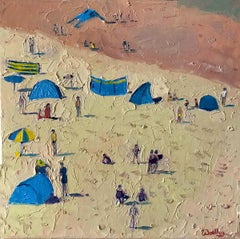
Spanish Shadows - Original, Contemporary, Cityscape

Spanish Shadows - Original, Contemporary, Cityscape

By Eleanor Woolley

Located in Deddington, GB

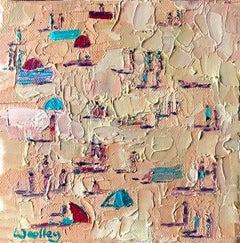
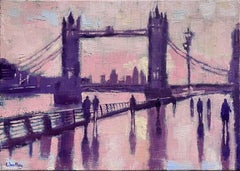
Spanish Shadows is an Original Painting by Eleanor Woolley. This painting is inspired by the Artist trips to Spain, the hot pink tones reflecting the heat on the streets. Long shadow...

Category

2010s Expressionist Frederick William MacMonnies Landscape Paintings
Materials

Canvas, Oil

"Landscape Scene of Mexican Villagers" Expressionistic Oil Painting on Masonite

"Landscape Scene of Mexican Villagers" Expressionistic Oil Painting on Masonite

By Michael Baxte

Located in New York, NY

A strong modernist oil painting depicted in 1971 by Russian painter Michael Baxte. Mostly known for his abstracted figures on canvas or street scenes, this piece is a wonderful representation of his landscape paintings, with expressive use of color, shape, and form. Later in his career, Baxte explores Expressionism, infusing both European and North American stylistic trends. This piece is from later in his career, but we can feel this underlying style throughout. Art measures 18 x 21.75 inches Michael Posner Baxte was born in 1890 in the small town of Staroselje Belarus, Russia. For the first half of the 19th century it was a center of the Chabad movement of Hasidic Jews, but this group was gone by the middle of the 19th century. By the time the Baxte family immigrated to the United States at the beginning of the 20th century, the Jewish population numbered only on the hundreds. The native language of the Baxte family was Yiddish. It is likely that the death of Michael Baxte’s father triggered the family’s immigration. Three older brothers arrived in New York between 1903 and 1905. Michael and his mother, Rebecca, arrived in 1907. By 1910 Michael, his mother, and brother, Joseph, were living in New Orleans and may have spent some time on a Louisiana plantation. Around 1912, Michael Baxte returned to Europe to study the violin. In 1914 he, his mother, and Joseph moved to New York City. Meanwhile, in Algeria, a talented young woman painter, Violette Mege, was making history. Since for the first time, a woman won the prestigious Beaux Art competition in Algeria. At first, the awards committee denied her the prize but, with French government intervention, Mege eventually prevailed. She won again 3 years later and, in 1916, used the scholarship to visit the United States of America. When Violette came to New York, she met Baxte, who was, by then, an accomplished violinist, teacher, and composer. Baxte’s compositions were performed at the Tokyo Imperial Theater, and in 1922 he was listed in the American Jewish Yearbook as one of the prominent members of the American Jewish community. As a music teacher he encouraged individual expression. Baxte stated, “No pupil should ever be forced into imitation of the teacher. Art is a personal experience, and the teacher’s truest aim must be to awaken this light of personality through the patient light of science.” By 1920 Michael Baxte and Violette Mege were living together in Manhattan. Although they claimed to be living as husband and wife, it seems that their marriage did not become official until 1928. On their “unofficial” honeymoon around 1917, in Algiers, Baxte confided to her his ambition to paint. There and later in New Mexico where the wonderful steeped sunlight approximates the coloring of Algiers, she taught him his heart’s desire. He never had any other teacher. She never had any other pupil. For ten years she devoted all her time, energy, and ambition to teaching, encouraging, inspiring him. Then in 1928, their mutual strivings were rewarded, as his works were being chosen as one of the two winners in the Dudensing National Competition for American Painters. Out of 150 artists from across the country participated in the Dudensing, and Michael Posner Baxte and, Robert Fawcett, were the winners. In his 1924 naturalization application, he indicated that he was sometimes known as “Michael Posner Baxte.” One of the witnesses to his application was Bernard Karfiol, a Jewish American artist. That’s when Michael may...

Category

1960s Expressionist Frederick William MacMonnies Landscape Paintings
Materials

Oil, Masonite

Before the Storm
Before the Storm

RAKHMET REDZHEPOV (RAMZI)Before the Storm, 2021

$339

H 7.09 in W 9.45 in D 0.4 in

Before the Storm

Located in Zofingen, AG

In creating this piece, I sought to capture the vibrant yet calm moment before a storm. I used acrylic and oil to blend realism with abstraction, allowing the textures and colors to ...

Category

2010s Expressionist Frederick William MacMonnies Landscape Paintings
Materials

Oil, Acrylic, Canvas

Copons Flower Park Acrylic Painting, Expressionist, Framed, 1990s

Copons Flower Park Acrylic Painting, Expressionist, Framed, 1990s

By Joan Copons

Located in CORAL GABLES - MIAMI, FL

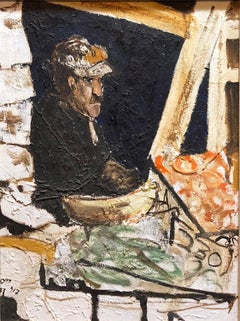
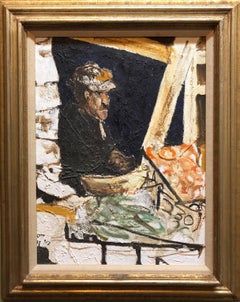
Original work of the Spanish artist Joan COPONS. -Barcelona-jardin. original acrylic painting

Category

1990s Expressionist Frederick William MacMonnies Landscape Paintings
Materials

Canvas, Oil

Frederick William Macmonnies landscape paintings for sale on 1stDibs.

Find a wide variety of authentic Frederick William MacMonnies landscape paintings available for sale on 1stDibs. You can also browse by medium to find art by Frederick William MacMonnies in oil paint, paint and more. Much of the original work by this artist or collective was created during the 20th century and is mostly associated with the Expressionist style. Not every interior allows for large Frederick William MacMonnies landscape paintings, so small editions measuring 30 inches across are available. Customers who are interested in this artist might also find the work of Philip Evergood, David Barnett, and Bruno Surdo. Frederick William MacMonnies landscape paintings prices can differ depending upon medium, time period and other attributes. On 1stDibs, the price for these items starts at $66,000 and tops out at $66,000, while the average work can sell for $66,000.