Georges Redon Art

to
1
2
1
1
1
1
1
1
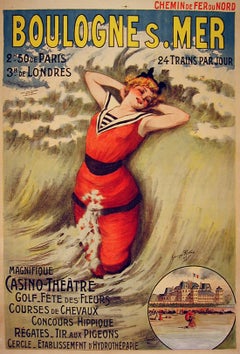
Original Antique French Poster, "Boulogne S.Mer ", Georges Redon, Lithograph

Original Antique French Poster, "Boulogne S.Mer ", Georges Redon, Lithograph

By Georges Redon

Located in Dallas, TX

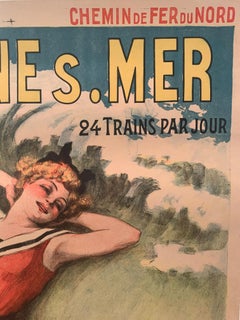
Antar, artist: Georges Redon. Size: 49 x 90. Year: 1905. Archival linen backed in very good condition; ready to frame. Original linen backed stone lithograph: GEORGES REDON (1869-1943) BOULOGNE S. MER. 1905. 41 3/4x29 1/2 inches, 55 1/4x75 cm. While on the surface this appears as an innocent enough image promoting travel to one of France's premier beach resorts, it is, in fact, also one of the most suggestive Belle Epoque posters. Despite the staid Victorian style of swimwear in red, the relationship between the woman and the waves is hard to ignore. Like all great posters, once it has the viewer's attention it also advertises many of the other pleasures and attractions available in Boulogne. Listing off a few of the wonderful things that you can do in Boulogne is magnificent theatre, casinos, golf, horse races, pigeon shooting...

Category

Early 1900s Art Nouveau Georges Redon Art
Materials

Lithograph

Related Items
Marc Chagall - Inspiration - Original Lithograph from "Chagall Lithographe" v. 2

Marc Chagall - Inspiration - Original Lithograph from "Chagall Lithographe" v. 2

By Marc Chagall

Located in Collonge Bellerive, Geneve, CH

Marc Chagall Original Lithograph from Chagall Lithographe 1957-1962. VOLUME II. 1963 Dimensions: 32 x 24 cm From the unsigned edition of 10000 copies without margins Reference: Mourlot 398 Condition : Excellent Marc Chagall (born in 1887) Marc Chagall was born in Belarus in 1887 and developed an early interest in art. After studying painting, in 1907 he left Russia for Paris, where he lived in an artist colony on the city’s outskirts. Fusing his own personal, dreamlike imagery with hints of the fauvism and cubism popular in France at the time, Chagall created his most lasting work—including I and the Village (1911)—some of which would be featured in the Salon des Indépendants exhibitions. After returning to Vitebsk for a visit in 1914, the outbreak of WWI trapped Chagall in Russia. He returned to France in 1923 but was forced to flee the country and Nazi persecution during WWII. Finding asylum in the U.S., Chagall became involved in set and costume design before returning to France in 1948. In his later years, he experimented with new art forms and was commissioned to produce numerous large-scale works. Chagall died in St.-Paul-de-Vence in 1985. The Village Marc Chagall was born in a small Hassidic community on the outskirts of Vitebsk, Belarus, on July 7, 1887. His father was a fishmonger, and his mother ran a small sundries shop in the village. As a child, Chagall attended the Jewish elementary school, where he studied Hebrew and the Bible, before later attending the Russian public school. He began to learn the fundamentals of drawing during this time, but perhaps more importantly, he absorbed the world around him, storing away the imagery and themes that would feature largely in most of his later work. At age 19 Chagall enrolled at a private, all-Jewish art school and began his formal education in painting, studying briefly with portrait artist Yehuda Pen. However, he left the school after several months, moving to St. Petersburg in 1907 to study at the Imperial Society for the Protection of Fine Arts. The following year, he enrolled at the Svanseva School, studying with set designer Léon Bakst, whose work had been featured in Sergei Diaghilev's Ballets Russes. This early experience would prove important to Chagall’s later career as well. Despite this formal instruction, and the widespread popularity of realism in Russia at the time, Chagall was already establishing his own personal style, which featured a more dreamlike unreality and the people, places and imagery that were close to his heart. Some examples from this period are his Window Vitebsk (1908) and My Fianceé with Black Gloves (1909), which pictured Bella Rosenfeld, to whom he had recently become engaged. The Beehive Despite his romance with Bella, in 1911 an allowance from Russian parliament member and art patron Maxim Binaver enabled Chagall to move to Paris, France. After settling briefly in the Montparnasse neighborhood, Chagall moved further afield to an artist colony known as La Ruche (“The Beehive”), where he began to work side by side with abstract painters such as Amedeo Modigliani and Fernand Léger as well as the avant-garde poet Guillaume Apollinaire. At their urging, and under the influence of the wildly popular fauvism and cubism, Chagall lightened his palette and pushed his style ever further from reality. I and the Village (1911) and Homage to Apollinaire (1912) are among his early Parisian works, widely considered to be his most successful and representative period. Though his work stood stylistically apart from his cubist contemporaries, from 1912 to 1914 Chagall exhibited several paintings at the annual Salon des Indépendants exhibition, where works by the likes of Juan Gris, Marcel Duchamp and Robert Delaunay were causing a stir in the Paris art world. Chagall’s popularity began to spread beyond La Ruche, and in May 1914 he traveled to Berlin to help organize his first solo exhibition, at Der Sturm Gallery. Chagall remained in the city until the highly acclaimed show opened that June. He then returned to Vitebsk, unaware of the fateful events to come. War, Peace and Revolution In August 1914 the outbreak of World War I precluded Chagall’s plans to return to Paris. The conflict did little to stem the flow of his creative output, however, instead merely giving him direct access to the childhood scenes so essential to his work, as seen in paintings such as Jew in Green (1914) and Over Vitebsk (1914). His paintings from this period also occasionally featured images of the war’s impact on the region, as with Wounded Soldier (1914) and Marching (1915). But despite the hardships of life during wartime, this would also prove to be a joyful period for Chagall. In July 1915 he married Bella, and she gave birth to a daughter, Ida, the following year. Their appearance in works such as Birthday (1915), Bella and Ida by the Window (1917) and several of his “Lovers” paintings give a glimpse of the island of domestic bliss that was Chagall’s amidst the chaos. To avoid military service and stay with his new family, Chagall took a position as a clerk in the Ministry of War Economy in St. Petersburg. While there he began work on his autobiography and also immersed himself in the local art scene, befriending novelist Boris Pasternak, among others. He also exhibited his work in the city and soon gained considerable recognition. That notoriety would prove important in the aftermath of the 1917 Russian Revolution when he was appointed as the Commissar of Fine Arts in Vitebsk. In his new post, Chagall undertook various projects in the region, including the 1919 founding of the Academy of the Arts. Despite these endeavors, differences among his colleagues eventually disillusioned Chagall. In 1920 he relinquished his position and moved his family to Moscow, the post-revolution capital of Russia. In Moscow, Chagall was soon commissioned to create sets and costumes for various productions at the Moscow State Yiddish Theater...

Category

1960s Surrealist Georges Redon Art

Materials

Lithograph

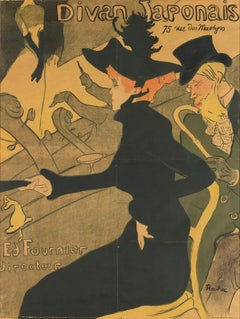
Divan Japonais

Divan Japonais

By Henri de Toulouse-Lautrec

Located in New York, NY

Color lithograph. Printed by Ancourt, Paris. The Divan Japonais was a small café-concert at 75 rue des Martyrs, Paris, where Yvette Guilbert began her career. This is Toulouse-Lautr...

Category

1890s Art Nouveau Georges Redon Art
Materials

Color, Lithograph

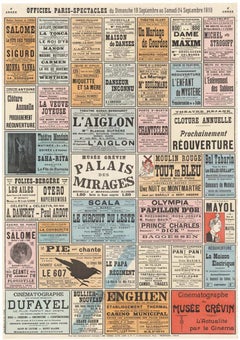
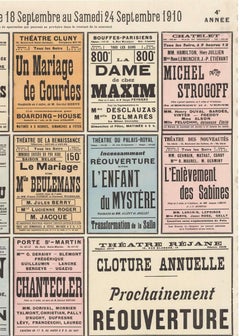
Original 1910 Officiel Paris Spectacles vintage poster for theater performances

Original 1910 Officiel Paris Spectacles vintage poster for theater performances

Located in Spokane, WA

Linen backed original of the official event spectacles of Paris, promoting Moulin Rouge, Salome, Musee Grevin, Sarah-Rita, Madame Butterfly, Carmen, La Vie de Boheme. Orignial in ex...

Category

1910s Art Nouveau Georges Redon Art
Materials

Lithograph

Leon Bakst Three Costume designs from Le Dieu Bleu Ballet 1911

Leon Bakst Three Costume designs from Le Dieu Bleu Ballet 1911

By Leon Bakst

Located in Paonia, CO

Three iconic Leon Bakst costume designs for Le Dieu Bleu ( The Blue God ) a ballet choreographed by Michel Fokine and written by Cocteau. The ballet premiered in Paris in 1912. It tells the story of a girl who tries to dissuade her fiancé from becoming a priest and is thereafter tormented by demons; but she is eventually saved by the Blue God, a part performed by Vaslaw Nijinsky, the greatest male dancer of his time. Fokine’s choreography and Bakst’s costumes drew upon Siamese dance and Hindu sculpture. These three prints are vintage reproductions quite unlike the reproductions of today. They each have the look of original watercolors and are backed on heavy grey rag paper with a hand painted gold border. Properly framed they will definitely look like the original drawing. The size of the actual prints varies slightly but the background paper size is consistently 10.5 x 15.5. Born in Russia in 1866, Léon Bakst belonged to a young generation of European artists who rebelled against 19th-century stage realism, sparking a revolution in theatre design. His fame lay in the sets and costumes he designed for Serge Diaghilev’s (1872 – 1929) legendary dance company the Ballets Russes, and his huge pageant spectaculars for the dancer and patron of the performing arts, Ida Rubinstein...

Category

20th Century Art Nouveau Georges Redon Art
Materials

Color

Marc Chagall - Original Lithograph

Marc ChagallMarc Chagall - Original Lithograph, 1963

$1,453

H 9.45 in W 12.6 in D 0.04 in

Marc Chagall - Original Lithograph

By Marc Chagall

Located in Collonge Bellerive, Geneve, CH

Marc Chagall Original Lithograph 1963 Dimensions: 32 x 24 cm Reference: Chagall Lithographe 1957-1962. VOLUME II. Condition : Excellent Marc Chagall (born in 1887) Marc Chagall was born in Belarus in 1887 and developed an early interest in art. After studying painting, in 1907 he left Russia for Paris, where he lived in an artist colony on the city’s outskirts. Fusing his own personal, dreamlike imagery with hints of the fauvism and cubism popular in France at the time, Chagall created his most lasting work—including I and the Village (1911)—some of which would be featured in the Salon des Indépendants exhibitions. After returning to Vitebsk for a visit in 1914, the outbreak of WWI trapped Chagall in Russia. He returned to France in 1923 but was forced to flee the country and Nazi persecution during WWII. Finding asylum in the U.S., Chagall became involved in set and costume design before returning to France in 1948. In his later years, he experimented with new art forms and was commissioned to produce numerous large-scale works. Chagall died in St.-Paul-de-Vence in 1985. The Village Marc Chagall was born in a small Hassidic community on the outskirts of Vitebsk, Belarus, on July 7, 1887. His father was a fishmonger, and his mother ran a small sundries shop in the village. As a child, Chagall attended the Jewish elementary school, where he studied Hebrew and the Bible, before later attending the Russian public school. He began to learn the fundamentals of drawing during this time, but perhaps more importantly, he absorbed the world around him, storing away the imagery and themes that would feature largely in most of his later work. At age 19 Chagall enrolled at a private, all-Jewish art school and began his formal education in painting, studying briefly with portrait artist Yehuda Pen. However, he left the school after several months, moving to St. Petersburg in 1907 to study at the Imperial Society for the Protection of Fine Arts. The following year, he enrolled at the Svanseva School, studying with set designer Léon Bakst, whose work had been featured in Sergei Diaghilev's Ballets Russes. This early experience would prove important to Chagall’s later career as well. Despite this formal instruction, and the widespread popularity of realism in Russia at the time, Chagall was already establishing his own personal style, which featured a more dreamlike unreality and the people, places and imagery that were close to his heart. Some examples from this period are his Window Vitebsk (1908) and My Fianceé with Black Gloves (1909), which pictured Bella Rosenfeld, to whom he had recently become engaged. The Beehive Despite his romance with Bella, in 1911 an allowance from Russian parliament member and art patron Maxim Binaver enabled Chagall to move to Paris, France. After settling briefly in the Montparnasse neighborhood, Chagall moved further afield to an artist colony known as La Ruche (“The Beehive”), where he began to work side by side with abstract painters such as Amedeo Modigliani and Fernand Léger as well as the avant-garde poet Guillaume Apollinaire. At their urging, and under the influence of the wildly popular fauvism and cubism, Chagall lightened his palette and pushed his style ever further from reality. I and the Village (1911) and Homage to Apollinaire (1912) are among his early Parisian works, widely considered to be his most successful and representative period. Though his work stood stylistically apart from his cubist contemporaries, from 1912 to 1914 Chagall exhibited several paintings at the annual Salon des Indépendants exhibition, where works by the likes of Juan Gris, Marcel Duchamp and Robert Delaunay were causing a stir in the Paris art world. Chagall’s popularity began to spread beyond La Ruche, and in May 1914 he traveled to Berlin to help organize his first solo exhibition, at Der Sturm Gallery. Chagall remained in the city until the highly acclaimed show opened that June. He then returned to Vitebsk, unaware of the fateful events to come. War, Peace and Revolution In August 1914 the outbreak of World War I precluded Chagall’s plans to return to Paris. The conflict did little to stem the flow of his creative output, however, instead merely giving him direct access to the childhood scenes so essential to his work, as seen in paintings such as Jew in Green (1914) and Over Vitebsk (1914). His paintings from this period also occasionally featured images of the war’s impact on the region, as with Wounded Soldier (1914) and Marching (1915). But despite the hardships of life during wartime, this would also prove to be a joyful period for Chagall. In July 1915 he married Bella, and she gave birth to a daughter, Ida, the following year. Their appearance in works such as Birthday (1915), Bella and Ida by the Window (1917) and several of his “Lovers” paintings give a glimpse of the island of domestic bliss that was Chagall’s amidst the chaos. To avoid military service and stay with his new family, Chagall took a position as a clerk in the Ministry of War Economy in St. Petersburg. While there he began work on his autobiography and also immersed himself in the local art scene, befriending novelist Boris Pasternak, among others. He also exhibited his work in the city and soon gained considerable recognition. That notoriety would prove important in the aftermath of the 1917 Russian Revolution when he was appointed as the Commissar of Fine Arts in Vitebsk. In his new post, Chagall undertook various projects in the region, including the 1919 founding of the Academy of the Arts. Despite these endeavors, differences among his colleagues eventually disillusioned Chagall. In 1920 he relinquished his position and moved his family to Moscow, the post-revolution capital of Russia. In Moscow, Chagall was soon commissioned to create sets and costumes for various productions at the Moscow State Yiddish Theater...

Category

1960s Surrealist Georges Redon Art

Materials

Lithograph

Marc Chagall Lithograph, Unsigned, 1960, Adam and Eve are Banished from Paradise

Marc Chagall Lithograph, Unsigned, 1960, Adam and Eve are Banished from Paradise

By Marc Chagall

Located in Washington, DC

Artist: Marc Chagall Title: Adam and Eve are Banished from Paradise Portfolio: Drawings for the Bible Medium: Lithograph Year: 1960 Edition: Unnumbered Sheet Size: 14 3/8" x 10 1/4" ...

Category

1960s Georges Redon Art

Materials

Lithograph

Jean Cocteau - Profile - Original Lithograph

Jean Cocteau - Profile - Original Lithograph

By Jean Cocteau

Located in Collonge Bellerive, Geneve, CH

Original Lithograph by Jean Cocteau Title: Taureaux Signed in the plate Dimensions: 40 x 30 cm Edition: 200 Luxury print edition from the portfolio of Trinckvel 1965 Jean Cocteau W...

Category

1960s Modern Georges Redon Art

Materials

Lithograph

Jean Cocteau - Surrealist Torrero - Original Lithograph

Jean Cocteau - Surrealist Torrero - Original Lithograph

By Jean Cocteau

Located in Collonge Bellerive, Geneve, CH

Original Lithograph by Jean Cocteau Title: Taureaux Signed in the plate Dimensions: 40 x 30 cm Edition: 200 Luxury print edition from the portfolio of Trinckvel 1965 From the last po...

Category

1960s Modern Georges Redon Art

Materials

Lithograph

Original Kola Marque, 1895 vintage French liquor poster by Jules Cheret

Original Kola Marque, 1895 vintage French liquor poster by Jules Cheret

By Jules Chéret

Located in Spokane, WA

Original stone lithograph KOLA MARQUE, created by the artist Jules Cheret in 1895. Size: 16" x 23.5". Professional acid free archival linen backed and ready to frame. Full boarders. Printer: Chaix. Jules Cheret is known as the father of the poster helping bring color printing to the world. Kola Marque. Tonique et Aperitif. Stimule forces physiques et intellectuelles. It indicates that if you drink this it helps give you physical and intellectual stimulus. In addition, it is served in all the local cafes and restaurants. I haven't found a breakdown of what 'special' ingredients in this liquor would make you feel and think so much better. Condition. This 1895 poster...

Category

1890s Art Nouveau Georges Redon Art
Materials

Lithograph

Jean Cocteau - Portrait - Original Lithograph

Jean Cocteau - Portrait - Original Lithograph

By Jean Cocteau

Located in Collonge Bellerive, Geneve, CH

Original Lithograph by Jean Cocteau Title: Taureaux Signed in the plate Dimensions: 40 x 30 cm Edition: 200 Luxury print edition from the portfolio of Trinckvel 1965 Jean Cocteau W...

Category

1960s Modern Georges Redon Art

Materials

Lithograph

Descente aux enfers

Georges BraqueDescente aux enfers, 1961

$4,420

H 12.6 in Dm 9.85 in

Descente aux enfers

By Georges Braque

Located in Paris, FR

Lithograph on Japan Paper, 1961 handsigned by the artist in pencil 23 x 19 cm (image) - 32 x 25 cm (sheet) very good condition LCD2804

Category

1960s Modern Georges Redon Art

Materials

Lithograph

"Pan" from Les Maitres de l'Affiche by Joseph Sattler

"Pan" from Les Maitres de l'Affiche by Joseph Sattler

Located in Hinsdale, IL

SATTLER, JOSEPH (1867 - 1931) "Pan" Original lithograph from “Les Maitres de L’Affiche” series Printed by Imprimerie Chaix, Paris Bearing MDL stamp lower right, from issue #17, 1897...

Category

1890s Art Nouveau Georges Redon Art
Materials

Lithograph

Previously Available Items
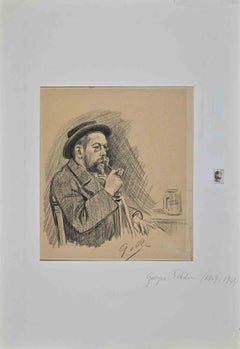
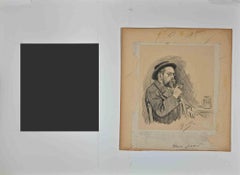
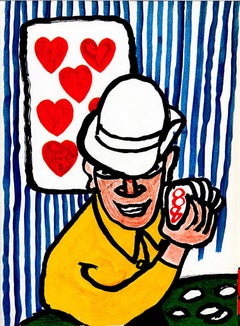
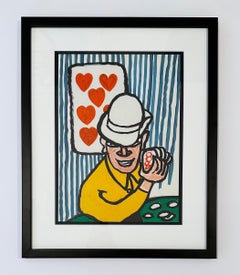
Pipe Man - Drawing by G. Redon - 1895

Pipe Man - Drawing by G. Redon - 1895

By Georges Redon

Located in Roma, IT

Pipe Man is a Pencil drawing realized by Georges Redon (1869-1943). Good condition on a yellowed paper included a white cardboard passpartout (51x35 cm). Hand-signed by the artist ...

Category

1890s Modern Georges Redon Art
Materials

Pencil

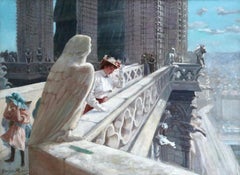
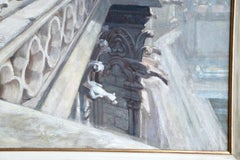
The Rooftops of Notre Dame - 19th Century Oil, Figures in Cityscape by G Redon

The Rooftops of Notre Dame - 19th Century Oil, Figures in Cityscape by G Redon

By Georges Redon

Located in Marlow, Buckinghamshire

Oil on canvas by Georges Redon, depicting figures admiring the views of Paris from the rooftop of Notre Dame - a woman and a young girl in the foreground hold on to their hats to sto...

Category

Early 20th Century Impressionist Georges Redon Art
Materials

Canvas, Oil

Georges Redon art for sale on 1stDibs.

Find a wide variety of authentic Georges Redon art available for sale on 1stDibs. You can also browse by medium to find art by Georges Redon in lithograph, paper and more. Not every interior allows for large Georges Redon art, so small editions measuring 28 inches across are available. Customers who are interested in this artist might also find the work of Eugène Delâtre, Lucien Levy-Dhurmer, and François-Louis Schmied. Georges Redon art prices can differ depending upon medium, time period and other attributes. On 1stDibs, the price for these items starts at $1,190 and tops out at $4,800, while the average work can sell for $3,950.

Artists Similar to Georges Redon