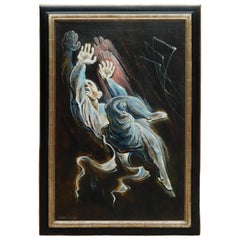
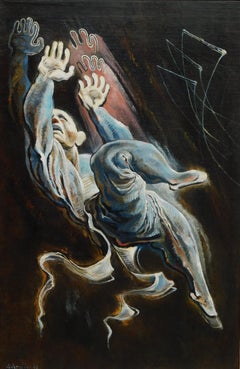
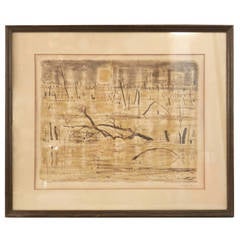
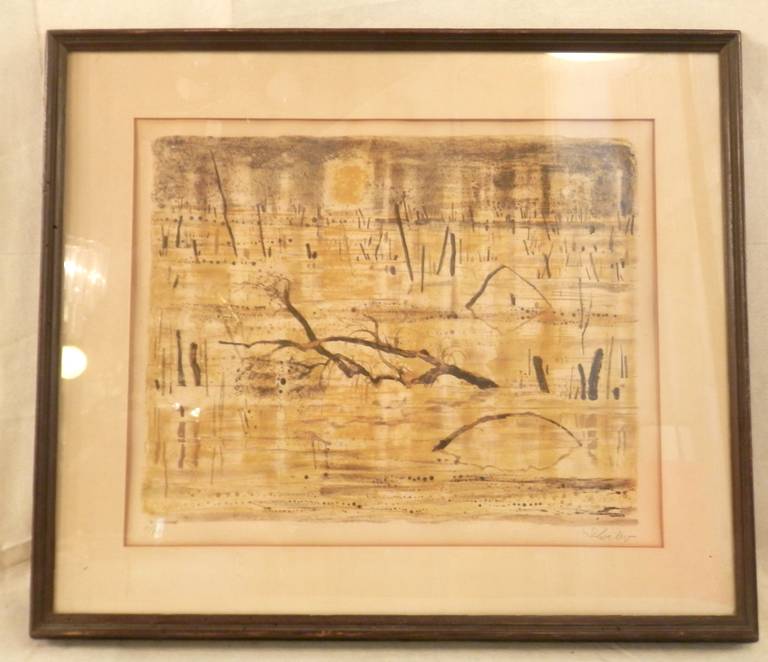
Georges Schreiber Art

American, 1904-1977

Georges Schreiber was born on April 25, 1904, in Brussels, Belgium. After studying in Berlin, London, Rome, Paris, and Florence, he moved to New York in 1928 and spent the rest of his life in the U.S. “I don’t want to be just an American with citizenship papers,” Schreiber declared. “I want to completely associate myself with America.” Besides his career as a lithographer, Schreiber was also a painter, illustrator, watercolorist as well as a teacher at the New School for Social Research. He was a regular contributor to several national magazines and an author and illustrator of several books. Throughout his career, he exhibited at the Metropolitan Museum of Art, the Museum of Modern Art, the Art Institute of Chicago, the Whitney Museum of American Art, the Carnegie Institute, the Corcoran Gallery of Art, the Pennsylvania Academy of Fine Arts, the White House Library, the Library of Congress and Bibliotheque Nationale, among others. He garnered numerous awards, including the William Tuthill Prize. Growing up in war-torn Europe, Schreiber was profoundly impacted by the horrors he witnessed. As a family of German descent living in Belgium during the First World War, the Schreibers were scorned by their neighbors, when they later returned to Germany, however, they were despised as Belgians. “All this has made me conscious of the times I live in . . . and the people I live with. It has made me strive with passion for human understanding in my work.”

Schreiber studied art in Belgium, at the Academy of Fine Art in Berlin and in London, related travels took him to Paris, Rome and Florence. From 1925–28, he worked as a freelance artist for German newspapers, a line of work he would continue upon his arrival in American in 1928. By 1936, he was employed with the Works Project Administration. He visited each of the 48 states and would ultimately make five cross-country journeys, from New England to California, Florida to Oregon, capturing contemporary American scenes with honesty and attention to detail. Considered en masse, Schreiber’s Panorama of America reveals the artist to be acutely aware of the world’s brutal realities and keenly attuned to the characters he portrayed so powerfully. Preferring rural to urban themes, his favorite composition was a lonely type set against a simple landscape background. “I want to live with these people . . . not depict them,” he said.

In addition to creating these heartfelt images, Schreiber continued to work as an illustrator. He sketched the Bruno Hauptmann kidnapping trial, illustrated the book Little Man What Now, contributed to Life and Fortune magazines, and earned wide acclaim for his caricatures. A 1936 publication entitled Portraits and Self-Portraits contained illustrations with short biographies of famous contemporary figures, all executed by Schreiber. During the Second World War, the United States Navy commissioned Schreiber to create paintings to use as posters. When fellow artists criticized him for this kind of work, Schreiber replied that “art for art’s sake” should be shelved for the duration of the war and voiced his approval of any medium which brought good art to great numbers of people.

to
1
5
5
5
3
1
1
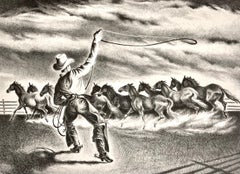
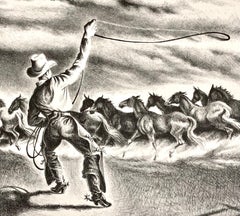
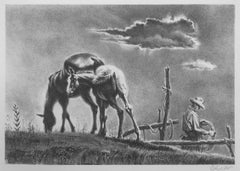
Going Home, Modern Black and White Lithograph by Georges Schreiber

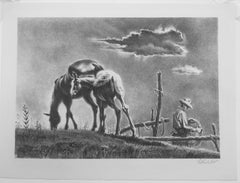
Going Home, Modern Black and White Lithograph by Georges Schreiber

By Georges Schreiber

Located in Long Island City, NY

Artist: Georges Schreiber, Belgian/American (1904 - 1977) Title: Going Home Year: circa 1945 Medium: Lithograph, signed and titled in pencil Image Size: 9.25 x 13.25 inches Size: 12 ...

Category

1940s American Realist Georges Schreiber Art

Materials

Lithograph

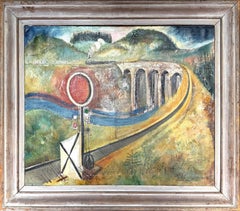
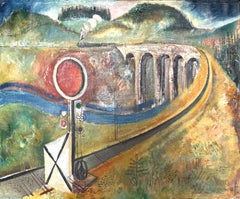
"Railroad Signal" Georges Schreiber, Train, Abstracted American Landscape

"Railroad Signal" Georges Schreiber, Train, Abstracted American Landscape

By Georges Schreiber

Located in New York, NY

Georges Schreiber Railroad Signal, 1933 Signed and dated lower right; titled on the frame verso Oil on canvas 20 3/4 x 25 inches Provenance Aline Barnsdall, Los Angeles, California ...

Category

1930s American Modern Georges Schreiber Art

Materials

Canvas, Oil

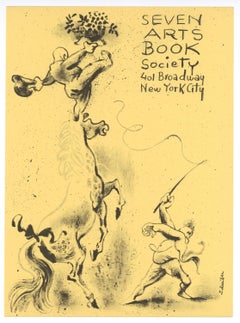
original lithograph

original lithograph

By Georges Schreiber

Located in Henderson, NV

Medium: original lithograph. This lithograph is from the rare 1950 "Improvisations" portfolio, published by the Artists Equity Association of New York on the occasion of the 1950 Spr...

Category

1950s Georges Schreiber Art

Materials

Lithograph

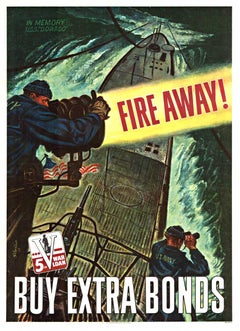
Original "Fire Away! Buy Extra Bonds, 5th War Loan" vintage submarine poster.

Original "Fire Away! Buy Extra Bonds, 5th War Loan" vintage submarine poster.

By Georges Schreiber

Located in Spokane, WA

Original World War 2 Fire Away! Buy Extra Bonds. Linen backed. Color poster of two sailors on a Navy ship at sea. One sailor uses a searchlight, and the other is looking through binoculars. The sailors wear blue jackets and knitted "watch caps". A U.S. flag can be seen on the ship deck below. "In memory, U.S.S. Dorado"--At the upper left corner of the picture. Logo near the bottom of the poster: "5th 'V' War Loan". Artist George Schrieber (1904-1977) designed this war bond poster after the U.S.S. Dorado, a Gato-class submarine, was sunk off the coast of Cuba by a German land mine. Georges Schreiber (1904-1977) commemorates the sinking of the USS Dorado submarine in this 1944 War Bonds poster entitled Fire Away for the Fifth War Loan. Schreiber sailed aboard the ship in the summer of 1943 and had a personal connection to the tragedy. USS Dorado (SS-248) was a Gato-class submarine. Her keel was laid down on 27 August 1942 by the Electric Boat Company of Groton, Connecticut and was commissioned on 28 August 1943 under the command of Lieutenant Commander Earle Caffrey Schneider. The USS Dorado sailed for the Panama Canal for use in the East Asia war effort. The submarine was sunk off the coast of Cuba due to a minefield left by a German-Nazi U Boat. This is an Original Vintage Poster; it is not a reproduction. "U.S. Government Printing Office: 1944-O-581636". "WFD 908-A" USS Eldorado (AGC-11) was named after a mountain range in Nevada. The ship was designed as an amphibious force flagship, a floating command post...

Category

1940s American Modern Georges Schreiber Art

Materials

Offset

Related Items
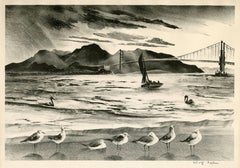
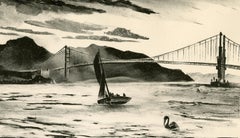
The Golden Gate
The Golden Gate

The Golden Gate

By Adolf Arthur Dehn

Located in Fairlawn, OH

The Golden Gate Lithograph on wove paper watermarked GC, 1940 Signed in pencil by the artist (see photo) Publisher: Associated American Artists Edition: 189, unnumbered The image depicts The Golden Gate Bridge which connects San Francisco and Marin County, California References And Exhibitions: Illustrated: Adams, The Sensuous Life of Adolf Dehn, Fig. 13.17, page 324 Reference: L & O 325 AAA Index 391 Adolf Dehn, American Watercolorist and Printmaker, 1895-1968 Adolf Dehn was an artist who achieved extraordinary artistic heights, but in a very particular artistic sphere—not so much in oil painting as in watercolor and lithography. Long recognized as a master by serious print collectors, he is gradually gaining recognition as a notable and influential figure in the overall history of American art. In the 19th century, with the invention of the rotary press, which made possible enormous print runs, and the development of the popular, mass-market magazines, newspaper and magazine illustration developed into an artistic realm of its own, often surprisingly divorced from the world of museums and art exhibitions, and today remains surprisingly overlooked by most art historians. Dehn in many regards was an outgrowth of this world, although in an unusual way, since as a young man he produced most of his illustrative work not for popular magazines, such as The Saturday Evening Post, but rather for radical journals, such as The Masses or The Liberator, or artistic “little magazines” such as The Dial. This background established the foundation of his outlook, and led later to his unique and distinctive contribution to American graphic art. If there’s a distinctive quality to his work, it was his skill in introducing unusual tonal and textural effects into his work, particularly in printmaking but also in watercolor. Jackson Pollock seems to have been one of many notable artists who were influenced by his techniques. Early Years, 1895-1922 For an artist largely remembered for scenes of Vienna and Paris, Adolf Dehn’s background was a surprising one. Born in Waterville, Minnesota, on November 22, 1895, Dehn was the descendent of farmers who had emigrated from Germany and homesteaded in the region, initially in a one-room log cabin with a dirt floor. Adolf’s father, Arthur Clark Dehn, was a hunter and trapper who took pride that he had no boss but himself, and who had little use for art. Indeed, during Adolf’s boyhood the walls of his bedroom and the space under his bed were filled with the pelts of mink, muskrats and skunks that his father had killed, skinned and stretched on drying boards. It was Adolf’s mother, Emilie Haas Dehn, a faithful member of the German Lutheran Evangelical Church, who encouraged his interest in art, which became apparent early in childhood. Both parents were ardent socialists, and supporters of Eugene Debs. In many ways Dehn’s later artistic achievement was clearly a reaction against the grinding rural poverty of his childhood. After graduating from high school in 1914 at the age of 19—an age not unusual in farming communities at the time, where school attendance was often irregular—Dehn attended the Minneapolis School of Art from 1914 to 1917, whose character followed strongly reflected that of its director, Munich-trained Robert Kohler, an artistic conservative but a social radical. There Dehn joined a group of students who went on to nationally significant careers, including Wanda Gag (later author of best-selling children’s books); John Flanagan (a sculptor notable for his use of direct carving) Harry Gottlieb (a notable social realist and member of the Woodstock Art Colony), Elizabeth Olds (a printmaker and administrator for the WPA), Arnold Blanch (landscape, still-life and figure painter, and member of the Woodstock group), Lucille Lunquist, later Lucille Blanch (also a gifted painter and founder of the Woodstock art colony), and Johan Egilrud (who stayed in Minneapolis and became a journalist and poet). Adolf became particularly close to Wanda Gag (1893-1946), with whom he established an intense but platonic relationship. Two years older than he, Gag was the daughter of a Bohemian artist and decorator, Anton Gag, who had died in 1908. After her husband died, Wanda’s mother, Lizzi Gag, became a helpless invalid, so Wanda was entrusted with the task of raising and financially supporting her six younger siblings. This endowed her with toughness and an independent streak, but nonetheless, when she met Dehn, Wanda was Victorian and conventional in her artistic taste and social values. Dehn was more socially radical, and introduced her to radical ideas about politics and free love, as well as to socialist publications such as The Masses and The Appeal to Reason. Never very interested in oil painting, in Minneapolis Dehn focused on caricature and illustration--often of a humorous or politically radical character. In 1917 both Dehn and Wanda won scholarships to attend the Art Students League, and consequently, in the fall of that year both moved to New York. Dehn’s art education, however, ended in the summer of 1918, shortly after the United States entered World War I, when he was drafted to serve in the U. S. Army. Unwilling to fight, he applied for status as a conscientious objector, but was first imprisoned, then segregated in semi-imprisonment with other Pacifists, until the war ended. The abuse he suffered at this time may well explain his later withdrawal from taking political stands or making art of an overtly political nature. After his release from the army, Dehn returned to New York where he fell under the spell of the radical cartoonist Boardman Robinson and produced his first lithographs. He also finally consummated his sexual relationship with Wanda Gag. The Years in Europe: 1922-1929 In September of 1921, however, he abruptly departed for Europe, arriving in Paris and then moving on to Vienna. There in the winter of 1922 he fell in love with a Russian dancer, Mura Zipperovitch, ending his seven-year relationship with Wanda Gag. He and Mura were married in 1926. It was also in Vienna that he produced his first notable artistic work. Influenced by European artists such as Jules Pascin and Georg Grosz, Dehn began producing drawings of people in cafes, streets, and parks, which while mostly executed in his studio, were based on spontaneous life studies and have an expressive, sometimes almost childishly wandering quality of line. The mixture of sophistication and naiveté in these drawings was new to American audiences, as was the raciness of their subject matter, which often featured pleasure-seekers, prostitutes or scenes of sexual dalliance, presented with a strong element of caricature. Some of these drawings contain an element of social criticism, reminiscent of that found in the work of George Grosz, although Dehn’s work tended to focus on humorous commentary rather than savagely attacking his subjects or making a partisan political statement. Many Americans, including some who had originally been supporters of Dehn such as Boardman Robinson, were shocked by these European drawings, although George Grocz (who became a friend of the artist in this period) admired them, and recognized that Dehn could also bring a new vision to America subject matter. As he told Dehn: “You will do things in America which haven’t been done, which need to be done, which only you can do—as far at least as I know America.” A key factor in Dehn’s artistic evolution at this time was his association with Scofield Thayer...

Category

1940s American Realist Georges Schreiber Art
Materials

Lithograph

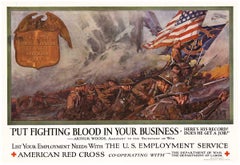
Put Fighting Blood in Your Business

Dan SmithPut Fighting Blood in Your Business, 1919

$798Sale Price|20% Off

H 19.5 in W 28 in D 0.1 in

Put Fighting Blood in Your Business

Located in Spokane, WA

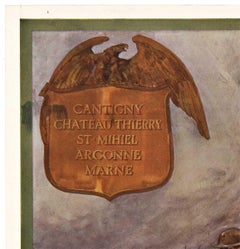
Original WW1 poster. Put Fighting Blood in Your Business. Here’s his record! Does he get a Job? Arthur Woods, Assistant to the Secretary of...

Category

1910s American Realist Georges Schreiber Art
Materials

Lithograph

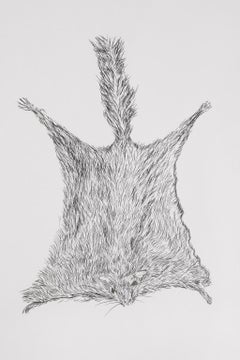
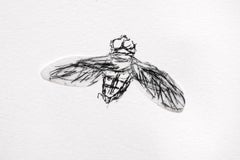
Kiki Smith Lithograph/Collage Various Flying Creatures "bee" Signed Dated

Kiki Smith Lithograph/Collage Various Flying Creatures "bee" Signed Dated

By Kiki Smith

Located in Detroit, MI

A collage lithograph from her series Various Flying Creatures by Kiki Smith titled: "bee." Smith has used one of her animal/insect iconic figures for this glassine paper and wove pap...

Category

1990s American Modern Georges Schreiber Art

Materials

Paper, Lithograph

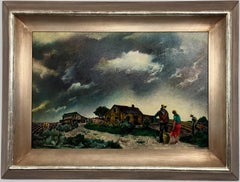
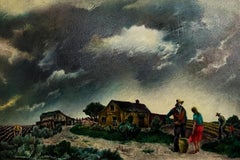
Late Afternoon  - Modernist Mid-Century Midwest Oil Painting

Late Afternoon - Modernist Mid-Century Midwest Oil Painting

Located in Marco Island, FL

A quintessential American Scene landscape painted by the Chicago Modernist, William Schwartz. Workers in tilled fields surrounding a farmstead under dramatic skies. Painted in 1935...

Category

1930s American Modern Georges Schreiber Art

Materials

Canvas, Oil

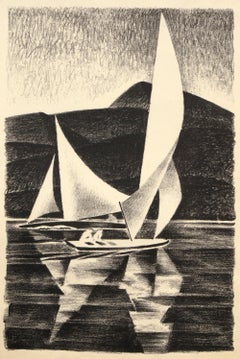
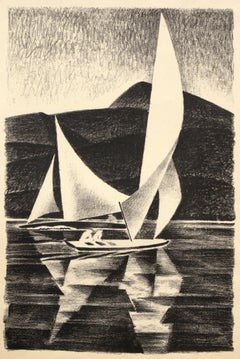
Arnold Ronnebeck 1930s Lithograph – Grand Lake Colorado Yacht Races, WPA Era

Arnold Ronnebeck 1930s Lithograph – Grand Lake Colorado Yacht Races, WPA Era

By Arnold Rönnebeck

Located in Denver, CO

This striking vintage 1930s black-and-white lithograph by celebrated Colorado artist Arnold Ronnebeck (1885–1947) captures the dynamic energy of the Grand Lake...

Category

1930s American Modern Georges Schreiber Art

Materials

Lithograph

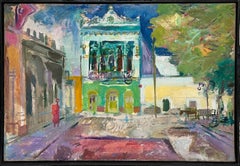
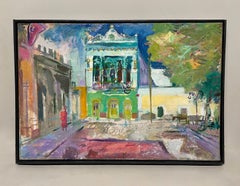
1930s Mexican City Scene by Chicago Artist Francis Chapin, City Plaza, Guaymas

1930s Mexican City Scene by Chicago Artist Francis Chapin, City Plaza, Guaymas

By Francis Chapin

Located in Chicago, IL

A charming, vibrant, 1930s Modern Mexican city street scene by famed Chicago Modern artist Francis Chapin (Am. 1899-1965). Depicting a picturesque view of a quiet square in the hist...

Category

1930s American Modern Georges Schreiber Art

Materials

Oil, Canvas

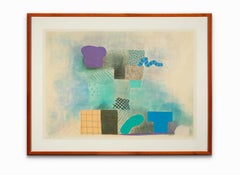
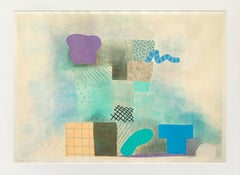
Robert Natkin Abstract Lithograph Signed Numbered

Robert Natkin Abstract Lithograph Signed Numbered

By Robert Natkin

Located in Detroit, MI

SALE ONE WEEK ONLY Soft pastel colors in floating smudges lay between and around lyrical abstract geometric and organic forms giving a diaphanous color and shape harmony to the work...

Category

1990s Abstract Expressionist Georges Schreiber Art

Materials

Lithograph

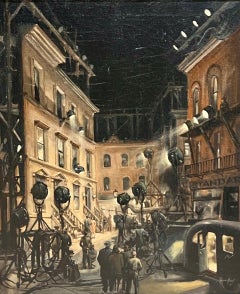
Till the Clouds Roll By 1945 Frank Sinatra Mid Century Modern Hollywood Film WPA

Till the Clouds Roll By 1945 Frank Sinatra Mid Century Modern Hollywood Film WPA

By Richard Whorf

Located in New York, NY

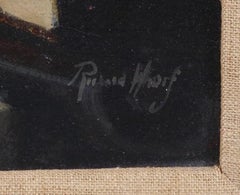
Till the Clouds Roll By 1945 Frank Sinatra Mid Century Modern Hollywood Film WPA TILL THE COULDS ROLL BY (Film Set), oil on canvas, 20 x 24 inches signed “Richard Whorf” lower right and signed and dated on the verso “R. Whorf/ Dec. 21, 1945. Frame by Hendenryk. ABOUT THE PAINTING This painting is from the collection of Barbara and Frank Sinatra, dated December 21, 1945 (just nine days after Frank Sinatra’s 30th birthday), and depicts the Metro-Goldwyn-Mayer Culver City backlot during the filming of Till the Clouds Roll By, the direction of the film having been taking over by Richard Whorf in December 1945. It is not presently clear if Whorf gave the Sinatras this painting as a gift, as the presence of the Dalzell Hatfield Galleries label on the verso indicates the painting may have been sourced there. Frank and Nancy Sinatra acquired a number of works from Dalzell Hatfield Galleries during the 1940’s, or perhaps they framed it for the couple. Sinatra performed “Old Man River’ in the film. Sinatra and June Allyson are depicted in the center of the painting. PROVENANCE From the Estate of Mrs. Nancy Sinatra; Dalzell Hatfield Galleries, Ambassador Hotel, Los Angeles. An image of the Dalzell Hatfield label and the back of the original frame (which we replaced with a stunning Heydenrk frame) are attached. Nancy Sinatra was Fran's first wife. Nancy Rose Barbato was 17 years old when she met Frank Sinatra, an 18-year-old singer from Hoboken, on the Jersey Shore in the summer of 1934. They married in 1939 at Our Lady of Sorrows Church in Jersey City where Frank gave Nancy a recording of a song dedicated to her titled "Our Love" as a wedding present. The young newlyweds lived and worked in New Jersey, where Frank worked as an unknown singing waiter and master of ceremonies at the Rustic Cabin while Nancy worked as a secretary at the American Type Founders. His musical career took off after singing with big band leaders Harry James and Tommy Dorsey...

Category

1940s American Modern Georges Schreiber Art

Materials

Canvas, Oil

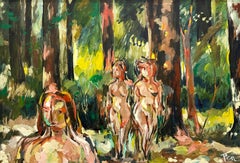
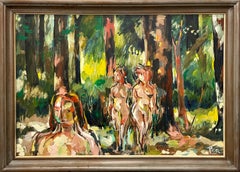
A Large, Dynamic Mid-Century Modern Figurative Landscape Painting by Rudolph Pen

A Large, Dynamic Mid-Century Modern Figurative Landscape Painting by Rudolph Pen

Located in Chicago, IL

A large, dynamic Mid-Century Modern summer landscape painting with standing female bathers by noted Chicago artist, Rudolph Pen. A wonderful example of the artist's uniquely express...

Category

Mid-20th Century American Modern Georges Schreiber Art

Materials

Canvas, Oil

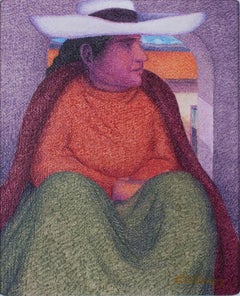
"Mujer de Cajamarca, " Oil Painting on Jute signed by Ernesto Gutierrez

"Mujer de Cajamarca, " Oil Painting on Jute signed by Ernesto Gutierrez

By Ernesto Gutierrez (b.1941)

Located in Milwaukee, WI

"Mujer de Cajamarca" is an original oil painting on jute by Ernesto Gutierrez. The artist signed the piece in the lower right. It depicts a woman seated in front of an archway. 16"...

Category

Early 2000s Contemporary Georges Schreiber Art

Materials

Jute, Oil

Previously Available Items
Georges Schreiber, Intermission

Georges Schreiber, Intermission

By Georges Schreiber

Located in New York, NY

Georges Schreiber famously made three cross country trips and ended up with a major painting for every one of the 48 states. Together they formed an exhibition at Associated American...

Category

Mid-20th Century American Modern Georges Schreiber Art

Materials

Lithograph

In Texas
In Texas

In Texas

By Georges Schreiber

Located in New York, NY

Georges Schreiber famously made three cross country trips and ended up with a major painting for every one of the 48 states. Together they formed an exhibition at Associated American...

Category

Mid-20th Century American Modern Georges Schreiber Art

Materials

Lithograph

Mare and Colt
Mare and Colt

Mare and Colt

By Georges Schreiber

Located in Santa Monica, CA

GEORGES SCHREIBER (1904 - 1977) MARE AND COLT. 1952 Lithograph signed in pencil. Edition 250 as published by Associated American Artists. image, 9 12 ...

Category

1950s American Realist Georges Schreiber Art
Materials

Lithograph

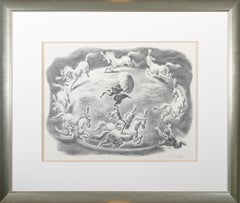
'Circular Motion' original lithograph signed by Georges Schreiber

'Circular Motion' original lithograph signed by Georges Schreiber

By Georges Schreiber

Located in Milwaukee, WI

In this lithograph, Georges Schreiber focused on the thrill of the circus, taking its circular composition from the central ring. Here, acrobats perform amazing feats of agility on t...

Category

1940s American Modern Georges Schreiber Art

Materials

Lithograph

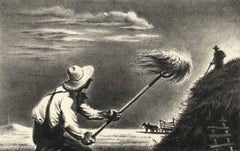
Haying
Haying

Georges SchreiberHaying, 1945

Sold

H 8.19 in W 13 in

Haying

By Georges Schreiber

Located in New Orleans, LA

The heartland of America is symbolized by these farmers loading hay. It is from an edition of 250 and was published by Associated American Artists. In the collection of Yale Univers...

Category

Mid-20th Century American Modern Georges Schreiber Art

Materials

Lithograph

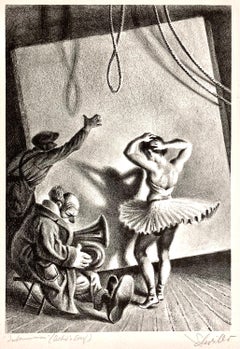
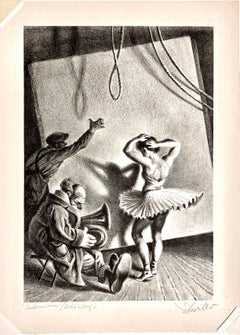
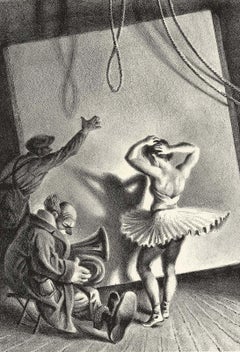
Intermission
Intermission

Georges SchreiberIntermission, 1944

Sold

H 13.38 in W 9.25 in

Intermission

By Georges Schreiber

Located in New Orleans, LA

Georges Scheiber has presented a snapshot of life backstage at a vaudeville show. A stagehand reaches for a rope as a ballerina and a clown with a horn wait to perform. This is an ...

Category

Mid-20th Century American Modern Georges Schreiber Art

Materials

Lithograph

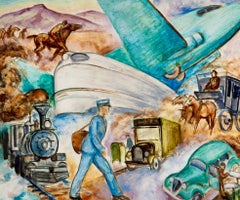
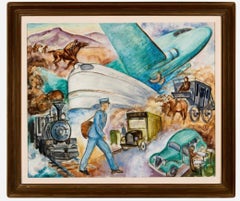
"In Tennessee, " Georges Schreiber, ca 1930-40, American Regionalist landscape

"In Tennessee, " Georges Schreiber, ca 1930-40, American Regionalist landscape

By Georges Schreiber

Located in Wiscasset, ME

Born in Brussels, Belgium in 1904, Georges Schreiber studied in Belgium, at the Academies of Fine Art in Berlin and Düsseldorf at the Arts and Crafts School in Elberfeld, Germany and...

Category

1930s Realist Georges Schreiber Art
Materials

Lithograph

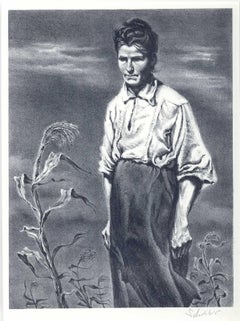
I Raise Turkeys and Chickens (portrait of iconic farm woman with corn stalk)

I Raise Turkeys and Chickens (portrait of iconic farm woman with corn stalk)

By Georges Schreiber

Located in New Orleans, LA

Collection of The High Museum in Atlanta, GA and the National Gallery of Art in Washington DC. The heartland of America is symbolized by this portrait of a distinguished, determined ...

Category

Mid-20th Century American Modern Georges Schreiber Art

Materials

Lithograph

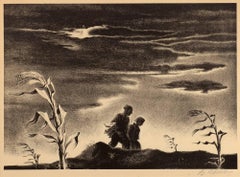
Wind in the Cornfield

Wind in the Cornfield

By Georges Schreiber

Located in Wiscasset, ME

Born in Brussels, Belgium in 1904, Georges Schreiber studied in Belgium, at the Academies of Fine Art in Berlin and Düsseldorf at the Arts and Crafts School in Elberfeld, Germany and...

Category

1930s Realist Georges Schreiber Art
Materials

Lithograph

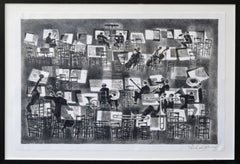
Mid Century -- Intermission at the Symphony

Mid Century -- Intermission at the Symphony

By Georges Schreiber

Located in Soquel, CA

Wonderful figurative signed print titled, "The Intermission" by George Schreiber (1904-1977). Image size, 36"H x 46"W. Presented in a wood frame. Sig...

Category

1920s American Modern Georges Schreiber Art
Materials

Archival Paper, Lithograph

Limited Edition Color Lithograph Signed George Schreiber

Limited Edition Color Lithograph Signed George Schreiber

By Georges Schreiber

Located in Brooklyn, NY

Georges Schreiber limited edition color lithograph from the Associated American Artists Galleries. A revered artist with works in the Whitney, Brooklyn and Metropolitan Museums. This...

Category

1940s American Vintage Georges Schreiber Art

Materials

Paper

Georges Schreiber art for sale on 1stDibs.
Find a wide variety of authentic Georges Schreiber art available for sale on 1stDibs. You can also browse by medium to find art by Georges Schreiber in lithograph, canvas, etching and more. Much of the original work by this artist or collective was created during the 20th century and is mostly associated with the modern style. Not every interior allows for large Georges Schreiber art, so small editions measuring 9 inches across are available. Customers who are interested in this artist might also find the work of Stephen Parrish, Gordon Grant, and George Biddle. Georges Schreiber art prices can differ depending upon medium, time period and other attributes. On 1stDibs, the price for these items starts at $50 and tops out at $12,000, while the average work can sell for $688.
Artists Similar to Georges Schreiber