Gilbert Shoenbrod Portrait Paintings

American, 1903-1996

Gilbert Adam Schoenbrod, artist-resident of Pacific Grove, was born in Chicago, on September 3, 1903. His parents were from Old Russia, and in his work, he shows the depth and warmth of his Eastern heritage, more especially in the etchings of scholars and ancients. His early childhood was spent in Texas as well as Chicago. Later, in New York, he acquired the first useful skills in drawing at Stuyvesant High School, long recognized for technical and scientific excellence. The groundwork for meticulous detail and accuracy was laid at New York University in his studies of the microscopic structure of the cell. In preparation for a career in medicine, Schoenbrod specialized in biological sciences, but also took time from studies to travel and explore the world of industry. At the College of Physicians and Surgeons, Columbia University, Schoenbrod entered medical studies, learning through dissection the intricacies of human anatomy. He sensed an imperative need to pursue the talent for drawing and left medical school to study painting and sculpture at Yale University.

During a holiday in New York City, Schoenbrod met Florence Symonton, who became his wife and the mother of their two sons. In both New York and Chicago, Schoenbrod was able to channel his artistic powers into 20 productive years of advertising design and illustration. At 40, he returned to Columbia University, but this time to the school of education, where he earned a master's degree and taught. While at the university, he met an Arabian silversmith who became a close friend, enhancing Schoenbrod's interest in the eastern handicrafts. Under a master's instructions, he acquired the ancient skills of metalcraft and jewelry-making. In 1948, on a trip to the West Coast, he discovered Carmel and in the following year, moved to that haven of artists to open his studio for handcrafted jewelry. The drawings accumulated in portfolios, for the most part, unframed and unseen.

In his early 50s, the urge to draw — and then, to write — became a compulsion for Schoenbrod. He continued to design and make jewelry and become widely known for his skill and craftsmanship. But the jewelry weighed him down as the need for a deeper expression grew more intense. Inner pressures built up, and in 1956, the strain brought on a break of illness. Intensive treatment and recovery, Schoenbrod felt at the time, brought perspective and self-knowledge. He closed the Carmel jewelry studio, and with his wife, retired, first to his old studio in Connecticut, then to a home overlooking the Pacific. From 1957 onward, he was drawing, painting and writing. In April 1971, he gave his first one-man showing of work of the period at the de Saisset Museum and Gallery at Santa Clara University. A book of his poems, The Ecology of the Man Within, related to the paintings on exhibition, was released in time for the show. It was then that the senior researcher of the Smithsonian Institute saw the artist’s work and asked the curator to gather all available material related to Schoenbrod’s life and send it to Washington, D.C. In an age so acutely in need of reconstructive ecology, the artist-author completed a timely book on food and exercise for the "care of the man within." Gilbert Adam Shoenbrod passed away in Monterey, California, in 1996.

to
1
1
Overall Width
to
Overall Height
to
1
1
1
1
1
1
1
281
116
91
70
1
1
Artist: Gilbert Shoenbrod
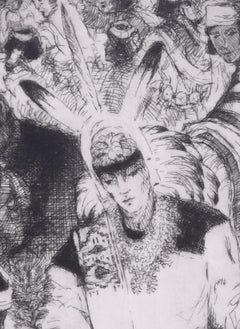
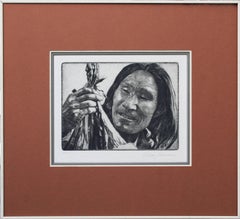
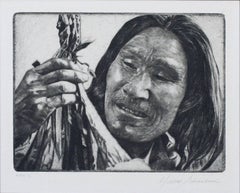
The Hunter, Mid-Century Photo Realist Drypoint Etching Portrait, Limited Edition

The Hunter, Mid-Century Photo Realist Drypoint Etching Portrait, Limited Edition

By Gilbert Schoenbrod

Located in Soquel, CA

An incredible photo-realist drypoint etching of a Native American man by Gilbert Adam Shoenbrod (American, 1903-1996), 1937. Titled "The Hunter", this hyper detailed portrait depicts...

Category

1930s Photorealist Gilbert Shoenbrod Portrait Paintings

Materials

Drypoint

Related Items
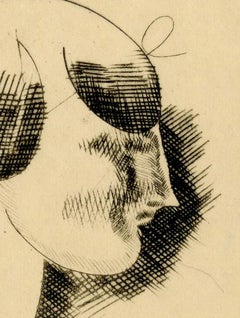
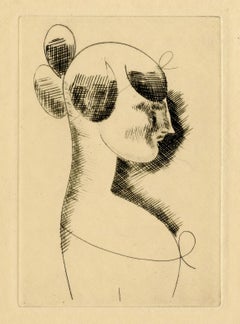
Profile Bust of a Girl - Woman's Head in Profile (Havard)

Profile Bust of a Girl - Woman's Head in Profile (Havard)

By Elie Nadelman

Located in Fairlawn, OH

Profile Bust of a Girl - Woman's Head in Profile (Havard) Drypoint, 1920 Unsigned (as issued) From: The Drypoints of Elie Nadelman, 21 unpublished prints by the sculptor, proof from ...

Category

1920s American Modern Gilbert Shoenbrod Portrait Paintings

Materials

Drypoint

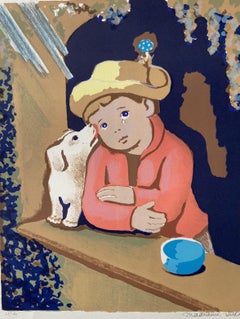
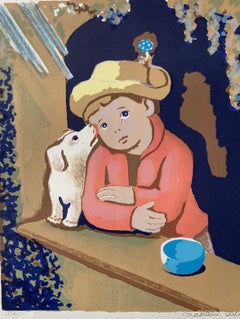
Boy and Puppy Lithograph, Surrealist Style, Mid-20th Century, Unframed

Boy and Puppy Lithograph, Surrealist Style, Mid-20th Century, Unframed

Located in Belgrade, MT

Madeline Luka (French 1894-1989) was a self taught painter known for her landscapes, portraits, nudes and still lifes. She typically portrayed her family and close friends set within...

Category

Mid-20th Century Surrealist Gilbert Shoenbrod Portrait Paintings

Materials

Lithograph

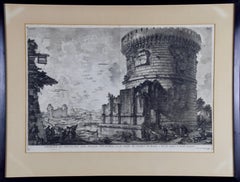
Ancient Roman Architecture: Original Framed 18th C. Etching by G. Piranesi

Ancient Roman Architecture: Original Framed 18th C. Etching by G. Piranesi

By Giovanni Battista Piranesi

Located in Alamo, CA

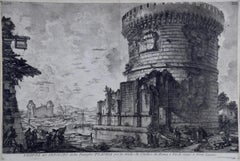
"Veduta del Sepolcro della Famiglia Plauzia per la Strada Che Conduce da Roma a Tivoli vicino a Ponte Lugano" from "Le Antichità Romane" (Roman Antiquities), one of the most famous works by Piranesi. "Antichita" illustrates the tombs along the Appian Way...

Category

Early 18th Century Old Masters Gilbert Shoenbrod Portrait Paintings

Materials

Etching, Engraving, Drypoint

Spring Song /// Antique Female Artist Children Child Etching British Art

Spring Song /// Antique Female Artist Children Child Etching British Art

By Eileen Soper

Located in Saint Augustine, FL

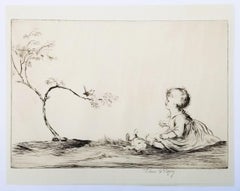
Artist: Eileen Alice Soper (English, 1905-1990) Title: "Spring Song" *Signed by Soper in pencil lower right Year: 1924 Medium: Original Etching on cream laid paper Limited edition: 178 Printer: Likely printed by Eva Soper, London, UK Publisher: H C Dickens, London, UK Sheet size: 8.13" x 10.13" Image size: 6.63" x 9.63" Reference: "The Catalogue Raisonne of Prints and Etchings of George and Eileen Soper" - Beetles No. 83, page 119, 141, 157 Condition: Paper trimmed in the margins. A few faint areas of discoloration. It is otherwise a strong impression in very good condition Notes: Provenance: private collection - Boulder, CO. Biography: Eileen Soper was born in 1905 in the Municipal Borough of Enfield and moved to the house where she was to spend the rest of her life in Harmer Green, Welwyn in the Hertfordshire countryside in 1908. The house she later named "Wildings" was built by her father, the artist George Soper...

Category

1920s Modern Gilbert Shoenbrod Portrait Paintings

Materials

Laid Paper, Drypoint, Etching, Intaglio

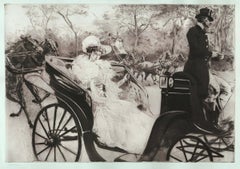
La Loge (The Lodge) /// Post-Impressionist Figurative French Paris People Art

La Loge (The Lodge) /// Post-Impressionist Figurative French Paris People Art

By Louis Legrand

Located in Saint Augustine, FL

Artist: Louis LeGrand (French, 1863-1951) Title: "La Loge (The Lodge)" Portfolio: Gazette des Beaux-Arts *Issued unsigned, though signed by LeGrand in the plate (printed signature) l...

Category

Early 1900s Post-Impressionist Gilbert Shoenbrod Portrait Paintings

Materials

Drypoint, Etching, Intaglio

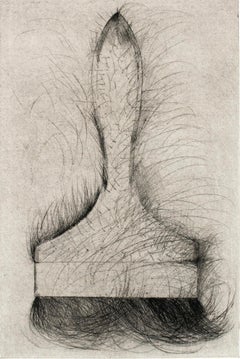
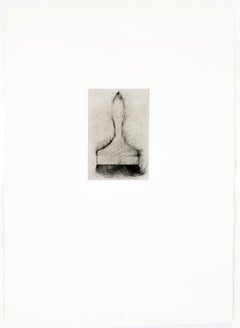
Tool Drypoint: Paintbrush by Jim Dine, black and white tool still life sketch

Tool Drypoint: Paintbrush by Jim Dine, black and white tool still life sketch

By Jim Dine

Located in New York, NY

Jim Dine drew the plate for this image in the same period as his “Thirty Bones of My Body” 1972 portfolio of drypoint tool images. Crisbrook paper (30 x 22 in. / 76.2 x 56 cm.) and p...

Category

1970s Modern Gilbert Shoenbrod Portrait Paintings

Materials

Drypoint

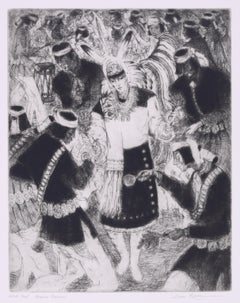
Keresan Dancers
Keresan Dancers

Gene KlossKeresan Dancers, 1962

$2,250

H 13.88 in W 10.88 in

Keresan Dancers

By Gene Kloss

Located in Fairlawn, OH

Keresan Dancers Etching & drypoint, 1962 Signed lower right (see photo) Inscribed lower left: "Artist's Proof Keresan Dancers" Depicts Keresan speaking peoples at Sam Felipe Pueblo Contemporary Puebloans are customarily described as belonging to either the eastern or the western division. The eastern Pueblo villages are in New Mexico along the Rio Grande and comprise groups who speak Tanoan and Keresan languages. Tanoan languages such as Tewa are distantly related to Uto-Aztecan, but Keresan has no known affinities. The western Pueblo villages include the Hopi villages of northern Arizona and the Zuni, Acoma, and Laguna villages, all in western New Mexico. Born Alice Glasier in Oakland, CA, Kloss grew up amid the worldly bustle of the San Francisco Bay Area. She attended the University of California at Berkeley, graduating with honors in art in 1924. She discovered her talents in intaglio printmaking during a senior-year course in figurative drawing. The professor, Perham Nahl, held up a print from Kloss’ first plate, still damp from the printing process, and announced that she was destined to become a printmaker. In 1925, Gene married Phillips Kloss, a poet and composer who became her creative partner for life. The match was uncanny, for in her own way Gene, too, was a poet and a composer. Like poetry, her artworks capture a moment in time; like music, her compositions sing with aesthetic harmony. Although she was largely self-taught, Kloss was a printmaking virtuoso. On their honeymoon the Klosses traveled east from California, camping along the way. They spent two week is Taos Canyon – with a portable printing press cemented to a rock near their campsite – where Gene learned to appreciate the wealth of artistic subject matter in New Mexico. The landscape, the cultures, and the immense sky left an indelible impression on the couple, who returned every summer until they made Taos their permanent home 20 years later. Throughout her life, Kloss etched more than 625 copper plates, producing editions ranging from five to 250 prints. She pulled every print in every edition herself, manually cranking the wheel of her geared Sturges press until she finally purchased a motorized one when she was in her 70s. Believing that subject matter dictated technique, she employed etching, drypoint, aquatint, mezzotint, roulette, softground, and a variety of experimental approaches, often combining several techniques on the same plate. She also produced both oil and watercolor paintings. Kloss’ artworks are filled with drama. Her prints employ striking contrasts of darkness and light, and her subjects are often illuminated by mysterious light sources. Though she was a devout realist, there is also a devout abstraction on Kloss’ work that adds an almost mythical quality. For six decades Kloss documented the cultures of the region-from images of daily life to those of rarely seen ceremonies. She and her husband shared a profound respect for the land and people, which made them welcome among the Native American and Hispanic communities. Kloss never owned a camera but relied instead on observation and recollection. Her works provide an inside look at the cultures she depicted yet at the same time communicate the awe and freshness of an outsider’s perspective. Although Kloss is best known for her images of Native American and Penitente scenes, she found artistic inspiration wherever she was. During the early years of their marriage, when she and Phil returned to the Bay Area each winter to care for their aging families, she created images of the California coast. And when the Klosses moved to southwestern Colorado in 1965, she etched the mining towns and mountainous landscapes around her. In 1970 the Klosses returned to Taos and built a house north of town. Though her artwork continued to grow in popularity, she remained faithful to Taos’ Gallery A, where she insisted that owner Mary Sanchez keep the prices of her work reasonable regardless of its market value. Kloss continued to etch until 1985, when declining health made printmaking too difficult. From her first exhibition at San Francisco’s exclusive Gump’s in 1937 to her 1972 election to full membership in the National Academy of Design, Kloss experienced a selective fame. She received numerous awards, and though she is not as well known as members of the Taos Society of Artists...

Category

1960s American Realist Gilbert Shoenbrod Portrait Paintings
Materials

Drypoint

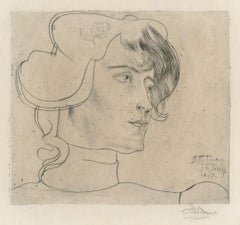
Woman's Head (Vrouwekop), Marguerite Adolphine Helfrich

Woman's Head (Vrouwekop), Marguerite Adolphine Helfrich

By Jan Toorop

Located in Fairlawn, OH

Woman's Head (Vrouwekop), Marguerite Adolphine Helfrich Drypoint, 1897 Signed lower right in pencil: J Toorop; by later hand Toorop's model for this print was Marguerite Adolphine H...

Category

1890s Jugendstil Gilbert Shoenbrod Portrait Paintings

Materials

Drypoint

La Promenade Etching, Art Nouveau, Signed, Edition of 50, 1900s

La Promenade Etching, Art Nouveau, Signed, Edition of 50, 1900s

By Edgar Chahine

Located in Fairlawn, OH

La Promenade Etching, soft-ground, aquatint & drypoint, Signed in pencil lower left Published by Edmund Sagot, Paris Edition of 50 in black only, aside from the edition of 50 in co...

Category

Early 1900s Art Nouveau Gilbert Shoenbrod Portrait Paintings

Materials

Drypoint, Etching, Aquatint

Tool Drypoint: Wrench by Jim Dine, black and white tool still life sketch

Tool Drypoint: Wrench by Jim Dine, black and white tool still life sketch

By Jim Dine

Located in New York, NY

Jim Dine drew the plate for this image in the same period as his “Thirty Bones of My Body” 1972 portfolio of drypoint tool images. Crisbrook paper (30 x 22 in. / 76.2 x 56 cm.) and p...

Category

1970s Modern Gilbert Shoenbrod Portrait Paintings

Materials

Drypoint

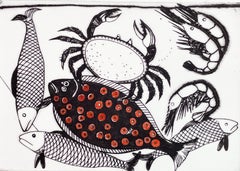
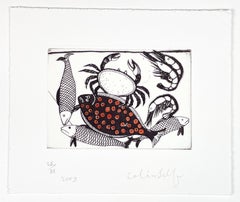
Crab, Plaice and Prawns

Crab, Plaice and Prawns

By Colin Self

Located in New York, NY

A contemporary of David Hockney and Peter Blake, Colin Self is an important British printmaker whose innovative etching techniques and novel use of found materials have defined his d...

Category

Early 2000s Expressionist Gilbert Shoenbrod Portrait Paintings
Materials

Drypoint

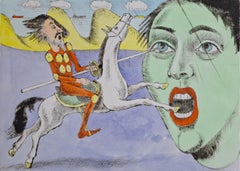
Don Quixote and apparition - Figurative Drypoint Print, Colorful, Polish Art

Don Quixote and apparition - Figurative Drypoint Print, Colorful, Polish Art

By Czeslaw Tumielewicz

Located in Warsaw, PL

Subject for this artwork comes from Miguel de Cervantes' book. CZESLAW TUMIELEWICZ (b. 1942) In 1968, he studied at the Architecture faculty of Gdank, before continuing his course a...

Category

Early 2000s Contemporary Gilbert Shoenbrod Portrait Paintings
Materials

Paper, Watercolor, Drypoint

Gilbert Shoenbrod portrait paintings for sale on 1stDibs.

Find a wide variety of authentic Gilbert Shoenbrod portrait paintings available for sale on 1stDibs. You can also browse by medium to find art by Gilbert Shoenbrod in drypoint, engraving and more. Much of the original work by this artist or collective was created during the 1930s and is mostly associated with the Photorealist style. Not every interior allows for large Gilbert Shoenbrod portrait paintings, so small editions measuring 17 inches across are available. Customers who are interested in this artist might also find the work of Anne Wolff, Jérome Romain, and Yousra Hafad . Gilbert Shoenbrod portrait paintings prices can differ depending upon medium, time period and other attributes. On 1stDibs, the price for these items starts at $1,450 and tops out at $1,450, while the average work can sell for $1,450.