Gustavo Montoya Paintings

Mexican, 1905-2003
Gustavo Montoya was born in Mexico City on July 9, 1905. At the age of 13 he studied painting at the Academia de San Carlos. Some of his teachers were: German Gedovius, Roberto Montenegro, Leandro Izaguirre, Francisco de la Torre, Mateo Herrera and Juan de Mata Pacheco, among others. He stated that the school had only taught him the technique of art, but not the spirit of it and therefore he considered himself a self-taught artist. He married his first wife, Luz Saavedra. In 1929 he traveled to Los Angeles, California, where he worked illustrating posters at the West Coast Theaters Co. The couple had a daughter, Rosa Elena Montoya Saavedra. The marriage did not last long, and Gustavo Montoya returned to Mexico in 1933. In 1936 he entered the Escuela Nacional de Artes Plásticas (National School of Visual Arts) as teacher of the color class. He married a second time to the painter Cordelia Urueta, with whom he moved to Paris in 1938 to study European avant-garde art. He visited museums, galleries, and painters' studios. He toured Switzerland, Italy and England. In 1939, due to the Second World War, Montoya and his wife were forced to leave for New York where they remained for several years. Exhibited at the Alma Reed Gallery. When they returned to Mexico in 1942, Gustavo Montoya joined the Mexican neo-realist school movement. In 1953 he entered again as a teacher at the Escuela Nacional de Artes Plásticas. In 1965 Gustavo Montoya and Cordelia Urueta divorced after 26 years of marriage. He was lonely and did not engage in artistic circles. He was a founding member of the League of Revolutionary Writers and Artists along with Cordelia Urueta and others. Also, he was a founding member of the Salón de la Plástica Mexicana. He spent most of his professional career depicting the streets of Mexico and its inhabitants. He painted still lifes, street scenes, churches, children, women, and markets in Mexico. Montoya preferred to paint the poor and working class, considering them the most authentic class in Mexico City. He liked to do his work in series around one main idea. Some of his series were: The streets of Mexico, Mexican still lifes, Mexican children, Dreams, Walls, Chess, Allegory of transformation, among others. Gustavo Montoya died on July 12, 2003 in Mexico City, at the age of 98 years.
to
1
Overall Width
to
Overall Height
to
1
1
1
1
1
1
1
1
1
1
1
1
1
4
788
759
754
665
1
1
Artist: Gustavo Montoya
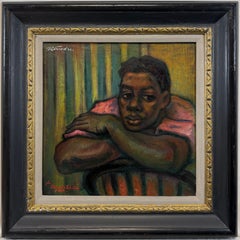
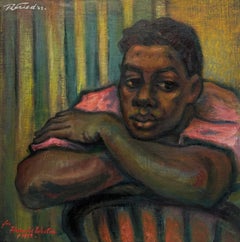
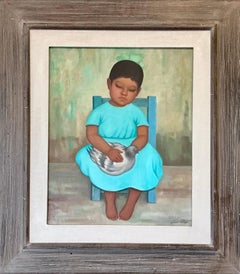
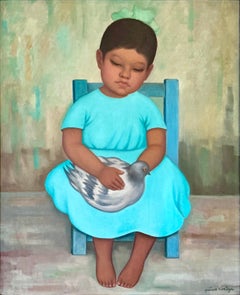
Gustavo Montoya Nina Con Paloma Oil Painting

Gustavo Montoya Nina Con Paloma Oil Painting

By Gustavo Montoya

Located in Dallas, TX

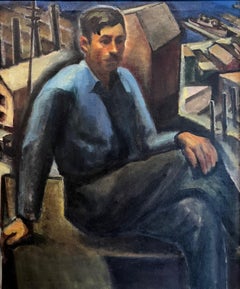
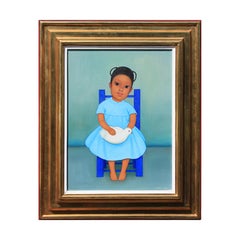
Gustavo Montoya (Mexican, 1905-2003) Seated Figure in Blue Oil on canvas Canvas: 22 X 18 inches (56 x 45.5 cm) Frame: 33 X29 X 2 inches Signed lower right: Gustavo Montoya Provenance: The artist; Private collection, New York, acquired from the above, circa 1952; By descent to the present owner, Stamford, Connecticut. Gustavo Montoya was born in Mexico City on July 9, 1905. At the age of 13 he studied painting at the Academia de San Carlos. Some of his teachers were: German Gedovius, Roberto Montenegro, Leandro Izaguirre, Francisco de la Torre, Mateo Herrera and Juan de Mata Pacheco, among others. He stated that the school had only taught him the technique of art, but not the spirit of it and therefore he considered himself a self-taught artist. He married his first wife, Luz Saavedra. In 1929 he traveled to Los Angeles, California, where he worked illustrating posters at the West Coast Theaters Co. The couple had a daughter, Rosa Elena Montoya Saavedra. The marriage did not last long, and Gustavo Montoya returned to Mexico in 1933. In 1936 he entered the Escuela Nacional de Artes Plásticas (National School of Visual Arts) as teacher of the color class. He married a second time to the painter Cordelia Urueta, with whom he moved to Paris in 1938 to study European avant-garde art. He visited museums, galleries, and painters' studios. He toured Switzerland, Italy and England. In 1939, due to the Second World War, Montoya and his wife were forced to leave for New York where they remained for several years. Exhibited at the Alma Reed Gallery. When they returned to Mexico in 1942, Gustavo Montoya joined the Mexican neo-realist school movement. In 1953 he entered again as a teacher at the Escuela Nacional de Artes Plásticas. In 1965 Gustavo Montoya and Cordelia Urueta divorced after 26 years of marriage. He was lonely and did not engage in artistic circles. He was a founding member of the League of Revolutionary Writers and Artists along with Cordelia Urueta and others. Also, he was a founding member of the Salón de la Plástica Mexicana. He spent most of his professional career depicting the streets of Mexico and its inhabitants. He painted still lifes, street scenes, churches, children, women, and markets in Mexico. Montoya preferred to paint the poor and working class, considering them the most authentic class in Mexico City. He liked to do his work in series around one main idea. Some of his series were: The streets of Mexico, Mexican still lifes...

Category

1950s Modern Gustavo Montoya Paintings

Materials

Canvas, Oil
Related Items
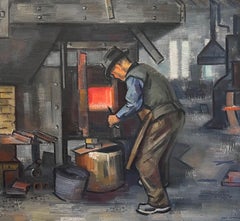
Blacksmith (Untitled)

Erle LoranBlacksmith (Untitled), 1936

$5,500

H 28 in W 30 in D 2 in

Blacksmith (Untitled)

By Erle Loran

Located in Los Angeles, CA

Blacksmith (Untitled), 1936, oil on canvas, signed and dated lower right, 28 x 30 inches Erle Loran was an influential American painter, art historian, and educator, renowned for h...

Category

1930s American Modern Gustavo Montoya Paintings

Materials

Canvas, Oil
"The Champ, 1942" Joe Louis "Brown Bomber" Boxer Portrait Ex-Museum Oil Signed

"The Champ, 1942" Joe Louis "Brown Bomber" Boxer Portrait Ex-Museum Oil Signed

Located in Yardley, PA

“The Champ, 1942” by Theodore Fried (1902-1980) This important portrait by Hungarian-American artist Theodore Fried depicts the legendary boxer Joe Louis aka “The Brown Bomber” and ...

Category

1940s American Modern Gustavo Montoya Paintings

Materials

Canvas, Oil, Board

Neighbors

Norman BarrNeighbors, 1939

$3,250

H 22 in W 26 in D 1 in

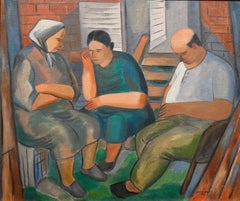
Neighbors

By Norman Barr

Located in Los Angeles, CA

Neighbors, 1939, oil on canvas, signed and dated lower right, 22 x 26 inches Norman Barr was an American Scene painter and muralist known for his poignant depictions of working-clas...

Category

1930s American Modern Gustavo Montoya Paintings

Materials

Canvas, Oil

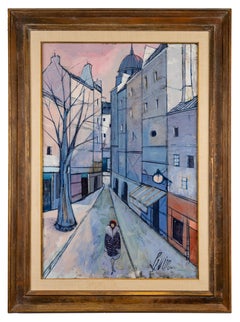
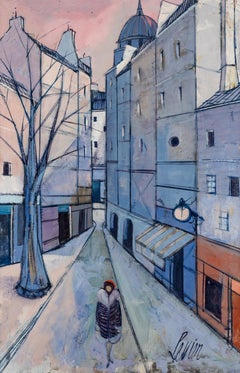
La Rue Solitaire
La Rue Solitaire

Charles LevierLa Rue Solitaire

$6,000

H 45.5 in W 33.5 in

La Rue Solitaire

By Charles Levier

Located in Sheffield, MA

Charles Levier French, 1920-2004 La Rue Solitaire Oil on canvas 36 X 24 in. w/ frame 45 ½ X 33 ½ in. Signed lower right Inventory Number: 01747 Charles Levier was born in 1920 fro...

Category

Mid-20th Century Modern Gustavo Montoya Paintings

Materials

Canvas, Oil

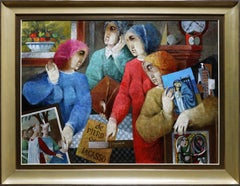
De Piero a Picasso
De Piero a Picasso

De Piero a Picasso

By Alvar Sunol Munoz-Ramos

Located in Atlanta, GA

This original oil on canvas is in excellent condition and and has only been shown in a gallery setting. The size dimensions do not include the frame. This item is signed by the arti...

Category

2010s Modern Gustavo Montoya Paintings

Materials

Canvas, Oil

Six O'Clock

Thomas CraigSix O'Clock

$12,500

H 20 in W 30 in D 2 in

Six O'Clock

Located in Los Angeles, CA

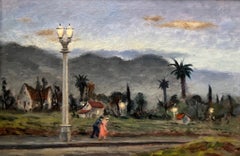
Six O-Clock, c. 1942, oil on canvas, 30 x 20 inches, signed and titled several times verso of frame and stretcher (perhaps by another hand), marked “Rehn” several times on frame (for the Frank K. M. Rehn Galleries in New York City, who represented Craig at the time); Exhibited: 1) 18th Biennial Exhibition of Contemporary American Oil Paintings from March 21 to May 2, 1943 at The Corcoran Gallery of Art in Washington, D.C. #87, original price $450 (per catalog) (exhibition label verso), 2) Craig’s one-man show at the Frank K. M. Rehn Galleries, New York City, from October 26 to November 14, 1942, #10 (original price listed as $350); and 3) Exhibition of thirty paintings sponsored by the Harrisburg Art Association at the State Museum of Pennsylvania in Harrisburg in March, 1944 (concerning this exhibit, Penelope Redd of The Evening News (Harrisburg, Pennsylvania) wrote: “Other paintings that have overtones of superrealism inherent in the subjects include Tom Craig’s California nocturne, ‘Six O’Clock,’ two figures moving through the twilight . . . .” March 6, 1944, p. 13); another label verso from The Museum of Art of Toledo (Ohio): original frame: Provenance includes George Stern Gallery, Los Angeles, CA About the Painting Long before Chris Burden’s iconic installation outside of the Los Angeles County Museum of Art, Urban Light, another artist, Tom Craig, made Southern California streetlights the subject of one of his early 1940s paintings. Consisting of dozens of recycled streetlights from the 1920s and 1930s forming a classical colonnade at the museum’s entrance, Burden’s Urban Light has become a symbol of Los Angeles. For Burden, the streetlights represent what constitutes an advanced society, something “safe after dark and beautiful to behold.” It seems that Craig is playing on the same theme in Six O-Clock. Although we see two hunched figures trudging along the sidewalk at the end of a long day, the real stars of this painting are the streetlights which brighten the twilight and silhouette another iconic symbol of Los Angeles, the palm trees in the distance. Mountains in the background and the distant view of a suburban neighborhood join the streetlights and palm trees as classic subject matter for a California Scene painting, but Craig gives us a twist by depicting the scene not as a sun-drenched natural expanse. Rather, Craig uses thin layers of oil paint, mimicking the watercolor technique for which he is most famous, to show us the twinkling beauty of manmade light and the safety it affords. Although Southern California is a land of natural wonders, the interventions of humanity are already everywhere in Los Angeles and as one critic noted, the resulting painting has an air of “superrealism.” About the Artist Thomas Theodore Craig was a well-known fixture in the Southern California art scene. He was born in Upland California. Craig graduated with a degree in botany from Pomona College and studied painting at Pamona and the Chouinard Art School with Stanton MacDonald-Wright and Barse Miller among others. He became close friends with fellow artist Milford Zornes...

Category

1940s American Modern Gustavo Montoya Paintings

Materials

Canvas, Oil

A Laborer Resting

Robert GilbertA Laborer Resting, 1930

$8,500

H 36 in W 30 in D 2 in

A Laborer Resting

By Robert Gilbert

Located in Los Angeles, CA

A Laborer Resting, 1930, oil on canvas, signed and dated lower center, 36 x 30 inches, inscribed verso “July – 1930 / Title – A Laborer Resting / Artist – Robert Gilbert / Price - $2...

Category

1930s American Modern Gustavo Montoya Paintings

Materials

Canvas, Oil

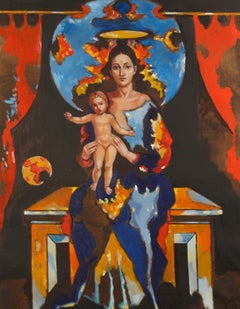
Madonna. By Alexander Kishchenko. 1992. Oil on canvas. 107/81 cm

Madonna. By Alexander Kishchenko. 1992. Oil on canvas. 107/81 cm

Located in Riga, LV

Alexander Mikhailovich Kishchenko (1933–1997) was an outstanding Belarusian monumentalist artist whose work significantly influenced the development of visual arts in Belarus during ...

Category

1990s Modern Gustavo Montoya Paintings

Materials

Canvas, Oil

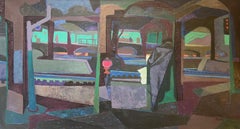
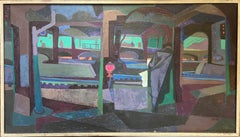
Untitled (Elevated Platform)

Untitled (Elevated Platform)

Located in Los Angeles, CA

This painting is part of our current exhibition - America Coast to Coast: Artists of the 1940s Untitled (Elevated Platform), 1950, oil on canvas, signed and dated lower right, 30 x...

Category

1950s American Modern Gustavo Montoya Paintings

Materials

Canvas, Oil

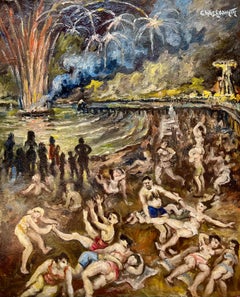
Coney Island, Fourth of July

Coney Island, Fourth of July

Located in Los Angeles, CA

Coney Island, Fourth of July, c. 1940s, oil on canvas applied to Masonite, signed upper right, 26 x 21 1/2 inches, presented in its original frame During the 1930s and 40s, Coney I...

Category

1940s American Modern Gustavo Montoya Paintings

Materials

Canvas, Oil, Board

Riders of Pigeon Hill

Riders of Pigeon Hill

By Jon Corbino

Located in Los Angeles, CA

Riders of Pigeon Hill, c. 1940s, oil on canvas, signed lower right, 24 x 36 inches, label verso with title, artist’s name and address; same information inscribed verso; ex-collection...

Category

1940s American Modern Gustavo Montoya Paintings

Materials

Canvas, Oil

Previously Available Items
Niño de Verde con Bastón de Dulce

Niño de Verde con Bastón de Dulce

By Gustavo Montoya

Located in Cuauhtemoc, Ciudad de México

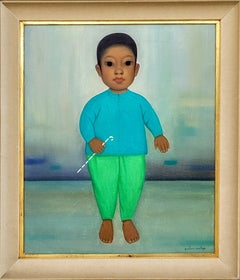
Signed lower right. Little Mexican boy in blue and green holding a candy cane.

Category

20th Century Folk Art Gustavo Montoya Paintings

Materials

Canvas, Oil

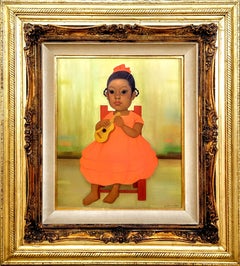
Niña de Naranja con Guitarra

Niña de Naranja con Guitarra

By Gustavo Montoya

Located in Cuauhtemoc, Ciudad de México

Signed lower right. Little Mexican girl in orange dress with braids, barefoot, sitting in an wooden chair holding a guitar.

Category

20th Century Folk Art Gustavo Montoya Paintings

Materials

Canvas, Oil

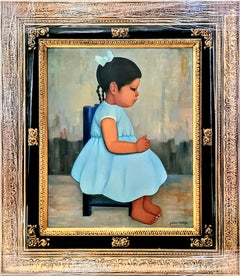
Niña de Azul

Gustavo MontoyaNiña de Azul, 1957

Sold

H 21.66 in W 18.12 in

Niña de Azul

By Gustavo Montoya

Located in Cuauhtemoc, Ciudad de México

Signed lower right. PROVENANCE: Galeria Central De Arte Moderno, Mexico; Private collection, California. Little Mexican girl in blue dress with braids, barefoot, sitting in an wooden blue chair.

Category

20th Century Folk Art Gustavo Montoya Paintings

Materials

Canvas, Oil

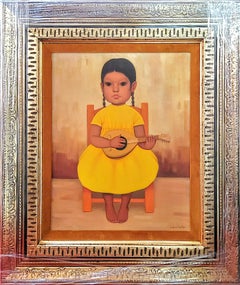
Niña de Amarillo con Mandolina

Niña de Amarillo con Mandolina

By Gustavo Montoya

Located in Cuauhtemoc, Ciudad de México

Signed lower right. PROVENANCE: Galeria Central De Arte Moderno, Mexico; Private collection, California. Little Mexican girl in yellow dress ...

Category

20th Century Folk Art Gustavo Montoya Paintings

Materials

Canvas, Oil

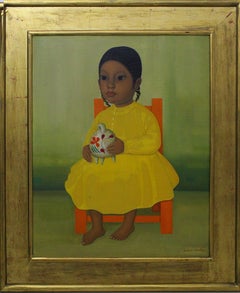
Niña de Amarillo con Alcancía

Niña de Amarillo con Alcancía

By Gustavo Montoya

Located in Cuauhtemoc, Ciudad de México

Signed lower right. Little Mexican girl in yellow dress with braids, barefoot, sitting in an orange chair over green background, holding a piggy b...

Category

20th Century Folk Art Gustavo Montoya Paintings

Materials

Canvas, Oil

"Niña con Paloma" Portrait of a Seated Girl in a Blue Dress Holding a Dove

"Niña con Paloma" Portrait of a Seated Girl in a Blue Dress Holding a Dove

By Gustavo Montoya

Located in Houston, TX

Portrait of a young girl in a light blue dress accompanied by a small white dove in her lap. The little girl is barefoot and seated on a deep blue chair, a staple of his paintings, that is placed in the center of the composition. Gustavo Montoya created a number of unique portraits depicting young girls and boys (Niña's & Niño's) who he believed represented the beautiful children of Mexico. The oil painting is signed by the artist on the lower right corner and is great condition. The portrait is displayed in a beautiful gold frame and white matting that wonderfully accentuates the composition. A gallery stamp from the Galeria Teresa Haas SA (Mexico City, Mexico) is recognizable on the back of the frame. Dimensions Without Frame: H 24 in. x W 18 in. Artist Biography: Gustavo Montoya was born in Mexico City on July 9, 1905. At the age of 13 he studied painting at the Academia de San Carlos. Some of his teachers were: German Gedovius, Roberto Montenegro, Leandro Izaguirre, Francisco de la Torre, Mateo Herrera and Juan de Mata Pacheco, among others. He stated that the school had only taught him the technique of art, but not the spirit of it and therefore he considered himself a self-taught artist. He married his first wife, Luz Saavedra. In 1929 he traveled to Los Angeles, California, where he worked illustrating posters at the West Coast Theaters Co. The couple had a daughter, Rosa Elena Montoya Saavedra. The marriage did not last long, and Gustavo Montoya returned to Mexico in 1933. In 1936 he entered the Escuela Nacional de Artes Plásticas (National School of Visual Arts) as teacher of the color class. He married a second time to the painter Cordelia Urueta, with whom he moved to Paris in 1938 to study European avant-garde art. He visited museums, galleries, and painters' studios. He toured Switzerland, Italy and England. In 1939, due to the Second World War, Montoya and his wife were forced to leave for New York where they remained for several years. Exhibited at the Alma Reed Gallery. When they returned to Mexico in 1942, Gustavo Montoya joined the Mexican neo-realist school movement. In 1953 he entered again as a teacher at the Escuela Nacional de Artes Plásticas. In 1965 Gustavo Montoya and Cordelia Urueta divorced after 26 years of marriage. He was lonely and did not engage in artistic circles. He was a founding member of the League of Revolutionary Writers and Artists along with Cordelia Urueta and others. Also, he was a founding member of the Salón de la Plástica Mexicana. He spent most of his professional career depicting the streets of Mexico and its inhabitants. He painted still lifes, street scenes, churches, children, women, and markets in Mexico. Montoya preferred to paint the poor and working class, considering them the most authentic class in Mexico City. He liked to do his work in series around one main idea. Some of his series were: The streets of Mexico, Mexican still lifes...

Category

1960s Folk Art Gustavo Montoya Paintings

Materials

Oil, Canvas

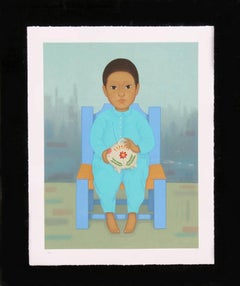
"Nino con Puerco"  Lithograph by Gustavo Montoya

"Nino con Puerco" Lithograph by Gustavo Montoya

By Gustavo Montoya

Located in Long Island City, NY

Artist: Gustavo Montoya, Mexican (1905 - 2003) Title: Nino con Puerco Year: circa 1984 Medium: Lithograph, signed and numbered in pencil Edition: 250 Size: 30 in. x 21.5 in. (76.2 c...

Category

1980s Folk Art Gustavo Montoya Paintings

Materials

Screen

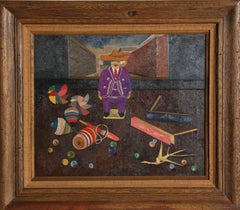
Man with Toys
Man with Toys

Man with Toys

By Gustavo Montoya

Located in Long Island City, NY

Artist: Alexander Calder (American, 1898-1976) Title: Man with Toys Year: circa 1962 Medium: Oil on Canvas Size: 20 in. x 24 in. (50.8 cm x 60.96 cm) Frame Size: 29.5 x 32.5 inches

Category

1960s Modern Gustavo Montoya Paintings

Materials

Canvas, Oil

Gustavo Montoya paintings for sale on 1stDibs.

Find a wide variety of authentic Gustavo Montoya paintings available for sale on 1stDibs.