Hans Berger Prints and Multiples

Swiss, 1882-1977
Hans Berger, born in Bienne on July 9, 1882 and died in Aire-la-Ville on April 7, 1977, was a Swiss painter. His father, Johann Josef, of Solothurn origin, is a worker in the watch industry and his mother, Julia Barbara Rihs, née Bosshard, is of Zurich origin. Between 1889 and 1895, Hans went to school in Solothurn, then his family moved to Geneva. He went to the College of Geneva from 1896 to 1898, then did his apprenticeship in an architect's office until 1902, while at the same time taking drawing lessons at the School of Fine Arts in Geneva. In 1902, he left for Paris, where he attended the National School of Fine Arts and worked in various architectural offices. In 1907, thanks to a grant, he returned to Paris, where he lived in solitude and experienced "a deep existential crisis", from which he emerged thanks to the reading of Nietzsche. In the spring of 1908, he really took up painting and made copies at the Louvre. His friend the painter Alexandre Blanchet made his bust and advised him to go to Brittany to paint, a trip that would have a profound impact on Berger4. In the spring of 1909, he returned to Geneva, then spent the summer on the shores of Lake Flaine, in Haute-Savoie, in isolation, to paint. That year and in 1910, he made stays in Provence.
to
1
1
Overall Width
to
Overall Height
to
7
1,595
1,125
936
697
1
1
1
1
1
1
1
1
1
1
1
Artist: Hans Berger
Related Items
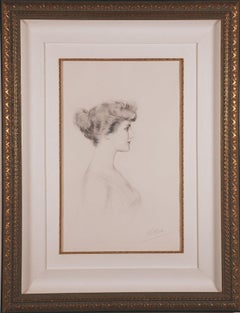
"Madame Georges Menier" Portrait, by Paul Cesar Helleu

"Madame Georges Menier" Portrait, by Paul Cesar Helleu

By Paul César Helleu

Located in Hinsdale, IL

HELLEU, PAUL CÉSAR (1859 -1927) "MADAME GEORGES MENIER" Montesquiou XXI Drypoint in colors, c. 1900 Signed in pencil, lower right Printed on wove paper Full...

Category

Early 20th Century Art Nouveau Hans Berger Prints and Multiples

Materials

Drypoint

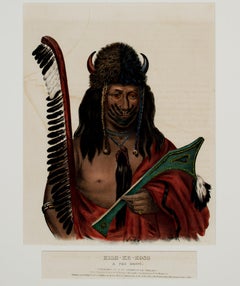
19th century color lithograph indigenous portrait figure feathers bison red

19th century color lithograph indigenous portrait figure feathers bison red

By McKenney & Hall

Located in Milwaukee, WI

"Kish-Ke-Kosh, A Fox Brave (Sauk-Fox)" is an original hand-colored lithograph by McKenney & Hall. This piece features a Native American man. Reference: Page 200 of The North American Indian Portfolios in the Library of Congress. 13 1/4" x 9 3/4" art 27 1/4" x 22 3/8" frame American lithograph publishers. Most well-known for "History of the Indian Tribes of North America," a collection of 125 images that included biographical sketches and anecdotes of principal chiefs. Thomas Loraine McKenney (1785-1859) served as Commissioner of Indian Affairs from 1824 to 1830. In that capacity he commissioned and collected portraits of Native Americans...

Category

1830s Academic Hans Berger Prints and Multiples

Materials

Lithograph

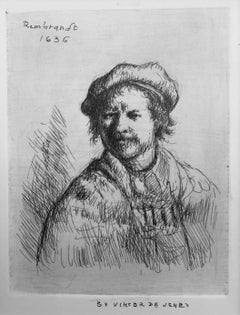
"Rembrandt Self Portrait, 1636"

Viktor de Jeney"Rembrandt Self Portrait, 1636", Circa 1965

$280Sale Price|20% Off

H 5 in W 4 in D 0.5 in

"Rembrandt Self Portrait, 1636"

By Viktor de Jeney

Located in Southampton, NY

Here is a etching executed by master painter and copyist, Viktor de Jeney. Done circa 1965 using the same techniques employed by Rembrant when he executed his now most famous self portrait etching in 1642. Framed measurements are 15.5 by 12.5 inches in original white mat and one inch wood frame. Sheet size 8.25 by 8 inches. De Jeney was born in Budapest, Hungary and emigrated to the United States in 1962 and settled in St. Louis, Missouri. He was known for his paintings of Native American Indians...

Category

1960s Academic Hans Berger Prints and Multiples

Materials

Etching

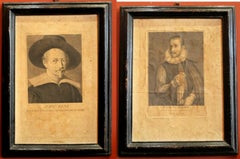
Italian Painter’s Portrait Engravings on Laid Paper on Canvas in Ebonized Frames

Italian Painter’s Portrait Engravings on Laid Paper on Canvas in Ebonized Frames

By Giovanni Domenico Campiglia 1

Located in Firenze, IT

These beautiful Italian 18th Centruy engravings on laid paper feature the portrait of two famous Italian painters: Veronese and Guido Reni. They were engraved by Pier Antonio Pazzi a...

Category

18th Century Baroque Hans Berger Prints and Multiples

Materials

Cotton Canvas, Laid Paper, Engraving

Bengt Lindstrom - Original Handsigned Engraving

Bengt Lindstrom - Original Handsigned Engraving

By Bengt Lindström

Located in Collonge Bellerive, Geneve, CH

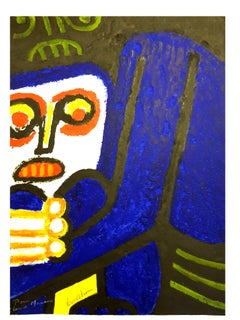
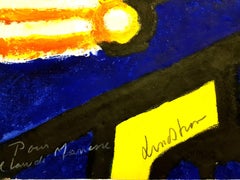
Bengt Lindström - Original Handsigned Engraving The Seven Deadly Sins. 76 x 56 cm Signed in pencil by Bengt Lindström Paris, ABCD, 1976. Original etching in color Limited edition 90 ex. This is the unique copy offered to Claude Manesse, The story of B. Lindström was collected by Frederick Towarnicki, assisted by Agathe Malet-Buisson. The engravings were drawn on the presses of Claude Manesse. Bengt Lindström (1925-2008) Bengt Lindström was born on September 3rd, 1925 in Storsjökapell, a small isolated village in the Swedish province of Norrland. The young child thus grew up in that vast, mythical and harsh expanse of mounts, glistening lakes and endless forests known as Lapland. His father was a primary school teacher who was fond of Lapps and who showed great interest in their ethnic group and culture. The child was only three days old when Lapp King Kroik, his godfather, administered the Baptism of the Earth, where the child is conveyed between two roots of a tree to grant him protection from the Gods. Lapps as well as local lumberjacks would occasionally abandon their silent ways to tell him and reveal the tales, legends and mysteries of the Great White North. 1935-1945 : He left Storsjökapell and headed to Härnösand, where he wrote short science-fiction novellas, became a renowned athlete and began to paint. 1944-1946 : Isaac Grünewald Art School in Stockholm, Sweden. Study drawing with Aksel Jörgensen at the Copenhagen Fine Arts School in Denmark. He realized his first two lithographs, Meditation and Le Modèle Etendu (The Stretched Model). 1947-1952 : He arrived in Paris. He travelled to Italy, where he visited Florence and Assisi, developing a deep fascination for Giotto and Cimabue. He was granted a scholarship by Swedish magazine Aftontidningen, which helped him move into a workshop in Arcueil, France. He began working on mosaics. 1953-1967 : He returned to Paris, once again taking up lithography and engraving, which holds a vital position in his work. He moved into a workshop in Rueil-Malmaison. This was the start of his collaboration with the Rive Gauche Gallery in Paris. London Tooth & Sons Gallery Director M. Cochrane purchased a large number of his works. He left the workshop in Rueil-Malmaison to settle in Savigny-sur-Orge, France. He began taking to figurative art with Masks, Gods and Monsters. He exhibited with the Nouvelle Figuration Group at the Mathias Feld Gallery. He also began working with the Ariel Gallery in Paris. 1968-1978 : Lindström completed a series of 10 lithographs about Scandinavian mythology. He also completed a series of drypoint works. An association with the Protée Gallery in Toulouse, France, led to exhibitions at the Protée Gallery II in Paris starting in 1984. He executed a large mural painting the Grand Hotel in Härnösand, Sweden. He also made two large frescoes for the Nacksta-Sundsvall covered market in Sweden. He took to sharing his working time between the workshop in Savigny-sur-Orge and the one in Sundsvall. He began collaboration that was to last several years with the ABCD Gallery in Paris, which provided exclusive publication for his engravings and strong ink work. Les Hommes du Nord (Men of the North) was the first of the major tapestries. He published a boxed set album, Eddan, Eddan, Eddan, illustrating Scandinavian mythology. Together with Jacques Putman, he completed two editions of bronze sculptures, Les Enfants Sauvages (The Wild Children). 1979-1982 : He worked on glass, making thirty dishes and goblets for renowned Swedish glassmaker Kosta Boda. He painted a car for Volvo, Sweden’s leading car manufacturer. Then, close to his birthplace, he painted gigantic tarpaulins over forty metres high, covering the slopes of the neighbouring Våladalen Mountain, as a protest against the building of a dam. This action caused a sensation and provoked fierce reactions. He also created small painted papier mâché sculptures, Têtes (Heads), as well as some gold and silver jewellery. 1983 : He exhibited seven monumental 3x2.5m works at the Art and History Museum in Stockholm: Les Grands Dieux Ase (The Great Aesir Gods), depicting the gods from Scandinavian mythology: Thor, Odin, Frej, Balder, Ymer, Loki and Unknown God, as well as acrylic paintings about the Valkyries. Les Grands Dieux was ultimately exhibited in a purpose-built chapel adjoining the Midlanda Contemporary Arts Centre in 1996. He completed Thor’s Hammer, a monumental sculpture. 1985-1990 : He lived also in the Alicante region, where Spanish friends found him a new workshop. While there he completed Novelda, an album of lithographs featuring poems by Spanish poet Paco Pastor. He completed a new mural, 5mx5m, for the Västeras Science Institute in Sweden. He then started working with the San Carlo Gallery in Milan, Italy, which coordinated all of the Italian events. Major exhibitions and retrospectives were held in Italy, Belgium, Luxembourg, Germany and Spain. He created two boxed set albums, containing series of 10 aquatints, Monde Autre et Chamanes (Otherworld and Shamans), featuring poems by Michel Perrin. 1991-1994 : He went back to working in black and white, completing some very-large-format works. In Murano, in association with the San Carlo Gallery, he created Grands Verres (Large Glasses), a series of large vases and sculptures made of crystal. He painted Kåtan Mimi, an 8x9m Lapp tent, for the town of Arjeplog in Swedish Lapland. He completed a couple of 2m-high painted polyester sculptures, Lui et Elle (Him and Her). He then made a new series of crystal glasses and sculptures in Murano, Italy. He completed Présence (Presence), a new 3.5x2.7m tapestry for the municipality of Timrå, Sweden. He started on the Grands Initiés (Great Insiders) series, all large format and mixed black and white techniques. He finished the strong series about Norse gods. 1995-1996 : He moved into a new workshop in Paris. A retrospective was held at the Sundsvall Museum in Sweden, and on that occasion he painted a monumental 700-m² canvass, Le Géant sur la montagne (The Giant on the Mountain), which was hung all summer long on the mountain slope facing the town. He went on to complete a suite of six silkscreen prints on the same theme. Then he inaugurated the Y, a monumental sculpture. Lindström then completed Temps Zéro (Zero Time), a watch made for Swatch. One of his works, L’hiver (Winter), made the cover of the first 1996 issue of Telerama, the leading French weekly. In association with Sydkraft Sweden, he painted a fresco for the municipality of Örebro on a 17m-high tank with a surface area of 3,000 m², located at the crossroads of major Swedish motorways, by the entrance to the Åbyverket industrial estate. He also created a 6.5m-high Tången sculpture made of painted concrete in Ånge, which was inaugurated on September 3rd in the presence of their Majesties the King and Queen of Sweden. 1997-1999 : He began working on ceramics in Albisolla, Italy. He also completed a new 30m-high fresco for the town of Örebro, located close to the tank he had painted in 1996 near Åbyverket. The year saw the inauguration of the Midlanda Contemporary Arts Centre in Sweden, which harbours the collection of the Bengt and Michèle Lindström Foundation, featuring the entire engravings collection (about 800 works), as well as a selection of paintings and sculptures. He completed a 4x10m mural in the lobby of the University of Eskilstuna, Sweden, and also completed two monumental frescoes on the Akkats dam and a mural on the power station facing Jokkmokk in Swedish Lapland. 2000-2003 : He painted all of the sides of a semi-articulated lorry for Scania, Sweden’s main truck manufacturer. In Italy, he completed a new series of crystal sculptures with Adriano Bérengo. He finished the Great Prophets, a series of 2x2m oil on canvass works. Swiss publisher Ides et Calendes published a small but luxurious monograph, with text by Françoise Monnin. A notebook was also published, Le Visage dans l’Art de Bengt Lindström (Faces in the Art of Bengt Lindström). He completed a substantial series of large blue acrylic paintings, Femmes (Women). 2003 : Bengt fell ill and was unable to paint, but the exhibitions went on. 2004 : Saw the release of the film by Dag Jonzon and Hans Östbom, produced by Dell’arte AB and Östbom Filmbild, about the life of Bengt Lindström. Entitled Lindström - Le Diable de la couleur et de la forme (Lindström – The Colour and Form Devil), the film was produced thanks to support from Film Västernorrland, Länsstyrelsen Västernorrland and Sveriges Television. It was broadcast on Swedish television channels. That same year, the Midlanda Contemporary Arts Centre was closed as a result of municipal policy. 2005-2007 : The 6m-high sculpture Le Loup (The Wolf), made for PEAB, was inaugurated in Botkyrka-Stockholm. Lindström – The Colour and Form Devil was screened at the Paris Swedish Cultural Centre and released on DVD. The Michèle and Bengt Lindström Foundation was donated and transferred to the Länsmuseet i Västernorrland in Härnösand, Sweden, where a special room was prepared to host Les Grands Dieux Ase. Edition of the 1998 Ceramics, created in association with Francis Dellile’s ”La Tuilerie” workshop. The Bengt Lindström Collection was inaugurated at, Murberget, the Länsmuseet i Västernorrland in Härnösand, Sweden. He illustrated Sinfonietta för Juliana, a collection of poems by Italian poet and art critic Sebastiano Grasso. On January 29th, 2008, Bengt Lindström passed away at his home in Sweden. 2008-2012 : The Fondation Krimaro presents the first volume of the works of Bengt Lindström in his collection. Numerous exhibitions-tribute to the work are presented in major cities in Europe. 2012 : Retrospective - Black and White in the engravings - Museum of Härnösand, Murberget, Sweden. Main exhibitions 1952 Fair Réalités Nouvelles – New realities, Paris, France. 1953 Craven Gallery, Paris, France. 1954 Gummeson Gallery, Stockholm, Sweden. Fair Salon d’Octobre, Paris, France. 1958 Breteau Gallery, Paris, France. 1959 Autour du Spontanéisme – Around the sontaneity, Stockholm, Sweden. L’Europe Nouvelle – The new Europe, LaUnited Statesnne, Switzerland. 1960 Rive Gauche Gallery, Paris, France. 1961 Tooth Gallery, London, England. Le Zodiaque Gallery, Brussels, Belgium. Fair Salon de Mai, Paris, France. 1962 Nouvelle Figuration – New Figuration , Mathias Fels Gallery, Paris, France, 1964 Nord-Sud – North-South, in several cities in Sweden. Ariel Gallery, Paris, France, 15 artists of my generation. Museum of Fine Arts in Gent, Belgium, Figuration-Défiguration – Figuration – Disfigurement. 1965 Rive Gauche Gallery. Paris, France. Nord Gallery, Lille, France. Birch Gallery, Copenhagen, Denmark. 1966 Museum of Modern Art, Gothenburg, Sweden. 1967 Veranneman Gallery, Brussels, Belgium. Carnegie Institute, Pittsburgh, United States. Seibu Gallery, Tokyo, Japan, 23 peintres in Paris. 1968 Ariel Gallery, Paris, France, followed by six exhibitions until 1976. 1969 La Pochade Gallery, Paris, France. Protée Gallery, Toulouse, France, who exhibited him in Paris, Gallery Protée II, from 1984. 1973 Galliera Museum, Paris, France. 1974 Gallery 111, Lisbon, Portugal. 1982 Gallery Protée-Arco, Madrid, Spain and Fair Foire de Cologne, Germany. 1983 Historia Museum, Stockholm, Sweden, The Ase gods and the Valkyries. 1984 Gallery Arcano XXI, Lisbon, Portugal. Gallery Christian Cheneau, Paris, France. Museum Château comtal, Carcassonne, France. 1985 Gallery Italia, Alicante, Spain. 1986 Gallery Sala Gaspar, Barcelona, Spain. Gallery Juan Mordo-Arco, Madrid, Spain. Gallery Italia, Alicante, Spain. Museum of Salamanca, Salamanca, Spain. Gallery Three Continents, New-York, United States. Gallery Protée, Toulouse France, Autour du Roi Lear – Around King Lear. 1987 Gallery Kostel, Paris, France. Gallery Zwirner, Cologne, Germany. Gallery Leu, Rottach-Egern, Germany. 1988 Maison du Lot, Figeac, France. Gallery Protée, Paris, France. Gallery Michèle Sadoun, Paris, France 1989 Gallery Michèle Sadoun, Paris, France, La terre des ancêtres - The Land pf the ancestors. Gallery Protée, Paris, France, Nomads. Gallery Raab, London, England. 1990 Gallery Michèle Sadoun, Paris, France. Centre Culturel de Brest, France. 1991 Gallery Michèle Sadoun, Paris, France. 1992 Archotèque, Saint-Denis, La Réunion, France. Museum of Vesoul, Vesoul, France. Gallery San Carlo, Milan, Italy. 1993 Gallery 111, Lisbon, Portugal. Tonnellerie du Cognac Monnet...

Category

1970s Modern Hans Berger Prints and Multiples

Materials

Engraving

Bengt Lindstrom - Original Handsigned Engraving

Bengt Lindstrom - Original Handsigned Engraving

By Bengt Lindström

Located in Collonge Bellerive, Geneve, CH

Bengt Lindström - Original Handsigned Engraving The Seven Deadly Sins. 76 x 56 cm Signed in pencil by Bengt Lindström Paris, ABCD, 1976. Original etching in color Limited edition 90 ex. This is the unique copy offered to Claude Manesse, The story of B. Lindström was collected by Frederick Towarnicki, assisted by Agathe Malet-Buisson. The engravings were drawn on the presses of Claude Manesse. Bengt Lindström (1925-2008) Bengt Lindström was born on September 3rd, 1925 in Storsjökapell, a small isolated village in the Swedish province of Norrland. The young child thus grew up in that vast, mythical and harsh expanse of mounts, glistening lakes and endless forests known as Lapland. His father was a primary school teacher who was fond of Lapps and who showed great interest in their ethnic group and culture. The child was only three days old when Lapp King Kroik, his godfather, administered the Baptism of the Earth, where the child is conveyed between two roots of a tree to grant him protection from the Gods. Lapps as well as local lumberjacks would occasionally abandon their silent ways to tell him and reveal the tales, legends and mysteries of the Great White North. 1935-1945 : He left Storsjökapell and headed to Härnösand, where he wrote short science-fiction novellas, became a renowned athlete and began to paint. 1944-1946 : Isaac Grünewald Art School in Stockholm, Sweden. Study drawing with Aksel Jörgensen at the Copenhagen Fine Arts School in Denmark. He realized his first two lithographs, Meditation and Le Modèle Etendu (The Stretched Model). 1947-1952 : He arrived in Paris. He travelled to Italy, where he visited Florence and Assisi, developing a deep fascination for Giotto and Cimabue. He was granted a scholarship by Swedish magazine Aftontidningen, which helped him move into a workshop in Arcueil, France. He began working on mosaics. 1953-1967 : He returned to Paris, once again taking up lithography and engraving, which holds a vital position in his work. He moved into a workshop in Rueil-Malmaison. This was the start of his collaboration with the Rive Gauche Gallery in Paris. London Tooth & Sons Gallery Director M. Cochrane purchased a large number of his works. He left the workshop in Rueil-Malmaison to settle in Savigny-sur-Orge, France. He began taking to figurative art with Masks, Gods and Monsters. He exhibited with the Nouvelle Figuration Group at the Mathias Feld Gallery. He also began working with the Ariel Gallery in Paris. 1968-1978 : Lindström completed a series of 10 lithographs about Scandinavian mythology. He also completed a series of drypoint works. An association with the Protée Gallery in Toulouse, France, led to exhibitions at the Protée Gallery II in Paris starting in 1984. He executed a large mural painting the Grand Hotel in Härnösand, Sweden. He also made two large frescoes for the Nacksta-Sundsvall covered market in Sweden. He took to sharing his working time between the workshop in Savigny-sur-Orge and the one in Sundsvall. He began collaboration that was to last several years with the ABCD Gallery in Paris, which provided exclusive publication for his engravings and strong ink work. Les Hommes du Nord (Men of the North) was the first of the major tapestries. He published a boxed set album, Eddan, Eddan, Eddan, illustrating Scandinavian mythology. Together with Jacques Putman, he completed two editions of bronze sculptures, Les Enfants Sauvages (The Wild Children). 1979-1982 : He worked on glass, making thirty dishes and goblets for renowned Swedish glassmaker Kosta Boda. He painted a car for Volvo, Sweden’s leading car manufacturer. Then, close to his birthplace, he painted gigantic tarpaulins over forty metres high, covering the slopes of the neighbouring Våladalen Mountain, as a protest against the building of a dam. This action caused a sensation and provoked fierce reactions. He also created small painted papier mâché sculptures, Têtes (Heads), as well as some gold and silver jewellery. 1983 : He exhibited seven monumental 3x2.5m works at the Art and History Museum in Stockholm: Les Grands Dieux Ase (The Great Aesir Gods), depicting the gods from Scandinavian mythology: Thor, Odin, Frej, Balder, Ymer, Loki and Unknown God, as well as acrylic paintings about the Valkyries. Les Grands Dieux was ultimately exhibited in a purpose-built chapel adjoining the Midlanda Contemporary Arts Centre in 1996. He completed Thor’s Hammer, a monumental sculpture. 1985-1990 : He lived also in the Alicante region, where Spanish friends found him a new workshop. While there he completed Novelda, an album of lithographs featuring poems by Spanish poet Paco Pastor. He completed a new mural, 5mx5m, for the Västeras Science Institute in Sweden. He then started working with the San Carlo Gallery in Milan, Italy, which coordinated all of the Italian events. Major exhibitions and retrospectives were held in Italy, Belgium, Luxembourg, Germany and Spain. He created two boxed set albums, containing series of 10 aquatints, Monde Autre et Chamanes (Otherworld and Shamans), featuring poems by Michel Perrin. 1991-1994 : He went back to working in black and white, completing some very-large-format works. In Murano, in association with the San Carlo Gallery, he created Grands Verres (Large Glasses), a series of large vases and sculptures made of crystal. He painted Kåtan Mimi, an 8x9m Lapp tent, for the town of Arjeplog in Swedish Lapland. He completed a couple of 2m-high painted polyester sculptures, Lui et Elle (Him and Her). He then made a new series of crystal glasses and sculptures in Murano, Italy. He completed Présence (Presence), a new 3.5x2.7m tapestry for the municipality of Timrå, Sweden. He started on the Grands Initiés (Great Insiders) series, all large format and mixed black and white techniques. He finished the strong series about Norse gods. 1995-1996 : He moved into a new workshop in Paris. A retrospective was held at the Sundsvall Museum in Sweden, and on that occasion he painted a monumental 700-m² canvass, Le Géant sur la montagne (The Giant on the Mountain), which was hung all summer long on the mountain slope facing the town. He went on to complete a suite of six silkscreen prints on the same theme. Then he inaugurated the Y, a monumental sculpture. Lindström then completed Temps Zéro (Zero Time), a watch made for Swatch. One of his works, L’hiver (Winter), made the cover of the first 1996 issue of Telerama, the leading French weekly. In association with Sydkraft Sweden, he painted a fresco for the municipality of Örebro on a 17m-high tank with a surface area of 3,000 m², located at the crossroads of major Swedish motorways, by the entrance to the Åbyverket industrial estate. He also created a 6.5m-high Tången sculpture made of painted concrete in Ånge, which was inaugurated on September 3rd in the presence of their Majesties the King and Queen of Sweden. 1997-1999 : He began working on ceramics in Albisolla, Italy. He also completed a new 30m-high fresco for the town of Örebro, located close to the tank he had painted in 1996 near Åbyverket. The year saw the inauguration of the Midlanda Contemporary Arts Centre in Sweden, which harbours the collection of the Bengt and Michèle Lindström Foundation, featuring the entire engravings collection (about 800 works), as well as a selection of paintings and sculptures. He completed a 4x10m mural in the lobby of the University of Eskilstuna, Sweden, and also completed two monumental frescoes on the Akkats dam and a mural on the power station facing Jokkmokk in Swedish Lapland. 2000-2003 : He painted all of the sides of a semi-articulated lorry for Scania, Sweden’s main truck manufacturer. In Italy, he completed a new series of crystal sculptures with Adriano Bérengo. He finished the Great Prophets, a series of 2x2m oil on canvass works. Swiss publisher Ides et Calendes published a small but luxurious monograph, with text by Françoise Monnin. A notebook was also published, Le Visage dans l’Art de Bengt Lindström (Faces in the Art of Bengt Lindström). He completed a substantial series of large blue acrylic paintings, Femmes (Women). 2003 : Bengt fell ill and was unable to paint, but the exhibitions went on. 2004 : Saw the release of the film by Dag Jonzon and Hans Östbom, produced by Dell’arte AB and Östbom Filmbild, about the life of Bengt Lindström. Entitled Lindström - Le Diable de la couleur et de la forme (Lindström – The Colour and Form Devil), the film was produced thanks to support from Film Västernorrland, Länsstyrelsen Västernorrland and Sveriges Television. It was broadcast on Swedish television channels. That same year, the Midlanda Contemporary Arts Centre was closed as a result of municipal policy. 2005-2007 : The 6m-high sculpture Le Loup (The Wolf), made for PEAB, was inaugurated in Botkyrka-Stockholm. Lindström – The Colour and Form Devil was screened at the Paris Swedish Cultural Centre and released on DVD. The Michèle and Bengt Lindström Foundation was donated and transferred to the Länsmuseet i Västernorrland in Härnösand, Sweden, where a special room was prepared to host Les Grands Dieux Ase. Edition of the 1998 Ceramics, created in association with Francis Dellile’s ”La Tuilerie” workshop. The Bengt Lindström Collection was inaugurated at, Murberget, the Länsmuseet i Västernorrland in Härnösand, Sweden. He illustrated Sinfonietta för Juliana, a collection of poems by Italian poet and art critic Sebastiano Grasso. On January 29th, 2008, Bengt Lindström passed away at his home in Sweden. 2008-2012 : The Fondation Krimaro presents the first volume of the works of Bengt Lindström in his collection. Numerous exhibitions-tribute to the work are presented in major cities in Europe. 2012 : Retrospective - Black and White in the engravings - Museum of Härnösand, Murberget, Sweden. Main exhibitions 1952 Fair Réalités Nouvelles – New realities, Paris, France. 1953 Craven Gallery, Paris, France. 1954 Gummeson Gallery, Stockholm, Sweden. Fair Salon d’Octobre, Paris, France. 1958 Breteau Gallery, Paris, France. 1959 Autour du Spontanéisme – Around the sontaneity, Stockholm, Sweden. L’Europe Nouvelle – The new Europe, LaUnited Statesnne, Switzerland. 1960 Rive Gauche Gallery, Paris, France. 1961 Tooth Gallery, London, England. Le Zodiaque Gallery, Brussels, Belgium. Fair Salon de Mai, Paris, France. 1962 Nouvelle Figuration – New Figuration , Mathias Fels Gallery, Paris, France, 1964 Nord-Sud – North-South, in several cities in Sweden. Ariel Gallery, Paris, France, 15 artists of my generation. Museum of Fine Arts in Gent, Belgium, Figuration-Défiguration – Figuration – Disfigurement. 1965 Rive Gauche Gallery. Paris, France. Nord Gallery, Lille, France. Birch Gallery, Copenhagen, Denmark. 1966 Museum of Modern Art, Gothenburg, Sweden. 1967 Veranneman Gallery, Brussels, Belgium. Carnegie Institute, Pittsburgh, United States. Seibu Gallery, Tokyo, Japan, 23 peintres in Paris. 1968 Ariel Gallery, Paris, France, followed by six exhibitions until 1976. 1969 La Pochade Gallery, Paris, France. Protée Gallery, Toulouse, France, who exhibited him in Paris, Gallery Protée II, from 1984. 1973 Galliera Museum, Paris, France. 1974 Gallery 111, Lisbon, Portugal. 1982 Gallery Protée-Arco, Madrid, Spain and Fair Foire de Cologne, Germany. 1983 Historia Museum, Stockholm, Sweden, The Ase gods and the Valkyries. 1984 Gallery Arcano XXI, Lisbon, Portugal. Gallery Christian Cheneau, Paris, France. Museum Château comtal, Carcassonne, France. 1985 Gallery Italia, Alicante, Spain. 1986 Gallery Sala Gaspar, Barcelona, Spain. Gallery Juan Mordo-Arco, Madrid, Spain. Gallery Italia, Alicante, Spain. Museum of Salamanca, Salamanca, Spain. Gallery Three Continents, New-York, United States. Gallery Protée, Toulouse France, Autour du Roi Lear – Around King Lear. 1987 Gallery Kostel, Paris, France. Gallery Zwirner, Cologne, Germany. Gallery Leu, Rottach-Egern, Germany. 1988 Maison du Lot, Figeac, France. Gallery Protée, Paris, France. Gallery Michèle Sadoun, Paris, France 1989 Gallery Michèle Sadoun, Paris, France, La terre des ancêtres - The Land pf the ancestors. Gallery Protée, Paris, France, Nomads. Gallery Raab, London, England. 1990 Gallery Michèle Sadoun, Paris, France. Centre Culturel de Brest, France. 1991 Gallery Michèle Sadoun, Paris, France. 1992 Archotèque, Saint-Denis, La Réunion, France. Museum of Vesoul, Vesoul, France. Gallery San Carlo, Milan, Italy. 1993 Gallery 111, Lisbon, Portugal. Tonnellerie du Cognac Monnet...

Category

1970s Modern Hans Berger Prints and Multiples

Materials

Engraving

Old Master, 1610, engraving, Hendrick Hondius I, Painter Pieter Aetsen, Dutch

Old Master, 1610, engraving, Hendrick Hondius I, Painter Pieter Aetsen, Dutch

By Hendrik Hondius the Elder

Located in Fairlawn, OH

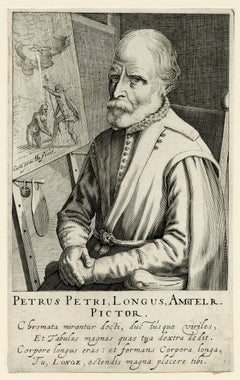
Hendrick Hondius I Flemish/Dutch, 1573–1650 formerly attributed jointly to Simon Frisius and Hondius Portrait of Pieter Aertsen (“Petrus Petri, Longus, Amstelr. Pictor”) 1610 Engraving on laid paper Plate: approximately 20.4 × 12.8 cm (8 × 5 in.) From Pictorum aliquot celebrium praecipuae Germaniae Inferioris effigies Signed within the image at lower left: Cum priv. Hh. fecit Lettered below the portrait with the sitter’s name and a four-line Latin encomium New Hollstein (Hondius) 105; Hollstein (Frisius) 149 Christopher Mendez stock label verso Attribution and series This engraving was published in The Hague in 1610 as part of Hendrick Hondius I’s celebrated series Pictorum aliquot celebrium praecipuae Germaniae Inferioris effigies—“Portraits of Certain Celebrated Painters, Principally of the Low Countries.” The volume assembled engraved likenesses of distinguished Northern European artists and helped establish an enduring visual canon of Netherlandish art. The old Christopher Mendez label identifies the engraving as “Frisius and Hondius” and calls it number 30 in the series. Current Rijksmuseum cataloguing, however, identifies Hendrick Hondius I as both engraver and publisher, consistent with the inscription Hh. fecit—“Hendrick Hondius made this”—within the image. Simon Frisius contributed other plates to the publication, which presumably accounts for the older dual attribution and the print’s listing under Frisius in Hollstein. Numbering varies between arrangements or parts of the series: another commercial description identifies the Aertsen portrait as plate 27 of the second part. The safest modern attribution is therefore engraved and published by Hendrick Hondius I, while recording the historical Frisius–Hondius attribution. The Rijksmuseum dates its impression to 1610 and gives the plate dimensions as 204 × 128 mm. Catalog Essay and Analysis Pieter Aertsen is represented half-length, seated before an easel and turning slightly toward the viewer. His heavy mustache, rounded beard, furrowed brow and direct gaze communicate experience and intellectual authority rather than courtly refinement. Hondius surrounds him with the material signs of his profession: palette, brushes and mahlstick rest on the ledge at left, while the unfinished or displayed painting behind him depicts the Baptism of Christ. The inclusion of a religious composition is important. Although Aertsen is now especially celebrated for monumental kitchen and market scenes, he was also a highly regarded painter of altarpieces. Many of those religious works were destroyed during the iconoclastic upheavals of the sixteenth century. By placing a sacred history painting so conspicuously beside the sitter, Hondius reminds the viewer that Aertsen was not merely a painter of food, peasants and market produce, but an ambitious inventor of large-scale religious compositions. The Baptism scene also establishes a subtle relationship between the artist and his creation. Aertsen’s large head and upper body dominate the foreground, while the slender figures in the painting recede dramatically. The arrangement transforms the workshop into a site of artistic memory: the painter survives physically through his likeness and professionally through the work displayed behind him. Hondius differentiates the surfaces through exceptionally controlled engraving. Closely spaced, curving lines model the sitter’s face and sleeves, while dense cross-hatching produces the dark wall and garment. The comparatively open white areas of the bald forehead, collar and cloak give the figure monumental clarity. The strict geometry of the chair, easel and background contrasts with the organic lines of Aertsen’s face and beard. The print is also an early example of the artist portrait as cultural historiography. Hondius’s series did more than reproduce appearances. It organized Northern painters into a lineage of recognized masters, pairing each likeness with a concise Latin inscription praising the sitter’s distinctive achievements. The series contained portraits made by Hondius, Simon Frisius, Andries Jacobsz. Stock and Robert de Baudous; the Rijksmuseum describes its set as comprising seventy-two portraits. Inscription The title identifies the sitter as: PETRUS PETRI, LONGUS, AMSTELR. PICTOR That is, “Pieter Pietersz., the Tall, painter of Amsterdam.” Longus translates Aertsen’s familiar nickname Lange Piet or “Tall Pieter.” The Latin verses may be translated: Learned men admire your colors and vigorous draughtsmanship, And the great pictures produced by your right hand. Tall you were in body, and in forming tall bodies; You, O Tall One, show that greatness pleased you. The poem plays repeatedly upon Aertsen’s exceptional height, his nickname, the elongated figures in his paintings and the unusually large scale of his compositions. A period description of another impression transcribes the same inscription and identifies the scene on the easel as the Baptism of Christ. Hendrick Hondius I Hendrick Hondius the Elder was born at Duffel, near Antwerp, in 1573. Trained initially in drawing and engraving, he reportedly studied with the celebrated printmaker Jan Wierix. He also developed interests in mathematics, perspective, architecture and fortification design. Following travels that included Cologne, London and Paris, he settled in The Hague, where he entered the Guild of Saint Luke in 1597. Hondius became an important engraver, publisher and organizer of printed knowledge. His publications ranged from architectural and perspective studies to portraits and reproductive prints. His 1610 Pictorum aliquot celebrium was among his most consequential projects. The collection expanded upon the earlier artist-portrait series issued in Antwerp in 1572 by Hieronymus Cock’s widow, Volcxken Diericx, with texts by Dominicus Lampsonius. By enlarging the group to include later Netherlandish artists—and selected German and English figures—Hondius fashioned a broader history of Northern European art. Hondius should not be confused with the contemporary cartographer Jodocus Hondius or with Jodocus’s son, Hendrik Hondius II. Pieter Aertsen Pieter Aertsen was born in Amsterdam in 1508 and died there on June 2, 1575. By 1535 he was documented as a master in the Antwerp Guild of Saint Luke. He remained in Antwerp for much of his career before returning to Amsterdam around the middle of the century. Known as Lange Piet because of his height, Aertsen was a pivotal figure in the development of Northern European genre and still-life painting. He pioneered monumental compositions in which lavish displays of meat, fish, vegetables, cooking vessels and market goods occupy the foreground, while a comparatively small biblical episode appears in the distance. These deliberate reversals of pictorial hierarchy invite the viewer to choose between material abundance and spiritual meaning. Aertsen’s compositions were deeply influential upon his nephew and pupil Joachim Beuckelaer and, through him, upon subsequent Flemish and Dutch kitchen...

Category

1610s Old Masters Hans Berger Prints and Multiples
Materials

Engraving

19th century color lithograph portraits patriotic American stars flags

19th century color lithograph portraits patriotic American stars flags

By Nathaniel Currier

Located in Milwaukee, WI

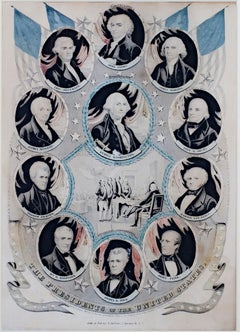
"The Presidents of the U.S." is an original hand-colored lithograph by Nathaniel Currier. It features the first eleven presidents of the United States. 14" x 10" art 23" x 19 1/8" frame Nathaniel Currier was born March 27, 1813 to Nathaniel and Hannah Currier in Roxbury, Massachusetts. At the age of fifteen he was apprenticed to William S. and John Pendleton of Boston who had set up the first lithographic establishment in America. His apprenticeship served him well as he went on to be the largest publisher of lithographs. Mr. Maurer described Nat Currier as being very gentlemanly and liberal. As is evident to the success of the firm of Currier & Ives he was very devoted to his business. Nat Currier had many friends including Horace Greely and P.T. Barnum. He was well known for his sense of humor and Harry T. Peters tells one story about P. T. Barnum. "Currier had heard that one day his friend, the great showman, had rushed into the barber shop of the old Park Hotel, at Beekman and Nassau Streets, to get a shave. Barnum had hurried up to Tom Higginson, the barber, and said, 'Tom, I'm in a hurry.' 'Sorry for it,' said Tom, 'but it's that gentleman's turn next.' 'That gentleman' was an unshaven irshman waiting for a ten-cent shave. Barnum turned to him and said, 'My friend, if you will let me have your turn, I'll pay for what you have done.' The gentleman consented, and, as Barnum found out later, had a full job done - absolutely everything the house had. The check was for a dollar and sixty cents. When Currier heard this story he found the very Irishman and had him pose. The result was the famous cartoon, "The Man that Gave Barnum 'His Turn.'" Nathaniel was married twice; his first wife was Miss Eliza West of Boston. He had one son with Eliza, Edward West Currier. In 1847 he married Miss Laura Ormsbee of Vermont. Laura and Nathaniel are memorialized in the famous N. Currier lithograph The Road Winter...

Category

1840s Academic Hans Berger Prints and Multiples
Materials

Lithograph

Semen: large scale expressionist nude male figure portrait, floating in pink

Semen: large scale expressionist nude male figure portrait, floating in pink

By Francesco Clemente

Located in New York, NY

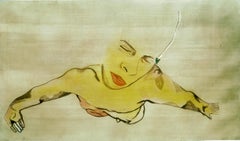
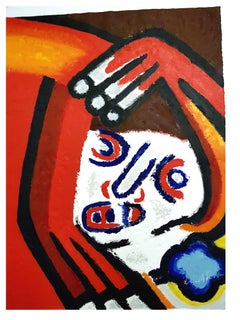
This large scale, ethereal portrait depicts a tranquil male nude figure floating in pink and blue. Based on a tempera painting, an expressionist, emotive piece to bring dramatic impa...

Category

1980s Contemporary Hans Berger Prints and Multiples
Materials

Drypoint, Etching, Aquatint

Venise, Nina
Venise, Nina

Edgar ChahineVenise, Nina, 1923

$1,250

H 12.5 in W 8.57 in

Venise, Nina

By Edgar Chahine

Located in Fairlawn, OH

Venise, Nina Etching and drypoint, 1923 Signed lower left (see photo) Titled lower right (see photo) Edition 100 Edition: 100 Printed on light green chine collee paper Condition: Exc...

Category

1920s Impressionist Hans Berger Prints and Multiples

Materials

Drypoint

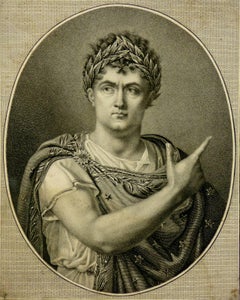
French Engraving Emperor

French Engraving Emperor, Circa 1830

$275

H 20 in W 16 in D 0.1 in

French Engraving Emperor

Located in Houston, TX

French stipple engraving portraying a stately emperor figure, circa 1830. Original artwork on paper displayed on a white mat with a gold border. Mat fits a standard-size frame. Ar...

Category

1830s Hans Berger Prints and Multiples
Materials

Paper, Ink, Engraving

Hans Berger prints and multiples for sale on 1stDibs.

Find a wide variety of authentic Hans Berger prints and multiples available for sale on 1stDibs. You can also browse by medium to find art by Hans Berger in crayon, engraving and more. Not every interior allows for large Hans Berger prints and multiples, so small editions measuring 18 inches across are available. Hans Berger prints and multiples prices can differ depending upon medium, time period and other attributes. On 1stDibs, the price for these items starts at $165 and tops out at $165, while the average work can sell for $165.