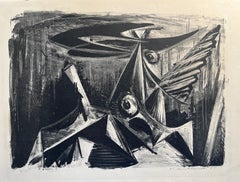
Untitled
By Hans Burkhardt
Located in New York, NY
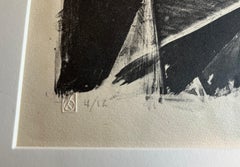
Lithograph, 1948. Signed by the artist and dated in pencil, lower right. Numbered 4/12 in pencil, lower left.
Category
1940s American Modern Hans Burkhardt Prints and Multiples
Materials
Lithograph
Hans Gustav Burkhardt was a Swiss-American abstract expressionist artist. He was born on December 20, 1904, in Basel. Burkhardt’s paintings of the 1930s are part of the genesis of American abstract expressionism. He moved to Los Angeles in 1937 and represented the most significant bridge between New York and Los Angeles. He brought with him many of the nascent ideas of abstract expressionist painting that had been swirling among New York's artists, foremost among them, Arshile Gorky and Willem de Kooning. Working independently in Los Angeles, Burkhardt's experimental investigative approach parallelled and in many instances anticipated the development of modern and contemporary art in New York and Europe. His unique role as an important American painter is affirmed by the constant interest and continuing reassessment afforded his work. In 1992, Burkhardt was honored as the recipient of the Lifetime Achievement Award by the American Academy of Arts and Letters. His works are displayed across many museums, including the British Museum, Metropolitan Museum of Art, Whitney Museum of American Art, Los Angeles Museum of Contemporary Art and Norton Simon Museum. Burkhardt died on April 22, 1994, in Los Angeles.
Untitled
By Hans Burkhardt
Located in New York, NY
Lithograph, 1948. Signed by the artist and dated in pencil, lower right. Numbered 4/12 in pencil, lower left.
Lithograph
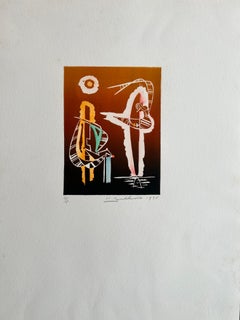
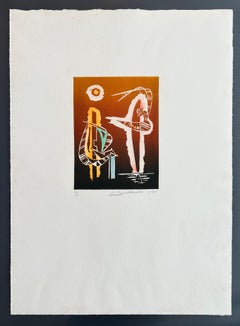
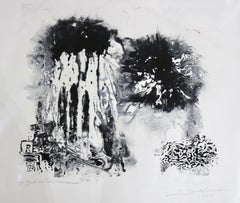
Untitled lithograph by Hans Burkhardt
By Hans Burkhardt
Located in Hudson, NY
Abstract lithograph by Hans Burkhardt. Image is 7 3/4" x 6" and sheet size is 21" x 14 1/4". The edition is 3/5. Marked with both the artist's signature and date (H. Burkhardt 1975,...
Paper, Lithograph
$1,200
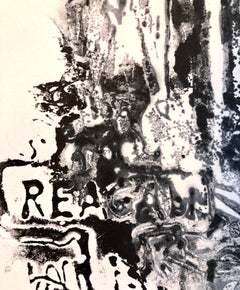
California Abstract Expressionist Linocut Lithograph Ronald Reagan Political Art
By Hans Burkhardt
Located in Surfside, FL
Untitled, 1983, lithograph printed in sepia ink, Hand signed and dated lower right, with the artist's chop mark lower left, inscribed by artist. From a series of experimental abst...
Lithograph, Linocut
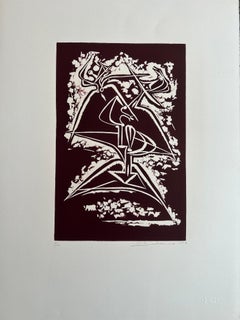
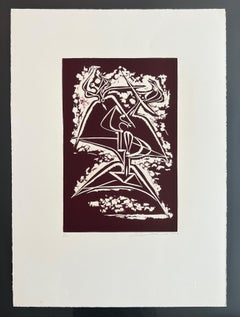
Untitled 1973 abstract lithograph by Hans Burkhardt
By Hans Burkhardt
Located in Hudson, NY
Abstract 1973 abstract lithograph by Hans Burkhardt. Image is 12" x 7 7/8 and sheet size is 20 3/4" x 14 3/4", edition is 3/12. Signed with both the artist's signature and date (H. ...
Paper, Lithograph
Price Upon Request
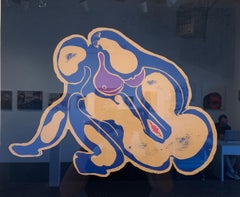
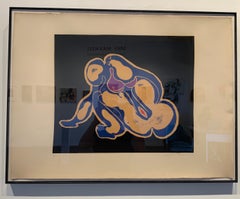
Untitled (Figure)
By Hans Burkhardt
Located in Santa Monica, CA
Original color linoleum cut
Linocut
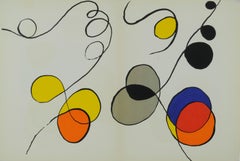
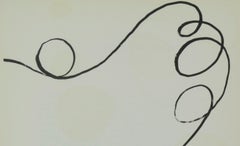
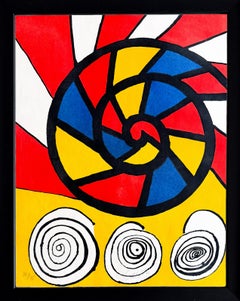
Untitled Double Page Illustration for DLM
By Alexander Calder
Located in Fairlawn, OH
Untitled Double Page Illustration for DLM Color lithograph, 1968 Unsigned as issued in DLM Published in Derriere le Miroir (Behind the Mirror), calle...
Lithograph
$1,875
H 21.5 in W 30.5 in
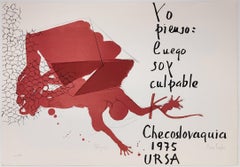
Untitled Lithograph from Poemas Para Mirar, Hand Signed, 1975, Edition of 125
By Paul Rebeyrolle
Located in Aventura, FL
From Poemas Para Mirar portfolio. Hand signed and numbered by Rebeyrolle and author/poet Carlos Franqui . Printed by Maeght and Mourlot, Paris. Published by Editart D. Blanco, Ginebr...
Paper, Lithograph
$5,413
H 25.2 in W 19.69 in
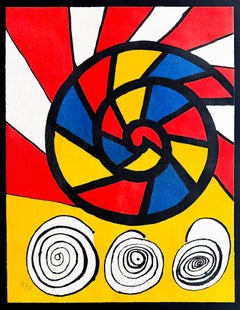
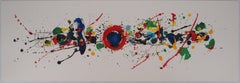
Alexander Calder (1898–1976) - Phonograph - Color lithograph on paper - 1976
By Alexander Calder
Located in Varese, IT
Color lithograph on paper from the folder 'Music Maestro Please I', edited in 1976. Limited edition, numbered as 14/75 in lower left corner. Hand-signed in pencil by artist at the bo...
Paper, Lithograph
$353
H 34.06 in W 11.62 in
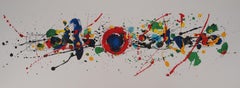
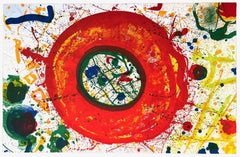
Swatch : Color Explosion - Original lithograph (Mourlot, 1992)
By Sam Francis
Located in Paris, IDF
Sam FRANCIS Color explosion, 1992 Original lithograph Unsigned On Arches vellum 86.5 x 29.5 cm Numbered on the back Authenticated by Moulot blind stamp INFORMATION : Edited by Gale...
Lithograph
$7,996Sale Price|20% Off
H 17.875 in W 21.5 in
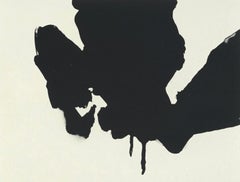
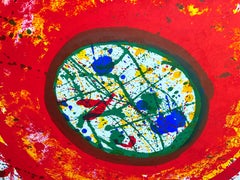
Composition (Belknap 354-380; Engberg/Banach 415-441), Three Poems
By Robert Motherwell
Located in Southampton, NY
Lithograph on Japon à la main, attached with chine appliqué to vélin d’Arches paper. Paper Size: 21.5 x 17.875 inches. Inscription: Unsigned and unnumbered, as issued. Notes: From th...
Lithograph
$13,180
H 29.77 in W 46.78 in D 0.04 in
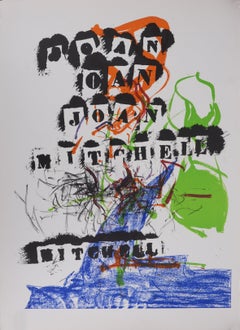
Untitled Lithograph by Sam Francis, 1992, Signed, Ed. 12/50
By Sam Francis
Located in Roma, IT
Untitled is an original artwork realized by Sam Francis in 1992. Mixed colored lithograph on velin paper. Hand signed and numbered oon the lower margin. Edition of 12/50 The Litho...
Lithograph
$2,118
H 30.32 in W 22.05 in
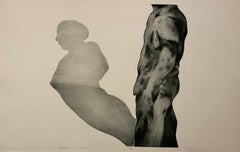
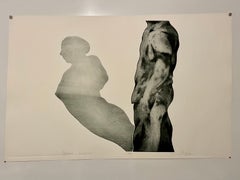
Abstract Tree and Stamps - Original lithograh (Fournier 1969)
By Joan Mitchell
Located in Paris, IDF
Joan MITCHELL (1925-1992) Abstract Tree, 1969 Original lithograph (Atelier Arte) Signed on the plate On vellum, 77 x 56 cm (c. 31 x 22 in) INFORMATION: Rare proof on vellum, with ...
Lithograph
$1,800
H 25 in W 38 in
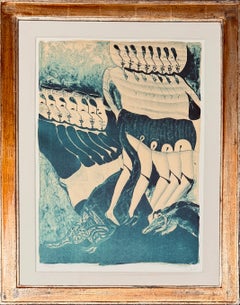
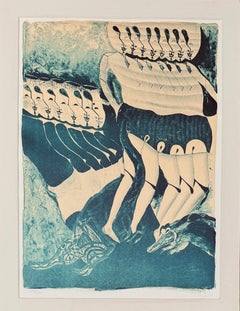
Modernist Figurative Pop Art Etching and Aquatint "the Artist" Michael Mazur
By Michael Mazur
Located in Surfside, FL
Michael Mazur "The Artist" Hand signed and editioned from the edition of 50 1967 Michael Burton Mazur (1935-August 18, 2009) was an American artist who was described by William Grim...
Lithograph, Screen
$2,353
H 25.6 in W 19.69 in
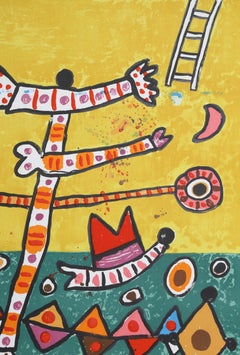
Francisco Toledo (1940–2019) - Colour lithograph on BFK Rives paper - 1970
By Francisco Toledo
Located in Varese, IT
Colour lithograph on BFK Rives paper, edited in 1970. Limited edition, numbered as 106/350 in lower left corner. Hand-signed in pencil by artist in lower right corner. Paper size: 6...
Lithograph, Paper
$1,500
H 41.5 in W 27.5 in D 0.1 in
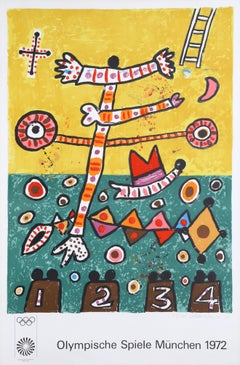
Olympische Spiele Muenchen, Signed Folk Art Lithograph by Alan Davie
By Alan Davie
Located in Long Island City, NY
Artist: Alan Davie, Scottish (1920 - 2014) Title: Olympische Spiele Muenchen Year: 1972 Medium: Lithograph, signed and numbered in pencil Ed...
Lithograph
$2,500
H 25.75 in W 18.25 in
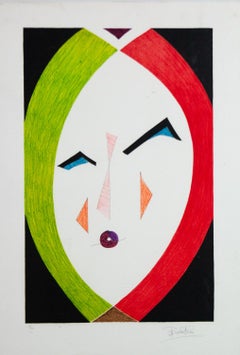
Mystery of Womanhood 1947 original signed Emilio Pucci Kaleidoscopic lithograph
By Emilio Pucci
Located in Paonia, CO
Mystery of Womanhood is an original 1947 pencil signed limited edition ( 31 / 100 ) lithograph by Emilio Pucci. It is from a set of six lithographs...
Lithograph
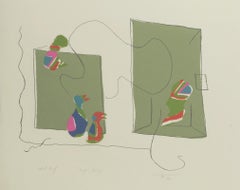
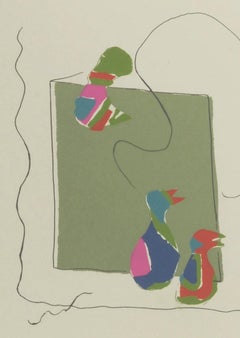
Things Kept
Located in Fairlawn, OH
Things Kept Color lithograph, 1970 Signed & titled in pencil (see photos) Annotated: "Artists Proof" Printed on RIVES wove paper Condition: Excellent Sheet has aging consistent with ...
Lithograph
Sold
H 20 in W 26 in
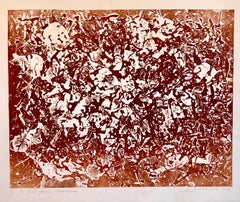
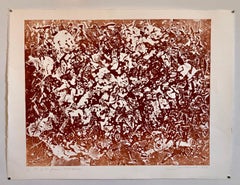
California Abstract Expressionist Linocut Lithograph Sepia Print Edition of 6
By Hans Burkhardt
Located in Surfside, FL
Untitled, 1983, lithograph printed in sepia ink, Hand signed and dated lower right, numbered in pencil with the artist's chop mark lower left, inscribed by artist. From a series o...
Lithograph, Linocut
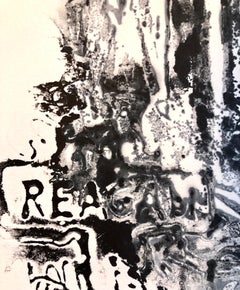
Sold
H 22 in W 30 in
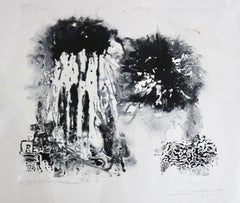
California Abstract Expressionist Linocut Lithograph Ronald Reagan Political Art
By Hans Burkhardt
Located in Surfside, FL
Untitled, 1983, lithograph printed in sepia ink, Hand signed and dated lower right, with the artist's chop mark lower left, inscribed by artist. From a series of experimental abstract linocuts done in 1983. These are very small editions and were gifted to a friend of the artist. They are done on deckle edged French Arches Art paper. This one does not appear to be editioned and might be unique a monoprint or monotype. Hans Gustav Burkhardt (1904 – 1994) was a Swiss-American abstract expressionist artist. Hans Burkhardt was born in the industrial quarter of Basel, Switzerland. Captivated by Germanic art, he began dabbling in art in his spare time while learning how to decorate furniture in antique styles. He became foreman of the furniture company's decorating department. From 1925 to 1928 he attended the Cooper Union School of the Arts, where he befriended mentor Arshile Gorky and Willem de Kooning—sharing Gorky's studio from 1928 to 1937. Burkhardt's paintings of the 1930s are part of the genesis of American abstract expressionism. In 1937 he moved to Los Angeles and represented the most significant bridge between New York and Los Angeles. His experimental investigative approach paralleled, and in many instances anticipated, the development of modern and contemporary art in New York and Europe including the work of Mark Rothko, Jackson Pollock, and Barnett Newman. Burkhardt held his first solo exhibition in 1939 at Stendahl Gallery in Los Angeles, arranged by Lorser Feitelson, and, in response to the Spanish Civil War, he painted his first anti-war works. From the late 1930s he began to produce apocalyptic anti-war compositions, a theme which became particularly pronounced in an abstract expressionist style after the atom bomb was dropped on Hiroshima and Nagasaki at the end of the Second World War. In the years following an acclaimed (1945) solo exhibition at the Los Angeles County Museum, Burkhardt continued in his art to respond to WWII, in the aftermath of Gorky's suicide in 1948, Burkhardt delved into his grief and celebration of Gorky's life creating several versions of “Burial of Gorky” and a series entitled “Journey into the Unknown.” Burkhardt first visited Mexico in 1950, and spent the next decade living half of the year in and around Guadalajara. Strongly influenced by Mexican attitudes towards the dead, and by the country's colors, sensuality, and spiritual qualities, Burkhardt “painted the soul of Mexico” with Mexican themes and colors—especially those of burials and ceremonies surrounding death—permeating his abstract work. His Mexican work flirted with Surrealism although he was never really considered a Surrealist artist. Art critics of the time considered him a "great Mexican master” alongside Orozco, Diego Rivera, and Siqueiros, and Rufino Tamayo admired his work. Overall, in the 1950s Burkhardt held 23 solo exhibitions in Los Angeles and Mexico, and participated in group shows at over thirty museums worldwide. He was friends with June Wayne from Tamarind Press. In the 1960s he produced paintings in protest against the Vietnam War, some of which incorporated the human skulls he had collected from Mexican graveyards. As art historian Donald Kuspit stated, Burkhardt was “a master—indeed the inventor—of the abstract memento mori.” In 1964, for the first time in forty years, Burkhardt returned to Basel, and began making annual summer visits where he became a friend of Mark Tobey—printing linocuts for the artist and collecting his work. In the 1970s Burkhardt continued his anti-war paintings—incorporating protruding wooden spikes into the canvas—while simultaneously painting abstractions of merging lovers and cityscapes during his summer visits to Basel. His “Small Print” (protesting smoking), “Graffiti,” and “Northridge” series demonstrate the evolution of his symbolism, and his “Desert Storms” series, in response to Iraq's invasion of Kuwait, was discussed by critic Peter Selz at a presentation at the International Congress of Art Critics Conference. In the last decades of his life, Burkhardt's work had moved from images of imbalance to a study of human tragedy—which he embraced in an attempt to discover beauty and facilitate understanding. Critic Peter Frank called Burkhardt “…one of America’s most vital abstract expressionist painters, someone who took the seed of the movement and cultivated it a rather different way in very different soil.” Burkhardt taught at numerous colleges and universities and retired as a professor emeritus from California State University, Northridge. In 1992 Burkhardt was honored as the recipient of the Lifetime Achievement Award by the American Academy and Institute of Arts and Letters’ Jimmy Ernst (son of Max Ernst) Award. Also in 1992, he established the Hans G. and Thordis W. Burkhardt Foundation. In 1993, the last year of his career, his final series “Black Rain” channeled pain and hardship, but provided poignant, symbolic beacons of hope and wishes for a better future for humanity. His unique role as an important American painter is affirmed by the constant interest and continuing reassessment afforded his work. Select Solo exhibitions 1939: Stendahl Gallery, Los Angeles, March 27 – April 17 1945: Hans Burkhardt, Los Angeles County Museum of Art 1951: Museo de Bellas Artes, Guadalajara, Mexico: Exhibición de Pinturas Modernas; Comara Gallery, Los Angeles 1953: Fisher Gallery, University of Southern California, Los Angeles 1957: Pasadena Art Museum, California: Ten Year Retrospective, June 14 – July 14; 1968: San Diego Museum of Art: Vietnam Paintings...
Lithograph, Linocut
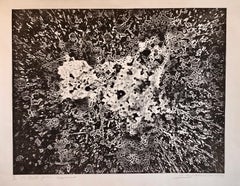

Sold
H 20 in W 26 in
California Abstract Expressionist Linocut Lithograph Print Small Edition of 12
By Hans Burkhardt
Located in Surfside, FL
Untitled, 1983, lithograph printed in sepia ink, Hand signed and dated lower right, numbered in pencil with the artist's chop mark lower left, inscribed by artist. From a series of experimental abstract linocuts done in 1983. These are very small editions and were gifted to a friend of the artist. They are done on deckle edged French Arches Art paper. Hans Gustav Burkhardt (1904 – 1994) was a Swiss-American abstract expressionist artist. Hans Burkhardt was born in the industrial quarter of Basel, Switzerland. Captivated by Germanic art, he began dabbling in art in his spare time while learning how to decorate furniture in antique styles. He became foreman of the furniture company's decorating department. From 1925 to 1928 he attended the Cooper Union School of the Arts, where he befriended mentor Arshile Gorky and Willem de Kooning—sharing Gorky's studio from 1928 to 1937. Burkhardt's paintings of the 1930s are part of the genesis of American abstract expressionism. In 1937 he moved to Los Angeles and represented the most significant bridge between New York and Los Angeles. His experimental investigative approach paralleled, and in many instances anticipated, the development of modern and contemporary art in New York and Europe including the work of Mark Rothko, Jackson Pollock, and Barnett Newman. Burkhardt held his first solo exhibition in 1939 at Stendahl Gallery in Los Angeles, arranged by Lorser Feitelson, and, in response to the Spanish Civil War, he painted his first anti-war works. From the late 1930s he began to produce apocalyptic anti-war compositions, a theme which became particularly pronounced in an abstract expressionist style after the atom bomb was dropped on Hiroshima and Nagasaki at the end of the Second World War. In the years following an acclaimed (1945) solo exhibition at the Los Angeles County Museum, Burkhardt continued in his art to respond to WWII, in the aftermath of Gorky's suicide in 1948, Burkhardt delved into his grief and celebration of Gorky's life creating several versions of “Burial of Gorky” and a series entitled “Journey into the Unknown.” Burkhardt first visited Mexico in 1950, and spent the next decade living half of the year in and around Guadalajara. Strongly influenced by Mexican attitudes towards the dead, and by the country's colors, sensuality, and spiritual qualities, Burkhardt “painted the soul of Mexico” with Mexican themes and colors—especially those of burials and ceremonies surrounding death—permeating his abstract work. His Mexican work flirted with Surrealism although he was never really considered a Surrealist artist. Art critics of the time considered him a "great Mexican master” alongside Orozco, Diego Rivera, and Siqueiros, and Rufino Tamayo admired his work. Overall, in the 1950s Burkhardt held 23 solo exhibitions in Los Angeles and Mexico, and participated in group shows at over thirty museums worldwide. He was friends with June Wayne from Tamarind Press. In the 1960s he produced paintings in protest against the Vietnam War, some of which incorporated the human skulls he had collected from Mexican graveyards. As art historian Donald Kuspit stated, Burkhardt was “a master—indeed the inventor—of the abstract memento mori.” In 1964, for the first time in forty years, Burkhardt returned to Basel, and began making annual summer visits where he became a friend of Mark Tobey—printing linocuts for the artist and collecting his work. In the 1970s Burkhardt continued his anti-war paintings—incorporating protruding wooden spikes into the canvas—while simultaneously painting abstractions of merging lovers and cityscapes during his summer visits to Basel. His “Small Print” (protesting smoking), “Graffiti,” and “Northridge” series demonstrate the evolution of his symbolism, and his “Desert Storms” series, in response to Iraq's invasion of Kuwait, was discussed by critic Peter Selz at a presentation at the International Congress of Art Critics Conference. In the last decades of his life, Burkhardt's work had moved from images of imbalance to a study of human tragedy—which he embraced in an attempt to discover beauty and facilitate understanding. Critic Peter Frank called Burkhardt “…one of America’s most vital abstract expressionist painters, someone who took the seed of the movement and cultivated it a rather different way in very different soil.” Burkhardt taught at numerous colleges and universities and retired as a professor emeritus from California State University, Northridge. In 1992 Burkhardt was honored as the recipient of the Lifetime Achievement Award by the American Academy and Institute of Arts and Letters’ Jimmy Ernst (son of Max Ernst) Award. Also in 1992, he established the Hans G. and Thordis W. Burkhardt Foundation. In 1993, the last year of his career, his final series “Black Rain” channeled pain and hardship, but provided poignant, symbolic beacons of hope and wishes for a better future for humanity. His unique role as an important American painter is affirmed by the constant interest and continuing reassessment afforded his work. Select Solo exhibitions 1939: Stendahl Gallery, Los Angeles, March 27 – April 17 1945: Hans Burkhardt, Los Angeles County Museum of Art 1951: Museo de Bellas Artes, Guadalajara, Mexico: Exhibición de Pinturas Modernas; Comara Gallery, Los Angeles 1953: Fisher Gallery, University of Southern California, Los Angeles 1957: Pasadena Art Museum, California: Ten Year Retrospective, June 14 – July 14; 1968: San Diego Museum of Art: Vietnam Paintings...
Lithograph, Linocut
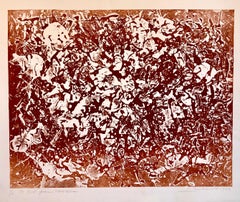
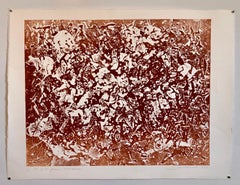
Sold
H 20 in W 26 in
California Abstract Expressionist Linocut Lithograph Sepia Print Edition of 6
By Hans Burkhardt
Located in Surfside, FL
Untitled, 1983, lithograph printed in sepia ink, Hand signed and dated lower right, numbered in pencil with the artist's chop mark lower left, inscribed by artist. From a series of experimental abstract linocuts done in 1983. These are very small editions and were gifted to a friend of the artist. They are done on deckle edged French Arches Art paper. Hans Gustav Burkhardt (1904 – 1994) was a Swiss-American abstract expressionist artist. Hans Burkhardt was born in the industrial quarter of Basel, Switzerland. Captivated by Germanic art, he began dabbling in art in his spare time while learning how to decorate furniture in antique styles. He became foreman of the furniture company's decorating department. From 1925 to 1928 he attended the Cooper Union School of the Arts, where he befriended mentor Arshile Gorky and Willem de Kooning—sharing Gorky's studio from 1928 to 1937. Burkhardt's paintings of the 1930s are part of the genesis of American abstract expressionism. In 1937 he moved to Los Angeles and represented the most significant bridge between New York and Los Angeles. His experimental investigative approach paralleled, and in many instances anticipated, the development of modern and contemporary art in New York and Europe including the work of Mark Rothko, Jackson Pollock, and Barnett Newman. Burkhardt held his first solo exhibition in 1939 at Stendahl Gallery in Los Angeles, arranged by Lorser Feitelson, and, in response to the Spanish Civil War, he painted his first anti-war works. From the late 1930s he began to produce apocalyptic anti-war compositions, a theme which became particularly pronounced in an abstract expressionist style after the atom bomb was dropped on Hiroshima and Nagasaki at the end of the Second World War. In the years following an acclaimed (1945) solo exhibition at the Los Angeles County Museum, Burkhardt continued in his art to respond to WWII, in the aftermath of Gorky's suicide in 1948, Burkhardt delved into his grief and celebration of Gorky's life creating several versions of “Burial of Gorky” and a series entitled “Journey into the Unknown.” Burkhardt first visited Mexico in 1950, and spent the next decade living half of the year in and around Guadalajara. Strongly influenced by Mexican attitudes towards the dead, and by the country's colors, sensuality, and spiritual qualities, Burkhardt “painted the soul of Mexico” with Mexican themes and colors—especially those of burials and ceremonies surrounding death—permeating his abstract work. His Mexican work flirted with Surrealism although he was never really considered a Surrealist artist. Art critics of the time considered him a "great Mexican master” alongside Orozco, Diego Rivera, and Siqueiros, and Rufino Tamayo admired his work. Overall, in the 1950s Burkhardt held 23 solo exhibitions in Los Angeles and Mexico, and participated in group shows at over thirty museums worldwide. He was friends with June Wayne from Tamarind Press. In the 1960s he produced paintings in protest against the Vietnam War, some of which incorporated the human skulls he had collected from Mexican graveyards. As art historian Donald Kuspit stated, Burkhardt was “a master—indeed the inventor—of the abstract memento mori.” In 1964, for the first time in forty years, Burkhardt returned to Basel, and began making annual summer visits where he became a friend of Mark Tobey—printing linocuts for the artist and collecting his work. In the 1970s Burkhardt continued his anti-war paintings—incorporating protruding wooden spikes into the canvas—while simultaneously painting abstractions of merging lovers and cityscapes during his summer visits to Basel. His “Small Print” (protesting smoking), “Graffiti,” and “Northridge” series demonstrate the evolution of his symbolism, and his “Desert Storms” series, in response to Iraq's invasion of Kuwait, was discussed by critic Peter Selz at a presentation at the International Congress of Art Critics Conference. In the last decades of his life, Burkhardt's work had moved from images of imbalance to a study of human tragedy—which he embraced in an attempt to discover beauty and facilitate understanding. Critic Peter Frank called Burkhardt “…one of America’s most vital abstract expressionist painters, someone who took the seed of the movement and cultivated it a rather different way in very different soil.” Burkhardt taught at numerous colleges and universities and retired as a professor emeritus from California State University, Northridge. In 1992 Burkhardt was honored as the recipient of the Lifetime Achievement Award by the American Academy and Institute of Arts and Letters’ Jimmy Ernst (son of Max Ernst) Award. Also in 1992, he established the Hans G. and Thordis W. Burkhardt Foundation. In 1993, the last year of his career, his final series “Black Rain” channeled pain and hardship, but provided poignant, symbolic beacons of hope and wishes for a better future for humanity. His unique role as an important American painter is affirmed by the constant interest and continuing reassessment afforded his work. Select Solo exhibitions 1939: Stendahl Gallery, Los Angeles, March 27 – April 17 1945: Hans Burkhardt, Los Angeles County Museum of Art 1951: Museo de Bellas Artes, Guadalajara, Mexico: Exhibición de Pinturas Modernas; Comara Gallery, Los Angeles 1953: Fisher Gallery, University of Southern California, Los Angeles 1957: Pasadena Art Museum, California: Ten Year Retrospective, June 14 – July 14; 1968: San Diego Museum of Art: Vietnam Paintings...
Lithograph, Linocut