By Hildegarde Haas
Located in Myrtle Beach, SC
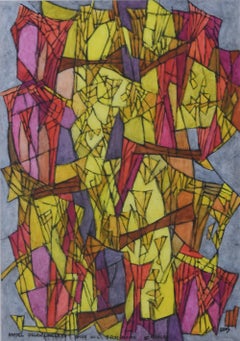
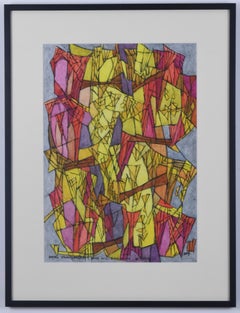
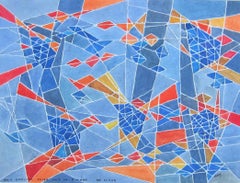
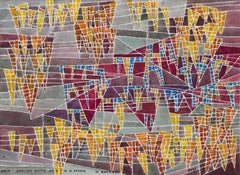
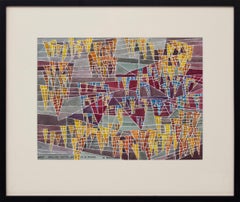
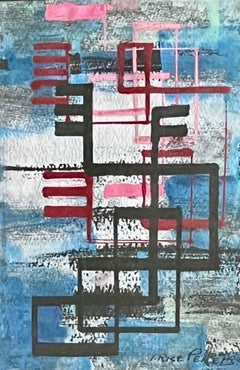
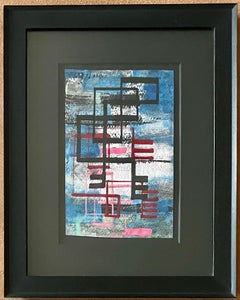
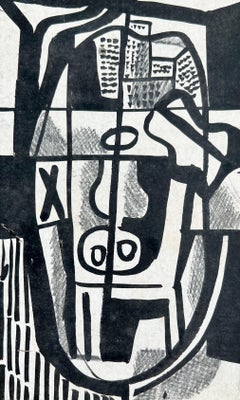
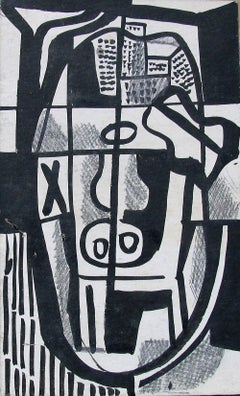
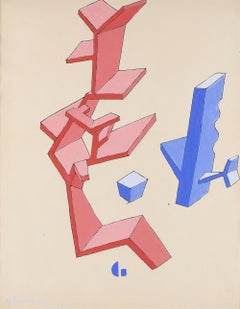
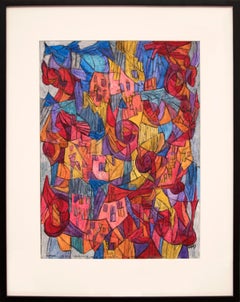
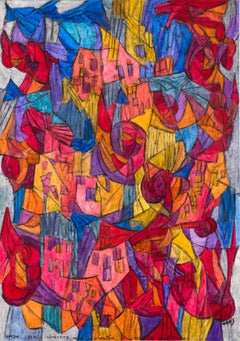
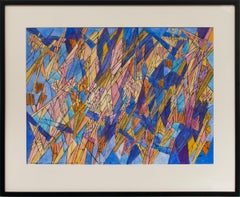
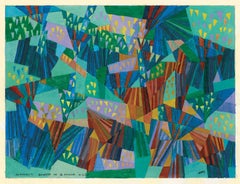
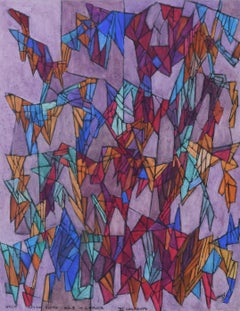
A unique and wonderfully expressive visual interpretation of Scarletti’s sonata juxaposing the harmonious interplay of color with a complexity of layered geometric shapes.
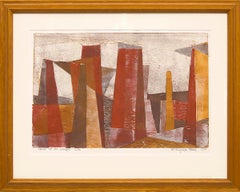
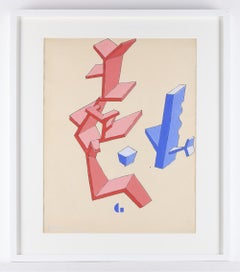
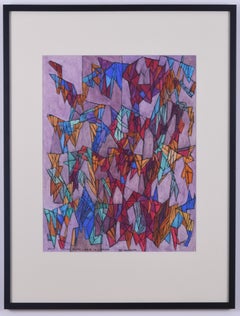
Gouache, c. 1950. Signed and titled in ink. A fine mid-century modernist abstraction, with fresh, undiminished colors, on heavy illustration bristol; the full sheet with 3 inch margins all around, in excellent condition. Archival matting to museum standards.
Image size 12 x 16 inches (305 x 406 mm); sheet size 18 x 22 inches (457 x 559 mm).
Baroque-age composer Domenico Scarletti (1685-1757) was himself a gifted and renowned harpsichordist. Born in Naples, Italy the same year as Bach and Handel, he was a great admirer of Handel’s work. He served as the composer and organist for Naples' royal chapel beginning in 1701; He was Maestro Di Cappella at St. Peter's in the Vatican from 1715 to 1719 and in 1719 he travelled to London to direct his opera 'Narciso' at the King's Theatre. In 1719 he went to Lisbon to teach music to the Portuguese princess Maria Magdalena Barbara. He lived briefly in Rome and Seville and in 1733 went to Madrid as music master to Princess Maria Barbara, who had married into the Spanish royal house. The Princess later became Queen of Spain. Scarlatti remained in the country for the remaining twenty-five years of his life, and had five children there. After the death of his first wife in 1742, he married a Spaniard, Anastasia Maxarti Ximenes. Among his compositions during his time in Madrid were a number of the 555 keyboard sonatas for which he is best known. The many sonatas which were unpublished during Scarlatti's lifetime have appeared in print irregularly in the two and a half centuries since. Scarlatti’s compositions have attracted renowned admirers and interpreters worldwide, including Béla Bartók, Arturo Benedetti Michelangeli, Johannes Brahms, Frédéric Chopin, Emil Gilels, Enrique Granados, Marc-André Hamelin, Vladimir Horowitz, Franz Liszt, Ivo Pogorelić, Heinrich Schenker and Dmitri Shostakovich.
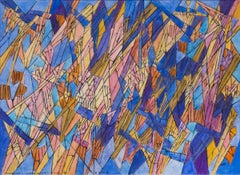
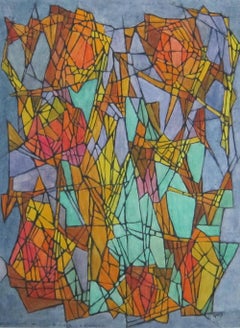
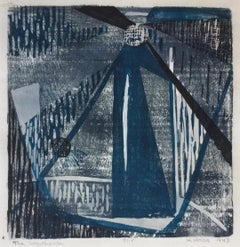
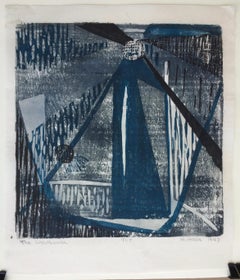
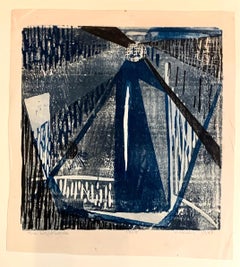
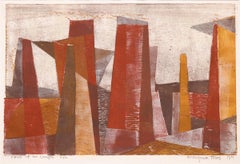
Born in Frankfort, Germany, Hildegarde Haas moved to the US with her parents in 1937. Her education included summer classes at the Colorado Springs Fine Art Center followed by two years at the University of Chicago. Receiving a scholarship to the Art Students League, she studied under Vaclav Vytlacil and Morris Kantor. She was a self-taught woodcut printmaker and became a member of The Printmakers, an established group of New York graphic artists.
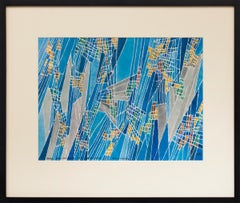
Her woodcuts which lean toward rhythmic and calligraphic abstraction were included in the exhibition 'Young American Printmakers' at the Museum of Modern Art, New York, in 1953. She exhibited nationally at juried exhibitions and her work frequently drew favorable comments by critics reviewing these shows. The physical demands of carving her own blocks and hand printing each impression became too great and after seven years she exchanged printmaking for painting.
Haas moved to Northern California in 1951 and became affiliated with the San Francisco and Oakland Art Associations and the Arts and Crafts Coop in Berkeley. Haas continued to exhibit in national and local painting and print exhibitions and she had solo exhibitions at the Dallas Museum of Fine Arts and the Kaiser Aluminum...
Category
Mid-20th Century Abstract Geometric Hildegarde Haas Art