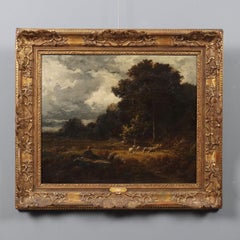
Tyrus Wong
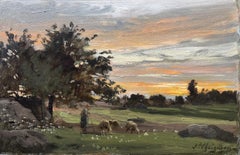
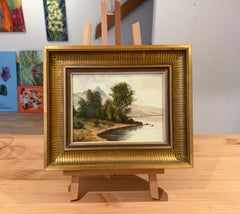
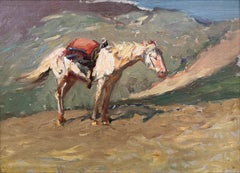
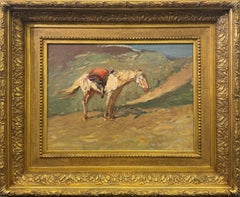
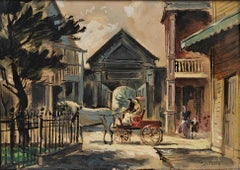
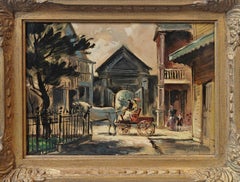
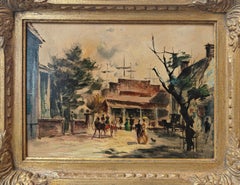
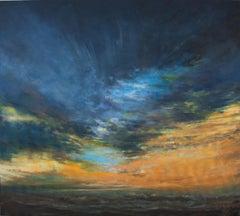
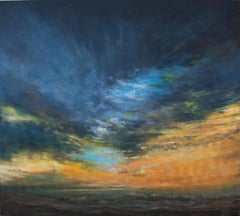
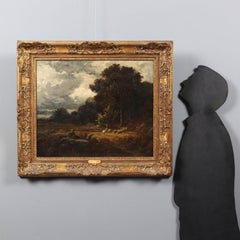
Original set illustration from "Gone With The Wind", 1939
Signed lower right
Oil on panel
6 x 8 3/4 inches
Tyrus Wong’s life embodies a remarkable journey of perseverance, talent, and artistic achievement. Born in China, he immigrated to the United States at the age of nine after being separated from his mother, whom he would never see again. Reunited with his father in Sacramento, Wong later relocated to Los Angeles, where the two lived in modest circumstances within a boarding house in Chinatown. His father nurtured his artistic abilities by encouraging him to practice Chinese calligraphy and helping him secure small painting jobs in the neighborhood. Recognizing his exceptional talent, one of Wong’s teachers recommended him for a summer scholarship at the Otis Art Institute. He became the youngest recipient of the award and later earned a full scholarship, offsetting tuition costs through work performed on campus.
After completing his studies in 1930, Wong supported himself through a variety of artistic jobs, including creating advertisements and working at the popular Dragon’s Den restaurant in Chinatown. During the Great Depression, he found employment through the Federal Art Project, producing paintings for government-sponsored programs. His career took a pivotal turn when he joined Walt Disney Studios. There, his atmospheric pastel studies for Bambi impressed Walt Disney and helped shape the film’s distinctive visual style. Wong’s contributions to the film’s backgrounds were instrumental to its success, earning him posthumous recognition as a Disney Legend in 2001. Following labor disputes at Disney, he left the studio before Bambi was released and continued his career at Warner Bros. and Republic Studios, creating concept art for films including Rebel Without a Cause, Around the World in 80 Days, Sands of Iwo Jima, and The Wild Bunch. He retired from the film industry in 1968.
Alongside his Hollywood career, Wong remained deeply involved in Southern California’s art community. He exhibited regularly in galleries and museums and participated in artist-run initiatives such as Eleven Associated, a cooperative gallery active during the early 1950s. Best known for his watercolor paintings and ceramics, Wong developed a unique artistic language that blended traditional Chinese brush techniques with modern American aesthetics. Influenced by his teacher Stanton Macdonald-Wright, he combined expressive calligraphic brushwork with depictions of nature and movement. His artistic versatility extended beyond fine art into commercial design, where he created popular Christmas card imagery and dinnerware patterns for Winfield Pottery...
Category
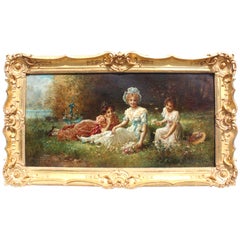
1930s Academic Jean Ferdinand CHAIGNEAU Paintings