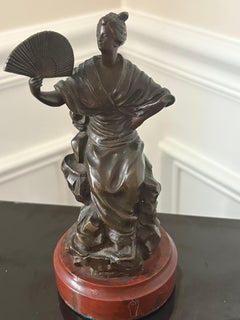
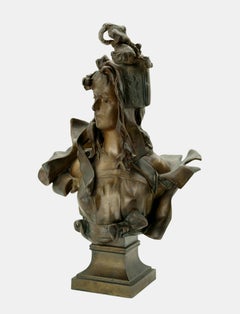
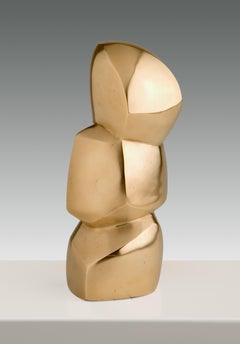
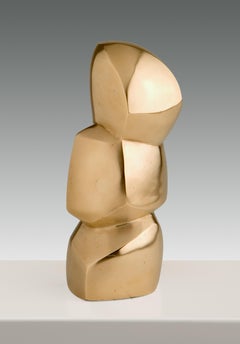
“rouge griotte”
By Jean Garnier
Located in Warren, NJ
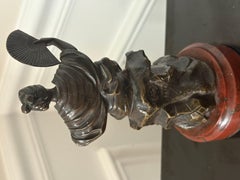
Jean Garnier (French, 1853-1910) Orientalist Bronze Sculpture rouge griotte marble base Original signed sculpture . 7” high Weighs over 2 pounds
19th Century Jean Garnier Art
Bronze
Jean Garnier was born in Mouzeuil, France, in 1853. He was a 19th-century French sculptor best known for his bronze figures and decorative vessels. Garnier exhibited at the Salon des Artiste Français, winning an honorable mention in 1892. Garnier died in 1910 in Paris, France.
“rouge griotte”
By Jean Garnier
Located in Warren, NJ
Jean Garnier (French, 1853-1910) Orientalist Bronze Sculpture rouge griotte marble base Original signed sculpture . 7” high Weighs over 2 pounds
Bronze
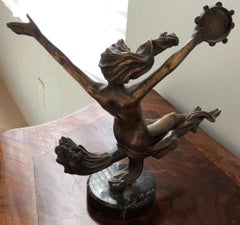
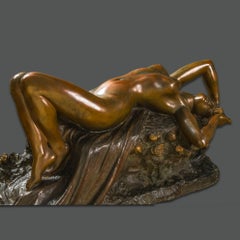
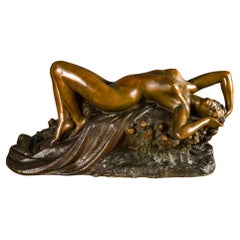
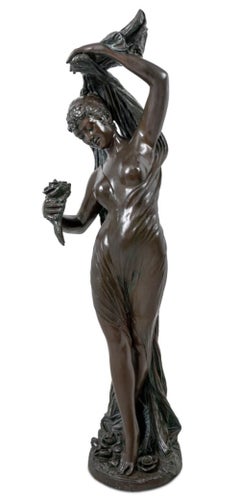
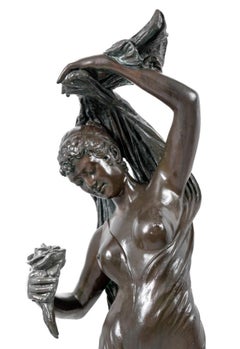
Jean Garnier Bronze of a Sea Nymph or Siren
By Jean Garnier
Located in San Francisco, CA
Jean Garnier (1853-1910) Art Nouveau Bronze Sculpture circa 1890s A Fine bronze sculpture by listed French artist Jean Garnier. A young nude woman with long flowing hair and a tamb...
Bronze
$4,961
H 24.02 in W 7.09 in D 4.53 in
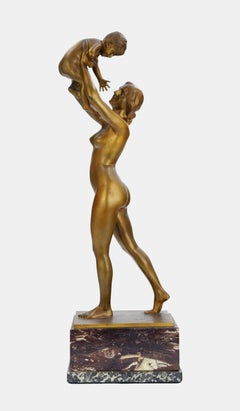
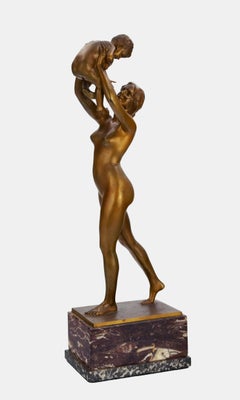
Mother Happiness / - The ecstasy of maternal joy -
Located in Berlin, DE
Johannes Boese (1856 Ostrog - 1917 Berlin), Mutterglück, um 1910. Goldbraun patinierte Bronze auf gegossener rechteckiger Plinthe, montiert auf zweifarbigem Marmorsockel (9,5 cm Höhe...
Bronze
$767
H 11.82 in W 7.88 in D 5.52 in
Bust of a young woman / - The Opulence of Beauty -
Located in Berlin, DE
Anton Nelson (i.e. Antoine Joseph van den Kerckhoven) (1849 Brussels - after 1910 ibid.), Bust of a young woman, c. 1890. Patinated bronze on cast base, 30 cm (total height) x 20 cm ...
Bronze
$2,598
H 9.85 in W 3.94 in D 1.97 in
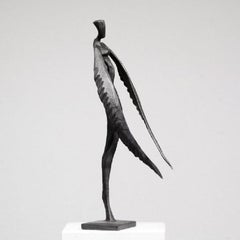
Dancer In Flight by Yann Guillon - Bronze Sculpture, Female Ballet Dancer
By Yann Guillon
Located in Paris, FR
Dancer in Flight (Danseuse Envolée) is a bronze sculpture by contemporary artist Yann Guillon, dimensions are 25 cm × 10 cm × 5 cm (9.8 × 3.9 × 2 in). This artwork is available with ...
Bronze
$11,222
H 13 in W 25.6 in D 13 in
Art Nouveau Italian Signed Dated and Inscribed Original Bronze
By Constantino Barbella
Located in Roma, IT
Wonderful Art Nouveau "Ebrezza" bronze sculpture of a woman lying on a bed of roses. It bears at the base the signature Barbella and the wording “Rome Palm Sunday 31 III 1912” Brand...
Bronze
$883Sale Price|20% Off
H 11.42 in W 3.55 in D 3.94 in
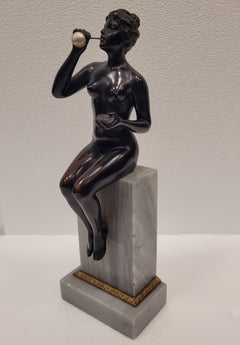
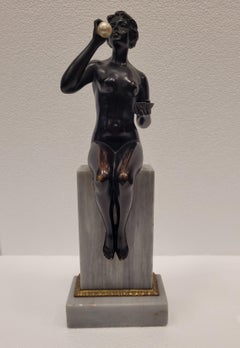
Art Nouveau sculpture “Woman blowing bubbles”, Bronze and marble, Germany
Located in Valladolid, ES
Gorgeous Sculpture “Woman blowing bubbles”, Bronze and marble, Art Nouveau, 1920 – Germany Refined antique solid bronze sculpture depicting a woman blowing bubbles. This piece is of...
Marble, Bronze
$1,594
H 3.75 in W 4.34 in D 2.56 in
Bear Cub by Eric Valat - Bronze sculpture of a bear, animal sculpture, fun, baby
By Eric Valat
Located in Paris, FR
Bear Cub is a bronze sculpture by contemporary artist Eric Valat, dimensions are 9.5 × 11 × 6.5 cm (3.7 × 4.3 × 2.6 in). The sculpture is signed and numbered, it is part of a limite...
Bronze
Torso of Ryan
Located in London, GB
Bronze Numbered 2/10 57cm × 18cm × 40cm (incl. base) Ian Rank-Broadley is one of the foremost sculptors working today. His effigy of the late Queen Elizabeth II appears on all UK an...
Bronze
$2,100
H 6 in W 9.5 in D 6 in
Reclining Nude Bronze Sculpture, Incised Signature, Edition of 50, 6x9.5x4 in.
By Bruno Luna
Located in Aventura, FL
Incised signature and numbered by the artist. Artwork is in excellent condition. Certificate of authenticity included. Edition of 50. All reasonable offers will be considered.
Bronze
Man with Hoop
Located in London, GB
Bronze Numbered 2/10 32cm × 15cm × 16cm (incl. base) Ian Rank-Broadley is one of the foremost sculptors working today. His effigy of the late Queen Elizabeth II appears on all UK an...
Bronze
Arlen Reclining
Located in London, GB
Bronze Numbered 4/10 21cm × 26cm × 57cm Ian Rank-Broadley is one of the foremost sculptors working today. His effigy of the late Queen Elizabeth II appears on all UK and Commonwealt...
Bronze
Forest idyll / - Soulmate -
By Rudolf Kaesbach
Located in Berlin, DE
Rudolf Kaesbach (1873 Gladbach - 1955 Berlin), Forest idyll, around 1915. Bronze, gold and golden brown patina, with cast plinth, mounted on a marble base (5 cm high), total height 36 cm, dimensions of the bronze: 31 cm (height) x 17 cm (length) x 12 cm (width). Weight 4,6 kg, signed on the plinth "R.[udolf] KAESBACH". - a few rubbed areas, overall in excellent condition for its age - Soulmate - The bronze sculpture depicts a young woman in an intimate exchange with a deer that accompanies her. The animal pauses to turn toward her, while the nude beauty slows her pace to look into the deer's eyes and tenderly caress it with her hand. The woman and the deer are in inner harmony. Even though her lips remain motionless, she speaks the language of the animal with which she is deeply connected. The golden patina, which contrasts with the more naturalistic coloring of the deer, gives the young woman the appearance of a saint, even if she cannot be identified as such. At the same time, she evokes memories of Diana, the goddess of the hunt, or a nymph. But she lacks the ferocity. In her innocent naivety, she is more like a vestal virgin, who is not at home in the solitude of the forest. And yet, the young beauty, moving unclothed in the heart of nature, looks like a priestess with her hair tied up and a carefully carried bowl on her way to a sacred grove. In order to open up the above-mentioned associations, Kaesbach deliberately designed the female figure in such a way that she cannot be identified as a specific person. He has created an allegory of natural femininity, characteristic of Art Nouveau, in which the deer is far more than a companion animal. It displays the same gracefulness as the young woman, and the inner resemblance between the two makes the deer appear as her other self. In animal terms, it embodies her inner being, which also gives the deer an allegorical character. About the artist Rudolf Kaesbach studied sculpture at the Hanau Academy and worked in a bronze foundry in Paris in 1900. In order to work as an independent artist, he opened a workshop in Düsseldorf, where he cast bronzes from models he designed. In 1902 he made his debut at the German National Art Exhibition in Düsseldorf. The following year Kaesbach went to the academy in Brussels. There he was inspired by contemporary Belgian sculpture, especially the work of Constantin Meunier. He moved to Berlin, where he opened a studio in the villa district of Grunewald and devoted himself to life-size marble sculptures and the design of bronzes. From 1911, he regularly presented his works at the major art exhibitions in Berlin, as well as in Düsseldorf and Malmö. Between 1936 and 1939, he also created models for the Rosenthal porcelain factory. From 1939 to 1944, Kaesbach was represented at the major German art exhibitions in Munich. GERMAN VERSION Rudolf Kaesbach (1873 Gladbach - 1955 Berlin), Waldidyll, um 1915. Gold und goldbraun patinierte Bronze mit gegossener Plinthe, auf einem Marmorsockel montiert (5 cm Höhe), Gesamthöhe 36 cm, Maße der Bronze: 31 cm (Höhe) x 17 cm (Länge) x 12 cm (Breite). Gewicht 4,6 kg, auf der Plinthe mit „R.[udolf] KAESBACH“ signiert. - vereinzele beriebene Stellen, insgesamt in einem altersgemäß ausgezeichneten Zustand - Seelenverwandtschaft - Die Bronzeplastik veranschaulicht eine junge Frau im innigen Austausch mit einem sie begleitenden Reh. Das Tier hält inne, um sich zu ihr hochzuwenden, während die nackte Schönheit ihren Schritt verlangsamt, um dem Reh ebenfalls in die Augen zu schauen und es zärtlich mit der Hand zu liebkosen. Die Frau und das Reh sind in einem inneren Gleichklang. Auch wenn ihre Lippen unbewegt bleiben, spricht sie die Sprache des Tieres, mit dem sie auf eine tief empfundene Weise verbunden ist. Die im Kontrast zur naturalistischeren Einfärbung des Rehs aufstrahlende goldfarbene Patina lässt die junge Frau wie eine Heilige erscheinen, auch wenn sich nicht als Heilige identifizierbar ist. Zugleich ruft sie Erinnerungen an die Jagdgöttin Diana oder eine Nymphe hervor. Dafür fehlt ihr allerdings die Wildheit. In ihrer unschuldigen Naivität gemahnt sie vielmehr an eine Vestalin, die freilich nicht in der Waldeinsamkeit zu Hause ist. Und doch wirkt die sich unbekleidet im Herzen der Natur bewegende junge Schönheit wie eine Priesterin, die sich mit hochgebundenem Haar und der vorsichtig getragenen Schale und dem Wege zu einem Heiligen Hain befindet. Um die gennannten Assoziationen zu eröffnen, hat Kaesbach die Frauenfigur bewusst so gestaltet, dass sie nicht als konkrete Person identifizierbar ist. Damit hat er eine für den Jugendstil charakteristische Allegorie natürlicher Weiblichkeit geschaffen, bei der das Reh weit mehr als ein Begleittier ist. Es weist dieselbe grazile Anmut wie die junge Frau auf und der innere Gleichklag der beiden lässt das Reh als ihr anderen Ich erscheinen. Es verkörpert – ins Animalische übertragen - ihr inneres Wesen, wodurch auch dem Reh ein allegorischer Charakter zukommt. zum Künstler Rudolf Kaesbach studierte an der Akademie Hanau Bildhauerei und war im Jahr 1900 in einer Pariser Bronzegießerei tätig. Um sich als eigenständiger Künstler betätigen zu können, eröffnete er in Düsseldorf eine Werkstatt, in der er Bronzen nach selbstentworfenen Modellen goss. 1902 debütierte er auf der Deutschen Nationalen Kunstaustellung in Düsseldorf. Im Folgejahr ging Kaesbach an die Akademie nach Brüssel. Dort wurde er von der zeitgenössischen belgischen Bildhauerei, insbesondere vom Werk Constantin Meuniers, inspiriert. Zurückgekehrt zog er nach Berlin, wo er im Villenviertel Grunewald ein Atelier eröffnete und sich neben dem Entwurf für Bronzen der lebensgroßen Marmorbildhauerei widmete. Ab 1911 präsentierte er seine Werke regelmäßig auf den Großen Berliner Kunstausstellungen, aber auch in Düsseldorf und Malmö. Zwischen 1936 und 1939 fertigte er zudem Modelle für die Porzellan-Manufaktur Rosenthal an. Von 1939 bis 1944 war...
Bronze
$1,063
H 6.5 in W 8.08 in D 2.84 in
Chien griffon - Sculpture en bronze de Prosper Lecourtier, 19e siècle
Located in Ixelles, BE
Prosper Lecourtier (1851 - 1925) Griffon Bronze à patine brune H. : 16,5 cm; L. : 20,5 cm; P. (terrasse) : 7,2 cm Signé «LECOURTIER» sur la terrasse Épreuve de fonte ancienne C...
Bronze