Lon Megargee Art

to
7
7
4
3
2
2
1
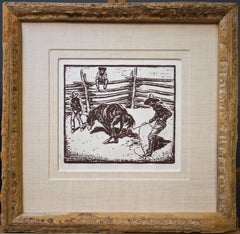
Longhorns by Lon Megargee

Longhorns by Lon Megargee

By Lon Megargee 1

Located in Phoenix, AZ

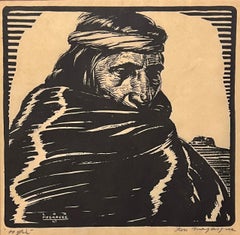
Lon Megargee 1883-1960 "Self Portrait" Wood block print Signed in plate, lower right Image size: 15.63 x 12 inches Frame size xx x xx inches Creator of S...

Category

1930s American Impressionist Lon Megargee Art

Materials

Screen

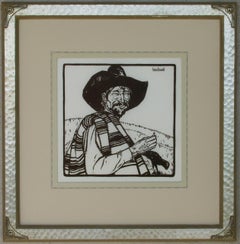
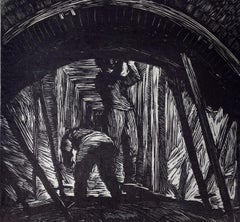
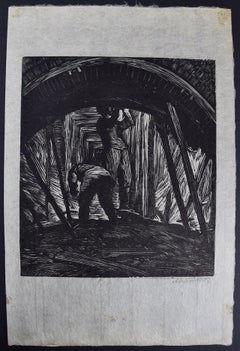
The Sheepherder by Lon Megargee

The Sheepherder by Lon Megargee

By Lon Megargee 1

Located in Phoenix, AZ

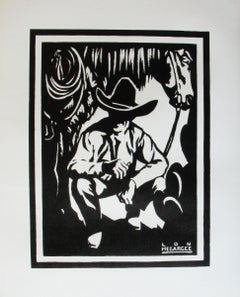
Lon Megargee 1883-1960 "The Sheepherder" Wood block print Signed in plate, lower right Image size: 10 x 10 inches Frame size 22 x 22 inches Creator of Stetson's hat logo "Last Drop from his Hat" Lon Megargee 1883 - 1960 At age 13, Lon Megargee came to Phoenix in 1896 following the death of his father in Philadelphia. For several years he resided with relatives while working at an uncle’s dairy farm and at odd jobs. He returned to Philadelphia in 1898 – 1899 in order to attend drawing classes at the Pennsylvania Academy of the Fine Arts. Back in Phoenix in 1899, he decided at the age of 16 to try to make his living as a cowboy. Lon moved to the cow country of Wickenburg, Arizona where he was hired by Tex Singleton’s Bull Ranch. He later joined the Three Bar R. . . and after a few years, was offered a job by Billy Cook of the T.T. Ranch near New River. By 1906, Megargee had learned his trade well enough to be made foreman of Cook’s outfit. Never shy about taking risks, Lon soon left Cook to try his own hand at ranching. He partnered with a cowpuncher buddy, Tom Cavness, to start the El Rancho Cinco Uno at New River. Unfortunately, the young partners could not foresee a three-year drought that would parch Arizona, costing them their stock and then their hard-earned ranch. Breaking with his romantic vision of cowboy life, Megargee finally turned to art full time. He again enrolled at the Pennsylvania Academy of Art and then the Los Angeles School of Art and Design during 1909 – 1910. The now well-trained student took his first trip to paint “en plein air” (outdoors) to the land of Hopi and Navajo peoples in northern Arizona. After entering paintings from this trip in the annual Territorial Fair at Phoenix, in 1911, he surprisingly sold his first oil painting to a major enterprise – the Santa Fe Railroad . . . Lon received $50 for “Navajos Watching the Santa Fe Train.” He soon sold the SFRR ten paintings over the next two years. For forty years the railroad was his most important client, purchasing its last painting from him in 1953. In a major stroke of good fortune during his early plein-air period, Megargee had the opportunity to paint with premier artist, William R. Leigh (1866 – 1955). Leigh furnished needed tutoring and counseling, and his bright, impressionistic palette served to enhance the junior artist’s sense of color and paint application. In a remarkable display of unabashed confidence and personable salesmanship, Lon Megargee, at age 30, forever linked his name with Arizona art history. Despite the possibility of competition from better known and more senior artists, he persuaded Governor George Hunt and the Legislature in 1913 to approve 15 large, historic and iconic murals for the State Capitol Building in Phoenix. After completing the murals in 1914, he was paid the then princely sum of roughly $4000. His Arizona statehood commission would launch Lon to considerable prominence at a very early point in his art career. Following a few years of art schooling in Los Angeles, and several stints as an art director with movie studios, including Paramount, Megargee turned in part to cover illustrations for popular Western story magazines in the 1920s. In the 1920s, as well, Lon began making black and white prints of Western types and of genre scenes from woodblocks. These prints he generally signed and sold singly. In 1933, he published a limited edition, signed and hard-cover book (about 250 copies and today rare)containing a group of 28 woodblock images. Titled “The Cowboy Builds a Loop,” the prints are noteworthy for strong design, excellent draftsmanship, humanistic and narrative content, and quality. Subjects include Southwest Indians and cowboys, Hispanic men and women, cattle, horses, burros, pioneers, trappers, sheepherders, horse traders, squaw men and ranch polo players. Megargee had a very advanced design sense for simplicity and boldness which he demonstrated in how he used line and form. His strengths included outstanding gestural (action) art and strong figurative work. He was superb in design, originality and drawing, as a study of his prints in the Hays collection reveals. In 1944, he published a second group of Western prints under the same title as the first. Reduced to 16 images from the original 28 subjects, and slightly smaller, Lon produced these prints in brown ink on a heavy, cream-colored stock. He designed a sturdy cardboard folio to hold each set. For the remainder of his life, Lon had success selling these portfolios to museum stores, art fairs and shows, and to the few galleries then selling Western art. Drawing on real working and life experiences, Lon Megargee had a comprehensive knowledge, understanding and sensitivity for Southwestern subject matter. Noted American modernist, Lew Davis...

Category

Early 20th Century American Impressionist Lon Megargee Art

Materials

Woodcut

Siesta by Lon Megargee 1929, Archival Pigmrnt Print

Siesta by Lon Megargee 1929, Archival Pigmrnt Print

By Lon Megargee 1

Located in Phoenix, AZ

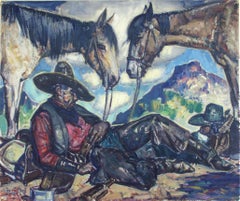
Tequila Siesta Lon Megargee Archival Pigment Print 100% 300 gram cotton rag paper Size: 22.5 x 27 inches Paper size: 24 x 28.5 inches Creator of the iconic logo for the Stetson Hat Company, " Last Drop From his Stetson", still in use today. Fine Art Estate of Lon Megargee, Collier Gallery At age 13, Lon Megargee came to Phoenix in 1896 following the death of his father in Philadelphia. For several years he resided with relatives while working at an uncle’s dairy farm and at odd jobs. He returned to Philadelphia in 1898 – 1899 in order to attend drawing classes at the Pennsylvania Academy of the Fine Arts. Back in Phoenix in 1899, he decided at the age of 16 to try to make his living as a cowboy. Lon moved to the cow country of Wickenburg where he was hired by Tex Singleton’s Bull Ranch. He later joined the Three Bar Ranch . . . and, after a few years, was offered a job by Billy Cook...

Category

1920s Lon Megargee Art

Materials

Archival Pigment

2 Lazy 2 P

2 Lazy 2 P

By Lon Megargee 1

Located in Phoenix, AZ

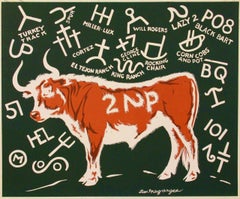
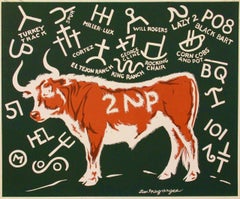
2 Lazy 2P, ca. 1939 Lon Megargee Serigraph 20 x 24 inches Signed in screen Original serigraph print by Lon Megargee 1883 - 1960 Featured in "Hot Irons" by Oren Arnold and John Hale, 1940 SHIPPING CHARGES INCLUDE SHIPPING, PACKAGING & INSURANCE Lon Megargee created this serigraph from his commission with Oren Arnold and John Hale to do their dust jacket for the book, " Hot Irons", 1940. Arnold and Hale wanted to establish a reference work, an "authority", with a entertaining history about the evolution of the brand. Megargee created a painting of a steer that was branded with the script, 2 Lazy 2 P. Surrounding the steer is a random display of famous brands of ranches in the Southwest. It was well received and must have prompted Megargee to create the likeness as a print. The brand is described in chapter thirteen, page 207-208 and says, " Ed Stram, who was Arizona state veterinarian for sixteen years, fire-branded his cattle with this peculiar crest. It isn't peculiar unless you have an equally peculiar sense of humor. At a glance it appears to be just another typically unimaginative brand, but it has been used to make many a thousand girls blush, and a few thousand bashful young men as well". COLLIER GALLERY, FINE ART ESTATE OF LON MEGARGEE Born and raised in Philadelphia, Pennsylvania, Lon Megargee, at age 13, ran away from his upper class home and went West in 1896 led by his zest for the wild and adventuresome life. There he established a reputation as a cowboy painter and illustrator with work most associated with Arizona Brewing Company ads featuring humorous aspects of cowboy life. In his youth, he worked as a free-lance cowboy, exhibition roper, poker dealer, and bronco buster in Arizona, and then went east again to study art in Philadelphia at the Pennsylvania Academy of Fine Arts, and to New York at the Art Students League and Pratt Institute. He returned to Arizona, living in Cave Creek, Salt River Canyon, Phoenix and the last years of his life near Sedona. His Phoenix home later became a popular hotel and dining place called the Hermosa Inn. Megargee was a ranch owner and also did oil canvases of the places he loved and the cowboy life he admired. By 1910, he was among the earliest resident artists, and was probably the best known artist in Arizona. His name was first associated with a landscape series of 15 large murals for the Capitol Building, newly constructed just after Arizona became a state in 1912. Another one of his paintings, Elemental, was the first painting by an artist living in Arizona to be acquired for the Municipal Collection of Phoenix. These works were chosen from entries in the State Fair, where he continued to win prizes for figure and landscape painting. From 1911 to 1953, he did numerous commission works for the Santa Fe Railroad, including a work titledNavajos Watching a Santa Fe Train. Between 1915 and 1930, he also painted in the Los Angeles area of California and had entries in the California State Fair. He died in Cottonwood, Arizona. After his death, theSaturday Evening Post had a double-page reproduction of his painting Cowboy's Dream. Creator of the iconic logo for the Stetson Hat Company, " Last Drop From his Stetson", still in use today. Fine Art Estate of Lon Megargee We offer signed in print and original signature block prints. Custom, hand carved, signature frames, with archival standards and a speciality in hand dyed mats and french matting are provided for a beautiful and timeless presentation. Megargee explored different mediums; printmaking captivated him in particular. The contrast of the black and white block print method captured perfectly his interpretation of a bold American West. The first print was produced around 1921 and culminated with the creation of “The Cowboy Builds a Loop” in 1933 with 28 images and poetry by his friend, Roy George. Megargee continued producing prints throughout the 1940s and early 50s. At age 13, Lon Megargee came to Phoenix in 1896 following the death of his father in Philadelphia. For several years he resided with relatives while working at an uncle’s dairy farm and at odd jobs. He returned to Philadelphia in 1898 – 1899 in order to attend drawing classes at the Pennsylvania Academy of the Fine Arts. Back in Phoenix in 1899, he decided at the age of 16 to try to make his living as a cowboy. Lon moved to the cow country of Wickenburg where he was hired by Tex Singleton’s Bull Ranch. He later joined the Three Bar Ranch . . . and, after a few years, was offered a job by Billy Cook...

Category

1930s American Modern Lon Megargee Art

Materials

Screen

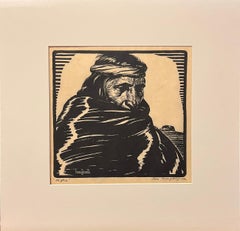
Hopi by Lon Megargee, Original Signed Block Print ca. 1920s

Hopi by Lon Megargee, Original Signed Block Print ca. 1920s

By Lon Megargee 1

Located in Phoenix, AZ

Title: Hopi ca. 1920s Artist: Lon Megargee Medium: Block Print Size: 11 x 11 inches (Sight Measurement) SHIPPING CHARGES INCLUDE SHIPPING, PACKAGING & INSURANCE Creator of Stetson's hat logo "Last Drop from his Hat" Image of Lon Megargee not included in purchase. Lon Megargee 1883 - 1960 At age 13, Lon Megargee came to Phoenix in 1896 following the death of his father in Philadelphia. For several years he resided with relatives while working at an uncle’s dairy farm and at odd jobs. He returned to Philadelphia in 1898 – 1899 in order to attend drawing classes at the Pennsylvania Academy of the Fine Arts. Back in Phoenix in 1899, he decided at the age of 16 to try to make his living as a cowboy. Lon moved to the cow country of Wickenburg, Arizona where he was hired by Tex Singleton’s Bull Ranch. He later joined the Three Bar R. . . and after a few years, was offered a job by Billy Cook of the T.T. Ranch near New River. By 1906, Megargee had learned his trade well enough to be made foreman of Cook’s outfit. Never shy about taking risks, Lon soon left Cook to try his own hand at ranching. He partnered with a cowpuncher buddy, Tom Cavness, to start the El Rancho Cinco Uno at New River. Unfortunately, the young partners could not foresee a three-year drought that would parch Arizona, costing them their stock and then their hard-earned ranch. Breaking with his romantic vision of cowboy life, Megargee finally turned to art full time. He again enrolled at the Pennsylvania Academy of Art and then the Los Angeles School of Art and Design during 1909 – 1910. The now well-trained student took his first trip to paint “en plein air” (outdoors) to the land of Hopi and Navajo peoples in northern Arizona. After entering paintings from this trip in the annual Territorial Fair at Phoenix, in 1911, he surprisingly sold his first oil painting to a major enterprise – the Santa Fe Railroad . . . Lon received $50 for “Navajos Watching the Santa Fe Train.” He soon sold the SFRR ten paintings over the next two years. For forty years the railroad was his most important client, purchasing its last painting from him in 1953. In a major stroke of good fortune during his early plein-air period, Megargee had the opportunity to paint with premier artist, William R. Leigh (1866 – 1955). Leigh furnished needed tutoring and counseling, and his bright, impressionistic palette served to enhance the junior artist’s sense of color and paint application. In a remarkable display of unabashed confidence and personable salesmanship, Lon Megargee, at age 30, forever linked his name with Arizona art history. Despite the possibility of competition from better known and more senior artists, he persuaded Governor George Hunt and the Legislature in 1913 to approve 15 large, historic and iconic murals for the State Capitol Building in Phoenix. After completing the murals in 1914, he was paid the then princely sum of roughly $4000. His Arizona statehood commission would launch Lon to considerable prominence at a very early point in his art career. Following a few years of art schooling in Los Angeles, and several stints as an art director with movie studios, including Paramount, Megargee turned in part to cover illustrations for popular Western story magazines in the 1920s. In the 1920s, as well, Lon began making black and white prints of Western types and of genre scenes from woodblocks. These prints he generally signed and sold singly. In 1933, he published a limited edition, signed and hard-cover book (about 250 copies and today rare)containing a group of 28 woodblock images. Titled “The Cowboy Builds a Loop,” the prints are noteworthy for strong design, excellent draftsmanship, humanistic and narrative content, and quality. Subjects include Southwest Indians and cowboys, Hispanic men and women, cattle, horses, burros, pioneers, trappers, sheepherders, horse traders, squaw men and ranch polo players. Megargee had a very advanced design sense for simplicity and boldness which he demonstrated in how he used line and form. His strengths included outstanding gestural (action) art and strong figurative work. He was superb in design, originality and drawing, as a study of his prints in the Hays collection reveals. In 1944, he published a second group of Western prints under the same title as the first. Reduced to 16 images from the original 28 subjects, and slightly smaller, Lon produced these prints in brown ink on a heavy, cream-colored stock. He designed a sturdy cardboard folio to hold each set. For the remainder of his life, Lon had success selling these portfolios to museum stores, art fairs and shows, and to the few galleries then selling Western art. Drawing on real working and life experiences, Lon Megargee had a comprehensive knowledge, understanding and sensitivity for Southwestern subject matter. Noted American modernist, Lew Davis...

Category

1920s American Impressionist Lon Megargee Art

Materials

Woodcut

Bronc by Lon Megargee, Woodblock Print ca. 1920s with Handmade Saguaro Rib Frame

Bronc by Lon Megargee, Woodblock Print ca. 1920s with Handmade Saguaro Rib Frame

By Lon Megargee 1

Located in Phoenix, AZ

SHIPPING CHARGES INCLUDE SHIPPING, PACKAGING & **INSURANCE** Bronc by Lon Megargee, Woodblock Print ca. 1920s Handmade Saguaro Rib Frame, double linen mat, museum archival materials Bronc Woodblock Print, signed in print Image: 8 3/4 x 9 7/8 inches Frame: 21 x 20 inches SHIPPING CHARGES INCLUDES, SHIPPING, PACKAGING & INSURANCE FINE ART ESTATE OF LON MEGARGEE Megargee Custom Handmade Saguaro Frame We offer signed in print and original signature block prints. Custom, hand carved, signature frames, with archival standards and a speciality in hand dyed mats and french matting are provided for a beautiful and timeless presentation. Free shipping Continental US Biography Megargee explored different mediums; printmaking captivated him in particular. The contrast of the black and white block print method captured perfectly his interpretation of a bold American West. The first print was produced around 1921 and culminated with the creation of “The Cowboy Builds a Loop” in 1933 with 28 images and poetry by his friend, Roy George. Megargee continued producing prints throughout the 1940s and early 50s. Creator of the iconic logo for the Stetson Hat Company, " Last Drop From his Stetson", still in use today. Fine Art Estate of Lon Megargee At age 13, Lon Megargee came to Phoenix in 1896 following the death of his father in Philadelphia. For several years he resided with relatives while working at an uncle’s dairy farm and at odd jobs. He returned to Philadelphia in 1898 – 1899 in order to attend drawing classes at the Pennsylvania Academy of the Fine Arts. Back in Phoenix in 1899, he decided at the age of 16 to try to make his living as a cowboy. Lon moved to the cow country of Wickenburg where he was hired by Tex Singleton’s Bull Ranch. He later joined the Three Bar Ranch . . . and, after a few years, was offered a job by Billy Cook...

Category

Early 20th Century Lon Megargee Art

Materials

Woodcut

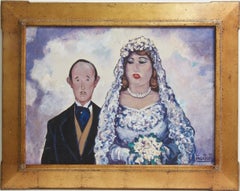
Love Honor Obey?
Love Honor Obey?

Love Honor Obey?

By Lon Megargee 1

Located in Phoenix, AZ

SHIPPING CHARGES INCLUDE SHIPPING, PACKAGING & **INSURANCE** Love Honor Obey? Lon Megargee ca. 1940 Oil on Board Size: 19.75 x 26.75 inches Frame: 26.75...

Category

1940s American Impressionist Lon Megargee Art

Materials

Oil

Related Items
Arch Beach, California

Arch Beach, California

Located in San Francisco, CA

This artwork titled "Arch Beach, California" c.1910 is an original etching on Wove paper by American artist Harley DeWitt Nichols, 1859-1939. It is hand signed and titled in pencil by the artist. The plate mark (image) size is 6.5 x 9.5 inches, framed size is 13 x 17 inches. it is custom framed in a wooden silver frame, with off white matting. It is in excellent condition, especially considering the age. About the artist: Born in the small rural Wisconsin town of Barton, Harley lived a peripatetic life. As a young child, he accompanied his family to Lincoln, Nebraska where he found great excitement in the roaming herds of buffalo and Native Americans. It was in these years that a talent for drawing was discovered. In 1870, after several years of hardship, his father moved the family back to Wisconsin. At the age of 11 he became a water boy...

Category

Early 20th Century American Impressionist Lon Megargee Art

Materials

Etching

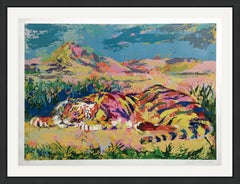
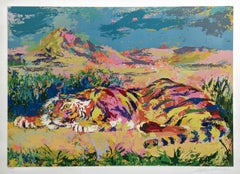
Delacroix's Tiger, Serigraph on Paper, Hand Signed, Edition of 300, 1977

Delacroix's Tiger, Serigraph on Paper, Hand Signed, Edition of 300, 1977

By LeRoy Neiman

Located in Aventura, FL

Hand signed numbered by the artist in pencil. Serigraph on Paper. Framed. Edition of 300. Artwork is in excellent condition. Certificate of authenticity included. All reasonable o...

Category

1970s Impressionist Lon Megargee Art

Materials

Paper, Screen

Triple Self-Portrait Lithograph Print, American Impressionist, 1972

Triple Self-Portrait Lithograph Print, American Impressionist, 1972

By Norman Rockwell

Located in Aventura, FL

Collotype in colors on paper. Unsigned. Published in 1972. Copyright info in typeset lower margin. Artwork is in excellent condition. All reasonable offers will be considered.

Category

1970s American Impressionist Lon Megargee Art

Materials

Paper, Lithograph

Kate II - Oversize limited edition - Kate Moss

Kate II - Oversize limited edition - Kate Moss

Located in London, GB

Kate II - Oversize limited edition - Kate Moss Beautiful archival pigment print of the supermodel and fashion icon by the London based contemporary pop art image creator and artist...

Category

2010s Pop Art Lon Megargee Art

Materials

Black and White, Archival Pigment

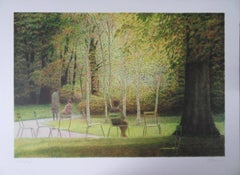
Three Chairs
Three Chairs

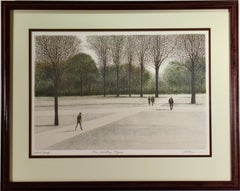
Harold AltmanThree Chairs, 1978

$900

H 22.25 in W 27.75 in D 1.35 in

Three Chairs

By Harold Altman

Located in San Francisco, CA

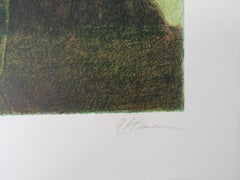
Artist: Harold Altman (American, 1924-2003) Title: Three Chairs Year: 1978 Medium: Original color lithograph Edition: Numbered 61/185 in pencil Paper: ...

Category

Late 20th Century American Impressionist Lon Megargee Art

Materials

Lithograph

Reginald Wilson, Horses

Reginald Wilson, Horses

By Reginald Wilson

Located in New York, NY

Although this work is titled Horses. It nice to think it could be (Horses in a Field in Woodstock, NY), but it was printed by Will Barnet at the Art Students League, about 1938, and Wilson, who visited Woodstock with Arnold Blanche...

Category

1930s American Modern Lon Megargee Art

Materials

Lithograph

Archery from Visions of Gold, Signed Sports Art Lithograph by Robert Peak

Archery from Visions of Gold, Signed Sports Art Lithograph by Robert Peak

By Robert Peak

Located in Long Island City, NY

Considered "the father of the contemporary movie poster," Bob Peak totally transformed the approach to movie advertising from basic collages of film stills or head shots to flamboyan...

Category

1980s American Impressionist Lon Megargee Art

Materials

Lithograph

Ode to the Pinching D'Estrées Sisters

Ode to the Pinching D'Estrées Sisters

By E2 - Kleinveld & Julien

Located in New Orleans, LA

10.5 x 16 inches - Edition 5 of 7 with 2 APs Additional framing $265. Shot in 2011 in Amsterdam Inspired by an anonymous artist of the Fontainebleau School’s Presumed Portrait of Gabrielle d’Estrées and Her Sister, the Duchess of Villars, circa 1594 Photography and acting are kindred spirits in the new series by e2 (Elizabeth Kleinveld and Epaul Julien...

Category

21st Century and Contemporary Contemporary Lon Megargee Art

Materials

Archival Pigment

Erotic Scene - Woodcut by Mino Maccari - 1944

Erotic Scene - Woodcut by Mino Maccari - 1944

By Mino Maccari

Located in Roma, IT

Erotic Scene is an original xilography artwork realized by Mino Maccari in 1944. Hand-signed in the pseudonym of "Jean Baschie" which is the artist's signature in 1944 erotic series artwork...

Category

1940s Modern Lon Megargee Art

Materials

Woodcut

Paix, Désarmement pour le Succès de la Conférence au Sommet, Paris, Mai 1960

Paix, Désarmement pour le Succès de la Conférence au Sommet, Paris, Mai 1960

By Pablo Picasso

Located in Spokane, WA

Pablo Picasso "Paix, Désarmement pour le succès de la Conférence au Sommet, Paris, Mai 1960" Original Vintage Poster, 1952/1960. Archival linen backed and ready to frame. This pos...

Category

1960s American Modern Lon Megargee Art

Materials

Lithograph

Untitled (Black smith in Charleston, South Carolina)

Untitled (Black smith in Charleston, South Carolina)

By Louis Oscar Griffith

Located in Fairlawn, OH

untitled (Shoeing the Mule, Charleston, South Carolina) Etching, c. 1930 Signed by the artist in pencil lower right (see photo) Condition: Excellent Image/plate size: 8 x 10 inches S...

Category

1930s American Impressionist Lon Megargee Art

Materials

Etching

Fox Hunt Screen Print, Hand Signed, Impressionist, 1974, Edition of 300
Fox Hunt Screen Print, Hand Signed, Impressionist, 1974, Edition of 300
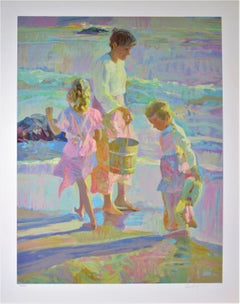
By LeRoy Neiman

Located in Aventura, FL

Hand signed numbered by the artist. Artwork image size 20.25 x 27 inches. Artwork is in excellent condition. Certificate of Authenticity included. Edition of 300. All reasonable off...

Category

1970s Impressionist Lon Megargee Art

Materials

Paper, Screen
Previously Available Items
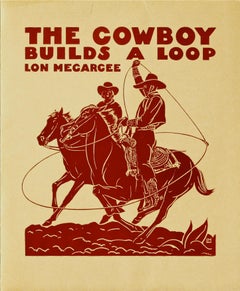
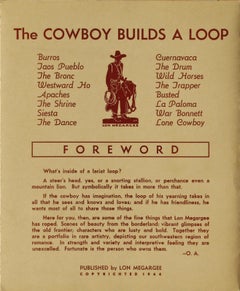
The Cowboy Builds a Loop by  Lon Megargee,  Portfolio of Sixteen Prints 1944

The Cowboy Builds a Loop by Lon Megargee, Portfolio of Sixteen Prints 1944

By Lon Megargee 1

Located in Phoenix, AZ

SHIPPING CHARGES INCLUDE SHIPPING, PACKAGING & **INSURANCE** Condition is excellent. This portfolio is very rare and rarely in this quality of condition. I can send additional images showing the pristine condition of the folio. This is the 1944 “The Cowboy Builds a Loop” portfolio from the fine art estate of Lon Megargee. 
It contains 16 images chosen from his 1933 original book “The Cowboy 
Builds a Loop”, which contains 28 plates and poems. The 1944 portfolio was created as 
an extension of the book which was no longer available. The prints were likely done on a letter set press using the images from the 1933 book and are not the original block prints, which are larger. I don’t know how many of the 1944 portfolios were made, but I don’t feel that they were produced in large numbers as would be done today. The foreword is written by Oren Arnold, novelist, journalist, and humorist, 1900-1980. Paper size is 12 x 8.75 inches, images vary within that size. Portfolio contains 16 prints. Creator of the iconic logo for the Stetson Hat Company, " Last Drop From his Stetson", still in use today. Fine Art Estate of Lon Megargee At age 13, Lon Megargee came to Phoenix in 1896 following the death of his father in Philadelphia. For several years he resided with relatives while working at an uncle’s dairy farm and at odd jobs. He returned to Philadelphia in 1898 – 1899 in order to attend drawing classes at the Pennsylvania Academy of the Fine Arts. Back in Phoenix in 1899, he decided at the age of 16 to try to make his living as a cowboy. Lon moved to the cow country of Wickenburg where he was hired by Tex Singleton’s Bull Ranch. He later joined the Three Bar Ranch . . . and, after a few years, was offered a job by Billy Cook...

Category

1940s Other Art Style Lon Megargee Art

Materials

Other Medium

2 Lazy 2 P

2 Lazy 2 P

By Lon Megargee 1

Located in Phoenix, AZ

2 Lazy 2P, ca. 1939 Lon Megargee Serigraph 20 x 24 inches Signed in screen Original serigraph print by Lon Megargee 1883 - 1960 Featured in "Hot Irons"...
Category

1930s Lon Megargee Art

Materials

Screen
Lon Megargee art for sale on 1stDibs.

Find a wide variety of authentic Lon Megargee art available for sale on 1stDibs. You can also browse by medium to find art by Lon Megargee in woodcut print, screen print, oil paint and more. Much of the original work by this artist or collective was created during the 20th century and is mostly associated with the Impressionist style. Not every interior allows for large Lon Megargee art, so small editions measuring 10 inches across are available. Lon Megargee art prices can differ depending upon medium, time period and other attributes. On 1stDibs, the price for these items starts at $1,500 and tops out at $22,000, while the average work can sell for $2,900.