Louis Osman Art

British, 1914-1996

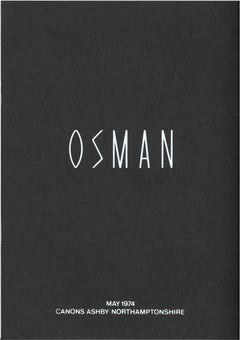
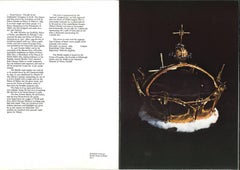
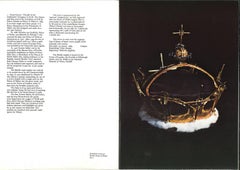
Louis Osman was born on January 30, 1914, in Exeter. He was an architect, artist, goldsmith, silversmith and medallist. Very few people matched his creations as a goldsmith and consequently, Osman was chosen to make the crown for the investiture of the Prince of Wales in 1969. Many of his other works are in public collections in the UK and worldwide. After Hele's School in Exeter, he studied at the Bartlett School of Architecture which was part of University College London, in 1931. Osman later attended the Slade School of Art and he left the Bartlett and was awarded the top first and won the Donaldson Medal of the Royal Institute of British Architects. Subsequently, he trained with Sir Albert Richardson. Serving during the Second World War as a Major in the Intelligence Corps, Osman was a specialist in Air Photography and served on the Beach Reconnaissance Committee before the June 1944 Normandy landings. Following the war, he was busy as an architect and worked for Westminster Abbey, Lincoln, Exeter, Ely and Lichfield Cathedrals. During the 1970s, Osman and his wife lived at Canons Ashby House in Northamptonshire, which was given to the National Trust in 1981 when he was not able to keep the tenancy any longer. At Canons Ashby, he established a workshop and had a team of silversmiths and goldsmiths working for him. In 1974, he created an exhibition celebrated by a lavishly illustrated catalog. Osman's 1969 crown for the investiture of the Prince of Wales was on display, together with many other items of his creation and also by other silversmiths such as Malcolm Appleby, Philip Noakes and Stephen Nunn and also acknowledging the work of Desmond Clen-Murphy, Peter Musgrove and Chris Philipson in his works. In 1976, he made the gold enameled casket that holds a copy of the Magna Carta on view in the United States Capitol, Washington, DC. Osman died on April 11, 1996.

to
5
1
6
1
4
Overall Width
to
Overall Height
to
17
2
6
1
1
17
8
8
1
7
5
3
2
2
2
2
2
1
1
1
1
1
1
1
1
10
10
9
6
6
17
10,777
2,837
2,494
1,413
17
Artist: Louis Osman
Louis Osman Christmas Card, Byford Court, 1985, Herefordshire Architect design

Louis Osman Christmas Card, Byford Court, 1985, Herefordshire Architect design

By Louis Osman

Located in London, GB

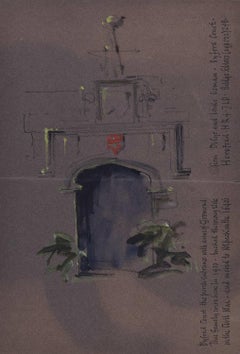
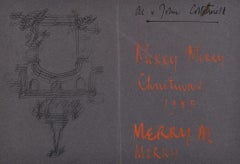
To see our other Modern British Art and works by the architect Louis Osman, scroll down to "More from this Seller" and below it click on "See all from this Seller" - or send us a message if you cannot find the artist you want. Louis Osman FRIBA (1914-1996) Christmas Card, Byford Court, 1985 22 x 31cm Gouache and ink on paper This characterful card was sent by Louis Osman and his wife Dilys, whom he had married in 1940. Written and painted in 1985, it features an ink sketch and gouache painting of the porch entrance to Byford Court, with handwritten notes about the house's significance. Osman moved to Byford Court in 1976, following a brief brush with bankruptcy. Osman attended the Bartlett School of Architecture and the Slade School of Art, and became a Donaldson Medallist of RIBA in 1935. In the late 1930s he took part in the British Museum and British School of Archaeology expeditions to Syria. After war service he worked in London designing buildings, furniture, tapestries, and glass including work in Westminster Abbey, Lincoln, Ely, Exeter and Lichfield Cathedrals. He also did work for the National Trust at Staunton Harold Church in Ashby de la Zouch. Before moving to Byford Court, Osman and his wife lived at Canons Ashby House in Northamptonshire. Whilst there, they made the crown used at the investiture of Charles, Prince of Wales. In 1976, they also made the gold enamelled casket holding the Magna Carta...

Category

1980s Modern Louis Osman Art

Materials

Gouache, Pen

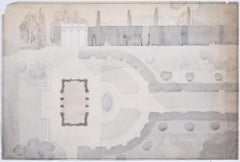
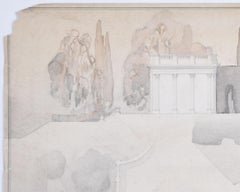
Louis Osman FRIBA Pavilion architectural design

Louis Osman FRIBA Pavilion architectural design

By Louis Osman

Located in London, GB

Louis Osman was an English artist, architect, goldsmith, silversmith and medallist. He is notable for the gold coronet he designed and made for the investiture in 1969 of Charles, Prince of Wales. We have acquired a large archive of Osman's works form his daughter; to see the other Osman works available, please scroll down to "More from this Seller" and below it click on "See all from this Seller." Louis Osman (1914 - 1996) A Pavilion in a Private Park Pen, ink and wash 67 x 100 cm Provenance: the family of the artist. Signed lower right. Osman was as much an artist as an architect. This is likely a portfolio piece from his time studying at the Bartlett School of Architecture, and is as such a piece of architectural history as well as a beautiful Osman design. Osman was awarded a First Class degree and the Donaldson Medal of the RIBA (for the best result in his year group) by the Bartlett, and then went on to the Slade School of Art. He subsequently trained with Sir Albert Richardson – we also have several Richardson works in our collection. After the war, Osman busied himself as an architect. His work included contributions to Westminster Abbey, and Lincoln, Exeter, Ely, and Lichfield Cathedrals, Staunton Harold Church in Ashby de la Zouch for the National Trust, and of course his folly: the Grade I listed Elizabethan manor house, Canons Ashby in Northamptonshire, now a National Trust property. At Canons Ashby he established a workshop and had a team of silversmiths and goldsmiths working for him. In 1976 he made the gold enamelled coffin...

Category

Mid-20th Century Modern Louis Osman Art

Materials

Ink, Watercolor, Pen
Agatha Christie's stables architectural design by Louis Osman FRIBA

Agatha Christie's stables architectural design by Louis Osman FRIBA

By Louis Osman

Located in London, GB

Louis Osman was an English artist, architect, goldsmith, silversmith and medallist. He is notable for the gold coronet he designed and made for the investiture in 1969 of Charles, Pr...

Category

1950s Modern Louis Osman Art

Materials

Pencil

Architectural Design IV by Louis Osman FRIBA

Architectural Design IV by Louis Osman FRIBA

By Louis Osman

Located in London, GB

Louis Osman was an English artist, architect, goldsmith, silversmith and medallist. He is notable for the gold coronet he designed and made for the investiture in 1969 of Charles, Pr...

Category

Mid-20th Century Modern Louis Osman Art

Materials

Ink, Pencil

Architectural Design I by Louis Osman FRIBA

Architectural Design I by Louis Osman FRIBA

By Louis Osman

Located in London, GB

Louis Osman was an English artist, architect, goldsmith, silversmith and medallist. He is notable for the gold coronet he designed and made for the investiture in 1969 of Charles, Pr...

Category

Mid-20th Century Modern Louis Osman Art

Materials

Pencil, Ink

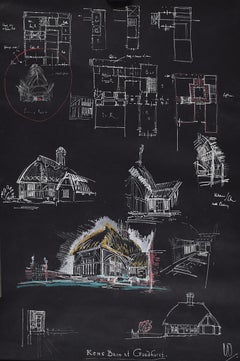
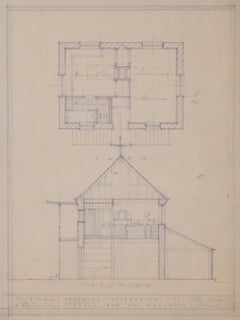
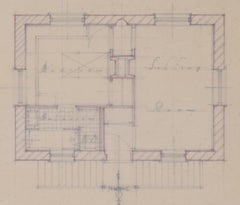
Louis Osman architectural design for Barn Conversion at Goudhurst Kent England

Louis Osman architectural design for Barn Conversion at Goudhurst Kent England

By Louis Osman

Located in London, GB

As Goldsmith Osman designed the Crown for the Investiture of the Prince of Wales in 1969, and as architect he commissioned Jacob Epstein's chef d'oeuvre, the Madonna and Child on the...

Category

Mid-20th Century Modern Louis Osman Art

Materials

Ink, Pen, Carbon Pencil

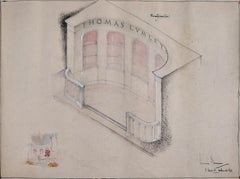
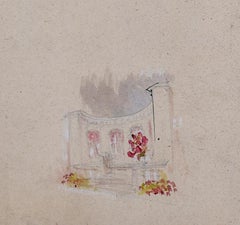
Louis Osman FRIBA Thomas Lumley Castle architectural sketches c. 1960s

Louis Osman FRIBA Thomas Lumley Castle architectural sketches c. 1960s

By Louis Osman

Located in London, GB

As Goldsmith Osman designed the Crown for the Investiture of the Prince of Wales in 1969, and as architect he commissioned Jacob Epstein's chef d'oeuvre, the Madonna and Child on the...

Category

Mid-20th Century Modern Louis Osman Art

Materials

Ink, Watercolor, Pen
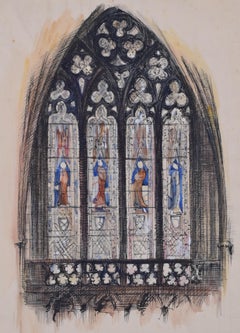
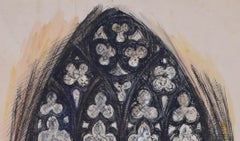
Stained glass window watercolour by Louis Osman FRIBA

Stained glass window watercolour by Louis Osman FRIBA

By Louis Osman

Located in London, GB

Louis Osman was an English artist, architect, goldsmith, silversmith and medallist. He is notable for the gold coronet he designed and made for the investiture in 1969 of Charles, Pr...

Category

1950s Modern Louis Osman Art

Materials

Watercolor

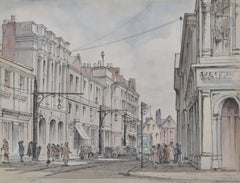
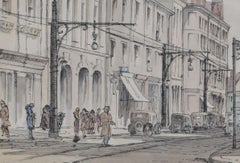
Queen Street, Exeter watercolour by Louis Osman FRIBA

Queen Street, Exeter watercolour by Louis Osman FRIBA

By Louis Osman

Located in London, GB

Louis Osman was an English artist, architect, goldsmith, silversmith and medallist. He is notable for the gold coronet he designed and made for the investiture in 1969 of Charles, Pr...

Category

1930s Modern Louis Osman Art

Materials

Watercolor

Architectural Design III by Louis Osman FRIBA

Architectural Design III by Louis Osman FRIBA

By Louis Osman

Located in London, GB

Louis Osman was an English artist, architect, goldsmith, silversmith and medallist. He is notable for the gold coronet he designed and made for the investiture in 1969 of Charles, Pr...

Category

Mid-20th Century Modern Louis Osman Art

Materials

Ink, Pencil

Staunton Harold organ restoration architectural design by Louis Osman FRIBA

Staunton Harold organ restoration architectural design by Louis Osman FRIBA

By Louis Osman

Located in London, GB

Louis Osman was an English artist, architect, goldsmith, silversmith and medallist. He is notable for the gold coronet he designed and made for the investiture in 1969 of Charles, Prince of Wales. We have acquired a large archive of Osman's works form his daughter; to see the other Osman works available, please scroll down to "More from this Seller" and below it click on "See all from this Seller." Louis Osman (1914 - 1996) Staunton Harold: Restoration of the Organ (1953) Pen, ink, and watercolour 63 x 63 cm Titled below, signed lower right, and labelled in Osman's hand. Osman's architectural design for the restoration of the organ at Staunton Harold Church, part of the Staunton Harold estate. The church, known as the Chapel of the Holy Trinity, is a 1653-built Gothic chapel. It was commissioned by Sir Robert Shirley (the Shirley family were Anglicans and Royalists, and the ornate design of the church is likely why Sir Robert was imprisoned under Oliver Cromwell). Osman was as much an artist as an architect. He studied at the Bartlett School of Architecture; he was awarded a First Class degree and the Donaldson Medal of the RIBA (for the best result in his year group), and then went on to the Slade School of Art. He subsequently trained with Sir Albert Richardson - we also have several Richardson works in our collection. After the war, Osman busied himself as an architect. His work included contributions to Westminster Abbey, and Lincoln, Exeter, Ely, and Lichfield Cathedrals, Staunton Harold Church in Ashby de la Zouch for the National Trust, and of course his folly: the Grade I listed Elizabethan manor house, Canons Ashby in Northamptonshire, now a National Trust property. At Canons Ashby he established a workshop and had a team of silversmiths and goldsmiths working for him. In 1976 he made the gold enamelled casket that holds the copy of the Magna Carta...

Category

1950s Modern Louis Osman Art

Materials

Watercolor, Ink, Pen

Architectural Design II by Louis Osman FRIBA

Architectural Design II by Louis Osman FRIBA

By Louis Osman

Located in London, GB

Louis Osman was an English artist, architect, goldsmith, silversmith and medallist. He is notable for the gold coronet he designed and made for the investiture in 1969 of Charles, Pr...

Category

Mid-20th Century Modern Louis Osman Art

Materials

Ink, Pencil

Related Items
Study for "Getting up" – 1955, a preparatory drawing by Balthus (1908 -2001)

Study for "Getting up" – 1955, a preparatory drawing by Balthus (1908 -2001)

By Balthus (Balthasar Klossowski de Rola)

Located in PARIS, FR

In 1955, as he was residing at the Château de Chassy in the Morvan for two years, Balthus created a large painting entitled "Getting up". Balthus was inspired for this painting by t...

Category

1950s Modern Louis Osman Art

Materials

Watercolor, Pencil

Intriguing abstract pencil sketch American modern art famous artist

Intriguing abstract pencil sketch American modern art famous artist

By Abraham Walkowitz

Located in London, GB

“If it brings to me a harmonious sensation…” Walkowitz once said, “…I then try to find the concrete elements that are likely to record the sensation in visual forms.” This philosoph...

Category

Mid-20th Century American Modern Louis Osman Art

Materials

Pencil

“Reclining Nude, c. 1930” American Modernist Female Drawing Lady African Mask

“Reclining Nude, c. 1930” American Modernist Female Drawing Lady African Mask

By Louise Nevelson

Located in Yardley, PA

“Reclining Nude, c. 1930” by Louise Nevelson (1899-1988) This wonderful original ink drawing highlights Nevelson’s interest in the early 20th century avant-garde. Inspired by Picass...

Category

Early 20th Century American Modern Louis Osman Art

Materials

Paper, Pencil, Graphite

The Prince's Room
The Prince's Room

The Prince's Room

By Willy Pogany

Located in Buffalo, NY

Born in Szeged, Hungary, he became one of the better known and successful illustrators of the Golden Age of Illustration, completing over 100 books. Among them are "A Treasury of Verse for Little Children," "The Rubaiyat of Omar Khayyam," and "The Rime of the Ancient Mariner." He is probably best known for pen and ink drawings of mythology subjects geared towards children. He studied at Budapest Technical University and attended art schools in Munich and Paris before moving to London at age 23. In 1907, he began illustrating children's books and did a series of annual gift books...

Category

1940s Realist Louis Osman Art

Materials

Gouache, Graphite, Pen, Watercolor

Early 19th Century English watercolour of woodland near Croxdale Hall

Early 19th Century English watercolour of woodland near Croxdale Hall

Located in Harkstead, GB

A very attractive and meticulously executed view of a rocky landscape within the woods dating to 1823. This would suit a library or study with its muted tones and skifull draughtsmanship. William Nicholson (1781-1844) Near Croxdale Hall Signed with initials and inscribed with title and date 1823 Pen, ink and grey wash 11 x 8 inches, image only 17 x 13 inches without frame The portrait-painter and etcher William Nicholson was born in Ovingham-on-Tyne, Northumberland, on Christmas Day 1781. His family transferred to Newcastle when his father was appointed Headmaster of the city's Grammar School. At an early age, though, Nicholson appears to have moved to Hull where he made his artistic debut, painting miniatures of officers garrisoned there. He was almost entirely self-taught, learning his craft through the close study of artworks in private and public galleries. He subsequently returned to Newcastle where he received many commissions to paint portraits of the old families of Northumberland. In 1808, he began to exhibit at the Royal Academy, continuing to do so until 1822. By 1814, Nicholson, whose mother was a Scot, had moved to Edinburgh where he set up as a miniaturist and painter in oils. Soon, however, he began to specialize in watercolour portraits. Early subjects included the actor Daniel Terry and the poet and novelist James Hogg. In 1818 he began to publish a series of Portraits of Eminent Scotsmen, etched from his own portraits and those of other painters. Besides Scott and Hogg, the subjects included the writers Robert Burns, John Wilson ('Christopher North'), and Lord Jeffrey, the painters Sir Henry Raeburn, the divines Alexander Carlyle and Alexander Cameron, the engineer James Watt, the architect John Playfair, and the song-collector and composer George Thomson...

Category

Early 19th Century Academic Louis Osman Art

Materials

Paper, Watercolor, Ink, Pen

'Guijarros y Agua'. Spanish seascape painting, drawing

'Guijarros y Agua'. Spanish seascape painting, drawing

By Sophia Milligan

Located in Penzance, GB

SOPHIA MILLIGAN 'Guijarros y Agua' Original Artwork (unframed*) ______________ Winter solstice light dancing on shingles and lapping tidal movements, towering rock formations rise ...

Category

2010s Contemporary Louis Osman Art

Materials

Paper, Conté, Mixed Media, Pencil, Carbon Pencil, Color Pencil

"Female Nude" Louise Nevelson, Modernist, Elegant Flowing Forms, Sweeping Line

"Female Nude" Louise Nevelson, Modernist, Elegant Flowing Forms, Sweeping Line

By Louise Nevelson

Located in New York, NY

Louise Nevelson Female Nude, circa 1935 Pencil on paper 9 15/16 x 13 7/16 inches Provenance The artist Estate of the artist Bobbie Greenfield Gallery, Santa Monica, California Priva...

Category

1930s American Modern Louis Osman Art

Materials

Paper, Pencil

1970s Renato Guttuso Signed Classical Drawing Venus of Milo

1970s Renato Guttuso Signed Classical Drawing Venus of Milo

By Renato Guttuso

Located in Roma, IT

Wonderful Renato Guttuso drawing of the Venus de Milo A sensual evocation of antiquity: the classical Muse in Guttuso’s mature period A fine original drawing on paper by the painter Renato Guttuso (1911–1987), probably created in the 1970s, a period in which the artist produced numerous drawings on paper inspired by the female figure and classical sculpture, with an expressionist approach. Mixed media: ink and tempera. The work is enhanced by an Empire-style frame in gilded wood with gold leaf. The black line is bold and vigorous, typical of Guttuso’s drawings, whilst the colouring is fluid, expressive and non-realistic. Signed lower right "Guttuso" Our company has been present on this platform for many years, with more than 100 sales made and just as many excellent reviews received that you can under our Furniture account. Dimensions are frame included The painting is also protected by glass Aldo Renato Guttuso (26 December 1911 – 18 January 1987) was a very important Italian painter He is considered to be among the most important Italian artists of the 20th century and is among the key figures of Italian expressionism. His best-known works include Flight from Etna (1938–39), Crucifixion (1941), and La Vucciria (1974). Guttuso also designed for the theatre (including sets and costumes for Histoire du Soldat, Rome, 1940) and did illustrations for books. Those for Elizabeth David’s Italian Food (1954),introduced him to many in the English-speaking world. A fierce anti-Fascist, "he developed out of expressionism and the harsh light of his native land to paint landscapes and social commentary". Guttuso was born on 26 December, 1911 in Bagheria, near Palermo. He was the son of Gioacchino Guttuso, land surveyor and amateur watercolorist, and Giuseppina d'Amico. Guttuso's birth date is often incorrectly listed as January 2, 1912, as this is when Giuseppina reported his birth to the registry office. Guttuso began signing and dating his works at the age of thirteen. They were mostly copies of nineteenth-century Sicilian landscape painters as well as French painters such as Millet and contemporary artists such as Carrà, but there were also original portraits. In 1928 he participated in his first collective exhibition in Palermo. Guttuso lived close to a house amongst the Valguarnera villas and Palagonia, which he would soon represent in paintings inspired by the cliffs of Aspra. In Palermo and Bagheria Guttuso observed the dereliction of 18th-century villas previously belonging to the nobility, abandoned to decay as a consequence of political infighting within the municipal chambers. At the same time, his family suffered a period of economic stress because of the hostility shown by Fascists and the clergy towards his father. Guttuso finished the Umberto I classical high school in Palermo and continued his studies at the University of Palermo, where his development was modelled according to the European figurative trends of the day, from Courbet to Van Gogh and to Picasso. In the early 1930s Guttuso was a frequent visitor to the studio of one of the most prolific futuristic painters, Pippo Rizzo. In 1929 he began contributing to newspapers and periodicals and in 1933 his first article on Picasso was targeted by Fascist censorship and caused the suspension of his contribution to the Palermo newspaper L’ora. In 1931 two of his paintings were accepted by the jury of the Quadriennale di Roma and were included in a collective exhibition of six Sicilian painters at the Galleria del Milione, Milan, which aroused great interest among the Milanese artistic milieu. The paintings were acclaimed by critic Franco Grasso as a "disclosure, a Sicilian affirmation". Back in Palermo Guttuso opened a studio in Pisani street and together with painter Lia Pasqualino and sculptors Barbera and Nino Franchina formed the Gruppo dei Quattro (The Group of Four). In 1937 Guttuso moved to Rome and opened his first studio in Piazza Melozzo. Due to his exuberant lifestyle, his friend Marino Mazzacurati nicknamed him "Unbridled Guttuso". He lived close to significant artists of the time: Mario Mafai, Corrado Cagli, Antonello Trombadori, also keeping in contact with the group from Milan of Giacomo Manzù and Aligi Sassu. Having rejected every academic canon, Guttuso joined the Corrente movement and wrote for Corrente di Vita in Milan. The movement was characterized by its strong opposition to Fascist rule and its influence on culture. Here he developed his "social" art, with his political attitudes evident in paintings such as Fucilazione in Campagna (1938) and Escape from Etna, the former dedicated to the poet Federico García Lorca, who had been shot by Franco's supporters during the Spanish Civil War. Guttuso continued painting during World War II, with his work ranging from landscape glimpses of the Gulf of Palermo to a collection of drawings entitled Massacri ("Massacres"), which implicitly denounced slaughters such as the Adreatine massacre. In 1940 he joined the clandestine Italian Communist Party and briefly took refuge in Genova, later returning to Rome. Crocifissione ("Crucifixion"), painted in 1940, is the painting for which he is best remembered and which earned him the second prize in the fourth Bergamo Prize in 1942. At the time it was derided by the clergy, who labelled Guttuso a "pictor diabolicus" ("devilish painter"). The Fascists also denounced it for depicting the horrors of war through the lens of religion. Guttuso wrote in his diary: "this is a time of war. I wish to paint the torment of Christ as a contemporary scene... as a symbol of all those who, because of their ideas, endure outrage, imprisonment and torment". He became an active participant in the partisan struggle in 1943. After the war, in 1945, Guttuso, along with artists Birolli, Marchiori, Vedova and others, founded the Fronte Nuovo delle Arti (New Arts Front) as a vessel for the promotion of the work of those artists who had previously been bound by Fascist rule. He also collaborated on the magazine Il Calendario del Popolo, established the same year. During this time he also met and befriended Pablo Picasso. Their friendship would last until Picasso's death in 1973. Socio-political themes dominated Guttuso's work during this time, depicting the day-to-day lives of peasants and blue-collar workers. Guttuso finished Muratori in riposo ("Builders resting"), an artwork in china ink and watercolour that he had started during the war, a symbol of rebirth of which Pier Paolo Pasolini wrote in 1962: The shapes of ten workers
emerge white over white masonry
the noon is that of the summer.
But the humiliated flesh
projects a shadow; is the disarranged order
of the white colors, that is faithfully followed
by the black ones. The noon is a peaceful one. In the following years Guttuso painted Contadino che zappa (1947) and Contadini di Sicilia (ten drawings published in Rome in 1951), in which his pictorial language became clear and free of all superfluous elements. Guttuso wrote that these were preparatory sketches for his 1949...

Category

1970s Modern Louis Osman Art

Materials

Watercolor, Pencil, Paper, Ink

Antique English-American Edward Sloman Silent Film Costume Sketch

Antique English-American Edward Sloman Silent Film Costume Sketch

Located in Buffalo, NY

Antique costume sketch by noted silent film director Edward Sloman. Framed. Measuring: 16 by 14 inches overall and 10 by 8 inches image alone. Excellent condition, ready to hang and ...

Category

20th Century Modern Louis Osman Art

Materials

Paper, Watercolor, Pencil

Previously Available Items
Lady Evelyn Malcolm's curtains architectural design by Louis Osman FRIBA

Lady Evelyn Malcolm's curtains architectural design by Louis Osman FRIBA

By Louis Osman

Located in London, GB

Louis Osman was an English artist, architect, goldsmith, silversmith and medallist. He is notable for the gold coronet he designed and made for the investiture in 1969 of Charles, Pr...

Category

1950s Modern Louis Osman Art

Materials

Watercolor

Louis Osman FRIBA: 'Plan of Market Floor' architectural design

Louis Osman FRIBA: 'Plan of Market Floor' architectural design

By Louis Osman

Located in London, GB

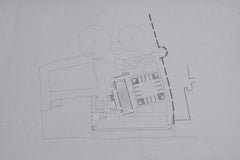
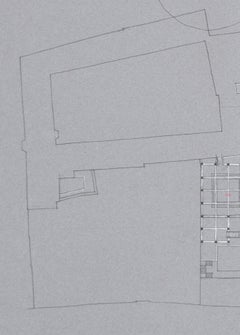
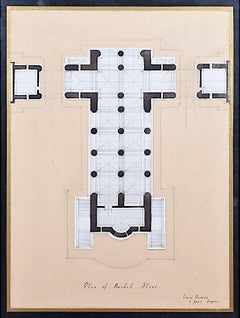
Louis Osman was an English artist, architect, goldsmith, silversmith and medallist. He is notable for the gold coronet he designed and made for the investiture in 1969 of Charles, Prince of Wales. We have acquired a large archive of Osman's works form his daughter; to see the other Osman works available, please scroll down to "More from this Seller" and below it click on "See all from this Seller." Louis Osman (1914-1996) Plan of Market Floor 43 x 32 cm Pencil, collage and wash Hand-titled 'Plan of Market Floor' and, signed lower right, 'Louis Osman, 3 Year Degree' by the artist. Provenance: from the artist's estate. Osman was as much an artist as an architect. This is likely a portfolio piece from his time studying at the Bartlett School of Architecture, and is as such a piece of architectural history as well as a beautiful Osman design. Osman was awarded a First Class degree and the Donaldson Medal of the RIBA (for the best result in his year group) by the Bartlett, and then went on to the Slade School of Art. He subsequently trained with Sir Albert Richardson - we also have several Richardson works in our collection. After the war, Osman busied himself as an architect. His work included contributions to Westminster Abbey, and Lincoln, Exeter, Ely, and Lichfield Cathedrals, Staunton Harold Church in Ashby de la Zouch for the National Trust, and of course his folly: the Grade I listed Elizabethan manor house, Canons Ashby in Northamptonshire, now a National Trust property. At Canons Ashby he established a workshop and had a team of silversmiths and goldsmiths working for him. In 1976 he made the gold enamelled casket that holds the copy of the Magna Carta...

Category

1930s Modern Louis Osman Art

Materials

Watercolor, Pencil

Louis Osman FRIBA Thomas Lumley Castle architectural sketch c. 1960s

Louis Osman FRIBA Thomas Lumley Castle architectural sketch c. 1960s

By Louis Osman

Located in London, GB

As Goldsmith Osman designed the Crown for the Investiture of the Prince of Wales in 1969, and as architect he commissioned Jacob Epstein's chef d'oeuvre, the Madonna and Child on the...

Category

Mid-20th Century Modern Louis Osman Art

Materials

Ink, Watercolor, Pen
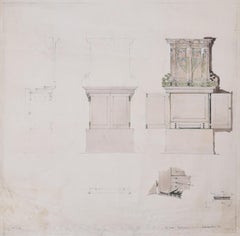
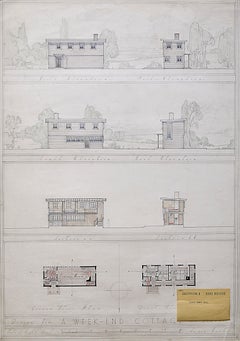
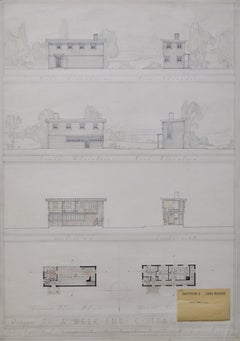
Louis Osman architectural design for Modernist House Weekend Cottage 1930s

Louis Osman architectural design for Modernist House Weekend Cottage 1930s

By Louis Osman

Located in London, GB

As Goldsmith Osman designed the Crown for the Investiture of the Prince of Wales in 1969, and as architect he commissioned Jacob Epstein's chef d'oeuvre, the Madonna and Child on the convent Osman rebuilt in Cavendish Square, W1 London after the war. From a large archive we acquired of his works from his daughter. To view the others scroll down to 'view more this seller' and then search. Louis Osman (1914-1996) Architectural Perspective Design for a Modernist House...
Category

1930s Modern Louis Osman Art

Materials

Ink, Pen, Carbon Pencil

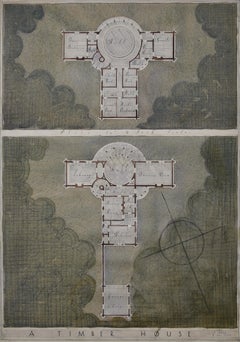
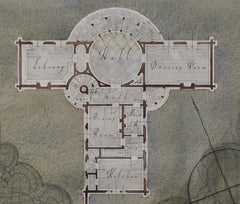
Louis Osman Architectural design for a Timber House goldsmith silversmith

Louis Osman Architectural design for a Timber House goldsmith silversmith

By Louis Osman

Located in London, GB

As Goldsmith Osman designed the Crown for the Investiture of the Prince of Wales in 1969, and as architect he commissioned Jacob Epstein's chef d'oeuvre, the Madonna and Child on the...

Category

1930s Realist Louis Osman Art

Materials

Watercolor, Carbon Pencil

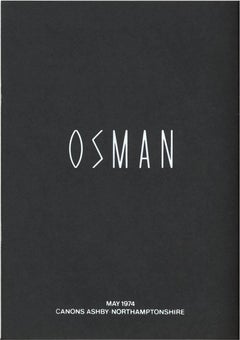
Louis Osman Architect Goldsmith Silversmith 1974 catalogue Prince of Wales Crown

Louis Osman Architect Goldsmith Silversmith 1974 catalogue Prince of Wales Crown

By Louis Osman

Located in London, GB

As Goldsmith Osman designed the Crown for the Investiture of the Prince of Wales in 1996, and as architect he commissioned Jacob Epstein's chef d'oeuvre, the Madonna and Child on the...

Category

1970s Modern Louis Osman Art

Materials

Lithograph

Louis Osman art for sale on 1stDibs.

Find a wide variety of authentic Louis Osman art available for sale on 1stDibs. You can also browse by medium to find art by Louis Osman in paint, watercolor, ink and more. Much of the original work by this artist or collective was created during the 20th century and is mostly associated with the modern style. Not every interior allows for large Louis Osman art, so small editions measuring 7 inches across are available. Customers who are interested in this artist might also find the work of Florence Camm, Gordon Scott, and Albert Richardson. Louis Osman art prices can differ depending upon medium, time period and other attributes. On 1stDibs, the price for these items starts at $99 and tops out at $3,456, while the average work can sell for $842.

Artists Similar to Louis Osman