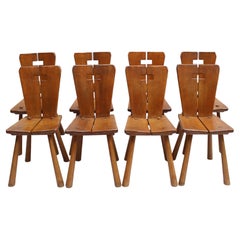
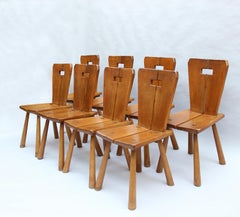
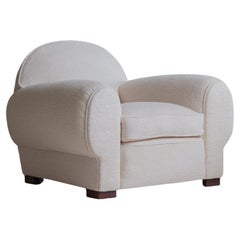
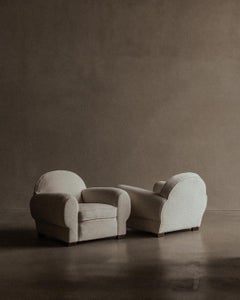
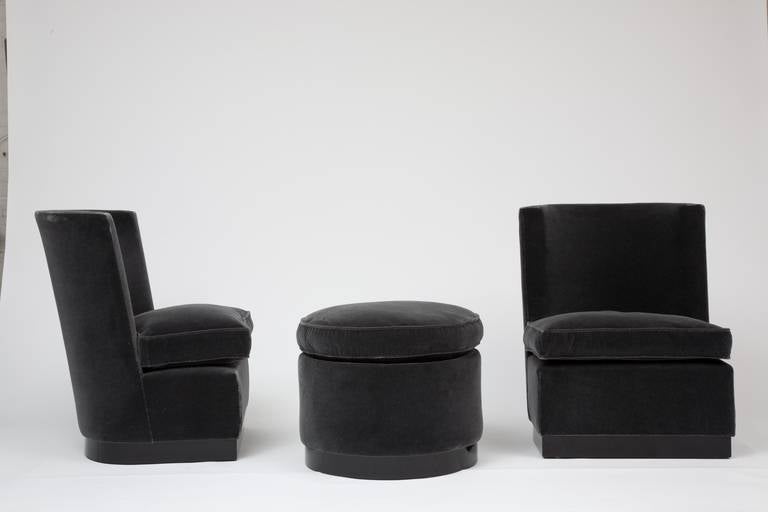
By Arflex, Louis Sognot
Located in Berlin, DE
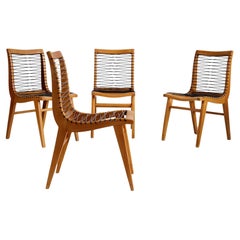
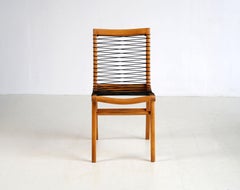
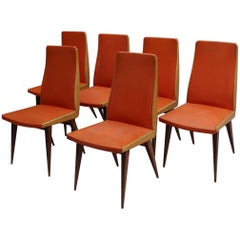
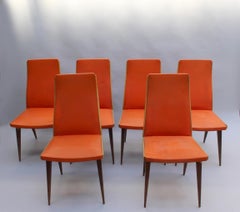
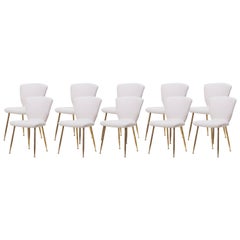
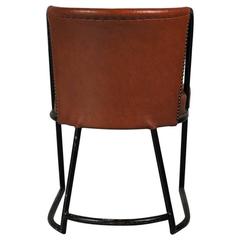
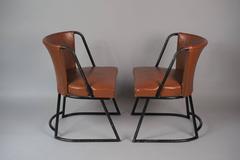
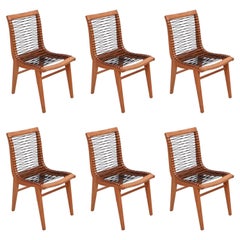
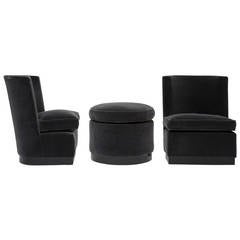
Fabulous set of ten dining chairs designed by famed French artist, decorator and designer Louis Sognot (1892-1970) in 1959 for Arflex, Italy.
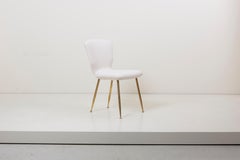
The seating on this set of ten chairs has been fully restored comprising new original high specification Pirelli rubber webbing, new high quality foam throughout, and finshed in high quality , linen and wool mix ,Danish Kvadrat 'Sunniva 2'' fabric color tone '811' which overall has a linen type appearance. The brass legs have been sympathetically hand polished and look lovely, please be aware that small insignificant marks ie light small scratches in the brass may still exist commensurate with originality age and use, it is completely unrealistic to assume that genuine chairs which are now over 50 years old will have perfect mark free brass legs. Please ask for additional photos.
This beautiful Sognot model is illustrated in an original 1962 Arflex catalog, where this model is confirmed as designed by Louis Sognot. In addition the catalog states this model was available in two options , either with luxurious brass legs or with cheaper black enameled legs. This set feature the luxury brass leg option which have a beautifully elegant tapered profile finished off with swivel joint feet to take up irregular floor surfaces.
Maurice Rinck edited another variant of this model for Sognot in France but only with the cheaper black enameled legs to suit the more rationalist taste of the French during this period. The Rinck edition featured alongside the luminaires of Serge Mouille at the 1960 'Salon des arts menagers in Paris', please see scan in this listing.
Patrick Favardin's tome on French midcentury design 'les decorateurs des annees 50' also confirms both the Arflex, Italy and Rinck editions. The Arflex brass leg version was also documented in the Italian design journal 'Rivista dell Arredamento' in 1963. Please see literature references below
Literature:
Original ARFLEX manufacturer's catalog, 1962, (illustrates example with red upholstery and brass legs) and documents Sognot as the designer. The catalog confirms two sales options were originally avaible, either the luxury option with brass legs or with cheaper black enamelled legs.
'RIVISTA DELL ARREDAMENTO' issue number 105, 1963, page 32.
'LES DECORATEURS DES ANNEES 50', FAVARDIN, page 163, NORMA EDITIONS 2002 documents the variant with black enamelled legs edited by Maurice Rinck with black enamelled legs at the Maurice Rinck stand at the 1960 'salon des arts menagers' alongside the luminaires of Serge Mouiie. The text also confirms that Arflex produced the brass leg variant for Sognot. PLEASE SEE SCAN.
Sognot was an early protagonist of Cubism and the Modern Movement but soon began to stand out by moving away from the radicalism of functionalism to assert some idea of comfort and quality, this singular position explains his dual involvement both as member of the 'l'Union des artistes de´corateurs, cre´ateurs, ensembliers' and of the ' l'Union des artistes modernes'.
Sognot studied at the Ecole Bernard Palissy and learned cabinetry at the famed JANSEN workshops. He moved on to run the famed PRIMAVERA workshop which was one of the founding sites of the Art Deco movement who allowed him to present his first collection of furnitue at the 'Salon d'Automne' et au 'Salon des artistes de´corateurs' in Paris.
Sognot soon became inspied by the modernist movement and his creations soon began to show the influences of cubism, notably a collection of furniture he presented at the Primavera pavillion at the 1925 ' l'Exposition internationale des Arts de´coratifs et industriels modernes'. At this time he discovered the achievements of Robert Mallet-Stevens and Francis Jourdain who thei influence can be seen in his output of this period.
Although influenced by the tubular steel furnitue created by Marcel Breuer, Louis Sognot soon found his own style in the Modern Movement during the late 1920s. In association with Charlotte Alix, he invented many sets of metal furniture but lookined to escape the "clinical Style" to reconcile with the quality of the French tradition of the 'Salon decorators'. He added the use of other materials such wood, wicker, leather or colored fabrics. This furniture was widely acclaimed by the critics of the time because they seem to reconcile industrial production with individual decoration.
1937 marked a new milestone for Sognot, at the ''Exposition internationale des arts et des techniques' he presented for the first time a series of high quality modern furniture...
Category
Mid-20th Century Italian Mid-Century Modern Louis Sognot Chairs