Luigi Spacal Art

to
17
Overall Width
to
Overall Height
to
17
5
9
7
1
9
7
1
4
4
2
2
1
1
1
1
1
1
17
17
11,584
2,879
2,492
1,587
17
Artist: Luigi Spacal
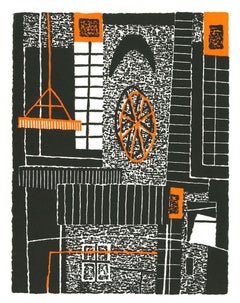
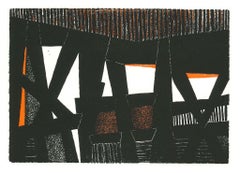
Composition - Original Woodcut by Luigi Spacal - 1970s

Composition - Original Woodcut by Luigi Spacal - 1970s

By Luigi Spacal

Located in Roma, IT

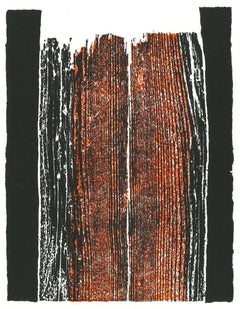
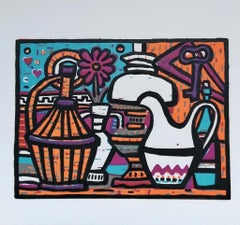
Composition is an original contemporary artwork realized by Luigi Spacal (Trieste, 1907 - Trieste, 2000) in the 1970s. Original Colored woodcut on cardboard. Good conditions. Image Dimensions: 14 x 12.5 cm Lojze Spacal, also known as Luigi Spacal, was born on the Trieste Karst, at the time of the Austro-Hungarian Empire, from a family of Slovenian nationality.In 1930 he was arrested on charges of anti-fascism and confined for some time to Accettura, in Basilicata. Here he discovered his artistic vocation. In 1934 he graduated in Venice. He began to exhibit his first works in 1937. In 1942 he was again sent to confinement, this time in Abruzzo and, later, assigned to a special working battalion in Forte dei Marmi. Nevertheless, he managed to continue to exhibit his works so much that, in 1944, he set up his first solo show. In 1948 he participated for the first time in the Venice biennial. In 1958 he won the International Grand Prix "for a draftsman and engraver" at the Venice Biennale. In 1959 he received the 2nd prize at the International Biennial of Graphic Art in Ljubljana. In 1974 he was awarded the Prešeren prize, the highest Slovenian artistic recognition, and the “San Giusto d'Oro” in 1977. In 1998 a museum was dedicated to him in the castle of San Daniele...

Category

1970s Abstract Luigi Spacal Art

Materials

Woodcut

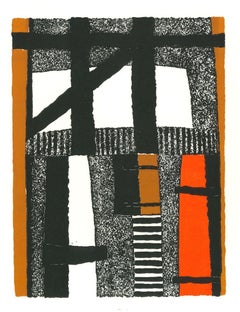
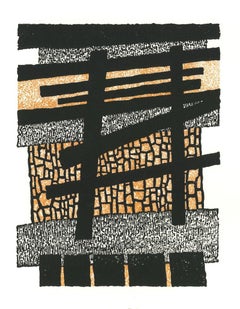
Composition - Woodcut by Luigi Spacal - 1970s

Composition - Woodcut by Luigi Spacal - 1970s

By Luigi Spacal

Located in Roma, IT

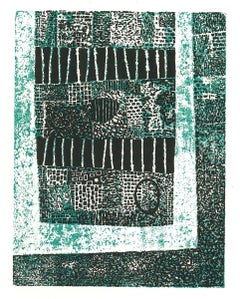
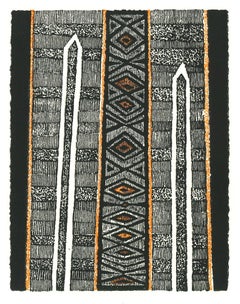
Composition is a contemporary artwork realized by Luigi Spacal (Trieste, 1907 - Trieste, 2000) in the 1970s. Original Colored woodcut print on cardboard. Image Dimensions: 18 x 14 cm Good conditions. Lojze Spacal...

Category

1970s Abstract Luigi Spacal Art

Materials

Woodcut

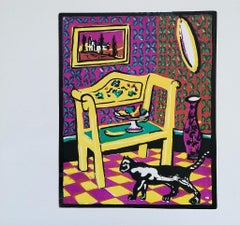
Interior with a Cat - Woodcut Print by L. Spacal - 1950 ca.

Interior with a Cat - Woodcut Print by L. Spacal - 1950 ca.

By Luigi Spacal

Located in Roma, IT

Interior with a Cat is an original Modern artwork realized by Luigi Spacal (Trieste, 1907 - Trieste, 2000) in the half of the 20th Century. Original Colored woodcut on cardboard. ...

Category

Mid-20th Century Luigi Spacal Art

Materials

Woodcut

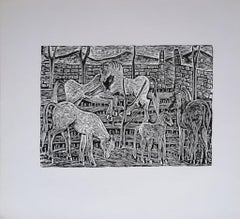
Free Horses - Woodcut Print by L. Spacal - 1940

Free Horses - Woodcut Print by L. Spacal - 1940

By Luigi Spacal

Located in Roma, IT

Free Horses is an original Modern artwork realized by Luigi Spacal (Trieste, 1907 - Trieste, 2000) in the half of the 20th Century. Original B/W woodcut on cardboard. Excellent conditions. Lojze...

Category

1940s Luigi Spacal Art

Materials

Woodcut

Karst Morning - Woodcut print by L. Spacal - 1940

Karst Morning - Woodcut print by L. Spacal - 1940

By Luigi Spacal

Located in Roma, IT

Karst Morning is a Modern artwork realized by Luigi Spacal (Trieste, 1907 - Trieste, 2000) in the half of the XX Century. Original B/W woodcut print. Excellent conditions. Lojz...

Category

1940s Luigi Spacal Art

Materials

Woodcut

Composition - Woodcut by Luigi Spacal - 1970s

Composition - Woodcut by Luigi Spacal - 1970s

By Luigi Spacal

Located in Roma, IT

Composition is a contemporary artwork realized by Luigi Spacal (Trieste, 1907 - Trieste, 2000) in the 1970s. Original Colored woodcut print on cardboard. Image Dimensions: 18 x 14 cm Good conditions, not signed. Lojze Spacal, also known as Luigi Spacal, was born on the Trieste Karst, at the time of the Austro-Hungarian Empire, from a family of Slovenian nationality.In 1930 he was arrested on charges of anti-fascism and confined for some time to Accettura, in Basilicata. Here he discovered his artistic vocation. In 1934 he graduated in Venice. He began to exhibit his first works in 1937. In 1942 he was again sent to confinement, this time in Abruzzo and, later, assigned to a special working battalion in Forte dei Marmi. Nevertheless, he managed to continue to exhibit his works so much that, in 1944, he set up his first solo show. In 1948 he participated for the first time in the Venice biennial. In 1958 he won the International Grand Prix "for a draftsman and engraver" at the Venice Biennale. In 1959 he received the 2nd prize at the International Biennial of Graphic Art in Ljubljana. In 1974 he was awarded the Prešeren prize, the highest Slovenian artistic recognition, and the “San Giusto d'Oro” in 1977. In 1998 a museum was dedicated to him in the castle of San Daniele...

Category

1970s Abstract Luigi Spacal Art

Materials

Woodcut

Composition - Original Woodcut by Luigi Spacal - 1970s

Composition - Original Woodcut by Luigi Spacal - 1970s

By Luigi Spacal

Located in Roma, IT

Composition is an original contemporary artwork realized by Luigi Spacal (Trieste, 1907 - Trieste, 2000) in the 1970s. Original Colored woodcut print on cardboard. Good conditions. Image Dimensions: 14 x 12.5 cm Lojze Spacal, also known as Luigi Spacal, was born on the Trieste Karst, at the time of the Austro-Hungarian Empire, from a family of Slovenian nationality.In 1930 he was arrested on charges of anti-fascism and confined for some time to Accettura, in Basilicata. Here he discovered his artistic vocation. In 1934 he graduated in Venice. He began to exhibit his first works in 1937. In 1942 he was again sent to confinement, this time in Abruzzo and, later, assigned to a special working battalion in Forte dei Marmi. Nevertheless, he managed to continue to exhibit his works so much that, in 1944, he set up his first solo show. In 1948 he participated for the first time in the Venice biennial. In 1958 he won the International Grand Prix "for a draftsman and engraver" at the Venice Biennale. In 1959 he received the 2nd prize at the International Biennial of Graphic Art in Ljubljana. In 1974 he was awarded the Prešeren prize, the highest Slovenian artistic recognition, and the “San Giusto d'Oro” in 1977. In 1998 a museum was dedicated to him in the castle of San Daniele...

Category

1970s Abstract Luigi Spacal Art

Materials

Woodcut

Childwood Memory - Woodcut Print by L. Spacal - 1940

Childwood Memory - Woodcut Print by L. Spacal - 1940

By Luigi Spacal

Located in Roma, IT

Childwood Memory is an original Modern artwork realized by Luigi Spacal (Trieste, 1907 - Trieste, 2000) in the half of the 20th Century. Original B/W woodcut on cardboard. Excellent conditions. Lojze Spacal...

Category

1940s Luigi Spacal Art

Materials

Woodcut

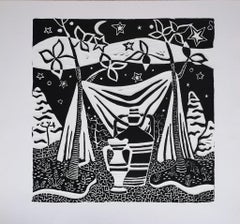
Still Life - Woodcut Print by Luigi Spacal - 1970s

Still Life - Woodcut Print by Luigi Spacal - 1970s

By Luigi Spacal

Located in Roma, IT

Still Life is an original contemporary artwork realized by Luigi Spacal (Trieste, 1907 - Trieste, 2000) in the 1970s. Original Colored woodcut print. Excellent conditions. Lojze Spacal...

Category

1970s Contemporary Luigi Spacal Art

Materials

Woodcut

Composition - Original Woodcut by Luigi Spacal - 1970s

Composition - Original Woodcut by Luigi Spacal - 1970s

By Luigi Spacal

Located in Roma, IT

Composition is an original contemporary artwork realized by Luigi Spacal (Trieste, 1907 - Trieste, 2000) in the 1970s. Original Colored woodcut print on cardboard. Good conditions. Image Dimensions: 18 x 14 cm. Lojze Spacal, also known as Luigi Spacal, was born on the Trieste Karst, at the time of the Austro-Hungarian Empire, from a family of Slovenian nationality.In 1930 he was arrested on charges of anti-fascism and confined for some time to Accettura, in Basilicata. Here he discovered his artistic vocation. In 1934 he graduated in Venice. He began to exhibit his first works in 1937. In 1942 he was again sent to confinement, this time in Abruzzo and, later, assigned to a special working battalion in Forte dei Marmi. Nevertheless, he managed to continue to exhibit his works so much that, in 1944, he set up his first solo show. In 1948 he participated for the first time in the Venice biennial. In 1958 he won the International Grand Prix "for a draftsman and engraver" at the Venice Biennale. In 1959 he received the 2nd prize at the International Biennial of Graphic Art in Ljubljana. In 1974 he was awarded the Prešeren prize, the highest Slovenian artistic recognition, and the “San Giusto d'Oro” in 1977. In 1998 a museum was dedicated to him in the castle of San Daniele...

Category

1970s Abstract Luigi Spacal Art

Materials

Woodcut

Childhood Memory - Woodcut Print by L. Spacal - 1940

Childhood Memory - Woodcut Print by L. Spacal - 1940

By Luigi Spacal

Located in Roma, IT

Childhood Memory is an original Modern artwork realized by Luigi Spacal (Trieste, 1907 - Trieste, 2000) in the half of the 20th Century. Original B/W woodcut on cardboard. Excellent conditions. Lojze Spacal...

Category

1940s Luigi Spacal Art

Materials

Woodcut

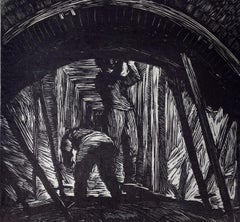
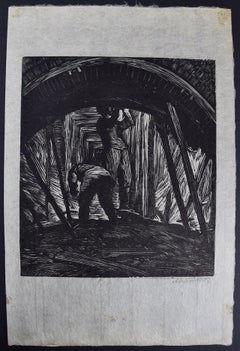
The Martyrs of Basovizza - Woodcut Print by L. Spacal - 1950 ca.

The Martyrs of Basovizza - Woodcut Print by L. Spacal - 1950 ca.

By Luigi Spacal

Located in Roma, IT

The Martyrs of Basovizza is an original Modern artwork realized by Luigi Spacal (Trieste, 1907 - Trieste, 2000) in the half of the 20th Century. Original Black and White woodcut print on cardboard. Excellent conditions. Lojze Spacal...

Category

Mid-20th Century Luigi Spacal Art

Materials

Woodcut

Composition - Woodcut by Luigi Spacal - 1970s

Composition - Woodcut by Luigi Spacal - 1970s

By Luigi Spacal

Located in Roma, IT

Composition is a contemporary artwork realized by Luigi Spacal (Trieste, 1907 - Trieste, 2000) in the 1970s. Original Colored woodcut on cardboard. Image Dimensions: 22 x 16.5 cm Good conditions. Lojze Spacal, also known as Luigi Spacal, was born on the Trieste Karst, at the time of the Austro-Hungarian Empire, from a family of Slovenian nationality.In 1930 he was arrested on charges of anti-fascism and confined for some time to Accettura, in Basilicata. Here he discovered his artistic vocation. In 1934 he graduated in Venice. He began to exhibit his first works in 1937. In 1942 he was again sent to confinement, this time in Abruzzo and, later, assigned to a special working battalion in Forte dei Marmi. Nevertheless, he managed to continue to exhibit his works so much that, in 1944, he set up his first solo show. In 1948 he participated for the first time in the Venice biennial. In 1958 he won the International Grand Prix "for a draftsman and engraver" at the Venice Biennale. In 1959 he received the 2nd prize at the International Biennial of Graphic Art in Ljubljana. In 1974 he was awarded the Prešeren prize, the highest Slovenian artistic recognition, and the “San Giusto d'Oro” in 1977. In 1998 a museum was dedicated to him in the castle of San Daniele...

Category

1970s Abstract Luigi Spacal Art

Materials

Woodcut

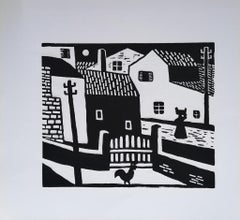
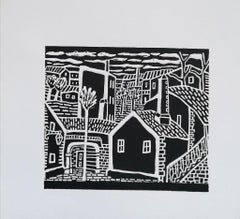
Karst Village - Woodcut Print by L. Spacal - 1950 ca.

Karst Village - Woodcut Print by L. Spacal - 1950 ca.

By Luigi Spacal

Located in Roma, IT

Karst Village is a Modern artwork realized by Luigi Spacal (Trieste, 1907 - Trieste, 2000) in the half of the 20th Century. Original B/W woodcut on cardboard. Excellent condition...

Category

Mid-20th Century Luigi Spacal Art

Materials

Woodcut

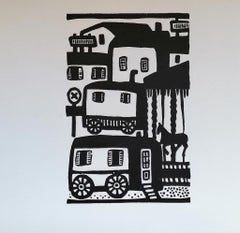
Booths in the Province - Woodcut on Cardboard by Luigi Spacal - 1970s

Booths in the Province - Woodcut on Cardboard by Luigi Spacal - 1970s

By Luigi Spacal

Located in Roma, IT

Booths in the Province is an original contemporary artwork realized by Luigi Spacal (Trieste, 1907 - Trieste, 2000) in the 1970s. Original B/W woodcut on cardboard. Excellent cond...

Category

1970s Luigi Spacal Art

Materials

Woodcut

Composition - Woodcut by Luigi Spacal - 1970s

Composition - Woodcut by Luigi Spacal - 1970s

By Luigi Spacal

Located in Roma, IT

Composition is an original contemporary artwork realized by Luigi Spacal (Trieste, 1907 - Trieste, 2000) in the 1970s. Original Colored woodcut on cardboard. Image Dimensions: 18 x 14 cm Good conditions. Lojze Spacal, also known as Luigi Spacal, was born on the Trieste Karst, at the time of the Austro-Hungarian Empire, from a family of Slovenian nationality.In 1930 he was arrested on charges of anti-fascism and confined for some time to Accettura, in Basilicata. Here he discovered his artistic vocation. In 1934 he graduated in Venice. He began to exhibit his first works in 1937. In 1942 he was again sent to confinement, this time in Abruzzo and, later, assigned to a special working battalion in Forte dei Marmi. Nevertheless, he managed to continue to exhibit his works so much that, in 1944, he set up his first solo show. In 1948 he participated for the first time in the Venice biennial. In 1958 he won the International Grand Prix "for a draftsman and engraver" at the Venice Biennale. In 1959 he received the 2nd prize at the International Biennial of Graphic Art in Ljubljana. In 1974 he was awarded the Prešeren prize, the highest Slovenian artistic recognition, and the “San Giusto d'Oro” in 1977. In 1998 a museum was dedicated to him in the castle of San Daniele...

Category

1970s Abstract Luigi Spacal Art

Materials

Woodcut

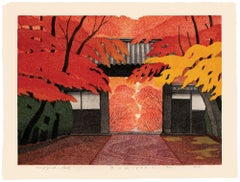
Related Items
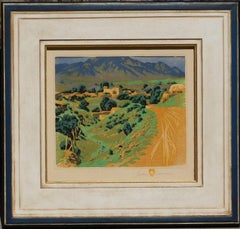
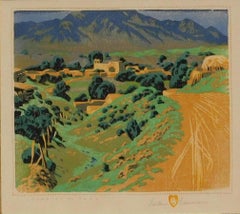
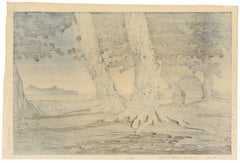
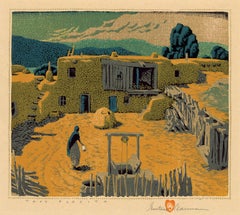
Gustave Baumann Color Woodblock - Rancho de Taos

Gustave Baumann Color Woodblock - Rancho de Taos

By Gustave Baumann

Located in Phoenix, AZ

“Rancho de Taos” by well-known woodblock artist Gustave Baumann (1881-1971). The medium is color woodblock. It's a beautiful print in excellent condition. Baumann's personal Hand and...

Category

Mid-20th Century Luigi Spacal Art

Materials

Woodcut

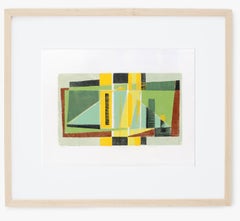
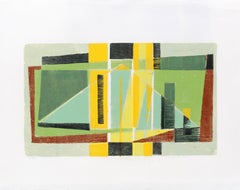
Werner Drewes Woodblock Print Cubist Colorful Rare Framed Green Black Red 1982

Werner Drewes Woodblock Print Cubist Colorful Rare Framed Green Black Red 1982

By Werner Drewes

Located in Buffalo, NY

An original woodblock print by American artist Werner Drews. This composition comes in an archival frame presentation which measures 26 x 30 on the wall. Werner Drewes (1899-1985) Werner Drewes, painter, printmaker, and teacher was born in Canig, Germany in 1899. His father, a Lutheran Minister, hoped he would become and architect but Werner chose the life of an artist. After he served on the front line in France during the war, Werner was admitted to the Bauhaus in 1921 where he studied under Klee, Itten, and Muche. Later, he traveled through Europe to study such old masters as Tintoretto, Velasque, and El Greco. After marrying Margaret Schrobsdorff, they traveled throughout South America, North America, and Asia. In 1930, Werner immigrated to New York City with his family. In New York City, despite the Depression, Werner joined other Bauhaus artists such as Mondrian and Feininger to make a living as an artist. This group became the core of the American Abstract Artists group. Werner taught at Columbia University, worked on the design of the 1939 Worlds Fair building...

Category

1980s Cubist Luigi Spacal Art

Materials

Paper, Woodcut

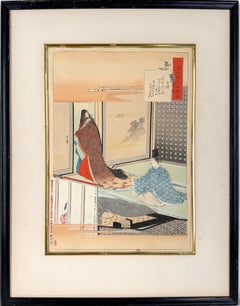
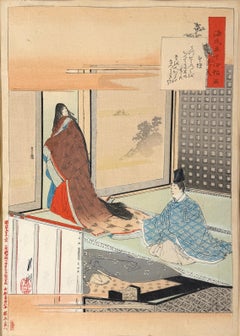
Wood Cut on Rice Paper "The Cicada Shell (Utsusemi)" by Gekko Ogata

Wood Cut on Rice Paper "The Cicada Shell (Utsusemi)" by Gekko Ogata

Located in Soquel, CA

Wood Cut on Rice Paper "The Cicada Shell (Utsusemi)" by Gekko Ogata Woodcut is a striking 1892 woodblock print by Meiji-era master Ogata Gekko (Japanese, 1859–1920). It references T...

Category

Late 19th Century Impressionist Luigi Spacal Art

Materials

Printer's Ink, Rice Paper, Woodcut

'The Beach at Kaiganji in Sanuki Province'  — Lifetime Impression

'The Beach at Kaiganji in Sanuki Province' — Lifetime Impression

By Kawase Hasui

Located in Myrtle Beach, SC

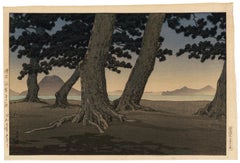
Kawase Hasui, 'The Beach at Kaiganji in Sanuki Province (Sanuki Kaiganji no hama),' from the series Collected Views of Japan II, Kansai Edition (Nihon fûkei shû II Kansai hen), woodblock print, 1934. A very fine, atmospheric impression, with fresh colors; the full sheet, in excellent condition. Signed 'Hasui' with the artist’s seal 'Kawase', lower left. Published by Watanabe Shozaburo with the Watanabe ‘D’ seal indicating an early impression printed between 1931 - 1941. Stamped faintly 'Made in Japan' in the bottom center margin, verso. Horizontal ôban; image size 9 3/8 x 14 1/4 inches (238 x 362 mm); sheet size approximately 10 5/16 x 15 1/2 inches ( 262 x 394 mm). Collections: Art Institute of Chicago; Austrian Museum of Applied Arts (Vienna); Honolulu Museum of Art; Museum of Fine Arts, Boston; National Museum in Warsaw; University of Wisconsin-Madison. ABOUT THE ARTIST “I do not paint subjective impressions. My work is based on reality...I can not falsify...(but) I can simplify…I make mental impressions of the light and color at the time of sketching. While coloring the sketch, I am already imagining the effects in a woodblock print.” — Kawase Hasui Hasui Kawase...

Category

1930s Showa Luigi Spacal Art

Materials

Woodcut

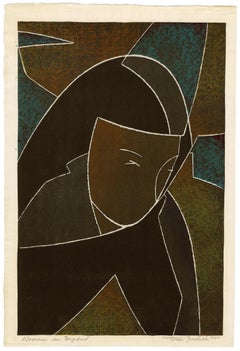
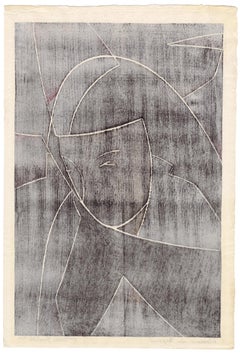
'Woman In Bagdad' — 1950s Japanese Sôsaku-hanga Signed Woodblock Print

'Woman In Bagdad' — 1950s Japanese Sôsaku-hanga Signed Woodblock Print

Located in Myrtle Beach, SC

Toshi Yoshida, 'Woman In Bagdad', color woodblock print, 1954, edition not stated. Signed, dated, and titled, in pencil. A fine, richly-inked impression, with fresh colors, on cream-wove Japan paper; the full sheet with margins (1/2 to 7/8 inch); minor toning in the margins, otherwise in excellent condition. Self-carved, self-printed. Archivally sleeved, unmatted. Image size 14 13/16 x 9 7/8 inches; sheet size 16 1/4 x 11 inches (oban tate-e). Exhibited: 'Color in Relief: Wood Block Prints from Origins to Abstraction', Georgetown University Library, 2016. Literature: Oliver Statler, Modern Japanese Prints: An Art Reborn, 1959, pp.168-169; Eugene M. Skibbe, Yoshida Toshi 1911-1999: Diversity, Change, and Continuity in the Yoshida Art Tradition, Andon 53, Society for Japanese Arts, 1996, pp. 5-14; Kendall H. Brown, Yoshida Toshi: The Nature of Tranquility, in, A Japanese Legacy: Four Generations of Yoshida Family Artists, The Minneapolis Institute of Arts, 2002, pp. 72-80; p. 91, no. 55 Exhibition: Japan & Beyond: The Yoshida Family Legacy in Japanese Woodblock Prints, curated by Kendall Brown and Quyen Le, The Ruth and Sherman Lee Institute for Japanese Art, Hanford, CA. February 3, 2004 - March 27, 2004. Collections: Art Institute of Chicago, Clark Center for Japanese Art and Culture, Minneapolis Institute of Art, University of California Merced, University of Oregon (The Lavenberg Collection of Japanese Prints). ABOUT THE ARTIST Yoshida Toshi (1911-1995) began training at the age of 14 under his father, Yoshida Hiroshi, one of the most acclaimed artists of the Japanese 20th-century printmaking revival movement shin-hanga (’new prints’ created in the traditional collaborative system of Japanese printmaking). He studied from 1932 to 1935 at the Taiheiyo-Gakai (Pacific Painting Association), co-founded by his father. Before the Pacific War, Toshi traveled widely with his father in Asia, Europe, Egypt, and the United States. Later he continued his worldwide travels, especially in Mexico, the United States, Canada, and Africa. Following his father’s death in 1950, Toshi began his very personal exploration of abstraction, joining the sôsaku-hanga movement (’creative prints’ wherein the artist is creator, carver, and printer). During this richly creative period (1954 to 1973), Toshi created over three hundred nonobjective designs. In the early 1960s, Toshi returned to large-scale figurative work, concentrating on scenes of African wildlife in its natural habitat, and in 1984 he published the first of many illustrated children's books on African wildlife (Dobutsu Ehon Shirizu), which he continued to produce until the early 1990s. In 1966 he published a book with the artist Yuki Rei...

Category

1960s Abstract Luigi Spacal Art

Materials

Woodcut

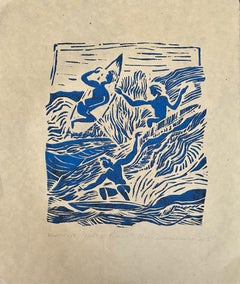
Three Turns - Surfing Art By Marc Zimmerman

Three Turns - Surfing Art By Marc Zimmerman

By Marc Zimmerman

Located in Carmel, CA

Three Turns - Surfing Art - Figurative - Woodcut Print By Marc Zimmerman Limited Edition 01/04 This masterwork is exhibited in the Zimmerman Gallery, Carmel CA. Immerse yourself i...

Category

2010s Contemporary Luigi Spacal Art

Materials

Woodcut

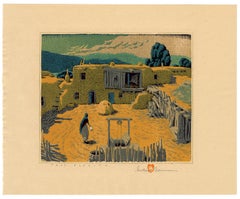
'Taos Placita' — American Southwest Masterwork, Signed Color Woodcut

'Taos Placita' — American Southwest Masterwork, Signed Color Woodcut

By Gustave Baumann

Located in Myrtle Beach, SC

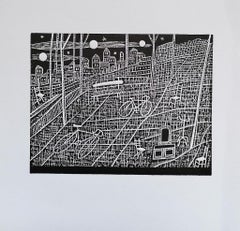
Gustave Baumann, 'Taos Placita', color woodcut, 1947, edition 125. Baumann 132. Signed, titled, and numbered '20-125' in pencil; with the artist’s Hand-in-Heart chop. A superb, richly-inked impression, with fresh colors, on fibrous oatmeal wove paper; the full sheet with margins (2 to 3 1/8 inches); slight rippling at the left sheet edge, in excellent condition. Matted to museum standards, unframed. Image size 9 5/8 x 11 1/4 inches (244 x 286 mm); sheet size 13 1/4 x 17 inches (337 x 432 mm). Collections: Harwood Museum of Art, New Mexico Museum of Art, Phoenix Art Museum, Scottsdale Art Museum, Wichita Art Museum. ABOUT THE ARTIST Gustave Baumann (1881-1971) was a renowned printmaker and a leading figure of the American color woodcut revival whose exquisite craftsmanship and vibrant imagery captured the essence of the Southwest. "A brilliant printmaker, Baumann brought to the medium a full mastery of the craft of woodworking that he acquired from his father, a German cabinetmaker. This craftsmanship was coupled with a strong artistic training that resulted in the handsome objects we see in the exhibition today. After discovering New Mexico in 1918, Baumann began to explore in his woodblock prints of this period the light. color, and architectural forms of that landscape. His prints of this period are among the most beautiful and poetic images of the American West." —Lewis I. Sharp, Director, Denver Art Museum Baumann, the son of a craftsman, immigrated to the United States from Germany with his family when he was ten, settling in Chicago. From 1897 to 1904, he studied in the evenings at the Art Institute of Chicago, working in a commercial printmaking shop during the day. In 1905, he returned to Germany to attend the Kunstwerbe Schule in Munich, where he decided on a career in printmaking. He returned to Chicago in 1906 and worked for a few years as a graphic designer of labels. Baumann made his first prints in 1909 and exhibited them at the Art Institute of Chicago the following year. In 1910, he moved to the artists’ colony in Nashville, Indiana, where he explored the creative and commercial possibilities of a career as a printmaker. In 1915, he exhibited his color woodcuts at the Panama-Pacific International Exposition in San Francisco, winning the gold medal. Among Baumann’s ongoing commercial activities was his work for the Packard Motor Car Company from 1914 to 1920 where he produced designs, illustrations, and color woodcuts until 1923. In 1919, Baumann’s printmaking work dominated the important exhibition of American color woodcuts at the Detroit Institute of Arts. Twenty-six of his prints were included, far more than the works of any other artist. A set of his blocks, a preparatory drawing, and seven progressive proofs complemented the exhibition. That same year, Baumann worked in New York and, over the summer, in Provincetown, Massachusetts. His airy images of Cape Cod employed soft, pastel colors and occasionally showed the influence of the white-line woodcut technique. Many of his Chicago artist friends had traveled to the southwest, and Baumann became intrigued by their paintings, souvenirs, and stories of an exotic place named Taos, New Mexico. In the summer of 1918, he spent the summer in Taos sketching and painting before visiting Santa Fe. Paul Walter, the director of the Museum of New Mexico, offered him a studio in the museum's basement. Inspired by the rugged beauty of the Southwest—the vibrant colors and dramatic landscapes of the region became a central theme in his work, influencing his artistic style and subject matter for the remainder of his career. Later in the decade, he traveled to the West Coast and made prints of California landscape. Baumann's prints became synonymous with the Southwest, capturing the spirit of its place in America's identity with a unique sense of authenticity and reverence. His iconic images of desert vistas, pueblo villages, and indigenous cultures served as visual tributes to the region's rich cultural heritage, earning him a dedicated following among collectors and curators alike. A true craftsman and artist, Baumann completed every step of the printmaking process himself, cutting each block, mixing the inks, and printing every impression on the handmade paper he selected. His dedication to true craftsmanship and his commitment to preserving the integrity of his artistic vision earned him widespread acclaim and recognition within the art world. About the vibrant colors he produced, Baumann stated, “A knowledge of color needs to be acquired since they don’t all behave the same way when ground or mixed...careful chemistry goes into the making of colors, with meticulous testing for permanence. While complicated formulae evolve new colors, those derived from Earth and metal bases are still the most reliable.” In the 1930s, Baumann became interested in puppet theater. He designed and carved his own marionettes and established a little traveling company. From 1943 to 1945, the artist carved an altarpiece for the Episcopal Church of the Holy Faith in Santa Fe. In 1952, a retrospective exhibition of his prints was mounted at the New Mexico Museum of Fine Arts. Throughout his prolific career, Baumann executed nearly four hundred color woodcuts. Baumann’s woodcuts...

Category

1940s American Modern Luigi Spacal Art
Materials

Woodcut

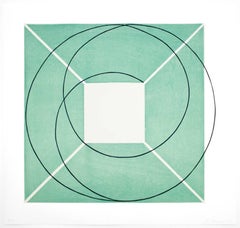
Frame with Separation

Frame with Separation

By Robert Mangold

Located in New York, NY

Associated with the Minimalist art movement of the 1960s, Mangold developed a reductive vocabulary based on geometric forms, monochromatic color, and an emphasis on the flatness of t...

Category

21st Century and Contemporary Minimalist Luigi Spacal Art

Materials

Woodcut

Midnight Flower 1969 Signed Limited Edition Large Woodcut

Midnight Flower 1969 Signed Limited Edition Large Woodcut

Located in Rochester Hills, MI

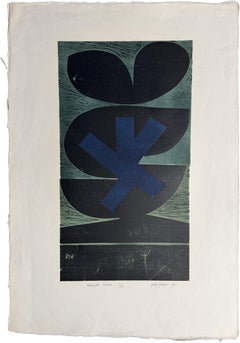
Peter Green Midnight Flower Paper Size = 26½" x 38½" inches Signed in pencil, titled, dated and marked 1/30 Born in 1933, Peter Green studied at Brighton College of Art and the In...

Category

1960s Modern Luigi Spacal Art
Materials

Woodcut

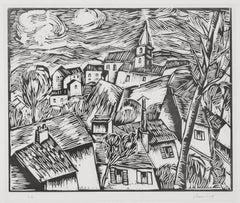
Bougival Woodcut Print, Fauvist Style, Signed, Edition 30, 1914

Bougival Woodcut Print, Fauvist Style, Signed, Edition 30, 1914

By Maurice de Vlaminck

Located in Fairlawn, OH

Bougival Woodcut, 1914 Signed and numbered in pencil Edition 30, this numberd 22 Printed on laid Van Gelder Zonen paper Published by Henri Kanweiler, Paris Printed by Paul Birault, P...

Category

1910s Fauvist Luigi Spacal Art
Materials

Woodcut

Previously Available Items
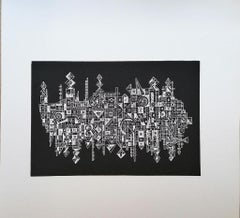
The City on the Mirror - Original Woodcut Print by Luigi Spacal - 1970s

The City on the Mirror - Original Woodcut Print by Luigi Spacal - 1970s

By Luigi Spacal

Located in Roma, IT

The City on the Mirror is an original xylograph realized in the 1970s by Luigi Spacal. The work shows an abstract skyline city that reflects the same lines. The work is extremely int...

Category

1970s Abstract Luigi Spacal Art
Materials

Woodcut

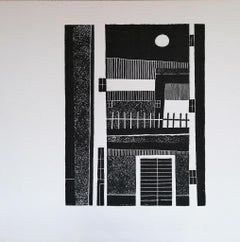
Karst Housewife - Original Woodcut Print by Luigi Spacal - 1970s

Karst Housewife - Original Woodcut Print by Luigi Spacal - 1970s

By Luigi Spacal

Located in Roma, IT

Karst Housewife is an original xylograph realized in the 1970s by Luigi Spacal, a Contemporary artwork. The work shows a female figure realized with geometrical lines in Black and W...

Category

1970s Abstract Luigi Spacal Art
Materials

Woodcut

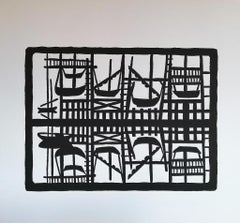
Boats - Original Woodcut on Cardboard by Luigi Spacal - 1970s

Boats - Original Woodcut on Cardboard by Luigi Spacal - 1970s

By Luigi Spacal

Located in Roma, IT

Boats is an original xylograph realized in the 1970s by Luigi Spacal, a Contemporary Italian artist. The work shows several boats that are stylized and are reflected on the water. T...

Category

1970s Luigi Spacal Art
Materials

Woodcut

Luigi Spacal art for sale on 1stDibs.
Find a wide variety of authentic Luigi Spacal art available for sale on 1stDibs. You can also browse by medium to find art by Luigi Spacal in woodcut print and more. Much of the original work by this artist or collective was created during the 20th century and is mostly associated with the abstract style. Not every interior allows for large Luigi Spacal art, so small editions measuring 5 inches across are available. Luigi Spacal art prices can differ depending upon medium, time period and other attributes. On 1stDibs, the price for these items starts at $66 and tops out at $155, while the average work can sell for $89.