Martin Sumers Art

to
3
Overall Width
to
Overall Height
to
3
2
3
3
3
3
5
11,049
2,853
2,494
1,431
3
Artist: Martin Sumers
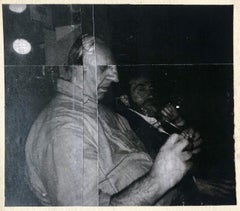
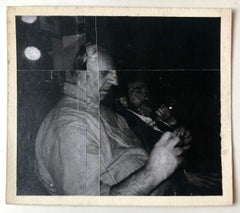
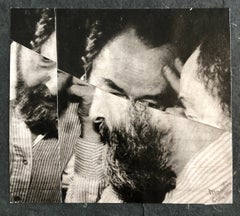
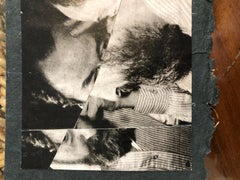
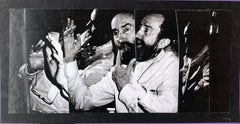
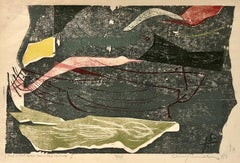
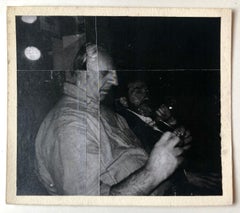
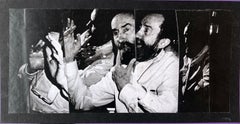
Vintage Abstract Expressionist Hyman Bloom Photo Collage Assemblage Photograph

Vintage Abstract Expressionist Hyman Bloom Photo Collage Assemblage Photograph

By Martin Sumers

Located in Surfside, FL

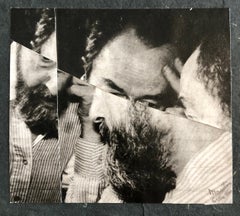
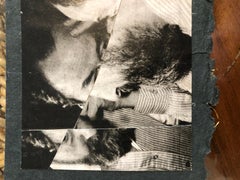
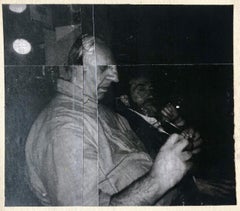
This is a unique original collage, decoupage style of Jiri Kolar, This is an exceptional artwork which was part of a collaboration between Hyman Bloom and fellow artist and his very ...

Category

1990s Modern Martin Sumers Art

Materials

Paper, Photographic Paper

Vintage Abstract Expressionist Hyman Bloom Photo Collage Assemblage Photograph

Vintage Abstract Expressionist Hyman Bloom Photo Collage Assemblage Photograph

By Martin Sumers

Located in Surfside, FL

This is a unique original collage, decoupage style of Jiri Kolar, This is an exceptional artwork which was part of a collaboration between Hyman Bloom and fellow artist and his very ...

Category

1990s Modern Martin Sumers Art

Materials

Paper, Photographic Paper

Vintage Abstract Expressionist Hyman Bloom Photo Collage Assemblage Photograph

Vintage Abstract Expressionist Hyman Bloom Photo Collage Assemblage Photograph

By Martin Sumers

Located in Surfside, FL

This is a unique original collage, decoupage style of Jiri Kolar, This is an exceptional artwork which was part of a collaboration between Hyman Bloom and fellow artist and his very ...

Category

20th Century Modern Martin Sumers Art

Materials

Paper, Photographic Paper

Related Items
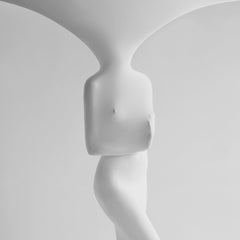
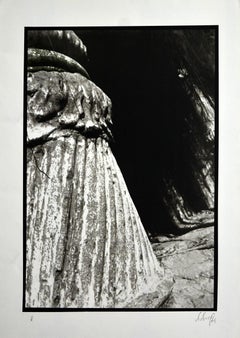
Heart 02
Heart 02

Kim HoltermandHeart 02

$625

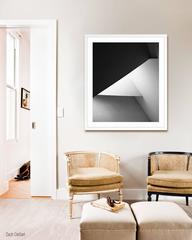
H 39.5 in W 32.9 in

Heart 02

By Kim Holtermand

Located in New York, NY

ABOUT THIS PIECE: Danish photographer Kim Høltermand photographed the Herning Art Museum in Jutland, Denmark. He is known for his moody, quiet photos that show public spaces before t...

Category

2010s Martin Sumers Art

Materials

Photographic Paper

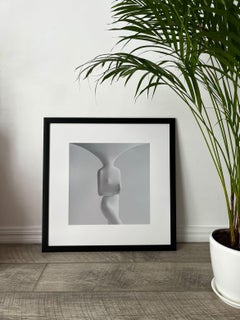
Heart 04
Heart 04

Kim HoltermandHeart 04

$625

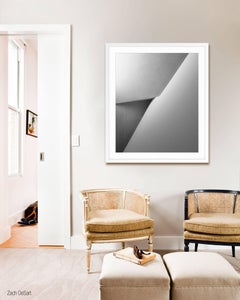
H 39.5 in W 32.9 in

Heart 04

By Kim Holtermand

Located in New York, NY

ABOUT THIS PIECE: Danish photographer Kim Høltermand photographed the Herning Art Museum in Jutland, Denmark. He is known for his moody, quiet photos that show public spaces before t...

Category

2010s Martin Sumers Art

Materials

Photographic Paper

Andre Beaudin, Horse, from Views of Paris, 1963

Andre BeaudinAndre Beaudin, Horse, from Views of Paris, 1963, 1963

$1,996Sale Price|20% Off

H 15.35 in W 23.62 in

Andre Beaudin, Horse, from Views of Paris, 1963

By Andre Beaudin

Located in Southampton, NY

This exquisite lithograph by Andre Beaudin (1895–1979), titled Cheval (Horse), from Regards Sur Paris (Views of Paris), originates from the January 22, 1963 issue published by Andre ...

Category

1960s Modern Martin Sumers Art

Materials

Lithograph

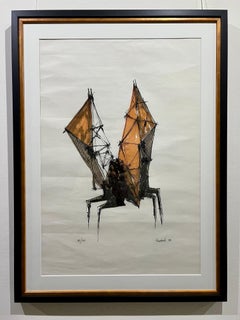
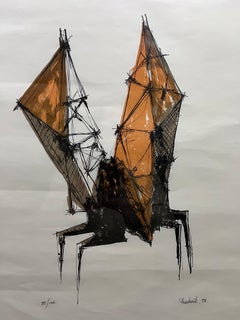
Jean Lurcat, Persian Octopus, from Animal Geography, 1975 (after)

Jean Lurcat, Persian Octopus, from Animal Geography, 1975 (after)

By Jean Lurçat

Located in Southampton, NY

This exquisite lithograph after Jean Lurcat (1892–1966), titled Pieuvre Persique (Persian Octopus), from Geographie animale (Animal Geography), originates from the January 22, 1975 issue published by Production Edito-Service S.A., Geneve in collaboration with Andre Gonin, Lausanne, and M. Jean Graven, Paris, and printed by Edito-Service S.A., Italy, 1975. This visionary composition reflects Lurcats mastery of the lithographic medium, embodying his poetic imagination through fluid line, expressive form, and a luminous sense of movement. The work conveys the artists unique ability to merge symbolism, nature, and emotion into a cohesive visual language, transforming even the simplest subject into a deeply evocative and dreamlike image. Infused with lyricism and spiritual resonance, the composition exemplifies Lurcats enduring exploration of mythology, cosmic order, and the transcendent power of art. The piece forms part of Geographie animale (Animal Geography), a landmark publication that documents and celebrates one of the most significant aspects of his graphic oeuvre. Executed as a lithograph on bouffant des Papeteries de Hauteville paper, this work measures 12.4 x 9.37 inches (31.5 x 23.8 cm). Unsigned and unnumbered as issued. The edition exemplifies the superb craftsmanship of the Edito-Service atelier, renowned for its refined European printing collaborations. Artwork Details: Artist: After Jean Lurcat (1892–1966) Title: Pieuvre Persique (Persian Octopus), from Geographie animale (Animal Geography), January 22, 1975 Medium: Lithograph on bouffant des Papeteries de Hauteville paper Dimensions: 12.4 x 9.37 inches (31.5 x 23.8 cm) Inscription: Unsigned and unnumbered as issued Date: 1975 Publisher: Production Edito-Service S.A., Geneve in collaboration with Andre Gonin, Lausanne, and M. Jean Graven, Paris Printer: Edito-Service S.A., Italy Condition: Well preserved, consistent with age and medium Provenance: From Geographie animale (Animal Geography), published by Production Edito-Service S.A., Geneve, 1975 Notes: Excerpted from the folio (translated from French), This edition of the Animal Geography by Jean Lurcat was established by publisher Andre Gonin in Lausanne, with the collaboration of Mr. Jean Graven. The lithographs were taken in the workshops of the Graphic Arts J.- E. Wolfensberger in Zurich, under the personal direction of the artist. The stones were sanded after the draw. The text, in Caslon character, body twenty, was composed and printed in Geneva, on velin pur fil a la forme des papeteries du Marais, by the master printer Andre Kundig with the help of Marc Barraud and Auguste Griess. The final to shot was given the iron June 1948. This second edition, 23.8 x 31.5 cm, was drawn with the authorization of Andre Gonin on Velin bouffant des Papeteries de Hauteville. About the Publication: Geographie animale (Animal Geography) stands as one of the most imaginative printed projects associated with Jean Lurcat, uniting visual invention, literary wit, and refined European craftsmanship in a richly conceived publication devoted to the symbolic world of animals. Originally conceived under the guidance of publisher Andre Gonin and later issued in this authorized 1975 edition by Production Edito-Service S.A. of Geneve in collaboration with partners in Lausanne and Paris, the publication reflects the enduring appeal of Lurcats bestiary imagery and philosophical approach to nature. The lithographs were prepared in the workshops of J.- E. Wolfensberger in Zurich under the artists personal supervision, demonstrating the close relationship between artist and printer that characterized the finest twentieth century illustrated editions. More than a portfolio of images, Geographie animale (Animal Geography) is a meditation on the animal kingdom as metaphor, presenting creatures as emblems of instinct, wisdom, humor, vigilance, and cosmic order. Through its union of image, typography, and material elegance, the publication remains an important testament to the vitality of postwar European graphic art and to Lurcats singular ability to merge intellect, decoration, and poetic symbolism. About the Artist: Jean Lurcat (1892–1966) was a pioneering French painter, ceramicist, and tapestry master who transformed the ancient art of tapestry into a modern, intellectual, and spiritual medium, establishing himself as one of the most original and influential artists of the 20th century. Born in Bruyeres, France, Lurcat studied in Nancy and Paris, where he became part of the avant-garde circle that included Pablo Picasso, Alexander Calder, Alberto Giacometti, Salvador Dali, Joan Miro, Wassily Kandinsky, Marcel Duchamp, and Man Ray. His early paintings reflected the influence of Post-Impressionism, Cubism, and Symbolism, but his true innovation came when he reimagined tapestry as a form of monumental art rather than decorative craft. Profoundly inspired by the medieval Apocalypse of Angers tapestry, he sought to revive the grandeur of weaving by fusing ancient techniques with modernist abstraction and symbolism. In the 1930s, working with the Aubusson and Gobelins workshops, Lurcat revolutionized the process of tapestry-making by introducing a precise color notation system and standardizing thread palettes, allowing artists to maintain creative control from conception to completion. His bold compositions radiant with color, geometric rhythm, and allegorical imagery embodied a philosophy of cosmic balance and human resilience. After World War II, Lurcats work deepened in moral and spiritual scope, culminating in his monumental cycle Le Chant du Monde (The Song of the World, 1957–1965), a humanist response to the destruction of war and one of the greatest artistic achievements of the postwar era. His art, characterized by suns, moons, mythic creatures, and symbolic geometry, reflected his belief that art should harmonize intellect, craft, and emotion while reconnecting humanity to the natural and divine order. A contemporary and peer of Pablo Picasso, Alexander Calder, Alberto Giacometti, Salvador Dali, Joan Miro, Wassily Kandinsky, Marcel Duchamp, and Man Ray, Lurcat shared their passion for abstraction and innovation while extending it into the tactile, enduring world of textile art. His influence resonated with later artists and designers such as Fernand Leger, Sonia Delaunay, Le Corbusier, and Victor Vasarely, whose integration of color and geometry echoed his ideas. His work is preserved in major collections including the Musee Jean Lurcat et de la Tapisserie Contemporaine in Angers, the Musee d’Art Moderne de Paris, and the Centre Pompidou. The highest auction record for Jean Lurcat was achieved by Apocalypse Tapestry, which sold for $290,500 USD at Sotheby’s, Paris, on May 29, 2014, underscoring his enduring legacy as the visionary who redefined tapestry as a cornerstone of modern art. Jean Lurcat Pieuvre Persique, Lurcat Geographie animale, Jean Lurcat lithograph...

Category

1970s Modern Martin Sumers Art

Materials

Lithograph

Jean Lurcat, Andalusian Monkey, from Animal Geography, 1975 (after)

Jean Lurcat, Andalusian Monkey, from Animal Geography, 1975 (after)

By Jean Lurçat

Located in Southampton, NY

This exquisite lithograph after Jean Lurcat (1892–1966), titled Singe Andalou (Andalusian Monkey), from Geographie animale (Animal Geography), originates from the January 22, 1975 is...

Category

1970s Modern Martin Sumers Art

Materials

Lithograph

Jean Lurcat, Manchurian Sphinx, from Animal Geography, 1975 (after)

Jean Lurcat, Manchurian Sphinx, from Animal Geography, 1975 (after)

By Jean Lurçat

Located in Southampton, NY

This exquisite lithograph after Jean Lurcat (1892–1966), titled Sphynx Mandchou (Manchurian Sphinx), from Geographie animale (Animal Geography), originates from the January 22, 1975 issue published by Production Edito-Service S.A., Geneve in collaboration with Andre Gonin, Lausanne, and M. Jean Graven, Paris, and printed by Edito-Service S.A., Italy, 1975. This visionary composition reflects Lurcats mastery of the lithographic medium, embodying his poetic imagination through fluid line, expressive form, and a luminous sense of movement. The work conveys the artists unique ability to merge symbolism, nature, and emotion into a cohesive visual language, transforming even the simplest subject into a deeply evocative and dreamlike image. Infused with lyricism and spiritual resonance, the composition exemplifies Lurcats enduring exploration of mythology, cosmic order, and the transcendent power of art. The piece forms part of Geographie animale (Animal Geography), a landmark publication that documents and celebrates one of the most significant aspects of his graphic oeuvre. Executed as a lithograph on bouffant des Papeteries de Hauteville paper, this work measures 12.4 x 9.37 inches (31.5 x 23.8 cm). Unsigned and unnumbered as issued. The edition exemplifies the superb craftsmanship of the Edito-Service atelier, renowned for its refined European printing collaborations. Artwork Details: Artist: After Jean Lurcat (1892–1966) Title: Sphynx Mandchou (Manchurian Sphinx), from Geographie animale (Animal Geography), January 22, 1975 Medium: Lithograph on bouffant des Papeteries de Hauteville paper Dimensions: 12.4 x 9.37 inches (31.5 x 23.8 cm) Inscription: Unsigned and unnumbered as issued Date: 1975 Publisher: Production Edito-Service S.A., Geneve in collaboration with Andre Gonin, Lausanne, and M. Jean Graven, Paris Printer: Edito-Service S.A., Italy Condition: Well preserved, consistent with age and medium Provenance: From Geographie animale (Animal Geography), published by Production Edito-Service S.A., Geneve, 1975 Notes: Excerpted from the folio (translated from French), This edition of the Animal Geography by Jean Lurcat was established by publisher Andre Gonin in Lausanne, with the collaboration of Mr. Jean Graven. The lithographs were taken in the workshops of the Graphic Arts J.- E. Wolfensberger in Zurich, under the personal direction of the artist. The stones were sanded after the draw. The text, in Caslon character, body twenty, was composed and printed in Geneva, on velin pur fil a la forme des papeteries du Marais, by the master printer Andre Kundig with the help of Marc Barraud and Auguste Griess. The final to shot was given the iron June 1948. This second edition, 23.8 x 31.5 cm, was drawn with the authorization of Andre Gonin on Velin bouffant des Papeteries de Hauteville. About the Publication: Geographie animale (Animal Geography) stands as one of the most imaginative printed projects associated with Jean Lurcat, uniting visual invention, literary wit, and refined European craftsmanship in a richly conceived publication devoted to the symbolic world of animals. Originally conceived under the guidance of publisher Andre Gonin and later issued in this authorized 1975 edition by Production Edito-Service S.A. of Geneve in collaboration with partners in Lausanne and Paris, the publication reflects the enduring appeal of Lurcats bestiary imagery and philosophical approach to nature. The lithographs were prepared in the workshops of J.- E. Wolfensberger in Zurich under the artists personal supervision, demonstrating the close relationship between artist and printer that characterized the finest twentieth century illustrated editions. More than a portfolio of images, Geographie animale (Animal Geography) is a meditation on the animal kingdom as metaphor, presenting creatures as emblems of instinct, wisdom, humor, vigilance, and cosmic order. Through its union of image, typography, and material elegance, the publication remains an important testament to the vitality of postwar European graphic art and to Lurcats singular ability to merge intellect, decoration, and poetic symbolism. About the Artist: Jean Lurcat (1892–1966) was a pioneering French painter, ceramicist, and tapestry master who transformed the ancient art of tapestry into a modern, intellectual, and spiritual medium, establishing himself as one of the most original and influential artists of the 20th century. Born in Bruyeres, France, Lurcat studied in Nancy and Paris, where he became part of the avant-garde circle that included Pablo Picasso, Alexander Calder, Alberto Giacometti, Salvador Dali, Joan Miro, Wassily Kandinsky, Marcel Duchamp, and Man Ray. His early paintings reflected the influence of Post-Impressionism, Cubism, and Symbolism, but his true innovation came when he reimagined tapestry as a form of monumental art rather than decorative craft. Profoundly inspired by the medieval Apocalypse of Angers tapestry, he sought to revive the grandeur of weaving by fusing ancient techniques with modernist abstraction and symbolism. In the 1930s, working with the Aubusson and Gobelins workshops, Lurcat revolutionized the process of tapestry-making by introducing a precise color notation system and standardizing thread palettes, allowing artists to maintain creative control from conception to completion. His bold compositions radiant with color, geometric rhythm, and allegorical imagery embodied a philosophy of cosmic balance and human resilience. After World War II, Lurcats work deepened in moral and spiritual scope, culminating in his monumental cycle Le Chant du Monde (The Song of the World, 1957–1965), a humanist response to the destruction of war and one of the greatest artistic achievements of the postwar era. His art, characterized by suns, moons, mythic creatures, and symbolic geometry, reflected his belief that art should harmonize intellect, craft, and emotion while reconnecting humanity to the natural and divine order. A contemporary and peer of Pablo Picasso, Alexander Calder, Alberto Giacometti, Salvador Dali, Joan Miro, Wassily Kandinsky, Marcel Duchamp, and Man Ray, Lurcat shared their passion for abstraction and innovation while extending it into the tactile, enduring world of textile art. His influence resonated with later artists and designers such as Fernand Leger, Sonia Delaunay, Le Corbusier, and Victor Vasarely, whose integration of color and geometry echoed his ideas. His work is preserved in major collections including the Musee Jean Lurcat et de la Tapisserie Contemporaine in Angers, the Musee d’Art Moderne de Paris, and the Centre Pompidou. The highest auction record for Jean Lurcat was achieved by Apocalypse Tapestry, which sold for $290,500 USD at Sotheby’s, Paris, on May 29, 2014, underscoring his enduring legacy as the visionary who redefined tapestry as a cornerstone of modern art. Jean Lurcat Sphynx Mandchou, Lurcat Geographie animale, Jean Lurcat lithograph...

Category

1970s Modern Martin Sumers Art

Materials

Lithograph

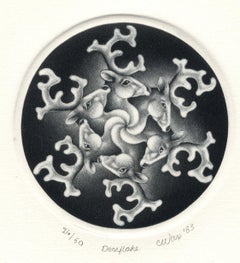
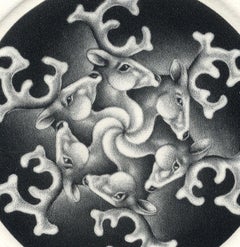
Deerflake (The artist's first work celebrating the Solstice / deer as snowflake)

Deerflake (The artist's first work celebrating the Solstice / deer as snowflake)

By Carol Wax

Located in New Orleans, LA

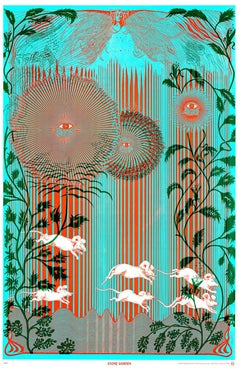
Carol Wax describes her circular images as "most often quasi abstract works that refer to ancient islamic designs using the shapes and attributes of animals, in this case the deer. T...

Category

Late 20th Century American Modern Martin Sumers Art

Materials

Mezzotint

Blanco 8, 2010 - Limited Edition Digital Photographic Print on Cotton paper

Blanco 8, 2010 - Limited Edition Digital Photographic Print on Cotton paper

By Rosa Basurto

Located in Brighton, GB

Blanco 8 is a 30cm x 30cm digital print on 50cm x 50cm cotton paper in a limited edition of 9 + 2 Artist Proofs. Rosa Basurto is a self-taught photographer from Spain who, within ...

Category

21st Century and Contemporary Abstract Martin Sumers Art

Materials

Photographic Paper, Digital

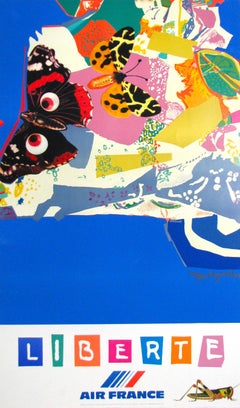
Air France, Mediterranee by Roger Bezombes

Air France, Mediterranee by Roger Bezombes

By Roger Bezombes

Located in New York, NY

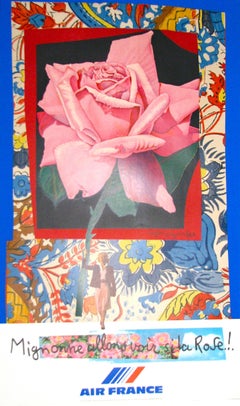
This lithographic poster was printed in 1981 at the Atelier Mourlot in Paris. In the early 1970s, Air France commissioned Roger Bezombes to create original artworks capturing the s...

Category

1980s Modern Martin Sumers Art

Materials

Lithograph

Jean Lurcat, Triplets of Canada, from Animal Geography, 1975 (after)

Jean Lurcat, Triplets of Canada, from Animal Geography, 1975 (after)

By Jean Lurçat

Located in Southampton, NY

This exquisite lithograph after Jean Lurcat (1892–1966), titled Triplettes du Canada (Triplets of Canada), from Geographie animale (Animal Geography)...

Category

1970s Modern Martin Sumers Art

Materials

Lithograph

Adagio 3 - Signed limited edition abstract brown pigment print, Contemporary

Adagio 3 - Signed limited edition abstract brown pigment print, Contemporary

By Michael Banks

Located in Sant Cugat del Vallès, Barcelona

Adagio 3 - Limited edition pigment print of 5 This print that is being offered is a high-quality Archival Pigment print which has been printed on fiber-based paper. The paper used ...

Category

2010s Abstract Martin Sumers Art

Materials

Archival Paper, Photographic Paper, Archival Pigment, Digital Pigment, C...

Jean Lurcat, Crayfish of Guam, from Animal Geography, 1975 (after)

Jean Lurcat, Crayfish of Guam, from Animal Geography, 1975 (after)

By Jean Lurçat

Located in Southampton, NY

This exquisite lithograph after Jean Lurcat (1892–1966), titled Ecrevisse de Guam (Crayfish of Guam), from Geographie animale (Animal Geography), originates from the January 22, 1975...

Category

1970s Modern Martin Sumers Art

Materials

Lithograph

Previously Available Items
Vintage Abstract Expressionist Hyman Bloom Photo Collage Assemblage Photograph

Vintage Abstract Expressionist Hyman Bloom Photo Collage Assemblage Photograph

By Martin Sumers

Located in Surfside, FL

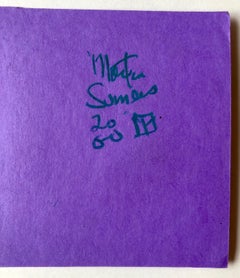
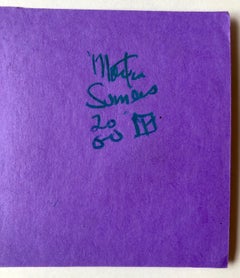
This is a unique original collage, decoupage style of Jiri Kolar, This is an exceptional artwork which was part of a collaboration between Hyman Bloom and fellow artist and his very good friend Martin Sumers. This is pencil signed by Martin Sumers. Provenance: Acquired from the Sumers estate collection. Hyman Bloom (March 29, 1913 – August 26, 2009) was a Latvian-born American painter. His work was influenced by his Jewish heritage and Eastern religions as well as by artists including Altdorfer, Grünewald, Caravaggio, Rembrandt, Blake, Bresdin, James Ensor and Chaim Soutine. He first came to prominence when his work was included in the 1942 Museum of Modern Art exhibition "Americans 1942 -- 18 Artists from 9 States". MoMA purchased 2 paintings from the exhibition and Time magazine singled him out as a "striking discovery" in their exhibition review. His work was selected for both the 1948 and 1950 Venice Biennale exhibitions and his 1954 retrospective traveled from Boston's Institute of Contemporary Art to the Albright Gallery and the de Young Museum before closing out at The Whitney Museum of American Art in 1955. In a 1954 interview with Yale art professor Bernard Chaet, Willem de Kooning indicated that he and Jackson Pollock both considered Bloom to be “America’s first abstract expressionist”, a label that Bloom would disavow. Starting in the mid 1950s his work began to shift more towards works on paper and he exclusively focused on drawing throughout the 1960s, returning to painting in 1971. He continued both drawing and painting until his death in 2009 at the age of 9 Hyman Bloom (né Melamed) was born into an orthodox Jewish family in the tiny Jewish village of Brunavišķi in what is now Latvia, then part of the Russian Empire At a young age Bloom planned to become a rabbi, but his family could not find a suitable teacher. In the eighth grade he received a scholarship to a program for gifted high school students at the Museum of Fine Arts. He attended the Boston High School of Commerce, which was near the museum. He also took art classes at the West End Community Center, a settlement house. The classes were taught by Harold Zimmerman, a student at the School of the Museum of Fine Arts, who also taught the young Jack Levine at another settlement house in Roxbury. When Bloom was fifteen, he and Levine began studying with a well-known Harvard art professor, Denman Ross, who rented a studio for the purpose and paid the boys a weekly stipend to enable them to continue their studies rather than take jobs to support their families. He took Bloom and Levine on a field trip to the Museum of Modern Art in New York, where Bloom was impressed by the work of Rouault and Soutine and began experimenting with their expressive painting styles. In the 1930s Bloom worked sporadically for the Public Works of Art Project and the Federal Art Project (WPA), He shared a studio in the South End with Levine and another artist, Betty Chase. It was during this period that he developed a lifelong interest in Eastern philosophy and music, and in Theosophy. He first received national attention in 1942 when thirteen of his paintings were included in the Museum of Modern Art (MoMA) exhibition Americans 1942: 18 Artists from 9 States, curated by Dorothy Miller. MoMA purchased two of his paintings from that exhibition, and he was featured in Time magazine. The titles of his paintings in the exhibition reflect some of his recurring themes. Two were titled The Synagogue, another, Jew with the Torah; Bloom was actually criticized by one reviewer for including "stereotypical" Jewish images. He also had two paintings titled The Christmas Tree, and another titled The Chandelier, both subjects he returned to repeatedly. Another, Skeleton (c. 1936), was followed by a series of cadaver paintings in the forties, and The Fish (c. 1936) was one of many paintings and drawings of fish he created over the course of his career. Bloom was associated at first with the growing Abstract Expressionist movement. Willem de Kooning and Jackson Pollock, who first saw Bloom's work at the MoMA exhibition, considered Bloom "the first Abstract Expressionist artist in America." In 1950 he was chosen, along with the likes of de Kooning, Pollock, and Arshile Gorky, to represent the United States at the Venice Biennale. That same year Elaine de Kooning wrote about Bloom in ARTnews, noting that in paintings such as The Harpies, his work approached total abstraction: "the whole impact is carried in the boiling action of the pigment". In 1951 Thomas B. Hess reproduced Bloom's Archaeological Treasure in his first book, Abstract Painting: Background and American Phase, along with works by Picasso, Pollock, and others. Both de Kooning and Hess remarked on Bloom's expressive paint handling, a key characteristic of Abstract Expressionist painting. As abstract expressionism dominated the American art world, Bloom became disenchanted with it, calling it "emotional catharsis, with no intellectual basis." In addition, instead of moving to New York to pursue his career, he opted to stay in Boston. As a result he fell out of favor with critics and never achieved the kind of fame that Pollock and others did. He disliked self-promotion and never placed much value on critical acclaim. Many of Bloom's paintings feature rabbis, usually holding the Torah. According to Bloom, his intentions were more artistic than religious. He began questioning his Jewish faith early in life, and painted rabbis, he claimed, because that was what he knew. Over the course of his career he produced dozens of paintings of rabbis...

Category

1990s Modern Martin Sumers Art

Materials

Paper, Photographic Paper

Vintage Abstract Expressionist Hyman Bloom Photo Collage Assemblage Photograph

Vintage Abstract Expressionist Hyman Bloom Photo Collage Assemblage Photograph

By Martin Sumers

Located in Surfside, FL

This is a unique original collage, decoupage style of Jiri Kolar, This is an exceptional artwork which was part of a collaboration between Hyman Bloom and fellow artist and his very good friend Martin Sumers. This is pencil signed by Martin Sumers. Provenance: Acquired from the Sumers estate collection. Hyman Bloom (March 29, 1913 – August 26, 2009) was a Latvian-born American painter. His work was influenced by his Jewish heritage and Eastern religions as well as by artists including Altdorfer, Grünewald, Caravaggio, Rembrandt, Blake, Bresdin, James Ensor and Chaim Soutine. He first came to prominence when his work was included in the 1942 Museum of Modern Art exhibition "Americans 1942 -- 18 Artists from 9 States". MoMA purchased 2 paintings from the exhibition and Time magazine singled him out as a "striking discovery" in their exhibition review. His work was selected for both the 1948 and 1950 Venice Biennale exhibitions and his 1954 retrospective traveled from Boston's Institute of Contemporary Art to the Albright Gallery and the de Young Museum before closing out at The Whitney Museum of American Art in 1955. In a 1954 interview with Yale art professor Bernard Chaet, Willem de Kooning indicated that he and Jackson Pollock both considered Bloom to be “America’s first abstract expressionist”, a label that Bloom would disavow. Starting in the mid 1950s his work began to shift more towards works on paper and he exclusively focused on drawing throughout the 1960s, returning to painting in 1971. He continued both drawing and painting until his death in 2009 at the age of 9 Hyman Bloom (né Melamed) was born into an orthodox Jewish family in the tiny Jewish village of Brunavišķi in what is now Latvia, then part of the Russian Empire At a young age Bloom planned to become a rabbi, but his family could not find a suitable teacher. In the eighth grade he received a scholarship to a program for gifted high school students at the Museum of Fine Arts. He attended the Boston High School of Commerce, which was near the museum. He also took art classes at the West End Community Center, a settlement house. The classes were taught by Harold Zimmerman, a student at the School of the Museum of Fine Arts, who also taught the young Jack Levine at another settlement house in Roxbury. When Bloom was fifteen, he and Levine began studying with a well-known Harvard art professor, Denman Ross, who rented a studio for the purpose and paid the boys a weekly stipend to enable them to continue their studies rather than take jobs to support their families. He took Bloom and Levine on a field trip to the Museum of Modern Art in New York, where Bloom was impressed by the work of Rouault and Soutine and began experimenting with their expressive painting styles. In the 1930s Bloom worked sporadically for the Public Works of Art Project and the Federal Art Project (WPA), He shared a studio in the South End with Levine and another artist, Betty Chase. It was during this period that he developed a lifelong interest in Eastern philosophy and music, and in Theosophy. He first received national attention in 1942 when thirteen of his paintings were included in the Museum of Modern Art (MoMA) exhibition Americans 1942: 18 Artists from 9 States, curated by Dorothy Miller. MoMA purchased two of his paintings from that exhibition, and he was featured in Time magazine. The titles of his paintings in the exhibition reflect some of his recurring themes. Two were titled The Synagogue, another, Jew with the Torah; Bloom was actually criticized by one reviewer for including "stereotypical" Jewish images. He also had two paintings titled The Christmas Tree, and another titled The Chandelier, both subjects he returned to repeatedly. Another, Skeleton (c. 1936), was followed by a series of cadaver paintings in the forties, and The Fish (c. 1936) was one of many paintings and drawings of fish he created over the course of his career. Bloom was associated at first with the growing Abstract Expressionist movement. Willem de Kooning and Jackson Pollock, who first saw Bloom's work at the MoMA exhibition, considered Bloom "the first Abstract Expressionist artist in America." In 1950 he was chosen, along with the likes of de Kooning, Pollock, and Arshile Gorky, to represent the United States at the Venice Biennale. That same year Elaine de Kooning wrote about Bloom in ARTnews, noting that in paintings such as The Harpies, his work approached total abstraction: "the whole impact is carried in the boiling action of the pigment". In 1951 Thomas B. Hess reproduced Bloom's Archaeological Treasure in his first book, Abstract Painting: Background and American Phase, along with works by Picasso, Pollock, and others. Both de Kooning and Hess remarked on Bloom's expressive paint handling, a key characteristic of Abstract Expressionist painting. As abstract expressionism dominated the American art world, Bloom became disenchanted with it, calling it "emotional catharsis, with no intellectual basis." In addition, instead of moving to New York to pursue his career, he opted to stay in Boston. As a result he fell out of favor with critics and never achieved the kind of fame that Pollock and others did. He disliked self-promotion and never placed much value on critical acclaim. Many of Bloom's paintings feature rabbis, usually holding the Torah. According to Bloom, his intentions were more artistic than religious. He began questioning his Jewish faith early in life, and painted rabbis, he claimed, because that was what he knew. Over the course of his career he produced dozens of paintings of rabbis...

Category

1990s Modern Martin Sumers Art

Materials

Paper, Photographic Paper

Vintage Abstract Expressionist Hyman Bloom Photo Collage Assemblage Photograph

Vintage Abstract Expressionist Hyman Bloom Photo Collage Assemblage Photograph

By Martin Sumers

Located in Surfside, FL

This is a unique original collage, decoupage style of Jiri Kolar, This is an exceptional artwork which was part of a collaboration between Hyman Bloom and fellow artist and his very good friend Martin Sumers. This is pencil signed by Martin Sumers. Provenance: Acquired from the Sumers estate collection. Hyman Bloom (March 29, 1913 – August 26, 2009) was a Latvian-born American painter. His work was influenced by his Jewish heritage and Eastern religions as well as by artists including Altdorfer, Grünewald, Caravaggio, Rembrandt, Blake, Bresdin, James Ensor and Chaim Soutine. He first came to prominence when his work was included in the 1942 Museum of Modern Art exhibition "Americans 1942 -- 18 Artists from 9 States". MoMA purchased 2 paintings from the exhibition and Time magazine singled him out as a "striking discovery" in their exhibition review. His work was selected for both the 1948 and 1950 Venice Biennale exhibitions and his 1954 retrospective traveled from Boston's Institute of Contemporary Art to the Albright Gallery and the de Young Museum before closing out at The Whitney Museum of American Art in 1955. In a 1954 interview with Yale art professor Bernard Chaet, Willem de Kooning indicated that he and Jackson Pollock both considered Bloom to be “America’s first abstract expressionist”, a label that Bloom would disavow. Starting in the mid 1950s his work began to shift more towards works on paper and he exclusively focused on drawing throughout the 1960s, returning to painting in 1971. He continued both drawing and painting until his death in 2009 at the age of 9 Hyman Bloom (né Melamed) was born into an orthodox Jewish family in the tiny Jewish village of Brunavišķi in what is now Latvia, then part of the Russian Empire At a young age Bloom planned to become a rabbi, but his family could not find a suitable teacher. In the eighth grade he received a scholarship to a program for gifted high school students at the Museum of Fine Arts. He attended the Boston High School of Commerce, which was near the museum. He also took art classes at the West End Community Center, a settlement house. The classes were taught by Harold Zimmerman, a student at the School of the Museum of Fine Arts, who also taught the young Jack Levine at another settlement house in Roxbury. When Bloom was fifteen, he and Levine began studying with a well-known Harvard art professor, Denman Ross, who rented a studio for the purpose and paid the boys a weekly stipend to enable them to continue their studies rather than take jobs to support their families. He took Bloom and Levine on a field trip to the Museum of Modern Art in New York, where Bloom was impressed by the work of Rouault and Soutine and began experimenting with their expressive painting styles. In the 1930s Bloom worked sporadically for the Public Works of Art Project and the Federal Art Project (WPA), He shared a studio in the South End with Levine and another artist, Betty Chase. It was during this period that he developed a lifelong interest in Eastern philosophy and music, and in Theosophy. He first received national attention in 1942 when thirteen of his paintings were included in the Museum of Modern Art (MoMA) exhibition Americans 1942: 18 Artists from 9 States, curated by Dorothy Miller. MoMA purchased two of his paintings from that exhibition, and he was featured in Time magazine. The titles of his paintings in the exhibition reflect some of his recurring themes. Two were titled The Synagogue, another, Jew with the Torah; Bloom was actually criticized by one reviewer for including "stereotypical" Jewish images. He also had two paintings titled The Christmas Tree, and another titled The Chandelier, both subjects he returned to repeatedly. Another, Skeleton (c. 1936), was followed by a series of cadaver paintings in the forties, and The Fish (c. 1936) was one of many paintings and drawings of fish he created over the course of his career. Bloom was associated at first with the growing Abstract Expressionist movement. Willem de Kooning and Jackson Pollock, who first saw Bloom's work at the MoMA exhibition, considered Bloom "the first Abstract Expressionist artist in America." In 1950 he was chosen, along with the likes of de Kooning, Pollock, and Arshile Gorky, to represent the United States at the Venice Biennale. That same year Elaine de Kooning wrote about Bloom in ARTnews, noting that in paintings such as The Harpies, his work approached total abstraction: "the whole impact is carried in the boiling action of the pigment". In 1951 Thomas B. Hess reproduced Bloom's Archaeological Treasure in his first book, Abstract Painting: Background and American Phase, along with works by Picasso, Pollock, and others. Both de Kooning and Hess remarked on Bloom's expressive paint handling, a key characteristic of Abstract Expressionist painting. As abstract expressionism dominated the American art world, Bloom became disenchanted with it, calling it "emotional catharsis, with no intellectual basis." In addition, instead of moving to New York to pursue his career, he opted to stay in Boston. As a result he fell out of favor with critics and never achieved the kind of fame that Pollock and others did. He disliked self-promotion and never placed much value on critical acclaim. Many of Bloom's paintings feature rabbis, usually holding the Torah. According to Bloom, his intentions were more artistic than religious. He began questioning his Jewish faith early in life, and painted rabbis, he claimed, because that was what he knew. Over the course of his career he produced dozens of paintings of rabbis...

Category

20th Century Modern Martin Sumers Art

Materials

Paper, Photographic Paper

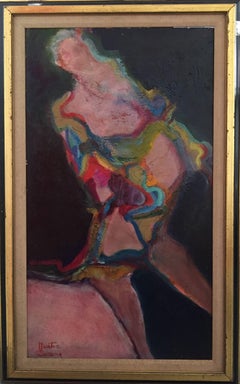
Abstract Expressionist Colorful Figure of a Woman, Oil Painting on Board

Abstract Expressionist Colorful Figure of a Woman, Oil Painting on Board

By Martin Sumers

Located in Surfside, FL

Beautiful abstract figurative painting Martin Sumers, painter, born in New York City, 1922, studied in University of Pennsylvania. Solo Exhibits: Art Fair Gallery 1962; Nordness Gallery 1963, 1964; Art Fair Gallery drawing 1966; Martin Sumers Graphics 1986 Group Exhibits: Aspects Gallery 1960; Art Fair Gallery 1960-1967; Hudson River Museum 1960; Montclair Art Museum 1964, 1967; New York Worlds Fair 1965; New Jersey State Museum State Annuals 1965, 1966, 1967; The Pratt Center for Contemporary Printmaking 1966; Forum Gallery, Sculpture; Art Fair Gallery Sculpture 1968; Art Center of Northern New Jersey 1968; American Academy of Arts and Letters 1968; Art in Park in Paterson NJ, Sculpture, 2nd. prize 1970 Holdings : New Jersey State Museum; Butler Institute of American Art; Roanoke Fine Arts Center; Housatonic College; Pen Morton College; University of North Carolina; Cornell College; Cedar Rapids Art Center; University of Miami; Slater Memorial Gallery in CT; Smith College in MA; Brandeis Rose Art Museum; Rollins...

Category

20th Century Modern Martin Sumers Art

Materials

Oil

Martin Sumers art for sale on 1stDibs.

Find a wide variety of authentic Martin Sumers available for sale on 1stDibs. You can also browse by medium to find art by Martin Sumers in paper, photographic paper and more. Much of the original work by this artist or collective was created during the 20th century and is mostly associated with the modern style. Not every interior allows for large Martin Sumers, so small editions measuring 5 inches across are available. Customers who are interested in this artist might also find the work of William Rittase, Naomi Savage, and Bruno Bernard (Bernard of Hollywood). Martin Sumers prices can differ depending upon medium, time period and other attributes. On 1stDibs, the price for these items starts at $1,200 and tops out at $1,800, while the average work can sell for $1,800.

Artists Similar to Martin Sumers