Max Ernst Prints

American, German, French, 1891-1976

Born in Germany in 1891, later naturalized as an American, then a French citizen, Max Ernst was a pioneer in the Dada and Surrealist movements, the boundaries of which he pushed with his unconventional methods of printmaking, drawing and collage.

Ernst had no formal art training — and that may have been his greatest asset. He produced his first work following four years serving in World War I. At the time, he was in Cologne, Germany, working closely with fellow Dada pioneers Jean Arp and Johannes Baargeld. His output during this period consisted largely of collages, which allowed him to represent the shards, rubble and explosions from his traumatic wartime experience.

In 1922, Ernst moved to France, where he soon became affiliated with Surrealism, the avant-garde art movement taking shape in Paris. Alongside Man Ray, Joan Miró and a couple of others, Ernst was among the first visual artists to experiment with imagery and techniques associated with Surrealism.

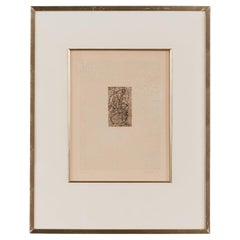
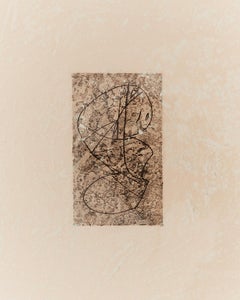
Ernst’s greatest contribution to the Surrealist movement was his invention of frottage (French for “rubbing”), wherein an artist rubs a pencil or crayon over a paper atop a textured surface, and later grattage (French for “scraping”), where a similar technique is applied with paint. Both methods showcase Ernst’s fascination with the unconscious and serendipitous elements of artistic creation, a theme that connected the Dadaists and the Surrealists. Ernst had deep knowledge of psychoanalysis and Sigmund Freud’s dream theories, which were big influences on Surrealists. He was among the first Surrealists to use Freud’s work to examine his own creative impulses. He also published a series of books of his collages, all of which were deeply symbolic and often philosophical.

When Germany occupied France during World War II, Ernst escaped to America with the help of patron and collector Peggy Guggenheim, whom he married in 1941. While living in New York, Ernst’s work and techniques proved instrumental in inspiring the early development of Abstract Expressionism — influencing Robert Motherwell and Jackson Pollock in particular. He later moved to Sedona, Arizona, where he lived with his fourth wife, Dorothea Tanning, a fellow Surrealist and prolific visual artist and poet.

While Ernst and Tanning are largely responsible for Sedona’s reputation as an artist colony, they relocated to France in the 1950s and remained until Ernst’s death in Paris in 1976.

Find original Max Ernst art on 1stDibs.

to
1
1
1
Height
to
Width
to
1
1
1
1
1
1
1
1
1
1
1
1
180
102
93
90
81
Creator: Max Ernst
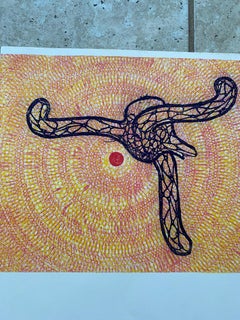
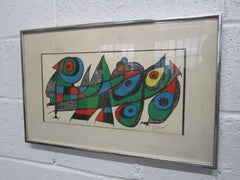
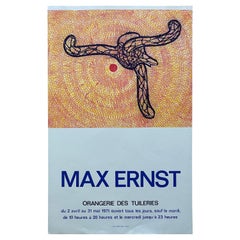
1971 Max Ernst "Orangerie Des Tuileries" Exposition Lithograph
By Max Ernst
Located in San Carlos, CA
Gorgeous color lithograph after Max Ernst. Printed in 1971 to announce a Max Ernst exhibition at L'orangerie des Tuilieres in Paris, France. This Max Ernst Lithograph...
Category

1970s French Modern Vintage Max Ernst Prints

Materials

Other

Related Items
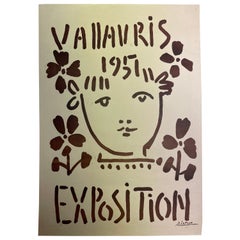
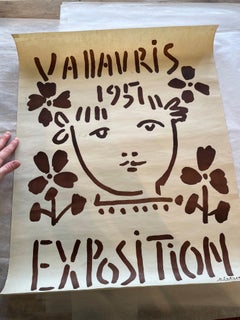
Vallauris 1951 Exposition, 1951
By Pablo Picasso
Located in Holmfirth, GB
Artist: Pablo Picasso Title: Vallauris 1951 Exposition, 1951 Date: 1951 Medium: Linocut Printer: Hidalgo Arnera Size: 65 x 50 cm Signed: In plate.
Category

Mid-20th Century French Modern Max Ernst Prints

Materials

Paper

Vallauris 1951 Exposition, 1951
$2,815 Sale Price
20% Off
H 25.6 in W 19.69 in D 0.04 in
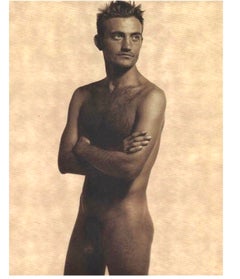
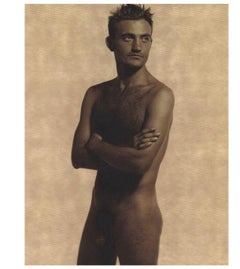
Karl Lagerfeld Satin Finish Umber Photo-Lithograph of Max Delorme, Nude, 1997
By Karl Lagerfeld
Located in Brooklyn, NY
Gorgeous photo print by the iconic photographer and fashion designer Karl Lagerfeld of Max Delorme. Image captured and satin finish umber photo-lithograph printed in 1997. Measures: ...
Category

Late 20th Century French Modern Max Ernst Prints

Materials

Paper

Peter Max "Joy" Serigraph 1971 Limited Edition 63/100
By Peter Max
Located in Toledo, OH
"Joy" by Peter Max, 1971 Limited Edition. Signed lower right and numbered lower left 63/100 in pencil. Printed on Arches Paper, France. This colorful serigraph depicts the sun rising...
Category

Mid-20th Century Max Ernst Prints

Materials

Paper

Inca Empire Costumes, Antique Lithograph of Inca Clothing, Max Tilke c.1880
Located in Langweer, NL
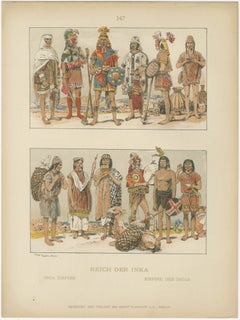
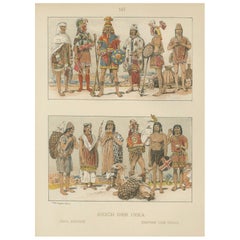
Aztec & Early Mexican Costumes, Set of 2 Antique Prints, 1500–1525 This striking pair of early 20th-century costume plates offers a vivid and historically valuable depiction of Aztec and early Mexican dress during the 16th century. Illustrated by Max Tilke and published by Ernst Wasmuth A.G. in Berlin, these prints belong to one of the most respected costume‐historical series of the period. Tilke was known for his meticulous research and his ability to translate ethnographic sources into richly detailed, accurate visual reconstructions. These two plates are among the most vibrant and desirable in the entire publication. Plate 144 presents warriors and nobles in full ceremonial and military attire. Jaguar warriors, eagle warriors, officers, and elite fighters are shown with their distinctive feathered headdresses, painted shields, quilted cotton armor (ichcahuipilli), and symbolic iconography referencing Aztec cosmology and rank. The colors and patterns reflect authentic codex sources, making the plate particularly valuable to historians of pre-Columbian culture. Plate 145 focuses on social classes and civilian dress from the late pre-Hispanic and early colonial period. Market vendors, weavers, young nobles, priests, and high-ranking women appear wearing garments such as tilmas, breechcloths, embroidered huipiles, feathered adornments, and body paint. Together, the two plates offer a rare, well-documented overview of everyday and ceremonial dress from Mexico around 1500–1525. The printing quality is exceptionally fine, with rich color lithography capturing the tonal variations of feathers, textiles, and painted patterns. These plates make a powerful impression when framed and are well suited for collectors of ethnographic art, museum-oriented interiors, historians of Mesoamerica, and designers seeking authentic cultural references. It is now uncommon to find both Mexican plates...
Category

1880s German Antique Max Ernst Prints
Materials

Paper

1957 Picasso Poster Exposition Vallauris France
By Pablo Picasso
Located in Chula Vista, CA
Poster by Picasso Exposition Vallauris France 1957 no certificate 20 h x 16 art 9.24 w x 11.5 Preowned original vintage condition Refer to images listed
Category

Mid-20th Century French Mid-Century Modern Max Ernst Prints

Materials

Paper

Picasso Exposition Poteries Fleurs Parfums (NO. 1)
By Pablo Picasso
Located in Melbourne, Victoria
Exposition Poteries, Fleurs, Parfums no. 1 Original Vintage Poster PICASSO EXPOSITION POTERIES FLEURS PARFUMS (NO. 1) Poster created by Picasso for...
Category

19th Century French Mid-Century Modern Antique Max Ernst Prints
Materials

Linen, Paper

Picasso Exposition Poteries Fleurs Parfums (NO. 1)
$2,400 Sale Price
20% Off
H 38.19 in W 26.38 in D 0.04 in
"Le Mur Des Lamentations" Lithograph by Salvador
By Salvador Dalí­
Located in Los Angeles, CA
"Le Mur des Lamentations" lithograph by Salvador Dalí (1975). Newly framed and matted , UV protected. Numbered 41/250. Dimensions: 41.5"H x 27.5"W x 1.25"D
Category

1970s Vintage Max Ernst Prints

Materials

Glass, Wood, Paper

"Le Mur Des Lamentations" Lithograph by Salvador
$4,200
H 41.5 in W 27.5 in D 1.25 in
Exposition Galerie Des Cannes
By (after) Pablo Picasso
Located in Holmfirth, GB
An exhibition poster from the Galerie De Cannes, text letterpress and featuring a reproduction of the lithographic L'Atelier, by Pablo Picasso (1881-1973), painted in Cannes in 1956; likely one of the lithographs on display at the exhibit. An uncommon poster for an exhibition of four of the major artists...
Category

1960s French Modern Vintage Max Ernst Prints

Materials

Paper

Exposition Galerie Des Cannes
$1,673 Sale Price
20% Off
H 21.66 in W 17.33 in D 0.04 in
Frère des Écoles Pies - 1862 Hand-Colored Lithograph of a Piarist Brother
Located in Langweer, NL
Frère des Écoles Pies - 1862 Hand-Colored Lithograph of a Piarist Brother This 1862 hand-colored lithograph depicts a Frère des Écoles Pies, or Piarist Brother, a member of the O...
Category

1860s Antique Max Ernst Prints
Materials

Paper

Jimmy Ernst Lithograph Plate V, 1970
By Jimmy Ernst
Located in Pasadena, TX
Jimmy Ernst (American/German, 1920–1984) Plate V, 1970 Hand-signed silkscreen on paper Executed in 1970. Ernst was an Abstract-Surrealist painter and second-generation member ...
Category

1970s American Modern Vintage Max Ernst Prints

Materials

Paper

Jimmy Ernst Lithograph Plate V, 1970
$1,200 Sale Price
20% Off
H 40 in W 30.75 in D 1 in
Lithograph by Henri Rivière - La Féérie des Heures - L’Aube
By Henri Riviere
Located in NANTES, FR
Henri Rivière – “La Féérie des Heures - L'Aube” This lithograph is signed by Henri Rivière and bears a red stamped seal in the lower right corner. The artwork is authentic and from t...
Category

Early 20th Century French Max Ernst Prints

Materials

Paper

Handcolored Lithograph of Conservateur des Reliques (Custodian of Relics), 1862
Located in Langweer, NL
Handcolored Lithograph of Conservateur des Reliques (Custodian of Relics), Plate 14, 1862 This exquisite handcolored lithograph, titled Conservateur des Reliques (Custodian of Rel...
Category

1860s Antique Max Ernst Prints
Materials

Paper

Previously Available Items
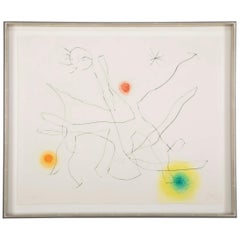
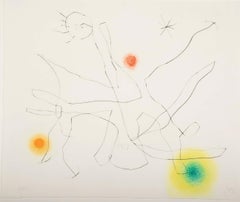
'Zodiaque' edition 95/100 print by Max Ernst, signed
By Max Ernst
Located in London, GB
Framed 'Zodique' colour etching on Lana laid paper by Max Ernst. Signed in pencil lower right 'Max Ernst' and numbered '95/100' lower left. 2964 Provenance from the collection for '...
Category

1970s European Vintage Max Ernst Prints
Materials

Paper

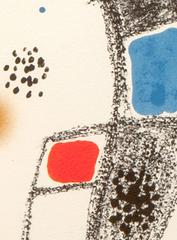
Max Ernst "Veilleuse Au Seuil De Nos Terrassements", 1968
By Max Ernst
Located in Dallas, TX
Max Ernst Lithograph titled "Veilleuse au Seuil de Nos Terrassements" 1968, 18/70.
Category

1960s Vintage Max Ernst Prints
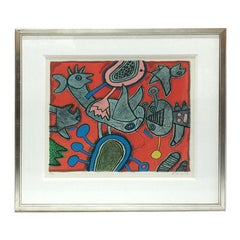
"Entre Chiens et Loups" Etching by Max Ernst
By Max Ernst
Located in Palm Desert, CA
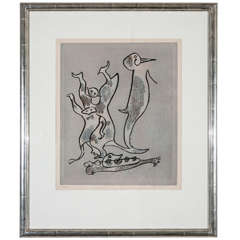
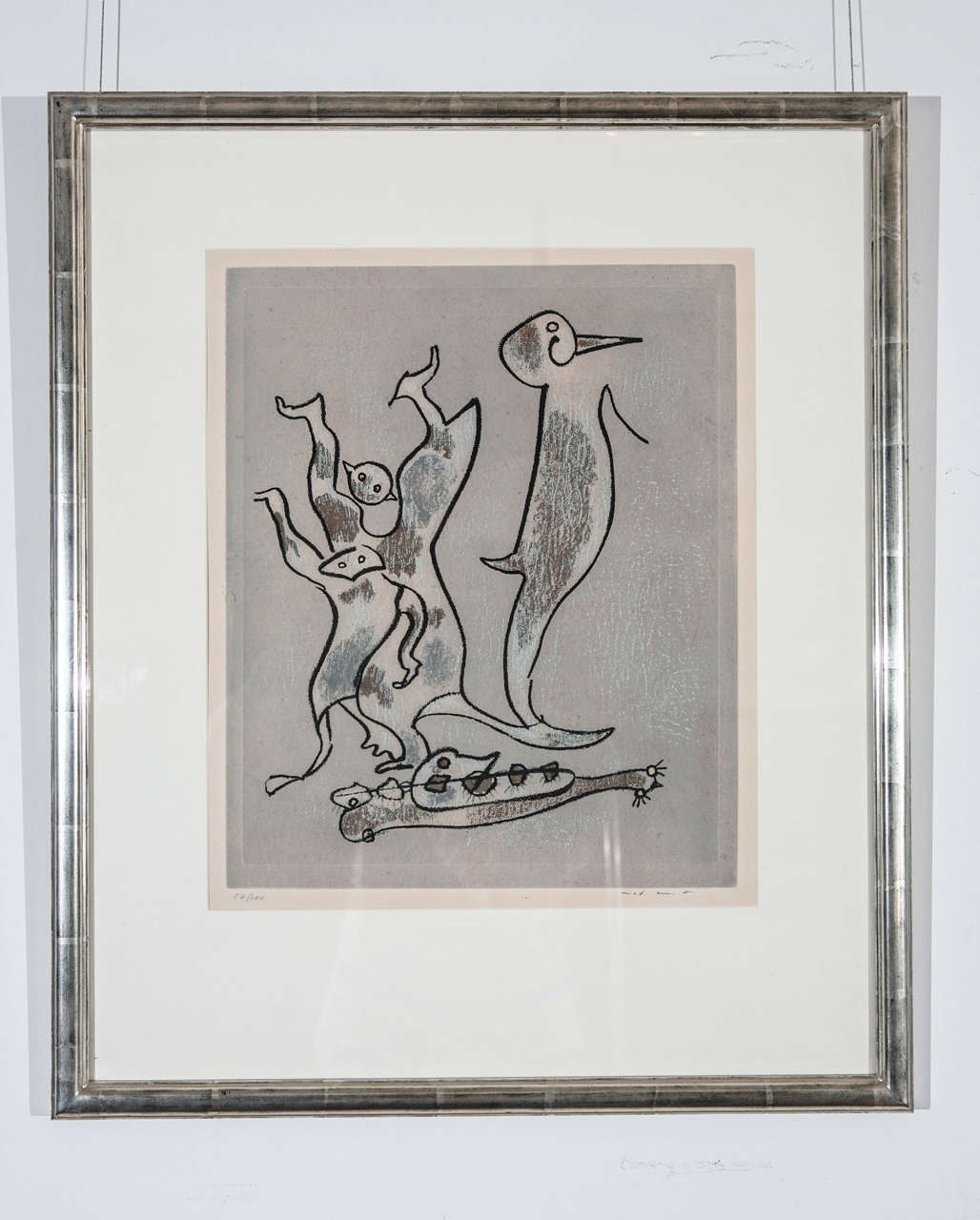
A charming etching and aquatint by Max Ernst entitled "Entre Chiens et Loups" pencil signed and numbered 57/100. Published by Editions Georges Visat, Paris. Dimensions given below ar...
Category

1970s French Vintage Max Ernst Prints
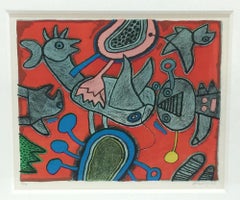
Max Ernst prints for sale on 1stDibs.

Max Ernst prints are available for sale on 1stDibs. These distinctive items are frequently made of paper and are designed with extraordinary care. Many of the original prints by Max Ernst were created in the modern style in france during the 1970s. If you’re looking for additional options, many customers also consider prints by Jean-Michel Folon, James Coignard, and Henri Matisse. Prices for Max Ernst prints can differ depending upon size, time period and other attributes — on 1stDibs, these items begin at $349 and can go as high as $349, while a piece like these, on average, fetch $349.
Questions About Max Ernst Prints
  • 1stDibs ExpertApril 26, 2024
    Max Ernst lived in several places during his life. He was born in Brühl, Germany, in 1881 and later moved to Bonn to attend the university located there. Then he settled in Cologne, not far from his birthplace. In 1922, Ernst moved to France, where he soon became affiliated with Surrealism, the avant-garde art movement taking shape in Paris. Alongside Man Ray, Joan Miró and others, Ernst was among the first visual artists to experiment with imagery and techniques associated with Surrealism. When Germany occupied France during World War II, Ernst escaped to America with the help of patron and collector Peggy Guggenheim, whom he married in 1941. While living in New York, Ernst's work and techniques proved instrumental in inspiring the early development of Abstract Expressionism. He later moved to Sedona, Arizona, where he lived with his fourth wife, Dorothea Tanning, a fellow Surrealist and prolific visual artist and poet. While Ernst and Tanning are largely responsible for Sedona's reputation as an artist colony, they relocated to France in the 1950s and remained there until Ernst's death in Paris in 1976. On 1stDibs, shop a collection of Max Ernst art.
  • 1stDibs ExpertMarch 13, 2024
    You can see Max Ernst paintings in many places around the world. The Max Ernst Museum Brühl des LVR in Brühl, Germany, is home to one of the largest exhibitions of his work. Other museums that have Max Ernst paintings in their permanent collections include the Museum of Modern Art in New York, New York; the San Francisco Museum of Modern Art in San Francisco, California; the Art Institute of Chicago in Chicago, Illinois and the Detroit Institute of Arts in Detroit, Michigan. Explore a range of Max Ernst art on 1stDibs.
  • 1stDibs ExpertNovember 20, 2024
    Max Ernst contributed to Surrealism by pushing the boundaries of the movement with his unconventional methods of printmaking, drawing and collage. He invented frottage (French for “rubbing”), wherein an artist rubs a pencil or crayon over a paper atop a textured surface, and later grattage (French for “scraping”), where a similar technique is applied with paint. Both methods showcase Ernst’s fascination with the unconscious and serendipitous elements of artistic creation, a theme that resonated with the Dadaists and the Surrealists. Ernst had deep knowledge of psychoanalysis and Sigmund Freud’s dream theories, which were big influences on Surrealists. He was among the first Surrealists to use Freud’s work to examine his own creative impulses. He also published a series of books of his collages, all of which were deeply symbolic and often philosophical. Explore a selection of Max Ernst art on 1stDibs.
  • 1stDibs ExpertOctober 15, 2024
    Max Ernst used Surrealism to process the traumas he experienced during World War I. His early works consisted largely of collages, which allowed him to represent the shards, rubble and explosions from his wartime experience. In 1922, Ernst moved to France, where he soon became affiliated with Surrealism, the avant-garde art movement taking shape in Paris. Alongside Man Ray, Joan Miró and others, Ernst was among the first visual artists to experiment with the imagery and techniques that became associated with Surrealist art. Ernst’s greatest contribution to the Surrealist movement is often considered his invention of frottage, wherein an artist rubs a pencil or crayon over a paper atop a textured surface, and later grattage, where a similar technique is applied with paint. Both methods showcase Ernst’s fascination with the unconscious and serendipitous elements of artistic creation, a theme that connected the Dadaists and the Surrealists. Explore a range of Max Ernst art on 1stDibs.
  • 1stDibs ExpertOctober 30, 2024
    How much Max Ernst paintings are worth depends on their size, history, condition and other factors. In 2023, his oil-on-panel piece Taya's Sun sold for more than $304,000 at auction. Ernst was a pioneer in the Dada and Surrealist movements, pushing their boundaries with his unconventional methods of printmaking, drawing and collage. If you own an Ernst, consider having a certified appraiser or experienced art dealer evaluate it. Explore a selection of Max Ernst art on 1stDibs.