Nicolaes Maes More Art

Dutch, 1634-1693

Nicolaes Maes was a Dutch Golden Age painter of genre and portraits. He was born in Dordrecht, the son of Gerrit Maes, a prosperous merchant, and Ida Herman Claesdr. In about 1648, he went to Amsterdam, where he entered Rembrandt's studio. Before his return to Dordrecht in 1653, Maes painted a few Rembrandtesque genre pictures, with life-size figures and in a deep glowing scheme of color, like The Reverie at the Rijksmuseum in Amsterdam, The Card Players at the National Gallery, and The Children with a Goat Carriage. So closely did his early style resemble that of Rembrandt, that the last-named picture, and other canvases in the Leipzig and Budapest galleries and in the collection of Lord Radnor, were or are still ascribed to Rembrandt. In his best period, from 1655–65, Maes devoted himself to the domestic genre on a smaller scale, retaining to a great extent the magic of color he had learned from Rembrandt. Only on rare occasions did he treat scriptural subjects, as in Hagar's Departure, which has been ascribed to Rembrandt. His favorite subjects were women spinning, or reading the Bible, or preparing a meal. Maes had a particular fascination with the subject of lacemaking and made almost a dozen versions on this subject. While he continued to reside in Dordrecht until 1673, when Maes settled in Amsterdam, he visited or even lived in Antwerp between 1665–67. His Antwerp period coincides with a complete change in style and subject. He devoted himself almost exclusively to portraiture and abandoned the intimacy and glowing color harmonies of his earlier work for a careless elegance which suggests the influence of Van Dyck. So great indeed was the change, that it gave rise to the theory of the existence of another Maes, of Brussels. His registered pupils were Justus de Gelder, Margaretha van Godewijk, Jacob Moelaert, and Johannes Vollevens. Maes died in Amsterdam. Maes is well represented at the London National Gallery by five paintings: The Cradle, The Dutch Housewife, The Idle Servant, The Card Players, and a man's portrait. At Amsterdam, besides the splendid examples to be found at the Rijksmuseum, is The Inquisitive Servant of the Six collections. At Buckingham Palace is The Listening Girl (repetitions exist), and at Apsley House Selling Milk and The Listener. Other notable examples are at the Berlin, Brussels, St Petersburg, the Hague, Frankfort, Hanover, Ottawa and Munich galleries.

to
1
Overall Width
to
Overall Height
to
1
1
1
1
1
1
1
2
264
224
169
126
1
Artist: Nicolaes Maes
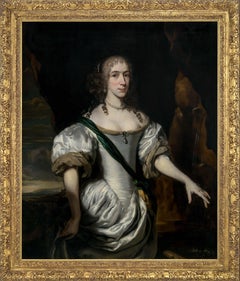
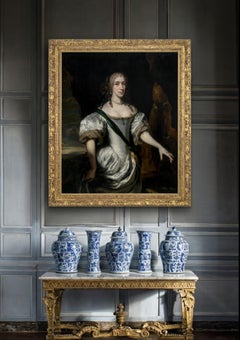
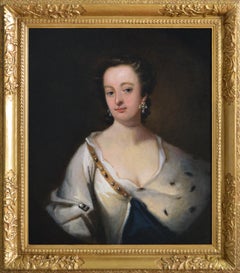
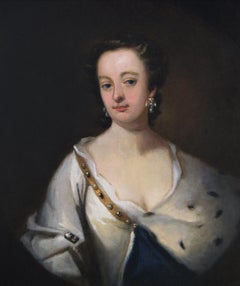
Portrait of an Elegant Lady in a White Satin Dress, signed and dated 1669 Maes

Portrait of an Elegant Lady in a White Satin Dress, signed and dated 1669 Maes

By Nicolaes Maes

Located in London, GB

Portrait of an Elegant Lady in a White Satin Dress, signed and dated 1669 Attributed to Nicolaes Maes (1634–1693) With special thanks to Dr. León Krempel for confirming the attribut...

Category

17th Century Old Masters Nicolaes Maes More Art

Materials

Canvas, Oil

Related Items
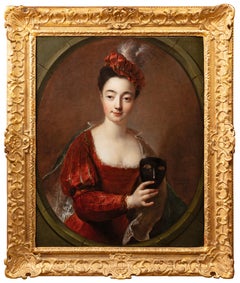
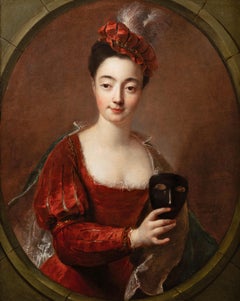
Portrait of a lady in a masquerade costume, signed F. de Troy, French 18th c.

Portrait of a lady in a masquerade costume, signed F. de Troy, French 18th c.

Located in PARIS, FR

Portrait of a lady in a masquerade costume by François de Troy (1645–1730) Signed lower right: peint… de Troy… 18th century France, Paris, circa 1715-1720. Canvas: h. 81 cm, w. 65 cm...

Category

Early 18th Century Old Masters Nicolaes Maes More Art

Materials

Canvas, Oil

Male and female portrait, both in silk kimono, possibly textile dealers

Male and female portrait, both in silk kimono, possibly textile dealers

By Christoffel Lubieniecki

Located in Amsterdam, NL

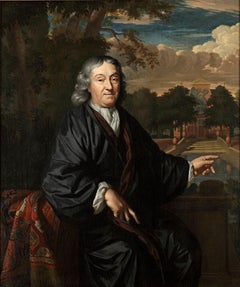
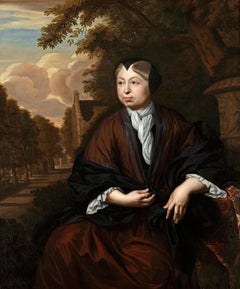
CHRISTOFFEL LUBIENIECKI (1659-1729) Pair of portraits of a gentleman and a lady, both in silk kimono, before a country house (circa 1680) Indistinctly signed “C.......” on a box under the man’s left hand Oil on canvas, 79.5 x 67 cm each Both sitters are portrayed wearing a silk “Japanese” coat. During the second half of the seventeenth the Japanese silk coat, an adapted Japanese kimono, became a real vogue in the Dutch elite. The exclusive Dutch trade contacts with Japan can explain the popularity of the kimono-style silk coats in the Netherlands. Everybody who could afford one, dressed in such a fashionable and comfortable coat and, like the present sitters, some proud owners had themselves portrayed in a “Japanese” coat often together with an oriental carpet to underline their standing and international connections. These portraits are the work of the Polish-born portraitist Christoffel Lubieniecki (also known as Lubienitski, Lubinitski or Lubiniecki) Lubieniecki was first trained in Hamburg under Julian Stuhr and after 1675 in Amsterdam under Adriaen Backer and Gerard de Lairesse. He specialized in landscapes, generally of an Italianate character, and in portraits. The loving execution of these contented burghers, enjoying the garden vistas of their country house, places him alongside Amsterdam portraitists such as Constantijn Netscher and Michiel van Musscher...

Category

1680s Old Masters Nicolaes Maes More Art

Materials

Canvas, Oil

18th Century portrait oil painting of a lady in an ermine trimmed cloak

18th Century portrait oil painting of a lady in an ermine trimmed cloak

By Sir Godfrey Kneller

Located in Nr Broadway, Worcestershire

Circle of Sir Godfrey Kneller Dutch, (1646-1723) Portrait of a Lady in an Ermine Trimmed Cloak Oil on canvas Image size: 26.5 inches x 22.5 inches Size including frame: 33.5 inches x 29.5 inches A well-executed half-length portrait of a lady painted in a feigned oval, circle of Sir Godfrey Kneller. The use of a feigned oval was a device used in portraiture to give a sense of depth and add an intimacy to the painting, drawing your attention to the sitter. The subject, posed without her wig in the undressed fashion of the day, wears a blue ermine trimmed blue cloak over a white silk robe...

Category

18th Century Old Masters Nicolaes Maes More Art

Materials

Canvas, Oil

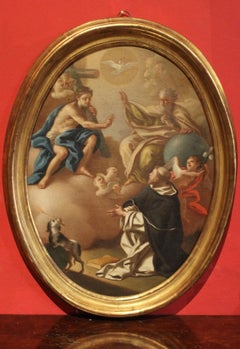
Italian 18th Century Oval Religious Oil on Canvas Painting with Saint Dominic

Italian 18th Century Oval Religious Oil on Canvas Painting with Saint Dominic

By Francesco de Mura

Located in Firenze, IT

This beautiful Italian 18th Century old masters oil painting on oval canvas with giltwood frame is attributed to Solimena and features a religious scene. In this splendid oval-shaped painting are depicted Saint Dominic...

Category

18th Century Old Masters Nicolaes Maes More Art

Materials

Canvas, Oil

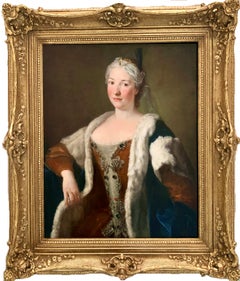
18th century French Old Master Portrait of a woman in oriental costume

18th century French Old Master Portrait of a woman in oriental costume

Located in Aartselaar, BE

French 18th century old master portrait of a majestic lady dressed "à la Turque" The sitter at the viewer with a kind and enigmatic smile and twinkling eyes. She looks elegant and kind, yet also has an intelligent and determined aura, reflecting the character of someone who is in charge of her own life and destiny. De Silvestre paid great attention to her spectacular outfit, which is striking in its portrayal of the sumptuous fabrics and their decorative richness. She is wearing a luxurious royal blue robe à la...

Category

1740s Old Masters Nicolaes Maes More Art

Materials

Canvas, Oil

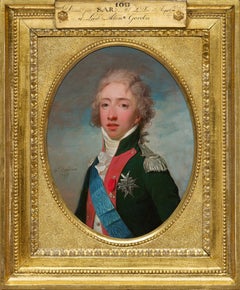
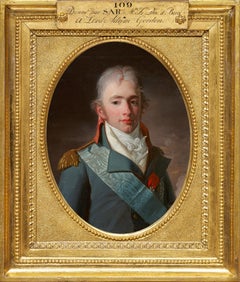
Two royal portraits (the Duc d'Angoulême and the Duc de Berry) by H.P. Danloux

Two royal portraits (the Duc d'Angoulême and the Duc de Berry) by H.P. Danloux

Located in PARIS, FR

These two royal portraits are a major historical testimony to the stay of the Comte d'Artois (the future Charles X) and his family in Edinburgh in 1796-1797. Given by the sitters to Lord Adam Gordon, the Governor of Edinburgh, and kept by family descent to this day, these two portraits provide us with a vivid and spontaneous image of the Duc d’Angoulême and his brother the Duc de Berry. Danloux, who had emigrated to London a few years before, demonstrate his full assimilation of the art of British portrait painters in the brilliant execution of these portraits. 1. Henri-Pierre Danloux, a portraitist in the revolutionary turmoil Born in Paris in 1753, Henri-Pierre Danloux was first a pupil of the painter Nicolas-Bernard Lépicié (1735 - 1784) and then, in 1773, of Joseph-Marie Vien (1716 - 1809), whom he followed to Rome when, at the end of 1775, Vien became Director of the Académie de France. In Rome he became friends with the painter Jacques-Louis David (1748 - 1825). Returning to France around 1782, he settled in Lyon for a few years before returning to Paris in 1785. One of his first portraits was commissioned by the Baroness d'Etigny, the widow of the former Intendant of the Provinces of Gascony, Bearn and Navarre Antoine Mégret d'Etigny (1719 – 1767). He then became close to his two sons, Mégret de Sérilly and Mégret d'Etigny, who in turn became his patrons. In 1787, this close relationship with the d'Etigny family was further strengthened by his marriage to Antoinette de Saint-Redan, a relative of Madame d'Etigny. After his marriage, he left for Rome and did not return to France until 1789. It was during the winter of 1790-1791 that he painted one of his masterpieces, the portrait of Baron de Besenval. Set in a twilight atmosphere, this portrait of an aristocrat who knows that his death is imminent symbolizes the disappearance of an erudite and refined society which would be swept away by the French Revolution. The Jacobin excesses led Danloux to emigrate to England in 1792; many members of his family-in-law who remained in France were guillotined on 10 May 1794. Danloux enjoyed great success as a portrait painter in England before returning to France in 1801. During his stay in England, Danloux was deeply under the influence of English portraitists: his colors became warmer (as shown by the portrait of the Duc d'Angoulême that we are presenting), and his execution broader. 2. Description of the two portraits and biographical details of the sitters The Duc d'Angoulême (1775-1844) was the eldest son of the Comte d'Artois, the younger brother of King Louis XVI (the future King Charles X), and his wife Marie-Thérèse of Savoie. He is shown here, in the freshness of his youth, wearing the uniform of colonel-general of the "Angoulême-Dragons" regiment. He is wearing the blue cordon of the Order of the Holy Spirit, which was awarded to him in 1787, and two decorations: the Cross of Saint-Louis and the Maltese Cross, as he was also Grand Prior of the Order of Malta. Born on 16 August 1775 in Versailles, Louis-Antoine d'Artois followed his parents into emigration on 16 July 1789. In 1792, he joined the émigrés’ army led by the Prince de Condé. After his stay in Edinburgh (which will be further discussed), he went to the court of the future King Louis XVIII, who was in exile at the time, and in 1799 married his first cousin Marie-Thérèse Charlotte of France, the daughter of Louis XVI and the sole survivor of the royal family. The couple had no descendants. He became Dauphin of France in 1824, upon the accession to the throne of his father but played only a minor political role, preferring his military position as Grand Admiral. Enlisted in Spain on the side of Ferdinand VII, he returned home crowned with glory after his victory at Trocadero in 1823. He reigned for a very short time at the abdication of Charles X in 1830, before relinquishing his rights in favor of his nephew Henri d'Artois, the Duc de Bordeaux. He then followed his father into exile and died on 3 June 1844 in Gorizia (now in Italy). His younger brother, the Duc de Berry, is shown in the uniform of the noble cavalry of the émigrés’ Army. He is wearing the blue cordon of the Order of the Holy Spirit, awarded to him in May 1789, and the Cross of Saint-Louis (partly hidden by his blue cordon). Born on 24 January 1778 in Versailles, Charles-Ferdinand d'Artois also followed his parents into emigration and joined the émigrés’ army in 1792. After his stay in Edinburgh, he remained in Great Britain, where he had an affair with Amy Brown...

Category

1790s Old Masters Nicolaes Maes More Art

Materials

Canvas, Oil, Wood Panel
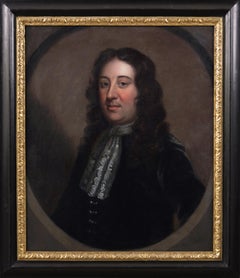
17th Century portrait oil painting of a gentleman

17th Century portrait oil painting of a gentleman

By John Riley

Located in Nr Broadway, Worcestershire

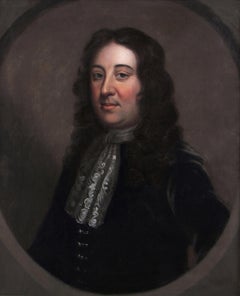
Circle of John Riley British, (1646-1691) Portrait of a Gentleman Oil on canvas Image size: 29 inches x 24 inches Size including frame: 36 inches x 31 inch...

Category

17th Century Old Masters Nicolaes Maes More Art

Materials

Canvas, Oil

Oil on Canvas Painting Portrait of the Italian Noble Family of Zanardi Count

Oil on Canvas Painting Portrait of the Italian Noble Family of Zanardi Count

By Lucia Casalini Torelli

Located in Firenze, IT

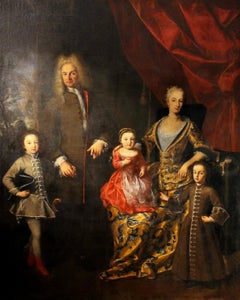
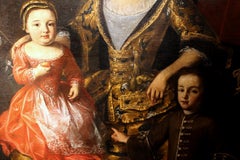
This museum quality old master oil on canvas formal portrait painting depicting the family of the Count Zanardi is signed by the artist- the female painter Lucia Casalini Torelli- and published in a book dedicated to Casalini Torelli’s workshop and academy. This palatial masterpiece artwork comes directly from the ancient Villa Maraini Guerrieri - Palidano di Gonzaga (Mantua), an historic Italian heritage building owned by the descendants of the family portrayed for more than two centuries, until 1998. The big scale of this oil on canvas masterpiece painting states the relevance of Lucia Casalini Torelli as a painter. The present artwork is a formal family portrait painting that aim to introduce the characters depicted according to their social role in the society. The noble family is all gathered under a loggia overlooking a park, the landscape in the background is partially covered by a beautiful red cloth on the right side. The father stands up and holds the hand of his eldest son, proudly introducing his future heir. The son wears a light-blue dress and red boots, he is depicted in a serious pose holding a black tricorn hat under his arm and a rapier sword on his belt. The mother wears an elegant gold and dark green brocade dress, she is sitting with her youngest daughter on her knees while her second son is by her side. The little daughter wears a lovely long red and dress with white lace and holds an apple on her hand. The son stands next to his mother and is dressed in a brown priestly clothes. This palatial old masters piece was probably painted in 1740 due to the similarities with Cardinal Doria’ s portrait, now on display at the Doria Palace Museum, the official residence of the Prince of Genoa. The painting features original canvas (“prima tela”) and antique original patina, it is in excellent overall condition considering the age, use and its large scale. A formal detailed condition report and the results of the inspection with the UV lamp accompanied by photos is available on request. As well as for its exceptional quality and quite perfect state of conservation, this painting is particularly important and even more valuable both for the artist who painted it and for its absolutely exclusive provenance. Lucia painted the most prominent and powerful noble families of her time, the location of these paintings is unknown to the art market as it is extremely likely that the portraits are still kept in private collections. Furthermore, Lucia was one of the most appreciated artists of her time, so important that she was admitted as a member of the academy at a time when women were forbidden to attend these studies. In 1706, Felice Torelli...

Category

18th Century Old Masters Nicolaes Maes More Art

Materials

Canvas, Oil

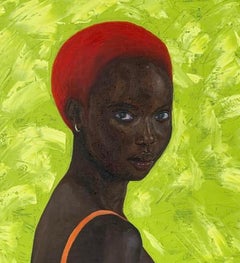
Answer Within
Answer Within

Answer Within

By Emmanuel Ojebola

Located in Ibadan, Oyo

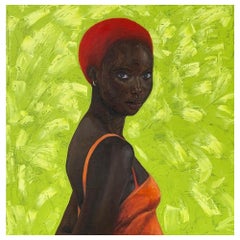
Painting Ships in a well-protected tube from Nigeria This work is unique, this is not a print or other type of copy. Accompanied by a Certificate of Authenticity (Issued by the Gallery)

Category

21st Century and Contemporary Old Masters Nicolaes Maes More Art

Materials

Canvas, Oil

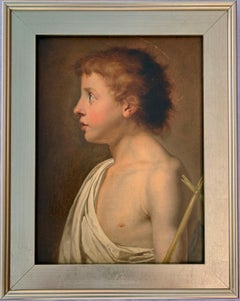
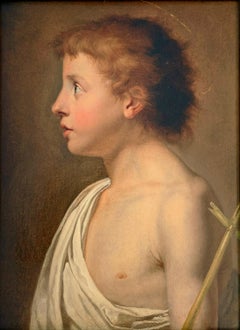
18th Century European Portrait of an Angel, Oil on Canvas

18th Century European Portrait of an Angel, Oil on Canvas

$6,000Sale Price|20% Off

H 19 in W 14.25 in D 3 in

18th Century European Portrait of an Angel, Oil on Canvas

Located in SANTA FE, NM

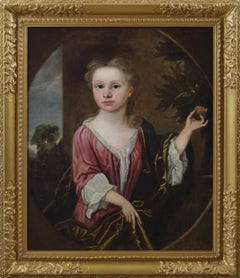
18th Century European Portrait of an Angel, Oil on Canvas Unsigned 19 x 14 1/4 inches This lovely and sensitively painting has been examined by a professional restorer who was forme...

Category

18th Century Old Masters Nicolaes Maes More Art

Materials

Canvas, Oil

Nicolaes Maes more art for sale on 1stDibs.

Find a wide variety of authentic Nicolaes Maes more art available for sale on 1stDibs. You can also browse by medium to find art by Nicolaes Maes in canvas, fabric, oil paint and more. Much of the original work by this artist or collective was created during the 18th century and earlier and is mostly associated with the Old Masters style. Not every interior allows for large Nicolaes Maes more art, so small editions measuring 45 inches across are available. Nicolaes Maes more art prices can differ depending upon medium, time period and other attributes. On 1stDibs, the price for these items starts at $24,630 and tops out at $24,630, while the average work can sell for $24,630.