Oonju Chun Art

to
2
Overall Width
to
Overall Height
to
2
2
1
1
2
2
2
2
2
10,817
2,842
2,494
1,421
2
Artist: Oonju Chun
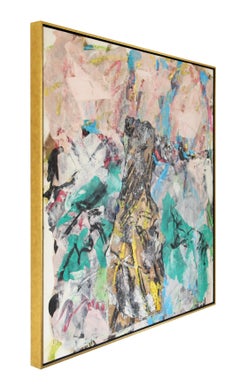
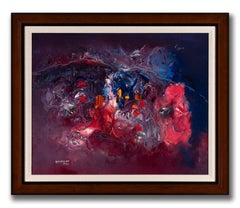
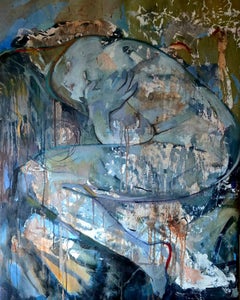
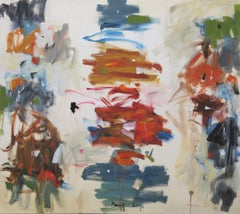
Blue Tarp
Blue Tarp

Blue Tarp

By Oonju Chun

Located in Salt Lake City, UT

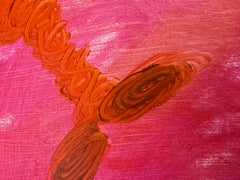
Blue Tarp, oil on canvas, 60 x 50 in. (unframed, gallery-wrapped canvas). Oonju Chun’s large abstract expressionist paintings delightfully employ the basic...

Category

2010s Abstract Expressionist Oonju Chun Art
Materials

Canvas, Oil

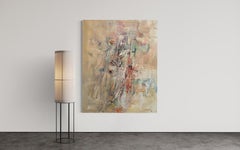
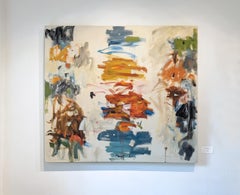
Parallel Construction

Parallel Construction

By Oonju Chun

Located in Salt Lake City, UT

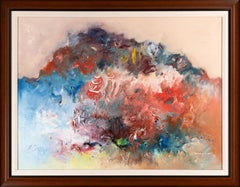
Parallel Construction, oil on canvas, 48 x 54 in. Oonju Chun’s large abstract expressionist paintings delightfully employ the basics of good, nonobjective ...

Category

2010s Abstract Expressionist Oonju Chun Art
Materials

Canvas, Oil

Related Items
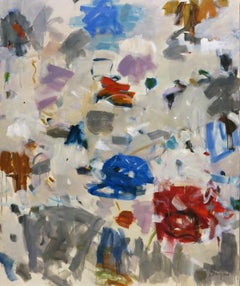
Untitled Abstract Oil by Naohiko Inukai

Untitled Abstract Oil by Naohiko Inukai

Located in Hudson, NY

A richly colored abstraction by Japanese artist Naohiko Inukai. This early work demonstrates the artist's fluidity and expression with paint prior to wh...

Category

1960s Abstract Expressionist Oonju Chun Art
Materials

Canvas, Oil

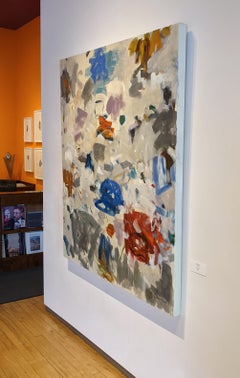
Red Right Hand /// Abstract Expressionism Blue Red Female Artist Painting Canvas

Red Right Hand /// Abstract Expressionism Blue Red Female Artist Painting Canvas

By Margaux Halloran

Located in Saint Augustine, FL

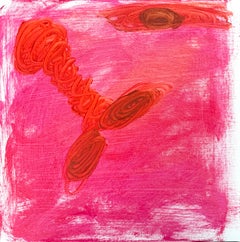
Artist: Margaux Halloran (American, 1999-) Title: "Red Right Hand" *Monogram signed by Halloran lower right. It is also signed, dated, and titled on verso Year: 2024 Medium: Original...

Category

2010s Abstract Expressionist Oonju Chun Art
Materials

Canvas, Paint, Pastel, Oil, Chalk

"The Dancer 2" Fauvist Abstract Original Oil Painting

"The Dancer 2" Fauvist Abstract Original Oil Painting

By Chris Hamamoto

Located in Soquel, CA

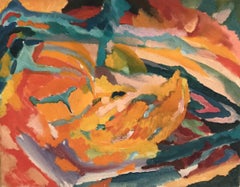
Abstract Expressionist painting by Southern California artist Chris Hamamoto (American, 20th century). Image, 40"H x 30"W. Unframed. Chris, a native of Southern California, has en...

Category

1990s Abstract Expressionist Oonju Chun Art
Materials

Canvas, Oil

Subjective Farm Landscape abstract oil painting by Ralph Rosenborg

Subjective Farm Landscape abstract oil painting by Ralph Rosenborg

By Ralph Rosenborg

Located in Hudson, NY

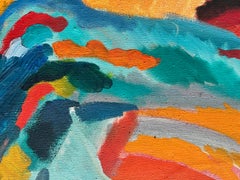
Subjective Farm Landscape 1940 Oil on canvas, 24" x 30" 37.5" x 31" x 2" framed - frame is original to this artwork Signed recto lower right: "rosenborg 40" & arrow box cypher. Signe...

Category

1940s Abstract Expressionist Oonju Chun Art
Materials

Canvas, Oil

“Lightride”
“Lightride”

Syd Solomon“Lightride”, 1978

H 43.25 in W 23 in D 1.5 in

“Lightride”

By Syd Solomon

Located in Southampton, NY

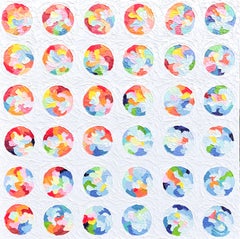
Here for your consideration is a great example of the artwork of the well known American artist, Syd Solomon. Signed top left. Titled and dated verso 1978. The painting is oil and acrylic paint on mounted synthetic canvas. Condition is excellent. Overall framed measurements are 44.75 by 24.5 inches. Provenance: A Sarasota, Florida collector. SYD SOLOMON BIOGRAPHY American 1917-2004 Written by Dr. Lisa Peters/Berry Campbell Gallery “Here, in simple English, is what Syd Solomon does: He meditates. He connects his hand and paintbrush to the deeper, quieter, more mysterious parts of his mind- and he paints pictures of what he sees and feels down there.” --Kurt Vonnegut Jr. from Palm Sunday, 1981 Syd Solomon was born near Uniontown, Pennsylvania, in 1917. He began painting in high school in Wilkes-Barre, where he was also a star football player. After high school, he worked in advertising and took classes at the Art Institute of Chicago. Before the attack on Pearl Harbor, he joined the war effort and was assigned to the First Camouflage Battalion, the 924th Engineer Aviation Regiment of the US Army. He used his artistic skills to create camouflage instruction manuals utilized throughout the Army. He married Ann Francine Cohen in late 1941. Soon thereafter, in early 1942, the couple moved to Fort Ord in California where he was sent to camouflage the coast to protect it from possible aerial bombings. Sent overseas in 1943, Solomon did aerial reconnaissance over Holland. Solomon was sent to Normandy early in the invasion where his camouflage designs provided protective concealment for the transport of supplies for men who had broken through the enemy line. Solomon was considered one of the best camoufleurs in the Army, receiving among other commendations, five bronze stars. Solomon often remarked that his camouflage experience during World War II influenced his ideas about abstract art. At the end of the War, he attended the École des Beaux-Arts in Paris. Because Solomon suffered frostbite during the Battle of the Bulge, he could not live in cold climates, so he and Annie chose to settle in Sarasota, Florida, after the War. Sarasota was home to the John and Mable Ringling Museum of Art, and soon Solomon became friends with Arthur Everett “Chick” Austin, Jr., the museum’s first Director. In the late 1940s, Solomon experimented with new synthetic media, the precursors to acrylic paints provided to him by chemist Guy Pascal, who was developing them. Victor D’Amico, the first Director of Education for the Museum of Modern Art, recognized Solomon as the first artist to use acrylic paint. His early experimentation with this medium as well as other media put him at the forefront of technical innovations in his generation. He was also one of the first artists to use aerosol sprays and combined them with resists, an innovation influenced by his camouflage experience. Solomon’s work began to be acknowledged nationally in 1952. He was included in American Watercolors, Drawings and Prints at the Metropolitan Museum of Art, New York. From 1952–1962, Solomon’s work was discovered by the cognoscenti of the art world, including the Museum of Modern Art Curators, Dorothy C. Miller and Peter Selz, and the Whitney Museum of American Art’s Director, John I. H. Baur. He had his first solo show in New York at the Associated American Artists Gallery in 1955 with “Chick” Austin, Jr. writing the essay for the exhibition. In the summer of 1955, the Solomons visited East Hampton, New York, for the first time at the invitation of fellow artist David Budd...

Category

1970s Abstract Expressionist Oonju Chun Art
Materials

Canvas, Oil, Acrylic, Board

American Vivid Abstract Expressionist Art Oil Painting Norman Carton, WPA Artist

American Vivid Abstract Expressionist Art Oil Painting Norman Carton, WPA Artist

By Norman Carton

Located in Surfside, FL

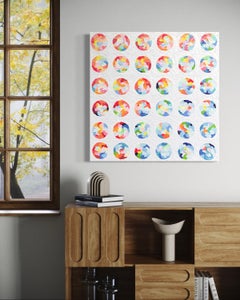
Norman Carton (American, 1908-1980), Oil on canvas Hand signed lower left Dimensions: 25.5 X 21.5 X 1.5 in. Work Size: 24 x 20 in. Modern abstract painting featuring bold gestural brushstrokes and layered color fields, characteristic of mid-century Abstract Expressionism. Norman Carton (1908 – 1980) was an American artist and educator known for abstract expressionist art. He was born in the Ukraine region of Imperial Russia and moved to the United States in 1922 where he spent most of his adult life. A classically trained portrait and landscape artist, Carton also worked as a drafter, newspaper illustrator, muralist, theater set designer, photographer, and fabric designer and spent most of his mature life as an art educator. Carton showed in and continues to be shown in many solo and group exhibitions. His work is included in numerous museums and private collections throughout the world. Norman Carton was born in the Dnieper Ukraine territory of the Russian Empire in 1908. Escaping the turbulence of civil war massacres, he settled in Philadelphia in 1922 after years of constant flight. While attending the Pennsylvania Museum School of Industrial Art, Carton worked as a newspaper artist for the Philadelphia Record from 1928 to 1930 in the company of other illustrator/artists who had founded the Ashcan School, the beginnings of modern American art. From 1930 to 1935, he studied at the Pennsylvania Academy of Fine Arts under Henry McCarter, who was a pupil of Toulouse-Lautrec, Puvis de Chavanne, and Thomas Eakins. Arthur Carles, especially with his sense of color, and the architect John Harbison also provided tutelage and inspiration. Following his time at the Pennsylvania Academy of Fine Arts, Carton studied at the Barnes Foundation from 1935 to 1936 where he was influenced by an intellectual climate led by visiting lecturers John Dewey and Bertrand Russell as well as daily access to Albert C. Barnes and his art collection. Carton was awarded the Cresson Traveling Scholarship in 1934 which allowed him to travel through Europe and study in Paris. There he expanded his artistic horizons with influences stemming from Henri Matisse, Pablo Picasso, Chaim Soutine, and Wassily Kandinsky. While at the Pennsylvania Academy of Fine Arts, Carton was also awarded the Toppan Prize for figure painting as well as the Thouron Composition Prize. He received numerous commissions as a portrait artist, social realist, sculptor, and theatrical stage designer as well as academic scholarships. During this time, Carton worked as a scenery designer at Sparks Scenic Studios, a drafter at the Philadelphia Enameling Works, and a fine art lithographer. From 1939 to 1942, the Works Progress Administration (WPA) Federal Art Project employed Carton as a muralist and easel artist. He collaborated with architect George Howe...

Category

Mid-20th Century Abstract Expressionist Oonju Chun Art
Materials

Canvas, Oil

"Untitled"
"Untitled"

"Untitled"

By Clayton Mitropoulos

Located in Southampton, NY

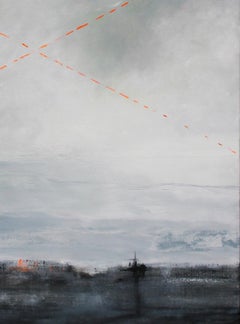
This abstract oil on canvas painting was done in 2005 and was exhibited at RVS Fine Art the same year. In good condition and housed in a contemporary gold gilt frame. Overall size 2...

Category

21st Century and Contemporary Abstract Expressionist Oonju Chun Art
Materials

Oil, Canvas

Little Red House by Eleanor Woolley

Little Red House by Eleanor Woolley

By Eleanor Woolley

Located in Deddington, GB

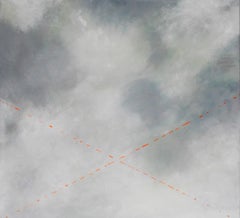
original Oil Paint on Canvas Image size: H:70 cm x W:100 cm Complete Size of Unframed Work: H:70 cm x W:100 cm x D:2cm Sold Unframed Please note that insitu images are purely an indi...

Category

2010s Abstract Expressionist Oonju Chun Art
Materials

Canvas, Oil

Venetian Forms, Abstract Expressionist Oil on Canvas by Lucien Dulfan

Venetian Forms, Abstract Expressionist Oil on Canvas by Lucien Dulfan

Located in Long Island City, NY

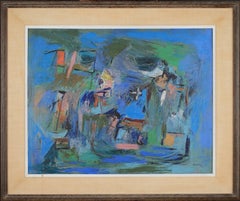
Dulfan Lucien (b. 1942) - Ukrainian painter. Born in Kyrgyzstan. He graduated from Odessa Art School (1953-1963), professor D. Frumina. He participated in over 100 exhibitions (since...

Category

Late 20th Century Abstract Expressionist Oonju Chun Art
Materials

Canvas, Oil, Board

“Sandscape 2”
“Sandscape 2”

“Sandscape 2”

By Syd Solomon

Located in Southampton, NY

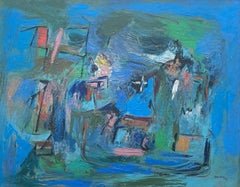
Original oil and acrylic painting on canvas titled “Sandscape 2” by the well known American artist, Syd Solomon. Signed Syd Solomon lower left. Signed and dated Syd Solomon 1972 and inscribed as titled on the reverse. 22 × 30 inches. Overall very good to excellent condition. No notable issues detected during inspection. No signs of restoration under UV inspection. The painting is in its original wood with silver reveal floating frame. Overall framed measurements are 24.25 by 32.25 inches. Provenance: A private collector. Syd Solomon was born near Uniontown, Pennsylvania, in 1917. He began painting in high school in Wilkes-Barre, where he was also a star football player. After high school, he worked in advertising and took classes at the Art Institute of Chicago. Before the attack on Pearl Harbor, he joined the war effort and was assigned to the First Camouflage Battalion, the 924th Engineer Aviation Regiment of the US Army. He used his artistic skills to create camouflage instruction manuals utilized throughout the Army. He married Ann Francine Cohen in late 1941. Soon thereafter, in early 1942, the couple moved to Fort Ord in California where he was sent to camouflage the coast to protect it from possible aerial bombings. Sent overseas in 1943, Solomon did aerial reconnaissance over Holland. Solomon was sent to Normandy early in the invasion where his camouflage designs provided protective concealment for the transport of supplies for men who had broken through the enemy line. Solomon was considered one of the best camoufleurs in the Army, receiving among other commendations, five bronze stars. Solomon often remarked that his camouflage experience during World War II influenced his ideas about abstract art. At the end of the War, he attended the École des Beaux-Arts in Paris. Because Solomon suffered frostbite during the Battle of the Bulge, he could not live in cold climates, so he and Annie chose to settle in Sarasota, Florida, after the War. Sarasota was home to the John and Mable Ringling Museum of Art, and soon Solomon became friends with Arthur Everett “Chick” Austin, Jr., the museum’s first Director. In the late 1940s, Solomon experimented with new synthetic media, the precursors to acrylic paints provided to him by chemist Guy Pascal, who was developing them. Victor D’Amico, the first Director of Education for the Museum of Modern Art, recognized Solomon as the first artist to use acrylic paint. His early experimentation with this medium as well as other media put him at the forefront of technical innovations in his generation. He was also one of the first artists to use aerosol sprays and combined them with resists, an innovation influenced by his camouflage experience. Solomon’s work began to be acknowledged nationally in 1952. He was included in American Watercolors, Drawings and Prints at the Metropolitan Museum of Art, New York. From 1952–1962, Solomon’s work was discovered by the cognoscenti of the art world, including the Museum of Modern Art Curators, Dorothy C. Miller and Peter Selz, and the Whitney Museum of American Art’s Director, John I. H. Baur. He had his first solo show in New York at the Associated American Artists Gallery in 1955 with “Chick” Austin, Jr. writing the essay for the exhibition. In the summer of 1955, the Solomons visited East Hampton, New York, for the first time at the invitation of fellow artist David Budd. There, Solomon met and befriended many of the artists of the New York School, including Jackson Pollock, Franz Kline, Willem de Kooning, James Brooks, Alfonso Ossorio, and Conrad Marca-Relli. By 1959, and for the next thirty-five years, the Solomons split the year between Sarasota (in the winter and spring) and the Hamptons (in the summer and fall). In 1959, Solomon began showing regularly in New York City at the Saidenberg Gallery with collector Joseph Hirshhorn buying three paintings from Solomon’s first show. At the same time, his works entered the collections of the Whitney Museum of American Art, the Solomon R. Guggenheim Museum, and the Wadsworth Athenaeum in Hartford, Connecticut, among others. Solomon also began showing at Signa Gallery in East Hampton and at the James David Gallery in Miami run by the renowned art dealer, Dorothy Blau. In 1961, the Guggenheim Museum’s H. H. Arnason bestowed to him the Silvermine Award at the 13th New England Annual. Additionally, Thomas Hess of ARTnews magazine chose Solomon as one of the ten outstanding painters of the year. At the suggestion of Alfred H. Barr, Jr., the Museum of Modern Art’s Director, the John and Mable Ringling Museum in Sarasota began its contemporary collection by purchasing Solomon’s painting, Silent World, 1961. Solomon became influential in the Hamptons and in Florida during the 1960s. In late 1964, he created the Institute of Fine Art at the New College in Sarasota. He is credited with bringing many nationally known artists to Florida to teach, including Larry Rivers, Philip Guston, James Brooks, and Conrad Marca-Relli. Later Jimmy Ernst, John Chamberlain, James Rosenquist, and Robert Rauschenberg settled near Solomon in Florida. In East Hampton, the Solomon home was the epicenter of artists and writers who spent time in the Hamptons, including Alfred Leslie, Jim Dine, Ibram Lassaw, Saul Bellow, Barney Rosset, Arthur Kopit, and Harold Rosenberg. In 1970, Solomon, along with architect Gene Leedy, one of the founders of the Sarasota School of Architecture, built an award-winning precast concrete and glass house and studio on the Gulf of Mexico near Midnight Pass in Sarasota. Because of its siting, it functioned much like Monet’s home in Giverny, France. Open to the sky, sea, and shore with inside and outside studios, Solomon was able to fully solicit all the environmental forces that influenced his work. His friend, the art critic Harold Rosenberg, said Solomon’s best work was produced in the period he lived on the beach. During 1974 and 1975, a retrospective exhibition of Solomon’s work was held at the New York Cultural Center and traveled to the John and Mable Ringling Museum in Sarasota. Writer Kurt Vonnegut, Jr. conducted an important interview with Solomon for the exhibition catalogue. The artist was close to many writers, including Harold Rosenberg, Joy Williams, John D. McDonald, Budd Schulberg, Elia Kazan, Betty Friedan...

Category

1970s Abstract Expressionist Oonju Chun Art
Materials

Acrylic, Oil, Canvas

Deep as the Night, an oil painting by John Von Wicht

Deep as the Night, an oil painting by John Von Wicht

By John von Wicht

Located in Hudson, NY

This work is one of a group of over 100 works personally selected by the artist, and gifted to a close personal friend in 1969. Exhibited: 1967 National Academy Annual Exhibition -...

Category

1960s Abstract Expressionist Oonju Chun Art
Materials

Canvas, Oil

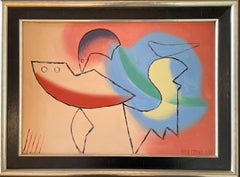
4-35 abstract oil painting by Charles Biederman

4-35 abstract oil painting by Charles Biederman

Located in Hudson, NY

Signed and dated "Biederman 4-35" lower right. About this artist: Charles Joseph Biederman was a twentieth century abstract American artist best known for his constructivist, cubist...

Category

1930s Abstract Expressionist Oonju Chun Art
Materials

Canvas, Oil

Previously Available Items
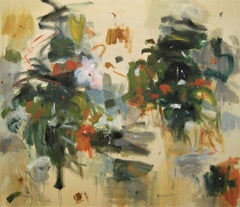
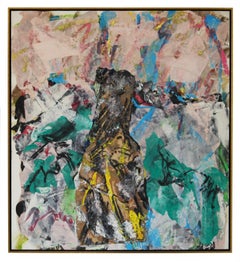
Twin Peaks
Twin Peaks

Twin Peaks

By Oonju Chun

Located in Salt Lake City, UT

Twin Peaks, oil on canvas, 56 x 64 in. Oonju Chun’s large abstract expressionist paintings delightfully employ the basics of good, nonobjective communicati...

Category

2010s Abstract Expressionist Oonju Chun Art
Materials

Canvas, Oil

Oonju Chun art for sale on 1stDibs.

Find a wide variety of authentic Oonju Chun art available for sale on 1stDibs. You can also browse by medium to find art by Oonju Chun in canvas, fabric, oil paint and more. Much of the original work by this artist or collective was created during the 21st century and contemporary and is mostly associated with the abstract style. Not every interior allows for large Oonju Chun art, so small editions measuring 40 inches across are available. Oonju Chun art prices can differ depending upon medium, time period and other attributes. On 1stDibs, the price for these items starts at $4,900 and tops out at $8,000, while the average work can sell for $7,350.