Pedro Joaquin Beltran Aban Art

to
1
Overall Width
to
Overall Height
to
1
1
1
1
1
10,027
2,754
1,379
1,375
Artist: Pedro Joaquin Beltran Aban
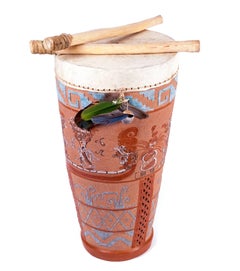
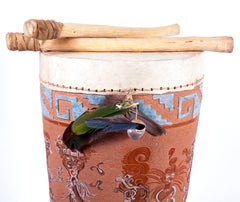
10'' Tambor San Bartolo Alebrije Sculpture Mexican Folk Art
By Pedro Joaquin Beltran Aban
Located in Jesus del Monte, MX
FREE SHIPPING TO WORLDWIDE! Artisan: Pedro Joaquin Beltran Aban CAEY 3rd. State Place Category Toys and Musical Instruments CASA DE LAS ARTESANIAS DEL ESTADO DE YUCATAN III Region...
Category

2010s Folk Art Pedro Joaquin Beltran Aban Art
Materials

Ceramic, Clay

Related Items
Rare Folk Art Hebrew Judaica Carved Gilded Wood Lions Torah Synagogue Sculpture
Located in Surfside, FL
Paint and gold paint on wood Circa early to mid 20th century. This is not signed A treasure from a proud congregation. It is a hand-carved wooden sculpture showing the Tablets of the Law flanked by two Lions of Judah. Their paws held the tablets. Their roaring mouths faced outward, protecting the commandments from threats. In a foliage design with gold and silver paint. Circa 1920-1940's. This Neoclassical, Judaic, Art Deco, Egyptian revival, Shul, Aron Kodesh hand carving, wood with gilding, Hebrew lettering ten commandments sign sculpture, was produced probably in New York. There was a show at the Folk Art Museum titled “Gilded Lions and Jeweled Horses: The Synagogue to the Carousel” That featured these antique magnificent pieces. From gilded lions to high-stepping horses, the sacred to the secular, and the Old World to the New, “Gilded Lions and Jeweled Horses: The Synagogue to the Carousel” traces the journey of Jewish woodcarvers and other artisans from Eastern and Central Europe to America and the unsung role they played in establishing a distinct Jewish culture in communities throughout the United States. The exuberant artworks stand as a testament to a history of survival and transformation and provide a surprising revelation of the link that was forged between the synagogue and the carousel as immigrant Jewish artists transferred symbolic visual elements into this vernacular American idiom. The first major study of this important aspect of the Jewish contribution to American folk art, the exhibition features approximately one hundred artworks and objects, including rare documentary photographs of Eastern European synagogue arks and carved gravestones, sacred carvings, papercuts, and carousel animals. Some of these same Jewish European carvers worked on Coney Island amusement park rides and carousel horses and other carnival and circus carvings.
Category

Early 20th Century Folk Art Pedro Joaquin Beltran Aban Art
Materials

Metal

Pair Tiki Ceramic Figures
Located in San Diego, CA
Pair of Tiki ceramic figures by artist Howard Pierce (1912-1994). Howard Pierce's artistry is cherished among collectors, a following he gained in over 5...
Category

20th Century Folk Art Pedro Joaquin Beltran Aban Art
Materials

Clay

Rare Jewish Pre War Woven Gold Textile Embroidered Antique Judaica Tallit Atara
Located in Surfside, FL
Shpanyer Arbeit, Jewish textile ritual judaic Folk Art Estimated to the 19th century or early 20th century. there are no markings. It is a hand weaving ...
Category

19th Century Folk Art Pedro Joaquin Beltran Aban Art
Materials

Metal

Rare Vesuvius Lava Stone Writing Set. torre Del Greco (naples). XIX
Located in Firenze, IT
Very Rare Vesuvius lava stone writing set. Torre del Greco (Naples). 19th century. 4 objects with small sculptures (cameos) depicting the poet Petrarch, mythological female figures, ...
Category

Mid-19th Century Folk Art Pedro Joaquin Beltran Aban Art
Materials

Stone, Brass

Rare Vesuvius Lava Stone Writing Set. torre Del Greco (naples). XIX
$431 Sale Price
20% Off
H 3.15 in W 8.67 in D 1.19 in
Original 1949 Painted Ceramic Tile Flowers Hand Painting Grandma Moses Folk Art
By Grandma Moses
Located in Surfside, FL
Dogwood Blossoms. 1949. Dimensions: Tile 6 X 6 Frame 7.75 X 7.75 inches. Provenance: The tile was in the possession of the Beers family and is from the estate. Catalogue raisonné number at Galerie St Etienne: Kallir T #87 An exceedingly rare, authenticated, and hand painted floral decorated tile by Grandma Moses herself, fired by Helen Beers. Tile dated 1949 and signed moses recto as well as 'Moses Fired by Helen C. Beers, painted by Grandma Moses, Pinewold Pottery'. There are only a handful of these known to exist, approximately five, this being one of those five, outside the private collection of Galerie St. Etienne, Manhattan NY. This listing is for the tile only. The photo archive, from the family, will be listed separately and is included here just for provenance and reference. Anna Mary Robertson Moses (1860 – 1961), or Grandma Moses, was an American folk artist. She began painting in earnest at the age of 78 and is a prominent example of a newly successful art career at an advanced age. Moses gained popularity during the 1950s, having been featured on a cover of Time Magazine in 1953. She was a subject of numerous television programs and of a 1950 Oscar-nominated biographical documentary. Her autobiography, titled My Life's History, was published in 1952. She was also awarded two honorary doctoral degrees. She embroidered pictures with yarn, until disabled by arthritis. In her 1961 obituary, The New York Times said: "The simple realism, nostalgic atmosphere and luminous color with which Grandma Moses portrayed simple farm life and rural countryside won her a wide following. She was able to capture the excitement of winter's first snow, Thanksgiving preparations and the new, young green of oncoming spring ... In person, Grandma Moses charmed wherever she went. A tiny, lively woman with mischievous gray eyes and a quick wit, she could be sharp-tongued with a sycophant and stern with an errant grandchild." Moses's work has been a subject of numerous museum exhibitions worldwide and has been extensively merchandised, such as on greeting cards. In 2006, her 1943 painting titled Sugaring Off was sold at Christie's New York for US$1.36 million, setting an auction record for the artist. Her work is fundamental for any Naive art or Americana collection. She was known as either "Mother Moses" or "Grandma Moses", and although she first exhibited as "Mrs. Moses", the press dubbed her "Grandma Moses", and the nickname stuck. As a young wife and mother, Moses was creative in her home; for example, in 1918 she used house paint to decorate a fireboard. Beginning in 1932, Moses used yarn to embroider pictures for friends and family. She created quilt objects, a form of "hobby art". Lucy R. Lippard stated in "The Word in Their Hands" that she found "hobby art" to be "an activity so 'low' on the art lists that it still ranks way below 'folk art'". She found that hobby art often involves reuse of otherwise discarded objects. Moses painted scenes of rural life from earlier days, which she called "old-timey" New England landscapes. Moses said that she would "get an inspiration and start painting; then I'll forget everything, everything except how things used to be and how to paint it so people will know how we used to live." From her works of art, she omitted features of modern life, such as tractors and telephone poles. Her early style is less individual and more realistic or primitive, with a lack of knowledge of, or perhaps rejection of, basic perspective. Initially she created simple compositions or copied existing images. As her career advanced, she created complicated, panoramic compositions of rural life. During a visit to Hoosick Falls in 1938, Louis J. Caldor, an art collector who worked as an engineer in the state of New York, saw paintings made by Moses in the window of a drug store. He bought their supply and ten more from her Eagle Bridge house for $3 or $5 each. The next year, three Grandma Moses paintings...
Category

1940s Folk Art Pedro Joaquin Beltran Aban Art
Materials

Ceramic, Paint

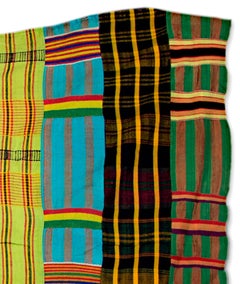
"Kente Cloth Ashanti Tribe, Ghana, " Silk and Cotton Weaving created circa 1970
Located in Milwaukee, WI
This silk and cotton fabric was made by an unknown Ashanti artist. It features green and orange accents. The Ashanti are a major ethnic group of the Akans in Ghana, a fairly new nation, barely more than 50 years old. Ghana, previously the Gold Coast, was a British colony until 1957. It is now politically separated into four main parts. Ashanti is in the center and Kumasi is the capital. The Ashanti have a wide variety of arts. Bark cloth was used for clothing before weaving was introduced. With weaving, there is cotton and silk. Women may pick cotton...
Category

1970s Folk Art Pedro Joaquin Beltran Aban Art
Materials

Cotton, Silk

Guatemala. Maschera di Baila de la Conquista. Inizio XX secolo
Located in Firenze, IT
Questa maschera guatemalteca del inizio del XX secolo, scolpita in legno e utilizzata per la danza della Riconquista (Baila de la Conquista) , raffigura vividamente un uomo europeo, ...
Category

Early 20th Century Folk Art Pedro Joaquin Beltran Aban Art
Materials

Wood, Intaglio

Guatemala. Maschera di Baila de la Conquista. Inizio XX secolo
$239 Sale Price
20% Off
H 7.49 in W 5.71 in D 4.34 in
"Kente Cloth, Ashanti Tribe Ghana, " Cotton Weaving created circa 1970
Located in Milwaukee, WI
This cotton fabric was made by an unknown Ashanti artist. It is mostly black and white. The Ashanti are a major ethnic group of the Akans in Ghana, a fairly new nation, barely more than 50 years old. Ghana, previously the Gold Coast, was a British colony until 1957. It is now politically separated into four main parts. Ashanti is in the center and Kumasi is the capital. The Ashanti have a wide variety of arts. Bark cloth was used for clothing before weaving was introduced. With weaving, there is cotton and silk. Women may pick cotton...
Category

1970s Folk Art Pedro Joaquin Beltran Aban Art
Materials

Cotton

"Wood Carving, " Wood Painted in Yellow, Red, Blue, & Green made in Indonesia
Located in Milwaukee, WI
This wood carving was created by an unknown Indonesian artist. It is approximately 17" tall by 7" wide. It was painted with abstract designs in primary colors.
Category

20th Century Folk Art Pedro Joaquin Beltran Aban Art
Materials

Wood

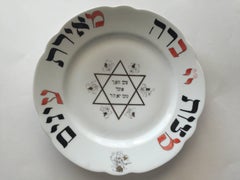
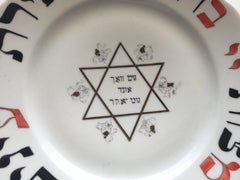
Rare European 19C Judaica Havdalah Hebrew Plate
Located in Surfside, FL
Here is a rare late 19th Century-early 20th Century painted and stenciled Jewish plate with a Yiddish greeting. A rare piece of Jewish Porcelain from the Pre War era. In a bold black...
Category

Late 19th Century Folk Art Pedro Joaquin Beltran Aban Art
Materials

Porcelain

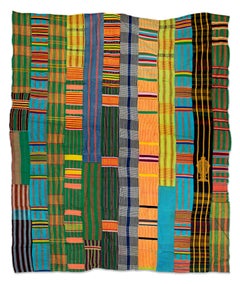
"Tribal Cloth, Ewe Ghana, " Multicolored Cotton Textile created circa 1965
Located in Milwaukee, WI
The Ewe people from Ghana are master weavers. People of means commission cloths called adanudo ("skilled/wise cloths"). Ewe adanudo textiles often display a tweed effect by twisting ...
Category

1960s Folk Art Pedro Joaquin Beltran Aban Art
Materials

Cotton

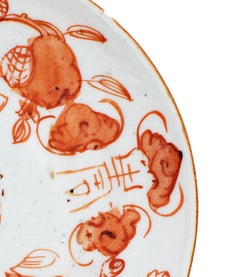
"Small Dish (Sepia Color), " Ceramic created in China circa 1860
Located in Milwaukee, WI
This ceramic dish was made by an unknown Chinese artist in the 1860s. It features sepia designs on a white background. The dish has a 5 1/4" diameter.
Category

1860s Folk Art Pedro Joaquin Beltran Aban Art
Materials

Ceramic

Pedro Joaquin Beltran Aban art for sale on 1stDibs.

Find a wide variety of authentic Pedro Joaquin Beltran Aban art available for sale on 1stDibs. You can also browse by medium to find art by Pedro Joaquin Beltran Aban in ceramic, clay and more. Not every interior allows for large Pedro Joaquin Beltran Aban art, so small editions measuring 20 inches across are available. Customers who are interested in this artist might also find the work of Kira Yustak, Jessica JH Roller, and Andrea Doss. Pedro Joaquin Beltran Aban art prices can differ depending upon medium, time period and other attributes. On 1stDibs, the price for these items starts at $1,200 and tops out at $1,200, while the average work can sell for $1,200.

Artists Similar to Pedro Joaquin Beltran Aban

Still Thinking About These?

All Recently Viewed