Peter Carl Fabergé Enamel Frames and Objects

Russian, 1846-1920

Master goldsmith Gustav Fabergé, a descendant of Huguenot emigrées, founded the House of Fabergé in St. Petersburg in 1842. While the firm is best known for creating the lavishly ornate and intricately devised Imperial Easter eggs given by the last czars to their families as annual holiday gifts, it was the most prestigious Russian luxury goods maker of the late 19th and early 20th centuries. Fabergé did a brisk trade among the lesser nobility and the merchant class, but it flourished under the guidance of Gustav’s eldest son Peter Carl Fabergé — known also as Karl Gustavovich Fabergé — who took over in 1872.

Serving the aristocracy and the well-to-do through stores in St. Petersburg, Moscow and as far afield as London, Fabergé crafted a wide range of brooches and other jewelry, clock cases, silver and myriad objets de vertu that included picture frames, cigarette cases, cufflinks and carved hardstone floral and animal figurines. Following the revolution, the firm was closed by the Soviet state in 1918.

Cosmopolitan, widely-traveled and himself a master goldsmith — he was sent on a Grand Tour in the 1860s — the younger Fabergé drew early design inspiration when he volunteered to catalogue and restore pieces in the imperial jewelry collection in the Hermitage.

Fabergé pieces based on historical jewelry from the Hermitage caught the attention of Czar Alexander III at a Moscow exhibition in 1882, and three years later he commissioned the first Imperial Easter egg as a gift for the czarina. Czar Nicholas II continued the tradition, presenting two eggs each Easter — one for his wife and one for his mother.

Relatively simple in design compared to the complex cloisonné-adorned eggs that followed, the first Fabergé egg was a white-enameled ovoid containing a gold “yolk” that held a gold hen, which in turn contained a replica of the imperial crown from which hung an egg-shaped ruby pendant.

As the appointed goldsmith to the royal court, the House of Fabergé became the darling of Russian aristocrats as well as wealthy patrons across Europe. Many and varied objets — hundreds of thousands by one count — were made to meet their demand. The firm employed some 500 craftsmen and designers when it was shuttered.

After the Russian Revolution, the Fabergé name and trademark endured a checkered passage through the 20th century.

Family members left their homeland in 1918 and set up a new business in Paris that was mainly concerned with repairing and restoring earlier-made wares. The name was adopted by an American fragrance and beauty products maker in the late 1930s, and later authorized by the family in a 1951 agreement. The trademark has been subsequently sold several times, and attached to numerous products including jewelry.

Fabergé pieces are richly redolent of a romantic past, and a source of thorough delight — for connoisseurs, true Fabergé refers to items made in the firm’s brief, golden decades from 1885 to 1917.

Collectors are advised to make a study of Fabergé works in museum collections such as the Victoria & Albert and the Royal Collection in London to gain an understanding of the quality of genuine goods made by the original firm, and then to purchase only from reputable and reliable dealers, such those at 1stDibs.

Find Peter Carl Fabergé objects and vintage jewelry on 1stDibs.

to
1
1
1
1
5
23
3
2
2
1
1
1
Creator: Peter Carl Fabergé
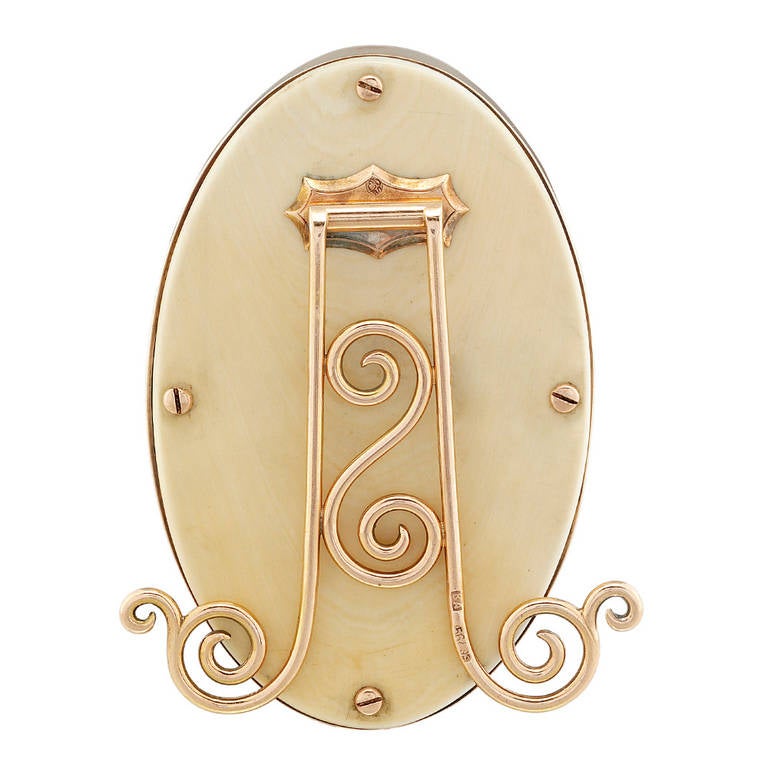
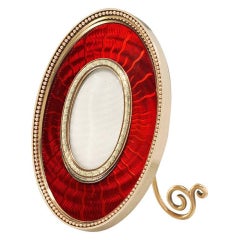
Important Faberge Red Enamel Gold Picture Frame

Important Faberge Red Enamel Gold Picture Frame

By Peter Carl Fabergé

Located in London, GB

A Faberge red enamel and gold miniature frame, the oval frame enamelled raspberry red with a sunray guilloche ground, the oval aperture with gold laurel leaf border, the outside border with gold bead decoration, fine bone back, scroll design gold easel...

Category

Late 19th Century Russian Victorian Antique Peter Carl Fabergé Enamel Frames and Objects

Materials

Yellow Gold

Related Items
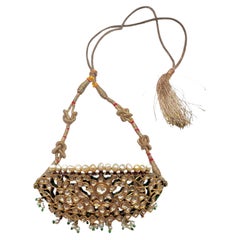
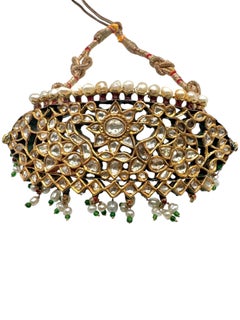
18th Century Indian Gold, Diamond & Enamel Bazuband (Armband)

18th Century Indian Gold, Diamond & Enamel Bazuband (Armband)

Located in Great Neck Plaza, NY

An exceptional and rare 18th-century Indian bazuband (armband) crafted circa 1775. This exquisite piece showcases the artistry of the period with a striking dual-sided design. One si...

Category

18th Century Indian Antique Peter Carl Fabergé Enamel Frames and Objects

Materials

Diamond, Gold, Enamel

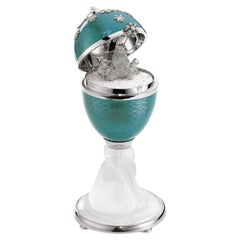
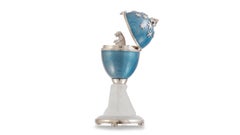
Fabergé Polar-Bear Egg, 18k White Gold, Turquoise Enamel, Diamonds, Rock Crystal

Fabergé Polar-Bear Egg, 18k White Gold, Turquoise Enamel, Diamonds, Rock Crystal

By Fabergé

Located in Pforzheim, DE

Fabergé Polar Bear-Egg Object, 18k White Gold, Turquoise Guilloché Vitreous Enamel, Diamonds 0.17 ct G VS, White Topaz, Sardonyx, Rock Crystal The Polar Bear Egg, created in 2003, captures the brilliance and clarity of the Arctic winter. The egg is made of 18k white gold and covered with multiple layers of turquoise translucent vitreous enamel on a guilloché ground, producing a luminous icy shimmer. It is crowned with a prominent conical white topaz and decorated with numerous stylised ice-crystal motifs in white gold. The opener, also shaped as an ice crystal, is set with brilliant-cut diamonds. When opened, the egg reveals a miniature scene of a mother polar bear with two cubs, modelled in 18k white gold, resting on an ice floe carved from sardonyx with its natural frosted surface resembling snow. The pedestal is made of frosted rock crystal cut with angular facets to evoke a glacier. It rests on a circular base of polished rock crystal, mounted with white-gold feet that provide stability and refinement. Background: Fabergé’s animal...

Category

Early 2000s German Edwardian Peter Carl Fabergé Enamel Frames and Objects

Materials

Topaz, 18k Gold, Enamel, White Gold

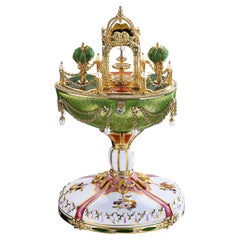
Fabergé Meissen Egg, Gold, Enamel, Diamonds, Gemstones, Porcelain, Music Box

Fabergé Meissen Egg, Gold, Enamel, Diamonds, Gemstones, Porcelain, Music Box

By Fabergé

Located in Pforzheim, DE

This Fabergé egg commemorates Carl-Peter Fabergé’s sojourn in Dresden in 1860/61 and the artistic influences he absorbed at the Green Vault. The foot is crafted of hand-painted porcelain by the State Meissen Porcelain Manufactory, designed expressly for this piece. The upper half of the egg in gold and enamel contains a miniature garden with a diamond-set well house and trees of nephrite and pearls. A dedicated Swiss music box movement by Reuge plays a minuet by Luigi Boccherini, while the well house and trees move in contrapuntal motion. The transformation of the music box movement into the motion of the well is achieved by a special mechanism with an additional spring, developed by the Swiss master watchmaker Paul Gerber...

Category

1990s German Edwardian Peter Carl Fabergé Enamel Frames and Objects

Materials

Diamond, 18k Gold, Yellow Gold, Enamel, Gold

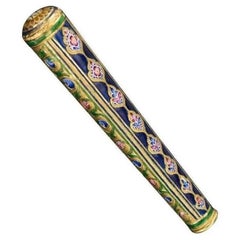
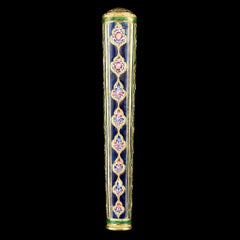
Rare Qajar Gold and Enamel Parasol Cane Handle

Rare Qajar Gold and Enamel Parasol Cane Handle

Located in Long Island City, NY

A Rare Qajar Gold and Enamel Parasol Cane Handle A very rare Persian, Qajar, polychrome enamelled gold cane handle, of cylindrical form, decorated with fl...

Category

19th Century Unknown Antique Peter Carl Fabergé Enamel Frames and Objects

Materials

Gold, Enamel

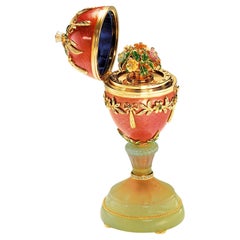
Fabergé Spring Egg, 18k Yellow Gold, Pink Guilloche Enamel, Diamonds, Bowenite

Fabergé Spring Egg, 18k Yellow Gold, Pink Guilloche Enamel, Diamonds, Bowenite

By Fabergé

Located in Pforzheim, DE

Fabergé Spring Egg, 18k Yellow Gold, Translucent Pink Guilloché Vitreous Enamel, 79 Diamonds 1.06 ct G VS, Bowenite, Rose Quartz, Citrine, Rock Crystal, Amethyst, Topaz The Spring Egg, created in 1996, is the first in the Fabergé “Four Seasons” series inspired by Antonio Vivaldi’s celebrated violin concertos. It represents the awakening of spring through a delicate fusion of colour, movement, and music. The egg’s exterior is crafted from 18k yellow gold, covered with translucent pink enamel on a guilloché ground. Its surface is richly decorated with applied golden garlands, bows, and floral motifs, accented by 79 brilliant-cut diamonds totalling 1.06 ct (G VS). The vibrant pink hue, enhanced by guilloché engraving, symbolises freshness and renewal. When opened, the egg reveals its surprise: a golden vase containing a vivid bouquet of flowers carved from semiprecious stones — citrine, rock crystal, amethyst, and topaz. Each blossom is highlighted by a sparkling diamond “dewdrop”, while the leaves are crafted in green-enamelled gold. The bouquet slowly revolves to the melody of Vivaldi’s “Spring” from The Four Seasons, played by a dedicated Swiss music movement by Reuge. The mechanism was further modified and refined by Swiss master watchmaker Paul Gerber...

Category

1990s German Belle Époque Peter Carl Fabergé Enamel Frames and Objects

Materials

Amethyst, Topaz, Rock Crystal, Citrine, Diamond, Enamel, Yellow Gold, 18...

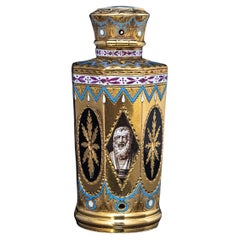
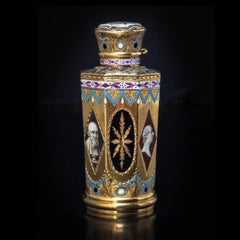
Exceptional Antique Louis XVI Gold Enamel Scent Perfume Bottle

Exceptional Antique Louis XVI Gold Enamel Scent Perfume Bottle

Located in Chicago, IL

Circa 1780 This is one of the finest enameled gold scent bottles that has ever appeared on the market. This elaborate multi-color enamel and gold scent / perfume bottle was made ...

Category

1780s Neoclassical Antique Peter Carl Fabergé Enamel Frames and Objects

Materials

Gold, Enamel

Fabergé Rose-Egg, 18k Yellow Gold, Red Enamel, 51 Diamonds, Garnet, Tourmalines

Fabergé Rose-Egg, 18k Yellow Gold, Red Enamel, 51 Diamonds, Garnet, Tourmalines

By Fabergé

Located in Pforzheim, DE

Fabergé Rose-Egg Object, 18k Yellow Gold, Aubergine Red Guilloche Vitreous Enamel, 51 Diamonds 4.36 ct G VS, Garnet, Pink Tourmalines The Rose-Egg Object, created in 2002, is one of...

Category

Early 2000s German Edwardian Peter Carl Fabergé Enamel Frames and Objects

Materials

Tourmaline, Garnet, Diamond, Enamel, Yellow Gold, 18k Gold

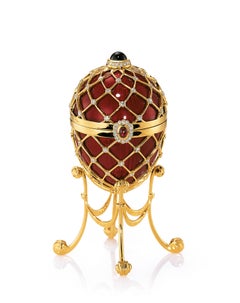
Fabergé Autumn-Egg, 18k Yellow Gold, Aubergine-Red Enamel,  Diamonds 3.34ct G VS

Fabergé Autumn-Egg, 18k Yellow Gold, Aubergine-Red Enamel, Diamonds 3.34ct G VS

By Fabergé

Located in Pforzheim, DE

Fabergé Autumn Egg, 18k Yellow Gold, Aubergine-Red Enamel, Diamonds 3.34 ct G VS, Obsidian, Agate, Ruby, Amethyst, Coral, Onyx This Fabergé egg, created in 1998 as part of the “Four...

Category

1990s German Edwardian Peter Carl Fabergé Enamel Frames and Objects

Materials

Diamond, Ruby, Emerald, Coral, Amber, Agate, Enamel, Yellow Gold, 18k Gold

Fabergé Pill Box 18K Yellow Gold Green GuillocheEnamel 12 Diamonds & 16 Rubies

Fabergé Pill Box 18K Yellow Gold Green GuillocheEnamel 12 Diamonds & 16 Rubies

By Fabergé

Located in Pforzheim, DE

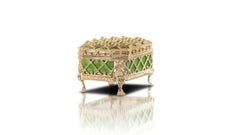
Fabergé Limited Edition Pill Box 18K Yellow Gold, Vitreous Green Enamel, Diamonds 0.30 ct G VS, Rubies 0.48ct Reference: F1104/AP/02/31/102_F1085/00/00/06/102 Brand: Fabergé Workmaster: Victor Mayer Material: 750/- yellow gold (18k) Dimensions: 52*40*32 mm Vitreous enamel: translucent green Diamonds: 12 brilliant cut diamonds total 0.30 ct, G VS Gemstone: 16 round facetted rubies total 0.48 ct Limited edition: Box: 31/100 Stand: 06/400 This piece is an original modern Fabergé creation, crafted in 18k gold by the master artisans of Victor Mayer in Pforzheim, Germany. Victor Mayer, who held the exclusive Fabergé license from 1989 to 2009 and continues to produce objects and jewelry for Fabergé to this day, is renowned for its meticulous craftsmanship and faithful adherence to the illustrious Fabergé tradition. The exterior features a vivid green guilloché enamel. Guilloché is a technique where intricate, repeating patterns are engine-turned into the underlying metal; when covered with translucent enamel and fired, these engraved patterns shimmer beneath the glass-like surface. The result is a dynamic play of light and depth, with the green enamel glowing as it highlights the geometric motif beneath. Over this enamel surface, a raised latticework of gold “struts” is set at regular intervals, creating a trellis-like pattern. At each intersection, a gemstone is placed—alternating rubies and diamonds. The rubies, with their rich red hue, and the diamonds, with their brilliant sparkle, form a lively contrast against the green enamel and warm gold tones. Each stone is carefully set into the gold to ensure secure positioning and uniform alignment. Delicate rope-like gold borders and ornamental edging around the box add further intricacy and textural interest, emphasizing the level of detail that goes into such a piece. Supported by small, individually crafted gold feet, the box stands slightly elevated, suggesting a sense of grandeur and presence. Inspired by the lavish snuff boxes and treasure boxes of the 18th and 19th centuries, such a piece might have once held finely ground tobacco for aristocrats. Today, it could serve as a pill box or simply be cherished as a precious keepsake—an objet d’art that blends historical elegance with artisanal mastery. Though small and portable, this is far more than a container. It is a miniature work of art that embodies time-honored techniques, luxurious materials, and a heritage steeped in the tradition of Old World craftsmanship. It stands as a testament to the exquisite skill of those who created it, worthy of admiration in a collection or showcased as a decorative masterpiece. The stunning contemporary 18-carat gold Faberge Pill Box...

Category

21st Century and Contemporary German Belle Époque Peter Carl Fabergé Enamel Frames and Objects

Materials

Diamond, Ruby, 18k Gold, Yellow Gold, Enamel
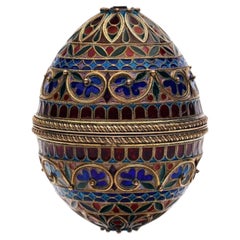
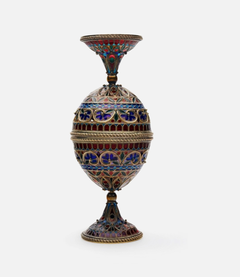
Fabergé Workmaster Imperial Russia Silver Plique-à-Jour Enamel Easter Egg Cups

Fabergé Workmaster Imperial Russia Silver Plique-à-Jour Enamel Easter Egg Cups

Located in MELBOURNE, AU

Fabergé Workmaster Silver-Gilt & Plique-à-Jour Easter Egg / Travelling Egg Cups Workmaster: Mikhail Evlampievich Perkhin (1860–1903) Imperial Russia, late XIX century - very early ...

Category

Early 1900s Russian Russian Empire Antique Peter Carl Fabergé Enamel Frames and Objects

Materials

Silver, Enamel

Fabergé Serpent-Egg Objet, 18k Yellow Gold, Pink Enamel, 36 Diamonds, 2 Emeralds

Fabergé Serpent-Egg Objet, 18k Yellow Gold, Pink Enamel, 36 Diamonds, 2 Emeralds

By Fabergé

Located in Pforzheim, DE

Fabergé Serpent-Egg Object, 18k Yellow Gold, Translucent Pink Guilloché Vitreous Enamel, Diamonds 0.36 ct, Emeralds This Fabergé egg, created in 1991, is a tribute to Fabergé’s hist...

Category

1990s German Belle Époque Peter Carl Fabergé Enamel Frames and Objects

Materials

Diamond, Emerald, Gold, 18k Gold, Yellow Gold, Enamel, White Gold

Previously Available Items
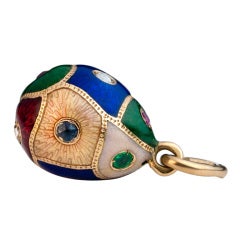
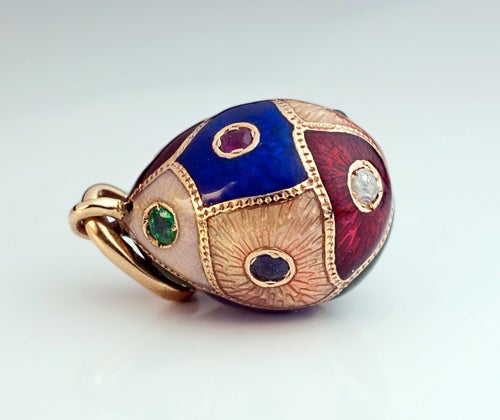
Antique Faberge Egg Pendant c. 1890

Antique Faberge Egg Pendant c. 1890

By Peter Carl Fabergé

Located in Chicago, IL

This very elaborate multi-color guilloche enamel jeweled egg was made by the Faberge's Moscow branch. The egg is set with rose cut diamonds and various-...

Category

Late 19th Century Victorian Antique Peter Carl Fabergé Enamel Frames and Objects

Peter Carl Fabergé enamel frames and objects for sale on 1stDibs.

Find a range of Peter Carl Fabergé enamel frames and objects available on 1stDibs. Each of these unique items was designed with extraordinary care, often using gold. We have 2 pieces in this collection as well as a number of other designs by this jeweler. art nouveau and Victorian are among the most popular styles of Peter Carl Fabergé enamel frames and objects available on 1stDibs. While this collection reflects work that originated over various time periods, most of these items were designed during the early 1900s. If you’re looking for additional options, many customers also consider enamel frames and objects by and Fabergé. Prices for Peter Carl Fabergé enamel frames and objects can differ depending upon gemstone, time period and other attributes. On 1stDibs, the price for these items starts at $76,961 and tops out at $92,910, while pieces like these, on average, can sell for $84,936.

Questions About Peter Carl Fabergé Enamel Frames and Objects

  • 1stDibs ExpertMarch 22, 2022
    Peter Carl Fabergé was born on May 30, 1846, in Saint Petersburg, Russia. His father, Gustav Fabergé, led the House of Fabergé and turned the company over to his son in 1870. On 1stDibs, find a selection of Fabergé jewelry.