Peter Mazel Prints and Multiples

to
1
Overall Width
to
Overall Height
to
1
1,320
1,027
920
889
1
1
1
1
1
1
1
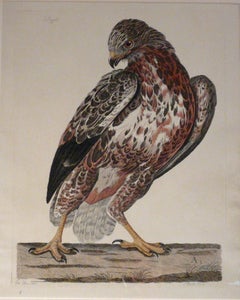
Artist: Peter Mazel
THE COMMON BUZZARD
THE COMMON BUZZARD

THE COMMON BUZZARD

By Peter Mazel

Located in Portland, ME

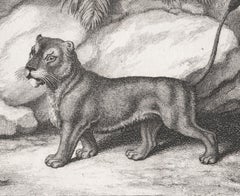
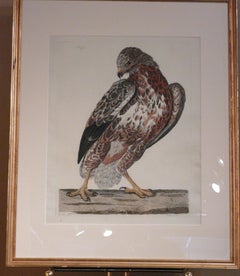
(Mazell, Peter). THE COMMON BUZZARD after Charles Collins. Engraving with hand-coloring, c. 1766. A plate from The British Zoology, London 1777. Titled in the plate, top, and with th...

Category

1760s Peter Mazel Prints and Multiples

Materials

Engraving
Related Items
Snail in a Bowl (Artist Proof inscribed to Fritz Eichenberg)

Snail in a Bowl (Artist Proof inscribed to Fritz Eichenberg)

Located in New Orleans, LA

Leonard Merchant's mezzotint, "Snail in Cup" is inscribed for fellow artist, Fritz Eichenberg. While a student at the Central School for Arts and Crafts in London, a young Leonard Marchant found an engraving rocker in a cupboard and proceeded to turn himself into a master of the painstaking art of mezzotinting. Marchant, who has died in Shrewsbury aged 70, grew up in Simonstown, the Royal Navy's enclave in South Africa. Though his first job was as a parliamentary messenger, he taught himself to paint and, aged 19, was given a one-man show in Cape Town. Fired by this success, he left for England to study painting and, he claimed, to escape the stifling home atmosphere created by his Catholic mother and aunts. (His father was killed in the second world war.) Without contacts in London, he phoned Jacob Epstein, whose recommendation resulted in a grant to study briefly at the Central School. It was later, when studying full-time at the Central, that he saw the mezzotints of the Japanese master, Yozo Hamaguchi, in a London gallery. He was hooked. Creating a mezzotint is tedious in the extreme. The copper plate must first be prepared with a "rocker" which roughens the surface. A plate may be "rocked" 30 or 40 times. The rough texture is then reduced with a burnisher and a scraper, allowing the print a range of tones from velvety black through the greys to white. Marchant's plates could be months in the making. But the technical demands were the least of his worries. In its 18th- and 19th-century heyday, mezzotint was solely a reproductive medium, for copying masters such as Reynolds and Turner. The development of photography rendered it unfashionable, and by the 1960s the technique, known as la manière anglaise, was a bygone medium. Marchant, by now a teacher in printmaking at the Central, began to create original mezzotints with a colleague, Radavan Kraguly. A perfectionist, he seemed to revel in the straitjacket procedure. Perhaps it was the metaphor of bringing darkness out of light that appealed to this straight-talking, sometimes sombre, man, who would suddenly relax and light up like a gleaming hue on one of his prints. His work was of squares and triangles with the occasional cat, black and ominous, and carefully arranged still lifes, featuring plants, a seed pod, a pot he might have bought at auction to celebrate the sale of a print. There were one-man shows, notably at the Bankside Gallery. He sold well at the Royal Academy summer exhibition, was a Florence Biennale prizewinner, spent a fellowship year at the British School in Rome, and was elected a Fellow of the Royal Society of Painter-Printmakers. But making mezzotints was not a paying job. Marchant and his South African wife...

Category

1980s Modern Peter Mazel Prints and Multiples

Materials

Mezzotint

Tigre couché à l'entrée de son antre  (Tiger Lying at the Entrance to its Lair)

Tigre couché à l'entrée de son antre (Tiger Lying at the Entrance to its Lair)

By Eugène Delacroix

Located in Middletown, NY

Etching, drypoint, and roulette on watermarked Hallines cream laid paper, 3 3/4 x 5 7/8 inches (95 x 148 mm), full margins. A very good impression of this charming image, with all of...

Category

Early 19th Century Realist Peter Mazel Prints and Multiples

Materials

Laid Paper, Drypoint, Etching

Tree with moth, caterpillar..., Plate 39, Metamorphosis Insectorum Surinamensium

Tree with moth, caterpillar..., Plate 39, Metamorphosis Insectorum Surinamensium

By Maria Sibylla Merian

Located in Middletown, NY

Metamorphosis Insectorum Surinamensium, Plate No. 39; Unidentified tree with moth, caterpillar and pupa. The Netherlands: 1705....

Category

Early 18th Century Naturalistic Peter Mazel Prints and Multiples

Materials

Watercolor, Engraving

Cocoa plant, caterpillar, ..., Plate 26, Metamorphosis Insectorum Surinamensium

Cocoa plant, caterpillar, ..., Plate 26, Metamorphosis Insectorum Surinamensium

By Maria Sibylla Merian

Located in Middletown, NY

Metamorphosis Insectorum Surinamensium, Plate No. 26; Cocoa plant, caterpillar, pupa, and butterflies. The Netherlands: 1705. En...

Category

Early 18th Century Naturalistic Peter Mazel Prints and Multiples

Materials

Watercolor, Engraving

Deerflake (The artist's first work celebrating the Solstice / deer as snowflake)

Deerflake (The artist's first work celebrating the Solstice / deer as snowflake)

By Carol Wax

Located in New Orleans, LA

Carol Wax describes her circular images as "most often quasi abstract works that refer to ancient islamic designs using the shapes and attributes of animals, in this case the deer. T...

Category

Late 20th Century American Modern Peter Mazel Prints and Multiples

Materials

Mezzotint

The Sparrow Hawk, 1942 (Histoire Naturelle - Textes de Buffon, B.342)

The Sparrow Hawk, 1942 (Histoire Naturelle - Textes de Buffon, B.342)

By Pablo Picasso

Located in Greenwich, CT

The Sparrow Hawk is an aquatint and drypoint print on chine from one of the deluxe copies of Picasso's 1942 Histoire Naturelle - Textes de Buffon series. The image size is 10.5 x 8 inches, unsigned as issued, and framed in a contemporary silver and gray moulding. One of about 36 prints that exist with Picasso's remarqued title in French, from the edition of 262 (there were 226 portfolios, some with additional sets on varying papers). Catalogue - Cramer #37 The exceptional etchings from Picasso’s Histoire Naturelle – Textes de Buffon are a masterful combination of sugar-lift aquatint and drypoint, showcasing a full range of gray tonalities. The etchings of animals, birds and insects are considered some of the most beautiful and most unusual examples of Picasso’s graphic work. Roger Lacourière, Picasso’s master printer, pulled the prints for each etching between 1939-1942. It was Lacourière who taught Picasso the sugar-lift aquatint technique which allowed him to mimic the effect of brushstrokes in these etched images. Picasso first explored the technique in his plates for the Vollard Suite, but it was in the creation of the Buffon images that he fully realized its stunning, painterly potential. For the edition, 226 portfolios were produced with the first thirty-six counting as deluxe compilations. These rare deluxe sets were on diverse papers (chine, japon or vergé ancien) and each included a complete additional suite showing Picasso’s title remarques along the bottom. As such, the remarqued versions of the prints are quite rare with just thirty-six of each produced for the edition (with the exception of The Wolf which is never remarqued – the image always fills the entire etching plate). These prints are based on the writings of French naturalist Georges-Louis Leclerc, Comte de Buffon, who extensively documented the natural world in his monumental work Histoire Naturelle. Picasso’s association with the project to illustrate parts of the Buffon came during a tumultuous time in European history – the prelude to, and early years of, World War II. As the continent was ravaged, Picasso lived through the disaster in Paris, which the Germans occupied in 1940. These prints could be seen as a political statement – Picasso channeling his artistic expression into a form of resistance art...

Category

20th Century Modern Peter Mazel Prints and Multiples

Materials

Drypoint, Aquatint

The Vulture. 1942 (Histoire Naturelle - Textes de Buffon, B.341)

The Vulture. 1942 (Histoire Naturelle - Textes de Buffon, B.341)

By Pablo Picasso

Located in Greenwich, CT

The Vulture is an aquatint and drypoint print on chine from one of the deluxe copies of Picasso's 1942 Histoire Naturelle - Textes de Buffon series. The image size is 10.6 x 8 inches, unsigned as issued, and framed in a contemporary silver and gray moulding. One of about 36 prints that exist with Picasso's remarqued title in French, from the edition of 262 (there were 226 portfolios, some with additional sets on varying papers). Catalogue - Cramer #37 The exceptional etchings from Picasso’s Histoire Naturelle – Textes de Buffon are a masterful combination of sugar-lift aquatint and drypoint, showcasing a full range of gray tonalities. The etchings of animals, birds and insects are considered some of the most beautiful and most unusual examples of Picasso’s graphic work. Roger Lacourière, Picasso’s master printer, pulled the prints for each etching between 1939-1942. It was Lacourière who taught Picasso the sugar-lift aquatint technique which allowed him to mimic the effect of brushstrokes in these etched images. Picasso first explored the technique in his plates for the Vollard Suite, but it was in the creation of the Buffon images that he fully realized its stunning, painterly potential. For the edition, 226 portfolios were produced with the first thirty-six counting as deluxe compilations. These rare deluxe sets were on diverse papers (chine, japon or vergé ancien) and each included a complete additional suite showing Picasso’s title remarques along the bottom. As such, the remarqued versions of the prints are quite rare with just thirty-six of each produced for the edition (with the exception of The Wolf which is never remarqued – the image always fills the entire etching plate). These prints are based on the writings of French naturalist Georges-Louis Leclerc, Comte de Buffon, who extensively documented the natural world in his monumental work Histoire Naturelle. Picasso’s association with the project to illustrate parts of the Buffon came during a tumultuous time in European history – the prelude to, and early years of, World War II. As the continent was ravaged, Picasso lived through the disaster in Paris, which the Germans occupied in 1940. These prints could be seen as a political statement – Picasso channeling his artistic expression into a form of resistance art...

Category

20th Century Modern Peter Mazel Prints and Multiples

Materials

Drypoint, Aquatint

4 plates from The Wondrous Transformation of Caterpillars & their Strange Diet..

4 plates from The Wondrous Transformation of Caterpillars & their Strange Diet..

By Maria Sibylla Merian

Located in Middletown, NY

Four plates from The Wondrous Transformation of Caterpillars and their Strange Diet of Flowers. “Wolfsmelk Rupsen;" “Wolfsmilch, Raupe und Schmetterling" Amsterdam: J F Bernard, 1730. Each an engraving with hand coloring in watercolor and gouache printed on one sheet of watermarked Honig cream laid paper, each measures 6 1/4 x 5 inches (157 x 121 mm), sheet measures 20 5/8 x 14 inches (522 x 355 mm), full margins. With handling creases in the lower right sheet quadrant, as well as minor, loose cockling, otherwise in very good condition. The colors are superb with exceptionally fresh and bright saturation. Engraved between 1679 and 1683, printed 1730. Plates included: No.1:I; No. 2:1; II & III. MARIA SIBYLLA MERIAN was one of the most highly respected entomologists of the 17th century, and remains today one of the field's most significant figures. A German-born naturalist and scientific illustrator, she reared herself on the study of caterpillars, and made tremendous contributions to the knowledge of the life cycles of numerous species. Until her detailed and careful study of the process of metamorphosis it was thought that insects were "born of mud," through spontaneous generation. Trained as a miniature painter by her stepfather, she published her first book of illustrations in 1675, at the age of 28. In 1679, Merian published the first volume of the two-volume series on caterpillars, The Wondrous Transformation of Caterpillars and their Strange Diet of Flowers; the second volume followed in 1683. Each volume contained 50 plates that she engraved and etched. In 1699, Merian traveled to Dutch Guiana...

Category

Early 18th Century Naturalistic Peter Mazel Prints and Multiples

Materials

Watercolor, Engraving

The Donkey, 1942 (Histoire Naturelle - Textes de Buffon, B.329)

The Donkey, 1942 (Histoire Naturelle - Textes de Buffon, B.329)

By Pablo Picasso

Located in Greenwich, CT

The Donkey is an aquatint and drypoint print on chine from one of the deluxe copies of Picasso's 1942 Histoire Naturelle - Textes de Buffon series. The image size is 10.5 x 8 inches,...

Category

20th Century Modern Peter Mazel Prints and Multiples

Materials

Drypoint, Aquatint

Bols de Fruit, by Laurent Schkolnyk

Bols de Fruit, by Laurent Schkolnyk

By Karl Wirsum

Located in Palm Springs, CA

Mezzotint on Lana paper Signed and numbered in pencil Image Size: 4.63 x 3.5 inches Edition : 90 copies in mint condition Laurent Schkolnyk is internationally recognized as a maste...

Category

Early 2000s Contemporary Peter Mazel Prints and Multiples

Materials

Mezzotint

Harlequin Humming-Bird, 18th century bird engraving by John Latham

Harlequin Humming-Bird, 18th century bird engraving by John Latham

By John Latham

Located in Melbourne, Victoria

Copper-line engraving. 1781. From John Latham's 'General Synopsis of Birds' 1781-1785, and its Supplements. Plate number top left. Laid paper. John Latham was the leading English or...

Category

Late 18th Century Naturalistic Peter Mazel Prints and Multiples

Materials

Engraving
Peter Mazel prints and multiples for sale on 1stDibs.

Find a wide variety of authentic Peter Mazel prints and multiples available for sale on 1stDibs. You can also browse by medium to find art by Peter Mazel in engraving and more. Not every interior allows for large Peter Mazel prints and multiples, so small editions measuring 20 inches across are available. Customers who are interested in this artist might also find the work of Francois Nicolas Martinet, Bernard Picart, Georges-Louis Leclerc, and Comte de Buffon. Peter Mazel prints and multiples prices can differ depending upon medium, time period and other attributes. On 1stDibs, the price for these items starts at $450 and tops out at $450, while the average work can sell for $450.