Philip Little Art

American, 1857-1942
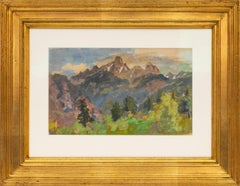
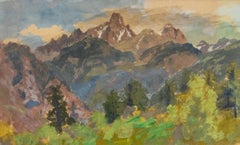
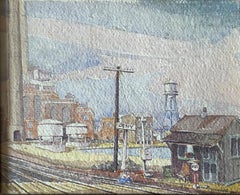
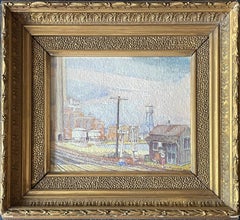
Philip Little was born in Swampscott, MA September 6th , 1857 the son of James Lovell and Julia Augusta Cook. He attended M.I.T. intending to go into business until contracting Typhoid Fever (1875-1876). From 1877-1880 he attended Lowell School of Design at the Institute of Technology and worked in lithograph department of Forbes Lithograph Company of Boston. From 1881-1882 he and Frank W. Benson were students at Boston's Museum School and the following year he exhibited for the first time at the Boston Art Club (April-May) and married Lucretia Shephard Jackson. Little and Benson lived at 2 Chestnut Street, Salem (MA) beginning in 1886 and they were neighbors in 1931. Little was influenced by the work of Frank W. Benson as much as Benson was of his impressionistic canvases and two often painted outdoors together. From 1887-1901 Little served in the Massachusetts National Guard attaining the rank of General with the Second Corps Cadets. Civic minded, little he was elected to the Salem Board of Aldermen (1892, 1893), was a member of the School Board (1898-1912) and the Essex Institute. Little actively exhibited throughout the U.S. and Europe and he maintained close ties to all the members of the Boston school of painting. His light-filled landscapes and scenes of New England harbors and wharves, Green Island (Sheepscot River), Maine storms and boating parties, trout streams and lobster fishermen are close in style to that of his life long friend Frank W. Benson. Art Critic A.J. Philpott called Little “one of the best landscape painters in America.”
to
1
Overall Width
to
Overall Height
to
1
1
1
1
1
1
1
1
1
1
1
1
1
10,369
2,808
2,500
1,411
1
Artist: Philip Little
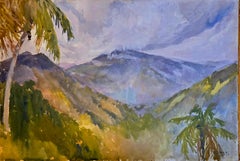
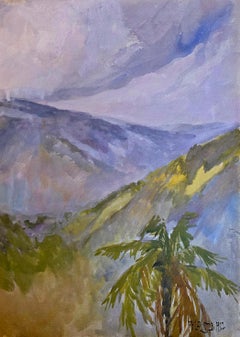
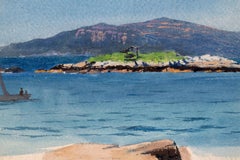
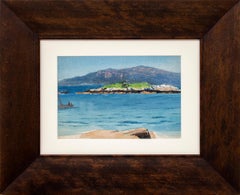
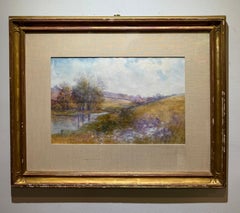
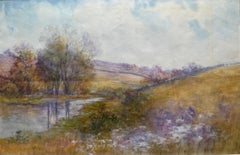
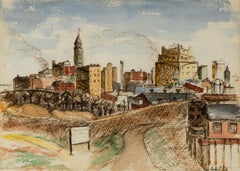
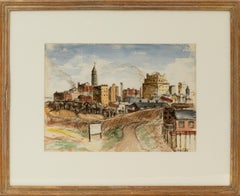
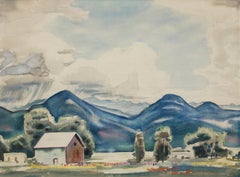
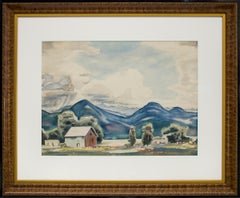
Looking West from Richmond Hill, Port Antonio, Jamaica

Looking West from Richmond Hill, Port Antonio, Jamaica

By Philip Little

Located in North Clarendon, VT

Fantastic Philip Little watercolor of Jamaica from 1922. Watercolor paper mounted on board, signed and dated lower right. Philip Little was a prominent Salem, Massachusetts, artist ...

Category

1920s American Impressionist Philip Little Art

Materials

Watercolor

Related Items
Colorado Mountain Landscape with River, 1890s Watercolor Painting

Colorado Mountain Landscape with River, 1890s Watercolor Painting

By Charles Partridge Adams

Located in Denver, CO

This original late 19th-century watercolor painting beautifully captures a classic Colorado mountain landscape by iconic early 20th century artist, Charles Partridge Adams. The compo...

Category

1980s American Impressionist Philip Little Art

Materials

Watercolor

Charles Partridge Adams California Coastal Watercolor, American Impressionist

Charles Partridge Adams California Coastal Watercolor, American Impressionist

By Charles Partridge Adams

Located in Denver, CO

This exquisite California coastal watercolor by American Impressionist Charles Partridge Adams (1858–1942) captures the serene beauty of the shoreline in vibrant hues of blue, green,...

Category

1920s American Impressionist Philip Little Art

Materials

Watercolor

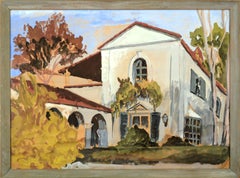
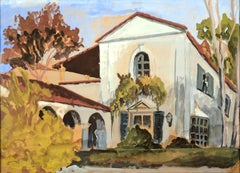
Mid Century California Mission Landscape

Mid Century California Mission Landscape

$600Sale Price|20% Off

H 18.5 in W 25 in D 1 in

Mid Century California Mission Landscape

Located in Soquel, CA

Beautiful mid century landscape of a historic California mission, highlighting its iconic architectural details such as a columned arches, white was...

Category

Mid-20th Century American Impressionist Philip Little Art

Materials

Paper, Gouache, Cardboard

METCALF American Impressionist Landscape Watercolor

METCALF American Impressionist Landscape Watercolor

By Willard LeRoy Metcalf

Located in New York, NY

Willard Metcalf (1858-1925) was an important American Impressionist, member of the American Watercolor Society, and teaching at Cooper Union and the Art Student's League. This comp...

Category

Early 20th Century American Impressionist Philip Little Art

Materials

Watercolor

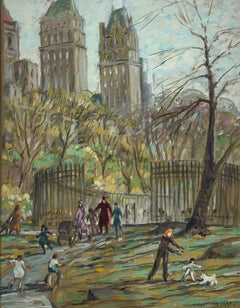
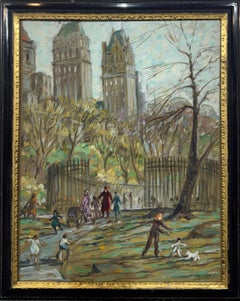
Central Park, Cityscape with Figures by American Impressionist Painter

Central Park, Cityscape with Figures by American Impressionist Painter

Located in Doylestown, PA

"Central Park" is a figurative cityscape of New York City by American Impressionist painter Henry Ives Cobb Sr. The painting is a 19 x 15 inches, gouache on board, framed, signed and...

Category

1950s American Impressionist Philip Little Art

Materials

Gouache, Board

Charles Partridge Adams, Colorado Landscape Gouache, 20th-Century Plein Air Art

Charles Partridge Adams, Colorado Landscape Gouache, 20th-Century Plein Air Art

By Charles Partridge Adams

Located in Denver, CO

This original circa 1910s plein air field study by celebrated Colorado landscape painter Charles Partridge Adams (1858–1942) beautifully captures the tranquil majesty of the Rocky Mo...

Category

1910s American Impressionist Philip Little Art

Materials

Gouache

"Train Station, " Max Kuehne, Industrial City Scene, American Impressionism

"Train Station, " Max Kuehne, Industrial City Scene, American Impressionism

By Max Kuehne

Located in New York, NY

Max Kuehne (1880 - 1968) Train Station, circa 1910 Watercolor on paper 8 1/4 x 10 1/4 inches Signed lower right Provenance: Private Collection, Illinois Max Kuehne was born in Halle, Germany on November 7, 1880. During his adolescence the family immigrated to America and settled in Flushing, New York. As a young man, Max was active in rowing events, bicycle racing, swimming and sailing. After experimenting with various occupations, Kuehne decided to study art, which led him to William Merritt Chase's famous school in New York; he was trained by Chase himself, then by Kenneth Hayes Miller. Chase was at the peak of his career, and his portraits were especially in demand. Kuehne would have profited from Chase's invaluable lessons in technique, as well as his inspirational personality. Miller, only four years older than Kuehne, was another of the many artists to benefit from Chase's teachings. Even though Miller still would have been under the spell of Chase upon Kuehne's arrival, he was already experimenting with an aestheticism that went beyond Chase's realism and virtuosity of the brush. Later Miller developed a style dependent upon volumetric figures that recall Italian Renaissance prototypes. Kuehne moved from Miller to Robert Henri in 1909. Rockwell Kent, who also studied under Chase, Miller, and Henri, expressed what he felt were their respective contributions: "As Chase had taught us to use our eyes, and Henri to enlist our hearts, Miller called on us to use our heads." (Rockwell Kent, It's Me O Lord: The Autobiography of Rockwell Kent. New York: Dodd, Mead and Co., 1955, p. 83). Henri prompted Kuehne to search out the unvarnished realities of urban living; a notable portion of Henri's stylistic formula was incorporated into his work. Having received such a thorough foundation in art, Kuehne spent a year in Europe's major art museums to study techniques of the old masters. His son Richard named Ernest Lawson as one of Max Kuehne's European traveling companions. In 1911 Kuehne moved to New York where he maintained a studio and painted everyday scenes around him, using the rather Manet-like, dark palette of Henri. A trip to Gloucester during the following summer engendered a brighter palette. In the words of Gallatin (1924, p. 60), during that summer Kuehne "executed some of his most successful pictures, paintings full of sunlight . . . revealing the fact that he was becoming a colorist of considerable distinction." Kuehne was away in England the year of the Armory Show (1913), where he worked on powerful, painterly seascapes on the rocky shores of Cornwall. Possibly inspired by Henri - who had discovered Madrid in 1900 then took classes there in 1906, 1908 and 1912 - Kuehne visited Spain in 1914; in all, he would spend three years there, maintaining a studio in Granada. He developed his own impressionism and a greater simplicity while in Spain, under the influence of the brilliant Mediterranean light. George Bellows convinced Kuehne to spend the summer of 1919 in Rockport, Maine (near Camden). The influence of Bellows was more than casual; he would have intensified Kuehne's commitment to paint life "in the raw" around him. After another brief trip to Spain in 1920, Kuehne went to the other Rockport (Cape Ann, Massachusetts) where he was accepted as a member of the vigorous art colony, spearheaded by Aldro T. Hibbard. Rockport's picturesque ambiance fulfilled the needs of an artist-sailor: as a writer in the Gloucester Daily Times explained, "Max Kuehne came to Rockport to paint, but he stayed to sail." The 1920s was a boom decade for Cape Ann, as it was for the rest of the nation. Kuehne's studio in Rockport was formerly occupied by Jonas Lie. Kuehne spent the summer of 1923 in Paris, where in July, André Breton started a brawl as the curtain went up on a play by his rival Tristan Tzara; the event signified the demise of the Dada movement. Kuehne could not relate to this avant-garde art but was apparently influenced by more traditional painters — the Fauves, Nabis, and painters such as Bonnard. Gallatin perceived a looser handling and more brilliant color in the pictures Kuehne brought back to the States in the fall. In 1926, Kuehne won the First Honorable Mention at the Carnegie Institute, and he re-exhibited there, for example, in 1937 (Before the Wind). Besides painting, Kuehne did sculpture, decorative screens, and furniture work with carved and gilded molding. In addition, he designed and carved his own frames, and John Taylor Adams encouraged Kuehne to execute etchings. Through his talents in all these media he was able to survive the Depression, and during the 1940s and 1950s these activities almost eclipsed his easel painting. In later years, Kuehne's landscapes and still-lifes show the influence of Cézanne and Bonnard, and his style changed radically. Max Kuehne died in 1968. He exhibited his work at the National Academy of Design, the Art Institute of Chicago, the Carnegie Institute in Pittsburgh, the Memorial Art Gallery of the University of Rochester, and in various New York City galleries. Kuehne's works are in the following public collections: the Detroit Institute of Arts (Marine Headland), the Whitney Museum (Diamond Hill...

Category

1910s American Impressionist Philip Little Art

Materials

Paper, Watercolor
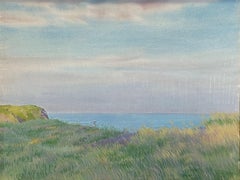
1950s Denver Skyline Painting – Graphite & Watercolor Colorado Cityscape Art

1950s Denver Skyline Painting – Graphite & Watercolor Colorado Cityscape Art

Located in Denver, CO

A captivating midcentury cityscape titled "Denver Skyline", this original 1950s watercolor and graphite painting offers a rare industrial-era view of lower downtown Denver, Colorado....

Category

1950s American Impressionist Philip Little Art

Materials

Watercolor, Graphite

1890s Watercolor Landscape – Sunrise & Spring Blossoms Over Platte River

1890s Watercolor Landscape – Sunrise & Spring Blossoms Over Platte River

By Charles Partridge Adams

Located in Denver, CO

An original 1891 watercolor painting by noted American landscape artist Charles Partridge Adams, titled "Spring Blossoms." This serene composition captures the Platte River at sunris...

Category

1890s American Impressionist Philip Little Art

Materials

Watercolor

"Monhegan Island, Maine, " Edward Dufner, American Impressionism Landscape View

"Monhegan Island, Maine, " Edward Dufner, American Impressionism Landscape View

By Edward Dufner

Located in New York, NY

Edward Dufner (1872 - 1957) Monhegan Island, Maine Watercolor on paper Sight 16 x 20 inches Signed lower right With a long-time career as an art teacher and painter of both 'light' and 'dark', Edward Dufner was one of the first students of the Buffalo Fine Arts Academy to earn an Albright Scholarship to study painting in New York. In Buffalo, he had exchanged odd job work for drawing lessons from architect Charles Sumner. He also earned money as an illustrator of a German-language newspaper, and in 1890 took lessons from George Bridgman at the Buffalo Fine Arts Academy. In 1893, using his scholarship, Dufner moved to Manhattan and enrolled at the Art Students League where he studied with Henry Siddons Mowbray, figure painter and muralist. He also did illustration work for Life, Harper's and Scribner's magazines. Five years later, in 1898, Dufner went to Paris where he studied at the Academy Julian with Jean-Paul Laurens and privately with James McNeill Whistler. Verification of this relationship, which has been debated by art scholars, comes from researcher Nancy Turk who located at the Smithsonian Institution two 1927 interviews given by Dufner. Turk wrote that Dufner "talks in detail about Whistler, about how he prepared his canvasas and about numerous pieces he painted. . . A great read, the interview puts to bed" the ongoing confusion about whether or not he studied with Whistler. During his time in France, Dufner summered in the south at Le Pouleu with artists Richard Emil Miller...

Category

Early 20th Century American Impressionist Philip Little Art

Materials

Paper, Watercolor
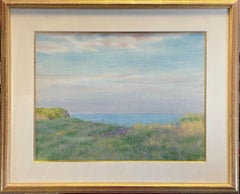
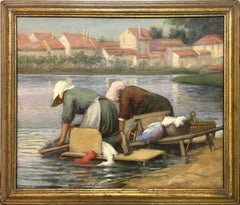
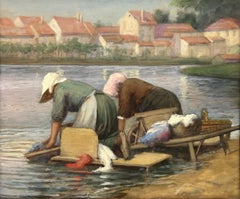
Multi-Exhibition Labels FRENCH IMPRESSIONIST Washerwoman Banks of Loing River

Multi-Exhibition Labels FRENCH IMPRESSIONIST Washerwoman Banks of Loing River

Located in New York, NY

Here I’m selling a very interesting work by an Important female American impressionist painter Lee Lufkin Kaula (1865-1957). Painting has Four Different EXHIBITION Labels: 1. Boston Art Club Exhibition 2. Pennsylvania Academy Fine Arts 1907 Exhibition 3. Poland Spring Gallery Exhibition 1908 4. The Arts Student League Of New York I Purchased this painting a few weeks ago as an unsigned impressionist...

Category

Early 1900s American Impressionist Philip Little Art

Materials

Gouache

Philip Little art for sale on 1stDibs.

Find a wide variety of authentic Philip Little art available for sale on 1stDibs. Not every interior allows for large Philip Little art, so small editions measuring 38 inches across are available. Customers who are interested in this artist might also find the work of Henry Bayley Snell, Hayley Lever, and Paul Bernard King.