Pierre Alechinsky Art

Belgian, b. 1927
Pierre Alechinsky is a belgian painter born in 1927 in Brussels. Attracted by painting, Pierre Alechinsky begins aged 17 in the Ecole Nationale Supérieure d'Architecture et des Arts Décoratifs de la Cambre in Brussels. He was involved in the Cobra artistic movement with Karel Appel and Asger Jorn and organised exhibitions. In the early fifties, he learnt the art of engraving with Stanley William Hayter and also Japanese calligraphy. He met Giacometti, Bram Van Velde, and Victor Brauner. In 1955, he signs for his first exhibition at the Palais des Beaux-Arts de Bruxelles, then at the Institute of Contemporary Arts of London. His artworks, prints, lithographies, engravings and books illustrations can also be found in the USA, in France, in the Netherlands, Denmark and Germany. On and after 1965, fascinated by the Oriental calligraphy, he uses acrylic painting, ink, different types of paper as bills, and gets carried away by action painting technique. During the eighties, he became for four years a teacher of plastic arts at the Ecole Nationale Supérieure des Beaux Arts. Also a writer, Pierre Alechinsky published many books including «Titres et pains perdus », « Baluchon et ricochets », and in 2004 «Des deux mains ». He lives and works in France.
to
3
6
4
76
62
32
21
13
9
3
3
Period: 1960s
original lithograph

original lithograph

By Pierre Alechinsky

Located in Henderson, NV

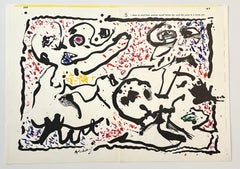
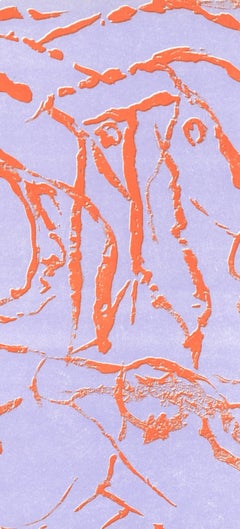
Medium: original lithograph. Printed in 1960 for the art revue XXe Siecle (No. 14) and published in Paris by San Lazzaro. Size: 12 1/8 x 9 1/8 inches (308 x 230 mm). Not signed. Con...

Category

1960s Pierre Alechinsky Art

Materials

Lithograph

original lithograph

original lithograph

By Pierre Alechinsky

Located in Henderson, NV

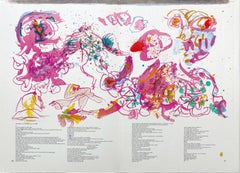
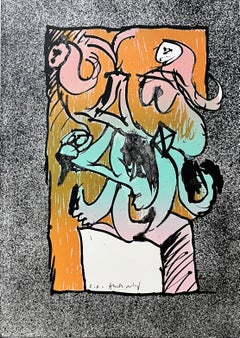
Medium: original lithograph (in two sections). Printed in 1964 and published by Eberhard Kornfeld for the 1 Cent Life portfolio in an edition of 2000. Size: 16 1/4 x 22 3/4 inches (4...

Category

1960s Pierre Alechinsky Art

Materials

Lithograph

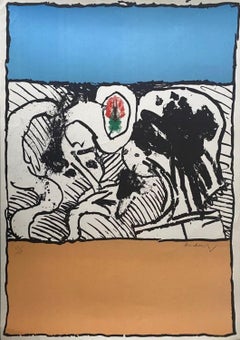
"Untitled": Lithograph from One Cent Life

"Untitled": Lithograph from One Cent Life

By Pierre Alechinsky

Located in Austin, TX

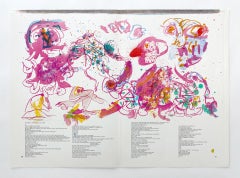
Artist: Pierre Alechinsky Title: "Untitled": Lithograph from One Cent Life Year: 1964 Medium: 2 page lithograph, as printed from One Cent Life As printed with Walasse Ting poem, fro...

Category

1960s Expressionist Pierre Alechinsky Art

Materials

Lithograph

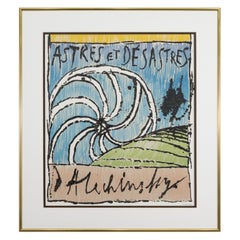
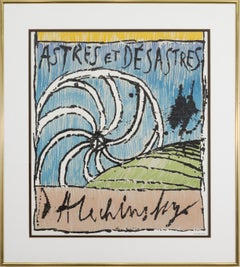
Astres et désastres
Astres et désastres

Astres et désastres

By Pierre Alechinsky

Located in OPOLE, PL

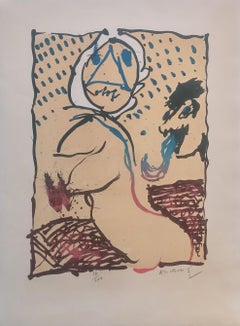
Pierre Alechinsky (1927) - Astres et désastres Etching from 1969. The edition 15 of 99. Dimensions of work: 52 x 67 cm. Hand signed. The work is in Excellent condition.

Category

1960s Surrealist Pierre Alechinsky Art

Materials

Etching

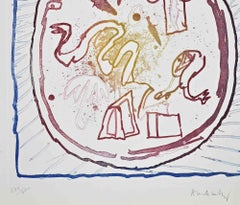
LA TAILLE DOUCE

LA TAILLE DOUCE

By Pierre Alechinsky

Located in Aventura, FL

Lithograph in colors on paper. Hand signed and numbered in pencil. From the edition of 100. Artwork is in excellent condition. Certificate of Authenticity included. All reasonabl...

Category

1960s Abstract Expressionist Pierre Alechinsky Art

Materials

Paper, Lithograph

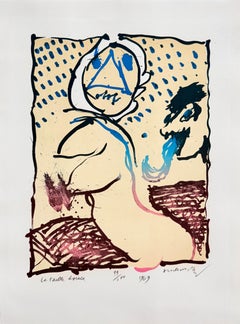
La taille douce
La taille douce

La taille douce

By Pierre Alechinsky

Located in OPOLE, PL

Pierre Alechinsky (1927) - La taille douce Lithograph from 1969. The edition of 99/100. Dimensions of work: 62 x 44 cm. Hand signed. Reference: Rivière 384. The work is in Good...

Category

1960s Surrealist Pierre Alechinsky Art

Materials

Lithograph

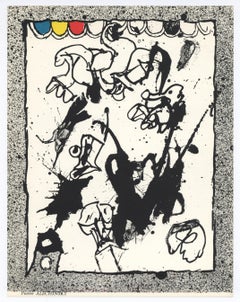
original lithograph

original lithograph

By Pierre Alechinsky

Located in Henderson, NV

Medium: original lithograph. Printed in Paris in 1967 by Clot, Bramsen et Georges and issued in an edition of 2500 for "Les Temps Situationistes" (The Situationist Times -- a radical...

Category

1960s Pierre Alechinsky Art

Materials

Lithograph

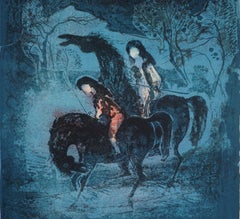
Pierre Alechinsky, Untitled, from XXe Siecle, 1960

Pierre Alechinsky, Untitled, from XXe Siecle, 1960

By Pierre Alechinsky

Located in Southampton, NY

This exquisite lithograph by Pierre Alechinsky (born 1927), titled Sans titre (Untitled), from the album XXe Siecle, Nouvelle serie, XXIIe Annee, N°14, Juin 1960, originates from the...

Category

1960s Modern Pierre Alechinsky Art

Materials

Lithograph

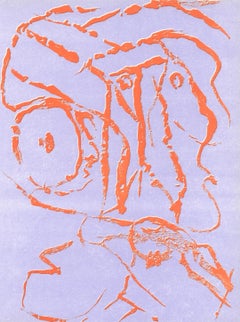
Digitale
Digitale

Digitale

By Pierre Alechinsky

Located in OPOLE, PL

Pierre Alechinsky (1927) - Digitale Lithograph from 1969. The edition ea. Dimensions of work: 44 x 30.5 cm. Hand signed. Publisher: Atelier Clot, Paris. The work is in Excellen...

Category

1960s Surrealist Pierre Alechinsky Art

Materials

Lithograph

Bœuf gros sel
Bœuf gros sel

Bœuf gros sel

By Pierre Alechinsky

Located in OPOLE, PL

Pierre Alechinsky (1927) - Bœuf gros sel Lithograph from 1969. The edition of 232/300. Dimensions of work: 44 x 30.5 cm. Hand signed. Publisher: Atelier Clot, Paris. The work i...

Category

1960s Surrealist Pierre Alechinsky Art

Materials

Lithograph

Related Items
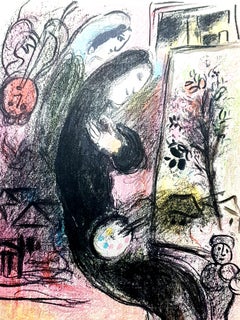
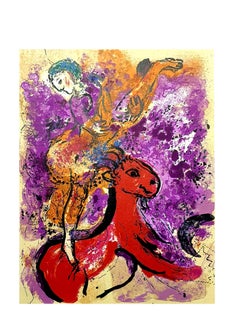
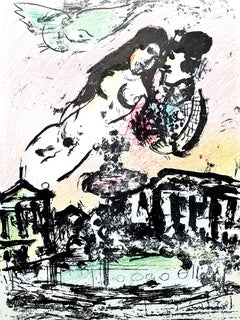
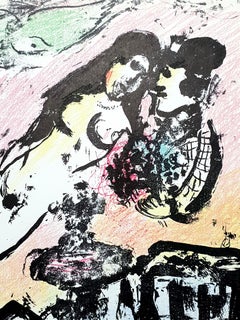
Marc Chagall - Inspiration - Original Lithograph from "Chagall Lithographe" v. 2

Marc Chagall - Inspiration - Original Lithograph from "Chagall Lithographe" v. 2

By Marc Chagall

Located in Collonge Bellerive, Geneve, CH

Marc Chagall Original Lithograph from Chagall Lithographe 1957-1962. VOLUME II. 1963 Dimensions: 32 x 24 cm From the unsigned edition of 10000 copies without margins Reference: Mourlot 398 Condition : Excellent Marc Chagall (born in 1887) Marc Chagall was born in Belarus in 1887 and developed an early interest in art. After studying painting, in 1907 he left Russia for Paris, where he lived in an artist colony on the city’s outskirts. Fusing his own personal, dreamlike imagery with hints of the fauvism and cubism popular in France at the time, Chagall created his most lasting work—including I and the Village (1911)—some of which would be featured in the Salon des Indépendants exhibitions. After returning to Vitebsk for a visit in 1914, the outbreak of WWI trapped Chagall in Russia. He returned to France in 1923 but was forced to flee the country and Nazi persecution during WWII. Finding asylum in the U.S., Chagall became involved in set and costume design before returning to France in 1948. In his later years, he experimented with new art forms and was commissioned to produce numerous large-scale works. Chagall died in St.-Paul-de-Vence in 1985. The Village Marc Chagall was born in a small Hassidic community on the outskirts of Vitebsk, Belarus, on July 7, 1887. His father was a fishmonger, and his mother ran a small sundries shop in the village. As a child, Chagall attended the Jewish elementary school, where he studied Hebrew and the Bible, before later attending the Russian public school. He began to learn the fundamentals of drawing during this time, but perhaps more importantly, he absorbed the world around him, storing away the imagery and themes that would feature largely in most of his later work. At age 19 Chagall enrolled at a private, all-Jewish art school and began his formal education in painting, studying briefly with portrait artist Yehuda Pen. However, he left the school after several months, moving to St. Petersburg in 1907 to study at the Imperial Society for the Protection of Fine Arts. The following year, he enrolled at the Svanseva School, studying with set designer Léon Bakst, whose work had been featured in Sergei Diaghilev's Ballets Russes. This early experience would prove important to Chagall’s later career as well. Despite this formal instruction, and the widespread popularity of realism in Russia at the time, Chagall was already establishing his own personal style, which featured a more dreamlike unreality and the people, places and imagery that were close to his heart. Some examples from this period are his Window Vitebsk (1908) and My Fianceé with Black Gloves (1909), which pictured Bella Rosenfeld, to whom he had recently become engaged. The Beehive Despite his romance with Bella, in 1911 an allowance from Russian parliament member and art patron Maxim Binaver enabled Chagall to move to Paris, France. After settling briefly in the Montparnasse neighborhood, Chagall moved further afield to an artist colony known as La Ruche (“The Beehive”), where he began to work side by side with abstract painters such as Amedeo Modigliani and Fernand Léger as well as the avant-garde poet Guillaume Apollinaire. At their urging, and under the influence of the wildly popular fauvism and cubism, Chagall lightened his palette and pushed his style ever further from reality. I and the Village (1911) and Homage to Apollinaire (1912) are among his early Parisian works, widely considered to be his most successful and representative period. Though his work stood stylistically apart from his cubist contemporaries, from 1912 to 1914 Chagall exhibited several paintings at the annual Salon des Indépendants exhibition, where works by the likes of Juan Gris, Marcel Duchamp and Robert Delaunay were causing a stir in the Paris art world. Chagall’s popularity began to spread beyond La Ruche, and in May 1914 he traveled to Berlin to help organize his first solo exhibition, at Der Sturm Gallery. Chagall remained in the city until the highly acclaimed show opened that June. He then returned to Vitebsk, unaware of the fateful events to come. War, Peace and Revolution In August 1914 the outbreak of World War I precluded Chagall’s plans to return to Paris. The conflict did little to stem the flow of his creative output, however, instead merely giving him direct access to the childhood scenes so essential to his work, as seen in paintings such as Jew in Green (1914) and Over Vitebsk (1914). His paintings from this period also occasionally featured images of the war’s impact on the region, as with Wounded Soldier (1914) and Marching (1915). But despite the hardships of life during wartime, this would also prove to be a joyful period for Chagall. In July 1915 he married Bella, and she gave birth to a daughter, Ida, the following year. Their appearance in works such as Birthday (1915), Bella and Ida by the Window (1917) and several of his “Lovers” paintings give a glimpse of the island of domestic bliss that was Chagall’s amidst the chaos. To avoid military service and stay with his new family, Chagall took a position as a clerk in the Ministry of War Economy in St. Petersburg. While there he began work on his autobiography and also immersed himself in the local art scene, befriending novelist Boris Pasternak, among others. He also exhibited his work in the city and soon gained considerable recognition. That notoriety would prove important in the aftermath of the 1917 Russian Revolution when he was appointed as the Commissar of Fine Arts in Vitebsk. In his new post, Chagall undertook various projects in the region, including the 1919 founding of the Academy of the Arts. Despite these endeavors, differences among his colleagues eventually disillusioned Chagall. In 1920 he relinquished his position and moved his family to Moscow, the post-revolution capital of Russia. In Moscow, Chagall was soon commissioned to create sets and costumes for various productions at the Moscow State Yiddish Theater...

Category

1960s Surrealist Pierre Alechinsky Art

Materials

Lithograph

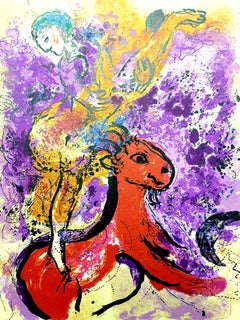
Marc Chagall - The Red Rider - Original Lithograph

Marc Chagall - The Red Rider - Original Lithograph

By Marc Chagall

Located in Collonge Bellerive, Geneve, CH

Marc Chagall - Original Lithograph The Red Rider From the unsigned, unnumbered lithograph printed in the literary review XXe Siecle 1957 See Mourlot 191 Dimensions: 32 x 24 cm Publisher: G. di San Lazzaro. Marc Chagall (born in 1887) Marc Chagall was born in Belarus in 1887 and developed an early interest in art. After studying painting, in 1907 he left Russia for Paris, where he lived in an artist colony on the city’s outskirts. Fusing his own personal, dreamlike imagery with hints of the fauvism and cubism popular in France at the time, Chagall created his most lasting work—including I and the Village (1911)—some of which would be featured in the Salon des Indépendants exhibitions. After returning to Vitebsk for a visit in 1914, the outbreak of WWI trapped Chagall in Russia. He returned to France in 1923 but was forced to flee the country and Nazi persecution during WWII. Finding asylum in the U.S., Chagall became involved in set and costume design before returning to France in 1948. In his later years, he experimented with new art forms and was commissioned to produce numerous large-scale works. Chagall died in St.-Paul-de-Vence in 1985. The Village Marc Chagall was born in a small Hassidic community on the outskirts of Vitebsk, Belarus, on July 7, 1887. His father was a fishmonger, and his mother ran a small sundries shop in the village. As a child, Chagall attended the Jewish elementary school, where he studied Hebrew and the Bible, before later attending the Russian public school. He began to learn the fundamentals of drawing during this time, but perhaps more importantly, he absorbed the world around him, storing away the imagery and themes that would feature largely in most of his later work. At age 19 Chagall enrolled at a private, all-Jewish art school and began his formal education in painting, studying briefly with portrait artist Yehuda Pen. However, he left the school after several months, moving to St. Petersburg in 1907 to study at the Imperial Society for the Protection of Fine Arts. The following year, he enrolled at the Svanseva School, studying with set designer Léon Bakst, whose work had been featured in Sergei Diaghilev's Ballets Russes. This early experience would prove important to Chagall’s later career as well. Despite this formal instruction, and the widespread popularity of realism in Russia at the time, Chagall was already establishing his own personal style, which featured a more dreamlike unreality and the people, places and imagery that were close to his heart. Some examples from this period are his Window Vitebsk (1908) and My Fianceé with Black Gloves (1909), which pictured Bella Rosenfeld, to whom he had recently become engaged. The Beehive Despite his romance with Bella, in 1911 an allowance from Russian parliament member and art patron Maxim Binaver enabled Chagall to move to Paris, France. After settling briefly in the Montparnasse neighborhood, Chagall moved further afield to an artist colony known as La Ruche (“The Beehive”), where he began to work side by side with abstract painters such as Amedeo Modigliani and Fernand Léger as well as the avant-garde poet Guillaume Apollinaire. At their urging, and under the influence of the wildly popular fauvism and cubism, Chagall lightened his palette and pushed his style ever further from reality. I and the Village (1911) and Homage to Apollinaire (1912) are among his early Parisian works, widely considered to be his most successful and representative period. Though his work stood stylistically apart from his cubist contemporaries, from 1912 to 1914 Chagall exhibited several paintings at the annual Salon des Indépendants exhibition, where works by the likes of Juan Gris, Marcel Duchamp and Robert Delaunay were causing a stir in the Paris art world. Chagall’s popularity began to spread beyond La Ruche, and in May 1914 he traveled to Berlin to help organize his first solo exhibition, at Der Sturm Gallery. Chagall remained in the city until the highly acclaimed show opened that June. He then returned to Vitebsk, unaware of the fateful events to come. War, Peace and Revolution In August 1914 the outbreak of World War I precluded Chagall’s plans to return to Paris. The conflict did little to stem the flow of his creative output, however, instead merely giving him direct access to the childhood scenes so essential to his work, as seen in paintings such as Jew in Green (1914) and Over Vitebsk (1914). His paintings from this period also occasionally featured images of the war’s impact on the region, as with Wounded Soldier (1914) and Marching (1915). But despite the hardships of life during wartime, this would also prove to be a joyful period for Chagall. In July 1915 he married Bella, and she gave birth to a daughter, Ida, the following year. Their appearance in works such as Birthday (1915), Bella and Ida by the Window (1917) and several of his “Lovers” paintings give a glimpse of the island of domestic bliss that was Chagall’s amidst the chaos. To avoid military service and stay with his new family, Chagall took a position as a clerk in the Ministry of War Economy in St. Petersburg. While there he began work on his autobiography and also immersed himself in the local art scene, befriending novelist Boris Pasternak, among others. He also exhibited his work in the city and soon gained considerable recognition. That notoriety would prove important in the aftermath of the 1917 Russian Revolution when he was appointed as the Commissar of Fine Arts in Vitebsk. In his new post, Chagall undertook various projects in the region, including the 1919 founding of the Academy of the Arts. Despite these endeavors, differences among his colleagues eventually disillusioned Chagall. In 1920 he relinquished his position and moved his family to Moscow, the post-revolution capital of Russia. In Moscow, Chagall was soon commissioned to create sets and costumes for various productions at the Moscow State Yiddish Theater, where he would paint a series of murals titled Introduction to the Jewish Theater as well. In 1921, Chagall also found work as a teacher at a school for war orphans. By 1922, however, Chagall found that his art had fallen out of favor, and seeking new horizons he left Russia for good. Flight After a brief stay in Berlin, where he unsuccessfully sought to recover the work exhibited at Der Sturm before the war, Chagall moved his family to Paris in September 1923. Shortly after their arrival, he was commissioned by art dealer and publisher Ambroise Vollard to produce a series of etchings for a new edition of Nikolai Gogol's 1842 novel Dead Souls. Two years later Chagall began work on an illustrated edition of Jean de la Fontaine’s Fables, and in 1930 he created etchings for an illustrated edition of the Old Testament, for which he traveled to Palestine to conduct research. Chagall’s work during this period brought him new success as an artist and enabled him to travel throughout Europe in the 1930s. He also published his autobiography, My Life (1931), and in 1933 received a retrospective at the Kunsthalle in Basel, Switzerland. But at the same time that Chagall’s popularity was spreading, so, too, was the threat of Fascism and Nazism. Singled out during the cultural "cleansing" undertaken by the Nazis in Germany, Chagall’s work was ordered removed from museums throughout the country. Several pieces were subsequently burned, and others were featured in a 1937 exhibition of “degenerate art” held in Munich. Chagall’s angst regarding these troubling events and the persecution of Jews in general can be seen in his 1938 painting White Crucifixion. With the eruption of World War II, Chagall and his family moved to the Loire region before moving farther south to Marseilles following the invasion of France. They found a more certain refuge when, in 1941, Chagall’s name was added by the director of the Museum of Modern Art (MOMA) in New York City to a list of artists and intellectuals deemed most at risk from the Nazis’ anti-Jewish campaign. Chagall and his family would be among the more than 2,000 who received visas and escaped this way. Haunted Harbors Arriving in New York City in June 1941, Chagall discovered that he was already a well-known artist there and, despite a language barrier, soon became a part of the exiled European artist community. The following year he was commissioned by choreographer Léonide Massine to design sets and costumes for the ballet Aleko, based on Alexander Pushkin’s “The Gypsies” and set to the music of Pyotr Ilyich Tchaikovsky. But even as he settled into the safety of his temporary home, Chagall’s thoughts were frequently consumed by the fate befalling the Jews of Europe and the destruction of Russia, as paintings such as The Yellow Crucifixion...

Category

1950s Surrealist Pierre Alechinsky Art
Materials

Lithograph

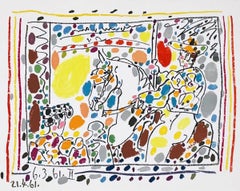
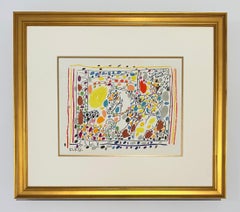
Pablo Picasso Abstract Lithograph, Unsigned, 1961, "A Los Toros: Le Picador II"

Pablo Picasso Abstract Lithograph, Unsigned, 1961, "A Los Toros: Le Picador II"

By Pablo Picasso

Located in Washington, DC

Artist: Pablo Picasso Title: Le Picador (II) Portfolio: A Los Toros Avec Picasso Medium: Transfer lithograph Date: 1961 Frame Size: 17 1/4" x 19 3/4" Sheet Size: 9 1/2" x 12 1/2" Ima...

Category

1960s Abstract Pierre Alechinsky Art

Materials

Lithograph

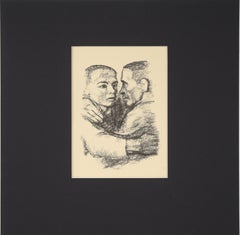
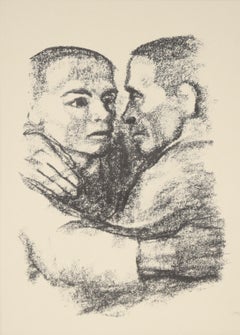
"Brotherhood" lithograph by Käthe Kollwitz

Käthe Kollwitz"Brotherhood" lithograph by Käthe Kollwitz, 1941

$1,200Sale Price|20% Off

H 20 in W 20 in D 0.25 in

"Brotherhood" lithograph by Käthe Kollwitz

By Käthe Kollwitz

Located in Soquel, CA

Bold print of "Brotherhood" by Kathe Kollwitz (German, 1867-1945). This piece is one of the Lithographic reproductions of the original lithographs, plate 3 from a series of 10, print...

Category

1940s Expressionist Pierre Alechinsky Art

Materials

Paper, Ink, Lithograph

Marc Chagall - Original Lithograph

Marc ChagallMarc Chagall - Original Lithograph, 1963

$1,490

H 9.45 in W 12.6 in D 0.04 in

Marc Chagall - Original Lithograph

By Marc Chagall

Located in Collonge Bellerive, Geneve, CH

Marc Chagall Original Lithograph 1963 Dimensions: 32 x 24 cm Reference: Chagall Lithographe 1957-1962. VOLUME II. Condition : Excellent Marc Chagall (born in 1887) Marc Chagall was born in Belarus in 1887 and developed an early interest in art. After studying painting, in 1907 he left Russia for Paris, where he lived in an artist colony on the city’s outskirts. Fusing his own personal, dreamlike imagery with hints of the fauvism and cubism popular in France at the time, Chagall created his most lasting work—including I and the Village (1911)—some of which would be featured in the Salon des Indépendants exhibitions. After returning to Vitebsk for a visit in 1914, the outbreak of WWI trapped Chagall in Russia. He returned to France in 1923 but was forced to flee the country and Nazi persecution during WWII. Finding asylum in the U.S., Chagall became involved in set and costume design before returning to France in 1948. In his later years, he experimented with new art forms and was commissioned to produce numerous large-scale works. Chagall died in St.-Paul-de-Vence in 1985. The Village Marc Chagall was born in a small Hassidic community on the outskirts of Vitebsk, Belarus, on July 7, 1887. His father was a fishmonger, and his mother ran a small sundries shop in the village. As a child, Chagall attended the Jewish elementary school, where he studied Hebrew and the Bible, before later attending the Russian public school. He began to learn the fundamentals of drawing during this time, but perhaps more importantly, he absorbed the world around him, storing away the imagery and themes that would feature largely in most of his later work. At age 19 Chagall enrolled at a private, all-Jewish art school and began his formal education in painting, studying briefly with portrait artist Yehuda Pen. However, he left the school after several months, moving to St. Petersburg in 1907 to study at the Imperial Society for the Protection of Fine Arts. The following year, he enrolled at the Svanseva School, studying with set designer Léon Bakst, whose work had been featured in Sergei Diaghilev's Ballets Russes. This early experience would prove important to Chagall’s later career as well. Despite this formal instruction, and the widespread popularity of realism in Russia at the time, Chagall was already establishing his own personal style, which featured a more dreamlike unreality and the people, places and imagery that were close to his heart. Some examples from this period are his Window Vitebsk (1908) and My Fianceé with Black Gloves (1909), which pictured Bella Rosenfeld, to whom he had recently become engaged. The Beehive Despite his romance with Bella, in 1911 an allowance from Russian parliament member and art patron Maxim Binaver enabled Chagall to move to Paris, France. After settling briefly in the Montparnasse neighborhood, Chagall moved further afield to an artist colony known as La Ruche (“The Beehive”), where he began to work side by side with abstract painters such as Amedeo Modigliani and Fernand Léger as well as the avant-garde poet Guillaume Apollinaire. At their urging, and under the influence of the wildly popular fauvism and cubism, Chagall lightened his palette and pushed his style ever further from reality. I and the Village (1911) and Homage to Apollinaire (1912) are among his early Parisian works, widely considered to be his most successful and representative period. Though his work stood stylistically apart from his cubist contemporaries, from 1912 to 1914 Chagall exhibited several paintings at the annual Salon des Indépendants exhibition, where works by the likes of Juan Gris, Marcel Duchamp and Robert Delaunay were causing a stir in the Paris art world. Chagall’s popularity began to spread beyond La Ruche, and in May 1914 he traveled to Berlin to help organize his first solo exhibition, at Der Sturm Gallery. Chagall remained in the city until the highly acclaimed show opened that June. He then returned to Vitebsk, unaware of the fateful events to come. War, Peace and Revolution In August 1914 the outbreak of World War I precluded Chagall’s plans to return to Paris. The conflict did little to stem the flow of his creative output, however, instead merely giving him direct access to the childhood scenes so essential to his work, as seen in paintings such as Jew in Green (1914) and Over Vitebsk (1914). His paintings from this period also occasionally featured images of the war’s impact on the region, as with Wounded Soldier (1914) and Marching (1915). But despite the hardships of life during wartime, this would also prove to be a joyful period for Chagall. In July 1915 he married Bella, and she gave birth to a daughter, Ida, the following year. Their appearance in works such as Birthday (1915), Bella and Ida by the Window (1917) and several of his “Lovers” paintings give a glimpse of the island of domestic bliss that was Chagall’s amidst the chaos. To avoid military service and stay with his new family, Chagall took a position as a clerk in the Ministry of War Economy in St. Petersburg. While there he began work on his autobiography and also immersed himself in the local art scene, befriending novelist Boris Pasternak, among others. He also exhibited his work in the city and soon gained considerable recognition. That notoriety would prove important in the aftermath of the 1917 Russian Revolution when he was appointed as the Commissar of Fine Arts in Vitebsk. In his new post, Chagall undertook various projects in the region, including the 1919 founding of the Academy of the Arts. Despite these endeavors, differences among his colleagues eventually disillusioned Chagall. In 1920 he relinquished his position and moved his family to Moscow, the post-revolution capital of Russia. In Moscow, Chagall was soon commissioned to create sets and costumes for various productions at the Moscow State Yiddish Theater...

Category

1960s Surrealist Pierre Alechinsky Art

Materials

Lithograph

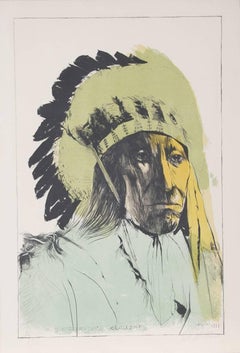
Chief American Horse - Oglalla Sioux, Lithograph by Leonard Baskin

Chief American Horse - Oglalla Sioux, Lithograph by Leonard Baskin

By Leonard Baskin

Located in Long Island City, NY

Artist: Leonard Baskin Title: Chief American Horse - Oglalla Sioux Year: 1973 Medium: Lithograph, Signed and Numbered in pencil Edition: 100 Size: 41 x 30 inches

Category

1970s Expressionist Pierre Alechinsky Art

Materials

Lithograph

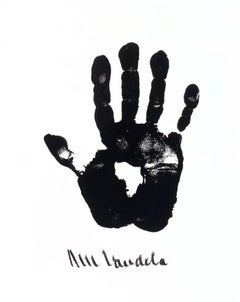
Hand of Africa - Mandela, Former South African President, Signed Artwork, Hand

Hand of Africa - Mandela, Former South African President, Signed Artwork, Hand

By Nelson Mandela

Located in Knowle Lane, Cranleigh

Nelson Mandela, Hand of Africa, Signed Limited Edition Lithograph Many people are unaware that Nelson Mandela turned his hand to art in his 80's as a way of leaving a legacy for his ...

Category

Early 2000s Contemporary Pierre Alechinsky Art

Materials

Lithograph

untitled

Richard Huntuntitled, 2021

$3,500

H 25 in W 36 in

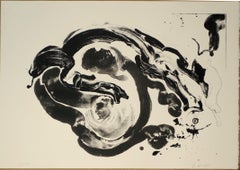
untitled

By Richard Hunt

Located in New York, NY

Lithograph printed in two blacks published in an edition of 43.

Category

2010s Abstract Pierre Alechinsky Art

Materials

Lithograph

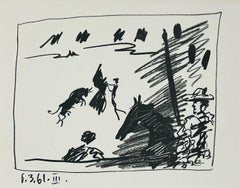
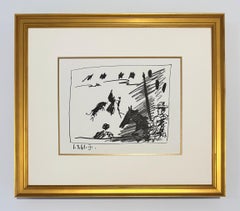
Jeu de la Cape (III), from A Los Toros Avec Picasso

Jeu de la Cape (III), from A Los Toros Avec Picasso

By Pablo Picasso

Located in Washington, DC

Artist: Pablo Picasso Title: Jeu de la Cape (III) Portfolio: A Los Toros Avec Picasso Medium: Transfer lithograph Date: 1961 Edition: Unnumbered Frame Size: 17 1/4" x 19 3/4" Sheet S...

Category

1960s Abstract Pierre Alechinsky Art

Materials

Lithograph

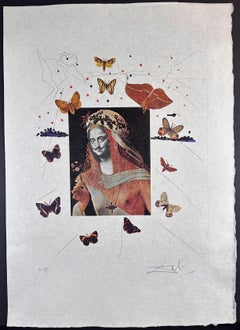
Memories of Surrealism Surrealist Portrait of Dali Surrounded by Butterflies

Memories of Surrealism Surrealist Portrait of Dali Surrounded by Butterflies

By Salvador Dalí­

Located in Hollywood, FL

ARTIST: Salvador Dali TITLE: Memories of Surrealism Surrealist Portrait of Dali Surrounded by Butterflies MEDIUM: Etching on Japon Paper SIGNED: Hand Signed by Salvador Dali EDIT...

Category

1970s Surrealist Pierre Alechinsky Art
Materials

Etching

Previously Available Items
Composition - Etching by Pierre Alechinsky - 1969

Composition - Etching by Pierre Alechinsky - 1969

By Pierre Alechinsky

Located in Roma, IT

Etching and aquatint realized in 1969. Hand signed and numbered in pencil. Edition of 300. Excellent condition.

Category

1960s Contemporary Pierre Alechinsky Art

Materials

Etching

Pierre Alechinsky Astres et Désastres (Stars & Disasters) 1969 Exhibition Poster

Pierre Alechinsky Astres et Désastres (Stars & Disasters) 1969 Exhibition Poster

By Pierre Alechinsky

Located in Keego Harbor, MI

A vibrant lithographic poster by Pierre Alechinsky (b. 1927), created for his 1969 exhibition Astres et Disastres (Stars & Disasters). Executed in Alechinsky's signature style, the w...

Category

1960s Belgian Vintage Pierre Alechinsky Art

Materials

Paper

Louisiana

Pierre AlechinskyLouisiana, 1969

Sold

H 32.68 in W 23.43 in

Louisiana

By Pierre Alechinsky

Located in Paris, FR

Lithograph, 1969 Handsigned by the artist in pencil and numbered 62/300 Catalog : Rivière 371 83.00 cm. x 59.50 cm. 32.68 in. x 23.43 in. (paper) 82.00 cm. x 58.00 cm. 32.28 in. x ...

Category

1960s Abstract Pierre Alechinsky Art

Materials

Lithograph

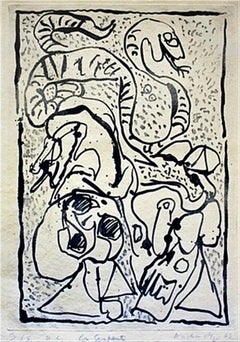
Ca Serpente (185, Rivière) Mid Century Modern Serpent by French Expressionist

Ca Serpente (185, Rivière) Mid Century Modern Serpent by French Expressionist

By Pierre Alechinsky

Located in New York, NY

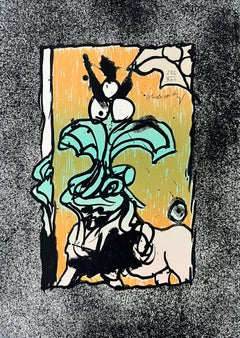
Pierre Alechinsky Ca Serpente (185, Rivière), 1963 Etching on wove paper Editions HC-3 of 10 Pencil signed, dated and annotated III/X HC Frame included (vintage): original 1960s vint...

Category

1960s Abstract Expressionist Pierre Alechinsky Art
Materials

Etching

Tribord

Pierre AlechinskyTribord, 1968

Sold

H 19.3 in W 25.99 in

Tribord

By Pierre Alechinsky

Located in Paris, FR

Lithograph, 1968 Handsigned by the artist in pencil and numbered 3/300 Printer : Clot Bramsen Catalog : Rivière 349 LCD5014

Category

1960s Abstract Pierre Alechinsky Art

Materials

Lithograph

Pierre Alechinsky, - Mai 68 Original French Poster - Mai 68

Pierre Alechinsky, - Mai 68 Original French Poster - Mai 68

By Pierre Alechinsky

Located in Collonge Bellerive, Geneve, CH

Pierre Alechinsky - Mai 68 Original French Poster - Mai 68 Tchou Editions, Paris, printed in 1968. Dimensions: 48 x 32.5 cm Paris, May 1968: The revolution that never was Even without retrieving that bundle of yellowing French newspapers from the top shelf in a closet, it is easy to remember the night of May 10, 1968, in Paris. It is far less easy, 40 years later, to discern what it was all about. Adolescent hormones, the death of communism, the death of capitalism or, as André Malraux suggested at the time, the death of God? Malraux, the writer and politician and the French culture minister at the time, may have been alone in invoking God's death as an explanation, but no one doubted that May 10 provoked an entire society to a rare assessment - call it an examination of conscience, if you will - of its fundamental values. A week earlier, the police had been called in to occupy the Sorbonne, and Paris began to witness daily student marches, usually culminating in skirmishes between students throwing stones and the police firing tear gas. By May 10, the number of student demonstrators was estimated at 20,000. At every street leading to the Sorbonne, they found their way blocked by vans and ranks of riot police. This time, the students did not disperse. As darkness fell, they began prying up cobblestones, ransacking building sites and turning over parked cars to construct their own barricades facing the police ones. For hours, the silent inner ring of police barricades stretching around much of the Latin Quarter stood surrounded by a noisy outer ring of student barricades. At 2:15 a.m., the police got the order to assault the student barricades. As the interior minister said, "The streets have to be clear for traffic." Continue reading the main story It took three hours of brutal fighting to do that: clouds of tear gas, Molotov cocktails, exploding automobile gas tanks, cobblestones hurled at the police, students chased down and beaten, more than 300 people injured but fortunately no gunfire - and no deaths. When the radio reported a fire on Rue Gay-Lussac that fire trucks could not reach because of the street fighting and barricades, two young Americans living nearby began deciding what to take with them in case of urban conflagration: 1) the 2-year-old daughter; 2) passports and money; 3) the notes for the dissertation. After that, it didn't matter. France woke up shocked. So, presumably, did President Charles de Gaulle, who had gone to bed early. Events accelerated. The left mounted a huge march of solidarity with the students, who reoccupied the Sorbonne. Workers began occupying their factories. Within another week, France was closed down by the general strike that revolutionaries had always dreamed of. The story, of course, did not end in revolution, for which few people over 30 really had any stomach anyway. On May 30, de Gaulle put his foot down. He addressed the nation briefly on the radio. He announced new elections and hinted at using military means to restore order. A deftly prepared demonstration immediately flooded the Champs-Élysées with hundreds of thousands of citizens previously maintaining a low profile. Newsletter Sign UpContinue reading the main story The Interpreter Newsletter Understand the world with sharp insight and commentary on the major news stories of the week. You agree to receive occasional updates and special offers for The New York Times's products and services. May passed into June. Workers and students won some changes. The elections swept de Gaulle and his supporters back into power. Was it all merely a spring rainstorm? Hardly. For two astonishing weeks in May, an entire nation had been caught up in a frenzy of self-examination. Committees were formed to restructure secondary schooling, the university, the film industry, the theater, the news media. Everyone was a talking head. What the talking heads were talking about were ideas spawned by a crazy array of leftist groups: revisionist socialists, Trotskyists, Maoists, anarchists, surrealists and Marxists. They were anticommunist as much as anticapitalist. Some appeared anti-industrial, anti-institutional, even anti-rational. Three positive objectives and one great fear dominated their views. The objectives were self-management by workers, a decentralization of economic and political power and participatory democracy at the grass roots. The great fear was that contemporary capitalism was capable of absorbing any and all critical ideas or movements and bending them to its own advantage. Hence, the need for provocative shock tactics. "Be realistic: Demand the impossible!" was one of the May movement's slogans. To many critics, all this was only the final twitch of a quasi-religious socialist utopianism that had long inspired workers and intellectuals rebelling against the pains of industrialization. Other critics preferred psychological explanations: May 1968 was a Freudian fling of adolescent revolt against Mom and Dad. Or it was a nostalgic bout of playacting, a childish re-enactment of the storming of the Bastille and other Greatest Hits of France's Revolutions. Or it was, paradoxically, an unwitting reinforcement of the individualist consumer capitalism that it claimed to oppose. On the other side, the anti-authoritarian spirit of 1968 was eventually seen as a wellspring of the successful rebellion against Soviet-bloc communism in 1989. The link was made graphically by book jackets rotating 68 to read 89. After all, Prague Spring...

Category

1960s Pierre Alechinsky Art

Alechinsky: Un Ensemble d'Impressions

Alechinsky: Un Ensemble d'Impressions

By Pierre Alechinsky

Located in Saint Augustine, FL

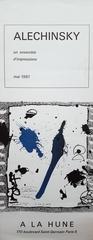
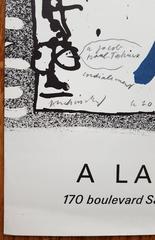
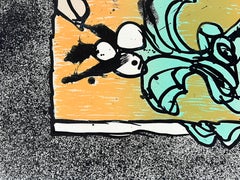
An original signed lithograph exhibition poster by Belgian artist Pierre Alechinsky (1927-) titled "Alechinsky: Un Ensemble d'Impressions", 1967. This lithographic poster was produce...

Category

1960s Abstract Expressionist Pierre Alechinsky Art
Materials

Lithograph

Pierre Alechinsky art for sale on 1stDibs.
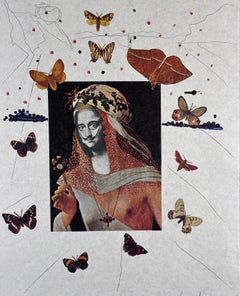
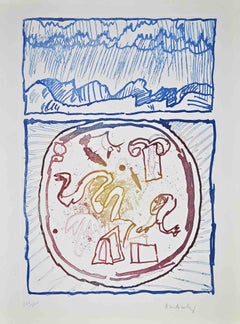
Find a wide variety of authentic Pierre Alechinsky art available for sale on 1stDibs. If you’re browsing the collection of art to introduce a pop of color in a neutral corner of your living room or bedroom, you can find work that includes elements of blue, yellow and other colors. You can also browse by medium to find art by Pierre Alechinsky in lithograph, paper, linocut and more. Much of the original work by this artist or collective was created during the 20th century and is mostly associated with the abstract style. Not every interior allows for large Pierre Alechinsky art, so small editions measuring 5 inches across are available. Customers who are interested in this artist might also find the work of Raoul Ubac, Conrad Marca-Relli, and Nicholas Krushenick. Pierre Alechinsky art prices can differ depending upon medium, time period and other attributes. On 1stDibs, the price for these items starts at $50 and tops out at $9,239, while the average work can sell for $1,083.
Artists Similar to Pierre Alechinsky