R.C. Gorman Sculptures

American, 1931-2005

Rudolph Carl Gorman was an American artist, born on July 26, 1931, in Canyon de Chelly, Arizona. He was raised in a traditional hogan, on the Navajo Reservation. He became one of the Southwest USA's most famous and celebrated Native American artists. His signature works were Navajo women in a variety of poses. Referred to as the Picasso of American Indian Artists by The New York Times, his paintings are primarily of Native American women and characterized by fluid forms and vibrant colors, though he also worked in sculpture, ceramics and stone lithography. In 1973, the Metropolitan Museum of Art included several Rudolph’s works in an exhibition on Native American art and in 1986, Harvard University honored him for his notable contributions to American art and Native American culture. His admirers included Andy Warhol, who painted him on several occasions and who was among the many celebrities, who collected his art. He was also the author of a series of popular cookbooks. Gorman died on November 3, 2005, in Albuquerque, New Mexico.

to
4
3
1
Overall Width
to
Overall Height
to
8
1
3
6
4
4
4
3
3
1
1
1
1
1
1
6
1
1
1
1
49
214
212
140
128
8
Artist: R.C. Gorman
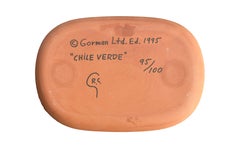
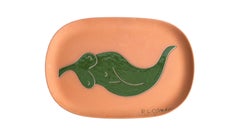
Chili Verde, Nude Folk Art Ceramic Dish by RC Gorman

Chili Verde, Nude Folk Art Ceramic Dish by RC Gorman

By R.C. Gorman

Located in Long Island City, NY

Limited edition cast ceramic dish with a hand-carved image of a nude woman tapering into the shape of a chili pepper. This sculpture by Indigenous American artist RC Gorman is signed...

Category

1990s Folk Art R.C. Gorman Sculptures

Materials

Ceramic

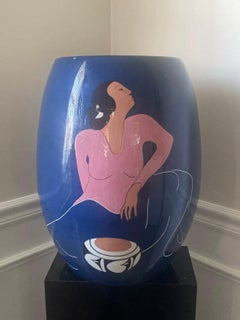
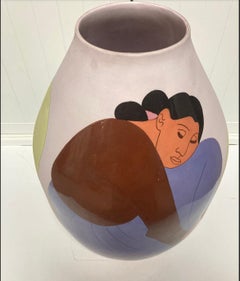
“Night Song, 1991”
“Night Song, 1991”

“Night Song, 1991”

By R.C. Gorman

Located in Warren, NJ

R.C. Gorman “Night Song, 1991” ceramic vase . In good condition some minor paint loss . measures 18x12

Category

20th Century R.C. Gorman Sculptures

Materials

Ceramic

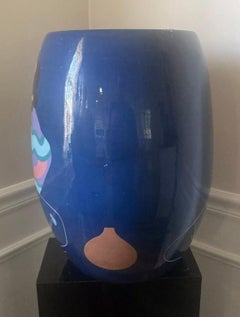
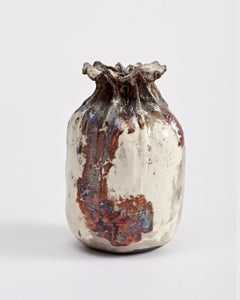
“Chamisa“
“Chamisa“

“Chamisa“

By R.C. Gorman

Located in Warren, NJ

This is an RC Gorman ceramic vase signed and numbered “chamisa”. In good condition minor wear on the vase no breaks or cracks .. Measures 19x9. Out of 150 made

Category

20th Century R.C. Gorman Sculptures

Materials

Oil

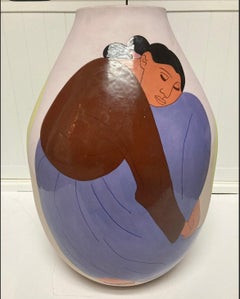
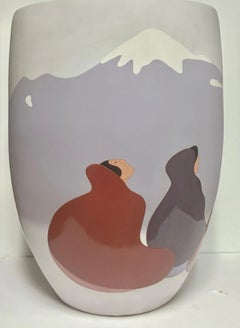
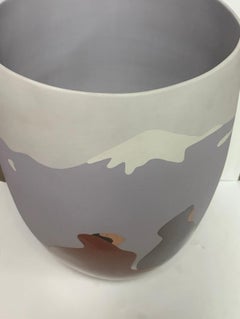
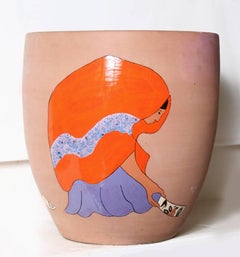
“Taos mountain”
“Taos mountain”

“Taos mountain”

By R.C. Gorman

Located in Warren, NJ

RC Gorman pottery vase signed and numbered “Taos mountain” large. In good condition measures 26 1/2 by 19

Category

20th Century R.C. Gorman Sculptures

Materials

Ceramic

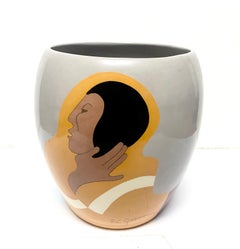
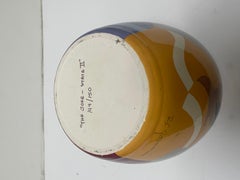
“The Joke State ii”
“The Joke State ii”

“The Joke State ii”

By R.C. Gorman

Located in Warren, NJ

This is an RC Gorman ceramic vase signed and numbered “The Joke State ii”. In good condition. Measures 10x9

Category

20th Century R.C. Gorman Sculptures

Materials

Clay

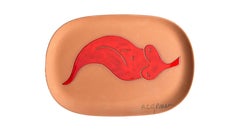
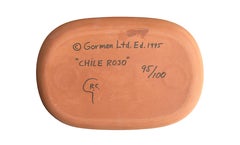
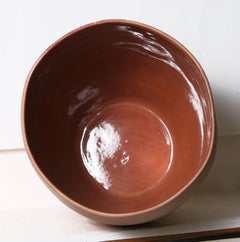
Chili Rojo, Nude Folk Art Ceramic Dish by RC Gorman

Chili Rojo, Nude Folk Art Ceramic Dish by RC Gorman

By R.C. Gorman

Located in Long Island City, NY

Limited edition cast ceramic dish with a hand-carved image of a nude woman tapering into the shape of a chili pepper. This sculpture by Indigenous American artist RC Gorman is signed...

Category

1990s Folk Art R.C. Gorman Sculptures

Materials

Ceramic

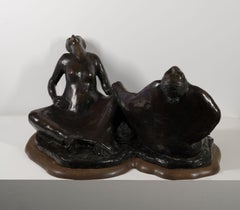
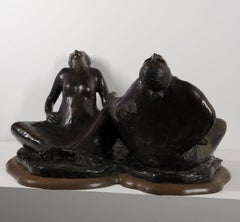
"Laughing Sisters" by R. C. Gorman signed bronze sculpture on wooden base

"Laughing Sisters" by R. C. Gorman signed bronze sculpture on wooden base

By R.C. Gorman

Located in Boca Raton, FL

"Laughing Sisters" bronze sculpture on wooden base by artist R. C. Gorman. Signed R.C. Gorman, dated '81 and annotated E.P.I. near base. Artist's proof Edition Press Impression aside...

Category

1980s Tribal R.C. Gorman Sculptures

Materials

Bronze

Related Items
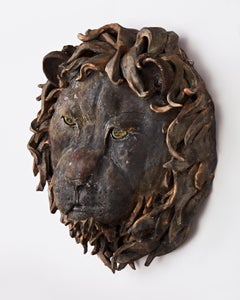
"Lion Face" 2023
"Lion Face" 2023

"Lion Face" 2023

By Anneke Bogardus

Located in New York, NY

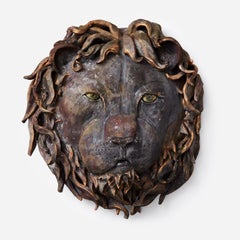
Anneke Bogardus "Lion Face" 2023 Entirely hand sculpted. Raku fired. Finished With touches of Oil paint, Pencil, and Acrylic. 67” around, 8” Off the wall. Raku firing is an ancie...

Category

2010s Contemporary R.C. Gorman Sculptures

Materials

Ceramic, Clay, Oil, Acrylic, Pencil

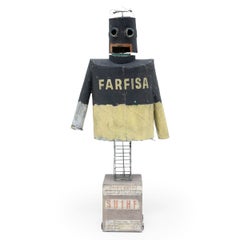
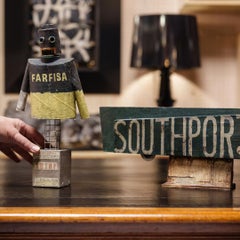
"XMITTER" Helmet & Jacket Sculpture

"XMITTER" Helmet & Jacket Sculpture

Located in Chicago, IL

To Chicago-based artist Patrick Fitzgerald, his sculptures are a means of traveling through time. Working from found materials, Fitzgerald constructs miniature soap box cars...

Category

21st Century and Contemporary Outsider Art R.C. Gorman Sculptures

Materials

Wire

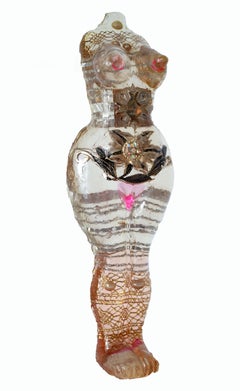
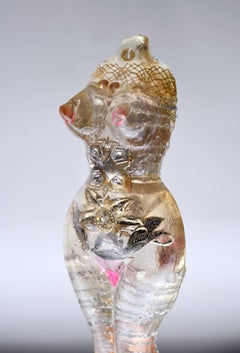
Noche Crist Nude Goddess Sculpture

Noche CristNoche Crist Nude Goddess Sculpture, 1970s

$563Sale Price|24% Off

H 11 in W 3.5 in D 2 in

Noche Crist Nude Goddess Sculpture

Located in Washington, DC

One of a kind Goddess sculpture by Noche Crist (1909-2004). Noche Crist was an American artist born in Romania. Sculpture is made from polyester res...

Category

1970s Outsider Art R.C. Gorman Sculptures

Materials

Acrylic Polymer

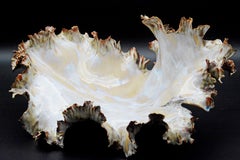
Biomorphic Ceramic Organic Sculpture w/ 22K Japanese Gold Luster

Biomorphic Ceramic Organic Sculpture w/ 22K Japanese Gold Luster

Located in Johns Creek, GA

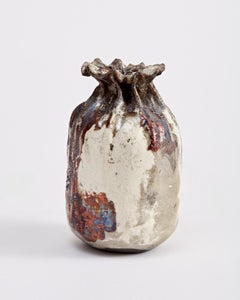
"Autumn By The Shore" Meticulously handcrafted stoneware through weeks of pinching from award-winning artist Beth Anne Krah, this biomorphic ceramic sculpture is truly a one-of-a-ki...

Category

2010s Abstract R.C. Gorman Sculptures

Materials

Gold

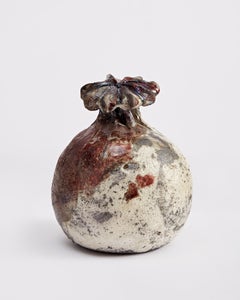
"Poppy №4" 2023
"Poppy №4" 2023

"Poppy №4" 2023

By Anneke Bogardus

Located in New York, NY

Anneke Bogardus "Poppy №4" 2023 Entirely hand sculpted. Raku fired. 5 3/4” tall, 12” around Raku firing is an ancient Japanese ceramics technique. The Raku technique is essentiall...

Category

2010s Contemporary R.C. Gorman Sculptures

Materials

Ceramic, Clay

Mother Goddess Figurine, Early Indus Valley Civilization (circa 3500 - 2800 BC)

Mother Goddess Figurine, Early Indus Valley Civilization (circa 3500 - 2800 BC)

Located in Paris, Île-de-France

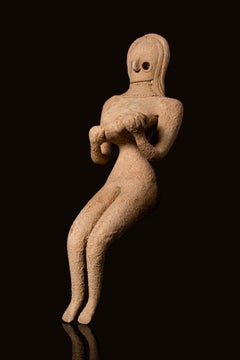
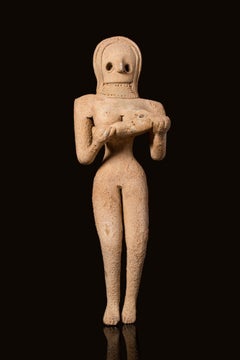
Mother Goddess Figurine Early Indus Valley Civilization (circa 3500 - 2800 BC) Handmade pottery, 140 mm x 45 mm, 60 g Provenance: Prince Collection, 1990s-2014; Pierre Bergé Colle...

Category

15th Century and Earlier Tribal R.C. Gorman Sculptures

Materials

Clay, Terracotta

"Poppy №5" 2023
"Poppy №5" 2023

"Poppy №5" 2023

By Anneke Bogardus

Located in New York, NY

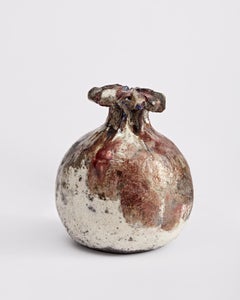
Anneke Bogardus "Poppy №5" 2023 Entirely hand sculpted. Raku fired. 5 1/4” tall, 13" around the widest point. Raku firing is an ancient Japanese ceramics technique. The Raku tech...

Category

2010s Contemporary R.C. Gorman Sculptures

Materials

Ceramic, Clay

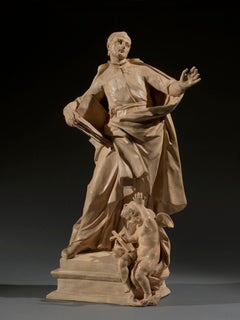
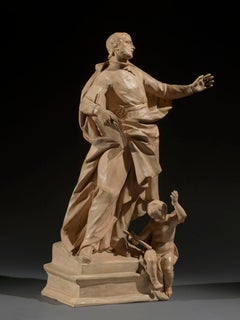
Roman 18th century terracotta model for the sculpture of San Camillo de Lellis

Roman 18th century terracotta model for the sculpture of San Camillo de Lellis

Located in London, GB

This remarkably fluid terracotta bozetto was made in preparation for Pietro Pacilli’s most important public commission, a large-scale marble statue of San Camillo de Lellis for the nave of St Peter’s Basilica in Rome. Expressively modelled, this terracotta sculpture is a rare and significant work made by a major Roman sculptor at a transformative moment of European sculpture. Pacilli began his working life on the great Baroque decorative projects initiated in the seventeenth century, but he found success as a restorer of ancient sculpture working to finish antiquities for a tourist market, becoming an important figure in the emergence of an archaeologically minded Neoclassicism. Pacilli trained Vincenzo Pacetti and provided important decorative work for the Museo Pio-Clementino, at the same time he is recorded restoring some of the most celebrated antiquities excavated and exported during the period. Pacilli was born into a family of Roman craftsmen, his father Carlo was a wood carver, and Pacilli is recorded working with him on the Corsini Chapel in San Giovanni Laternao as early as 1735. In 1738 his terracotta model of Joseph and Potiphar’s Wife won the first prize in the second class of the sculpture concorso at the Accademia di San Luca, this is particularly notable as Bartolomeo Cavaceppi came third. He worked as a carver and stuccoist completing works for the churches of San Marco and SS. Trinita dei Domeniciani Spagnoli. Pacilli operated as a sculptor and restorer of antiquities from his studio at the top of the Spanish Steps, close to Santa Trinita dei Monti, where he is listed as a potential vendor to the Museo Pio-Clementino in 1770. In 1763 Pacilli completed a silver figure of San Venanzio for the treasury of San Venanzio. He is recorded as Pacetti’s first master and it was evidently through Pacilli that he began to acquire his facility as a restorer of ancient sculpture. Pacilli, at his studio ‘poco prima dell’Arco della Regina alla Trinita dei Monti,’ exercised, what the nineteenth-century scholar, Adolf Michaelis called ‘rejuvenating arts’ on several important pieces of classical sculpture, including in 1760 the group of a Satyr with a Flute for the natural brother of George III, General Wallmoden, Hanovarian minister at Vienna. In 1765, Dallaway and Michaelis record that Pacilli was responsible for the restorations, including the addition of a new head, to the Barberini Venus which he had acquired from Gavin Hamilton. The Venus was then sold to Thomas Jenkins, who in turn passed it on to William Weddell at Newby Hall. In 1767 Pacilli exported a series of ancient busts ‘al naturale’ including portraits of Antinous, Julius Ceaser and Marus Aurelius, also a statue of a Muse and a Venus. As early as 1756 Pacilli seems to have been operating as an antiquarian, helping to disperse the collection of the Villa Borrioni. Pacilli supplied sculpture to notable British collectors, including Charles Townley, who on his first trip to Italy purchased the Palazzo Giustiniani statue of Hecate from Pacilli. Pacilli was involved with the Museo Pio Clementino from its conception, supplying busts of Julius Ceaser and a Roman Woman as well as completing stucco putti surmounting the arms of Pope Bendedict XIV to signal the entrance to the new Museo Critiano. In 1750 Il Diario Ordinario del Chracas announced that Pacilli had begun work on a sculpture of San Camillo de Lellis for St Peter’s. Camillo de Lellis founded his congregation, the Camillians, with their distinctive red felt crosses stitched on black habits in 1591. Having served as a soldier in the Venetian army, Camillo de Lellis became a novitiate of the Capuchin friars, he moved to Rome and established a religious community for the purpose of caring for the sick. In 1586 Pope Sixtus V formerly recognised the Camillians and assigned them to the Church of Santa Maria Maddalena in Rome. Camillo de Lellis died in 1614 and was entombed at Santa Maria Maddalena, he was canonised by Benedict XIV on June 26, 1746. It was an occasion that prompted the Camillians to make a number of significant artistic commissions, including two canvases by Pierre Subleyras showing episodes from San Camillo’s life which they presented to Benedict XIV. In 1750 Pacilli was commissioned to fill one of the large niches on the north wall of the nave with a sculpture of San Camillo. The present terracotta bozetto presumably had two important functions, to enable Pacilli to work out his ideas for the finished sculpture and at the same time to show his design to the various commissioning bodies. In this case it would have been Cardinal Alessandro Albani and Monsignor Giovan Francesco Olivieri, the ‘economo’ or treasurer of the fabric of St Peter’s. Previously unrecorded, this terracotta relates to a smaller, less finished model which has recently been identified as being Pacilli’s first idea for his statue of San Camillo. Preserved in Palazzo Venezia, in Rome, the terracotta shows San Camillo with his left hand clutching his vestments to his breast; the pose and action more deliberate and contained than the finished sculpture. In producing the present terracotta Pacilli has expanded and energised the figure. San Camillo is shown with his left hand extended, his head turned to the right, apparently in an attempt to look east down the nave of St Peter’s. The model shows Pacilli experimenting with San Camillo’s costume; prominently on his breast is the red cross of his order, whilst a sense of animation is injected into the figure through the billowing cloak which is pulled across the saint’s projecting right leg. The power of the restrained, axial contrapposto of bent right leg and outstretched left arm, is diminished in the final sculpture where a baroque fussiness is introduced to the drapery. What Pacilli’s terracotta demonstrates, is that he conceived the figure of San Camillo very much in line with the immediate tradition of depicting single figures in St Peter’s; the rhetorical gesture of dynamic saint, arm outstretched, book in hand, head pointed upwards was perhaps borrowed from Camillo Rusconi’s 1733 sculpture of St. Ignatius...

Category

18th Century Baroque R.C. Gorman Sculptures

Materials

Terracotta

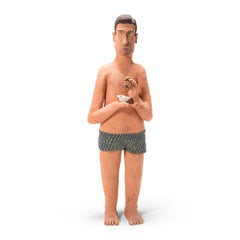
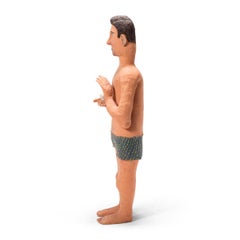
"Man with Cup, " Painted Ceramic Figure

"Man with Cup, " Painted Ceramic Figure

Located in Chicago, IL

Although this whimsical sculpture by Allan Winkler has the look of outsider art, this ceramic work stems from the art school-trained artist’s interest in...

Category

21st Century and Contemporary Surrealist R.C. Gorman Sculptures

Materials

Ceramic, Acrylic

Large Masterwork Haitian Folk Art Steel Drum Metal Work Sculpture Murat Brierre

Large Masterwork Haitian Folk Art Steel Drum Metal Work Sculpture Murat Brierre

By Murat Brierre

Located in Surfside, FL

This work is hand signed. It is not dated. Murat Brierre or Murat Briere (1938–1988) was one of Haiti's principal metal sculptors. He was influenced by George Liautaud, but his work acquired its own, highly experimental style, often focusing on multi-faceted and conjoined figures, fantastically personified elements, and unborn babies visible within larger creatures. He sculpted works that reflected both Christian and Haitian Vodou themes. Murat BRIERRE was born in Mirebalais in 1938. He first worked as a builder, cabinetmaker and blacksmith before being introduced to Le Centre d’Art in 1966. After trying painting with DeWitt Peters, he realized that metal sculpture was best suited for him and studied under Georges Liautaud in order to learn the métier. He also made very beautiful linocuts. Francine Murat quickly recognized his talent and considered Brierre to be one of the best Haitian sculptors. He passed away in 1988 at the age of 50. Brierre was known for his recycling of surplus steel oil drum lids. Brierre worked as a brick mason, cabinetmaker, tile setter, and blacksmith. He was born in Mirebalais or Port-au-Prince, Haiti and was the younger of two brothers. His older brother, Edgar Brierre, was a painter and sculptor. The brother's signed their works with only their last name, creating some confusion within their professional circles about the authorship of their work. Brierre's sculptures typically ranged from three to six feet in length and reflected Christian, Haitian Vodou, and folklore themes. Brierre was also a painter, but ultimately chose to work with metal because he felt that the material was saturated with spiritual energy. It was a laborious process. The oil drum lids were hammered flat, drawn onto, then cut with a razor. The sheet was then cut with a chisel before finishing was completed with a file. By the mid1970s, Brierre's sculptures included pronounced areas of cut outs surrounding long curved lines of metal. Brierre's iron sculpture titled Chien de Mer overlays a dog head onto the body of a fish. Haiti has long celebrated a rich artistic and cultural heritage. Georges Liautaud (1899–1991) ignited the Haitian metal sculpture movement in the 1950s in Croix-des-Bouquets, Haiti. A blacksmith by trade, he fashioned crosses for public cemeteries before creating more elaborate cut-metal works. Liautaud disseminated the distinctly Haitian art form to emerging artists, such as Murat Brièrre (1938–88) and the Louisjuste brothers, Sérésier, Janvier, and Joseph (1940–89). They, in turn, taught others in Croix-des-Bouquets, including Gabriel Bien-Aimé (b. 1951) and Serge Jolimeau (b. 1952), Haiti’s two leading metal sculptors working today. Discarded steel oil drums have historically served as the base material for Haitian metal artists. The drums’ lids are cut open with a chisel and hammer and a long vertical split is made along the side of the drums. The interiors are filled with dried sugarcane or grass and lit on fire to remove any grime; once cool, the drums are flattened into sheets. Designs are chalked on; pieces are then cut and sculpted using only hand tools and further enhanced by hammering, embossing, cutting holes, and bending the metal. Sculptures reflect everyday life portraits, imaginative themes, and motifs of Haitian Vodou, an African Diasporic religion. Some of the many forms that appear include angels and winged creatures, mermaids and other aquatic figures, musical bands, animals, and earthly, paradisiacal scenes. Solo exhibitions 1967 – Haitian Art Gallery, New York 1968 – Centre d'Art, Port-au-Prince, Haiti; Bradley Galleries, Milwaukee, Wisconsin; Georgetown Graphics Gallery, Washington D.C.; Menschoff Gallery, Chicago; John Michael Kohler Arts Center, Sheboygan, Wisconsin; Roko Gallery, New York 1969 – Centre d'Art, Port-au-Prince, Haiti; Showcase Gallery, Washington D.C.; Botolph Group, Boston 1970 – Centre d'Art, Port-au-Prince, Haiti 1972 – Centre d'Art, Port-au-Prince, Haiti; Roko Gallery, New York 1979 – Areta Contemporary Design, Boston Group exhibitions 1969 – Davenport Art Gallery, Iowa 1974 – Davenport Art Gallery, Iowa 1978 – Brooklyn Museum, New York (traveling) 1982 – Studio Museum in Harlem, New York 1983 – Chicago Public Library Cultural Center 1985 – Davenport Art Gallery, Iowa 1987 – Musée du Panthéon National, Port-au-Prince, Haiti 1988 – Galeries Nationales d'Exposition du Grand Palais, Paris 1989 – Museum of Art, Ft. Lauderdale, Florida 2006 – Phyllis Kind Gallery in conjunction with the Outsider Art Fair, New York 2024 Ayiti Toma II: Faith, Family, and Resistance, Luhring Augustine, Tribeca, New York 2023 Haitian Metal Sculpture, SFO Museum, California, USA 2015 Celebrating African American Art, Flomenhaft Gallery, Chelsea, New York, USA An important exhibition of works by outstanding African American artists. Included were: Emma Amos, Benny Andrews, Romare Bearden, Murat Brierre, Beverly Buchanan...

Category

Mid-20th Century Outsider Art R.C. Gorman Sculptures
Materials

Iron

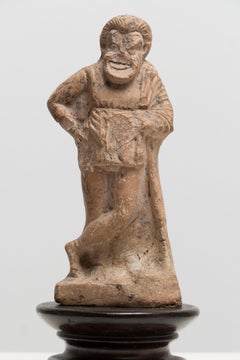
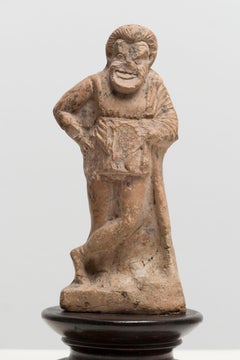
Ancient Greek Terracotta Comic Actor Figurine

Ancient Greek Terracotta Comic Actor Figurine

Located in Milan, IT

TERRACOTTA FIGURINE OF A COMIC ACTOR , Greece, c. 350 B.C. Labeled to the reverse, 'LAWRENCE COLL./LOT 426. SOTHEBY./APR. 1892. P. 816.'; Terracotta height 15.2 cm height 6 in Prove...

Category

15th Century and Earlier R.C. Gorman Sculptures
Materials

Terracotta, ABS

Previously Available Items
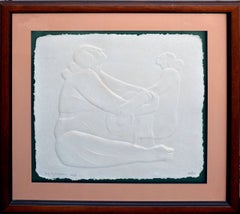
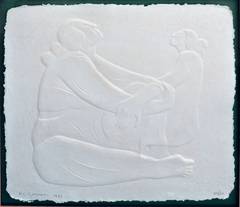
Two Women by Gorman
Two Women by Gorman

R.C. Gorman Two Women by Gorman, 1987

Sold

H 34 in W 33 in D 1 in

Two Women by Gorman

By R.C. Gorman

Located in Soquel, CA

Beautiful molded handmade paper relief of two women by Navajo artist Rudolph Carl (R.C.) Gorman. Signed and dated (1987) lower left. Edition number 60/150 lower right. Displayed in a wood frame. Gorman grew up in a traditional Navajo hogan and began drawing at age 3. He credited a teacher, Jenny Lind at Ganado Presbyterian Mission School, for his inspiration to become a full-time artist. After he left high school, he served in the Navy before entering college, where he majored in literature and minored in art at Northern Arizona University. In 1958, he received the first scholarship from the Navajo Tribal Council to study outside of the United States, and enrolled in the art program at Mexico City College.[4] There he learned of and was influenced by the work Diego Rivera. He later studied art at San Francisco State University. Gorman learned about the work of the Mexican social realists: Diego Rivera, David Siqueiros, and Rufino Tamayo. He became inspired by their colors and forms to change from abstraction to abstract realism. He used abstract forms and shapes to create his own unique, personal realistic style, recognizable to all who are acquainted with his work. While in Mexico, he also learned stone lithography from a master printer, Jose Sanchez. He used lithography throughout his life as a means of making original multiple images of his inspirations, often working by drawing directly on the stones from which the lithographs were printed. Gorman moved from California to New Mexico, opening the R. C. Gorman Navajo Gallery in Taos in 1968. It was the first Native American-owned art gallery in Taos. In 2003, he donated his personal library to Diné College in Tsaile, Arizona. He died at age 74 on November 3. New Mexico governor Bill Richardson...

Category

1980s R.C. Gorman Sculptures
Materials

Handmade Paper

R.c. Gorman sculptures for sale on 1stDibs.
Find a wide variety of authentic R.C. Gorman sculptures available for sale on 1stDibs. If you’re browsing the collection of sculptures to introduce a pop of color in a neutral corner of your living room or bedroom, you can find work that includes elements of orange and other colors. You can also browse by medium to find art by R.C. Gorman in ceramic, bronze, clay and more. Not every interior allows for large R.C. Gorman sculptures, so small editions measuring 9 inches across are available. R.C. Gorman sculptures prices can differ depending upon medium, time period and other attributes. On 1stDibs, the price for these items starts at $750 and tops out at $4,500, while the average work can sell for $2,000.