By Andrew Wyeth
Located in Southampton, NY
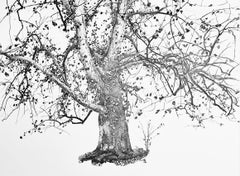
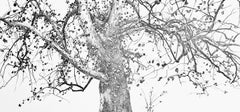
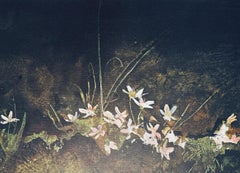
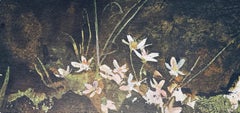
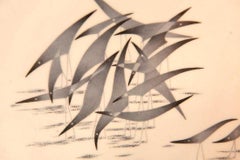
This exquisite lithograph after Andrew Wyeth (1917–2009), titled New Leaves, originates from the distinguished 1962 folio The Four Seasons: Paintings and Drawings by Andrew Wyeth. Published and printed by Art in America Company, Inc., New York, the edition exemplifies Wyeth’s quiet observation of nature and the passage of time. New Leaves captures the delicate stir of spring renewal—the subtle emergence of life in the landscape—rendered with Wyeth’s hallmark balance of precision, restraint, and emotional depth.
Executed on velin paper, this lithograph measures 17 x 13 inches (43.2 x 33 cm). As issued, it is unsigned and unnumbered, representing the folio’s authentic format. The Four Seasons series was conceived by the editors of Art in America in collaboration with Andrew and Betsy Wyeth, who selected drawings from the artist’s studio and personal archive to embody the poetic rhythm of the changing seasons. Each composition reveals Wyeth’s mastery of atmosphere, mood, and the quiet intensity of natural experience.
Artwork Details:
Artist: After Andrew Wyeth (1917–2009)
Title: New Leaves, from The Four Seasons, Paintings and Drawings by Andrew Wyeth, 1962
Medium: Lithograph on velin paper
Dimensions: 17 x 13 inches (43.2 x 33 cm)
Inscription: Unsigned and unnumbered, as issued
Date: 1962
Publisher: Art in America Company, Inc., New York
Printer: Art in America Company, Inc., New York
Condition: Well preserved, consistent with age and medium
Provenance: From the 1962 folio The Four Seasons, Paintings and Drawings by Andrew Wyeth, published and printed by Art in America Company, Inc., New York
Notes:
Excerpted from the 1962 folio:
"In 1962 the editors of Art in America proposed to Wyeth a portfolio of images of his recent dry-brush drawings. The artist and his wife suggested the theme, 'The Four Seasons,' because of the essential role played in his work by the cycle of the seasons. The drawings were selected by Andrew and Betsy Wyeth from works in the house and studio at Chadds Ford, supplemented by some owned by friends. With a few exceptions they had never been exhibited or reproduced. The plates were made directly from the originals. In these drawings Wyeth's loving concentration on the object is fully revealed. But as always in his work, this concern with the tangible is balanced by sensibility to mood, to the emotion arising from the actual. They are pervaded with a sense of the season—the exact time of year, the hour of the day, the quality of the light. To the truth and subtlety with which he captures these intangible factors, these drawings owe their poignant poetry."
About the Artist:
Andrew Wyeth (1917–2009) was an American visual artist and one of the best-known painters of the mid-20th century. Although he considered himself an abstractionist, Wyeth’s work is characterized by a meticulous realism imbued with psychological depth and atmosphere. He often painted the landscapes and people surrounding his homes in Chadds Ford, Pennsylvania, and Cushing, Maine, creating an intimate record of American rural life. The son of the celebrated illustrator N. C. Wyeth, Andrew trained under his father before developing his own deeply personal visual language inspired by Winslow Homer, Henry David Thoreau, and King Vidor. His wife, Betsy Wyeth, was both his muse and career manager, while his son Jamie Wyeth continued the family’s artistic legacy.
Among Wyeth’s best-known works is Christina’s World (1948), housed in the Museum of Modern Art, New York—a quintessential image of 20th-century American art. His other notable series include The Helga Pictures and his window studies, each reflecting a profound meditation on solitude, memory, and perception. Wyeth was the first painter to receive both the Presidential Medal of Freedom and the Congressional Gold Medal, and was elected to the French Académie des Beaux-Arts in 1980.
In 2022, Andrew Wyeth's painting Day Dream sold for USD 23.29 million at Christie’s New York, setting a world record for the artist.
Andrew Wyeth lithograph...
Category
1960s American Realist Raymond Loewy Art