Rolf RAFFLEWSKI Art

French, b. 1943
Rolf Rafflewski (b. 1943 - ) is a German artist born in Hanau am Main, Germany. He began to paint at the age of 12. His first solo exhibition was held just four years later. At the completion of his art studies at the Staatliche Zeichenakademie in 1961, Rafflewski visited Paris, fell in love with the city and moved there permanently. Paris – the elegant boulevards, lively quais and winding streets of Montmartre – provides the subject for many of his paintings and lithographs. Over the past twenty years Rafflewski has exhibited actively in galleries and museums throughout the world including San Francisco, Washington, Tokyo, Hawaii, Paris and New York. In addition to his many exhibitions, Rafflewski is known to collectors for the one hundred limited-edition lithographs he has created. In 1973, the Bibliotheque Nationale in Paris honored Rafflewski with a solo exhibition.
to
2
4
2
5
4
1
1
1
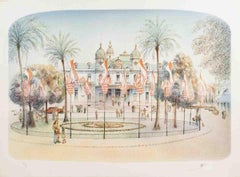
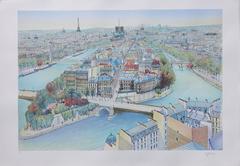
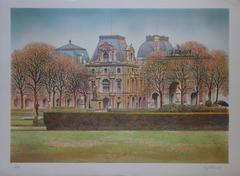
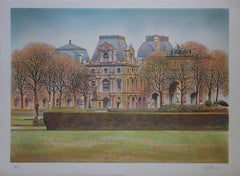
Paris : Louvre Museum - Original handsigned lithograph

Paris : Louvre Museum - Original handsigned lithograph

By Rolf Rafflewski

Located in Paris, IDF

Rolf RAFFLEWSKI Paris : Louvre Museum Original lithograph Handsigned in pencil Limited /275 copies On vellum 56 x 76 cm (c. 22 x 30 in) Excellent condition

Category

Late 20th Century Modern Rolf RAFFLEWSKI Art

Materials

Lithograph

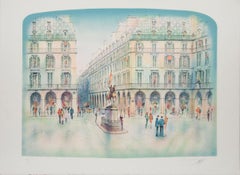
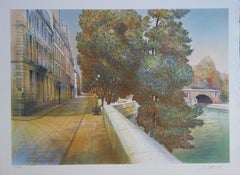
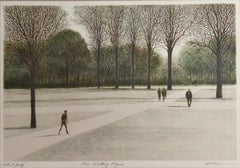
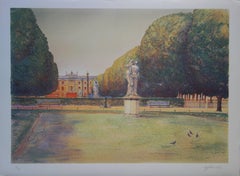
Square in Paris with the Kiss Sculpture - Original handsigned lithograph

Square in Paris with the Kiss Sculpture - Original handsigned lithograph

By Rolf Rafflewski

Located in Paris, IDF

Rolf RAFFLEWSKI Square in Paris with the Kiss Sculpture Original lithograph Handsigned in pencil Limited /275 copies On vellum 56 x 76 cm (c. 22 x 30 in) Excellent condition

Category

Late 20th Century Realist Rolf RAFFLEWSKI Art

Materials

Lithograph

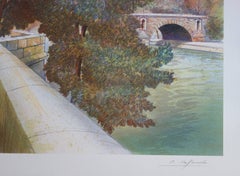
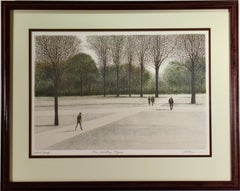
Paris : Near the Seine River - Original handsigned lithograph

Paris : Near the Seine River - Original handsigned lithograph

By Rolf Rafflewski

Located in Paris, IDF

Rolf RAFFLEWSKI (1943-) Paris : Near the Seine River (Quai de Bethune) Original lithograph Handsigned in pencil Limited /275 copies On vellum 56 x 76 cm (c. 22 x 30 in) Excellent c...

Category

Late 20th Century Modern Rolf RAFFLEWSKI Art

Materials

Lithograph

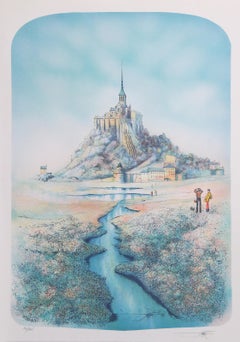
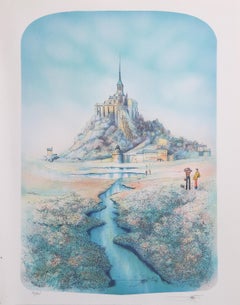
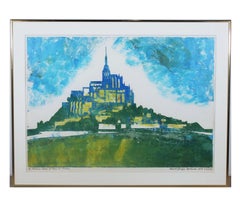
Mont Saint-Michel, Impressionist Lithograph by Rolf Rafflewski

Mont Saint-Michel, Impressionist Lithograph by Rolf Rafflewski

By Rolf Rafflewski

Located in Long Island City, NY

Rolf Rafflewski, German (1943 - 2019) - Mont Saint-Michel, Year: circa 1975, Medium: Lithograph, signed and numbered in pencil, Edition: 100/325, Image Size: 25.5 x 17.75 inches,...

Category

1970s Impressionist Rolf RAFFLEWSKI Art

Materials

Lithograph

Signed 21st Century Lithograph of Place Jeanne d'Arc, 22x30

Signed 21st Century Lithograph of Place Jeanne d'Arc, 22x30

By Rolf Rafflewski

Located in Brooklyn, NY

This limited edition lithograph, titled Place Jeanne d'Arc in Paris, was created by the artist Rolf Rafflewski. Printed on high-quality Arches Paper, the lithograph is part of a limi...

Category

21st Century and Contemporary Contemporary Rolf RAFFLEWSKI Art

Materials

Lithograph

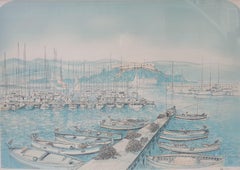
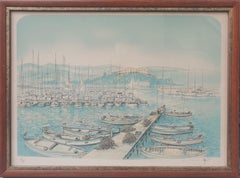
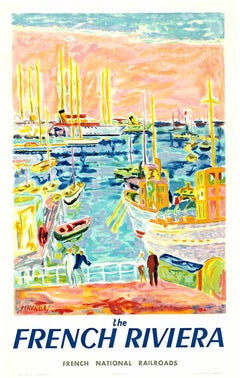
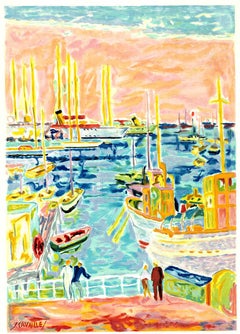
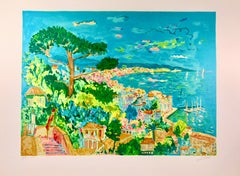
Antibes Azur Coast port boats large Lithography RAFFLEWSKI polish artist 20th

Antibes Azur Coast port boats large Lithography RAFFLEWSKI polish artist 20th

By Rolf Rafflewski

Located in PARIS, FR

Rolf RAFFLEWSKI Hanau, 1943 - Villejuif, 2019 Lithograph Signed lower right and numbered lower left Rolf Rafflewski is a painter and illustrator from Poland who worked in the second...

Category

Mid-20th Century Modern Rolf RAFFLEWSKI Art

Materials

Lithograph

Related Items
Windswept Landscape Henry Moore drawing of Scottish landscape for W.H. Auden

Windswept Landscape Henry Moore drawing of Scottish landscape for W.H. Auden

By Henry Moore

Located in New York, NY

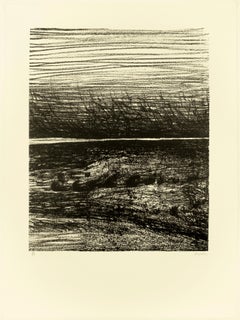
One of a series of 18 lithographs drawn by the artist fo¬r the Auden Poems/Moore Lithographs 1974 book and portfolio. This work is from an edition of 25 printed on vellum aside from the portfolio (edition of 75) and the book. Signed by the artist lower right in pencil; numbered lower left in pencil. Printed in inky black, this print features a shadowy landscape. Brush sweeps to the left, and the sky is drawn with long horizontal lines. In the bottom half of the composition, the ground looks rocky, perhaps dotted with shrubs. Windswept Landscape displays Moore’s fascination with light and dark – what he called a “…bias towards the blackness and mysterious depths.” Moore was inspired by the prints of Rembrandt and the drawings of Seurat, and even drew on his memories of viewing the Altamira cave paintings, recalling how some of the images used the shadow of candlelight on the rough surface of the rock to model light. Shortly before starting work on this series of lithographs, Moore had fallen ill, leaving him aware of his own mortality. His mood pervaded these prints with a sense of danger and foreboding. The Auden/Moore limited edition book and portfolio were exhibited on publication at the British Museum, London, with an accompanying catalogue. Windswept Landscape is one of a group of lithographs...

Category

Late 20th Century Modern Rolf RAFFLEWSKI Art
Materials

Lithograph

Edgar Degas, Dancer at the Barre, 1945 (after)

Edgar Degas, Dancer at the Barre, 1945 (after)

By Edgar Degas

Located in Southampton, NY

This exquisite lithograph after Edgar Degas (1834–1917), titled Danseur au bar (Dancer at the Barre), originates from the 1945 folio Degas, Ten Ballet Sketches. Published by The Stud...

Category

1940s Impressionist Rolf RAFFLEWSKI Art

Materials

Lithograph

1975 Andrew Dasburg Color Lithograph, "Trees in Ranchitos II" Taos Modernist

1975 Andrew Dasburg Color Lithograph, "Trees in Ranchitos II" Taos Modernist

By Andrew Michael Dasburg

Located in Denver, CO

"Trees in Ranchitos II" is a striking 1975 color lithograph by acclaimed modernist artist Andrew Michael Dasburg (1887–1979). This collectible artwork, initialed in the lower right, beautifully captures the serene landscapes of New Mexico, reflecting Dasburg’s signature fusion of Post-Impressionism and Cubist influences. The composition conveys the tranquil rhythm of trees and desert terrain, combining geometric abstraction with lyrical naturalism. The lithograph is presented in a custom frame measuring 30 ½ x 36 ¼ inches, with an image size of 16 ½ x 23 ¼ inches, making it a sophisticated and visually compelling addition to any collection of Taos Modernist art, American modernism, or Southwestern landscape prints. About Andrew Michael Dasburg (1887–1979): Born in Paris, France, Dasburg immigrated to New York City in 1892, where his early talent was recognized. He trained at the Art Students League of New York under notable instructors including Robert Henri, Kenyon Cox, and Birge Harrison. In 1908, he returned to Paris and encountered the works of Henri Matisse and Paul Cézanne, experiences that ignited his lifelong commitment to modernism. After settling in Woodstock, NY, Dasburg immersed himself in the avant-garde scene, collaborating with Morgan Russell...

Category

1970s American Impressionist Rolf RAFFLEWSKI Art

Materials

Lithograph

Edgar Degas, Dancer Standing in Profile, 1945 (after)

Edgar Degas, Dancer Standing in Profile, 1945 (after)

By Edgar Degas

Located in Southampton, NY

This exquisite lithograph after Edgar Degas (1834–1917), titled Danseur debout de profil (Dancer Standing in Profile), originates from the 1945 folio Degas, Ten Ballet Sketches. Published by The Studio Publications, Inc., New York, rendered and printed by Albert Carman, City Island, 1945, this work reflects Degas’s sensitive mastery of line, movement, and intimate observation, capturing the grace, poise, and psychological immediacy that define his iconic ballet imagery. In Danseur debout de profil (Dancer Standing in Profile), Degas reveals gesture and inner emotion through economical contour and lyrical nuance. Executed as a lithograph and pochoir on velin paper, this work measures 17 x 13 inches (43.18 x 33.02 cm). Signed in the plate and unnumbered as issued. Rendered and printed by Albert Carman, City Island, one of the notable American ateliers specializing in fine art lithography during the mid-20th century. Artwork Details: Artist: After Edgar Degas (1834–1917) Title: Danseur debout de profil (Dancer Standing in Profile), from Degas, Ten Ballet Sketches, 1945 Medium: Lithograph and pochoir on velin paper Dimensions: 17 x 13 inches (43.18 x 33.02 cm) Inscription: Signed in the plate and unnumbered as issued Date: 1945 Publisher: The Studio Publications, Inc., New York Printer: Albert Carman, City Island, 1945 Condition: Well preserved, consistent with age and medium Provenance: From the 1945 folio Degas, Ten Ballet Sketches, published by The Studio Publications, Inc., New York Notes: Excerpted from the album, Born in Paris in 1834, Edgar Degas lived, and surely loved the life of that city during most of his years. These continued somewhat sadly beyond those of most of his friends— into the debacle of the first World War, during which he died in 1917. Judging by the frequency with which he used them as models, he must have had an especial admiration for the ballet girls who followed a profession that at the time brought none of the glory and prosperity which attend it today. New aspects of the human body, revealed in movement, fascinated him. But his occupation with the simply anatomical side of his subjects never resulted in a cold interpretation. On the contrary there is a warmth and sympathy that pervades all of his work. The drawings here represent the painter in one important phase of his multi-sensitive view of life; and permit an insight which a more ambitious work might not do-into the operation of the creative process, the artist's transformation of reality as it passes through the mesh of his sensibilities. The Edition of this Portfolio is limited to MMMD examples. Rendered by Albert Carman. About the Publication: Degas, Ten Ballet Sketches, published in 1945 by The Studio Publications, Inc., New York, stands as one of the most elegant and scholarly mid-century American fine art folios devoted to the ballet imagery of Edgar Degas. Conceived as a high-quality interpretive portfolio, the album presents a series of lithograph-and-pochoir renderings based on Degas’s original drawings, executed with exceptional attention to tonal subtlety, contour fidelity, and the emotional interiority that defines the artist’s draftsmanship. Rendered and printed by Albert Carman on City Island, the publication embodies an American postwar effort to restore and celebrate European masterworks through meticulous handcraft and artisanal color application, honoring Degas’s distinctive line and the atmospheric delicacy of his studio-based studies. Produced in a substantial edition of MMMD examples, the portfolio offered audiences rare access to Degas’s private working drawings—images rarely seen outside institutional collections—while exemplifying the technical refinement and interpretive care characteristic of Carman’s workshop. Today, Degas, Ten Ballet Sketches remains a sought-after historical publication, valued for its craft, fidelity to Degas’s aesthetic, and its role in preserving and disseminating the artist’s intimate ballet imagery in a beautifully executed mid-century fine art format. About the Artist: Edgar Degas (1834–1917) was a French painter, draughtsman, printmaker, and sculptor whose groundbreaking fusion of classical draftsmanship, modern experimentation, and psychological depth helped define the trajectory of Western art, positioning him as one of the most influential figures of the nineteenth and early twentieth centuries; renowned for his depictions of ballet dancers, racehorses, theater scenes, cafe life, domestic interiors, milliners, laundresses, and women at their toilette, Degas reimagined observational realism through radical compositional innovation—employing extreme cropping, asymmetrical framing, oblique viewpoints, and dramatic lighting that anticipated photographic and cinematic language long before these technologies shaped visual culture, and although associated with Impressionism, he rejected plein-air spontaneity in favor of studio-based discipline rooted in the linear precision of Jean-Auguste-Dominique Ingres, the expressive chromaticism of Eugene Delacroix, and the modernity of Edouard Manet while also drawing inspiration from Japanese ukiyo-e prints, classical sculpture, and early photography; his independent artistic philosophy resonated with and helped shape the innovations of Pablo Picasso, Alexander Calder, Alberto Giacometti, Salvador Dali, Joan Miro, Wassily Kandinsky, Marcel Duchamp, and Man Ray, whose explorations of movement, form, dream logic, abstraction, and conceptualism all find antecedents in Degas’s investigations into seriality, temporality, and the fragmented figure, and his pioneering use of pastel, monotype, and wax sculpture fundamentally transformed each medium, influencing artists from Henri Matisse, Francis Bacon, Lucian Freud, and Giacomo Manzu to Paula Rego, contemporary realists, experimental photographers, and choreographers; his works are held in nearly every major museum collection worldwide—including the Musee dOrsay, the Louvre, the Metropolitan Museum of Art, the National Gallery of Art, the Art Institute of Chicago, the Courtauld Institute, and the National Gallery, London—affirming his central place in the history of art, and the highest auction record for Degas was achieved at Sothebys London on February 3, 2015, when Danseuses en Bleu sold for 37,033,000 GBP, cementing his status as one of the most sought-after and enduringly significant artists of the Western canon. Edgar Degas lithograph...

Category

1940s Impressionist Rolf RAFFLEWSKI Art

Materials

Lithograph

Love Is What You Want

Tracey EminLove Is What You Want, 2015

$6,810

H 27.56 in W 19.69 in

Love Is What You Want

By Tracey Emin

Located in London, GB

2015 Offset lithographic poster 70 x 50 cm Edition of 500 Hand signed by Emin Published by Emin International Tracey Emin (born 1963) is best known for her intimate, authentic, auto...

Category

2010s Contemporary Rolf RAFFLEWSKI Art

Materials

Paper, Lithograph, Offset

I Promise To Love You

Tracey EminI Promise To Love You, 2014

$6,191

H 27.56 in W 19.69 in

I Promise To Love You

By Tracey Emin

Located in London, GB

2014 Colour offset lithograph on 250 gsm glossy wove paper 70 x 50 cm Edition of 500 Signed and dated in pen by Tracey Emin Published by Emin International Stored in its original tub...

Category

2010s Contemporary Rolf RAFFLEWSKI Art

Materials

Paper, Lithograph, Offset

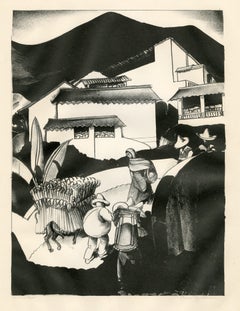
Lithograph of American rural life timeless with architecture monochrome

Lithograph of American rural life timeless with architecture monochrome

By Thomas Hart Benton

Located in London, GB

A man raises his hand to his chin, his neck tilted and face turned to look at a dilapidated farmhouse, barely held together by planks of wood and exposed to the elements. Behind him ...

Category

1930s American Modern Rolf RAFFLEWSKI Art

Materials

Lithograph

Edgar Degas, Dancer Arranging Her Dress, 1945 (after)

Edgar Degas, Dancer Arranging Her Dress, 1945 (after)

By Edgar Degas

Located in Southampton, NY

This exquisite lithograph after Edgar Degas (1834–1917), titled Danseuse arrangeant sa robe (Dancer Arranging Her Dress), originates from the 1945 folio Degas, Ten Ballet Sketches. Published by The Studio Publications, Inc., New York, rendered and printed by Albert Carman, City Island, 1945, this work reflects Degas’s sensitive mastery of line, movement, and intimate observation, capturing the grace, poise, and psychological immediacy that define his iconic ballet imagery. In Danseuse arrangeant sa robe (Dancer Arranging Her Dress), Degas reveals gesture and inner emotion through economical contour and lyrical nuance. Executed as a lithograph and pochoir on velin paper, this work measures 17 x 13 inches (43.18 x 33.02 cm). Signed in the plate and unnumbered as issued. Rendered and printed by Albert Carman, City Island, one of the notable American ateliers specializing in fine art lithography during the mid-20th century. Artwork Details: Artist: After Edgar Degas (1834–1917) Title: Danseuse arrangeant sa robe (Dancer Arranging Her Dress), from Degas, Ten Ballet Sketches, 1945 Medium: Lithograph and pochoir on velin paper Dimensions: 17 x 13 inches (43.18 x 33.02 cm) Inscription: Signed in the plate and unnumbered as issued Date: 1945 Publisher: The Studio Publications, Inc., New York Printer: Albert Carman, City Island, 1945 Condition: Well preserved, consistent with age and medium Provenance: From the 1945 folio Degas, Ten Ballet Sketches, published by The Studio Publications, Inc., New York Notes: Excerpted from the album, Born in Paris in 1834, Edgar Degas lived, and surely loved the life of that city during most of his years. These continued somewhat sadly beyond those of most of his friends— into the debacle of the first World War, during which he died in 1917. Judging by the frequency with which he used them as models, he must have had an especial admiration for the ballet girls who followed a profession that at the time brought none of the glory and prosperity which attend it today. New aspects of the human body, revealed in movement, fascinated him. But his occupation with the simply anatomical side of his subjects never resulted in a cold interpretation. On the contrary there is a warmth and sympathy that pervades all of his work. The drawings here represent the painter in one important phase of his multi-sensitive view of life; and permit an insight which a more ambitious work might not do-into the operation of the creative process, the artist's transformation of reality as it passes through the mesh of his sensibilities. The Edition of this Portfolio is limited to MMMD examples. Rendered by Albert Carman. About the Publication: Degas, Ten Ballet Sketches, published in 1945 by The Studio Publications, Inc., New York, stands as one of the most elegant and scholarly mid-century American fine art folios devoted to the ballet imagery of Edgar Degas. Conceived as a high-quality interpretive portfolio, the album presents a series of lithograph-and-pochoir renderings based on Degas’s original drawings, executed with exceptional attention to tonal subtlety, contour fidelity, and the emotional interiority that defines the artist’s draftsmanship. Rendered and printed by Albert Carman on City Island, the publication embodies an American postwar effort to restore and celebrate European masterworks through meticulous handcraft and artisanal color application, honoring Degas’s distinctive line and the atmospheric delicacy of his studio-based studies. Produced in a substantial edition of MMMD examples, the portfolio offered audiences rare access to Degas’s private working drawings—images rarely seen outside institutional collections—while exemplifying the technical refinement and interpretive care characteristic of Carman’s workshop. Today, Degas, Ten Ballet Sketches remains a sought-after historical publication, valued for its craft, fidelity to Degas’s aesthetic, and its role in preserving and disseminating the artist’s intimate ballet imagery in a beautifully executed mid-century fine art format. About the Artist: Edgar Degas (1834–1917) was a French painter, draughtsman, printmaker, and sculptor whose groundbreaking fusion of classical draftsmanship, modern experimentation, and psychological depth helped define the trajectory of Western art, positioning him as one of the most influential figures of the nineteenth and early twentieth centuries; renowned for his depictions of ballet dancers, racehorses, theater scenes, cafe life, domestic interiors, milliners, laundresses, and women at their toilette, Degas reimagined observational realism through radical compositional innovation—employing extreme cropping, asymmetrical framing, oblique viewpoints, and dramatic lighting that anticipated photographic and cinematic language long before these technologies shaped visual culture, and although associated with Impressionism, he rejected plein-air spontaneity in favor of studio-based discipline rooted in the linear precision of Jean-Auguste-Dominique Ingres, the expressive chromaticism of Eugene Delacroix, and the modernity of Edouard Manet while also drawing inspiration from Japanese ukiyo-e prints, classical sculpture, and early photography; his independent artistic philosophy resonated with and helped shape the innovations of Pablo Picasso, Alexander Calder, Alberto Giacometti, Salvador Dali, Joan Miro, Wassily Kandinsky, Marcel Duchamp, and Man Ray, whose explorations of movement, form, dream logic, abstraction, and conceptualism all find antecedents in Degas’s investigations into seriality, temporality, and the fragmented figure, and his pioneering use of pastel, monotype, and wax sculpture fundamentally transformed each medium, influencing artists from Henri Matisse, Francis Bacon, Lucian Freud, and Giacomo Manzu to Paula Rego, contemporary realists, experimental photographers, and choreographers; his works are held in nearly every major museum collection worldwide—including the Musee dOrsay, the Louvre, the Metropolitan Museum of Art, the National Gallery of Art, the Art Institute of Chicago, the Courtauld Institute, and the National Gallery, London—affirming his central place in the history of art, and the highest auction record for Degas was achieved at Sothebys London on February 3, 2015, when Danseuses en Bleu sold for 37,033,000 GBP, cementing his status as one of the most sought-after and enduringly significant artists of the Western canon. Edgar Degas lithograph...

Category

1940s Impressionist Rolf RAFFLEWSKI Art

Materials

Lithograph

Lithograph of American rural life timeless and romantic

Lithograph of American rural life timeless and romantic

By Thomas Hart Benton

Located in London, GB

A fine impression of this very popular image with full margins (smaller on top and bottom) published by Associated American Artists.

Category

1930s American Modern Rolf RAFFLEWSKI Art

Materials

Lithograph

Lithograph of American rural life timeless and romantic monochrome

Lithograph of American rural life timeless and romantic monochrome

By Thomas Hart Benton

Located in London, GB

In this sentimental work from 1939, Benton expresses his admiration for the rural lifestyle of the Midwest. He highlights the connection between man and the land by depicting two fig...

Category

1930s American Modern Rolf RAFFLEWSKI Art

Materials

Lithograph

Edgar Degas, Three Dancers, 1945 (after)

Edgar Degas, Three Dancers, 1945 (after)

By Edgar Degas

Located in Southampton, NY

This exquisite lithograph after Edgar Degas (1834–1917), titled Trois danseurs (Three Dancers), originates from the 1945 folio Degas, Ten Ballet Sketches. Published by The Studio Publications, Inc., New York, rendered and printed by Albert Carman, City Island, 1945, this work reflects Degas’s sensitive mastery of line, movement, and the intimate psychological nuances of the ballet studio. Executed as a lithograph and pochoir on velin paper, this work measures 13 x 17 inches (33.02 x 43.18 cm). Signed in the plate and unnumbered as issued. Rendered and printed by Albert Carman, City Island. Artwork Details: Artist: After Edgar Degas (1834–1917) Title: Trois danseurs (Three Dancers), from Degas, Ten Ballet Sketches, 1945 Medium: Lithograph and pochoir on velin paper Dimensions: 13 x 17 inches (33.02 x 43.18 cm) Inscription: Signed in the plate and unnumbered as issued Date: 1945 Publisher: The Studio Publications, Inc., New York Printer: Albert Carman, City Island Condition: Well preserved, consistent with age and medium Provenance: From the 1945 folio Degas, Ten Ballet Sketches, published by The Studio Publications, Inc., New York Notes: Excerpted from the album, Born in Paris in 1834, Edgar Degas lived, and surely loved the life of that city during most of his years. These continued somewhat sadly beyond those of most of his friends— into the debacle of the first World War, during which he died in 1917. Judging by the frequency with which he used them as models, he must have had an especial admiration for the ballet girls who followed a profession that at the time brought none of the glory and prosperity which attend it today. New aspects of the human body, revealed in movement, fascinated him. But his occupation with the simply anatomical side of his subjects never resulted in a cold interpretation. On the contrary there is a warmth and sympathy that pervades all of his work. The drawings here represent the painter in one important phase of his multi-sensitive view of life; and permit an insight which a more ambitious work might not do-into the operation of the creative process, the artist's transformation of reality as it passes through the mesh of his sensibilities. The Edition of this Portfolio is limited to MMMD examples. Rendered by Albert Carman. About the Publication: Degas, Ten Ballet Sketches (1945) is one of the earliest and most significant American postwar fine art portfolios devoted to Edgar Degas’s intimate works on paper. Published by The Studio Publications, Inc., New York, and rendered and printed by Albert Carman at City Island, the album sought to faithfully reproduce a group of Degas’s ballet-related drawings through a combination of lithography and hand-applied pochoir coloring. This hybrid technique allowed the edition to preserve the immediacy, tonal subtlety, and gestural delicacy central to Degas’s draftsmanship. Conceived as a fine art publication rather than a commercial book, the portfolio provided American audiences unprecedented access to Degas’s private, spontaneous studies—images that reveal the artist’s fascination with movement, anatomy, and the psychological atmosphere of the rehearsal studio. The album exemplifies the mid-20th-century revival of pochoir as a means of recreating the texture and coloristic nuance of original works on paper, and it remains an important document of how Degas’s legacy was translated into high-quality printed form for collectors, museums, and connoisseurs. About the Artist: Edgar Degas (1834–1917) was a French painter, draughtsman, printmaker, and sculptor whose groundbreaking fusion of classical draftsmanship, modern experimentation, and psychological depth helped define the trajectory of Western art, positioning him as one of the most influential figures of the nineteenth and early twentieth centuries; renowned for his depictions of ballet dancers, racehorses, theater scenes, cafe life, domestic interiors, milliners, laundresses, and women at their toilette, Degas reimagined observational realism through radical compositional innovation—employing extreme cropping, asymmetrical framing, oblique viewpoints, and dramatic lighting that anticipated photographic and cinematic language long before these technologies shaped visual culture, and although associated with Impressionism, he rejected plein-air spontaneity in favor of studio-based discipline rooted in the linear precision of Jean-Auguste-Dominique Ingres, the expressive chromaticism of Eugene Delacroix, and the modernity of Edouard Manet while also drawing inspiration from Japanese ukiyo-e prints, classical sculpture, and early photography; his independent artistic philosophy resonated with and helped shape the innovations of Pablo Picasso, Alexander Calder, Alberto Giacometti, Salvador Dali, Joan Miro, Wassily Kandinsky, Marcel Duchamp, and Man Ray, whose explorations of movement, form, dream logic, abstraction, and conceptualism all find antecedents in Degas’s investigations into seriality, temporality, and the fragmented figure, and his pioneering use of pastel, monotype, and wax sculpture fundamentally transformed each medium, influencing artists from Henri Matisse, Francis Bacon, Lucian Freud, and Giacomo Manzu to Paula Rego, contemporary realists, experimental photographers, and choreographers; his works are held in nearly every major museum collection worldwide—including the Musee dOrsay, the Louvre, the Metropolitan Museum of Art, the National Gallery of Art, the Art Institute of Chicago, the Courtauld Institute, and the National Gallery, London—affirming his central place in the history of art, and the highest auction record for Degas was achieved at Sothebys London on February 3, 2015, when Danseuses en Bleu sold for 37,033,000 GBP, cementing his status as one of the most sought-after and enduringly significant artists of the Western canon. Degas pochoir, Degas lithograph...

Category

1940s Impressionist Rolf RAFFLEWSKI Art

Materials

Lithograph

Previously Available Items
1975 Rolf Rafflewski 'Hotel de Ville' Contemporary Multicolor France Lithograph

1975 Rolf Rafflewski 'Hotel de Ville' Contemporary Multicolor France Lithograph

By Rolf Rafflewski

Located in Brooklyn, NY

Paper Size: 22 x 29.75 inches ( 55.88 x 75.565 cm ) Image Size: 19 x 27.5 inches ( 48.26 x 69.85 cm ) Framed: No Condition: B: Very Good Condition, with signs of handling or age ...

Category

1970s Rolf RAFFLEWSKI Art

Materials

Lithograph

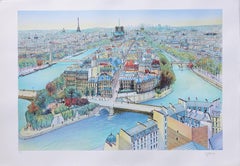
Overview of Paris - Tall handsigned lithograph

Overview of Paris - Tall handsigned lithograph

By Rolf Rafflewski

Located in Paris, IDF

Rolf RAFFLEWSKI Overview of Paris Original lithograph Handsigned in pencil Limited to 250 copies On Arches vellum 78 x 111 cm (c. 31 x 44 in) Excellent condition, light defects at ...

Category

Late 20th Century Modern Rolf RAFFLEWSKI Art
Materials

Lithograph

Overview of Paris - Tall handsigned lithograph

Overview of Paris - Tall handsigned lithograph

By Rolf Rafflewski

Located in Paris, IDF

Rolf RAFFLEWSKI Overview of Paris Original lithograph Handsigned in pencil Limited to 250 copies On Arches vellum 78 x 111 cm (c. 31 x 44 in) Excellent condition, light defects at ...

Category

Late 20th Century Modern Rolf RAFFLEWSKI Art
Materials

Lithograph

Rolf Rafflewski art for sale on 1stDibs.
Find a wide variety of authentic Rolf RAFFLEWSKI art available for sale on 1stDibs. You can also browse by medium to find art by Rolf RAFFLEWSKI in lithograph and more. Much of the original work by this artist or collective was created during the 20th century and is mostly associated with the modern style. Not every interior allows for large Rolf RAFFLEWSKI art, so small editions measuring 30 inches across are available. Customers who are interested in this artist might also find the work of Maxime Lalanne, Eugene Corneau, and Felix Labisse. Rolf RAFFLEWSKI art prices can differ depending upon medium, time period and other attributes. On 1stDibs, the price for these items starts at $216 and tops out at $270, while the average work can sell for $233.
Artists Similar to Rolf RAFFLEWSKI