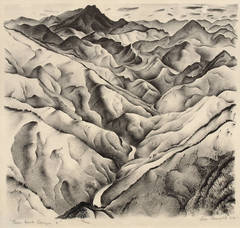
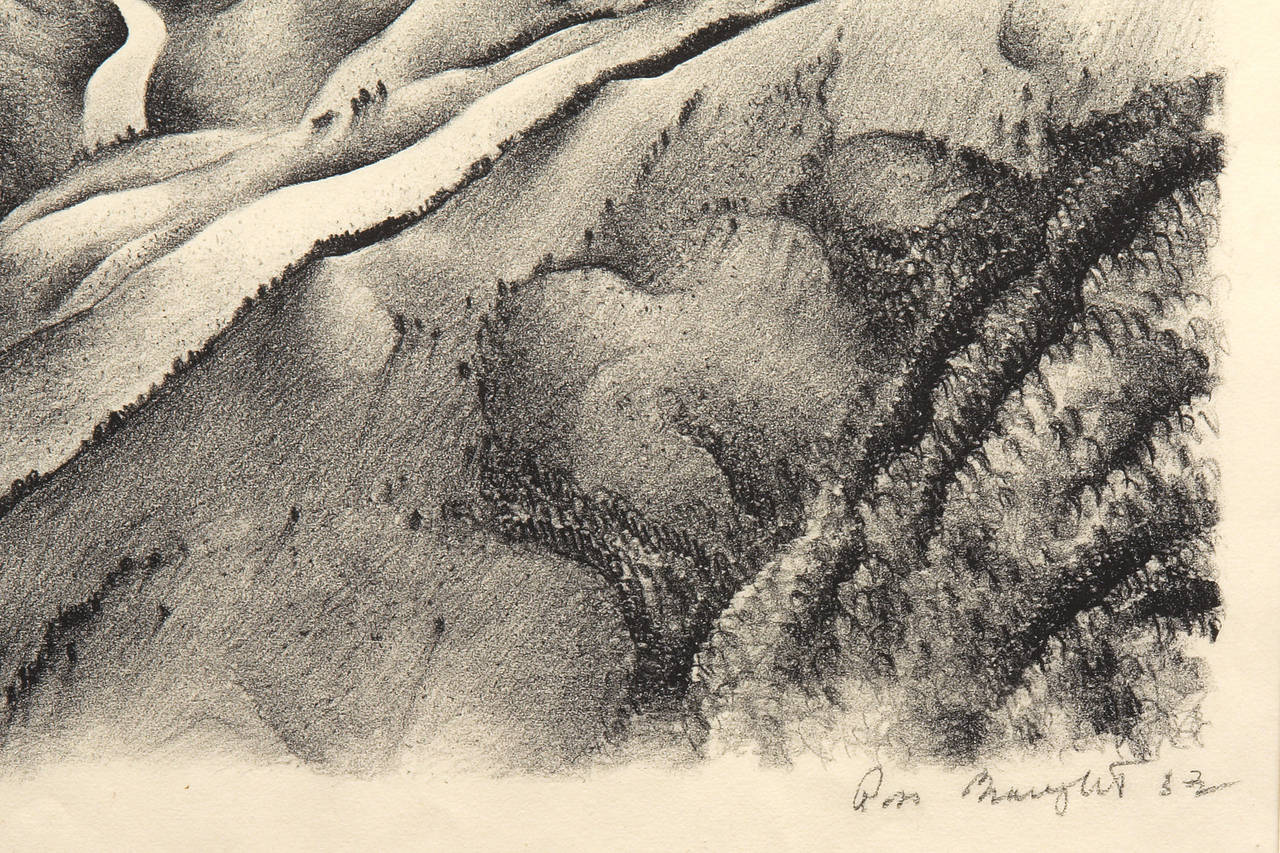
Ross Braught Art

American, 1898-1983

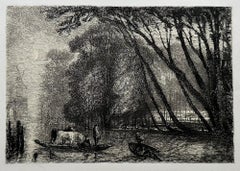
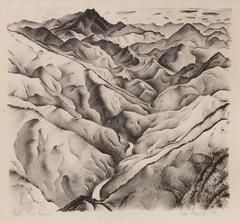
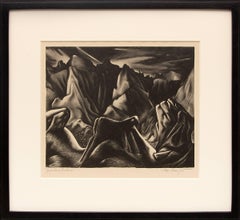
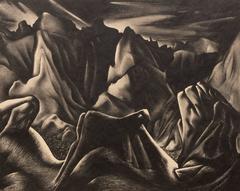
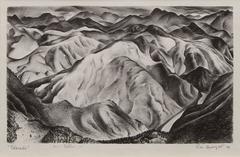
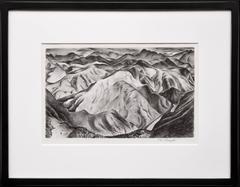
A 20th-century romantic, Ross Braught felt a life force coursing through all of creation. Like an artful Prospero, he celebrated the strange and wild and transformed the ordinary into mesmerizing wonder. Born in Carlisle, Braught attended the Pennsylvania Academy of Fine Art, studying with Daniel Garber. Winning academic approval, he was awarded the William Emlen Cresson Memorial Travelling Scholarship, which allowed him to visit England and Italy. In the twenties, he exhibited regularly at the Pennsylvania Academy, the National Academy of Design, the Corcoran Gallery and the Society of Independent Artists. Braught married in 1923 and the couple settled in Upper Black Eddy, a tiny town on Upper Delaware. Moving to Woodstock, in 1928, Braught pursued his emerging interest in lithography. As the decade grew to a close, his paintings increased in size and the motif of branching trees became a strong design element. During the Woodstock period, he began to explore the expressive possibilities of pictorial space with an elevated perspective and compressed focus. Facing debt, Braught accepted a position at the Kansas City Art Institute as head of painting in 1931. During the summers, he traveled to the Dakota Badlands, the Grand Canyon and the Colorado Rockies and the western spaces inspired more adventurous artistic compositions, in which landscape forms were highly stylized. When Braught turned to figural works, he now orchestrated rhythmic compositions of organic shapes. The masterwork of this phase of Braught's art is the 27-foot mural, Mnemosyne and the Four Muses, at the top of the Grand Staircase of the Kansas City Music Hall. The Braughts traveled to Tortola in the British Virgin Islands for the first time in 1936. After a three-year stint teaching at Cornell, the artist moved to the island with his family in 1939, where they took up residence in a hotel for the next seven years. The island, its jungles and its people, provided a deep well of inspiration for Braught as the exotic pushed him to find new means of expression. Due to shortages because of the war, Braught took to drawing with his children's pencils. The resulting works are testimony to his capacity to create infinitely complex works with such a simple tool and verification of Thomas Hart Benton's assertion that Braught was the greatest draughtsman of his age. His affinity for twisting tree branches now explored into intricate mazes of jungle growth, “The agitated movement of plants forms gave forth so much life and vitality that the utter lack of air currents and the breathlessness of atmosphere is a realization that comes as an afterthought”. After the war, Braught returned to teach at the Kansas City Art Institute, where he stayed until 1962. As an instructor, he encouraged his students to be bold colorists. In his work, he transplanted natural forms to the studio. In these late paintings, his spatial configurations became increasingly elaborate with tricky perspectives and reflections. These playful compositions, which hover between abstract design and illusion, anticipate post-modern works of later decades. With a reorganization of the Kansas City Art Institute, Braught returned to Philadelphia. It is believed that his wife may have had Alzheimer's, but the only communication from him was sending some pieces to the Institute in the early 60s. After a successful career as an artist and educator, Ross Braught disappeared from view for the last two decades of his life, leaving only a post office box as a contact. Yet no one was able to track down the mysterious figure and thus his life's work became the source of legend rather than of history. In a way, this was fitting for an artist who portrayed ancient myths and saw their resonance in nature. In 2000, Hirschl and Adler, New York organized the exhibition, “Ross Braught: A Visual Diary”, which cast the spotlight on the artist once again.
to
2
Overall Width
to
Overall Height
to
2
2
2
2
2
2
2
2
10,817
2,842
2,494
1,415
2
Artist: Ross Braught
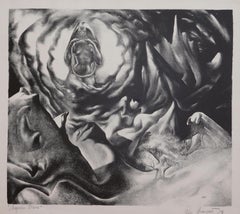
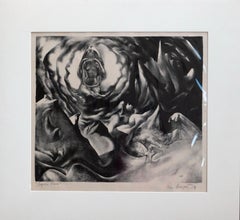
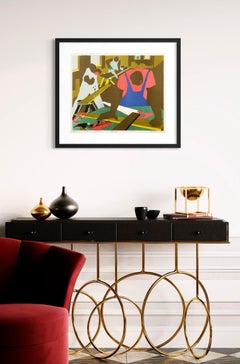
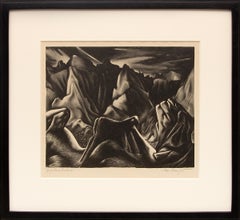
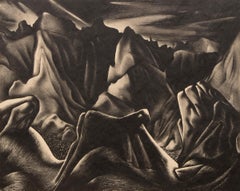
Original Pencil Signed Lithograph - Wagner's Muse

Original Pencil Signed Lithograph - Wagner's Muse

By Ross Braught

Located in Phoenix, AZ

Ross Eugene Braught (1898-1983) Original Lithograph titled “Wagner’s Muse.” Image measures 15 ½ x 17 3/4 inches. Pencil signed and dated lower right. Titled lower left. Rests in a 2...

Category

Mid-20th Century Ross Braught Art

Materials

Paper, Lithograph

Original Pencil Signed Lithograph - Mako Sica (Tchaikovsky's Sixth)

Original Pencil Signed Lithograph - Mako Sica (Tchaikovsky's Sixth)

By Ross Braught

Located in Phoenix, AZ

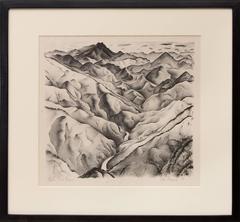
Ross Eugene Braught (1898-1983) Original Lithograph titled “Mako Sica (Tchaikovsky's Sixth).” Image measures 12 3/4 x 14 1/4. Pencil signed and dated lower right. Titled lower left. ...

Category

Mid-20th Century Ross Braught Art

Materials

Paper, Lithograph

Related Items
Extra Large Cyanotype Seascape of Pacific Ocean Currents, Nautical Blue & White

Extra Large Cyanotype Seascape of Pacific Ocean Currents, Nautical Blue & White

By Kind of Cyan

Located in Barcelona, ES

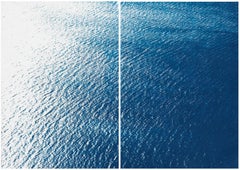
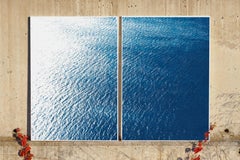
This is an exclusive handprinted limited edition cyanotype. "Pacific Ocean Currents (Blue Border)" is a handmade cyanotype print of rough water texture resembling Pacific Ocean swell...

Category

2010s Realist Ross Braught Art

Materials

Other Medium, Lithograph, Rag Paper, Watercolor

Polish French Figurative Abstract Art Brut Expressionist Lithograph Maryan

Polish French Figurative Abstract Art Brut Expressionist Lithograph Maryan

By Pinchas Maryan

Located in Surfside, FL

Pinchas Burstein, known as Maryan Lithograph (after the drawing). 1960 Dimensions: 12 3/8 x 9 3/8 inches (315 x 240mm). There is printed text on the back, as issued. Signed in the...

Category

1960s Expressionist Ross Braught Art

Materials

Paper, Lithograph

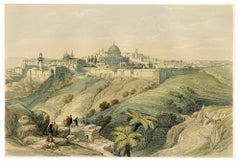
Cana, General View

David RobertsCana, General View

$1,069

H 12.5 in W 19 in

Cana, General View

By David Roberts

Located in London, GB

First Edition and Subscription Edition lithographs available Full plate: 34 Presented in a acid free mount Modern hand-coloured lithograph for the first edition of David Roberts' Th...

Category

1840s Realist Ross Braught Art

Materials

Laid Paper, Lithograph

Tiberias Looking Towards Hermon

Tiberias Looking Towards Hermon

By David Roberts

Located in London, GB

DAVID ROBERTS RA Tiberias Looking Towards Hermon 1796 - 1864 First Edition and Subscription Edition lithographs available Full plate: 38 Presented in a acid free mount Modern hand-...

Category

1840s Realist Ross Braught Art

Materials

Laid Paper, Lithograph

Hebron

David RobertsHebron

$1,069

H 12.5 in W 19 in

Hebron

By David Roberts

Located in London, GB

David Roberts RA Hebron 1796 - 1864 First Edition and Subscription Edition lithographs available Full plate: 55 Presented in a acid free mount Modern hand-coloured lithograph for th...

Category

1840s Realist Ross Braught Art

Materials

Laid Paper, Lithograph

Une Mère et Deux Enfants

Une Mère et Deux Enfants

By Pierre-Auguste Renoir

Located in New York, NY

A very good, dark and evenly-printed impression of this scarce lithograph on cream laid paper. From the edition of approximately 50.

Category

1910s Impressionist Ross Braught Art

Materials

Laid Paper, Lithograph

Andy Warhol Studies for a Boy Book (1950s Warhol illustrated announcement)

Andy Warhol Studies for a Boy Book (1950s Warhol illustrated announcement)

By Andy Warhol

Located in NEW YORK, NY

Andy Warhol Studies for a Boy Book 1956: A rare sought-after, 1950s Andy Warhol designed poster invitation published on the occasion of: Warhol's 'Studies for a Boy Book', held at the Bodley Gallery and Bookshop Feb. 14 - March 3, 1956. A rare early Warhol collectible that seldom comes to market. Not to be passed upon. Medium: Offset lithograph on wove paper. Framed in glass. Dimensions: 15.75 x 13.5 inches (40 x 34.3 cm). Framed dimensions: 24h x 26w inches. Good overall vintage condition; fold-lines as originally issued; Unsigned from an edition of unknown. Rare. With the Estate of Andy Warhol and the Andy Warhol Foundation for the Visual Arts Authorization ink-stamps on the reverse; initialed 'T.J.H.' by Timothy J. Hunt of the Andy Warhol Foundation and annotated 'XX-07.16' and 'PM19.0242' in pencil on the reverse. Provenance: The Andy Warhol Foundation for the Visual Arts, New York Susan Sheehan Gallery, New York Private Collection, New York Further Background: "In the 1950's Warhol self-published a large series of artist’s books & hold parties at Serendipity 3, a restaurant and ice cream parlor on Manhattan’s Upper East Side, where his friends would help him hand color his books. In 1956, he presented a solo exhibition at the Bodley Gallery called Studies for a Boy Book. These sketchbook drawings of portraits of young men and erotic portrayals of male nudes contrasted with the work of other contemporary gay artists, such as Robert Rauschenberg and Jasper Johns, who considered Warhol 'too swish.' (source: The Andy Warhol Museum) Collections: The Art Institute of Chicago Further background: Warhol’s career began as a commercial illustrator on New York’s Madison Avenue in 1949, during the massive post-war economic boom. His arrival additionally coincided with an extensive change in the motivations and strategies behind advertising, utilizing applied psychology to influence American consumers to purchase products. This stint as an ad man would further his Pop interest in cultural commercialization and start his artistic career; thus began the first chapter of Warhol’s oeuvre, dominated by charming and light-handed ink drawings. As a master of line and contour, Warhol’s consistent and unique drawings and designs piqued the interest of his clients, earning him commissions and collaborations with some of the biggest brands of the day: Tiffany & Co., Columbia Records, and Vogue, to name a few. Though stylistically different from the Pop, these early drawings offer a glimpse at an artist well on his way to establishing an art movement that would change the way the world conceived of contemporary art and its connection to pop culture, morphing from his early successes in the commercial art scene. The simple yet sophisticated line drawings contain... his favorite things: cherubs, shoes, cats, and often young men. Across these drawings and hand-colored prints, we see Warhol as a compulsive creator, documenting life and fantasy with the stark clarity of ink on paper." (source: Phillips) _ Obsessed with celebrity, consumer culture, and mechanical reproduction, Pop Art king, Andy Warhol created some of the 20th century’s most iconic images. Warhol was widely influenced by popular & consumer culture, with this being evident in some of his most famous works: 32 Campbell's soup cans, Brillo pad box sculptures, and portraits of Marilyn Monroe & Mick Jagger, for example. Rejecting the standard painting and sculpting modes of his era, Warhol embraced silk-screen printmaking to achieve his characteristic hard edges and flat areas of color. The artist mentored Keith Haring and Jean-Michel Basquiat and continues to influence contemporary art around the world: His most bold successors include Richard Prince, Takashi Murakami, and Jeff Koons. Warhol has been the subject of exhibitions at the Whitney Museum of American Art, Museum of Modern Art, Tate Modern, and Centre Pompidou, among other institutions. Related Categories 1950s Andy Warhol. Vintage Andy Warhol. Mid century modern. Pop Art. Andy Warhol advertising...

Category

1960s Pop Art Ross Braught Art

Materials

Paper, Lithograph

Toulouse Lautrec Original Lithograph Famous Political 1800s Collection Signed

Toulouse Lautrec Original Lithograph Famous Political 1800s Collection Signed

By Henri de Toulouse-Lautrec

Located in Milwaukee, WI

"Lautrec Book: From Au Pied du Sinai written by Georges Clemenceau" lithographs created by the legendary Henri de Toulouse-Lautrec. This book, Au Pied...

Category

1890s Post-Impressionist Ross Braught Art

Materials

Lithograph, Mulberry Paper

"Fishing Village" Joe Jones, Mid-Century, American Life, Small Town Scene

"Fishing Village" Joe Jones, Mid-Century, American Life, Small Town Scene

By Joe Jones

Located in New York, NY

Joe Jones Fishing Village, 1949 Signed in pencil lower right margin Lithograph on wove paper Image 9 5/16 x 12 9/16 inches Sheet 12 x 15 15/16 inches From the edition of 250 The initial details of Jones' career are sparse, and this is intentional. The young artist was engaged in a process of self-reinvention, crafting a persona. When he submitted a work to the Sixteen Cities Exhibition at New York City's Museum of Modern Art in 1933, he briefly characterized himself: "Born St. Louis, 1909, self-taught. " Jones intentionally portrayed himself to the art community as an authentic working-class figure, backed by a compelling history. He was the youngest of five children in a family led by a one-armed house painter from St. Louis, a Welsh immigrant, and his German American spouse. At the age of ten, Jones found himself in a Missouri reformatory due to authorities' concerns over his graffiti activities. After completing elementary school, he traveled by freight car to California and back, even being arrested for vagrancy in Pueblo, Colorado. Returning to St. Louis, he attempted to settle down by working alongside his father. Yet, Jones felt a profound restlessness and was drawn toward a more elevated artistic pursuit in his late teenage years. He discovered a local collective of budding artists that formed St. Louis’s "Little Bohemia," sharing a studio and providing mutual support until he managed to secure his own modest workspace in a vacant garage. Jones’s initial creations comprised still lifes, landscapes, and poignant portraits of those close to him. These subjects were not only accessible but also budget-friendly, as hiring models was beyond his means. He depicted himself, his father, mother, and eventually, his wife. In December 1930, at the age of 21, Jones wed Freda Sies, a modern dancer and political activist who was four years older than him. By 1933, Jones had started gaining noteworthy local recognition through a solo exhibition at the Artists’ Guild of Saint Louis. Of the twenty-five paintings on display, one, titled River Front (private collection, previously with Hirschl and Adler Galleries), was selected to illustrate a feature article about his show in The Art Digest (February 15, 1933, p. 9). Shortly before this exhibition, a young surgeon named Dr. Robert Elman took an interest in Jones’s art, purchasing several pieces and forming a group of potential patrons committed to providing the emerging artist with a monthly stipend in exchange for art. This group was officially known as the "Co-operative Art Society," but it was informally dubbed the "Joe Jones Club. " Jones became an active participant in the St. Louis artistic scene, particularly within its bohemian segments. He embraced modernism and was a founding member of the "New Hat" movement in 1931, a playful rebellion against the conservative and traditional mainstream art establishment. The summer of 1933 marked a significant shift in Jones’s journey. Sponsored by a dedicated ally, Mrs. Elizabeth Green, Jones, along with Freda and Green, embarked on an eastward road trip. In Washington, D. C., they explored the Corcoran Gallery of Art, the Freer Gallery (part of the Smithsonian Institution), the Library of Congress, and Mount Vernon. Following this whirlwind of art and American culture, they made their way to New York, where they visited various museums and galleries, including a stop at The New School for Social Research, which featured notable contemporary murals by fellow Missourian Thomas Hart Benton and the politically active Mexican artist, José Clemente Orozco. From June through August, Jones and Freda resided in the artist colony of Provincetown, Massachusetts, later returning home via Detroit to see Diego Rivera’s Detroit Industry mural housed at the Detroit Institute of Fine Arts. While Elizabeth Green allegedly hoped that Jones would refine his artistic skills under the guidance of Charles Hawthorne or Richard Miller in Provincetown, Jones followed a different path. Rather than pursuing conservative mentors, he connected with an engaging network of leftist intellectuals, writers, and artists who dedicated their time to reading Marx and applying his theories to the American landscape. Jones's reaction to the traditional culture of New England was captured in his statement to a reporter from the St. Louis Post Dispatch: “Class consciousness . . . that’s what I got of my trip to New England. Those people [New Englanders] are like the Chinese—ancestor worshipers. They made me realize where I belong” (September 21, 1933). The stark social divisions he witnessed there prompted him to embrace his working-class identity even more fervently. Upon returning to St. Louis, he prominently identified himself as a Communist. This newfound political stance created friction with some of his local supporters. Many of his middle-class advocates withdrew their backing, likely influenced not only by Jones’s politics but also by his flamboyant and confrontational demeanor. In December 1933, Jones initiated a complimentary art class for unemployed individuals in the Old Courthouse of St. Louis, the same location where the Dred Scott case was deliberated and where slave auctions formerly took place. Concurrently, the St. Louis Art League was offering paid courses. Emphasizing the theme of social activism, with a studio adorned with Soviet artwork, Jones’s institution operated for just over a year before being removed from the courthouse by local officials. The school’s political focus and unconventional teaching practices, along with its inclusion of a significant number of African American students during a period marked by rigid racial segregation, certainly contributed to its challenges. Under Jones’s guidance, the class created a large chalk pastel mural on board, measuring 16 by 37 feet, titled Social Unrest in St. Louis. Mural painting posed no challenge for the former housepainter, who was adept at handling large wall surfaces. His first significant commission in St. Louis in late 1931 was a mural that celebrated the city’s industrial and commercial fortitude for the local radio station, KMOX. This mural, aimed at conveying optimism amid severe economic hardship, showcased St. Louis's strengths in a modernist approach. When Jones resumed mural work in late 1933, his worldview had evolved considerably. The mural produced for the school in the courthouse, conceived by Jones, featured scenes of modern St. Louis selected to highlight political messages. Jones had observed the technique of utilizing self-contained scenes to craft visual narratives in the murals he encountered in the East. More locally, this compositional strategy was commonly employed by the renowned Missouri artist...

Category

1940s American Realist Ross Braught Art

Materials

Paper, Lithograph

"Wildflowers & Butterflies" Color Lithograph Botanical Monarch Thistle Grass

"Wildflowers & Butterflies" Color Lithograph Botanical Monarch Thistle Grass

Located in Austin, TX

Page size: 17.5 x 17 in. Vintage Frame with gold leaf finish size: 24 x 26 in. This intricately detailed lithograph depicts an vibrant floral scene against a warm, earthy backgroun...
Category

Mid-20th Century Ross Braught Art

Materials

Paper, Lithograph

Previously Available Items
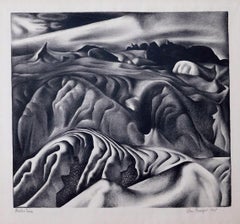
Bad Lands Nocturne- South Dakota Landscape, Modernist Black and White Lithograph

Bad Lands Nocturne- South Dakota Landscape, Modernist Black and White Lithograph

By Ross Braught

Located in Denver, CO

Vintage 1934 original signed lithograph print by Ross Braught (1898-1983), "Bad Lands Nocturne" is a modernist WPA era black and white art work depicting the Bad Lands of South Dakota landscape...

Category

1930s American Modern Ross Braught Art

Materials

Lithograph

Clear Creek Canyon (Colorado)

Ross BraughtClear Creek Canyon (Colorado), 1933

Sold

H 25.5 in W 27.5 in D 0.5 in

Clear Creek Canyon (Colorado)

By Ross Braught

Located in Denver, CO

Housed in a custom walnut frame with archival 8 ply mat and museum glass. Outer dimensions measure 25 ½ x 27 ½ x ½ inches. Image measures 16 ¼ x 17 ¼ inches (sight). About the artist: After a successful career as an artist and educator, Ross Braught disappeared from view for the last two decades of his life, leaving only a post office box...

Category

20th Century American Modern Ross Braught Art

Materials

Lithograph

Bad Lands Nocturne (South Dakota)

Bad Lands Nocturne (South Dakota)

By Ross Braught

Located in Denver, CO

Bad Lands of South Dakota, 1934 modernist landscape by Ross Braught (1898-1983), lithograph is pencil signed, titled and dated in lower margin. Housed in...

Category

1930s American Modern Ross Braught Art

Materials

Lithograph

Colorado
Colorado

Ross BraughtColorado, 1933

Sold

H 22.5 in W 24.75 in D 0.5 in

Colorado

By Ross Braught

Located in Denver, CO

A rare lithograph pencil signed by the artist and numbered 1 of an edition of 15. Housed in a custom frame with all archival materials and museum glass. Outer dimensions measure 2...

Category

1930s American Modern Ross Braught Art

Materials

Lithograph

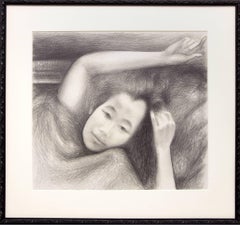
Untitled (Portrait of a Girl)

Untitled (Portrait of a Girl)

By Ross Braught

Located in Denver, CO

An original signed framed drawing masterfully rendered in graphite on paper by American modernist artist, Ross Braught (1898-1983), signed and dated 1963 lower right. Presented in a custom frame with all archival materials, outer dimensions measure 23 ¼ x 25 x 1 inches. Image size is 17 ½ x 19 ¼ inches. After a successful career as an artist and educator, Ross Braught disappeared from view for the last two decades of his life, leaving only a post office box...

Category

Mid-20th Century American Modern Ross Braught Art

Materials

Graphite, Archival Paper

Colorado
Colorado

Ross BraughtColorado, 1933

Sold

H 23.25 in W 24.5 in D 1 in

Colorado

By Ross Braught

Located in Denver, CO

Lithograph on paper. Sheet size is 18 3/4 x 24 3/4 x 1 inches. Housed in a custom frame with all archival materials; outer dimensions measure 23.25 x 24.5 x 1 inch. Image measures...

Category

1930s American Modern Ross Braught Art

Materials

Lithograph

Forest Interior
Forest Interior

Ross BraughtForest Interior, circa 1950

Sold

H 30.5 in W 40.5 in D 1 in

Forest Interior

By Ross Braught

Located in Denver, CO

Recently fitted in a custom frame with all archival materials. Framed dimensions are 30.5 x 40.5 x 1 inches. Image measures 22 x 33 inches. About the artist: After a successful career as an artist and educator, Ross Braught disappeared from view for the last two decades of his life, leaving only a post office box...

Category

20th Century American Modern Ross Braught Art

Materials

Ink

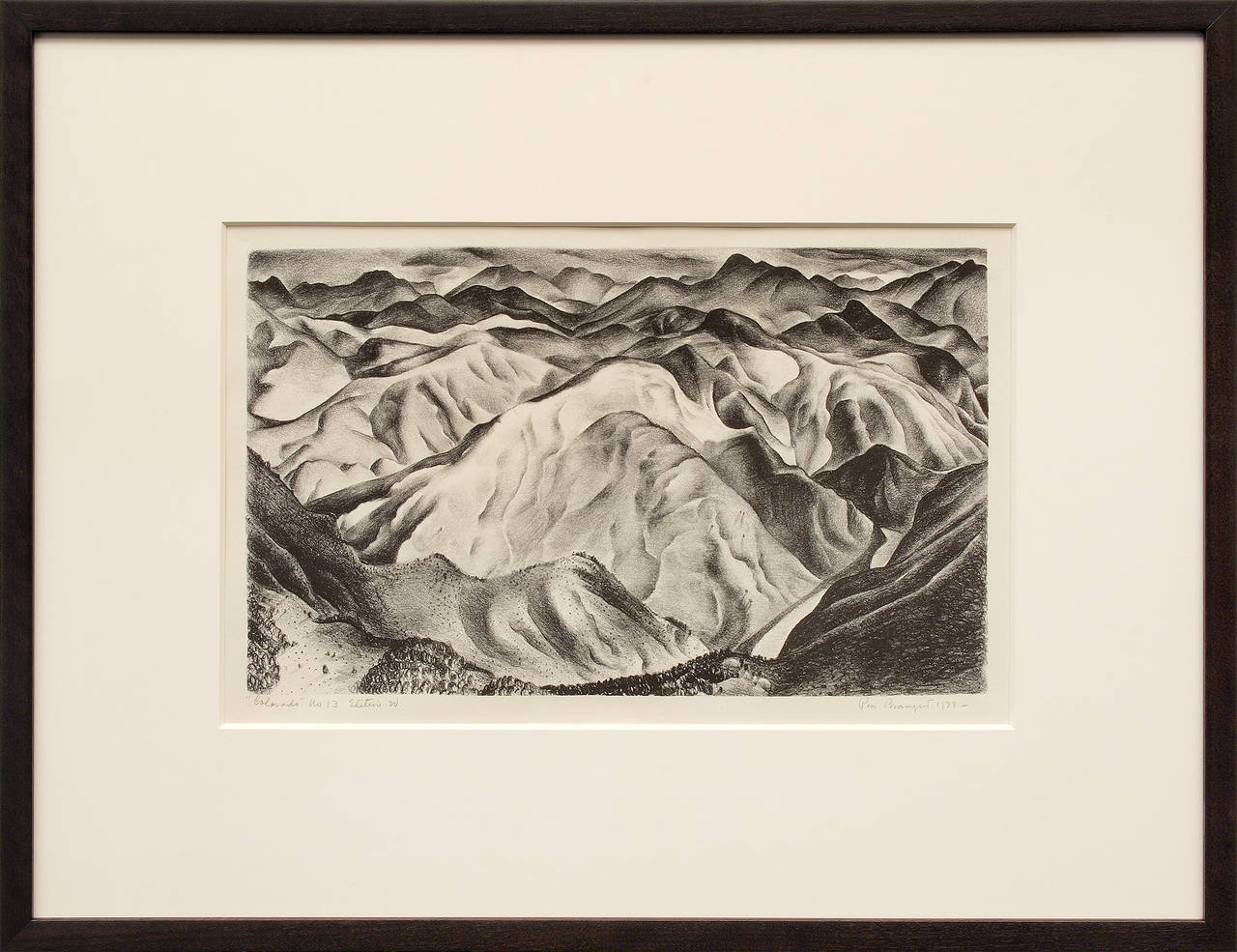
Colorado
Colorado

Ross BraughtColorado, 1933

Sold

H 9.75 in W 16.75 in

Colorado

By Ross Braught

Located in Denver, CO

Number 13 in an edition of only 20 printed. Custom frame with all archival materials. The framed dimensions are 20.75 x 27.5 inches. Pencil signed and dated lower right; titled lower left. Expedited and International Shipping is available; please contact us for a quote. About the Artist: After a successful career as an artist and educator, Ross Braught disappeared from view for the last two decades of his life, leaving only a post office box...

Category

1930s Ross Braught Art

Materials

Lithograph

Colorado
Colorado

Ross BraughtColorado, 1933

Sold

H 10 in W 16.5 in

Colorado

By Ross Braught

Located in Denver, CO

Number 12 in an edition of only 20 printed. Framed dimensions are 20.75 x 26 inches. Pencil signed and dated lower right; titled lower left. Expedited and International Shipping is available; please contact us for a quote. About the Artist: After a successful career as an artist and educator, Ross Braught disappeared from view for the last two decades of his life, leaving only a post office box...

Category

1930s Modern Ross Braught Art

Materials

Lithograph

Clear Creek Canyon (Colorado)

Clear Creek Canyon (Colorado)

By Ross Braught

Located in Denver, CO

Framed dimensions are 23.25 x 24.25 inches. Artist Bio: After a successful career as an artist and educator, Ross Braught disappeared from view for the last two decades of his life, leaving only a post office box...

Category

Ross Braught Art

Materials

Lithograph

Ross Braught art for sale on 1stDibs.

Find a wide variety of authentic Ross Braught art available for sale on 1stDibs.