Sanat Kar More Art

to
1
Overall Width
to
Overall Height
to
1
1
1
1
1
1
4
262
223
122
116
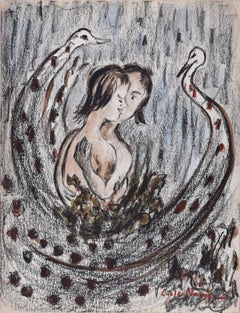
Artist: Sanat Kar
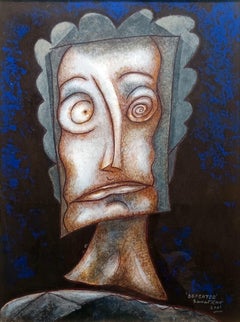
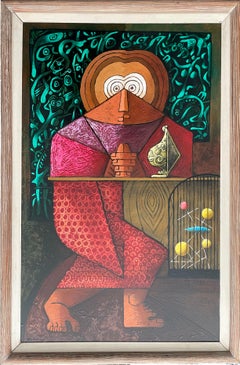
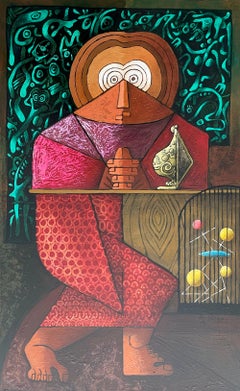
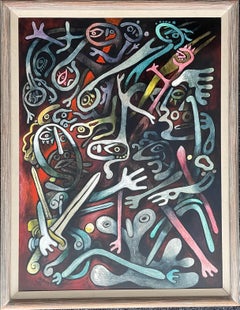
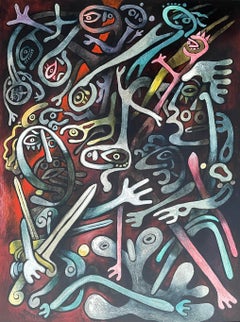
Defeated, Figurative, Tempera on Paper by Sanat Kar "In Stock"

Defeated, Figurative, Tempera on Paper by Sanat Kar "In Stock"

By Sanat Kar

Located in Kolkata, West Bengal

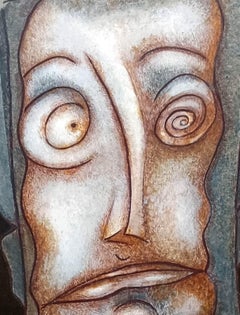
Sanat Kar - Defeated Tempera on Paper 17.5 x 13 inches, 2001 (Unframed & Delivered) “Defeated” (2001) by Sanat Kar is a surreal tempera painting that portrays a haunting, mask-like ...

Category

Early 2000s Modern Sanat Kar More Art

Materials

Paper, Tempera

Related Items
"Two Pueblo Dancers, Santa Clara" Pablita Velarde, New Mexico Native American

"Two Pueblo Dancers, Santa Clara" Pablita Velarde, New Mexico Native American

Located in New York, NY

Pablita Velarde Two Pueblo Dancers, Santa Clara, 1993 Signed and dated lower right Casein on paper 7 1/2 x 7 1/4 inches Provenance Adobe Gallery, New Mexico Private Collection, Texa...

Category

1990s American Modern Sanat Kar More Art

Materials

Paper, Casein

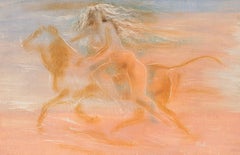
'Europa and the Bull', Greek Mythology, NYMOMA, Boston Museum of Fine Arts, PAFA

'Europa and the Bull', Greek Mythology, NYMOMA, Boston Museum of Fine Arts, PAFA

By Giglio Raphael Dante

Located in Santa Cruz, CA

Signed lower right 'Dante' for Giglio Raphael Dante (American, born 1916), titled verso and painted circa 1940. Raphael Dante first studied at the Academy of Rome prior to moving to...

Category

1940s Modern Sanat Kar More Art

Materials

Paper, Tempera

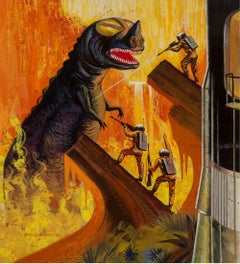
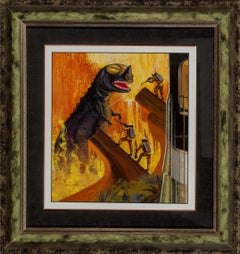
Godzilla like Dinosaur Monster, SciFi, Science Fiction Cover Illustration

Godzilla like Dinosaur Monster, SciFi, Science Fiction Cover Illustration

By Paul Wenzel

Located in Miami, FL

Beautiful Godzilla-like monster illustration from 1961. Wenzel was a prolific Disney Artist for decades. The work is beautifully matted and framed and looks better in person. Sign...

Category

1960s American Modern Sanat Kar More Art

Materials

Mixed Media, Gouache, Tempera, Illustration Board

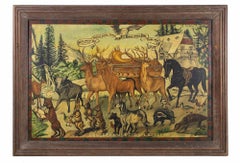
Hunter's funeral - Drawing in Tempera - Early 20th Century

Hunter's funeral - Drawing in Tempera - Early 20th Century

Located in Roma, IT

Hunter's funeral is a modern artwork realized in the early 20th Century. Tempera painting on board. Hand signed on the lower margin. Includes frame: 60 x 86 cm

Category

Early 20th Century Modern Sanat Kar More Art

Materials

Tempera

Peacocks  - Original Mixed Media on Paper by Lucie Navier - 1930s

Peacocks - Original Mixed Media on Paper by Lucie Navier - 1930s

By Lucie Navier

Located in Roma, IT

Peacocks is a painting realized by Lucie Navier in the 1930s. Original tempera painting and pastels on cardboard. Hand-signed by the artist on the lower right corner in red paintin...

Category

1930s Modern Sanat Kar More Art

Materials

Tempera, Pastel

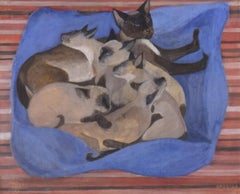
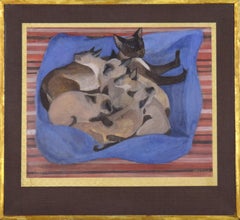
Siamese Cat with Kittens by Orovida Pissarro - Egg tempura painting

Siamese Cat with Kittens by Orovida Pissarro - Egg tempura painting

By Orovida Pissarro

Located in London, GB

Siamese Cat with Kittens by Orovida Pissarro (1893-1968) Egg tempera on linen 39 x 48 cm (15³/₈ x 18⁷/₈ inches) Signed lower right Orovida and dated lower left 1934 Provenance J Ankri, 8th October 1967 Literature K L Erickson, Orovida Pissarro: Painter and Print-Maker with A Catalogue Raisonné of Paintings, (doctoral thesis), Oxford, 1992, Appendices, no. 51, p. 56 (illustrated) Exhibition London, The Leicester Galleries, Paintings by Orovida, February 1935, no. 6 Women’s International Art Club, 20th February - 13th March 1937, no. 273 London, Redfern Gallery, Ten Years of Work by Orovida, 5th-28th May 1938, no. 7 London, The Royal Society of British Artists, Summer Exhibition, 1947, no. 281 (possibly the etching) London, O’Hana Gallery, Paintings, Drawings and Coloured Etchings: Orovida, 3rd-18th October 1957, no. 13 Artist biography Orovida Camille Pissarro, Lucien and Esther Pissarro’s only child, was the first woman in the Pissarro family as well as the first of her generation to become an artist. Born in Epping, England in 1893, she lived and worked predominantly in London where she became a prominent member of several British arts clubs and societies. She first learned to paint in the Impressionist style of her father, but after a brief period of formal study with Walter Sickert in 1913 she renounced formal art schooling. Throughout her career, Orovida always remained outside of any mainstream British art movements. Much to Lucien's disappointment she soon turned away from naturalistic painting and developed her own unusual style combining elements of Japanese, Chinese, Persian and Indian art. Her rejection of Impressionism, which for the Pissarro family had become a way of life, together with the simultaneous decision to drop her famous last name and simply use Orovida as a ‘nom de peintre’, reflected a deep desire for independence and distance from the weight of the family legacy. Orovida's most distinctive and notable works were produced from the period of 1919 to 1939 using her own homemade egg tempera applied in thin, delicate washes to silk, linen or paper and sometimes embellished with brocade borders. These elegant and richly decorative works generally depict Eastern, Asian and African subjects, such as Mongolian horse...

Category

1930s Modern Sanat Kar More Art

Materials

Linen, Egg Tempera
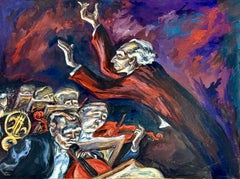
"Conductor" WPA American Scene. Social Realism. Mid 20th Century. Modern. Music.

"Conductor" WPA American Scene. Social Realism. Mid 20th Century. Modern. Music.

By Mervin Jules

Located in New York, NY

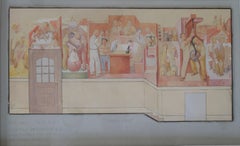
"Conductor" WPA American Scene. Social Realism. Mid 20th Century. Modern. Music. Mervin M Jules (1912-1994 "Conductor" 8 1/2 x 11 1/4 inches Casein on paper, c. 1940s Signed lower r...

Category

1940s American Modern Sanat Kar More Art

Materials

Board, Casein

St. Atomic oil and tempera painting by Julio de Diego

St. Atomic oil and tempera painting by Julio de Diego

By Julio de Diego

Located in Hudson, NY

Julio De Diego’s Atomic Series paintings made an extraordinary statement regarding the shock and fear that accompanied the dawn of the nuclear age. In the artist’s own words, “Scientists were working secretly to develop formidable powers taken from the mysterious depths of the earth - with the power to make the earth useless! Then, the EXPLOSION! . . . we entered the Atomic Age, and from there the neo-Atomic war begins. Explosions fell everywhere and man kept on fighting, discovering he could fight without flesh.” To execute these works, De Diego developed a technique of using tempera underpainting before applying layer upon layer of pigmented oil glazes. The result is paintings with surfaces which were described as “bonelike” in quality. The forms seem to float freely, creating a three-dimensional visual effect. In the 1954 book The Modern Renaissance in American Art, author Ralph Pearson summarizes the series as “a fantastic interpretation of a weighty theme. Perhaps it is well to let fantasy and irony appear to lighten the devastating impact. By inverse action, they may in fact increase its weight.” Exhibited 1950 University of Illinois at Urbana "Contemporary American Painting" 1964 Marion Koogler McNay Art Institute, San Antonio, Texas This work retains its original frame which measures 54" x 36" x 2". About this artist: Julio De Diego crafted a formidable persona within the artistic developments and political struggles of his time. The artist characterized his own work as “lyrical,” explaining, “through the years, the surrealists, the social-conscious painters and the others tried to adopt me, but I went my own way, good, bad or indifferent.” [1] His independence manifested early in life when de Diego left his parent’s home in Madrid, Spain, in adolescence following his father’s attempts to curtail his artistic aspirations. At the age of fifteen he held his first exhibition, set up within a gambling casino. He managed to acquire an apprenticeship in a studio producing scenery for Madrid’s operas, but moved from behind the curtains to the stage, trying his hand at acting and performing as an extra in the Ballet Russes’ Petrouchka with Nijinsky. He spent several years in the Spanish army, including a six-month stretch in the Rif War of 1920 in Northern Africa. His artistic career pushed ahead as he set off for Paris and became familiar with modernism’s forays into abstraction, surrealism, and cubism. The artist arrived in the U.S. in 1924 and settled in Chicago two years later. He established himself with a commission for the decoration of two chapels in St. Gregory’s Church. He also worked in fashion illustration, designed magazine covers and developed a popular laundry bag for the Hotel Sherman. De Diego began exhibiting through the Art Institute of Chicago in 1929, and participated in the annual Chicago Artists Exhibitions, Annual American Exhibitions, and International Water Color Exhibitions. He held a solo exhibition at the Art Institute of Chicago in the summer of 1935. Though the artist’s career was advancing, his family life had deteriorated. In 1932 his first marriage dissolved, and the couple’s young daughter Kiriki was sent to live with friend Paul Hoffman. De Diego continued to develop his artistic vocabulary with a growing interest in Mexican art. He traveled throughout the country acquainting himself with the works of muralists such as Carlos Merida, and also began a collection of small native artifacts...

Category

1940s American Modern Sanat Kar More Art

Materials

Masonite, Oil, Tempera

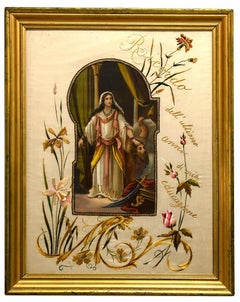
Salomè Painting, Tempera on Silk, 19th Century, Unframed, Embroidered

Salomè Painting, Tempera on Silk, 19th Century, Unframed, Embroidered

Located in Roma, IT

Salomè is an original mixed colored painting realized by Anonymous artist in the XIX century. Tempera on silk. Bearing embroidered border and iscribed 'Ricordo dell’ultimo anno di ...

Category

19th Century Modern Sanat Kar More Art

Materials

Tempera, Silk

The Magician oil and tempera painting by Julio de Diego

The Magician oil and tempera painting by Julio de Diego

By Julio de Diego

Located in Hudson, NY

Julio De Diego’s Atomic Series paintings made an extraordinary statement regarding the shock and fear that accompanied the dawn of the nuclear age. In the artist’s own words, “Scientists were working secretly to develop formidable powers taken from the mysterious depths of the earth - with the power to make the earth useless! Then, the EXPLOSION! . . . we entered the Atomic Age, and from there the neo-Atomic war begins. Explosions fell everywhere and man kept on fighting, discovering he could fight without flesh.” To execute these works, De Diego developed a technique of using tempera underpainting before applying layer upon layer of pigmented oil glazes. The result is paintings with surfaces which were described as “bonelike” in quality. The forms seem to float freely, creating a three-dimensional visual effect. In the 1954 book The Modern Renaissance in American Art, author Ralph Pearson summarizes the series as “a fantastic interpretation of a weighty theme. Perhaps it is well to let fantasy and irony appear to lighten the devastating impact. By inverse action, they may in fact increase its weight.” Exhibited 1964 Marion Koogler McNay Art Institute, San Antonio, Texas This work retains its original frame which measures 54" x 42" x 2" About this artist: Julio De Diego crafted a formidable persona within the artistic developments and political struggles of his time. The artist characterized his own work as “lyrical,” explaining, “through the years, the surrealists, the social-conscious painters and the others tried to adopt me, but I went my own way, good, bad or indifferent.” [1] His independence manifested early in life when de Diego left his parent’s home in Madrid, Spain, in adolescence following his father’s attempts to curtail his artistic aspirations. At the age of fifteen he held his first exhibition, set up within a gambling casino. He managed to acquire an apprenticeship in a studio producing scenery for Madrid’s operas, but moved from behind the curtains to the stage, trying his hand at acting and performing as an extra in the Ballet Russes’ Petrouchka with Nijinsky. He spent several years in the Spanish army, including a six-month stretch in the Rif War of 1920 in Northern Africa. His artistic career pushed ahead as he set off for Paris and became familiar with modernism’s forays into abstraction, surrealism, and cubism. The artist arrived in the U.S. in 1924 and settled in Chicago two years later. He established himself with a commission for the decoration of two chapels in St. Gregory’s Church. He also worked in fashion illustration, designed magazine covers and developed a popular laundry bag for the Hotel Sherman. De Diego began exhibiting through the Art Institute of Chicago in 1929, and participated in the annual Chicago Artists Exhibitions, Annual American Exhibitions, and International Water Color Exhibitions. He held a solo exhibition at the Art Institute of Chicago in the summer of 1935. Though the artist’s career was advancing, his family life had deteriorated. In 1932 his first marriage dissolved, and the couple’s young daughter Kiriki was sent to live with friend Paul Hoffman. De Diego continued to develop his artistic vocabulary with a growing interest in Mexican art. He traveled throughout the country acquainting himself with the works of muralists such as Carlos Merida, and also began a collection of small native artifacts...

Category

1940s American Modern Sanat Kar More Art

Materials

Masonite, Oil, Tempera

Sanat Kar more art for sale on 1stDibs.

Find a wide variety of authentic Sanat Kar more art available for sale on 1stDibs. You can also browse by medium to find art by Sanat Kar in mixed media, paint, paper and more. Much of the original work by this artist or collective was created during the 1990s and is mostly associated with the modern style. Not every interior allows for large Sanat Kar more art, so small editions measuring 19 inches across are available. Customers who are interested in this artist might also find the work of Jogen Chowdhury , Lalu Prasad Shaw, and Prokash Karmakar. Sanat Kar more art prices can differ depending upon medium, time period and other attributes. On 1stDibs, the price for these items starts at $7,174 and tops out at $7,174, while the average work can sell for $7,174.