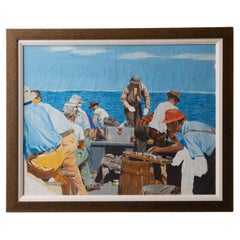
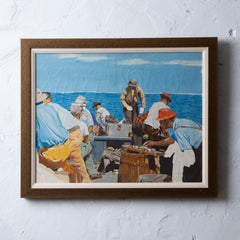
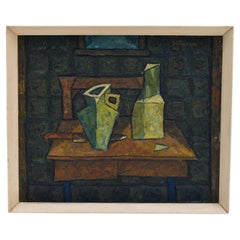
Atmospheric Blacksmith Forge Interior by Edvard Petersen, signed by monogram
This magnificent late 19th-century painting of an atmospheric blacksmith forge interior is by the renowned realist Danish painter Edvard Petersen. Depicting a richly detailed industrial workshop scene, it is a remarkable example of Danish realism. As an authentic Edvard Petersen painting, it showcases the artist’s dedication to portraying the lives of craftsmen and workers in the late 1800s.


If you are an art collector or enthusiast seeking to purchase an original blacksmith interior artwork, this vintage realism painting not only holds artistic value but also represents an essential piece of Danish heritage art. Below, we explore the painting’s intricate details, its historical context, and Edvard Petersen's life.
1. Artwork Overview: A Glimpse into the Industrial Past
This vintage painting of a blacksmith’s forge reflects the hardworking spirit of the late 19th century. The atmospheric industrial art is meticulously rendered with a keen eye for lighting, texture, and realism. Key aspects of this Danish blacksmith workshop artwork include:
Industrial Setting: The painting captures the interior of a blacksmith workshop, filled with well-used tools and the dim glow of the forge.
Lighting Mastery: The late 19th-century atmospheric blacksmith interior is defined by its masterful use of light and shadow. The forge fire creates a vivid, warm glow, contrasting with the cooler daylight filtering through a window.
Human Element: The blacksmith figures appear in dynamic postures, emphasising the laborious nature of their craft. The workers’ silhouettes against the glow of the fire add depth and dimension.
Textural Details: The texture of worn wood, metal tools, and stone flooring is painstakingly realistic, typical of Edvard Petersen’s style.
2. Artistic Style and Techniques
A. Realism and Atmosphere
As a prominent Danish realist painting, this work exemplifies the realist tradition for which Petersen is known. His choice of subdued, earthy tones highlights the authentic industrial atmosphere. The blend of warm, fiery hues with darker, shadowy tones creates a dramatic and contemplative mood.
B. Composition and Structure
The composition follows a well-organised structure, with:
Foreground Elements: Anvil, tools, and a large wooden barrel.
Middle Ground: Figures working at the forge and a workbench.
Background: The illuminated workshop window and hanging tools.
Colour Palette: Predominantly browns, greys, and ochres with contrasting fiery highlights.
Lighting Effect: The combination of natural and artificial lighting enhances the sense of depth and space.
3. Significance of the Painting
A. Cultural Context
This late 19th-century blacksmith painting...
Category
1890s Danish High Victorian Antique Unknown Wall Decorations