William Woollett Prints and Multiples

1901-1998

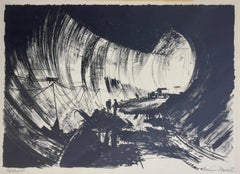
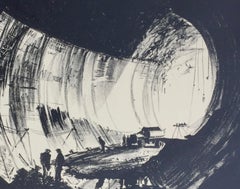
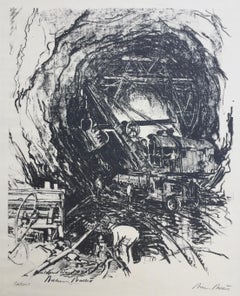
William Woollett was born in Albany, New York, on February 20, 1901. The Woollett family came to California in 1906. After a brief period in Berkeley, they settled in Los Angeles. The younger Woollett studied architecture at the University of Minnesota and atelier Hirons in New York. Upon returning to Los Angeles, he worked as an architect while in his leisure he was active as an artist. In 1972, he settled in Montecito near Santa Barbara and remained there until his death on October 13, 1988. Woollett is best known for his etchings and lithographs of the building of the Hoover Dam. He published a book about the dam and his second book, California's Golden Age, was to be published in 1989.

to
1
2
Overall Width
to
Overall Height
to
2
1,255
978
902
868
1
1
1
2
2
1
2
2
2
Artist: William Woollett
William Woollett after Annibale Carracci - 19th Century Engraving, Italian Town

William Woollett after Annibale Carracci - 19th Century Engraving, Italian Town

By William Woollett

Located in Corsham, GB

A charming engraving by William Woollett (British 1735-1785) after Annibale Carracci (Italian 1560-1609) depicting a picturesque rural landscape on the outskirts of an Italian town. ...

Category

19th Century William Woollett Prints and Multiples

Materials

Engraving

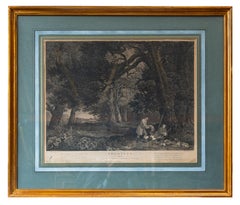
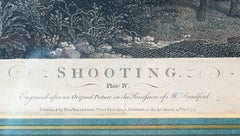
Shooting Engraving After George Stubbs, Late 18th Century, Framed

Shooting Engraving After George Stubbs, Late 18th Century, Framed

By William Woollett

Located in GB

William Woollett (1735–1785) William Woollett was one of the most accomplished British engravers of the 18th century, renowned for his precision and his ability to capture the paint...

Category

Late 18th Century William Woollett Prints and Multiples

Materials

Engraving
Related Items
West Africa: A 17th Century Hand-Colored Map by Mercator/Hondius

West Africa: A 17th Century Hand-Colored Map by Mercator/Hondius

By Gerard Mercator

Located in Alamo, CA

A 17th century hand-colored map entitled "Guineae Nova Descriptio" by Gerard Mercator and Jodocus Hondius, published in their 'Atlas Minor' in Amsterdam in 1635. It is focused on the...

Category

1630s William Woollett Prints and Multiples

Materials

Engraving
Spider Lily: An Original 18th C. Hand-colored Botanical Engraving by J. Weinmann

Spider Lily: An Original 18th C. Hand-colored Botanical Engraving by J. Weinmann

By Johann Wilhelm Weinmann

Located in Alamo, CA

This colored botanical mezzotint and line engraving finished with hand coloring by Johann Wilhelm Weinmann (1683-1741) is entitled "A. Ephemerum Virginianu flore Purpureo, B. Ephemer...

Category

Mid-18th Century Naturalistic William Woollett Prints and Multiples

Materials

Engraving, Mezzotint

"A Dance in Otaheite" (Tahiti), Engraving from Captain Cook's 3rd Voyage

"A Dance in Otaheite" (Tahiti), Engraving from Captain Cook's 3rd Voyage

By John Webber

Located in Alamo, CA

"A Dance in Otaheite" (Tahiti) is an engraving created by William Sharp (1749-1824), from a drawing by John Webber (1752-1793), who was the artist on Captain James Cook's 3rd and final voyage of discovery. It is a plate in the atlas of "A Voyage to the Pacific Ocean Undertaken by the Command of His Majesty, for Making Discoveries in the Northern Hemisphere", the official British Admirality sanctioned journal published upon completion of the voyage in London in 1784 by Strahan & Cadell. Two women and two men wearing ceremonial costumes, performing a dance outdoors standing on a mat. Three men are playing the drums in the background, in front of a thatched roof building. An audience of men are sitting on both sides of the stage. By the time Webber arrived in Tahiti, 'south sea' imagery had become familiar. Webber gave concentrated attention to dance. He had the opportunity to distinguish the Tahitian dance from the more formalized dancing of Tonga. Whereas they seem to have called to mind the more formal dances of antiquity, the Tahitian dancing aroused memories of peasant and folk dancing. This engraving is professionally framed in Koa wood. Koa wood is legendary in Hawaii. Not only is this amazing wood native to Hawaii, but it is known for the deep rich colors and varied grain pattern. Koa has an honored heritage in Hawaii and is highly revered and sacred. The word “koa” means “warrior” in Hawaiian. The warriors of King Kamehameha the Great, created canoes and weapons from a wood plentiful on the Big Island of Hawaii. This wood became synonymous with the warriors themselves, and it became known as koa. The print is in excellent condition. There are three other engravings listed from the official journal of Captain Cook's 3rd voyage available that are presented in identical Koa wood frames and double mats (LU117324682432, LU117324684052, LU117324684062). They would make a wonderful grouping for a display of 2, 3 or 4 prints. A discount is available for a grouping depending on the number of items included. Hawaii was discovered by Captain Cook during this voyage. Hawaii was originally called The Sandwich Islands in honor of The Earl of Sandwich...

Category

1780s Realist William Woollett Prints and Multiples

Materials

Engraving

"King of the Friendly Islands" (Tonga); Engraving from Captain Cook's 3rd Voyage

"King of the Friendly Islands" (Tonga); Engraving from Captain Cook's 3rd Voyage

By John Webber

Located in Alamo, CA

"Poulaho, King of the Friendly Islands, Drinking Kava" is an engraving created by William Sharp (1749-1824), from a drawing by John Webber (1752-1793), who was the artist on Captain James Cook's 3rd and final voyage of discovery. It was published in the atlas of "A Voyage to the Pacific Ocean Undertaken by the Command of His Majesty, for Making Discoveries in the Northern Hemisphere", the official British Admirality sanctioned journal published upon completion of the voyage in London in 1784 by Strahan & Cadell. Captain Cook visited Tonga on his 3rd voyage, which he named The Friendly Islands because of the warm welcome he and his crew received, unlike some of the other more hostile Pacific islands. The engraving depicts Cook and his men observed a kava ceremony at the village of Mu’a on Tongatapu. King Paulaho sits in the centre foreground, his back to the spectator with a man kneeling before him. The ceremonial mat depicted behind Paulaho indicates that nobody was allowed to sit behind him. The figure in the centre holds a single cup, referring to the Tongan custom of offering the cup to the king first. Kava is native to the islands of the South Pacific and was first described for English readers in 1768 by Captain James Cook. The kava root has been used for centuries as a central feature of ceremonies and celebrations because it was able to bring about a calming and pleasant social atmosphere. The root was crushed and processed into coconut milk to become the focal ceremonial beverage, simply referred to as kava. This engraving is presented in a Koa wood frame and a white mat. Koa wood is legendary in Hawaii. There are occasional faint spots, but the print is otherwise in very good condition. This amazing Koa wood is native to Hawaii and it is known for the deep rich colors and varied grain pattern. Koa has an honored heritage in Hawaii and is highly revered and sacred. The word “koa” means “warrior” in Hawaiian. The warriors of King Kamehameha the Great, created canoes and weapons from a wood plentiful on the Big Island of Hawaii. This wood became synonymous with the warriors themselves, and it became known as koa. There are three other engravings listed from the official journal of Captain Cook's 3rd voyage available that are presented in identical Koa wood frames and mats (LU117324682422, LU117324684052, LU117324684032). They would make a wonderful grouping for a display of 2, 3 or 4 prints. A discount is available for a grouping depending on the number of items included. Captain Cook is remembered as one of the greatest explorers and navigators in history. His explorations included Australia, New Zealand and islands of the South Pacific and the northwest coast of North America. Hawaii was discovered by Captain Cook during this voyage. Hawaii was originally called The Sandwich Islands in honor of The Earl of Sandwich...

Category

1780s Realist William Woollett Prints and Multiples

Materials

Engraving
Four Koa Wood Framed 18th C. Engravings from Captain Cook's 3rd Voyage Journal

Four Koa Wood Framed 18th C. Engravings from Captain Cook's 3rd Voyage Journal

By John Webber

Located in Alamo, CA

A grouping of four framed engravings of Hawaii, Tahiti, Tonga and Vancouver Island from the atlas of the official British Admiralty sanctioned journal of Captain Cook's 3rd Voyage entitled "A Voyage to the Pacific Ocean Undertaken by the Command of His Majesty, for Making Discoveries in the Northern Hemisphere", published upon completion of the voyage in London in 1784 by Strahan & Cadell. These engravings were made from drawings by John Webber (1752-1793), who was the artist on Captain James Cook's 3rd and final voyage of discovery. The set of engravings includes: "A Canoe of the Sandwich Islands, the Rowers Masked", Plate 65 in the atlas; "A Dance in Otaheite" (Tahiti), Plate 28; "King of the Friendly Islands" (Tonga), plate 20; "Inside of a House in Nootka Sound" (Canada), plate 42. These engravings are professionally framed in Koa wood, the same wood as was used to make the canoes of the ancient Hawaiians. Koa wood is legendary in Hawaii. Not only is this amazing wood native to Hawaii, but it is known for the deep rich colors and varied grain pattern. Koa has an honored heritage in Hawaii and is highly revered and sacred. The word “koa” means “warrior” in Hawaiian. The warriors of King Kamehameha the Great, created canoes and weapons from a wood plentiful on the Big Island of Hawaii. This wood became synonymous with the warriors themselves, and it became known as koa. These four engravings would make a wonderful grouping for a display of 2, 3 or 4 prints. They may be purchased separately or in groups on 1stDibs. Their listing Reference #'s are: LU117324682432, LU117324682022, LU117324684052 and LU117324684062. A discount is available for a grouping depending on the number of items included. Hawaii was discovered by Captain Cook (1728-1779) during this voyage. Hawaii was originally called The Sandwich Islands in honor of The Earl of Sandwich...

Category

1780s Other Art Style William Woollett Prints and Multiples

Materials

Engraving
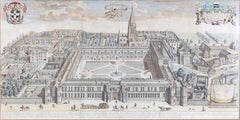
Pair of Hand-colored Romantic French Engravings after Francois Boucher

Pair of Hand-colored Romantic French Engravings after Francois Boucher

By (After) Francois Boucher

Located in Alamo, CA

A pair of French classical romantic prints original created in the 18th century by Jacques-Firmin Beauvarlet (1731-1797) after paintings by Francois Boucher (1703-1770), utilizing ...

Category

18th Century Romantic William Woollett Prints and Multiples

Materials

Engraving, Etching

Ancient Roman Architecture: Original Framed 18th C. Etching by G. Piranesi

Ancient Roman Architecture: Original Framed 18th C. Etching by G. Piranesi

By Giovanni Battista Piranesi

Located in Alamo, CA

"Veduta del Sepolcro della Famiglia Plauzia per la Strada Che Conduce da Roma a Tivoli vicino a Ponte Lugano" from "Le Antichità Romane" (Roman Antiquities), one of the most famous works by Piranesi. "Antichita" illustrates the tombs along the Appian Way...

Category

Early 18th Century Old Masters William Woollett Prints and Multiples

Materials

Etching, Engraving, Drypoint

Besler Hand-colored Botanical Engraving of Flowering Tulip & Wild Garlic Plants

Besler Hand-colored Botanical Engraving of Flowering Tulip & Wild Garlic Plants

Located in Alamo, CA

This is a hand-colored copperplate engraving entitled "Tulipa viridiscoloris, Fritillaria iuncifolns, Allium Vrsinum" depicting flowering tulip, fritillary and wild garlic plants fro...

Category

Early 18th Century Academic William Woollett Prints and Multiples

Materials

Engraving
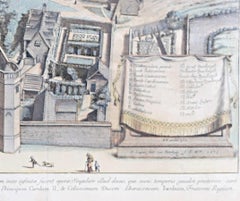
Fresh Gathered Peas: An 18th C. Engraving From the Series 'The Cries of London'

Fresh Gathered Peas: An 18th C. Engraving From the Series 'The Cries of London'

By Francis Wheatley

Located in Alamo, CA

This is a beautifully framed engraving, printed in colors with additional hand coloring, from the famous "Cries of London" series, depicting the lives and professions of the common p...

Category

Late 18th Century Naturalistic William Woollett Prints and Multiples

Materials

Engraving

Sandwich Islands Canoe (Hawaii): Framed 18th C. Engraving Captain Cook's Journal

Sandwich Islands Canoe (Hawaii): Framed 18th C. Engraving Captain Cook's Journal

By John Webber

Located in Alamo, CA

"A Canoe of the Sandwich Islands, the Rowers Masked" is an engraving created by Charles Grignion, from a drawing by John Webber (1752-1793), who was the artist on Captain James Cook's 3rd and final voyage of discovery. It is Plate 65 in the atlas of "A Voyage to the Pacific Ocean Undertaken by the Command of His Majesty, for Making Discoveries in the Northern Hemisphere", the official British Admiralty sanctioned journal published upon completion of the voyage in London in 1784 by Strahan & Cadell. This famous image of ten Hawaiian rowers transporting a priest who is carrying a feather-covered image of Kukailimoku, the Hawaiian god of war. The priests and paddlers are all wearing gourd masks in their double-hulled canoe with an upright lateen woven sail. Each hull was shaped from a single large Koa log harvested from island rainforests, where they were carved before being transported to the coast. This engraving is presented in a Koa wood frame and a white mat. There are occasional faint spots, but the print is otherwise in very good condition. Koa is the same wood as was used to make the canoe. Koa wood is legendary in Hawaii. Not only is this amazing wood native to Hawaii, but it is known for the deep rich colors and varied grain pattern. Koa has an honored heritage in Hawaii and is highly revered and sacred. The word “koa” means “warrior” in Hawaiian. The warriors of King Kamehameha the Great, created canoes and weapons from a wood plentiful on the Big Island of Hawaii. This wood became synonymous with the warriors themselves, and it became known as koa. The frame measures 20.75" high, 26.75" wide and 0.88" deep. There are three other engravings listed from the official journal of Captain Cook's 3rd voyage available that are presented in identical Koa wood frames and mat (LU117324682022, LU117324684052, LU117324684062). They would make a wonderful grouping for a display of 2, 3 or 4 prints. A discount is available for a grouping depending on the number of items included. Hawaii was discovered by Captain Cook (1728-1779) during this voyage. Hawaii was originally called The Sandwich Islands in honor of The Earl of Sandwich...

Category

1780s William Woollett Prints and Multiples

Materials

Engraving
Besler Hand Colored Botanical Engraving of Wood Pink & Cottage Pink Flowers

Besler Hand Colored Botanical Engraving of Wood Pink & Cottage Pink Flowers

Located in Alamo, CA

A 17th century hand-colored copper plate engraving entitled "Caryophyllus Maior Sylve Strisvarie Gatus" (Wood Pink & Cottage Pink Flowers) from Basilius Besler's landmark work, Hortus Eystettensis (Garden at Eichstatt), first published in 1613 in Eichstatt, Germany near Nuremberg and later in 1640 and 1713. This engraving is presented in a silver and gold-colored wood frame with a green edge and three elaborate cream-colored French mats...

Category

17th Century Old Masters William Woollett Prints and Multiples

Materials

Engraving
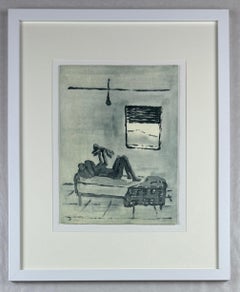
Previously Available Items
Interior View of Tunnel 1 -  (Building of Hoover Dam)

Interior View of Tunnel 1 - (Building of Hoover Dam)

By William Woollett

Located in Santa Monica, CA

WILLIAM WOOLLETT (American 1901- 1988) DIVERSION TUNNELS (The Building of Hoover Dam, 1932 Lithograph signed in pencil and numbered. Small edition of 5. 1...

Category

1930s American Realist William Woollett Prints and Multiples

Materials

Lithograph

The Building of Hoover Dam - Diversion Tunnels -

The Building of Hoover Dam - Diversion Tunnels -

By William Woollett

Located in Santa Monica, CA

WILLIAM WOOLLETT (American 1901- 1988) DIVERSION TUNNELS (The Building of Hoover Dam, 1932 Lithograph signed in pencil and in the stone. EDITION OF ONLY 1 ...

Category

1930s American Realist William Woollett Prints and Multiples

Materials

Lithograph

William Woollett prints and multiples for sale on 1stDibs.

Find a wide variety of authentic William Woollett prints and multiples available for sale on 1stDibs. You can also browse by medium to find art by William Woollett in lithograph and more. Not every interior allows for large William Woollett prints and multiples, so small editions measuring 12 inches across are available. Customers who are interested in this artist might also find the work of Georges Schreiber, Gordon Grant, and Lionel Edwards. William Woollett prints and multiples prices can differ depending upon medium, time period and other attributes. On 1stDibs, the price for these items starts at $600 and tops out at $650, while the average work can sell for $625.