Solomon Treasure

Long Island City, NY
THANKS!
Follow

About Solomon Treasure

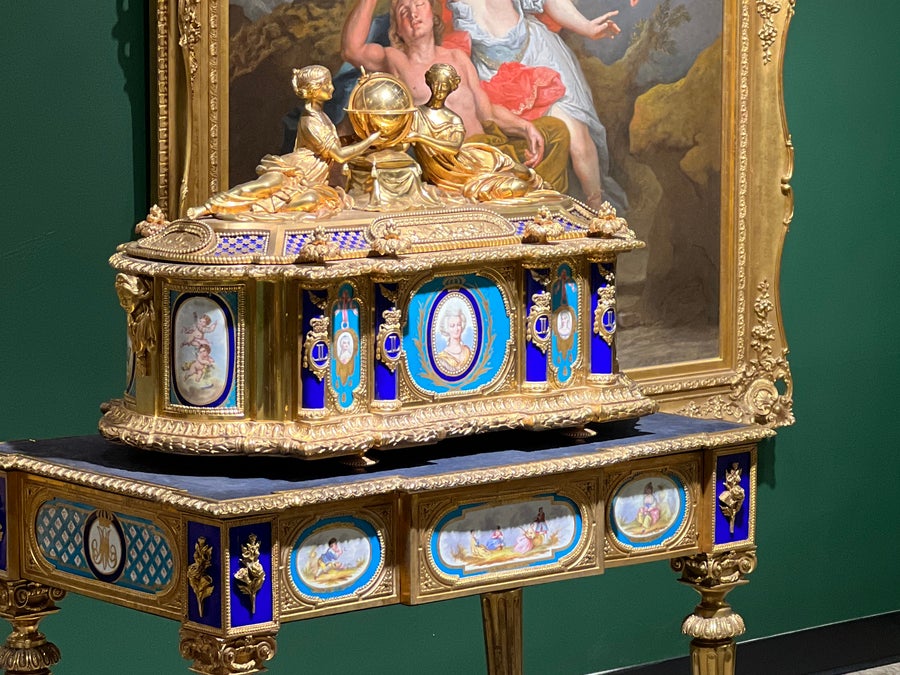
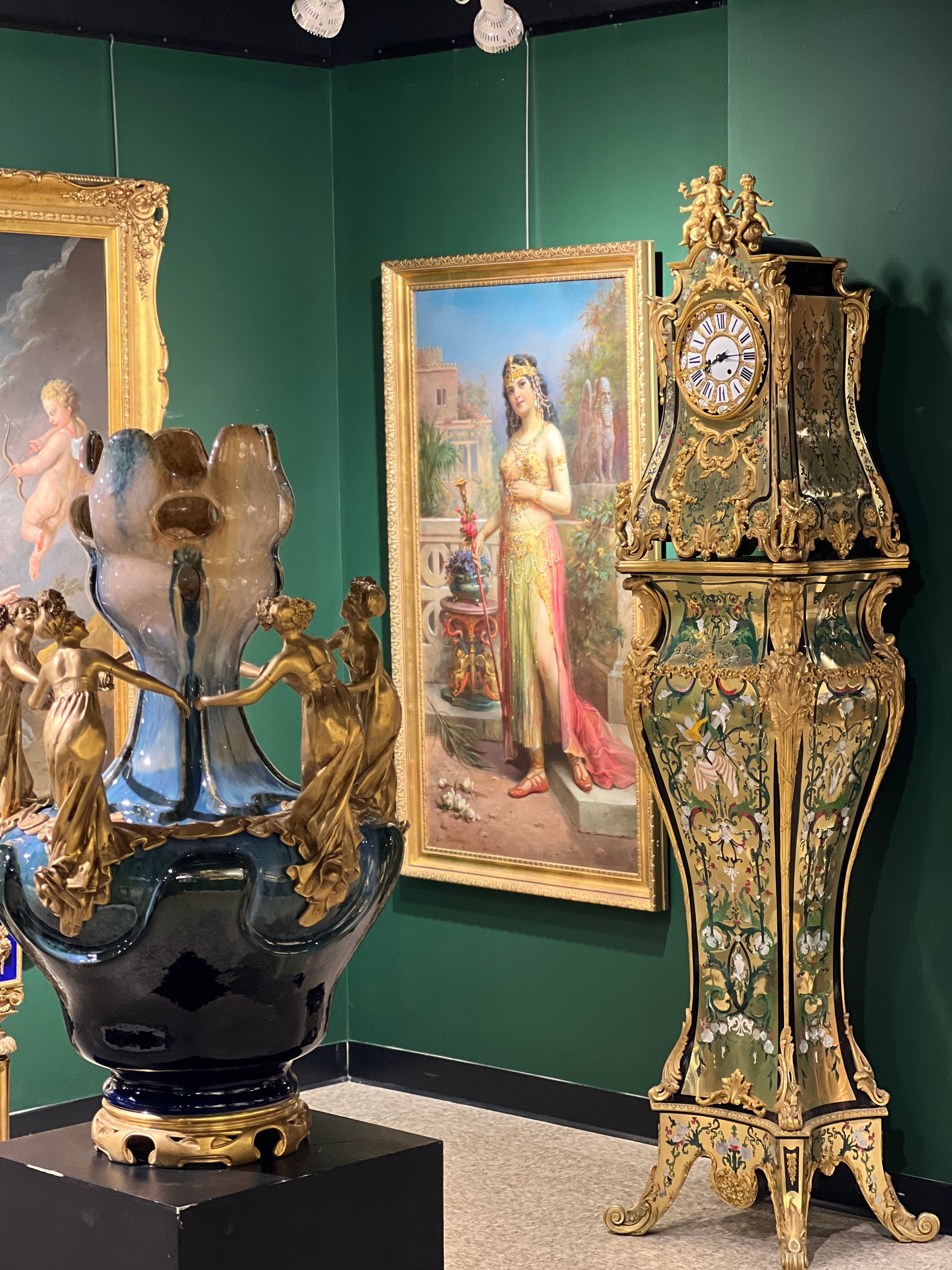
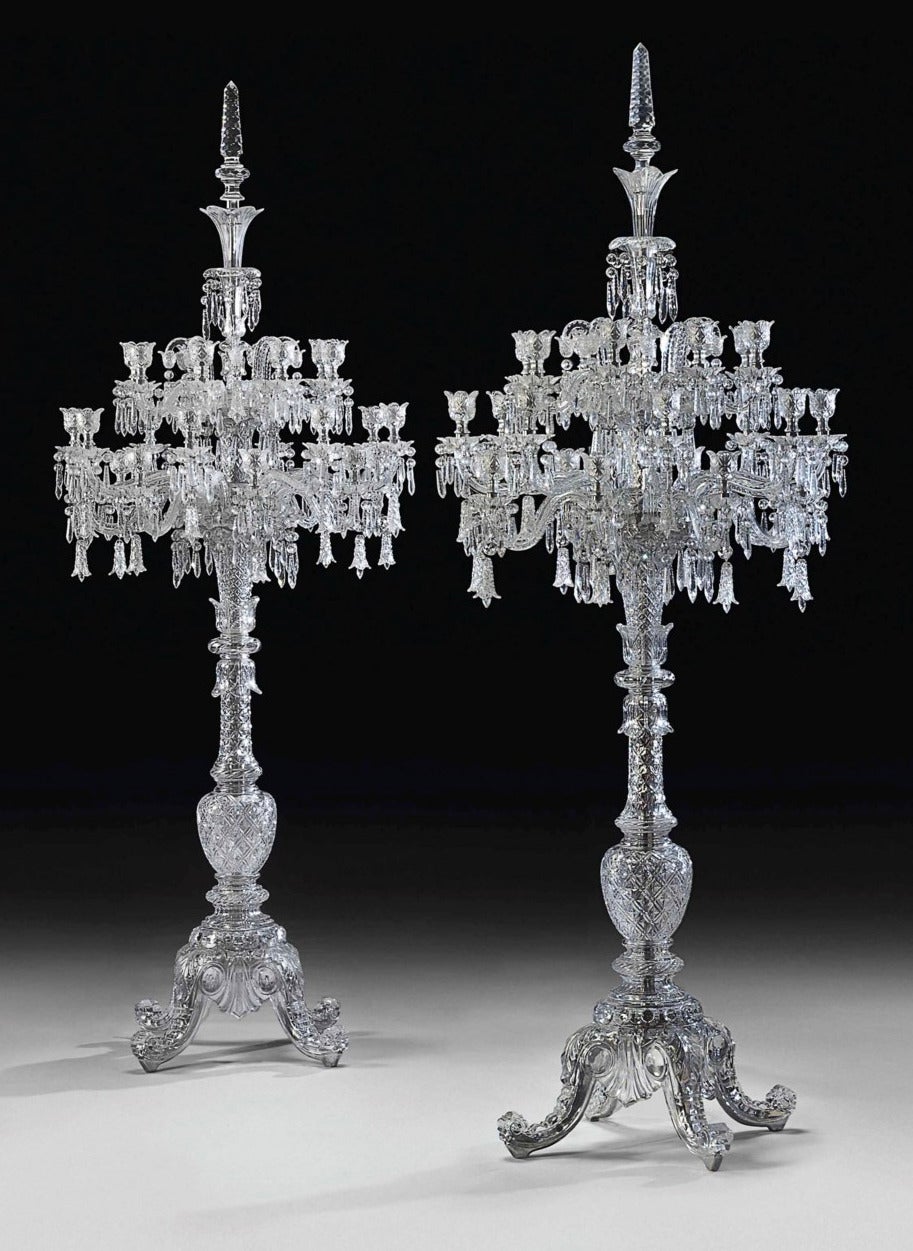
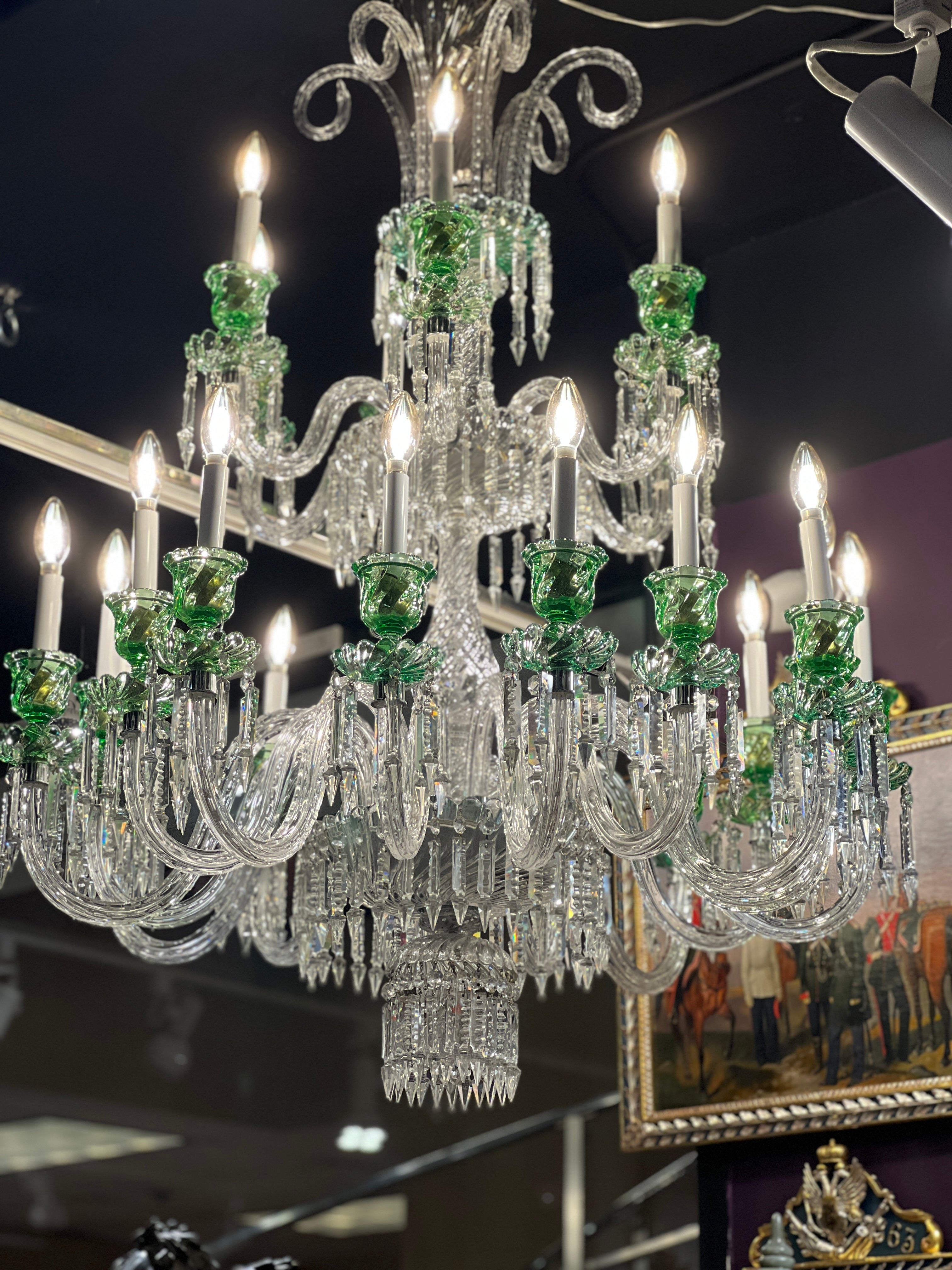
Four Generations. Five Centuries. One Standard: The Best Antiques in New York! Solomon Treasure traces its roots to the late 19th century, beginning with a master goldsmith and evolving through generations into a distinguished dealer of fine objects and Baccarat chandeliers for royalty and heads of state. The business expanded through Europe and ultimately established a prestigious gallery in New York, building an international clientele—from Asia to Moscow to the Middle East. For over 100 years, Solomon Treasure has remained devoted to acquiring rare and important wor...Read More

Solomon Treasure

Established in 19801stDibs seller since 2016

Featured Pieces

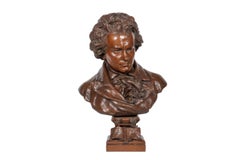
A Monumental Patinated Bronze Bust of George Washington, after William Rush (181
Located in Queens, NY
A Monumental Patinated Bronze Bust of George Washington, after William Rush (1817) This commanding bronze bust of George Washington is modeled after the celebrated 1817 portrait by ...
Category

19th Century Figurative Sculptures

Materials

Bronze

A Monumental Patinated Bronze Bust of Jesus Christ by Clesinger and Barbedienne
By Ferdinand Barbedienne
Located in Queens, NY
A Monumental and Truly Exceptional French Patinated Bronze Bust of Jesus Christ, Circa 1858, Signed J. Clesinger, Rome 1858 & F. Barbedienne Fondeur This monumental and extraord...
Category

19th Century Figurative Sculptures

Materials

Bronze

Alfred Copestick, Fort Hamilton from the Narrows, New York, 1857
Located in Queens, NY
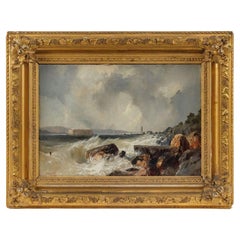
Alfred Copestick (1837–1859) Fort Hamilton from the Narrows, New York, 1857 Oil on canvas, in the original giltwood frame 14 ¼ x 20 ⅛ in. (canvas) Signed lower left: A. Copestick NY 1857 Painted when Copestick was only twenty years old, Fort Hamilton from the Narrows, New York captures both the military fortifications and maritime vitality of New York Harbor at mid-century. In the foreground, the fortress bastion commands the shoreline, while sail and steam vessels traverse the Narrows — the strategic waterway linking Upper New York Bay to the Atlantic. Copestick conveys not only the architectural solidity of Fort Hamilton but also the shifting atmosphere above, where cloud formations build and dissolve across a wind-driven sky. The painting is a remarkable marriage of documentary precision and romantic sensibility. The young artist’s brush imbues the fortress with weight and presence, yet the broader scene is alive with the transience of weather and the ceaseless motion of the sea. In its original giltwood frame, richly carved and preserving the period character, the canvas is a rare survival of a gifted hand cut short in its prime. This canvas reveals Copestick’s deep engagement with the maritime traditions of American art. The careful delineation of sailing vessels recalls the precision of James E. Buttersworth, while the atmospheric breadth echoes the influence of Fitz Henry Lane and John F. Kensett. The choice of subject — the strategic Narrows and its fortress — also reflects the national mood of the 1850s, when American identity was bound up with its coasts, harbors, and defenses. The romantic skies and dramatic contrasts suggest the impact of the Hudson River School, particularly the legacy of Thomas Cole and Asher B...
Category

19th Century Academic Landscape Paintings

Materials

Canvas, Oil

Alfred Copestick, Coastal Scene: New York, Oil on Canvas, 1857
Located in Queens, NY
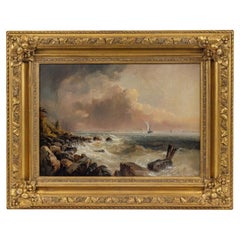
Alfred Copestick (1837–1859) Coastal Scene: New York, 1857 Oil on canvas, in the original giltwood frame 14 ¼ x 20 ⅛ in. (canvas) Signed lower right: A. Copestick NY 1857 Painted at just twenty years of age, Coastal Scene: New York demonstrates Alfred Copestick’s remarkable promise as a marine painter in antebellum America. The scene brims with energy: a single sailboat heels sharply into the wind, its rigging taut against the storm, while foamy waves break against a rugged shoreline. Above, clouds mass and dissolve, illuminated by shafts of storm-lit light. Copestick’s treatment is both romantic and naturalistic, conveying the sublime tension between man, sea, and sky. His confident brushwork captures atmosphere with an immediacy and sensitivity rarely found in so young an artist. The work survives in its original giltwood frame, richly carved in a mid-nineteenth-century American style, which not only underscores its historical authenticity but also heightens the tonal drama of the painting. Alfred Copestick came of age during a fertile moment in American painting, when marine art and landscape were central to cultural identity. Though little is known of his formal training, his works suggest familiarity with and admiration for leading marine painters such as James E. Buttersworth, famed for his racing yachts; Francis Augustus Silva, who later developed a luminist style of coastal painting; and earlier masters like Thomas Birch, whose shipwrecks and storm scenes set a precedent for drama at sea. Copestick also absorbed broader currents in American landscape painting. The Hudson River School, led by Thomas Cole, Asher B...
Category

19th Century Academic Landscape Paintings

Materials

Canvas, Oil

Spanish School (18th Century), A Rare Portrait of Juan Procopio de Bassecourt
Located in Queens, NY
Spanish School (18th Century), A Rare Portrait of Juan Procopio de Bassecourt, count of Santa Clara, governor of the island of Cuba between December 1796 and May 1799. The lighthouse...
Category

18th Century Portrait Paintings

Materials

Oil

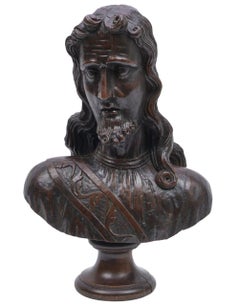
A Monumental 16th Century Renaissance Carved Oak Bust of Jesus Christ
Located in Queens, NY
Magnificent and Monumental 16th Century Renaissance Carved Oak Bust of Christ, Flemish Netherlandish, C. 1550 A powerful and deeply expressive Renaissance carved oak bust of Jesus C...
Category

16th Century Figurative Sculptures

Materials

Oak

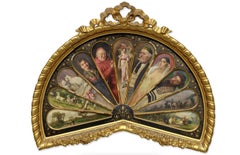
11 Oil Painting Panels in a Majestic Fan Shape, Featuring Isidor Kaufmann
Located in Queens, NY
A Rare and Important Treasure: 11 Oil Painting Panels in a Majestic Fan Shape Signed by Significant 19th-Century Austrian Artists, Featuring Isidor Kaufmann A magnificent and unique artistic achievement, this rare and important assemblage of 11 oil painting panels forms a majestic fan shape, uniting the work of significant 19th-century Austrian artists in a singular, breathtaking display. Each oil on panel is signed by the artist, showcasing a rich variety of subjects—ranging from evocative landscapes to compelling portraits—all rendered in the refined and masterful techniques characteristic of the era. Bringing together the talents of Isidor Kaufmann, Adolf Kaufmann, Carl Reichert, Emma (Edle von Seehof) Müller, Ernst Novak, Johann Hamza...
Category

19th Century Portrait Paintings

Materials

Oil

Emile-Edmond Peynot "Albaya' El Tunsi" The Tunisian Merchant Bronze, 1883
Located in Queens, NY
Émile-Edmond Peynot, (French, 1850 -1932) An exceptional, exquisite and rare orientalist bronze sculpture titled Albaya' El Tunsi / The Tunisian Merchant / The Arab rifleman. Dep...
Category

19th Century Figurative Sculptures

Materials

Bronze

Morteza Pourhosseini "The Circus 1" Oil and Acrylic on Canvas
By Morteza Pourhosseini
Located in Queens, NY
Morteza Pourhosseini (Iran, born 1985) "The Circus 1" oil and acrylic on canvas, 2013 . Depicting a gorgeous tattooed woman in Safavid armour, and a steel "Allam". An exceptional I...
Category

21st Century and Contemporary Portrait Paintings

Materials

Oil, Acrylic

Morteza Pourhosseini "The Circus 15" Oil and Acrylic on Canvas
By Morteza Pourhosseini
Located in Queens, NY
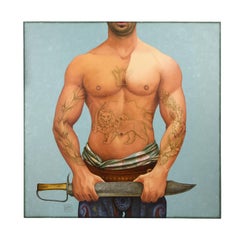
Morteza Pourhosseini (Iran, born 1985) "The Circus 15" oil and acrylic on canvas, 2013 . Depicting a muscular male nude with "The Persian Iranian Lion" tattooed on his stomach and a...
Category

21st Century and Contemporary Nude Paintings

Materials

Oil, Acrylic

Morteza Pourhosseini "The Circus 5" Oil and Acrylic on Canvas
By Morteza Pourhosseini
Located in Queens, NY
Morteza Pourhosseini (Iran, born 1985) "The Circus 5" oil and acrylic on canvas, 2013 . Depicting a woman in Safavid gold and metal armour. An exceptional Iranian Contemporary Artw...
Category

21st Century and Contemporary Portrait Paintings

Materials

Oil, Acrylic

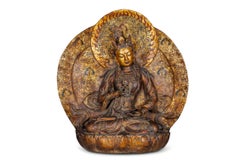
A Monumental Gilt-Lacquered Bronze Ornamental Sculpture of Vajravidarana
Located in Queens, NY
A Monumental Gilt-Lacquered Bronze Ornamental Buddha Sculpture of Vajravidarana: A Masterpiece of Sino-Tibetan Craftsmanship, Late 19th Century, Qing Dynasty This monumental gilt-lacquered bronze ornamental sculpture of Vajravidarana is an extraordinary and commanding piece of art, showcasing the pinnacle of Sino-Tibetan craftsmanship from the late 19th century. The figure of Vajravidarana, a powerful purification deity in Tibetan Buddhism, is meticulously sculpted to embody both spiritual authority and artistic excellence. Vajravidarana is primarily known for his role in removing spiritual impurities and negativities. Unlike other deities associated with wisdom or compassion, Vajravidarana’s function is centered on purification and healing. He is typically depicted holding a vajra and a bell, symbolizing the cutting away of delusions and the resonance of divine truth. In this striking sculpture, Vajravidarana is shown holding a vishva vajra (the double vajra), a unique and powerful variation of the traditional iconography, which signifies ultimate protection and the dispelling of negative karma. Vajravidarana: The Supreme Purifier and Protector Vajravidarana is revered in Tibetan Buddhism as the deity of spiritual purification, called upon to cleanse practitioners of defilements and negative influences. His vajra represents the indestructibility of truth, while his bell signifies the wisdom that resonates through purification rituals. In this sculpture, the presence of the vishva vajra, or double vajra, enhances his association with supreme protection, ensuring the destruction of all spiritual obstacles and afflictions. The figure’s powerful yet composed expression conveys a sense of unwavering resolve and divine authority. His posture, along with the carefully sculpted details of his robes and ornaments, highlights his function as a guardian against impurity. The inclusion of the vishva vajra rather than the usual single vajra reinforces his role as a supreme protector, capable of dispelling all forms of negativity and restoring balance. Symbolism of the Mantras and Aureole: Unlike deities that embody wisdom through duality, Vajravidarana’s iconography is centered on purification and exorcism. The aureole surrounding him is inscribed with sacred purification mantras rather than depictions of a consort. These mantras emphasize his function as a remover of obstacles and impurities, reinforcing his role in Buddhist healing rituals. The presence of the sacred inscriptions elevates the sculpture’s spiritual significance, making it a focal point for meditation and ritual purification. Practitioners often visualize Vajravidarana radiating purifying light, dissolving afflictions and negative karma. This theme is mirrored in the sculptural repetition of the purification symbols on the aureole, reinforcing the deity’s role as a divine cleanser. Gilt-Lacquered Bronze: The Artistry of Sino-Tibetan Metalwork: The craftsmanship of this monumental figure reflects the expertise of late 19th-century Sino-Tibetan metalwork, where traditional Tibetan themes were infused with Chinese artistic sensibilities. Cast in bronze and finished with a rich gilt lacquer, the statue has an otherworldly glow, giving it an ethereal, almost divine presence. The gilding process—applied with exceptional skill—gives the sculpture a striking luminosity that enhances the fine details of the facial features, flowing robes, jewelry, and other elements of the deity’s attire. The technique employed to create this figure speaks to the high level of craftsmanship that flourished during the late Qing Dynasty and early modern Tibetan art. The ornate details of the robes and the fine texture of the sculpture highlight the exceptional skill of the artisans who brought this work to life. The use of gold and lacquer not only reflects the preciousness of the sculpture but also its spiritual significance as an object meant to inspire reverence and meditation. An Ornamental Sculpture of Monumental Scale: Unlike smaller devotional objects, this sculpture is designed as an ornamental masterpiece, intended to make a grand visual and spiritual statement. Its monumental size allows it to dominate any space, offering a commanding presence that is both physically and symbolically impressive. In Buddhist practice, large sculptures of this nature are often placed in temples or meditation halls, where their imposing size and serene presence would encourage contemplation and devotion. The grand scale of the statue further amplifies the spiritual power it is meant to convey. As a representation of Vajravidarana, it is not only a physical object of beauty but also a conduit for meditation, purification, and enlightenment. The scale of the sculpture also emphasizes the divine stature of the deity, highlighting his importance in the Buddhist tradition as the ultimate force for spiritual cleansing and protection. Provenance: Acquired in China in circa 1900 1905 Private Buddhist Temple, Northeast, USA Private Sale Solomon Treasure...

Category

19th Century Figurative Sculptures

Materials

Bronze

More About Solomon Treasure