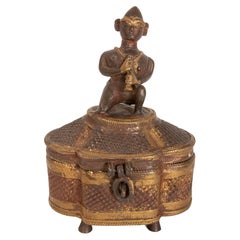
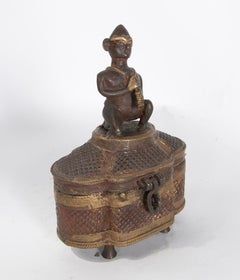
Chinese Brass Box with Chinese Letter Inscriptions on the Top
Located in Marbella, ES
Chinese Brass Box with Chinese Letter Inscriptions on the Top.
Late 20th Century Chinese Snuff Boxes and Tobacco Boxes
Brass
Chinese Brass Box with Chinese Letter Inscriptions on the Top
Located in Marbella, ES
Chinese Brass Box with Chinese Letter Inscriptions on the Top.
Brass
Chinese Cinnabar Lacquer Cuspidor
Located in New Orleans, LA
This intriguing Chinese zhadou is intricately carved of fine cinnabar lacquer. A work of exceptional artistry, this covered bowl is adorned with an intricately carved floral motif on all surfaces, including the cover and the wide rim. Also known as a cuspidor or spittoon, this rare container would have been used by members of the imperial family and scholar- officials at the court. Carved during the Kangxi period (1662-1722), this charming piece exhibits the high detail and charm associated with items from that period, making it a true treasure, Early 18th century (Kangxi dynasty) Measures: 6 ¼” wide x 3 ¼” high Cinnabar has been revered for its color all over the world. It has been found in the royal burial chambers of the Mayas, in the rituals of India, and in the ruins of ancient Greece and Rome. In China, cinnabar and gold were the two most important elements in alchemy. Mined since the Neolithic Age, cinnabar is the ore of mercury, and as such, it can be incredibly toxic, especially when mining. In fact, during the Roman Empire, miners at Spain’s Almadén mine in Spain were frequently exposed to mercury fumes, and the subsequent, often fatal, sickness was considered an occupational hazard. The most popular known use of cinnabar is in Chinese carved lacquer-ware, a technique that is believed to have originated in the Song Dynasty, in which cinnabar is ground to a powder and added to clear lacquer. As with mining, there was inherent danger of mercury poisoning for those who carved the lacquer, as mercury was also released into the air when artisans ground the pigments. Most antique cinnabar...
Lacquer
19th Century Chinese Cloisonné Enamel Brass Trinket Box
Located in Marbella, ES
19th century Chinese cloisonné enamel brass trinket box.
Metal
$1,480Sale Price / set|20% Off
Qing Dynasty - 13 Antique Chinese Porcelain Enameled Salt Boxes
Located in Atlanta, GA
Chinese, Qing Dynasty (1644-1911), 19th century. A grouping or instant collection of antique porcelain enameled salt boxes. Each box is decorated with immortal being riding the fabl...
Porcelain
1970s Indian Bronze Box with Character on the Lid
Located in Marbella, ES
1970s Indian bronze box with character on the lid.
Bronze
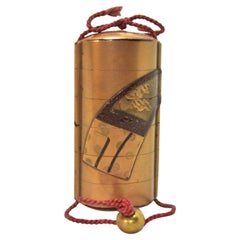
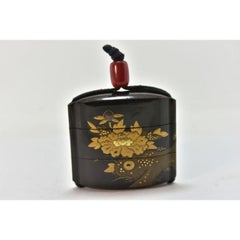
Japanese Inro XIXth Century with 3 Lacquered Wood Boxes
Located in Marseille, FR
19th Century Japanese inro with 3 lacquered wooden compartments, 63 x 70 x 22 mm in size. Weight 39.1 g. Additional information: Material: Lacquered ...
Wood
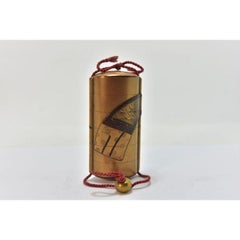
19th Century Japanese Inro with 5 Lacquered Wood Compartments
Located in Marseille, FR
19th Century Japanese inro with 5 lacquered wooden compartments, 93 x 50 x 30 mm in size. Weight 59.2 g. Additional information: Material: Lacquered ...
Wood
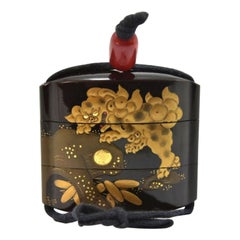
Japanese Inro with 4 19th Century Boxes in Gold Lacquer with Matt Kinji Backgrou
Located in Marseille, FR
Japanese inro with 4 XIXth century boxes in gold lacquer with matt kinji background decorated in gold taka makiyé of different tones. Lacquered wood measuring 65 x 70 x 22 mm. Weight...
Lacquer
Rare Chinese Tonkin Ware Shakudo Sawasa Erotic Tobacco Box
Located in Amsterdam, NL
A ruyi-shaped Shakudo-style erotic tobacco or snuff box, relief-decorated with silvered applied figures Possibly Jakarta (Batavia), first half 18th century Measures: H. 2.2 x L. 12.1 x W. 8 cm This box is very much in the Dutch taste, for the illustration is after a print with a legend reading “L’oiseau sans cage. Prenez, belle, mon oiseau. C’est le plus doux présent que je puisse vous faire. Pour les autres oiseaux, la cage d’ordinaire est une espèce de tombeau. Mais le mien semble prendre une nouvelle vie, Lorsqu’il sera dans la cage de mon aimable Silvie.” The erotic message is as clear as can be. In Dutch culture the verb ‘vogelen’ (catching a bird) is another word for having sex and a bird escaping from his cage indicates loss of chastity. The lady with the bare breasts, while making the sign of sealed lips to the lady behind her, who is pointing towards heaven, seems to be caressing the bird held in the sleeping man’s groin. 17th century Dutch pictures...
Gold, Silver, Bronze
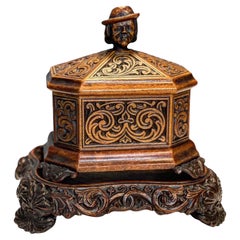
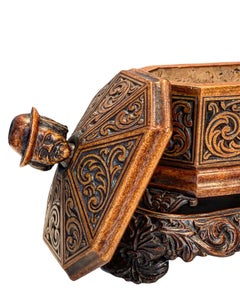
18th Century Georgian Hand-Carved Walnut Wood Tobacco Box
Located in North Miami, FL
18th century Georgian hand-carved walnut wood tobacco box on its original stand. This is an extremely fine and rare piece and one of its kind.
Wood, Walnut
Today antique snuffboxes and tobacco boxes — as well as a lot of other vintage tobacco accessories — are collectibles and charming pieces of decor for any display case or to elevate your bookshelves.
Snuff, made of ground tobacco, was especially popular with Europeans in the 1600s. The ornate boxes to keep the powder dry became highly decorative by the 18th century. It was considered a must-have item, particularly for nobility.
The most important feature of a snuffbox was that it was airtight. The box protected the snuff from oxygen. Another crucial component was the flat lid.
Snuffboxes could be small enough to fit into a pocket or a larger container for communal use at the table. They also came in different shapes. Porcelain containers were prevalent and often designed to look like trunks. Others were oval or square. Boxes made with cowrie shells were rare and more expensive.
Snuffboxes were usually crafted from silver, gold, horn or tortoiseshell. Some of the most prestigious snuffboxes were French tabatières made of gold and sometimes glass. They could be adorned with amethysts, sapphires and diamonds and enameled, engraved or chased.
Sheffield, England, was known for its silver snuffboxes in the late 18th century as its silver-plating technologies perfected these containers. By the early 19th century, the silver industry in Birmingham, England, was producing elegant snuffboxes with images of abbeys and castles on the sides and top.
Another type of tobacco box was the snuff mull or mill. It was made out of horn or an entire ram’s head and topped with a metal lid, frequently featuring engravings and decorative hinges. These were fashionable in Scotland during the 19th century. The origin of its name is unclear.
On 1stDibs, find a plentiful range of antique snuffboxes and tobacco boxes to complement any home decor or furniture style. You can browse the collection by style, which includes Victorian, Georgian and Art Deco, or by material to find pieces in silver and gold.