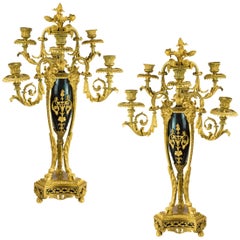
An Important Pair of Louis XV Period French Ormolu Three Light Candelabra with 18th Century Chinese Foo Dogs
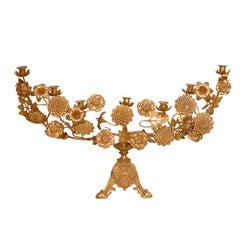
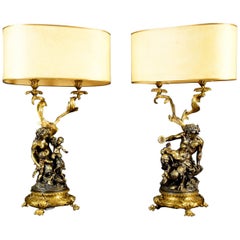
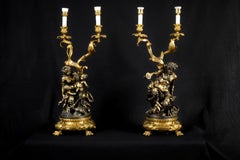
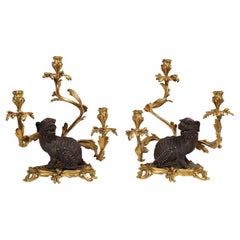
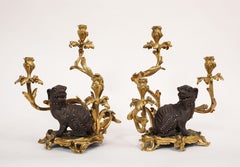
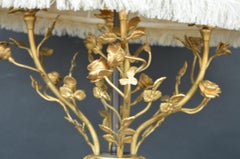
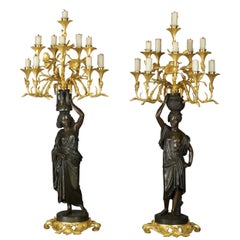
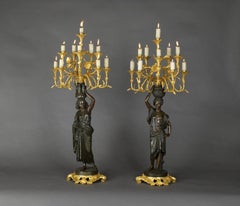
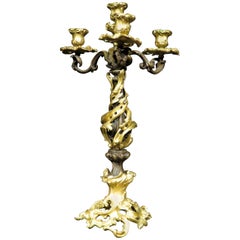
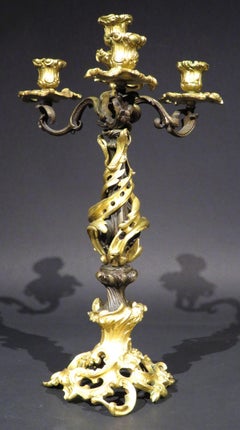
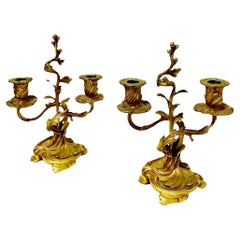
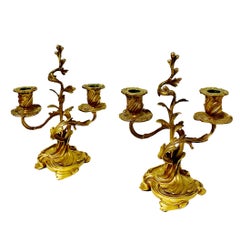
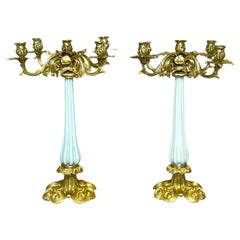
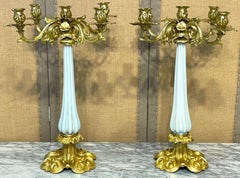
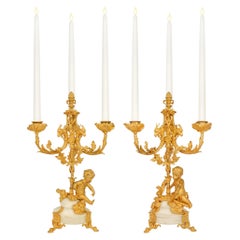
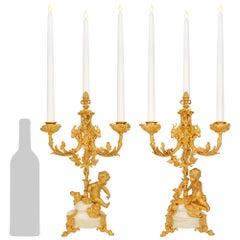
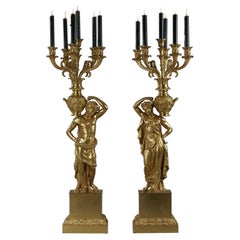
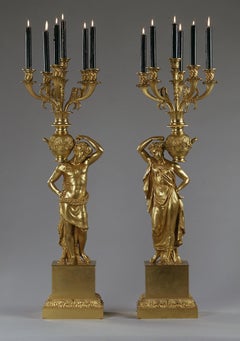
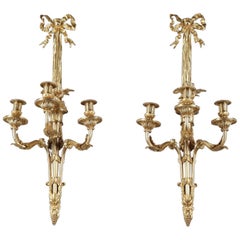
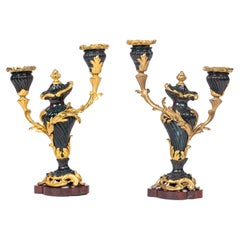
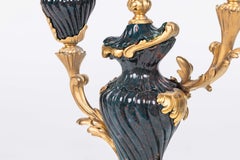
An important pair of Louis XV period French ormolu three light candelabra, each centered by an 18th century Chinese terracotta foo dog mounted within an elaborate arrangement of mercury gilt bronze branches. The opposing male and female figures are modeled seated with raised heads, open mouths, exposed teeth, curled ears, and defined facial features. Their dark brown terracotta bodies are hand engraved with linear detailing through the fur and musculature, while small enamel accents are applied around the brows, necks, shoulders, and haunches. Each figure rests on a shaped gilt bronze platform surrounded by scrolling Rococo ornament. From behind the figures rise three asymmetrically arranged ormolu branches formed as curved stems with applied leaves. Each branch terminates in a foliate candle nozzle above a spreading arrangement of modeled leaves and berries. The composition combines Chinese ceramic figures with French mid 1700s Parisian gilt bronze mounts, a form of luxury decorative mounting associated with French interiors of the Louis XV period.
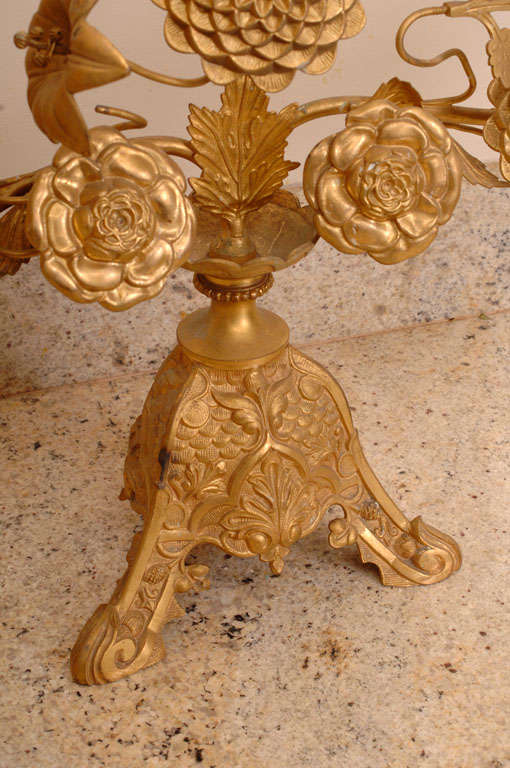
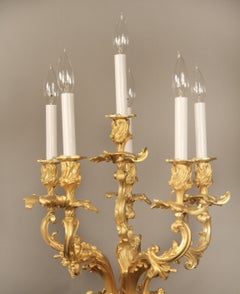
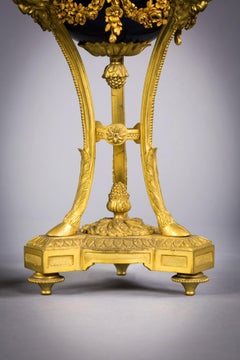
The ormolu structure is assembled from numerous separately cast sections, consistent with the construction of French gilt bronze objects of the 18th century. The bases are built from individual scrolling elements joined around an upper platform, with projecting feet formed from molded C scrolls, leaf forms, and pierced sections. The branches are likewise cast in separate lengths and joined at structural points around the central figure. Large acanthus leaves wrap around the curved stems, while smaller leaves and buds appear at the junctions. The candle nozzles are cast with raised Rococo foliage and fluted vertical divisions. Examination of the undersides reveals visible sand casting texture, surface irregularities, and unevenness associated with period bronze casting methods. These areas were not intended for display and retain evidence of the casting and finishing process that is less visible on the worked exterior surfaces.
The original surface is mercury gilded, or ormolu, the traditional French method in which a gold and mercury amalgam was applied to bronze before heating removed the mercury and left the gold bonded to the surface. The remaining gilding follows the modeled contours of the cast bronze, including the recessed veins of the leaves, molded borders of the bases, and raised details of the candle cups. Variations in the surface and areas of wear allow the underlying bronze to appear in places, while the protected recesses retain deeper gilding. The combination of separately cast components, hand chased surfaces, mercury gilding, and visible sand casting beneath the bases corresponds with Parisian bronze production of the mid 1700s.
The Chinese terracotta figures date to the 18th century and were incorporated into the French mounts as central sculptural elements. Each foo dog is separately modeled and hand finished, with incised lines defining the body, legs, tail, and facial features. The male and female figures form a related opposing pair rather than exact duplicates. Their individual modeling, dark fired surface, engraved decoration, and applied enamel details remain clearly visible against the surrounding ormolu. The French bronze mounts were designed around the dimensions of the Chinese figures, with the branches rising behind and around each animal while leaving the bodies exposed from multiple viewpoints.
The pairing of 18th century Chinese figures...
Category
1750s Louis XV Antique French Candle Holders