By C. Detouche
Located in Long Island City, NY, NY
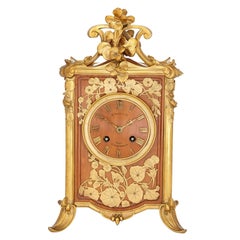
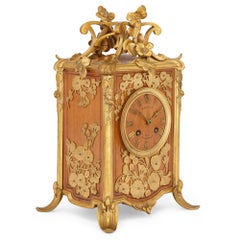
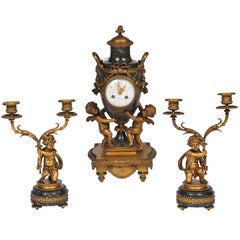
A Palatial and Extremely Rare Napoleon III French Ormolu and Patinated Bronze Regulateur de Parquet Clock by Louis-Constantin Detouche, Paris, Circa 1850
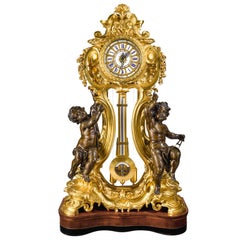
An exceptional testament to the grandeur and technical mastery of 19th-century French horology, this palatial and extraordinarily rare Napoleon III ormolu and patinated bronze Regulateur de Parquet clock stands as a crowning achievement of the renowned Parisian horologist Louis-Constantin Detouche. Created circa 1850, this monumental timepiece exemplifies the perfect synthesis of artistic opulence and mechanical precision, distinguishing itself as one of the most impressive works from Detouche’s illustrious oeuvre.
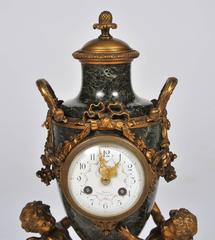
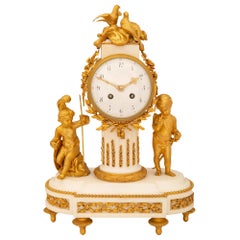
At over six feet tall, this clock’s imposing scale and decorative grandeur make it an object of immense historical and aesthetic significance. The case, crafted from the finest French ormolu, features two majestic patinated bronze seated putti, serving as allegorical figures and underscoring the artistic sophistication characteristic of the Second Empire style. The white enamel dial, elegantly signed "C. Detouche/Paris," affirms its prestigious maker, while the movement, meticulously numbered 7064 and bearing the stamps "C. Detouche RUE St. MARTIN" and "C. DETOUCHE 158 R. St MARTIN 160," speaks to the highest standards of 19th-century horological craftsmanship. Further distinguishing this piece is the medaille d’argent stamp, a testament to the numerous accolades and awards bestowed upon Detouche for his innovations in timekeeping.
A Masterpiece of Horological Artistry:
Louis-Constantin Detouche was not merely a clockmaker; he was a visionary whose contributions to horology redefined precision and complexity. This particular regulator clock...
Category
19th Century Napoleon III Antique French Clocks