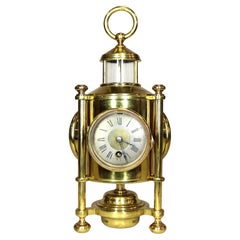
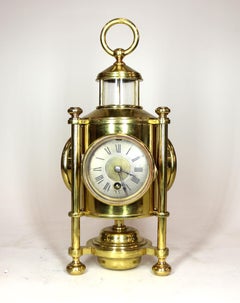
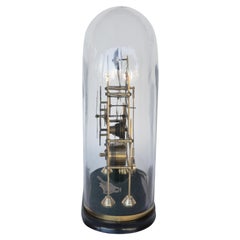
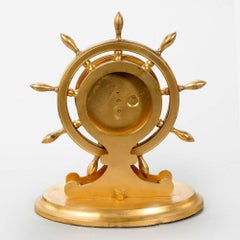
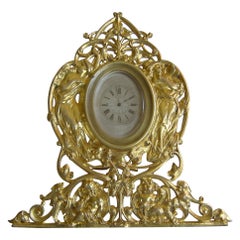
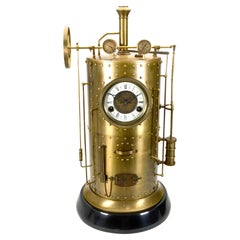
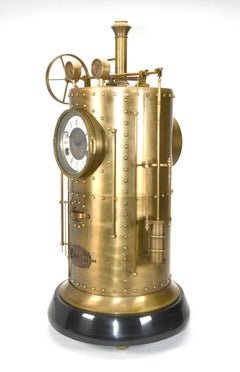
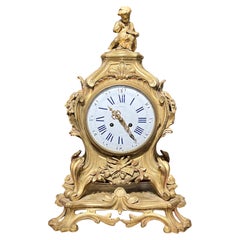
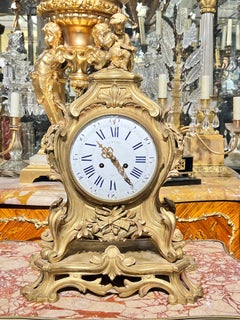
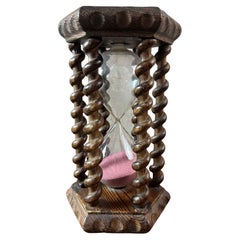
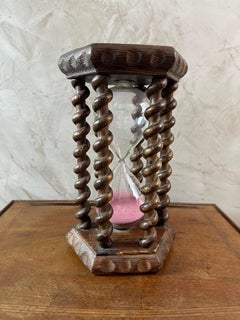
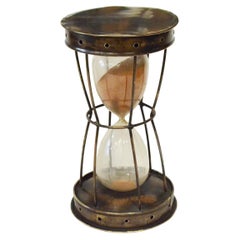
Sand hourglass, brass container with circular base and tapered columns in the center and blown glass cruet. Duration 45 minutes. English manufacture of the early 1900s.
Measures height 20 cm, diameter 11.5 cm – 7.9x4.5 inches.
Shipping is insured by Lloyd's London; our gift box is free (look at the last picture).
In Greece, the use of hourglasses was introduced in 325 BC, in the form of stone containers with a truncated cone shape that let water flow out of a hole in the bottom at a constant rate. Other hourglasses were cylindrical or cup-shaped and were slowly filled by a constant flow of water. Some signs on the inner surface of the container indicated the passage of hours as the liquid level rose. Another version consisted of a metal container with a hole in the bottom which, placed to float in a larger container, sank in a given time. This system remained in use until the 20th century in North Africa. These clocks were typically used at night, but not during the day, when the more accurate sundials were available.
In the first half of the III century BC. Ctesibius transformed the hourglass into the more complex water clock. Various mechanisms were introduced by him and others to increase the precision of the watch by regulating the pressure and keeping the flow of water constant, but also to offer a better display of the time. The most advanced specimens could ring bells or gongs, open windows to display images, or had movable indicators, dials or representations of celestial bodies. Among the designers of watches...
Category
Antique 1890s Table Clocks and Desk Clocks