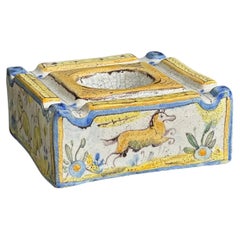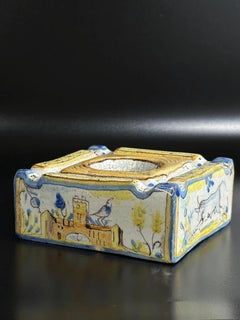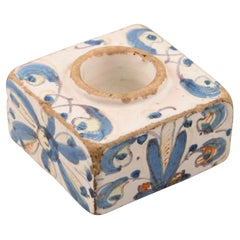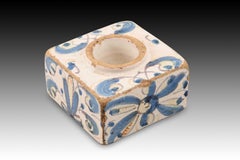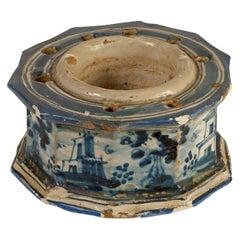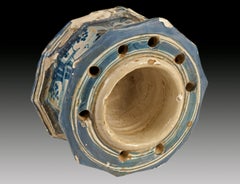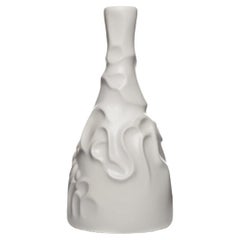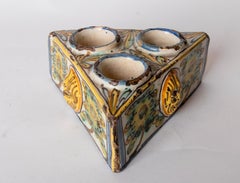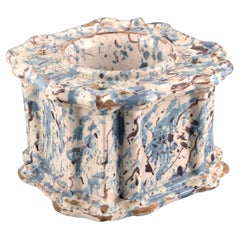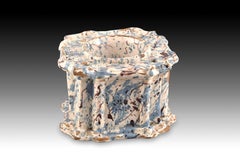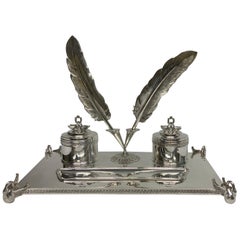
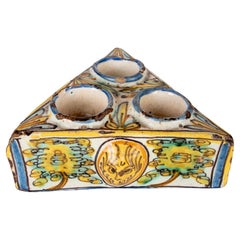
17th Century Spanish Traditional Talavera Glazed Ceramic Ink Holder
Located in Marbella, ES
Antique 17th century Spanish traditional Talavera glazed ceramic ink holder.
17th Century Antique Spanish Inkwells
Ceramic
17th Century Spanish Traditional Talavera Glazed Ceramic Ink Holder
Located in Marbella, ES
Antique 17th century Spanish traditional Talavera glazed ceramic ink holder.
Ceramic
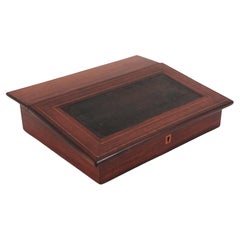
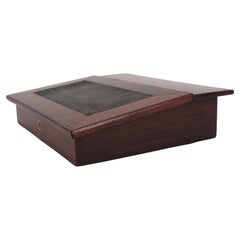
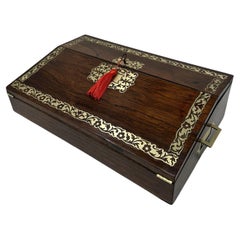
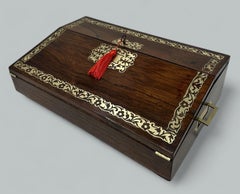
Spanish Writing Slope Box in Walnut and Leather
Located in Barcelona, ES
Elegant hand crafted walnut writing slope with marquetry stripe details Leather writing surface on op Above the slope there is a compartment for storage writing implenments and two i...
Wood, Walnut, Leather
Inkwell, Glazed Ceramic, Talavera de la Reina, Spain, 17th Century
By Talavera de la Reyna
Located in Madrid, ES
Inkwell. Glazed ceramic. Talavera de la Reina, Spain, 17th century. Inkwell or spice rack with a square shaped hole that is made of glazed ceram...
Ceramic
Spanish Talavera Inkwell - Hand-Painted Faience with Animals & Floral Motifs
Located in SANT ADRIÀ DE BESÒS, ES
This charming and highly decorative antique Spanish inkwell is crafted in the traditional Talavera de la Reina style, likely dating to the late 18th or early 19th century. The square...
Faience
Ceramic Inkwell, Talavera De La Reina, Spain, 18th Century
By Talavera de la Reyna
Located in Madrid, ES
Talavera Inkwell, 18th century. Glazed pottery Talavera ceramic inkwell, decorated with cobalt blue enamel on a white tin slip with restorations" Size: 16 x 16 x 7 cms.
Ceramic
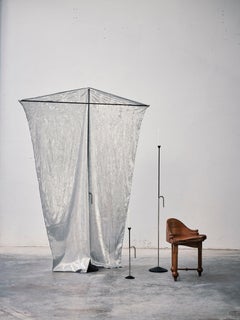
Ronan Bouroullec Chromed Baton Paravant For Bd Barcelona
By Ronan Bouroullec
Located in Barcelona, Barcelona
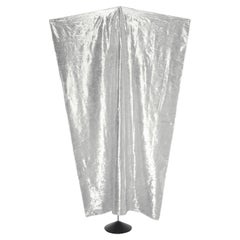
Ronan Bouroullec Chromed Baton Paravant For Bd Barcelona The Baton collection was designed by Ronan Bouroullec and is produced by BD. Its sublime simplicity carves around the shape of a cane. The Baton finds its place in a room as a screen divider, a candleholder, a vase, a valet stand, a side table or a mirror. It strikes a balance between a fluent, curving line and a slim and unimposing frame. As a standalone or group, the Baton represents Bouroullec’s emphasis on refining function and form. The system changes interiors. It generates an intimate feeling in the home or a shared space, with an appealing design that is subtle and concise. A minimal frame with multiple uses. Dimensions and technical drawing Unfolded 138 x 28 x 220 cm Materials and finishes Base in gravity die casting steel, polished and powder coated in textured black. Inox steel polished curved tube. Steel rod fixed to the base, powder coated in black matt. Different options available for the fabric space divider. When folded, horizontal rod used to hang the fabric is stored fixed on the vertical rod by two clipping systems. Important information regarding images of products: Please note that some of the images show other colors and variations of the model, these images are only to present interior design proposals. The item that is selling is on the first image. Important information regarding color(s) of products: Actual colors may vary. This is due to the fact that every computer monitor, laptop, tablet and phone screen has a different capability to display colors and that everyone sees these colors differently. We try to edit our photos to show all of our products as life-like as possible, but please understand the actual color may vary slightly from your monitor About the designer: Ronan Bouroullec is a French designer born in Quimper (Brittany) in 1971. He went to the École Nationale Supérieure des Arts Appliqués et des Métiers d’Art when he was 17. The following year he exhibited for the first time at the Salon du Meuble in Paris. His brother joined him in Paris in 1998, and he opened a small studio in 1999, the same year he was awarded the New Designer Award by the International Contemporary Furniture Fair in New York. Ronan and Erwan Bouroullec began partnerships with names such as Vitra, and their designs and ongoing partnership led to numerous other collaborations with international design companies. Their designs have spanned multiple fields of expression, from craftsmanship to mass production, beyond the realm of furniture design into technology and art. Permanent public space installations have been produced around the world, and they have been represented in some of the most important international institutions such as MoMA New York, the Victoria and Albert Museum in London, the Art Institute of Chicago, the Centre National d'Art et de Culture Georges-Pompidou in Paris, and the Musée des Arts Décoratifs in Paris. There have been numerous monographs published on Bourroullec’s work and had his first solo exhibition at the Centre Pompido in the Spring of 2024. Ronan focuses on practical and flexible designs. Designs that are refined, maintaining his creative flair and an era-defining ingenuity. About the manufacturer: BD has been around for over half a century. It was founded in a nightclub in 1972 by a bunch of young architects and designers from Barcelona. They broke into the design world with a new vision: to produce and market their designs, and the designs of their friends with complete creative freedom and design criteria. Beginning with the designs of contemporaries like Ettore Sottsass, Rennie Mackintosh and Álvaro Siza, BD provoked a curiosity about design. These early pieces helped bring international recognition to the country’s design scene, and many of them still exist today. They are an international design company run by a collective ownership —Apartamento Magazine (Nacho Alegre, Omar Sosa, Marco Velardi), Taller Bofill (Pablo Bofill, Ricardo Bofill, Luna Paiva...
Steel
$160
H 1.38 in W 6.25 in D 0.5 in
Vintage Chrome Figural Fish Metal Letter Opener Knife, Germany Dated 1978
Located in Nuernberg, DE
1978 Fish Figural Metal Letter Opener, Austria This charming fish-shaped letter opener is a delightful example of late-20th-century design. Made of metal with a warm, aged patina, i...
Metal
$180
H 4.75 in W 2.63 in D 2.63 in
Dice Chrome Metal Statue Paper Weight Mid-Century Modern, German, 1980s
Located in Nuernberg, DE
Super cool Art Deco design sculptural "High Roller" dice statue or paperweight. Nice metal dice atop a metal base. Was made as a journeyman's piece. The journeyman's piece is a centr...
Metal, Chrome
$210
H 2.38 in W 2.38 in D 2.38 in
Dice Chrome Metal Statue Paper Weight Mid-Century Modern, German, 1980s
Located in Nuernberg, DE
Super cool Art Deco design sculptural "High Roller" dice paperweight. Nice chrome dice atop a chromed base. Signed by Artist A.R. and Date 5.3.80. The best addition to your desk or e...
Metal, Chrome
$336Sale Price|20% Off
H 3.25 in W 11.25 in D 3.13 in
Chrome Bull and Pen Holder Statue Decorative Desk Accessory, Italy 1970s
Located in Nuernberg, DE
Classic 20th century Bull statue on a marble base with a pen holder. Desktop accessory, made of metal, chrome and marble. Nice addition to your wri...
Marble, Metal, Chrome
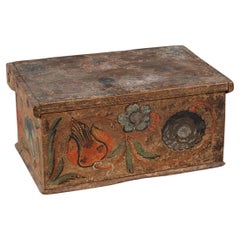
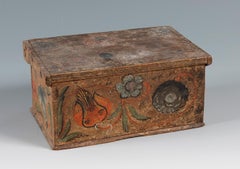
18th Century Mexican Chest from New Spain
Located in Marbella, ES
Mexican chest. New Spain, 18th century. In polychrome wood. Slight paint losses on the lid. Measurements: 7 x 16 x 6.5 cm. Wooden chest from the vicerega...
Wood
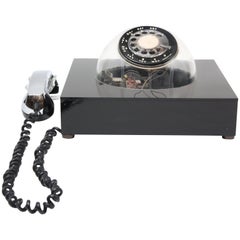
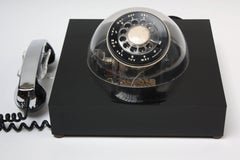
Space Age Acrylic and Chrome 'Teledome' Rotary Telephone
Located in Brooklyn, NY
This futuristic Teledome (model #3005) phone was patented and manufactured in 1972 by Teleconcepts and included internals made by Northern Telecom Inc. Chrome-plate handset with blac...
Chrome
19th Century Baccarat Inkwell
Located in Tampa, FL
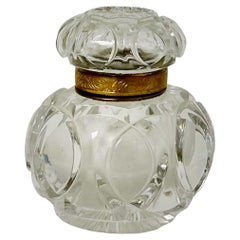
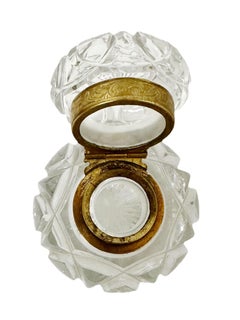
A Baccarat crystal inkwell with decorated bronze. Circa 19th century, France. The interior is two inches deep and the opening is one inch wide.
Crystal
$556Sale Price|20% Off
H 1.5 in W 7.5 in D 7 in
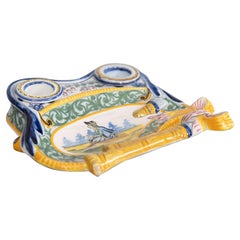
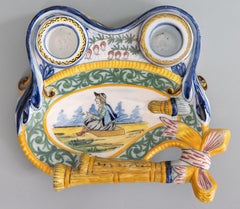
Antique French Faience Quimper Inkwell Pen Tray, circa 1900
By Henriot Quimper
Located in Pearland, TX
A charming antique French faience Quimper double inkwell and pen tray desk set, circa 1900. This gorgeous inkwell is hand painted with a traditional Breton man surrounded by bagpipes...
Faience
Italian Pietre Dure Panel of Parrot on Branch, Late 17th Century
Located in Spencertown, NY
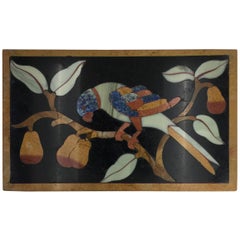
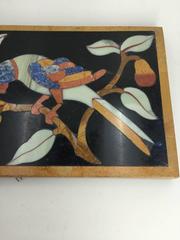
The Pietre Dure panel inset with lapis lazuli, marmo giallo, in a rectangular shape, probably a panel from a cabinet.
Marble
$10,455 / set
H 21.25 in Dm 13 in
19th Century Spanish Pair of Urns, Talavera de la Reina Pottery, Stamped 1899
Located in Dublin 8, IE
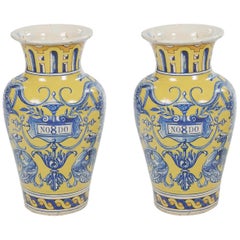
19th-century Spanish pair of large urns with blue mythical masks, dragons, scrolling acanthus leaves, linen swags and with printed text: NO 8 Do, BETTICA and Tortosa all against a yellow background, Talavera de la Reina...
Ceramic
French 18th Century Balance Scale
Located in Round Top, TX
A handsome French 18th century balance scale in iron and brass. The balance mechanism is in iron. The foot and the plates are in brass. The...
Brass, Iron
Danish 18th Century Blue Faience Inkwell by Store Kongensgade
Located in Haddonfield, NJ
Rare Danish blue and white faience ink stand by Johan Ernst Pfau for Store Kongensgade Faience Manufactory, Copenhagen Denmark circa 1740. This inkwell retain with its original ink a...
Faience
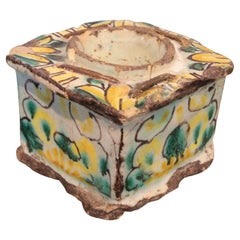
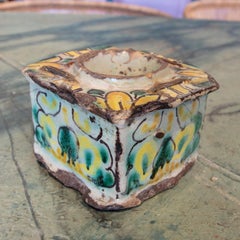
Talavera Glazed Ceramic Inkwell in its characteristic tones
Located in Marbella, ES
Talavera Glazed Ceramic Inkwell in its characteristic tones
Ceramic
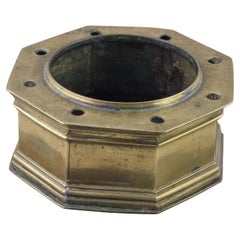
Bronze inkwell. Spain, 17th century.
Located in Madrid, ES
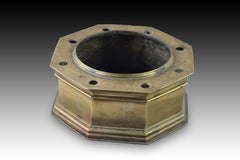
Bronze inkwell. Spain, 17th century. Inkwell made of octagonal bronze with eight small holes and one larger one in the center of the upper part that has a flat base and decoration on its fronts based on moldings of different shapes and widths, all smooth and leaving areas flat in the center of the piece. Around this central hole it presents an enhancement of moldings, in a combination similar to the one mentioned. Typologically, the most common form of inkwell in Baroque Spain was square, and they were made of bronze, ceramic, etc. The polygonal shape, although also relatively frequent and apparently more so in the 18th century, is less common. Compare, for example, the polygonal ceramic inkwell from Talavera de la Reina dated from the 17th century in the Museo Nacional de Artes Decorativas (Madrid), or the bronze one with an octagonal lid from the 19th century. from the same institution, with various ceramics and different provenances from the 18th century (same museum), etc. Above all, it is necessary to remember the polygonal inkwell with six holes made of bronze and dated from the 17th century, which is in the Museo Casa Natal de Cervantes (Alcalá de Henares, Madrid), due to its resemblance to this piece. Likewise, it is possible to see the use of pieces of this type in paintings such as San Gregorio Magno...
Bronze
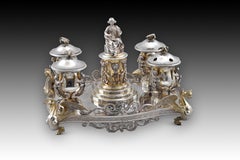
Silver Writing Set. After Platerías Martínez
By Platerías Martínez
Located in Madrid, ES
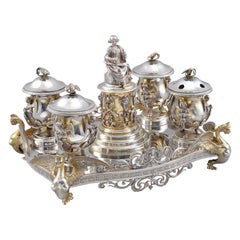
Notary with four inkwells. Silver. Spain, 20th century, following models from the Real Fábrica de Platerías by Antonio Martínez. With contrast markings. Notary with a silver tray...
Silver
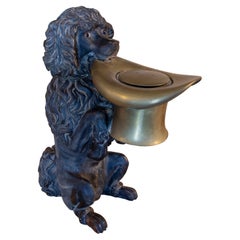
19th Century Dog-Shaped Scrip in the Shape of a Bronze Hat
Located in Marbella, ES
19th century dog-shaped scrip in the shape of a bronze hat.
Bronze
Marbled Ceramic Inkwell, Possibly Talavera, Spain, 17th Century
Located in Madrid, ES
Inkwell, variegated series. Glazed ceramic. Possibly Talavera, 17th century. Slightly rectangular inkwell, decorated with two semicircular pillars on each front, made of glazed cera...
Ceramic
Empire Style Silver Double Inkwells Tray/Inkstand
Located in Guaynabo, PR
This is a unique polished silver double inkwell tray. It is composed of two wide cilynder shaped inkwells decorated with an embossing of a garland of palm...
Silver