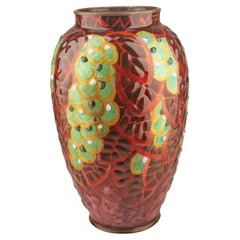
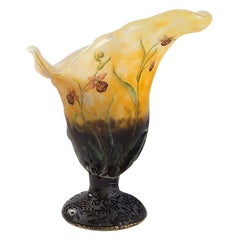
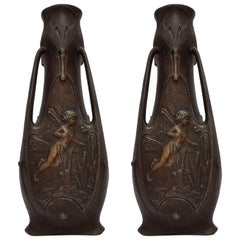
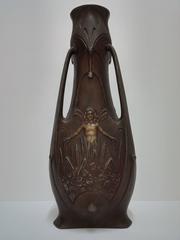
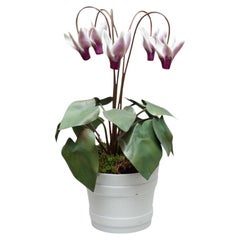
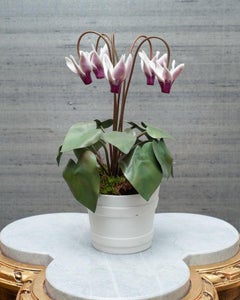
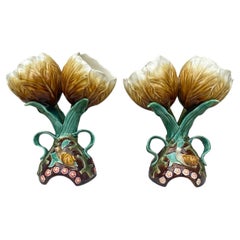
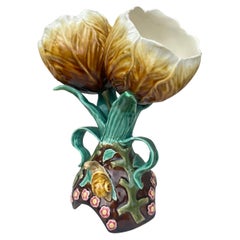
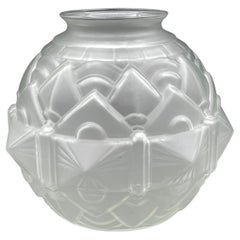
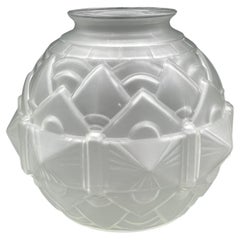
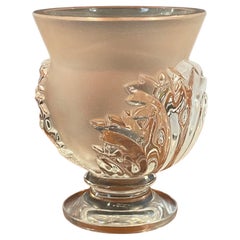
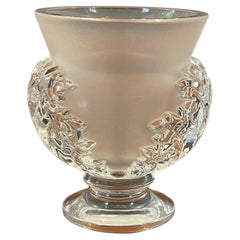
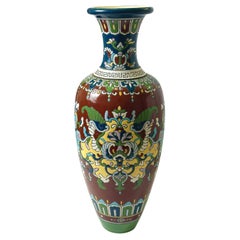
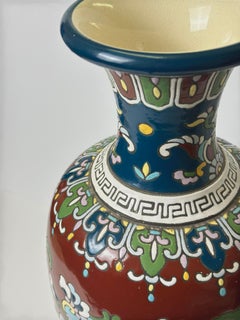
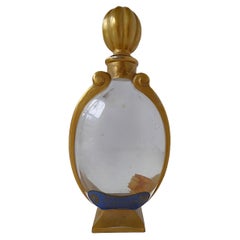
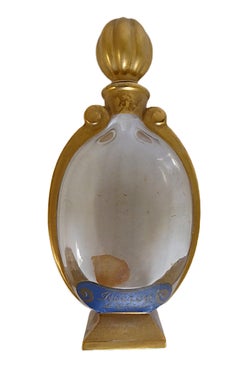
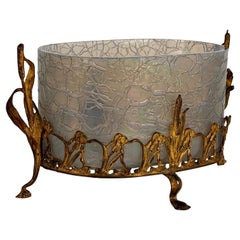
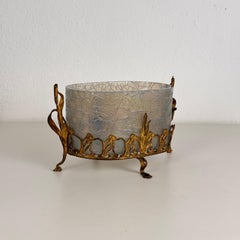
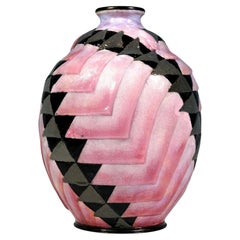
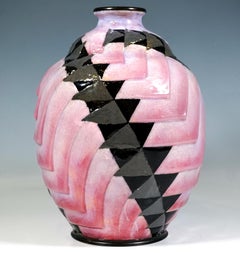
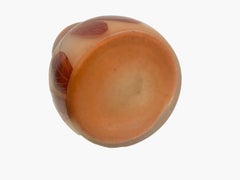
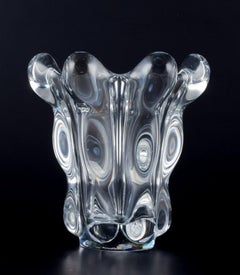
Émile Gallé Art Nouveau Enamel Soliflore w/ Dragonfly & Thistles, Nancy, c. 1900
Art Nouveau
Émile Gallé
Dragonfly and Thistles Soliflore (Bud Vase)
Multi-Color Enamel over Clear Art Glass
Nancy, France
Circa 1900
DIMENSIONS
Height: 3.25 inches
Max. Diameter: 2.75 inches
Opening Diameter: 0.75 inches
MARKINGS
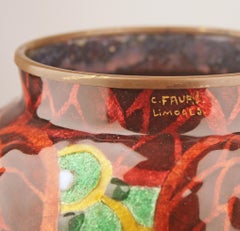
Signed in enamel at the base, bearing the mark “E. Gallé de Nancy.”
MATERIALS
Multi-color enamel on clear art glass
CONDITION
Excellent condition, with no chips, cracks, or restorations.
ABOUT
“The aim of my work is the study of nature, the love of nature's art and the need to express what one feels in one's heart.” – Emile Gallé
A rare and exquisite cabinet-sized soliflore by Émile Gallé, exemplifying the highest artistic standards of early French Art Nouveau. The vase displays an exceptional and sculpturally sophisticated form—its body conceived as a sphere discreetly contained within a smaller cube—resulting in sensuously rounded, perfectly balanced contours that are both visually arresting and elegantly understated.
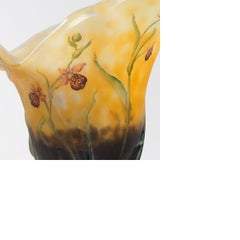
The clear glass body is decorated with finely rendered, hand-applied enamels depicting a dragonfly in flight among mountain grasses and thistles—a lyrical theme central to Gallé’s celebration of the natural world. The composition is executed with subtle tonal gradations and refined brushwork, capturing both the delicate movement and the ephemeral beauty of the scene.
A museum-quality example, notable for its rare form, poetic decoration, and intimate scale. A superb addition to any serious Art Nouveau or Gallé collection.
ABOUT ARTIST
Émile Gallé Gallé (French, 1846 – 1904)
Emile Galle was a French glass and ceramic designer who combined art and botany. Most of his glass vases are created in Art Nouveau style. Born on May 4, 1846 in Nancy, France, Émile Gallé seemed destined for a career in glassmaking. Nancy was well-established for its glass artistry, and his father, Charles Gallé was an established faïence (ceramic) and glassmaker with his own successful manufactory, the Maison Gallé-Reinemer. It would be here under the guidance of his father that the young Emile began to learn the art of glassmaking while simultaneously indulging his academic interests in philosophy, botany and chemistry. In 1867, Gallé joined his father working full-time at the Maison.
Gallé's glasswork, even at its earliest stages, was heavily influenced by nature, with his very first pieces incorporating enameled floral motifs painted upon clear glass. He was an avid botanist his entire life, collecting plants, flowers, and insects from which to study and draw inspiration. He was even elected Secretary-General for Nancy's Société centrale d'horticulture.
Gallé traveled throughout Europe studying works at museums and private institutions, gaining insight from ancient glass antiquities to Japonesque masterpieces, and everything in between. It would be Gallé’s trip to the British Museum in 1871 that would alter the course of his art career. Enamored by the famed ancient Roman cameo glass...
Category
Early 1900s Art Nouveau Antique French Decorative Objects