Located in Sammu-shi, Chiba
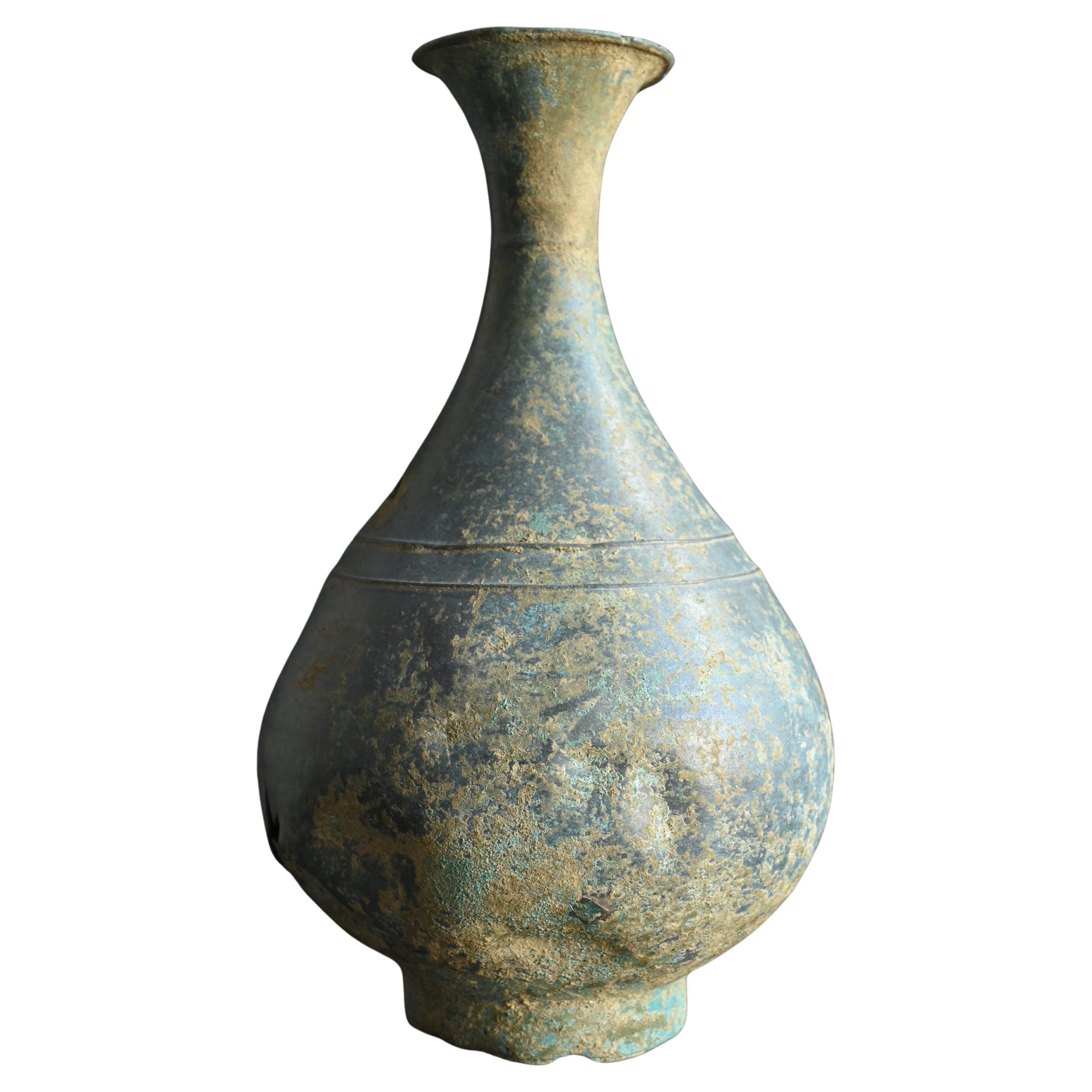
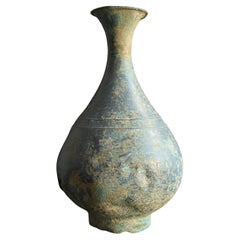
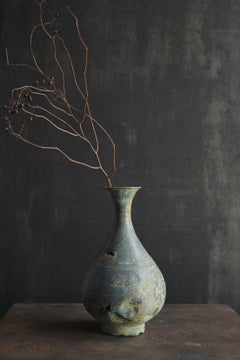
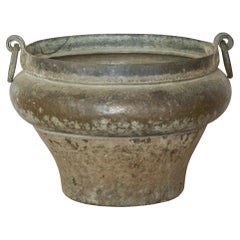
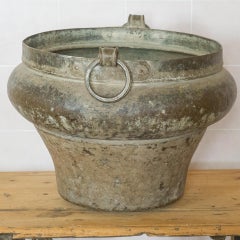
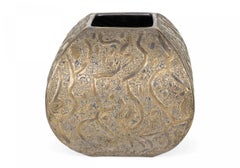
This is a bronze vase made in Korea during the late Goryeo dynasty (around the 12th–13th century).
The Goryeo dynasty was a period in which highly sophisticated craftsmanship developed alongside a flourishing Buddhist culture. During this era, many outstanding works of art were produced, including celadon ceramics and metalwork. This piece is an example of bronze craftsmanship from that time and possesses an elegant form that reflects the refined aesthetic sensibilities of the period.
The shape of this vase is known as “Yuhuchun” (玉壺春), a classic bottle form frequently seen in Chinese Song dynasty celadon. The slender neck rises gracefully upward, leading to a gently swelling rounded body, and finally to a small, stable foot. This silhouette creates a beautifully balanced curve throughout the entire form. While Goryeo craftsmanship was influenced by Chinese culture, it also developed its own distinct aesthetic, and this vessel appears to have been created within that cultural context.
Around the neck and shoulder are ring-shaped ridges known as “tutdae” (突帯). These raised bands create a subtle rhythm in the form and give visual structure to the vessel. Such decorative ridges are one of the characteristic features seen in Goryeo bronze objects. They function not merely as decoration but also as an important design element that defines and tightens the overall contour of the vessel.
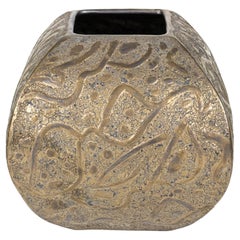
Across the surface, a natural patina has formed over the centuries, with areas of green corrosion and soil accretions typical of ancient bronze. The coloration shifts subtly from blue-green to light brown tones. This patina cannot be artificially reproduced; it appears only through the passage of a long period of time. The piece embodies both the rough character typical of excavated artifacts and a quiet beauty, as though it has preserved a fragment of the ancient landscape within its surface.
Regarding its condition, because this is an excavated object, corrosion over time has caused a hole to form in the body. Please refer to the detailed photos for confirmation. For this reason, it cannot be used to hold water directly. However, if you wish to arrange flowers, you may place a slender glass container inside the vase and fill that with water. It also works beautifully with dried flowers or branches. The heavy texture of ancient bronze pairs exceptionally well with natural plant materials, making it a striking decorative object within an interior space.
This vase also comes with its original storage box.
On the lid is an inscription reading “Goryeo Period Bronze Water Vessel...
Category
15th Century and Earlier Antique Bronzed Decorative Objects