Located in West Palm Beach, FL
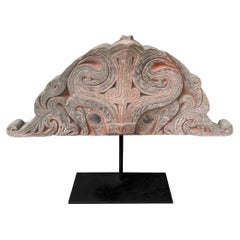
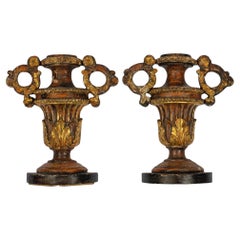
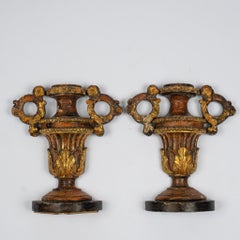
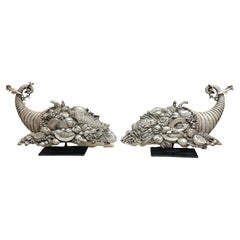
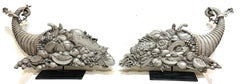
Pair of Continental Carved and Polychromed Wooden Cornucopias, 19th Century
These finely carved and polychromed wooden cornucopias exemplify the enduring symbolic power of the horn of plenty in European decorative arts. Each composition is rendered in high relief, the ribbed horn issuing an abundant cascade of fruit and vegetables—pomegranates, grapes, melons, pumpkins, gourds, citrus, corn, and floral sprays—arranged with exuberant Baroque fullness. Now mounted on forged iron bases for display, the pair measures 20" high × 28" wide × 3.5" deep, including stands 12.5" x 6" (carvings alone 28" wide × 17" high × 3.5" deep).
The Cornucopia in History
Originating in antiquity, the cornucopia (Latin cornu copiae) was first associated with Amalthea, the goat who suckled the infant Zeus, whose horn became a miraculous source of nourishment. In Roman culture it was carried by deities of abundance—Fortuna, Abundantia, and Ceres—as an emblem of civic prosperity and the cycles of nature. Revived in the Renaissance and Baroque periods, the cornucopia became a favored motif in architecture, painting, and decorative arts, symbolizing divine blessing, seasonal plenty, and the wealth of the natural world.
Iconography of the Fruits and Vegetables
The profusion of produce is not merely decorative but encodes symbolic meanings rooted in both classical and Christian traditions:
Pomegranates—fertility, eternal life, and resurrection.
Grapes—festivity, vintage, and the Eucharistic blood of Christ.
Melons and Watermelon Slices—sensual abundance, refreshment, and ephemeral pleasure.
Pumpkins and Gourds—autumn harvest, transformation, and the cycles of plenty.
Corn (Maize)—sustenance and prosperity, reflecting New World influence on European symbolism.
Citrus Fruits—health, luxury, and Mediterranean prosperity.
Floral Sprays—seasonal beauty and the transience of life, underscoring vanitas themes common in still-life art.
This allegorical language aligns the carvings with the broader European tradition of abundance imagery found in still-life painting, silverwork, and architectural ornament.
Continental Style and Possible Origin
The sculptural density, dramatic overlapping of forms, and naturalistic rendering suggest a Continental origin, likely Austrian, German, or Italian, c. late 19th century. While Swedish decorative carving of the same era tends toward flatter surfaces and folk stylization, these examples embody a more theatrical Baroque and Rococo inheritance, later enhanced with a polychrome or silver-toned surface to heighten their decorative impact. Originally conceived as architectural appliqués...
Category
19th Century European Neoclassical Antique Polychromed Decorative Objects