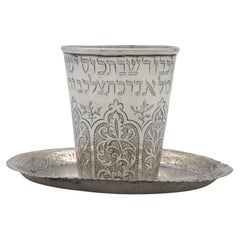
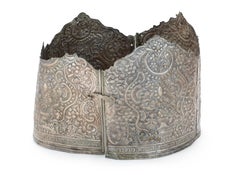
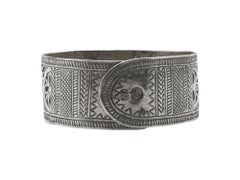
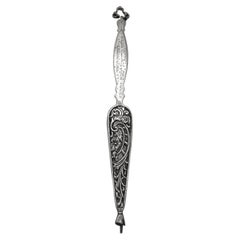
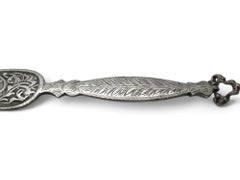
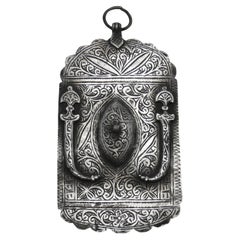
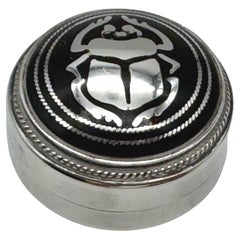
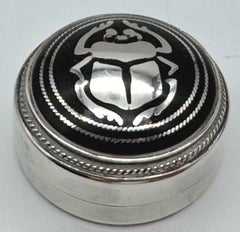
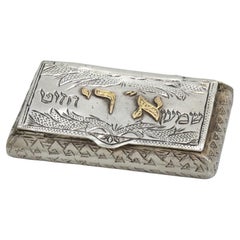
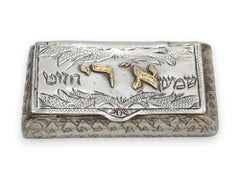
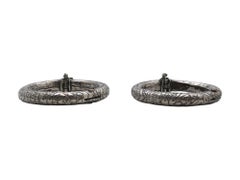
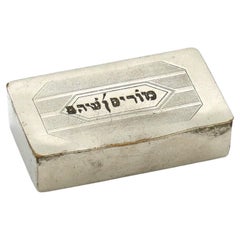
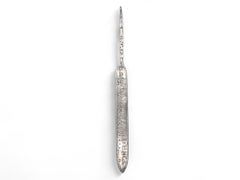
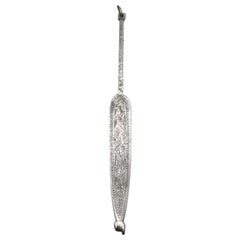
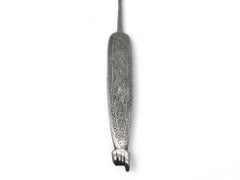
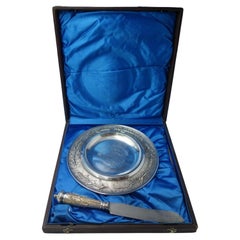
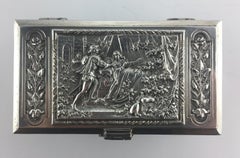
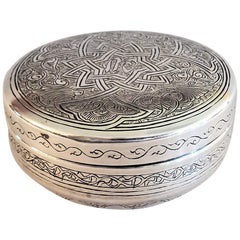
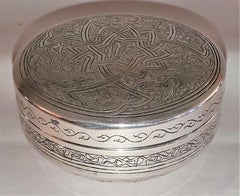
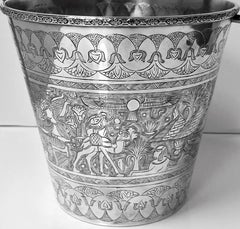
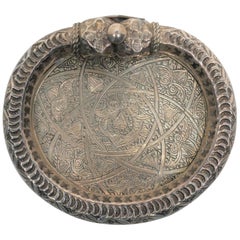
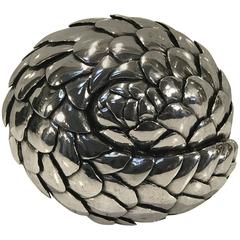
A remarkable intricately designed, handcrafted silver box, circa 1880s.
We were told that this box is sterling silver and that the makers mark "M" is that of "M. Mayer". Maurice MAYER was a very prestigious silversmith. Research shows that he was an "Orfèvre de l'Empereur", Napoleon Bonaparte, 1860-1870.
The Minerva hallmarks are not visible, may have been rubbed off from use and cleaning. No documentation.
This intricately carved box depicts the romantic poem of Le Roman de la Rose (The Romance of the Rose). Comes with the original lock and key.
Le Roman de la Rose, begun by Guillaume de Lorris circa 1230 and completed, in a different style, circa 1270-1280, by Jean de Meun, builds on the concept of courtly love found in the poetry of the troubadours. The authors create a complex allegory of the romance between the Lover and the Rose. In the quest to pick the Rose (to achieve the conquest of love), the flower and its attendants represent the Lady and her sentiments while being wooed.
In the first part of the poem, written by de Lorris, the Lover recounts his dream, ending with the winning of a kiss from the Lady. In the dream, the Lover discovers a walled garden and gains entrance thanks to a beautiful young woman. He meets Diversion and dancers who represent courtly values such as Beauty and Generosity. A tour of the garden brings him to a beautiful bed of roses by the Fountain of Love...
Category
19th Century Antique African Sterling Silver